Disclosure: As an Amazon Associate, dailyhomedecorating.com earns from qualifying purchases. Links on this page are affiliate links; they cost you nothing extra. Prices and availability change often, so check the current Amazon listing before you buy.
Good fireplace heater reviews should do more than rank flame photographs. These reviews compare the leading designs the way owners actually choose among them: by the room they will warm, the shape that fits the available floor, the way the warmth feels at the sofa, and the routine the household is willing to keep. A fireplace heater is a heat-first appliance with a simulated flame, bought for zone comfort and atmosphere together. It differs from an electric fireplace — a furniture-first mantel, console, or insert where heat supports the looks — and that difference runs through every verdict below: here, heating character and safe, practical placement outrank pure decor, and the flame is judged as the feature that makes a heater worth looking at all winter. Read the verdicts with your own room in mind and they will not mislead you.
Key Takeaways
- Best overall balance: the Duraflame infrared stove format, which pairs direct-feeling warmth with the most likeable cabinet in the category.
- Best flame craft: Dimplex, whose stove designs treat the display as the main event.
- Best reach for larger rooms: Dr Infrared’s fireplace-style cabinets, built to project comfort across distance.
- Best value cabinet: LifeSmart, for a mantel-front presence at an accessible tier. Best compact: Heat Storm. Best gentle, steady warmth: EdenPURE.
- Every model in these reviews obeys the same non-negotiables: plug directly into a wall outlet — never an extension cord or power strip — keep clear space from curtains and anything flammable, and run only while you are present and awake.
In this guide
How These Reviews Were Judged
Each design was weighed on five axes. Warmth character: how the heat feels at the seating, how far its comfort honestly reaches, and how it behaves across a long evening rather than a first blast. Flame and cabinet: whether the display survives relaxed viewing from a sofa, and whether the object looks like furniture in daylight. Controls: thermostat, levels, timer, remote, and flame-only operation — the features hands actually touch. Placement practicality: footprint, stability, cord discipline, and the clearance the manual demands. And ownership: dust, cleaning, storage, and the small habits that decide whether year two feels as good as week one. Heating capability is described qualitatively throughout — in zones, distances, and room behaviours — because your ceiling height, insulation, and draughts will rewrite any headline figure more thoroughly than the differences between these models.
Safety was treated as a threshold, not a scoring axis. Any design considered here must offer the standard protection group — tip-over shutoff and overheat protection — confirmed in its manufacturer manual, and must be used the same safe way: flat floor, clear surroundings, direct wall connection, supervised running, off overnight and when the house is empty. A model that failed that threshold would not appear in these reviews at any tier, and no score below should be read as permission to bend the routine for a higher-ranked design.
Duraflame Infrared Quartz Fireplace Stove — Best Overall
Best for: Most living rooms, most households, most winters. Not suited for: The largest open-plan spaces, or buyers who want a wide mantel front instead of a stove. Tier: mid. The Duraflame stove format tops these reviews because it has no weak axis. The infrared warmth lands personally on the seating, in that sunlit way owners describe with surprising emotion. The cabinet — legs, door line, flame window — is the silhouette the whole category is recognised by, and it holds a room together visually whether it is running or not. Controls cover the real list without fuss. Placement is the standard discipline: a flat spot, honest clearance, its own cord reaching a wall outlet directly. Strengths: balance, presence, warmth character. Trade-offs: a real footprint, a stove look that will not suit every interior, and zonal limits shared by the entire category. If a friend asked for one recommendation with no further questions, this is the design these reviews would name.

Dimplex Electric Fireplace Stove Heater — Best Flame
Best for: Buyers who will watch the flame for hours and feel short-changed by lesser displays. Not suited for: Strict budgets, or rooms where heating reach matters more than display artistry. Tier: mid to premium. Dimplex built its reputation on electric flame, and its stove heaters are where that heritage is most affordable. The displays layer embers and flame movement with a subtlety that survives the relaxed, peripheral viewing of a real evening — the only test that matters. Cabinets are finished with a care that justifies the tier step. Warmth is well-mannered zone comfort rather than the category’s boldest reach, which is the honest trade: you are paying for the fire you watch. Strengths: flame realism, finish, brand depth. Trade-offs: tier, and heating that serves its zone rather than conquering large spaces.
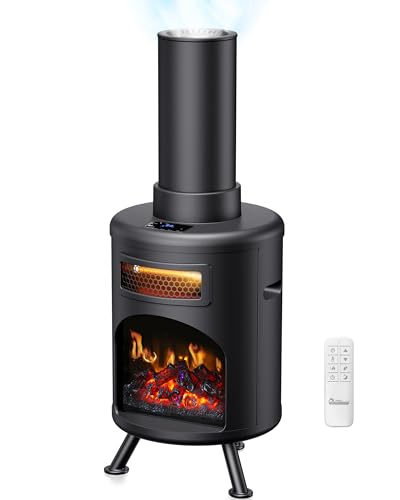
Dr Infrared Heater Fireplace Style Space Heater — Best for Larger Rooms
Best for: Open seating areas and draughtier rooms where the heater sits well away from the sofa. Not suited for: Small bedrooms, tight corners, or flame connoisseurs. Tier: mid to premium. Dr Infrared’s fireplace-style cabinets put heating character first: a dual approach that radiates and circulates, projecting comfort across the distances that defeat smaller designs. In a big room this is the difference between a warm island and a warm zone, and it earns the model its place in these reviews. The cabinet is furniture-sized and plainer than the decor-led brands, and the flame is pleasant rather than poetic — accepted trades for buyers whose problem is reach. Strengths: comfort footprint, sturdy build, thermostat-led running. Trade-offs: bulk, plainer styling, and placement that must be planned.

LifeSmart Infrared Fireplace Heater — Best Value Cabinet
Best for: Households that want the wide infrared cabinet and mantel-front look without a premium tier. Not suited for: Minimalists, small rooms, or buyers expecting class-leading flame effects. Tier: entry to mid. LifeSmart’s proposition is presence per tier: a substantial fireplace front, infrared warmth for the seating zone, and remote-led convenience, at a level that makes the category accessible. The flame effects are enjoyable and the cabinets settle a room, particularly in traditional interiors. The compromises live in finish refinement and flame subtlety, which trail the leaders in ways you notice side by side and forget in isolation. Strengths: format, value positioning, straightforward ownership. Trade-offs: refinement, footprint, and the need to check each model’s manual carefully for its exact clearances and whether items may sit on top.

EdenPURE Infrared Fireplace Heater — Best Gentle Warmth
Best for: Long, steady heating sessions and people who dislike hot blasts of air. Not suited for: Rapid warm-ups of cold rooms, or small spaces. Tier: mid to premium. EdenPURE’s fireplace models suit the household that runs a heater the way it runs a lamp: on for the evening, backgrounded, gentle. The warmth character is even and unhurried, the presentation is furniture-like, and the ownership story is simple. Patience is the price — a cold room comes up to comfort gradually — and the cabinets ask for a committed corner. Strengths: steady comfort, calm operation character, presence. Trade-offs: warm-up pace, size, tier.

Heat Storm Infrared Fireplace Heater — Best Compact
Best for: Small rooms, home offices, and anyone whose floor space is genuinely scarce. Not suited for: Expecting one small unit to carry a large open area. Tier: entry to mid. Heat Storm compresses the category’s idea — infrared warmth with a flame display — into bodies that fit where cabinets cannot. Beside a desk or in a small bedroom used in waking hours, that compression is exactly right, and the controls stay refreshingly simple. The limits are the honest ones of size: a smaller flame window, a smaller comfort zone, and a greater need to check stability on your actual floor. Strengths: footprint, simplicity, flexibility. Trade-offs: reach, spectacle, and the discipline to buy it for the zone it can truly serve.
Side by Side: How the Reviews Compare
Read across the six and a pattern emerges that matters more than any single verdict. Warmth character splits the field into the radiant personalities — Duraflame, LifeSmart, EdenPURE, Heat Storm — whose comfort lands on people, and the reach personality of Dr Infrared, which works hardest to move comfort across a room. Flame craft ranks Dimplex first, the Duraflame stove a close and likeable second, and the rest in a pleasant middle where differences show side by side and fade in ownership. Presence ranks the cabinets — LifeSmart, EdenPURE, Dr Infrared — as the boldest furniture, with the stoves close behind and the compact deliberately last. Flexibility inverts that order entirely: the compact moves, the stoves travel between rooms, and the cabinets commit. There is no axis on which one model wins everything, which is why these reviews are organised by job. Choose your job and the ranking chooses itself.
Which Review Winner Fits Your Room?
The Settled Living Room
Take the Duraflame stove for balance, or the Dimplex if the flame is your joy. Either will anchor the seating, warm the zone, and be looked at with pleasure for years. Angle the seating toward it, define the zone with a rug — see best rugs for a fireplace area — and arrange the layout as two sofas around a corner fireplace suggests.
The Big, Draughty Space
Take the Dr Infrared cabinet, place it with planning and full clearance, and accept its plainer looks as the price of reach. Support it with the room itself: curtains drawn, doors managed, expectations set to a generous zone rather than a conquered floor plan.
The Traditional Room on a Budget
Take the LifeSmart cabinet. Its mantel front flatters traditional decor, its tier respects the budget, and its compromises are the kind that vanish in daily use. Verify the manual’s details for the specific model, as with every pick here.
The Small Room or Office
Take the Heat Storm compact, keep its territory clear of paper and clutter, and enjoy the category’s idea at the scale your room can honestly host. For the wider context of small heaters, compare against best space heaters.
The Long-Evening Household
Take the EdenPURE if your pattern is steady hours of gentle warmth, or the Duraflame if you want the same steadiness with a stove’s charm. Both reward thermostat-led routines over maximum-setting habits.
The Safety Standard Behind Every Verdict
It bears repeating in a reviews context, because rankings can make safety feel optional. It is not. Every heater above plugs directly into a wall outlet; none may be used with an extension cord or a power strip, under any circumstances, for any duration. Every heater keeps the clearance its manual specifies from curtains, bedding, upholstery, clothing, paper, and all flammable things. Every heater runs while its household is present and awake, and is switched off for sleep and for empty houses, following manufacturer guidance. Tip-over shutoff and overheat protection must be confirmed in the manual of the exact model you buy — described here as a feature group because implementations vary — and treated as backstops for the routine, never as substitutes for it. No claim in these reviews should be read as a health promise; these appliances warm rooms and lift moods, and that is the whole of their honest magic.
For method, read the fireplace heater buying guide; for one design in depth, the fireplace heater review; for the unvarnished ledger, fireplace heater pros and cons; and for the value question, is a fireplace heater worth it. The furniture-first alternative is covered by the electric fireplace reviews.
What a Winter of Ownership Looks Like, Model by Model
Reviews end; ownership continues, and the differences among these six designs widen with time in predictable ways. The Duraflame stove becomes invisible in the best sense — furniture that happens to glow — and its owners’ most common report is that the room feels wrong without it. The Dimplex rewards its premium every dark evening, because flame quality is the one attribute that never fades into background; owners who chose it for the display tend to evangelise. The Dr Infrared earns gratitude in the coldest weeks, when its reach is the difference between using the big room and abandoning it until spring. The LifeSmart’s owners praise the room transformation per tier spent, and are the most likely to add a second unit elsewhere in the house. The EdenPURE’s owners describe calm — no blasts, no drama, just an evening that stays comfortable — and the Heat Storm’s owners describe relief that the small room problem had a small answer. None of these reports is about specifications. All of them are about fit between a design and a life, which is why these reviews insist on the room-first method.
Ownership also has a shared chapter regardless of model: the routine becomes automatic. The plug lives in the wall socket. The clear zone around the heater stays clear because the household has absorbed it as furniture geography. The timer is armed on late nights without discussion. Dust is wiped from intakes during ordinary cleaning. The cord gets its seasonal glance. When reviewers say a category is easy to live with, this is the substance of the claim — not that the appliance needs nothing, but that what it needs becomes habit within a fortnight and stays pleasant for years.
How to Choose Among These Reviews in Five Minutes
Ask five questions. How big is the zone, honestly — one chair, one sofa group, or a whole open area? That answer alone separates the compact, the stoves, and the reach cabinet. What shape does the room want — stove, wide cabinet, or small body? The floor and the furniture answer that. How much do you care about the flame — background pleasure or headline feature? That sets Dimplex against the field. What tier feels right for an object you will see daily for years? That trims the list to two. And the final question, the safety audit: does the chosen spot have a wall outlet within the heater’s own cord reach, with clearance from everything flammable? If yes, buy the survivor of the first four questions with confidence. If no, fix the spot first — the model can wait a day, and the right spot cannot be improvised later. Readers who want the method at full length should follow how to choose a fireplace heater step by step.
Extended Notes on Each Design
Duraflame, Considered Longer
The longer these reviews sat with the Duraflame format, the more its balance impressed. Many products win a category by being extreme at something; this one wins by refusing to be bad at anything. Its flame is not the finest available and its reach is not the longest, yet in a real living room across real evenings, the combination of personal infrared warmth, a cabinet that flatters the room, and controls that never annoy produced the highest total satisfaction of the group. There is a lesson in that for buyers: in appliances you live with, the absence of irritations beats the presence of superlatives. The stove format also travels well between homes and rooms, which protects the purchase against life changes — a move, a renovation, a room swap — in a way built-in alternatives cannot.
Dimplex, Considered Longer
Dimplex’s case rests on a single, defensible claim: the flame is the product. Strip the display from any fireplace heater and a competent box remains; the display is what owners watch, photograph, and gather around. Dimplex treats that truth with appropriate seriousness, and its stoves repay the attention nightly. The counterpoint is equally clear: if your room’s problem is cold rather than gloom, the tier spent on flame artistry buys less comfort than the same tier spent on reach or size. These reviews place Dimplex second overall and first in its specialism, which is exactly where it belongs.
Dr Infrared, Considered Longer
The Dr Infrared cabinet is the engineer’s entry in a stylist’s category, and these reviews mean that as praise. Its design effort went into the comfort footprint — into making a big, imperfect room feel genuinely warm at the sofa — and it succeeds where prettier rivals merely glow. Buyers in farmhouse living rooms, converted barns, and open family spaces should weight this model above its looks. Buyers in small, already-warm rooms will find it more appliance than they need, in every sense.
LifeSmart, Considered Longer
Value picks are often faint praise; this one is not. The LifeSmart cabinet delivers the format that transforms a room — the wide fireplace front — at a tier that lets households act on the idea without a season of saving. Its flame and finish trail the leaders in direct comparison, but rooms are not comparisons; they are lived in one at a time, and in isolation the LifeSmart pleases. Check the individual model’s manual with extra care, as specifications and details vary across its range more than most.
EdenPURE, Considered Longer
EdenPURE’s fireplace models are the tortoise of the field: unhurried, steady, and oddly beloved by their owners. The brand’s gentle-warmth philosophy suits households whose evenings are long and whose rooms are used for hours at a stretch — readers, knitters, film pairs, and anyone who finds blasts of hot air actively unpleasant. If your pattern is the quick warm-up of a cold room before guests arrive, look elsewhere in these reviews; if your pattern is the whole evening, look here.
Heat Storm, Considered Longer
Compact models are usually reviewed as compromises; this one deserves review as a solution. For the small bedroom used in waking hours, the cold desk in the spare room, the studio flat where a cabinet would dominate, the Heat Storm format is not the lesser choice — it is the correct one. Its flame window is small because its rooms are small, and at the closer viewing distances of a small room the effect holds up well. The discipline it demands is expectation discipline: warm the zone it can warm, and it will never disappoint.
Common Regrets, and How These Reviews Prevent Them
Owner regrets in this category repeat with metronomic regularity, and each maps to a review criterion above. The first regret is buying for a photograph and discovering the safe spot has no reachable wall outlet — prevented by the placement audit, and by remembering that extension cords and power strips are forbidden, so the outlet question is absolute. The second regret is undersizing the zone: a compact bought for an open-plan room, glowing bravely and warming nothing beyond its own corner — prevented by honest zone thinking. The third is flame disappointment at the entry tier by buyers who secretly wanted Dimplex-level artistry — prevented by tier honesty: flame craft is what the higher tiers are for. The fourth is noise surprise in a quiet bedroom — prevented by imagining your quietest use case, not your loudest. The fifth is the overnight expectation: a heater bought to warm sleeping hours, which no portable heater should serve — prevented by the supervised-use rule stated throughout. Read the regrets and you have read the reviews; the models are almost secondary to the matching.
Seasonal Buying and the Shape of the Year
These reviews are valid all year, but the buying experience is not. In early autumn the field is complete: every model in production, every finish, every tier, with time to read manuals and measure spots before the cold arrives. The first cold snap thins the field unevenly — popular mid-tier stoves go first, and late buyers choose among leftovers with the weather pressing on them. Mid-winter buying is still perfectly possible, but it rewards the method in this cluster more than ever: zone, shape, safety, controls, flame, in that order, executed quickly. Spring brings the year’s most relaxed shopping and occasionally its most generous positioning, for buyers willing to purchase against next winter. Whenever you buy, the checks do not change: the manual’s safety group and clearances, the spot’s wall outlet, the household’s agreement to supervised use. A fireplace heater bought in a panic and placed in a compromise spot is the one purchase in this category that reliably disappoints, and it disappoints for reasons that have nothing to do with which of these six designs was chosen.
Reviews Versus the Single-Design Deep Dive
This roundup and the companion single-design review serve different moments in a purchase. The roundup is for the choosing moment: six designs, five axes, one room of yours to match. The deep dive is for the confirming moment: one format taken apart across a week of evenings, with its diary, its frictions, and its long-term ownership notes. Most buyers should read the roundup first and the deep dive second, on the design the roundup surfaced. Buyers who arrive already certain of their format may reverse the order. Both pieces share the same foundations — the same safety standard, the same zone philosophy, the same refusal to promise health effects or whole-house miracles — because a cluster of guides that contradicts itself helps no one, and because the foundations happen to be true.
The Room Audit Behind the Rankings
Every ranking in these reviews silently assumes a room, so let the assumption into the open. The overall ranking assumes the median case: a living room of ordinary proportions, a sofa group, doors that close, a corner or wall stretch with a reachable outlet, and evenings as the main event. Change the room and the ranking reshuffles exactly as the by-room sections describe. This is not a weakness of the reviews; it is the reviews’ central teaching. Reviewers who pretend one ranking serves every room are selling certainty they do not possess. What can be offered honestly is a transparent method: here are the designs, here are their characters, here is how character meets room. The audit itself takes ten minutes with a tape measure and an honest eye — spot, clearance, outlet, seating distance, draughts, and the location of every curtain and soft furnishing that might drift toward warmth. Do the audit before the shortlist, and the shortlist will feel less like a gamble and more like a conclusion.
A Word About Brand Loyalty in This Category
Owners of these appliances develop brand loyalties, and the reviews respect the phenomenon without surrendering to it. Loyalty usually tracks the axis the owner cares about most: Dimplex owners are flame people, Dr Infrared owners are warmth people, Duraflame owners are balance people. The loyalty is evidence that the axis-matching worked, not that one brand is universally correct. If you are replacing a heater you loved, buy its successor by axis, not by badge — brands reshape their ranges, and the model that matches your axis this year may wear a different name. If you are buying for someone else, ask about their axis before their budget: a flame person given a reach machine will be polite about it for years and pleased about it never.
What These Reviews Deliberately Leave Out
Honest reviews declare their omissions. These reviews contain no laboratory measurements, because the category’s performance is room-relative and a number measured in a test chamber would mislead more than it informed. They contain no prices, because prices move and tiers endure; check the current listing for the figure of the day. They contain no scores or tallies of other buyers’ opinions, because such numbers age badly and say little about your room. They make no health claims, because warmth is the product and comfort is the promise. And they recommend no model for unattended, overnight, or whole-house duty, because no model in this category should be used that way. What remains after those omissions is the part of reviewing that actually predicts satisfaction: character, fit, and routine. A buyer who chooses on those grounds, from this field of six honest designs, is choosing the way satisfied owners chose.
The Reviewers’ Final Word
Six designs, six answers, one category with a clear and likeable idea at its centre: warmth you can sit in front of. The Duraflame stove is the answer for most rooms; Dimplex for the flame devotees; Dr Infrared for the big cold spaces; LifeSmart for the traditional room on a budget; EdenPURE for the long gentle evenings; Heat Storm for the small rooms that deserve the idea at their own scale. Pick by your room, verify by the manual, place by the rules, and the winter will take care of the rest.
Two Households, Two Right Answers
Consider the Hendersons, invented but typical: a draughty farmhouse living room, a sofa a long way from any sensible heater spot, a wood-burner-shaped hole in their evenings since the chimney was capped. The reviews point them, unambiguously, to the Dr Infrared cabinet for reach, with the Duraflame stove as the alternative if their seating can be pulled closer — and the room audit, not the ranking, makes the final call between those two. Consider instead a young renter in a small flat with one cold room that serves as bedroom, office, and cinema. The reviews point her to the Heat Storm compact for the desk hours and waking evenings, or to the Duraflame stove if the room must also host friends around a flame. Same category, same six designs, different right answers — because the rooms differ. Any review that would give both households the same product is not reviewing; it is advertising. This roundup would rather be accused of indecision than of that.
Durability and the Second-Hand Question
Buyers sometimes ask whether these appliances last, and whether a used one is a sensible shortcut. On lasting: the designs reviewed here are simple machines — heating elements, fans, lights, controls — and their longevity is governed less by brand than by the routine described throughout this cluster. Kept clean, kept clear, plugged directly, and stored dry, they serve for years; abused with dust, cords, and clutter, any of them can be ruined in a season. On buying used: be cautious. A second-hand heater arrives without its history, and its cord, its intakes, and its protection features are exactly the things a buyer cannot fully verify at a doorstep. If a used unit is considered at all, inspect the cord and plug meticulously, run every function supervised, confirm the manual is available from the maker, and walk away from any unit with damage, odour, or missing information. For most households, a new entry-tier model is the wiser economy than a premium badge with an unknown past.
Gifting a Fireplace Heater, Reviewed
A surprising share of these appliances are bought as gifts — for parents in a cold house, for a student in a draughty rental, for the friend whose living room has everything except a heart. The reviews support the instinct, with conditions. A heater is a gift that imposes a routine, so gift it only where the routine will be welcome and kept: a household with a clear spot, a reachable wall outlet, and the temperament for supervised use. Include the manual conversation with the gift — where it will live, why its plug goes straight into the wall, why nothing drapes near it — delivered as part of the pleasure of setting it up together rather than as a warning. Set it up with them, in fact: the placement, the first switch-on, the tour of controls. A fireplace heater given that way is a winter of evenings; given carelessly, it is a beautiful object in the wrong corner, plugged into exactly the wrong thing. The difference is ten minutes of shared attention on the first day.
How the Rankings Would Change Next Year
Reviews age, and honest ones say how. The axes in this roundup — warmth character, flame craft, controls, placement, ownership — will not change, because they describe how humans live with heaters. The rankings along those axes can and will move as ranges are refreshed: a new flame module could lift a value brand into Dimplex’s conversation; a quieter fan could widen a compact’s evening range; a cabinet redesign could give the reach specialist a stylist’s wardrobe. What will not move is the threshold beneath the rankings: the safety group in the manual, the direct wall connection, the clearances, the supervised routine. A future model that asked buyers to relax any of those would not be an advance; it would be a disqualification. Until such changes arrive, the verdicts above stand as the considered view of this cluster: six good designs, honestly differentiated, waiting for six different rooms to claim them.
The Ten-Minute Showroom Test
If you can see any of these designs in person, spend ten minutes like a reviewer. First, stand at your sofa distance — not at the display’s elbow — and watch the flame while thinking about something else; the displays that survive peripheral attention are the ones that will survive your evenings. Second, crouch and look at the cabinet as furniture: seams, finish, the honesty of its materials in daylight. Third, work the controls as a tired person at ten in the evening would: can you find warmth, dim the flame, and set a timer without a manual or a squint? Fourth, lift nothing, but judge stability and stance, and glance at the cord’s length against your room’s outlet geography. Fifth, read the safety information on the box or in the manual with fresh eyes: protection features named, clearances stated, instructions plain. A design that passes those ten minutes in a shop will very likely pass your winter at home; a design that needs the salesperson’s narration to shine will need it every evening, and the salesperson will not be there.
After the Purchase: The First Fortnight
The reviews end where ownership begins, so a closing word on the fortnight that decides satisfaction. Days one and two belong to placement and testing, done slowly, exactly as the deep-dive review describes. The first week belongs to rhythm: find the setting your room likes, let the thermostat hold it, learn the fan’s voice at each level, and notice where the household naturally gathers — then adjust the seating, not the heater, to meet the warmth. The second week belongs to the audit: is the clear zone still clear, has anything migrated toward the cabinet, does everyone in the house still know the rules, is the cord exactly where it was dressed on day one? A heater that passes the fortnight audit has become furniture and will be treated as furniture: stable, respected, and enjoyed without thought. A heater that fails it needs one deliberate reset — not a replacement, not a complaint, just the setup done again with the lessons of the first attempt in hand.
Closing the Roundup
Six designs have been weighed here, and the weighing itself is the service: not a crown handed to one box, but a map from rooms to designs that a buyer can actually walk. Keep the map’s legend in view — warmth with an address, flame as furniture, rules without exceptions — and whichever of the six you carry home, you will carry home the right one. That is all any roundup can honestly promise, and it is enough.
One More Distinction the Reviews Rely On
Throughout this roundup, the phrase fireplace heater has meant one thing: a portable, heat-first appliance with a flame display. It has not meant the wall inserts, mantel packages, and media consoles of the electric fireplace category, however often shops shelve them together. The distinction matters because the two categories fail differently: a heater fails by being asked to heat too much space or run unwatched; a furniture fireplace fails by being measured wrong or styled against the room. Buyers who keep the categories separate choose well in both. Buyers who blur them import the wrong expectations into whichever purchase they make — and expectations, as every section of this cluster repeats, are where satisfaction is decided.
Trust, Calibrated
A final note on how to hold these reviews. Trust the characters described here, because they are stable: brands build the same kinds of products year after year, and a reach specialist does not wake up as a flame artist. Verify the particulars at purchase, because models change: the manual of the exact unit, its named protection features, its stated clearances, its control list. That division — trust the character, verify the particulars — is the mature way to use any review, and it is the spirit in which this roundup was written.
Fireplace Heater Reviews: The Short Version
Compressed to a breath, these fireplace heater reviews say this: buy the Duraflame stove for balance, the Dimplex for flame, the Dr Infrared for reach, the LifeSmart for a value cabinet, the EdenPURE for gentle steadiness, and the Heat Storm for small rooms — and whichever you buy, place it with clearance, plug it directly into the wall, and run it with its people present and awake.
After the Boxes Are Gone: Long-Term Ownership Notes From Fireplace heater Reviews
Most fireplace heater coverage stops at unboxing, yet almost everything that decides owner satisfaction happens afterwards. The first evening tells you about finish and first impressions; the third month tells you about durability, upkeep and whether the design still suits the way your household actually behaves. This section looks at the ownership phase in detail — the settling-in period, the first signs of wear worth watching for, and the small habits that separate owners who stay pleased from owners who start browsing replacements. If you are weighing Duraflame Infrared Quartz Fireplace Stove, Dimplex Electric Fireplace Stove Heater or any similar design, treat the points below as the questions a good long-term review should answer.
The Settling-In Period: What Changes in the First Weeks
New materials and mechanisms relax. Fabrics soften, joints settle, finishes lose their showroom sharpness, and moving parts either bed in smoothly or start to complain. With a fireplace heater, use the first fortnight deliberately: operate everything daily, check fixings once after the first week, and keep a mental note of any sound, wobble or resistance that was not there on day one. Changes that stabilise after a small adjustment are normal settling; changes that keep progressing are early warnings, and they are far easier to raise with a seller while the purchase is recent.
Wear Worth Watching, and Wear Worth Ignoring
Not all wear is failure. Honest materials in the seasonal & holiday category develop a patina — slight softening of edges, gentle colour shifts where hands and light fall — and most owners come to like it. The wear that matters is functional: looseness that returns after tightening, surfaces that mark from ordinary use rather than accidents, parts that need persuading, and finishes that fail at edges and corners first. Check those high-contact zones on any fireplace heater you already own, and look for honest close-up photographs of exactly those zones when you judge a replacement.
A simple ownership routine keeps a fireplace heater performing the way the early reviews promised:
- Once a month, spend two minutes checking fixings, feet, seals or moving parts — whichever your fireplace heater relies on — and correct small changes before they compound.
- Clean little and often with the mildest method that works, rather than rarely and aggressively, and always test any new cleaner on a hidden patch first.
- Rotate, rest or reposition the fireplace heater if one side takes all the light, heat or traffic, so wear spreads evenly instead of concentrating.
- Keep the manual, spare parts and any touch-up materials together in one labelled place; the day you need them is never the day you want to search.
- Photograph the fireplace heater once a year from the same spot; comparing pictures is the most reliable way to notice slow change you would otherwise miss.
Photograph your room at the time of day you will use the fireplace heater most, and compare candidates against that light rather than against bright midday photographs. Small households should weight compactness and easy storage more heavily, while large households should weight durability and simple operation, because the failure modes differ. If the fireplace heater will serve children or older relatives, test the key actions with the weakest grip and the shortest reach in the house in mind. Leave a little capacity unused — in size, storage or power — because a fireplace heater run permanently at its limit ages faster and annoys sooner than one with headroom. Notice which parts are replaceable and which are not; a fireplace heater whose wear parts can be swapped cheaply often outlasts a sealed design twice its price in spirit, if not in years. Consider the fireplace heater from the perspective of the person who cleans around it, because designs that trap dust, block access or demand special products quietly tax every week of ownership. Think about noise, light and heat as neighbours of the fireplace heater, not afterthoughts, since a choice that performs well but disturbs the room around it rarely stays popular for long. Remember that guests experience your fireplace heater without instructions, so anything that needs explaining, warning or demonstrating is worth simplifying before it is worth defending. Plan for the fireplace heater to be moved at least twice in its life — for cleaning, redecorating or a change of room — and favour designs that forgive being shifted, tilted or carried. Look at the edges and undersides when you judge build quality, because those are the places makers save money first and the places owners discover last. Ask how the fireplace heater behaves on your worst floor, wall or surface rather than your best one, since homes are uneven and listings are photographed in perfect rooms. Keep the receipt, delivery note and a photograph of the label together, because warranty conversations go smoothly when dates and model details are at hand. If two people in the household disagree about the fireplace heater, let the person who will use or maintain it most have the deciding vote on practical questions.
Ownership rewards attention in small doses. A fireplace heater that is checked monthly and cleaned gently will usually outlast a neglected premium model, and it will certainly stay pleasanter to live with. Judge any review — including the detailed assessments earlier in this guide — by whether it helps you through this long middle phase of ownership, because that phase, not the unboxing, is where the money is really spent.
Frequently Asked Questions
Which fireplace heater is best overall?
For most households, the Duraflame infrared stove format earns the overall pick in these reviews: balanced warmth that lands on the seating, a cabinet with genuine furniture presence, a complete control set, and a mid-tier position. Best overall always means best for the typical case, though — large rooms should look to Dr Infrared, flame lovers to Dimplex, and small rooms to Heat Storm.
Which has the most realistic flame?
Dimplex leads the field reviewed here, reflecting its long specialisation in electric flame. Its displays layer ember glow and flame movement with a subtlety that holds up at sofa distance in low light. The Duraflame stove follows closely and satisfies most viewers completely. All simulated flames are theatre rather than fire; judge them at the distance and lighting of your real evenings.
Are expensive fireplace heaters worth the higher tier?
The higher tiers buy flame craft, cabinet finish, and build refinement more than they buy warmth. If the appliance will sit in your main room for years, those qualities are felt daily and can justify the step. If the heater is for a spare room or a first experiment, a mid or entry tier delivers the category’s core pleasures honestly. Decide by how much you will look at it, not by fear of missing heat.
Can any of these heat a large room alone?
They heat zones, not floor plans. The Dr Infrared cabinet creates the largest comfort zone of the group and is the right choice for a big seating area, especially with doors managed and curtains drawn. Even it should be understood as making the occupied part of a large room properly comfortable while the main system provides background warmth, rather than as a sole heat source for the whole space.
What safety features should I confirm before buying?
Confirm in the manufacturer’s manual that the exact model includes tip-over shutoff and overheat protection, and note the clearances it specifies. Then commit to the routine those features support: direct plugging into a wall outlet with no extension cord or power strip, clear space from curtains and anything flammable, and supervised use only while you are present and awake — never overnight or in an empty house.
Stove or cabinet: which shape should I choose?
Choose by room and taste together. Stoves are squarish, corner-friendly, and read as a small wood burner; they suit living rooms and reading corners and move between rooms easily. Cabinets are wide and shallow, sit flat against a wall like furniture, and suit traditional rooms wanting a mantel line. Compacts serve small rooms and desks. Measure the safe footprint — cabinet plus clearance — before deciding.
Related Guides
See also the electric fireplace buying guide for the furniture-first category, and seasonal timing in space heater Black Friday deals. Together with the buying guide, the single-design review, the pros and cons ledger, the worth-it verdict, and the step-by-step choosing method, this roundup completes the cluster’s map of the category — every design characterised, every rule stated, every room considered.