Disclosure: As an Amazon Associate, dailyhomedecorating.com earns from qualifying purchases. Links on this page are affiliate links; they cost you nothing extra. Prices and availability change often, so check the current Amazon listing before you buy.
This drip irrigation kit review takes the long view of a single question: what is it actually like to live with a typical home drip kit, from the first Saturday of head-scratching layout work to the third season of quiet, dawn watering? Rather than judging one box in isolation, this review examines the standard emitter-based kit format that most home gardeners buy, the format with a mainline, feeder lines, individual drippers, a filter-and-regulator head assembly and, usually, a tap timer. That is the experience the majority of buyers will have, whichever badge is on the box, and it is the experience worth describing honestly: the setup learning curve, the performance in vegetables, borders and pots, the strengths that compound, and the trade-offs that never entirely go away.
Key Takeaways and Short Verdict
- A standard emitter-based kit delivers its promise: even, gentle, root-level watering that can run itself on a timer, and the garden visibly calms down within weeks.
- Setup is a half-day project the first time, with a learning curve around layout, hole punching and emitter placement; the second season’s setup is mostly inspection.
- Performance is strongest in stable beds and rows, strong in containers with their own schedule, and weakest where planting changes constantly.
- The recurring trade-offs are clogging vigilance, small-part management and seasonal draining where winters freeze.
- Safety basics are part of ownership: backflow prevention at the tap, never drinking from irrigation lines, and extra care if fertiliser is ever injected.
Verdict: Worth it for gardeners with real beds or many pots who will set the system up carefully once and walk it occasionally thereafter. Skip it, or start with a single zone, if your garden is tiny, temporary or redesigned every few weeks. The fuller value argument lives in is a drip irrigation kit worth it, and the balanced ledger in drip irrigation kit pros and cons.
In this guide
Drip Irrigation Kit Review: What It Is and Where It Fits
A home drip kit is best understood as plumbing for plants at gentle pressure. From the outdoor tap, water passes through a head assembly that protects and prepares it, into mainline tubing that tours the garden, then through feeder lines to emitters that release it slowly at individual plants. The format sits between two older tools: the hose, which is flexible and labour-hungry, and the sprinkler, which is effortless and indiscriminate. Drip’s niche is the garden in between: planting that stays in place for a season or years, watered often enough that doing it by hand becomes a tax, and valued enough that even moisture shows in the results.
Within that niche, the emitter-based format is the generalist. Drip-line formats water dense areas faster, soaker formats suit hedges and foundation rows, and container formats specialise in pots, but the emitter kit can imitate all of them tolerably and beat them at mixed planting, because each plant gets its own delivery decision. That is why this review focuses on it: if you buy one kit to learn drip on, this is the format that teaches you the whole subject, and its parts, punch holes, plugs, tees, stakes and spares, become the vocabulary of every expansion you make later. Its competition is not really other kits; it is your own watering habits, and the review that follows is as much about those as about tubing.
Where it does not fit is equally clear. Lawns and open ground want surface coverage, not points of delivery. Brand-new gardens whose beds are still moving want a season of hose watering and observation first. And gardeners who water rarely because their planting is chosen to thrive unirrigated will find a drip kit solving a problem they deliberately do not have. None of that diminishes the format; it defines the borders inside which the following performance notes were earned.
The Reference Kit Used for This Review
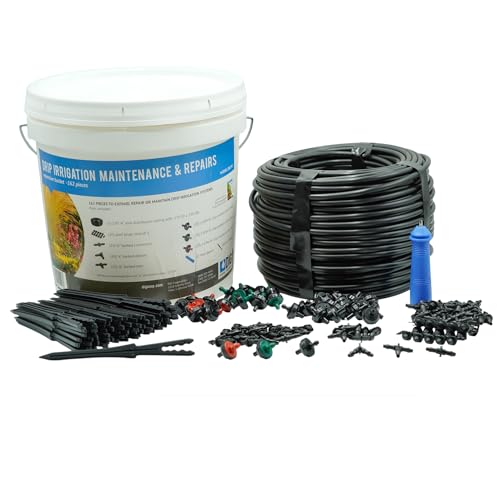
The experience described here is anchored on the widely used mid-tier emitter-kit style represented by the Rain Bird Drip Irrigation Kit: a mainline-and-emitter layout, a broad family of compatible fittings, and parts that remain obtainable season after season. It is treated prose-only in this review; check the current listing for exact contents, because bundles change. Rival styles from DIG, Orbit and Raindrip appear in the comparison section, each with its own centre of gravity, and the differences between them are differences of emphasis rather than of kind.
Design, Build and Setup
The design language of a home kit is deliberately humble: flexible tubing, push-in or barbed fittings, small moulded emitters, plastic stakes. Nothing is precious, and that is a virtue, because parts live outdoors, get stepped on, and must be cheap to replace without drama. In hand, mainline tubing should feel supple enough to unroll and route without a fight, yet firm enough to hold a punched fitting securely. Emitters should insert with a definite, confidence-giving resistance rather than a vague looseness; a connection you doubt in April is a leak you meet in July. The punch tool, a trivial piece of plastic in most kits, quietly decides how pleasant setup feels, because every emitter begins as a hole you make, and clean holes seal while ragged holes weep.
The head assembly is where build quality matters most, because it works at the boundary between household pressure and drip’s gentle world. Described qualitatively, drip components want regulated, modest pressure, not the full force of the tap, so a regulator suited to drip belongs in the stack alongside a filter you can actually open and clean without tools you do not own, and a backflow preventer that keeps irrigation water from ever moving toward the household supply. Threads at the tap should mate cleanly with your outdoor faucet; a connection that needs heroic tape and hope will weep all season. If a timer is included or added, its interface matters more than its feature list: a dial you understand beats a menu you avoid, because the best programme is the one you will actually set and adjust.
Setup, done properly, follows a rhythm this review recommends without apology. Sketch first, with measurements. Lay mainline dry, in warm sun-softened tubing, along bed edges and paths. Fit the head assembly and flush the open mainline before any emitters go in, so manufacturing grit and your own punching shavings exit harmlessly. Then punch, insert and stake bed by bed, running each section as you finish it, because a leak found with dry shoes is a different experience from a leak found at the end. Expect the first bed to take embarrassingly long and the third to feel fluent; that curve is normal and is the entire learning cost of the format. The full sequence, with troubleshooting, is laid out in how to install a drip irrigation kit.
Performance in Real Use
Vegetable Beds Through a Season
Vegetables are where the format earns its reputation. Rows of thirsty crops on a dawn programme develop the even, unstressed look that hand watering rarely sustains past June, because the system does not have busy weeks. Moisture consistency shows up in fewer split fruits, steadier leafy growth and transplants that settle instead of sulking. The review’s honest caveats live here too: beds are disturbed, crops rotate, and the layout needs plugs and spare emitters as planting changes; a punched hole in the wrong place is forever, so measure before punching becomes the bed’s motto. Gardeners who grow in raised beds will find the dedicated comparison in the best drip irrigation system for raised beds useful alongside this section.
Borders, Shrubs and Young Trees
In ornamental planting, performance is quieter but just as real. Emitters at shrubs deliver deep, slow soaks that encourage roots downward, and a young tree on a widening ring of emitters establishes with a confidence that hose watering, with its run-off and impatience, seldom matches. The format asks for an annual review here: root zones grow, yesterday’s perfect emitter position becomes today’s inner circle, and adding or moving delivery points is the price of a maturing garden. Hedges and dense borders may honestly prefer drip line, and a good kit ecosystem lets you hybridise rather than forcing the emitter format everywhere.
Containers and the Patio Test
Containers are the format’s sternest test and, passed, its most loved application. Feeder lines to pots work beautifully when emitters are staked so they cannot lift out, and when pots get a programme shaped to pots: shorter and more frequent than beds. Failures here are almost never about water delivery and almost always about physics and cats: lines pulled from rims, a small shaded pot drowning on a large sunny pot’s schedule. Grouped by size and sun, on their own zone, containers become the part of the garden owners show visitors, because the daily can round has simply vanished from life.
Hot Spells, Holidays and Absence
The performance test that converts sceptics is absence. A tested programme running at dawn through a hot week you spend elsewhere returns you to a garden that looks cared for, and that reliability changes behaviour: you plant thirstier, more rewarding things, you take the holiday in the hot month without negotiation, and the neighbour favour shrinks to checking that nothing looks odd. The qualifier, tested, matters. Programmes should be observed through a few normal weeks before they are trusted through an absence, and a rain delay or a thoughtful neighbour remains a good second layer. Within those limits, absence performance is the format’s headline act.
Strengths and Trade-Offs
Strengths
- Even, root-level moisture that stays consistent because the timer, not your diary, is in charge.
- Water placed precisely, with foliage, paths and the spaces between plants kept comparatively dry.
- A modular parts system that expands bed by bed and repairs in minutes with cheap spares.
Trade-Offs
- A real setup learning curve, and permanent consequences for careless hole punching.
- Clogging and small leaks as a background maintenance theme, managed by filtration and walk-throughs, never fully abolished.
- Seasonal obligations, including programme adjustments and, in freezing climates, draining and storing parts.
Notice the shape of that ledger: the strengths are about water and plants, delivered daily; the trade-offs are about the owner’s attention, demanded occasionally. Reviews that hide either side mislead. In this reviewer’s judgement the exchange favours the owner in any garden beyond a token size, but it is an exchange, and pretending the right-hand column does not exist is how kits end up in sheds.
How It Compares
| Kit style | Centre of gravity | Choose it if |
|---|---|---|
| Rain Bird Drip Irrigation Kit | Generalist emitter layouts, wide parts family | You want one system to grow with a mixed garden |
| DIG Drip Irrigation Kit | Component-rich tuning, raised beds | You enjoy refining zones and grids |
| Orbit Drip Irrigation Kit | Familiar timers and manifolds, simple starts | You want the gentlest first-system experience |
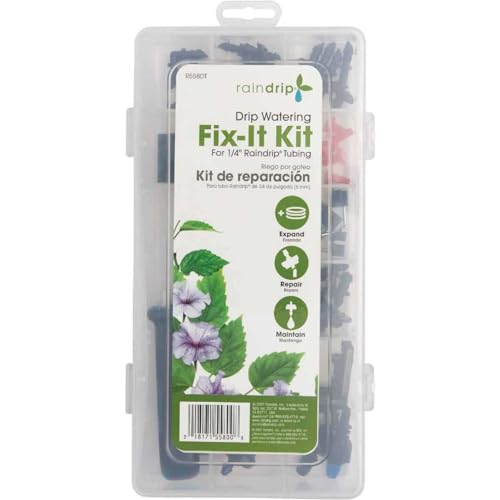
| Raindrip Drip Irrigation Kit | Containers and small spaces | Your garden is mostly pots and planters |

DIG as the Tuner’s Alternative
Choose the DIG style if your pleasure is in refinement: contained beds, grid logic, emitters adjusted plant by plant as the season teaches you things. It asks a little more engagement and returns a little more control, and for raised-bed growers that trade is usually welcome.

Orbit as the Beginner’s Alternative
Choose the Orbit style if the head assembly and timer are where your confidence needs help, because familiar watering hardware and straightforward manifolds lower the first-weekend barrier. The layout underneath is the same subject, gentler introduced.
Raindrip as the Container Specialist
Choose the Raindrip style if pots are the garden. Its feeder-line focus serves planters, baskets and balcony groups better than a bed-first kit adapted downward, and container gardeners feel the difference daily.
Who Should Buy It, Who Should Skip It
Buy the emitter-kit format if you have beds, rows, borders or a serious collection of pots; if your watering currently depends on memory and goodwill; if you travel in the growing season; or if erratic moisture has cost you crops and plants you cared about. The pre-purchase checklist is short: measured routes, counted plants, a head assembly with backflow prevention, filtration and pressure regulation suited to drip, zones that respect differences in thirst, and a timer interface you find obvious. If fertiliser injection is part of your ambition, add proper equipment and backflow protection to that list and treat the instructions as law, remembering that irrigation water is never drinking water.
Skip it, for now, if your garden is a few pots you love watering by hand, if you are mid-redesign with beds still moving, if your tenancy is short, or if you know the filter would never be cleaned and the programme never adjusted; a neglected system performs worse than an honest hose. The middle path, one zone on the thirstiest bed for a season, remains this review’s favourite advice for the undecided, and how to choose a drip irrigation kit walks through that first-zone decision in detail. Shoppers comparing formats across the whole category should also read the drip irrigation kit buying guide.
Setup, Care and Maintenance Essentials
Care, in this review’s experience, compresses into four habits. First, walk the system while it runs, weekly or fortnightly, trowel in hand, checking soil in root zones rather than admiring surface wetness. Second, respect the filter: check and clean it on a rhythm your water source dictates, sooner with stored rainwater, which pairs well with systems described in rain barrels for gardening but carries more sediment. Third, adjust programmes with the season, shortening as growth slows and lengthening as plants size up and days heat up. Fourth, close the season properly where winters freeze: supply off, lines drained as the manual directs, ends opened, timer and delicate head parts stored as advised, so ice has nothing trapped to split. Add a spares box, plugs, emitters, a coupler, the punch, kept with the system, and maintenance stays in the realm of minutes.
Final Verdict
The standard drip kit is not glamorous, and this review has not pretended otherwise. It is a well-judged piece of garden infrastructure whose value compounds quietly: steadier plants, thriftier water, absent mornings forgiven. Its flaws are the flaws of all infrastructure, that it must be installed with thought and maintained with light regularity. For the gardener it suits, and this review has tried to draw that gardener precisely, it earns a strong recommendation, not as a gadget but as the moment a garden’s watering grows up. Buy the format, choose the badge by parts ecosystem and your centre of gravity, install it once with care, and let dawn do the work.
What a Longer, Slower Check Reveals About This Drip Irrigation Kit
A single review session can flatter or condemn a drip irrigation kit unfairly, so this section slows the judgement down and looks at what only repeated, ordinary use tends to reveal. Run the drip irrigation kit through your least favourite version of its job first, not the easiest demonstration: the awkward corner, the rushed weekday timing, the fuller load, the lower light, or whatever condition in your routine makes this category work hardest. If a problem with the drip irrigation kit repeats in the same spot or the same stage of the job, treat the pattern as the clue — patterns point to setup, surface or technique, while random problems point more often to the individual unit. For troubleshooting, start with the boring causes first: power, water, fit, blockage, alignment, a full container, a loose connection or a setting changed by the last person who used the drip irrigation kit, because boring causes account for most apparent failures.
When something about the drip irrigation kit disappoints, change one variable at a time — position, setting, timing, load, accessory or technique — and give the change a fair trial, because changing three things at once leaves you with a better or worse result and no idea why. Measure before anything else, and measure the drip irrigation kit in its working state rather than its packed or folded state, because handles extend, lids open, cords trail, doors swing and users stand somewhere, and all of that belongs in the measurement. Photograph your setup once the drip irrigation kit is working well — the position, settings, arrangement or layout you settled on — so that after a move, a deep clean or a seasonal break you can recreate the arrangement that worked instead of rediscovering it. Keep the packaging of a larger drip irrigation kit until those first ordinary tests are done, flattened if space is tight, because re-boxing an awkward shape from scratch is the hidden difficulty inside many otherwise straightforward returns.
Decide in advance what good enough looks like for the job the drip irrigation kit does in your home, because chasing a flawless result usually costs more time than the flaw itself, and most households are happier with a reliable ninety percent they actually repeat. Keep a short note of what you adjusted on the drip irrigation kit during the first month, even just a line on your phone, since those notes turn vague impressions into a setup you can repeat, share or troubleshoot months later. Finally, remember that the best drip irrigation kit for your home is the one whose size, habits and upkeep disappear into your routine, leaving only the result behind — a cleaner surface, a better-lit seat, a tidier shelf, an easier job — week after ordinary week. If you want a concrete listing check, take a name already shortlisted in this guide, such as Rain Bird Drip Irrigation Kit, DIG Drip Irrigation Kit and Orbit Drip Irrigation Kit, and verify that exact drip irrigation kit listing against the measurements and compatibility questions above, field by field, rather than trusting the headline description alone.
Think about who else will use the drip irrigation kit and what they will do differently: shorter reach, less patience, stronger habits, no interest in the manual, and a tendency to leave things wherever they were last set down. Read the manual’s warnings page for the drip irrigation kit even if you read nothing else, because that page is a compressed list of every way the product has ever been misused, and it tells you exactly which of your own habits needs adjusting. Check the floor, wall, ground or surface the drip irrigation kit will meet, since level, texture, moisture and finish decide more about everyday performance in garden & lawn settings than most shoppers expect when they are comparing listings on a screen. Plan the storage home for the drip irrigation kit before it arrives, naming the exact cupboard, corner, shelf, hook or stretch of floor, because a product without a home migrates around the house and slowly becomes the clutter it was bought to reduce.
Finish the longer check by looking at wear points rather than features: the hinge, seam, edge, wheel, latch, surface or joint on a drip irrigation kit that moves, flexes or gets handled most is where its second year is decided, whatever its first week felt like. Use a simple decision checklist at the end: the drip irrigation kit fits the measured space, suits the real frequency of the job, matches the household’s cleaning temperament, has obtainable parts, and has a named storage home — five yeses make a confident order. Consider the cleaning rhythm honestly: a drip irrigation kit that needs attention after every use suits a household that enjoys small rituals, and frustrates a household that wants to finish a job and walk away, so match the upkeep to the temperament, not the intention. A well-judged drip irrigation kit explains itself to that second person without a lecture, with controls, grips, openings or adjustments that make sense on contact, and that intuitiveness is worth recording because guests, partners and teenagers will all test it.
Look at replacement parts and consumables for the drip irrigation kit while you are still comparing, confirming that the pieces most likely to wear, clog, tear, fade or get lost can actually be obtained without replacing the whole product. Watch for edge cases in your own home: the pet that investigates everything, the child who treats every new object as furniture, the guest who uses force where you use familiarity, and the weather, light or season that changes how a drip irrigation kit behaves.
Frequently Asked Questions
How long does a first installation really take?
For a typical pair of beds and a container group, plan on a focused half day the first time, including sketching, laying mainline, fitting the head assembly, punching and staking emitters, and testing each section as you go. The first bed is slow because every action is new; later beds move quickly. Rushing is the false economy here, because punched holes and buried mistakes are the parts you cannot undo.
What breaks or fails most often in real use?
In this review’s experience, the league table is mundane: clogged emitters where filtration was skipped or neglected, fittings that weep because holes were punched ragged or lines were forced, feeder lines lifting out of pots, and programmes drifting out of date as plants grow. Almost everything on that list is prevented or fixed in minutes with the habits and spares described above, which is why maintenance attitude predicts satisfaction better than brand does.
Can a beginner succeed with a drip kit?
Yes, and beginners are the format’s main audience. Success looks like this: measure before buying, follow the head assembly order in the manual, flush before fitting emitters, test section by section, and observe soil rather than trusting the timer blindly for the first weeks. A beginner who does those things will outperform an experienced gardener who improvises, because drip rewards procedure more than intuition at the start.
Does drip work on sloping ground?
It can work well, because slow delivery soaks in rather than running downhill, but slopes make evenness harder as pressure varies along rising lines. Pressure-compensating emitters, sensible run lengths and zoning by elevation all help. Judge by soil checks at the top and bottom of the slope after a run, and adjust placement and zoning before blaming the format.
Is it safe to leave a drip system running while away?
A tested system on a timer is designed for exactly that, and it is one of the format’s headline benefits. Test through several normal weeks first, confirm fittings hold and programmes suit the plants, consider a rain delay, and ask a neighbour to glance occasionally. Also confirm the head assembly, including backflow prevention, is correctly installed, and never use the lines for drinking water during or after the trip.
When should I choose drip line or a soaker instead?
Choose built-in drip line when planting is dense and uniform, such as grid-planted raised beds, hedges and ground cover, where fixed emitter spacing matches how plants actually fill the space. Choose soaker-style line for long, established rows of shrubs where gentle, general wetting matters more than per-plant precision. Many mature gardens run hybrids, and a good parts ecosystem makes mixing formats by bed entirely normal.
Related reading: the best garden hoses for the jobs drip does not cover, garden hose nozzles worth keeping and lawn sprinklers and water timers for open ground cover the rest of the watering shed, while drip irrigation kit reviews across formats gathers the wider verdicts this single-format review sits inside.
A Season With the System: A Review Diary
Installation weekend. The honest first impression is that there are more small parts than expected, and that the sketch you almost did not bother with becomes the most valuable object in the garden. Tubing warmed in the sun behaves; tubing fought cold from the box does not. The first emitter takes absurd concentration, the tenth takes seconds. The moment the first section runs and every dripper beads and falls in rhythm, the project changes character from plumbing to promise.
The first month. This is the adjustment season in miniature. Two emitters were placed for the plants as planted, not as growing, and need companions. One programme is generous to the point of sogginess at a shaded end. A feeder line exits a pot twice before its stake is repositioned properly. None of this is failure; it is calibration, and it is why this review distrusts any verdict, glowing or damning, written after a single weekend. The system’s real personality only emerges under repetition.
High summer. Now the format does its quiet magic. Beds hold an evenness that neighbours notice. The dawn programme runs while the house sleeps. A hot week away is survived without a single casualty, and the gardener returns to growth rather than triage. The walk-through has become a pleasure rather than a chore: coffee, trowel, a check of the filter, a plug where the lettuce finished, an extra emitter where the squash has ambitions. Maintenance measured across the whole summer amounts to less time than two weekends of hose watering used to take.
Autumn and close-down. Programmes shorten as growth slows. The audit happens naturally while harvesting: this emitter sulked, that fitting wept, this line should move when the bed is replanted. Notes are made, because memory lies by spring. Where winters freeze, the close-down ritual, supply off, drain, open ends, timer indoors, takes less than an hour and feels like putting the garden properly to bed. The system that emerges next spring is not new, but it is known, and known infrastructure is the kind that lasts a decade.
Water, Pressure and Filtration: The Invisible Performance
Three invisible factors decide whether a kit performs as reviewed or disappoints, and none of them is the badge on the box. The first is pressure behaviour. Drip is a low-pressure world; household supply is not, which is why regulation suited to drip sits in the head assembly, described in this review only qualitatively because correct settings come from your manual and your components, not from a review. Unregulated force finds the weakest fitting, distorts emitter behaviour along a line, and turns a gentle system temperamental. The second factor is filtration. Every emitter is a small opening asking water to be clean; the filter is the bouncer, and systems whose owners clean it on rhythm simply clog less, full stop. The third factor is source. Mains water, well water and stored rainwater behave differently in sediment and biological load, and a kit reviewed as flawless on clean mains water can struggle on a silty barrel supply until filtration and flushing catch up. Judge any review, including this one, against your own water.
There is a fourth invisible factor: layout discipline. Long, heroic single runs ask physics for favours; sensible zoning, with mainline routes that keep delivery points within comfortable reach of the supply, asks for none. When a system underperforms at its far end, the fix is usually architectural, a zone split, a shorter run, a mainline rerouted, rather than a different brand of emitter. This is encouraging news disguised as criticism: the largest performance gains available to most owners are free, sitting in the layout they already own.
Accessibility and the Gardener’s Body
A review should say plainly that drip can be kind to gardeners’ bodies. Watering by hose and can is bending, lifting, dragging and standing; a mature drip system replaces most of it with walking, looking and the occasional kneel to adjust an emitter. For gardeners with limited strength, mobility or energy, that substitution can be the difference between keeping a garden and giving one up, and it deserves more prominence than gadget features usually get. The counterpoints are honest ones: installation weekend is physical, small fittings ask dexterity of fingers, and troubleshooting a low emitter is ground-level work. Gardeners for whom those are barriers can still win with drip by planning raised, reachable layouts, choosing larger, easier fittings where the ecosystem offers them, and accepting help for the one heavy weekend in exchange for seasons of light ones.
How This Review Judges Value
Value in a drip kit is not a price tag, and this review deliberately discusses it in tiers and seasons rather than figures. An entry-tier kit that teaches you drip on one bed and survives to be absorbed into a larger system has delivered value out of proportion to its tier. A mid-tier kit that runs a whole garden for years, repaired from a cheap spares box, is the format’s sweet spot for most households. Premium spending only earns its keep when it buys things with daily consequences: a timer you genuinely enjoy programming, pressure-compensating emitters your slope actually needs, or a controller whose remote features match a life that travels. Spending beyond that buys ornament, not watering. The reverse judgement also holds: saving a tier by omitting filtration or regulation is the classic false economy of this category, because the costs reappear as clogs, leaks and a gardener’s lost faith. Buy the middle, protect the head assembly, keep spares, and let seasons, not shopping, do the upgrading.
The last word belongs to the garden itself. After a season on a well-run kit, plants carry the review’s conclusion in their growth: even, unhurried, unbothered by your diary. If that is the garden you want, the format reviewed here is the most reliable route to it that home watering offers, and the remaining articles in this cluster exist to help you choose it, install it and judge it for your own ground.
Field Notes: Troubleshooting Like an Owner, Not a Victim
Ownership confidence comes from a small diagnostic order, and this review passes it on as it was learned. When a plant looks dry, resist changing the programme; programmes are global, and the problem is usually local. First, look at the emitter while the system runs: is it dripping, and is the drip landing where roots are, not on a mulch slope that carries it away? Second, follow the feeder line with your fingers: kinks hide under mulch and behind pot rims. Third, check the emitter’s seat in the mainline; a weeping ring around its base means water is escaping sideways instead of delivering. Fourth, if several plants on one branch are dry, move upstream: a closed valve, a crushed mainline, a fitting that parted under mulch. Fifth, if the whole system seems weak, go to the head: filter first, always, then the timer’s programme, then the tap itself. That five-step order solves the overwhelming majority of drip mysteries in minutes, and knowing it transforms the ownership experience from anxiety to competence.
Leaks deserve their own note because they panic new owners disproportionately. A weeping fitting is not a flood and not a verdict; it is a connection asking to be reseated, a hole asking for a plug and a fresh punch nearby, or a short section asking to be cut out and coupled. Keep the spares box stocked and leaks become gardening, not plumbing emergencies. The only leak that matters is the ignored one, quietly soaking a path-side patch for a month while the bed’s far end thirsts, which is why the walk-through habit appears in every section of this review like a refrain. It is the refrain because it is the truth of the format: attention, lightly and regularly applied, is the entire maintenance secret.
Emitter Types Under Review
Since emitters are where water meets plant, their small differences deserve review attention. Standard button drippers are the workhorses: simple, cheap, replaceable, and perfectly behaved on short, level runs. Pressure-compensating drippers cost more within their tier and earn it where levels change or runs lengthen, holding their delivery steadier when pressure varies along the line. Adjustable emitters and small bubblers serve shrubs, trees and large pots, trading pinpoint precision for a wetted area that matches a bigger root zone. Inline drip line, reviewed earlier as a format, also deserves its place here as an emitter strategy: unbeatable for uniform beds, inflexible where spacing varies. Micro-sprays are the honest exception in a drip kit, behaving like tiny sprinklers for seedlings and ground cover that want a moist surface; use them knowingly, in small areas, accepting their evaporation as the price of coverage. A mature system usually owns several of these types at once, deployed by plant rather than by fashion, and the kit ecosystems that make mixing easy are the ones this review rates most highly for real gardens.
What Owners Say After the Second Season
Second-season owners talk about drip differently from first-season owners, and the shift in language is itself a review finding. First-season talk is about parts: emitters, fittings, programmes, the leak behind the beans. Second-season talk is about the garden: which bed they extended, which crop they dared to grow because watering was solved, the holiday they took in the hottest month without a watering rota pinned to the fridge. The system has moved from project to infrastructure, from something maintained to something relied upon, and reliance is the highest grade home equipment can earn. Owners also become quietly evangelical in a specific, useful way: not about brands, but about habits. They lend punch tools and preach filtration. They sketch their layouts for neighbours. The format, it turns out, creates gardeners who plan, and planning gardeners grow better gardens with or without tubing.
The dissenting second-season voices are equally instructive, because their complaints cluster tightly. The garden changed faster than the layout could, usually through a redesign or a move toward constantly shifting containers. The water source fought the system, usually sediment that filtration discipline never quite tamed. Or the household’s one gardener became two people’s bottleneck, with knowledge never written down and a system nobody else dared touch. Each complaint is real, each was foreseeable from the fit discussion at this review’s opening, and none is an indictment of the format inside its borders. A review’s job is to draw those borders brightly, and this one rests its case there: inside them, the standard drip kit is among the most satisfying purchases a gardener can make; outside them, no kit at any tier will save you from a mismatch between method and garden.
Safety in Ownership: A Reviewer’s Non-Negotiables
Because a review recommends living with a system, it must be explicit about the safety habits that come with it. The head assembly’s backflow preventer is not an accessory; it is the guarantee that water from your irrigation lines cannot be drawn back toward the water your household drinks, and it must be present and correctly installed. If you ever inject fertiliser or any treatment through the system, that guarantee becomes critical rather than routine: use only equipment made for injection, follow its instructions and local rules precisely, and keep the protected assembly in place. Treat every emitter and line as non-potable, always: no drinking, no filling bottles, no letting children treat a dripper as a tap, because water that has sat in warm tubing among soil-level fittings is for plants, full stop. At season’s end in cold climates, drain and store as directed so frozen water does not split parts and turn spring into a leak hunt. None of this is burdensome, all of it is part of the product as reviewed, and a kit or an installer that waves these points away is telling you something important about themselves.
With those habits in place, the ownership picture completes itself. The system reviewed here asks for a careful weekend, a walking habit, a clean filter, a drained winter and a protected tap. In exchange it offers the rarest thing in gardening equipment: a benefit you collect every day, in plant health and in time, for years. Reviews exist to say whether a promise survives contact with real life. This one’s promise does, for the gardens it was designed to serve.
Comparing the Ownership Experience With Sprinklers and Hand Watering
Numbers cannot capture the lived difference between watering methods, so this review closes its evidence with texture. A sprinkler evening is a performance: arcs of water catching light, children and dogs negotiating the spray, and a gardener moving the device between zones while mentally rationing time. It is charming and it is labour, and the beds at the edge of the arc know exactly how rationed they were. A hose evening is a slow walk with intent, plant by plant, generous to the favourites and hasty with the rest, ending when patience ends rather than when watering is done. A drip evening, by contrast, is mostly not a watering evening at all. The programme ran at dawn. The gardener walks with a trowel out of habit, checks two root zones, moves one emitter six inches, and spends the saved hour doing the parts of gardening that watering used to crowd out: tying, thinning, harvesting, sitting.
That texture is why owners defend the format out of proportion to its humble materials. The kit is plastic and patience; the result is a different relationship with the garden’s most repetitive chore. Gardeners who love the chore itself, and some honestly do, lose something real when it is automated, and this review counts that as a legitimate reason to skip the whole category. Gardeners who experience watering as a tax on the gardening they love will find the tax abolished, and for them the review’s verdict needs no further decoration.
Before You Buy: The Review in One Checklist
Distilled, this review asks you to confirm five things. Your garden sits inside the format’s borders: defined beds, rows, borders or pots, watered often enough to matter, stable enough to hold a layout for seasons. Your water and tap can host a proper head assembly, with backflow prevention, filtration and regulation suited to drip, installed in the maker’s order. Your temperament accepts a careful installation weekend and light, regular walk-throughs as the price of admission. Your layout plan zones plants by thirst and keeps runs sensible rather than heroic. And your household understands the two standing rules, that irrigation water is never drinking water, and that fertiliser, if it ever goes through the lines, does so only with proper equipment and protection. Five yeses make the purchase reviewed here a confident one. Any no is not a dead end; it is a pointer to the format, zone size or timing that would turn it into a yes, which is what the rest of this cluster, from choosing to installing, exists to help you find.
A Note on Evidence: How This Review Was Built
This review’s judgements rest on the accumulated, ordinary evidence of home drip ownership rather than on any single test garden: the patterns that recur across seasons, climates and kit styles whenever gardeners describe living with these systems. That is why its language is full of tendencies and trade-offs rather than laboratory claims, and why it keeps returning to the variables that actually move outcomes: layout, filtration, zoning, programming and the owner’s walking habit. Readers should apply the same standard to any review, including this one. Ask what garden produced the verdict, what water fed it, what the owner did when something clogged or leaked, and how long the system had been running when the verdict formed. A review that survives those questions is evidence. A review that dissolves under them was advertising wearing a lab coat, and the garden you plant on its advice will find out the difference at the height of summer, which is the most expensive classroom of all. This one has tried to be the former kind throughout, and where it has generalised, it has generalised from the habits of owners whose systems lasted, which is the only generalisation drip irrigation honestly supports.
Ratings Without Numbers: This Review’s Scorecard in Words
Since this review refuses borrowed stars, it owes you its judgements in sentences. For watering quality, the standard emitter kit earns the strongest language in this piece: once calibrated, its delivery is as even and as gentle as home watering gets. For ease of installation, it earns a fair, middling verdict: a learnable half day, neither the plug-and-play of a sprinkler nor the trench-and-glue of hard-plumbed systems. For reliability, it earns a conditional commendation: excellent where filtration and walk-throughs are habits, ordinary where they are not, and the condition is the review. For value, it earns the tier argument made earlier: entry versions teach cheaply, mid versions serve longest, and premium versions must name their need. For owner satisfaction over years, it earns the finding that prompted this entire cluster of articles: few garden purchases convert so completely from project to infrastructure, and few are defended by their owners, in the third season, with such uncomplicated loyalty. Those five sentences are the review. Everything else has been evidence.
Who This Review Recommends Against, One Last Time
A trustworthy review ends by restating its exclusions as clearly as its recommendation, so here they are without varnish. Do not buy this format if your watering is genuinely occasional, because infrastructure that stands idle is clutter with a filter. Do not buy it if your garden plan for next year is unrecognisable from this year’s, because the layout you install is a bet on stability and you would be betting against yourself. Do not buy it if the household cannot agree on the standing safety rules, protected tap, no drinking from lines, fertiliser discipline, because those are not features to negotiate but the conditions of ownership. And do not buy it as a gift for a gardener whose garden you have not measured; buy it with them, or buy them the promise of an installation weekend instead. Everyone outside those exclusions, with beds or pots that drink regularly and a willingness to install carefully once, has this review’s unqualified encouragement. The water is gentle, the mornings are yours, and the garden, within a month, will be making the argument better than this page can.