Disclosure: As an Amazon Associate, dailyhomedecorating.com earns from qualifying purchases. Links on this page are affiliate links; they cost you nothing extra. Prices and availability change often, so check the current Amazon listing before you buy.
Reading drip irrigation kit pros and cons honestly matters because drip is one of those garden purchases that people either swear by for a decade or abandon in a single frustrating season, and the difference is rarely luck. The advantages are real: water placed at roots, mornings given back, beds watered evenly while you are away. The disadvantages are just as real: small parts, clogged emitters, a layout to plan, and a system to drain before winter. This article lays both sides out in full, with the context that decides which side wins in your garden, so you can buy with open eyes or decide, equally happily, that a hose and a watering can suit you better.
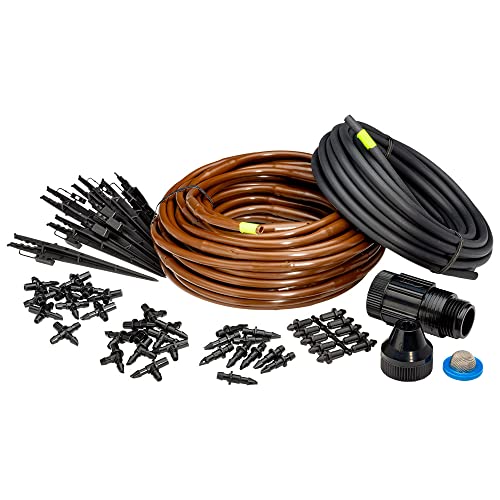
Quick Verdict and Key Takeaways
Best for: Gardeners with beds, borders or pots they water repeatedly through the season, who value consistency and are willing to spend one careful session planning and installing. Not suited for: Anyone watering only a few plants occasionally, anyone who hates small fittings and seasonal maintenance, and gardens that change layout completely every few weeks. Drip rewards routine and punishes improvisation, so your temperament is part of the verdict.
- The biggest pro is precision: water goes to root zones, slowly, with far less lost to paths, wind and evaporation than overhead watering.
- The biggest con is complexity at small scale: dozens of little parts stand between the tap and a watered plant, and each is a place to leak, clog or pull out.
- Automation is the force multiplier. On a timer, the pros compound daily; watered by memory and a tap, drip loses much of its edge.
- Most cons shrink with good habits: filtration, a proper head assembly, secure stakes, seasonal flushing and honest zoning.
- Safety is non-negotiable either way: use a backflow preventer, especially with any fertiliser injection, and never treat irrigation water as drinking water.
In this guide
Drip Irrigation Kit Pros and Cons: The Pros in Detail
Pro: Water Lands Where Roots Can Use It
The central advantage is placement. A sprinkler or hose rose wets everything in its arc: leaves, paths, mulch surface, the gaps between plants. A drip emitter wets a defined patch of soil at the base of a plant, and the moisture spreads through the root zone from there. Less water is lost to wind drift on a breezy morning, less evaporates from hot paving, and less runs off compacted paths. Over a season of regular watering, that placement adds up to a genuinely thriftier way of keeping beds moist, and it shows in the garden as well as the water bill: soil moisture stays steadier, and plants are not cycling between a soaking and a drought depending on when you last had time with the hose.
Pro: Leaves Stay Drier and Beds Stay Tidier
Many common garden frustrations love wet foliage and splashing soil. Watering at the base keeps leaves drier and reduces the soil splash that moves spores and dirt onto lower leaves and ripening fruit. Tomatoes, squash and many ornamentals are simply happier when their foliage is not drenched daily. There is a tidiness dividend too: no muddy spray across paths, no puddles at the gate, and mulch stays where you put it instead of being blasted into drifts by a hose. Gardeners who mulch heavily, as most drip users learn to, get a double benefit, because the mulch shades the wetted soil and slows evaporation from the surface the emitters just moistened.
Pro: It Gives You Your Mornings Back
Hand watering is pleasant in May and a burden in a hot, busy August. A drip system on a timer waters at dawn whether you are up, away, or simply occupied, and it waters for the set duration rather than for as long as your patience lasts at each plant. Consistency is the hidden crop here: even, regular moisture helps prevent the feast-and-famine cycle behind problems like cracked fruit and stressed transplants. For households that travel, the difference between a neighbour doing you a vague favour and a timer following a programme you set and tested is the difference between anxiety and a holiday. Even without a timer, turning one tap and walking the beds with a coffee while the system works is a calmer ritual than dragging a hose.
Pro: It Scales From One Bed to a Whole Garden
A kit is a starting point, not a ceiling. Because systems are built from tubing, fittings and emitters in families, you can begin with the vegetable beds, add the fruit bushes next season, and branch to the patio pots the season after, all from the same tap assembly and the same box of spares. Plants’ needs can be tuned individually: an extra emitter for the thirsty shrub, a plug where a crop finished, a new branch for a new bed. That modularity also makes repairs cheap and local; a damaged section is cut out and coupled, not replaced wholesale. Few garden systems age this gracefully, and it is a major reason experienced gardeners defend drip despite its fiddly reputation.
Pro: Gentle Watering Suits Slopes, Pots and Young Plants
Slow delivery soaks in instead of running off, which matters on slopes, in light soils that shed a sudden deluge, and around seedlings whose roots a hose stream can wash bare. Containers benefit in a particular way: a pot watered from above can channel water down the inside edge and out of the drainage hole while the centre stays dry, whereas an emitter sitting on the compost surface, running slowly, gives moisture time to spread. Young trees and shrubs establish well on drip because you can deliver a deep, slow soak right where the root ball is, then widen the emitter ring as the plant grows outward.
Pro: Weeds Get Less Help From You
Watering only the soil around your plants means the soil between them stays drier, and dry surface soil germinates fewer weed seeds. Anyone who has watered a whole bed with a sprinkler and watched a green haze of weeds appear in the paths a week later understands this pro viscerally. Drip does not eliminate weeding, and perennial weeds with deep roots will not care, but it stops you from actively irrigating your weeds, which is more than most watering methods can claim. Combined with mulch over the lines, the effect is a bed that stays cleaner with less effort through the busiest part of the season.
The Cons in Detail
Con: Planning and Installation Take Real Effort
There is no honest way around the first con: drip asks for thought before it gives anything back. You must measure routes, count plants, choose emitter styles, assemble a head stack at the tap, punch holes in the right places, and test the result. A sprinkler asks you to screw it onto a hose. For a gardener who enjoys projects, this is a satisfying Saturday; for a gardener who wanted the watering problem solved by lunchtime, it is the moment the box goes back on the shelf. The effort is front-loaded and the system does repay it, but anyone selling you drip as effortless is setting you up to join the abandoned-kit statistics.
Con: Emitters Clog, and Finding the Clog Takes Detective Work
Small openings and garden water are natural enemies. Grit, algae, mineral scale and the odd insect can all narrow or block an emitter, and the symptom is usually a plant quietly suffering while its neighbours thrive. Filtration prevents most of it, and flushing helps, but prevention is not perfection: you still need a habit of walking the system while it runs and noticing who is dry. The detective work is simple but real, checking the emitter, then the feeder line, then the fitting, then the filter, and gardeners who never look at their system between spring and autumn will eventually be surprised by it.
Con: Many Small Parts Mean Many Small Failures
A drip layout may contain scores of connections, and each connection is a potential weep, pop-off or slow leak. Tubing gets nicked by spades, kinked at corners, chewed occasionally, and lifted out of pots by cats, children and careless feet. None of these failures is expensive; all of them are mildly annoying, and they recur at the rate your garden life disturbs the system. The counterweight is that repairs are quick if you keep spares, but the honest con stands: compared with a hose, which has essentially two ends and a nozzle, drip has far more that can go slightly wrong.
Con: It Is Not Drinking Water, and Fertiliser Raises the Stakes
Water sits in warm tubing, passes soil-adjacent fittings, and may carry fertiliser if you inject feed, so irrigation lines must never be treated as a drink source, for people or for filling bottles, however convenient the tap-like fittings look. More seriously, any connection between an irrigation system and the household supply needs backflow protection so that water, especially water carrying fertiliser or other chemigation, cannot be drawn back into the home’s drinking supply. This is not a reason to avoid drip; it is a reason to install the head assembly properly and follow injector instructions exactly, and it is a genuine con for anyone who wanted zero safety thinking with their watering.
Con: Winter and Seasons Demand Attention
In freezing climates, water left sitting in lines can freeze and split tubing and fittings, so the system needs an end-of-season routine: supply off, lines drained as the manual directs, ends opened, timers and delicate parts stored as advised. It is not heavy work, but it is work a hose in a shed does not ask for, and skipping it can convert a cheap kit into a spring replacement exercise. Even in mild climates, seasons change plant size, day length and demand, so programmes set in spring drift out of date. Drip is a system you manage lightly all year, not an appliance you forget.
Con: The Layout Can Fight a Changing Garden
Drip loves stable planting and repetitive beds; it is less delighted by gardeners who redesign borders monthly, grow mostly in shifting pots that move around the patio, or practise a very fluid style of planting. Lines can be replugged and rerouted, and modularity softens this con considerably, but constant change turns drip’s strength, a fixed, tuned layout, into recurring labour. Similarly, a garden watered only rarely, such as established drought-tolerant planting, gains little: the system’s whole value is frequent, precise delivery, and if your plants honestly need water a handful of times a year, the infrastructure is overkill.
Con: Output Is Invisible, So Mistakes Hide
With a sprinkler you can see the water. With drip, delivery happens quietly under mulch, and both under-watering and a hidden leak can run for weeks before a plant or a damp patch tells the story. A line split under mulch may soak one spot heroically while the end of the bed dries. This invisibility is manageable with walk-throughs and soil checks, but it is a real behavioural demand: drip suits gardeners who look at their soil, and it can quietly fail gardeners who assume that because the timer clicked, the garden drank.
What the Trade-Offs Mean for You
For the vegetable grower, the pros dominate: regular, even moisture is close to a yield input, beds are stable enough to reward a fixed layout, and the time saving lands exactly in the busiest season. The cons to manage are clogging, because vegetable beds are replanted and disturbed often, and layout changes between crops, which plugs and spare emitters handle well. For the container gardener, the pro is freedom from daily pot rounds and the con is fiddliness at small scale; the verdict is strongly positive if pots are numerous and mostly stay put, and weaker if your patio is three pots you enjoy watering by hand as an evening ritual.
For the ornamental gardener with established shrubs and perennials, the balance is subtler. Established planting drinks less often, so drip’s precision matters less than its convenience during dry spells and holidays. A simpler layout, perhaps drip line through borders and bubblers at key shrubs, often captures most of the pro with least con. For the gardener on sloped or difficult ground, gentle delivery and pressure-aware emitter choices make the pros unusually strong. And for anyone whose water comes from a barrel or well, filtration discipline decides whether the clogging con stays theoretical or becomes your summer hobby. If you are weighing a purchase now, our drip irrigation kit buying guide turns these trade-offs into a contents checklist, while our drip irrigation kit review looks at the experience of living with a system.
How Drip Compares With the Alternatives
| Method | Strengths | Weaknesses | Suits |
|---|---|---|---|
| Drip kit | Precise, gentle, automatable, water-thrifty | Planning, small parts, seasonal care | Beds, rows, pots, regular watering |
| Sprinkler | Fast coverage of open areas, simple | Wets foliage and paths, wind drift, uneven | Lawns, large open ground |
| Hose and nozzle | Total control, no installation, flexible | Your time, every time; inconsistent depth | Small gardens, spot jobs, washing down |
| Watering can | Gentlest, exact for seedlings and pots | Slowest, heavy, daily effort at scale | Seedlings, a few pots, delicate plants |
The table hides a truth worth stating: most good gardens end up using several methods. Drip handles the routine base load of beds and pots, a hose handles the new planting that is not on the system yet and the jobs drip cannot do, and a can handles seedlings and the sick plant that needs individual attention. Choosing drip is therefore not a rejection of the alternatives; it is a decision about which method should carry the daily weight. Compare hose tools in the best garden hose nozzles and cans in the best watering cans if your garden’s honest answer is a hybrid, and see the best drip irrigation system for raised beds for the raised-bed version of this comparison.
How to Buy Smart If the Pros Win
Buy against the cons, not just for the pros. Against clogging, insist on a real filter in the head assembly and easy access to it. Against leaks and pop-offs, choose a coherent fitting family with obtainable spares, and add stakes and plugs to the order. Against winter damage, prefer parts you can drain and store sensibly, and keep the manual. Against layout regret, measure first and buy headroom in tubing and emitters rather than exotic extras. Against invisibility, choose a timer and layout that encourage walk-throughs: zones you can run individually make inspection natural. The picks below are prose-only examples of kit styles that embody those defences; check current listings for exact contents before buying.

Rain Bird Drip Irrigation Kit
A mid-tier, expandable style of kit whose broad parts ecosystem directly answers the small-parts con: when something breaks or a bed changes, compatible replacements are easy to find. Best for: Mixed beds you expect to grow. Not suited for: Gardeners wanting the absolute simplest possible layout.

DIG Drip Irrigation Kit
A component-rich, mid-tier style suited to raised beds and tinkerers, where the ability to reconfigure answers the changing-garden con better than most. Best for: Grid beds and seasonal replanting. Not suited for: Anyone who dislikes managing small parts.
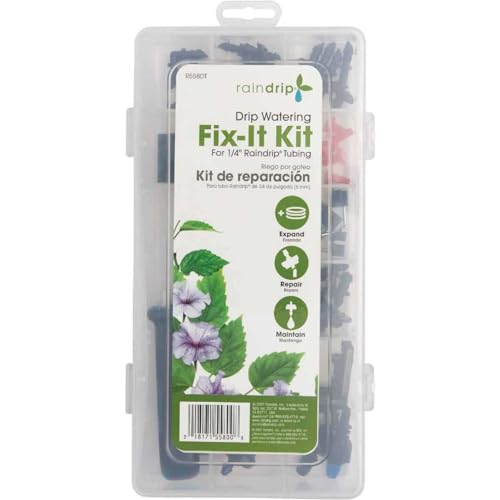
Raindrip Drip Irrigation Kit
An entry-to-mid tier container-focused style that tackles the patio version of the problem, where the pro of daily freedom is strongest. Best for: Pots, planters and balconies. Not suited for: Long in-ground runs.

Orbit Drip Irrigation Kit
An approachable, entry-to-mid tier style for a first system, where familiar timers and manifolds reduce the planning con for beginners. Best for: Straightforward first layouts near the tap. Not suited for: Ambitious multi-zone gardens planned at full scale immediately.
Setup and Care That Reduce the Cons
Nearly every con in this article has a habit that shrinks it. Flush lines before final fitting to clear shavings and grit, and you prevent the first wave of clogs. Warm stiff tubing in the sun before laying it, and installation stops fighting you. Secure every line that crosses a pot rim or a path edge, and the pull-out con fades. Label zones at the manifold and keep a one-page map in the shed, and troubleshooting becomes a two-minute job instead of an archaeological dig. Walk the system while it runs every week or two, trowel in hand, checking soil rather than trusting the timer’s click, and the invisibility con loses its power.
Seasonally, clean the filter before it forces the issue, flush end lines, replace the emitters that sulked all summer, and adjust programmes as plant size and weather change. Before freezing weather, drain and store as your manual directs so winter does not split what summer built. If you ever add fertiliser injection, do it only with proper equipment and backflow protection, and keep the rule that irrigation water is never drinking water absolute for the whole household. None of this is heroic; it is the light, regular attention that separates the ten-year drip devotees from the one-season abandoners. The full sequence is in how to install a drip irrigation kit, and the value framing is in is a drip irrigation kit worth it.
Bottom Line
Weighed fairly, the pros of a drip kit are about the garden: healthier moisture patterns, thriftier water use, drier foliage, fewer weeds encouraged, and time returned to the gardener every single day of the season. The cons are about the gardener: planning effort, small-part management, seasonal routines and a little safety discipline at the tap. That asymmetry explains the pattern everyone observes. Gardeners who accept the second list almost always collect the first list for years; gardeners who wanted the first list without the second usually end up back at the hose, not because drip failed but because the bargain was never really accepted. Read the lists again with your own garden in mind, count your beds and pots honestly, and decide which gardener you are. If the pros win, buy against the cons as described above and install carefully once. If the cons win, there is no shame in a good hose, a good can, and a garden small enough to love watering by hand.
Living With the Trade-Offs: A Week-by-Week Reality Check for a Drip Irrigation Kit
A pros-and-cons list is a snapshot, but living with a drip irrigation kit is a film, and this section follows the trade-offs across the first weeks when novelty fades and routine takes over. In week one, most owners notice the headline advantage of a drip irrigation kit constantly, because every use is a comparison with whatever came before it, while the headline drawback feels minor simply because it is still new. Check the floor, wall, ground or surface the drip irrigation kit will meet, since level, texture, moisture and finish decide more about everyday performance in garden & lawn settings than most shoppers expect when they are comparing listings on a screen. That reversal is the real test for a drip irrigation kit: ask whether the drawback you are weighing is a one-time cost, paid at setup or purchase, or a per-use cost that you will pay hundreds of times a year without ever getting used to it.
Measure before anything else, and measure the drip irrigation kit in its working state rather than its packed or folded state, because handles extend, lids open, cords trail, doors swing and users stand somewhere, and all of that belongs in the measurement. Photograph your setup once the drip irrigation kit is working well — the position, settings, arrangement or layout you settled on — so that after a move, a deep clean or a seasonal break you can recreate the arrangement that worked instead of rediscovering it. By week three the pattern usually reverses: the advantage becomes invisible background, part of how the room or routine simply works now, while any recurring friction with the drip irrigation kit — a awkward reach, a fiddly clean, a storage squeeze — is the thing you feel on every single use. Decide in advance what good enough looks like for the job the drip irrigation kit does in your home, because chasing a flawless result usually costs more time than the flaw itself, and most households are happier with a reliable ninety percent they actually repeat.
Look at replacement parts and consumables for the drip irrigation kit while you are still comparing, confirming that the pieces most likely to wear, clog, tear, fade or get lost can actually be obtained without replacing the whole product. Think about who else will use the drip irrigation kit and what they will do differently: shorter reach, less patience, stronger habits, no interest in the manual, and a tendency to leave things wherever they were last set down. Plan the storage home for the drip irrigation kit before it arrives, naming the exact cupboard, corner, shelf, hook or stretch of floor, because a product without a home migrates around the house and slowly becomes the clutter it was bought to reduce. Keep a short note of what you adjusted on the drip irrigation kit during the first month, even just a line on your phone, since those notes turn vague impressions into a setup you can repeat, share or troubleshoot months later.
For troubleshooting, start with the boring causes first: power, water, fit, blockage, alignment, a full container, a loose connection or a setting changed by the last person who used the drip irrigation kit, because boring causes account for most apparent failures. Seasonal thinking helps more than expected: a drip irrigation kit bought in one season will meet different light, humidity, mud, heat, guests and routines in another, so judge its size, storage and upkeep against the hardest season it will face. When something about the drip irrigation kit disappoints, change one variable at a time — position, setting, timing, load, accessory or technique — and give the change a fair trial, because changing three things at once leaves you with a better or worse result and no idea why. Test the drip irrigation kit in the first week under deliberately ordinary conditions rather than saving it for a special occasion, so that any problem surfaces while returning, exchanging or adjusting your setup is still simple.
Per-use costs forgive nothing, so weigh any drawback that appears every time you reach for the drip irrigation kit — noise, wobble, awkward controls, slow setup, difficult emptying or cleaning — far more heavily than its position on a balanced list suggests. If you already own a drip irrigation kit, run the same week-by-week check backwards and note which drawback you have genuinely stopped noticing and which one still earns a small sigh, because that sigh is the most honest review you will ever read. Share the checklist result with anyone who shares the space, since a drip irrigation kit chosen by one person and resented by another rarely survives, however sensible the purchase looked on paper. Consider the cleaning rhythm honestly: a drip irrigation kit that needs attention after every use suits a household that enjoys small rituals, and frustrates a household that wants to finish a job and walk away, so match the upkeep to the temperament, not the intention.
Frequently Asked Questions
What is the single biggest advantage of a drip kit?
Consistent, precise moisture at the roots without your daily labour, especially once a timer is involved. Placement saves water and keeps foliage drier, but it is the repeatability, the same right amount on the mornings you are busy or away, that gardeners cite after a season. Beds stop cycling between drought and deluge, and plants that dislike erratic moisture, from tomatoes to new perennials, show the difference clearly.
What is the most common reason drip systems get abandoned?
Neglect of the small disciplines: filters never cleaned, programmes never adjusted, a few clogged emitters ignored until plants suffer, and no spares in the shed when a fitting breaks. The system then seems unreliable, when in fact it was unmaintained. A weekly walk-through while it runs and a seasonal flush prevent most abandonments, which is why this article treats habits as part of the product.
Is drip really more water-efficient than a sprinkler?
For beds, borders and pots, generally yes, because water is delivered slowly at the soil near roots instead of being thrown through the air onto everything in range. Wind drift, evaporation from hot surfaces and run-off all shrink. The saving depends on scheduling, though: a drip system left running far too long can waste water as surely as any sprinkler, just more quietly, which is why soil checks matter.
Can drip water a lawn or large open area?
It is not the natural tool for that job. Drip excels where plants are in defined places: rows, beds, borders, pots and around shrubs and trees. Open turf wants even coverage across a surface, which sprinklers do better; see lawn sprinklers and water timers for that side of the shed. Many gardens sensibly run drip for beds and a sprinkler for grass, each where it belongs.
Is it safe to run fertiliser through a drip system?
Only with equipment designed for injection and proper backflow protection installed, following the maker’s instructions and any local rules exactly, because fertilised water must never be able to move back toward the household supply. Irrigation water should never be drunk, with or without fertiliser. If that discipline sounds like more than you want, feed plants by hand and keep the drip system for plain water; the pros survive perfectly well without injection.
How much maintenance does a drip kit really need?
Less than its reputation suggests, but more than zero: periodic filter checks, a walk-through while it runs every week or two in season, programme adjustments as weather and plants change, an end-of-season flush, and draining plus storage steps before freezing weather where winters bite. Spread out, it is minutes at a time. Bunched into neglect and then repair, it feels like a burden, which is a choice rather than a property of the kit.
For related reading on shaping the beds a system will serve, see the best raised garden beds, and for collecting the water itself, rain barrels for gardening. Gardeners comparing hand tools for the jobs around a system will also find garden sprayers for targeted treatments useful, because drip deliberately keeps foliage dry and any foliar care therefore happens separately, by hand, on your schedule rather than the timer’s.
Pros and Cons by Plant Type
Vegetables
Vegetables are drip’s strongest case. Most are thirsty, closely spaced, grown in defined rows or grids, and sensitive to the erratic moisture that hand watering delivers in a busy week. Fruiting crops reward steadiness, leafy crops reward foliage that stays dry, and root crops reward deep, gentle soaking that does not crust the surface. The cons show up as layout churn, because beds are dug, cleared and replanted, and as clogging risk from disturbed soil and frequent changes. Plugs, spare emitters and a layout that treats each bed as a replaceable branch turn those cons into routine. On balance, if you grow vegetables seriously, drip is close to essential equipment rather than a luxury.
Shrubs, Trees and Hedges
Established woody plants drink deeply and infrequently, which drip handles beautifully with bubblers or rings of emitters that expand as the plant grows. The pro is establishment: young trees and shrubs watered deeply and slowly in their first seasons build the root systems that carry them through later droughts with little help. The con is that a fixed emitter position can become wrong as the root zone widens, so this planting needs an annual glance and occasional additions. Hedges suit drip line laid along the row, giving each plant an equal share without wetting the whole strip of soil and the weeds waiting in it.
Flowers and Ornamental Borders
Mixed borders sit between the vegetable case and the shrub case. Dense, stable perennial planting loves drip line or well-placed emitters; foliage stays drier, blooms are not battered by spray, and the border can be watered at dawn without wetting paths before guests arrive. The con is diversity: a border holds the thirsty and the drought-tolerant side by side, and a single zone will flatter one and drown the other. Thoughtful gardeners zone borders by thirst rather than by geography, or accept emitters they can cap individually. Annual bedding that changes completely each season is the weakest fit, workable with drip line if the bed shape is stable even when the plants are not.
Containers, Baskets and Small Spaces
Containers amplify both lists. The pro, freedom from the daily round with a can, grows with every pot you own, and pots on drip are watered more evenly than most hand watering manages. The cons amplify too: small tubing is fiddly, lines lift out, programmes that suit the big pot flood the small one, and a balcony system has nowhere to hide its plumbing. Grouping pots by size and sun, securing every emitter, and giving containers their own schedule converts this from the most frustrating use case to the most liberating one. Gardeners with very few pots should weigh the can honestly; gardeners with a patio full should not hesitate long.
Ownership Over Several Seasons: How the Balance Shifts
In the first month, the cons lead. You are learning the system’s language, finding the leaks your installation left, discovering which emitter you placed badly, and adjusting programmes you set by guesswork. Many abandonments happen here, which is a shame, because the curve bends quickly. By mid-season, the layout is tuned, the walk-through is a pleasant routine, and the pros begin compounding: beds that look calm and even, a garden that survives your week away, mornings that start with coffee and inspection instead of labour. By the second season, you own knowledge no kit can sell: where your soil dries fastest, which bed needs the longer run, which corner clogs and why.
Later seasons test different things. Tubing that has baked in sun and frozen in winter slowly ages; emitters accumulate mineral history; the garden itself grows, and shrubs that were perfectly served begin to shade and crowd the layout they were given. Owners who thrive treat the system as garden infrastructure, like a path or a fence: inspected yearly, repaired promptly, extended when the garden grows. Owners who expected a fit-and-forget appliance drift back toward disappointment. This is why the verdict sections of this article keep returning to temperament. The hardware is honestly roughly equal across decent kits; the ownership habit is the variable, and it is yours to assess before you spend anything.
There is also a quiet social pro and con worth naming. A garden on drip looks after itself well enough that neighbours, house-sitters and family can be away from the mental load of it, which matters in households where one person is the gardener and everyone else is a reluctant deputy. The con is that the system’s knowledge lives in that gardener’s head unless it is written down. A labelled manifold and a one-page map, mentioned earlier and worth repeating, convert private knowledge into household infrastructure. Do that small kindness for your future deputies, and for yourself next spring when the details have faded.
Environmental Pros and Cons, Weighed Plainly
Environmentally, drip’s case rests on using less water to grow the same plants, and on keeping fertiliser and soil where they belong. Because delivery is slow and local, run-off that carries soil and nutrients into paths and drains is reduced, and because foliage and paths stay dry, some gardeners find they intervene less overall. Against that, a drip system is plastic infrastructure: tubing, fittings and emitters that must eventually be replaced piece by piece, and cheap kits that fail early are the worst of both worlds, water saved briefly and plastic discarded quickly. The honest environmental advice mirrors the practical advice: buy a durable, repairable system in a parts family you can maintain for years, repair rather than replace, and let longevity do the green work. A system in its eighth season has a very different footprint story from three bargain kits in the same period.
Water source matters too. Drip pairs beautifully with collected rain, because low-pressure, gentle delivery suits stored water and because every harvested litre is placed precisely. The con is that stored water carries more sediment and biological material than mains water, so the filtration and flushing disciplines stop being advice and become requirements. Gardeners who make that pairing work tend to be the most satisfied drip owners of all, because the whole garden’s water story, collection to root zone, is under their control. Those who connect a barrel casually and skip the filter tend to meet the clogging con in its purest form within a single season.
Financial Pros and Cons Without the Fantasy
Money deserves the same honesty, discussed in tiers rather than invented figures. The con is obvious: a kit, a timer, a proper head assembly and a spares box cost more upfront than a hose you already own, and the garden’s water saving alone may take a long while to repay that in pure cash terms, especially where water is cheap. The pro is subtler: the real returns are plants that do not die of a missed week in August, crops that yield instead of splitting, and hours returned across a whole season, which most gardeners value far above the arithmetic of the water meter. Framed as a pure financial investment, drip is modest. Framed as buying reliability, plant survival and daily time at an entry-to-mid tier cost, it is one of the better bargains in the garden. Gardeners who buy it for the second framing are rarely disappointed; gardeners promised the first framing sometimes are, which is why this article refuses to promise it.
There is also a cost-of-failure asymmetry worth weighing. The downside of trying drip and disliking it is bounded: a modest kit, some weekends, and parts that can serve a smaller area or a single bed even in partial retirement. The downside of not having drip, for a gardener whose plants repeatedly suffer in dry spells or whose holidays keep colliding with heatwaves, recurs every season. When the pros and cons are tallied across years rather than across a single purchase, the balance tilts further toward drip for anyone with a garden of real size. Small gardens, short tenancies and uncertain plans tilt it back, and a renter with one raised bed should feel entirely free to choose the hose and keep life simple.
Who Should Ignore the Cons, and Who Should Heed Them
Ignore the cons, within reason, if you recognise yourself here: you keep a garden you water at least several times a week in season; you enjoy a project with a plan and a map; you travel or have weeks when the garden must fend for itself; you have lost plants to watering gaps before and remember how it felt. For you, the cons are a fair price, mostly paid once, for pros collected daily. Heed the cons if your garden is tiny, your tenancy is short, your planting changes constantly, or your honest self-knowledge says a filter will never be cleaned and a programme never adjusted. For you, drip’s pros are theoretical and its cons are certain, and a simpler method will make you a happier gardener. Neither answer is a failure of character; both are good gardening judgement, which is mostly the art of matching methods to the gardener as much as to the garden.
If you are between those poles, consider the middle path that many satisfied owners took: start with one zone, your most valuable or thirstiest bed, on a modest kit with a proper head assembly and a simple timer. Live with it for a season. The pros will announce themselves in that bed’s condition and in your mornings; the cons will announce themselves in your willingness to maintain it. Expansion from evidence beats both the full-garden leap of faith and the indefinite postponement that leaves every bed on the hose. That, in the end, is the fairest summary of drip irrigation kit pros and cons available: a genuinely better way to water, offered at the price of a little planning and care, to gardeners whose gardens and habits can use it.
A Short Story of Two Identical Kits
Consider two neighbours who buy the same kit on the same weekend for similar gardens. The first sketches the beds, counts plants, installs a filter and regulator, labels the zones, and spends the first month walking the system with a trowel, moving two emitters and shortening one programme. The second unrolls the tubing where it roughly fits, guesses the programme, and thinks about the garden’s other jobs. By August, the first garden is calm: even growth, a gardener who trusts the system enough to go on holiday, and a spares box that has been opened twice for two-minute repairs. The second garden has a dry corner blamed on the kit, a timer running a programme nobody remembers setting, and a hose back in daily use because it feels more reliable.
The kits were identical; the ownership was not. This story is not told to blame the second gardener, whose time and attention are real constraints, but to locate the pros and cons accurately. Most of the cons live in the gap between a system installed and a system installed, tested and lightly managed. Most of the pros live on the far side of that gap. When you read other gardeners’ verdicts on drip, in forums, in reviews, across fences, listen for which side of the gap the speaker lives on, because their experience will predict yours only if your habits match theirs. The hardware question, which kit, is genuinely secondary, and every section of this article has been written in that belief: choose a coherent, repairable kit, then let planning and light attention convert its theoretical advantages into your garden’s daily reality.
That is also why this guide’s final advice is behavioural rather than commercial. Set a calendar nudge for filter checks. Keep the map. Walk the lines. Adjust for the season. Protect the household water with a backflow preventer and never let anyone drink from the lines. Do those small things and the pros-and-cons ledger, in most gardens of any size, settles decisively in drip’s favour, season after season, plant after plant, morning after reclaimed morning.
The Pros and Cons of Waiting
One trade-off rarely listed belongs in this article because so many gardeners live it: the pros and cons of postponing the decision itself. Waiting has genuine pros. A season of hand watering teaches you where the garden is thirsty, where shade actually falls, and which beds you keep versus which you merely inherited, and that knowledge makes any later drip layout dramatically better. Waiting also lets a new garden settle, a new household find its rhythms, and a borderline budget recover. But waiting has cons that compound quietly: another season of losses in the dry weeks, another year in which the garden’s ambitions stay sized to your watering stamina rather than to your imagination, and the subtle entrenchment of a routine you already know is failing, defended only by familiarity. The honest resolution is a deadline rather than a drift: observe deliberately for one season, sketch in hand, noting thirst and shade as evidence for a decision, then decide. Observation with a deadline is research. Observation without one is how gardens spend a decade being watered badly by gardeners who always meant to fix it, and the pros-and-cons ledger of that outcome is the worst in this entire article.
The Small Print of the Ledger
Every ledger has small print, and this one deserves a paragraph before the verdict hardens into habit. The pros assume a system installed whole: filter present, backflow protected, zones honest, timer set. A partial system collects partial pros and full cons, and should be judged as its own, lesser product rather than as evidence about drip itself. The cons assume a garden of ordinary complexity; a truly enormous or intricate garden shifts some cons, especially maintenance and knowledge concentration, from light to genuinely weighty, and at that scale professional design stops being a luxury and becomes the honest comparison. The ledger also assumes water worth saving and time worth reclaiming; a gardener with unlimited water, unlimited mornings and a tiny garden is reading a document written for other people, and should close it with this article’s blessing. Small print is where reviews keep their integrity, and this one is offered in that spirit: the balance struck in these pages is real, but it is struck for the gardens and gardeners it describes, and your first task as a reader is to confirm that one of them is yours.
And one final balancing note, small enough to fit at the foot of the ledger where it belongs. The pros and cons in this article describe a technology, but they are lived as a relationship, and relationships have a property no specification captures: they improve with attention and sour with neglect in ways that feel personal. Gardeners speak of their drip systems the way they speak of old tools, with loyalty earned through seasons of mutual reliability, and they speak of abandoned kits the way they speak of gym memberships, with the embarrassment of a promise made to a self they turned out not to be. Read the lists one last time with that in mind, not asking which column is longer, but which gardener in the columns is recognisably you on an ordinary Tuesday in July. That recognition, more than any tally, is the verdict this article has been circling since its first paragraph, and it rarely lies.


