Disclosure: As an Amazon Associate, dailyhomedecorating.com earns from qualifying purchases. Links on this page are affiliate links; they cost you nothing extra. Prices and availability change often, so check the current Amazon listing before you buy.
Key Takeaways
- A good charcoal grill is a vent system and a fire bowl, judged on control, not gadgets.
- The kettle format remains the benchmark every other style is measured against.
- Build quality — enamel, grate weight, ash handling — predicts years of service.
- Your first upgrades should be a chimney starter and a thermometer, not a bigger grill.
This charcoal grill review takes a clear-eyed look at what a charcoal grill actually delivers in a real garden: how the fire behaves, how the food tastes, where the design frustrates, and who should spend money on one. Rather than reviewing a single box in isolation, we assess the charcoal grill as a category through its benchmark designs, because that is the decision you are really making — which style, built how well, for the way you cook.
Our verdict up front: for households that enjoy cooking, a well-made charcoal grill is the most rewarding cooker you can put on a patio, and the benchmark kettle designs earn that praise on merit. For households that value speed above flavour, the same grill will feel like hard work. Both conclusions run through everything below.
In this guide
What a Charcoal Grill Is and Where It Fits
Strip away the marketing and a charcoal grill is three things: a fireproof bowl, a grate, and vents to govern airflow. Everything else — carts, tables, thermometers, ash systems — is refinement of that triangle. The category spans small portable kettles for two, the classic mid-size kettle that anchors most gardens, insulated kamados that double as smokers and ovens, and barrel designs built for volume. They share one cooking language: arrange the coals, set the vents, and let fire and patience do the work.
Where it fits in a modern kitchen’s life is equally clear. It is not the fastest route to dinner, and it does not pretend to be. It is the cooker for food that benefits from smoke and searing, for weekends and gatherings, and for cooks who like a process they can improve at. Positioned honestly, it complements a kitchen; positioned as a push-button appliance, it disappoints. That framing matters more than any single feature when you read the rest of this review.
Briquettes are the predictable choice for most home cooks. They are uniform in size, light evenly and burn at a steady pace, which makes learning temperature control much easier. Lump charcoal is irregular pieces of real wood; it lights fast, burns hotter and responds quickly when you open the vents, but its size varies from bag to bag, so heat is less even. Many experienced grillers keep both: briquettes for long, steady cooks and lump for quick, hot searing sessions.
How much charcoal you use is a temperature decision, not a habit. A full chimney gives you a hot fire for searing and for cooking larger loads; half a chimney suits a smaller meal or a gentler fire. Spreading the coals in a single even layer gives direct heat across the grate, while banking them to one side creates the two-zone setup that makes charcoal cooking forgiving: a hot zone for searing and a cooler zone where food can finish gently or wait out a flare-up.
Lighting method matters more than most beginners expect. A chimney starter lights charcoal evenly with a little newspaper or a fire-starter cube, with no lighter fluid and no chemical taste on the food. Electric starters work too, if you have an outdoor outlet nearby. Whatever you use, wait until the coals are mostly covered in grey ash before you spread them and start cooking; black, smoking coals are still heating up and will give you uneven heat and harsh smoke on the first food that goes on.
Store charcoal dry. A bag left open in a damp garage absorbs moisture, lights reluctantly and burns unevenly, and clumped, crumbling briquettes are usually a sign the bag has taken on water. Keep the bag sealed in a dry spot, ideally in a lidded container if your storage area is humid. Dry charcoal lights faster, smells cleaner and behaves predictably — and predictable fuel is half of temperature control learned before you even open a vent.
Design, Build and Setup
Benchmark designs share recognisable quality markers. The bowl and lid are enamelled steel or cast aluminium with a finish that feels glassy rather than painted; the lid seats cleanly without rocking; vents move with a positive, adjustable feel and stay where you set them; and the cooking grate has real weight, with hinges or cut-outs for adding charcoal during long cooks. Handles stay cool enough to use, legs and wheels feel planted rather than wobbly, and the whole assembly goes together in under an hour with sensible fixings.
Weber Original Kettle — Best Overall
The Weber Original Kettle is the classic kettle that most home grillers learn on. Treat this as a starting point rather than a verdict: what matters is how its size, vent layout and cooking style line up with the way you actually cook outdoors. If it earns a place on your shortlist, check price on Amazon and compare the current listing details against the checklist in this guide before you decide.
Best for: households whose cooking matches the role described above. Not suited for: anyone whose space, fuel preference or typical crowd size points to a different style entirely.

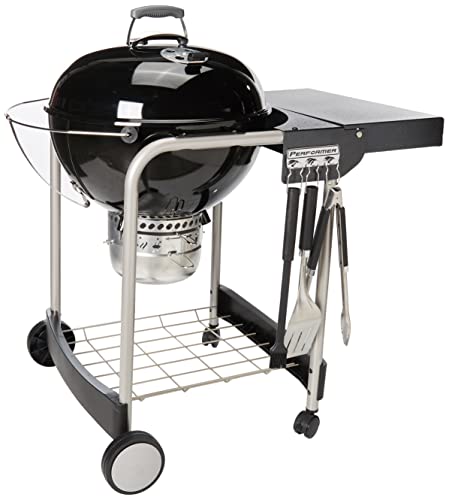
Weber Performer — Best for Frequent Cooks
The Weber Performer is a kettle on a cart with a work table for people who grill often. Treat this as a starting point rather than a verdict: what matters is how its size, vent layout and cooking style line up with the way you actually cook outdoors. If it earns a place on your shortlist, check price on Amazon and compare the current listing details against the checklist in this guide before you decide.
Best for: households whose cooking matches the role described above. Not suited for: anyone whose space, fuel preference or typical crowd size points to a different style entirely.

Char-Griller Akorn Kamado — Best Kamado Style
The Char-Griller Akorn Kamado is an insulated kamado-style cooker for low-and-slow and high-heat searing. Treat this as a starting point rather than a verdict: what matters is how its size, vent layout and cooking style line up with the way you actually cook outdoors. If it earns a place on your shortlist, check price on Amazon and compare the current listing details against the checklist in this guide before you decide.
Best for: households whose cooking matches the role described above. Not suited for: anyone whose space, fuel preference or typical crowd size points to a different style entirely.

Dyna-Glo — Best for Crowds
The Dyna-Glo is a larger barrel-style option for households that cook for a crowd. Treat this as a starting point rather than a verdict: what matters is how its size, vent layout and cooking style line up with the way you actually cook outdoors. If it earns a place on your shortlist, check price on Amazon and compare the current listing details against the checklist in this guide before you decide.
Best for: households whose cooking matches the role described above. Not suited for: anyone whose space, fuel preference or typical crowd size points to a different style entirely.
Setup out of the box is straightforward on mainstream models: legs, bowl, ash system, grate, lid. The meaningful setup happens on your first cook — a dry run with no food, burning a load of charcoal to cure the interior, learn how the vents respond and find out how long your grill takes to settle at cooking temperature. Treat that first burn as calibration, not wasted fuel, and every cook after it gets easier to predict.
Performance in Real Use
Searing and Direct Grilling
Burgers and steaks are where charcoal earns its reputation. A hot, direct fire gives a deep sear and the faint smokiness that gas rarely matches, and the two-zone layout lets you move a thick steak to the cooler side to finish without burning the crust. Pat the surface of the meat dry before it goes on, season confidently, and leave it alone long enough for the crust to form and release from the grate instead of tearing when you try to turn it too early.
Roasting and Indirect Cooking
Chicken is the cook that teaches patience. Skin-on pieces flare as fat drips, thighs benefit from time on the cooler side so the fat renders and the skin crisps without scorching, and whole birds cook beautifully with indirect heat and the lid on, like a smoky outdoor oven. Cook chicken by temperature, not by colour or by the clock, and rest it before cutting so the juices settle back through the meat instead of running across the board.
Low-and-Slow Smoking
Low-and-slow barbecue — ribs, pork shoulder, brisket-style cuts — is entirely possible on a standard charcoal grill with indirect heat, a drip pan and a steady small fire. It asks more of you than a dedicated smoker does: you will add fuel, watch vents and accept some temperature drift. But the results convince many people that one versatile grill covers both weeknight searing and weekend projects, which is exactly the question a buyer should settle before paying for a second, specialised cooker.
Vegetables, Seafood and Everything Else
Vegetables are not an afterthought on a charcoal grill; they are some of the best reasons to light one. Corn in the husk, peppers blistered whole, thick slices of courgette and aubergine, and halved onions all take on char and sweetness that a frying pan cannot give them. A perforated grill pan or a simple tray keeps smaller pieces from falling through the grate, and a brush of oil plus salt before cooking matters more than any complicated marinade afterwards.
Seafood rewards a hot grate and a short cook. Firm fish, prawns on skewers and scallops sear quickly and pick up smoke in the few minutes they need. Oil the food rather than the grate, make sure the grate is genuinely hot and clean before anything goes on, and use a wide spatula rather than tongs for delicate fillets. The margin between perfectly cooked and dry is small, so have plates, sauces and sides ready before the seafood ever touches the grill.
Vents are your thermostat. The bottom vents feed the fire oxygen and have the biggest effect on temperature; the lid vent draws heat and smoke across the food and fine-tunes things. Small adjustments matter: open the bottom vents a little more to raise the heat, close them partway to calm it down, and give every change ten to fifteen minutes to settle before you adjust again. Chasing the temperature with constant fiddling is the fastest way to overshoot in both directions.
For low-and-slow cooking, you are asking a small fire to burn for hours, so start with fewer lit coals than you think you need and let the vents do the work. A snake or ring of unlit briquettes with a few lit ones at one end burns slowly along its length and is the classic kettle method for ribs and shoulders. Keep the lid on and resist peeking: every lift dumps the heat you spent twenty minutes building and adds time to the cook.
Wind changes everything and fools beginners into blaming the grill. A breeze forces extra air through the vents and can push a settled fire much hotter, while also blowing heat away from the lid. Position the grill so the wind is not blasting straight into the bottom vents, expect to run the vents a little more closed on windy days, and judge the fire by how the food is cooking and by a thermometer, not by how the coals look through the grate.
A simple thermometer habit separates guesswork from control. The dial in many lids sits well above the grate and reads the air near the top of the grill, not the temperature your food experiences. A probe at grate level, or an instant-read thermometer used when you check the food, tells the truth. You do not need a complicated setup — you need one reading you trust, taken in the same place each time, so your adjustments mean something from one cook to the next.
Strengths and Trade-Offs
Strengths:
- Flavour and searing heat that define outdoor cooking at its best.
- Genuine versatility — grill, roast and smoke from one fire.
- Mechanical simplicity: little to break, everything replaceable.
Trade-offs:
- Lighting and cooling time attached to every session.
- Ash, soot and grease to manage as a routine.
- Temperature control that you perform, rather than a dial performing it.
How It Compares
Within the category, the kettle is the all-rounder, the kamado the insulated specialist for smoking and all-weather cooking, the barrel the capacity play, and the portable the travel option. Across fuels, the detailed head-to-head with pellets is in our charcoal grill vs pellet grill comparison; against gas, charcoal trades speed for flavour in a bargain most enthusiasts accept happily. The models below are the reference points we would cross-check first in each role.
PK360 — Best Premium Control
The PK360 is a cast-aluminum grill and smoker built for precise two-zone control. Treat this as a starting point rather than a verdict: what matters is how its size, vent layout and cooking style line up with the way you actually cook outdoors. If it earns a place on your shortlist, check price on Amazon and compare the current listing details against the checklist in this guide before you decide.
Best for: households whose cooking matches the role described above. Not suited for: anyone whose space, fuel preference or typical crowd size points to a different style entirely.
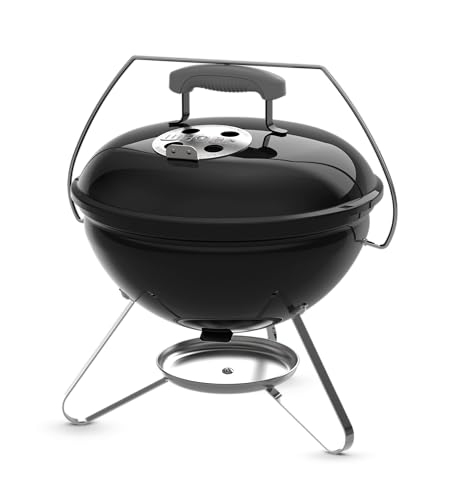
Weber Smokey Joe — Best Portable
The Weber Smokey Joe is a compact portable kettle for balconies, picnics and tailgates. Treat this as a starting point rather than a verdict: what matters is how its size, vent layout and cooking style line up with the way you actually cook outdoors. If it earns a place on your shortlist, check price on Amazon and compare the current listing details against the checklist in this guide before you decide.
Best for: households whose cooking matches the role described above. Not suited for: anyone whose space, fuel preference or typical crowd size points to a different style entirely.
Who Should Buy It and Who Should Skip It
Buy a charcoal grill if you cook outdoors at least a couple of times a month in season, enjoy being involved in the cooking, and care about how grilled food tastes more than how fast it appears. Skip it — honestly — if weeknight speed is everything, if your space prohibits open charcoal, or if you know the ash routine will quietly stop you using it. The full decision framework is in our charcoal grill buying guide, and the value question is tackled head-on in is a charcoal grill worth it.
Setup, Care and Maintenance Essentials
Clean the grate while it is still warm after cooking, when residue brushes off easily, rather than the next day when it has hardened. A good brush or grate scraper used for a minute at the end of each cook prevents the build-up that makes food stick and taste stale. Before the next cook, preheat the grate fully and brush again; heat does most of the sanitising work, and a clean, hot, lightly oiled grate is the simplest non-stick system there is.
Ash management is routine maintenance, not an occasional chore. Ash left sitting in the bowl absorbs moisture from the air, forms a corrosive paste against the metal and chokes airflow on your next cook. Once ash is completely cold, empty it regularly, wipe the bowl, and check that the ash catcher and vent mechanism still move freely. Grills with one-touch sweeping systems make this a ten-second job, which is exactly why that feature is worth having.
Protect the outside and the grill lasts years longer. A fitted cover keeps rain off the lid, vents and moving parts, and storing the grill under some shelter — a garage corner or under an eave, only once fully cold — slows rust further. Once or twice a season, check bolts, handles, wheels and the grate itself for rust or wear, tighten what has loosened, and touch up small chips in enamel before they spread. Charcoal grills have few parts, and nearly all of them are replaceable.
Know when a part is done. A cooking grate eaten through by rust, a vent blade bent so it no longer seals, or legs that wobble despite tightening are safety and performance problems, not character. Replacement grates, handles and ash catchers are widely available for mainstream models, which is a quiet advantage of buying an established design: the grill you maintain properly can stay in service far longer than a cheaper, unsupported one that you have to replace whole.
Hot ash is the most underestimated hazard in charcoal cooking. Coals can stay hot enough to start a fire long after the food is done — buried in ash, they hold heat for a day or more. Let ash cool fully in the closed grill, then transfer it to a metal container with a lid, set that container on a non-combustible surface away from the house, and wait before bagging anything for the bin. Never dump ash into a plastic bin, a cardboard box or a pile of garden waste.
Keep a simple safety kit within reach before you light anything: long-handled tongs, heat-resistant gloves, a spray bottle of water for minor flare-ups on the food (not for a grease fire), and a clear path between the grill and the house. If fat flares, the first move is usually to close the lid and vents briefly to starve the flame, or to move the food to the cooler zone — not to throw water into a hot grill, which flashes to steam and can scatter ash.
Keep the supporting kit simple and good: the tongs, spatula and brush gathered in our guide to building a simple, useful grill tool set, and hand protection from our roundup of heat-resistant gloves for handling hot grates and chimneys, cover ninety percent of what you will ever reach for. Add a chimney starter and a thermometer and the setup is complete; everything beyond that is enthusiasm, which is allowed, but should come after the basics.
Charcoal Grill Review: Final Verdict
Judged as a category, the charcoal grill remains the benchmark for flavour-led outdoor cooking: imperfect in convenience, unmatched in results, and honest in its simplicity. Buy a well-built mainstream design, learn its vents over a few cooks, and it will repay you for years. Our detailed comparisons in the charcoal grill reviews companion and the step-by-step how to choose a charcoal grill guide will help you land on the exact model.
Long-Term Testing Notes: Living With the Grill
Extended use teaches what a first weekend cannot. The first lesson is how a grill settles: enamel cures, the interior seasons with a dark patina, vents loosen into their true feel, and the fire becomes predictable in a way no new grill ever is. By the tenth cook, an owner knows how far to open the bottom vent for a gentle roast on their grill — not from a manual, but from a small library of remembered fires. This is the stage reviews written at unboxing cannot describe, and it is where good designs pull away from mediocre ones, because predictability is a property of tight lids, honest vents and a bowl that holds its shape.
The second lesson is about weather. A settled charcoal grill shrugs off ordinary breezes once its owner learns to shield the intake side and run the vents a touch more closed, and rain matters mostly at lighting time. Insulated designs barely notice the seasons at all. What extended use does expose is corrosion discipline: grills whose owners empty ash and use a cover look and cook years younger than identical grills left full and open to the sky. In long-term testing, maintenance explains more variance in condition than brand does — a humbling finding for anyone hoping the badge alone would do the work.
The third lesson concerns the grate, the part your food actually meets. Heavy grates hold a sear through the moment cold food lands on them; light grates dip and recover, and the difference shows on every steak. Hinged sections, which seem like a convenience on paper, prove their worth on every long cook, because adding charcoal without moving the food is the difference between a calm session and a juggling act. If extended testing changes one buying habit, it is this: shoppers stop asking about burners and extras, and start asking about grate weight, vent feel and the ash system — the three things they will touch at every single cook.
Cooking Diary: Four Sessions That Tell the Story
Session one — burgers for six. A full chimney, coals spread wide, patties seared hard and finished on the cooler edge. The grill’s party trick is on display: fierce, even heat and room to shuffle food as fat flares. Total involvement: high at the start, low once the food is on. This is the cook that sells charcoal grills, and any competent design passes it.
Session two — a whole chicken, indirect. Coals banked either side, drip pan in the middle, lid down for the duration. The test here is stability: does the temperature hold in a sensible band with only one or two vent nudges? Benchmark kettles and kamados pass comfortably; leaky lids and sloppy vents announce themselves through constant adjustment. The reward — crisp skin, smoky meat, juices in the pan — is the cook that converts sceptics.
Session three — ribs, low and slow. A small fire, patience, and refuelling through the hinged grate. Charcoal shows its honest trade: superb flavour, real attention. The grill that holds a low temperature without drama earns genuine respect here, and the cook learns more about their vents in one afternoon than in a month of burgers. Dedicated smokers do this job more easily; that a standard grill does it well at all is the point.
Session four — vegetables and flatbreads, midweek. Half a chimney, a fast fire, courgettes, peppers, corn and breads kissed by heat. This is the session that decides whether a grill becomes a habit: if lighting a small fire on a weekday feels easy, the grill gets used fifty times a year instead of fifteen, and every other judgement about value follows from that number. Designs with quick ash systems and easy lighting win this session, quietly and decisively.
Ownership Costs and Parts, Checked Honestly
Across years of ownership the spending pattern is plain: charcoal itself, steadily; starters; a grate when the original thins; perhaps a handle, a wheel or an ash part. There is no annual service, no control board, no burner set quietly rusting toward a large bill. Mainstream models keep parts available for a long time, and the parts are priced like hardware, not like luxury spares. Set against powered alternatives, the charcoal grill’s lifetime bill is both lower and — just as valuable — more predictable, arriving in small amounts you can see coming. For a household deciding where the outdoor-cooking money goes, that predictability is a feature in its own right, and a major reason the category keeps its loyal following.
What We Would Buy With Our Own Money
Review conclusions should be accountable, so here is ours plainly. For most households, the mid-size kettle from an established maker is where our own money goes: it is the design with the fewest weaknesses, the longest parts support and the widest accessory world, and it cooks everything in this review’s diary without drama. We would pair it with a chimney, a thermometer and a cover before spending a penny more on the grill itself, because those three items improve every single cook, while the next tier of grill improves only some. That ordering — grill, then fire tools, then protection — is the closest thing this category has to a universal recommendation.
The exceptions are equally plain. The committed smoker, cooking low and slow twice a month or more, should skip the kettle stage and buy the insulated kamado their cooking actually wants; they will save the cost of the intermediate step and gain the fuel efficiency their habit rewards. The entertainer feeding a dozen monthly should look hard at cart and barrel formats, where grate area and work surface stop being luxuries. The traveller and the balcony cook should buy the best portable they can, without apology, because a small grill used weekly beats a large one used twice. Every one of these verdicts follows from the same principle that ran through the whole review: the grill is a tool for a life, and it should be bought for the life that is actually lived.
Reliability, Warranties and the Ten-Year View
Charcoal grills fail slowly and visibly, which makes reliability easy to judge if you know where to look. Enamel chips at impact points first; check the rim of the lid and the bowl’s edge on any grill you inspect. Vent blades bend or seize when ash is left to cement them; a grill whose vents still sweep cleanly after years is a grill that was emptied, and its owner is telling you the truth about its life. Grates thin from the underside. Handles char or crack near their mounts. None of these is fatal, all are replaceable on mainstream designs, and together they form a checklist that takes two minutes to run on any grill, new purchase or old friend.
Warranties in this category reward the same reading. A long warranty on the bowl and lid signals a maker confident in its enamel and steel; short cover on grates and small parts is normal and acceptable, because those are consumables by design. What matters more than the printed term is the lived reality behind it: are parts listed, priced and shipped for models a decade old? For the established designs in this review, they are — and that, more than any clause, is what a ten-year view of ownership actually rests on. Buy the grill whose maker still answers for its grandparents, and yours will be cooking when trendier appliances are landfill.
Temperature Stability, Tested in Plain Language
Stability is the quality owners feel most and specifications describe least, so let us describe it as it is experienced. A stable grill, lit and set, holds its cooking temperature in a band you can ignore for twenty minutes at a time. You baste, you turn, you fetch things from the kitchen, and the fire waits for you like a good dog. An unstable grill wanders: the temperature creeps up while your back is turned, or sags the moment the lid has been lifted twice, and cooking on it feels like supervising rather than creating. The causes are unglamorous — lid fit, vent precision, bowl mass, insulation — and they are exactly the build qualities this review has weighted throughout, because in daily use they are the product.
The practical test, once you own any grill, takes one afternoon: light a measured fire, set the vents to a moderate opening, and log a thermometer reading every fifteen minutes for two hours without touching anything. The shape of that line is your grill’s character. A gentle, slow drift is normal and easily corrected. A sawtooth of climbs and collapses means air is entering somewhere it should not — a lid that rocks, a vent that does not seal, a door that gaps. Many such faults are fixable with adjustment or a replacement part, which is why the test is worth doing in the first season, while warranties and returns are still your friends.
Why does stability deserve this much ink in a review? Because it decides which foods you attempt. Cooks attempt ambitious dishes on equipment they trust and retreat to sausages on equipment they do not. The grill that holds its temperature turns its owner into someone who smokes ribs, roasts whole birds and bakes bread outdoors — not through talent, but through the quiet confidence that the fire will behave. When we rank build quality above features in every verdict in this review, this is the reason, stated in full.
Sound, Smell and the Sensory Report
A review should also report what it is like to be near the thing. A charcoal grill announces itself: the crackle of the chimney, the tick of expanding metal, the particular smell of clean charcoal smoke that tells a street it is the weekend. Most people find all of this pleasant to the point of nostalgia. The honest debits are the start-up plume, which is smoky for a few minutes whichever fuel you choose, and the lingering smell on the cook’s clothes, which some count as perfume and others as laundry. Neither is a reason to choose or reject the category, but both are part of the true product, and a review that omits them has described a brochure instead of a grill.
The Reviewer’s Notebook: Small Things That Turned Out to Matter
Long reviews are built from small observations, and the ones that survive editing are the ones owners confirm. The lid handle that stays genuinely cool is not a detail; it is the difference between cooking bare-handed with confidence and performing every check in gloves. The thermometer port, the tool hooks that actually hold tools, the shelf that takes a tray at the moment both hands are full — each reads as trivia in a feature list and as design intelligence in the third month of use. Conversely, the small failures compound fastest: the ash catcher that needs two hands and a knee, the vent that must be kicked the last centimetre, the wheel that finds every crack in the patio. When you handle a grill before buying, handle these things, because your hands are conducting the only review that will still matter in a year.
One more notebook entry, because it surprised us: the grill’s sound. A well-made kettle is nearly silent in use — a faint tick as the metal warms, the food’s own sizzle, nothing else. Thin, loose grills drum, rattle and buzz in wind, and the difference registers subconsciously as quality or its absence every single time you stand beside it. It will never appear in a specification, and no salesperson will mention it, but put a hand on the lid of a grill you are considering and feel whether it sits like a door or like a tin. Your hands already know the verdict this whole review has been arguing toward: substance you can feel is substance that lasts, in cooking, in cleaning and in the quiet satisfaction of owning a tool that was made properly.
Scores, Summarised Without Numbers on a Pedestal
Reviews traditionally end in scores, and this one will translate its verdicts into words instead, because words carry the conditions that numbers hide. For flavour: outstanding, the best available to a home cook at any tier. For searing: outstanding, limited only by how much charcoal you are willing to light. For convenience: fair, honestly earned — the fire asks for your time and repays it, but it does ask. For build and longevity, in the mainstream designs assessed here: excellent, with the caveat that the owner holds up the maintenance side of the bargain. For value: excellent at the modest tiers, good at the premium ones, poor only at the flimsy bottom of the market where thin steel makes every other quality worse. Read as a whole, that is the profile of a mature, well-understood product category — one whose weaknesses are known, priced and, for the right household, entirely worth accepting.
So the notebook closes where the review began: with a category that has earned its place the slow way, by cooking well for generations of households that were free to choose anything. The charcoal grill is not the easiest cooker you can own, and this review has not pretended otherwise at any point. It is, on the evidence of the food, the fire and the years, the most rewarding one — provided the household holding the tongs wants what it offers. Read the verdicts, weigh the trade-offs against your own evenings, and if the answer is yes, buy the benchmark, learn its fire, and join the long line of cooks who would not trade their kettle for anything with a plug.
A Second Look After the First Impression: Testing Charcoal Grill Against Real Routines
This section exists to look again after the first impression has faded, because the qualities that sell a product in the first hour are rarely the ones that decide whether it is still liked in month three. It adds a layer that a feature list cannot give you, grounded in the patio & outdoor living context this charcoal grill will actually live in. Where this guide names examples such as Weber Original Kettle, Weber Performer, PK360, use them as test cases for the checks below rather than as shortcuts past them.
Consider the edge cases that sit just outside normal use, because a charcoal grill will meet all of them eventually. The unusually large load, the unusually small task, the day you are in a hurry, the day something else in the room is broken and this has to cover for it. Versatility is not about a long feature list; it is about behaving predictably when conditions are imperfect. Where a design offers settings, modes, attachments or configurations, ask what each one is actually for in your home, and be suspicious of flexibility you cannot attach to a real occasion. One well-judged configuration used weekly beats five clever ones used once, and the honest charcoal grill for your home is the one whose strengths line up with your most frequent edge case, not your rarest.
Build a simple decision checklist and score it in writing. Five lines are enough: fit in the space, fit with the routine, ease of cleaning or upkeep, quality of the parts that move or wear, and how the charcoal grill will be stored or will look when it is not the centre of attention. Score each contender quickly, then look only at the lowest scores, because purchases are usually ruined by their weakest point rather than saved by their strongest. If two options tie, choose the one whose weakness is cheapest or easiest to live with. This sounds mechanical, and it is meant to: a written checklist is the best defence against the very human habit of falling for the last photograph you looked at.
Finally, plan the first fortnight. Decide where the charcoal grill will live from day one, what it replaces, what accessory or companion it needs straight away and what small job you will use to learn its habits while returning it is still simple. Keep the packaging until that learning period is over, note anything that surprises you, and deal with a mismatch early rather than adapting yourself around a poor fit for years. The households that end up happiest with a charcoal grill are rarely the ones that researched longest; they are the ones that checked fit honestly, bought for the ordinary week, and paid attention during the first days instead of assuming the decision ended at checkout.
One more angle is worth your time: the second-order costs. A charcoal grill changes what happens around it. It can demand a different cleaning product, a new storage habit, a moved piece of furniture, a rearranged cupboard or a standing arrangement with the people you live with. List those knock-on effects before you buy and decide whether you accept them as part of the deal. Sometimes the answer is an easy yes, and the charcoal grill earns its place by improving the whole routine around it. Sometimes the honest answer is that the supporting changes are the real project, and the purchase should wait until you are ready for them. Either answer is useful; the only bad outcome is discovering the knock-on effects by accident, one irritation at a time, after the decision can no longer be revisited.
It also helps to separate the problems a charcoal grill can solve from the problems it merely moves. If the underlying difficulty is space, the answer may be a smaller format or a different location rather than a more elaborate model. If the difficulty is time, look for the option that removes steps rather than the one that performs each step slightly better. If the difficulty is that several people want different things, a compromise design that everyone rates as good enough will usually outlast a specialist design that one person loves and everyone else avoids. Naming the real problem in one sentence, out loud, before you order, is a surprisingly powerful filter, and many shoppers find that the sentence itself points at a different charcoal grill than the one they started out researching.
Start with the unglamorous measurements. For a charcoal grill, the numbers that decide satisfaction are rarely the headline ones in a listing; they are ground level, exposure to wind and rain, clearance from walls and planting, and where the item will actually live in winter. Write the real dimensions of your space down, including the awkward constraints you normally work around without thinking, and hold every contender up against that sheet rather than against a showroom photograph. Then walk the route the charcoal grill will take on delivery day and during normal use. A choice that fits on paper but fights you every time it is moved, opened, cleaned or stored will lose its shine quickly, however strong its other qualities look in a comparison table.
Next, rehearse the week, not the ideal day. Picture the charcoal grill inside a long summer evening with friends, a quick weeknight session for two, and the first cold snap that tests every cover and joint. Most disappointment comes from buying for the best-case scenario: the tidy version of the household, the motivated version of yourself, the weather or the guest list you hope for rather than the one you usually get. If the charcoal grill only makes sense when everything goes to plan, it is the wrong size, the wrong format or the wrong purchase for now. If it still looks useful on the tired, rushed, slightly chaotic version of the day, it has passed the most honest test there is, and the remaining questions are about detail rather than direction.
Pay close attention to the recurring friction points, because they compound. With a charcoal grill, owners tend to run into rust spots at the fixings, covers that pool water, and finishes that fade faster on the sunny side than the shaded side. None of these is dramatic on its own, and that is exactly why they get underestimated at buying time. Ask how the design you are considering handles each one: can the wearing part be replaced, can the awkward part be reached without tools, does the job take two minutes or twenty. A charcoal grill that makes its own upkeep easy gets maintained; one that makes upkeep a project gets neglected, and neglected products perform badly in ways that then get blamed on the original purchase.
Frequently Asked Questions
What should I look for first in a charcoal grill?
Vent quality and ash handling, before size or extras. Vents that adjust smoothly and seal well give you temperature control; an enclosed ash catcher makes the cleanup routine painless enough that you will actually do it. After that, check enamel or aluminium construction, a grate with real weight, and the availability of replacement parts for that model.
How long does a charcoal grill take to be ready to cook?
Plan on roughly twenty minutes from lighting a chimney starter to a bed of ash-covered coals ready for cooking, varying a little with charcoal type and weather. Lump charcoal is usually ready a bit sooner; a full chimney of briquettes a bit later. The wait is built into the routine — light the fire first, then prepare the food while the coals come up to temperature.
Can a beginner handle a charcoal grill?
Yes — the skills are simple and the learning curve is short. Two-zone fires forgive mistakes, vent adjustments are intuitive once explained, and a thermometer removes guesswork while you learn. Most beginners cook confidently within a few sessions. The people who struggle are usually those who skip the basics: cooking over unready coals, crowding the grate, or fiddling with the vents every two minutes.
Is a more expensive charcoal grill actually better?
Up to a point. Money buys thicker materials, better enamel, smoother vents, insulation in kamados and better ash systems — all of which you feel in control and longevity. Past the solid mid-range, you are paying for capacity, materials and refinement rather than better-tasting food. A modest kettle in skilled hands out-cooks a premium grill in careless ones, every time.
What accessories are worth buying with the grill?
A chimney starter, an instant-read or grate-level thermometer, long tongs, a sturdy spatula, heat-resistant gloves and a good grate brush. That kit transforms the experience more than any grill upgrade at the same cost. A fitted cover joins the list if the grill lives outdoors. Defer gadgets — rotisseries, pizza attachments, extra racks — until your cooking actually asks for them.
How do I stop food sticking to the grate?
Start with a clean grate, preheat it fully so it is genuinely hot, oil the food lightly rather than the grate, and then leave the food alone until it releases naturally. Sticking is usually a symptom of a cold or dirty grate, or of turning too early. Sugary marinades scorch and glue themselves down, so add those late in the cook or as a glaze at the end.
Related Guides
Keep exploring with these guides from the same collection: charcoal grill buying guide; charcoal grill pros and cons; charcoal grill reviews; charcoal grill vs pellet grill; building a simple, useful grill tool set; heat-resistant gloves for handling hot grates and chimneys.