Disclosure: As an Amazon Associate, dailyhomedecorating.com earns from qualifying purchases. Links on this page are affiliate links; they cost you nothing extra. Prices and availability change often, so check the current Amazon listing before you buy.
This bookcase buying guide is for anyone who has measured a wall, admired a wall of books in someone else’s home, and then frozen at the sheer range of sizes, materials and styles on offer. A bookcase looks simple — shelves in a frame — yet the difference between a good one and a regretted one shows up in sagging shelves, wobbly frames and finishes that fight the room. This guide works through the types, the criteria that genuinely decide satisfaction, and the mistakes to avoid, so the bookcase you choose is the one you would choose again in five years.
Key Takeaways
- Decide the job first: library storage, display, office work or a mix.
- Measure the room, the doorway and your deepest books before comparing styles.
- Shelf span, thickness and adjustability predict satisfaction better than looks.
- Anchor every tall bookcase to the wall and load the heaviest books low.
In this guide
Bookcase Buying Guide: What a Bookcase Does and the Main Types
A bookcase earns its place slowly. In the first week it holds the books you moved off the floor, and it feels like a simple storage upgrade. By the third month it has quietly become the room’s memory: the shelf with the travel books, the shelf where mail waits, the low shelf a child can reach without help. That is why choosing well matters more than choosing quickly. A bookcase is not a disposable accessory you swap each season; it is a tall, visible piece of furniture that will stand in your sightline every day, and its proportions, finish and sturdiness shape how finished the whole room feels.
Start with the honest job description. Some households need a true library wall, shelf after shelf of hardcovers that will never move again. Others need a flexible display piece that mixes a few paperbacks with plants, baskets, framed photographs and the objects that make a room feel lived in. A third group needs a hardworking hybrid for a home office, where binders, a printer and reference books share space with a router and a tangle of charging cables. The right bookcase for one job can be a poor answer to another, so name the job before you compare finishes or silhouettes.
Height is the first real decision. A tall bookcase uses vertical space your room has already paid for, and in a small apartment that vertical efficiency can free an entire wall of floor clutter. Tall units also demand respect: they must be level, they must be anchored to the wall, and the heaviest books belong on the lowest shelves so the centre of gravity stays low. A low, wide bookcase trades capacity for versatility, doubling as a room divider, a surface for a lamp or television, and a safer, more reachable option in a child’s room or a busy hallway.
Top Picks at a Glance

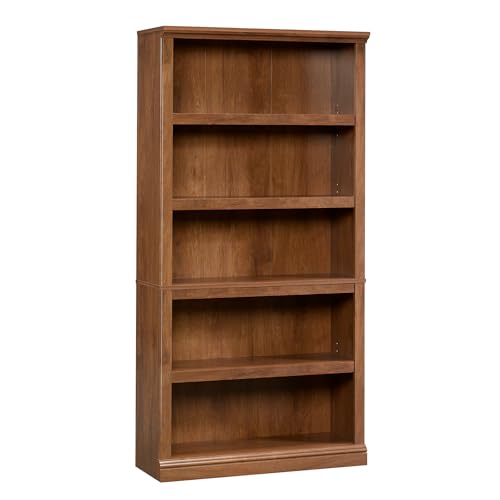
Sauder Harbor View 5-Shelf Bookcase
The Sauder Harbor View represents its approach honestly: it is a real, widely sold design that suits the readers described in this guide, and it is covered here in prose while its listing details are re-verified — check price on Amazon before you buy. Judge it on the criteria this article sets out: shelf span and thickness for your heaviest row, adjustability for the mix you actually own, a finish that agrees with your room’s light, and an anchor kit you will genuinely install on day one. If it passes those tests in your room’s measurements, it earns its place on your shortlist; if it fails one, the next pick in this guide is the better answer, and there is no shame in that order of decisions.

Bush Furniture Salinas Tall Bookcase
The Bush Furniture Salinas represents its approach honestly: it is a real, widely sold design that suits the readers described in this guide, and it is covered here in prose while its listing details are re-verified — check price on Amazon before you buy. Judge it on the criteria this article sets out: shelf span and thickness for your heaviest row, adjustability for the mix you actually own, a finish that agrees with your room’s light, and an anchor kit you will genuinely install on day one. If it passes those tests in your room’s measurements, it earns its place on your shortlist; if it fails one, the next pick in this guide is the better answer, and there is no shame in that order of decisions.

Furinno Turn-N-Tube 5-Tier Bookcase
The Furinno Turn-N-Tube represents its approach honestly: it is a real, widely sold design that suits the readers described in this guide, and it is covered here in prose while its listing details are re-verified — check price on Amazon before you buy. Judge it on the criteria this article sets out: shelf span and thickness for your heaviest row, adjustability for the mix you actually own, a finish that agrees with your room’s light, and an anchor kit you will genuinely install on day one. If it passes those tests in your room’s measurements, it earns its place on your shortlist; if it fails one, the next pick in this guide is the better answer, and there is no shame in that order of decisions.
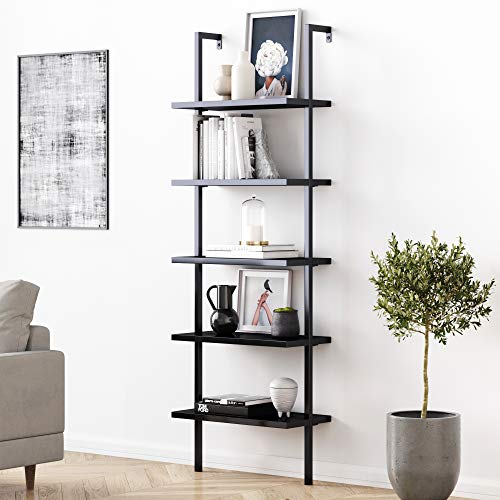
Nathan James Theo Ladder Bookcase
The Nathan James Theo represents its approach honestly: it is a real, widely sold design that suits the readers described in this guide, and it is covered here in prose while its listing details are re-verified — check price on Amazon before you buy. Judge it on the criteria this article sets out: shelf span and thickness for your heaviest row, adjustability for the mix you actually own, a finish that agrees with your room’s light, and an anchor kit you will genuinely install on day one. If it passes those tests in your room’s measurements, it earns its place on your shortlist; if it fails one, the next pick in this guide is the better answer, and there is no shame in that order of decisions.

Tribesigns 5-Tier Industrial Bookcase
The Tribesigns 5-Tier represents its approach honestly: it is a real, widely sold design that suits the readers described in this guide, and it is covered here in prose while its listing details are re-verified — check price on Amazon before you buy. Judge it on the criteria this article sets out: shelf span and thickness for your heaviest row, adjustability for the mix you actually own, a finish that agrees with your room’s light, and an anchor kit you will genuinely install on day one. If it passes those tests in your room’s measurements, it earns its place on your shortlist; if it fails one, the next pick in this guide is the better answer, and there is no shame in that order of decisions.
How Much Capacity Do You Really Need?
Width and depth decide whether the shelves actually fit your life. Standard paperbacks are forgiving, but art books, atlases, board games, vinyl records and storage baskets are not. Measure the deepest object you genuinely plan to store, then look for shelf depth that clears it with a small margin, because a book that overhangs the shelf edge looks untidy and is easy to knock. Width matters for span as much as for capacity: a very wide shelf with no centre support will bow under a full row of hardcovers, slowly at first and then unmistakably.
Books themselves impose quiet requirements. Hardcovers want upright support and bookends at row ends so they do not lean and warp. Oversize art books often live better flat in short stacks. Paperbacks forgive almost anything but fade fastest in sun. If you keep valuable or antique books, keep them away from exterior walls where condensation gathers, off the lowest shelf in flood-prone rooms, and out of the dustiest top shelf. A bookcase is a small climate and a small structure at once, and a little thought keeps both working in your collection’s favour.
Open, closed and mixed storage each solve different problems. Fully open shelves display beautifully and keep everything visible, which suits books you reach for weekly. Doors and cabinets hide the visual noise of cables, games, paperwork and children’s supplies, and they keep dust off stored items. A mixed unit, open above and closed below, is the pragmatic favourite for living rooms: display where eyes rest, concealment where clutter gathers. Backed shelves keep books from sliding through and protect the wall, while open-backed ladder designs feel lighter and let wall colour show through.
Which Material and Construction Suit Your Home?
Material is where long-term satisfaction is decided. Solid wood brings weight, repairability and a surface that ages gracefully, and it suits a buy-it-for-decades mindset. Engineered wood with a good laminate or veneer brings consistency, easier care and a lighter piece that is simpler to move, and modern versions handle everyday family use well when the shelves are not overloaded. Metal-frame designs with wood-look shelves bring an open, industrial lightness and excellent rigidity. Glass shelves brighten a dark room but show dust quickly and ask for gentler loading. None of these is automatically best; each trades cost, weight, care and character differently.
Delivery and access are the unglamorous details that decide whether purchase day feels easy. Measure doorways, hall turns, stair landings and lift interiors against the packaged or assembled dimensions, not just the finished ones. A two-piece or modular design can solve an impossible staircase. Check whether the unit can stand upright in the room’s ceiling height when tilted during assembly, a classic gotcha with tall bookcases in low-ceilinged rooms. Ten minutes with a tape measure before ordering prevents the particular misery of a bookcase that fits the room perfectly and the doorway not at all.
Load capacity deserves plain language. A shelf that sags is not a cosmetic problem; it is a safety problem and a sign the piece is being asked to do work it was not built for. Spread heavy sets across lower shelves, alternate heavy rows with lighter display objects, and never treat the top shelf as overflow for the heaviest encyclopaedias. If your collection is mostly dense hardcovers, favour shorter spans, thicker shelves and a centre support. If your shelves will hold a light mix of paperbacks, plants and baskets, almost any soundly built frame will serve you well for years.
How Deep, Tall and Adjustable Should It Be?
Adjustable shelves are the quiet feature owners praise most a year later. Fixed shelves force your collection to fit the furniture, while adjustable shelves let the furniture fit your collection: a tall shelf for art books and a vase, a close stack of shelves for paperbacks, an open bay for a printer or a record player. Check how adjustment works before you buy. Peg-and-hole systems are flexible and proven, while notched or sliding systems can be quicker to change. Also count the shelves included, because a unit that arrives with too few shelves wastes the vertical space you bought it for.
Height is the first real decision. A tall bookcase uses vertical space your room has already paid for, and in a small apartment that vertical efficiency can free an entire wall of floor clutter. Tall units also demand respect: they must be level, they must be anchored to the wall, and the heaviest books belong on the lowest shelves so the centre of gravity stays low. A low, wide bookcase trades capacity for versatility, doubling as a room divider, a surface for a lamp or television, and a safer, more reachable option in a child’s room or a busy hallway.
Assembly is part of the purchase, whether we admit it or not. Flat-pack bookcases reward patience: sort the hardware first, build on a soft surface so panels do not scratch, tighten fasteners in stages rather than fully at the first pass, and ask a second person to help when the unit goes upright. Pre-assembled or mostly assembled pieces cost more effort to deliver but spare you the wobble that comes from a rushed build. Either way, keep the spare hardware and the instructions; adjustable shelves get moved, houses get moved, and future you will be grateful.
How to Prioritise by Use Case
A bookcase in a child’s room has a different brief entirely. Reach matters more than capacity: low shelves a child can use independently build reading habits better than a tall unit only adults can stock. Rounded edges, a rock-solid anchor and shelves that cannot be pulled out by small hands all matter. Expect the contents to change fast, from board books to chapter books to school projects, so adjustability earns its keep here more than anywhere. A bookcase that grows with the child, reconfigured twice a year, will outlast three themed replacements.
For renters, the bookcase calculus shifts again. Freestanding units that need no wall modification beyond a small anchor hole, pieces light enough to move between apartments, and finishes that survive being wrapped and transported all rise in value. Modular and stackable designs shine here because they reconfigure to fit a new room’s awkward corner. Measure the stairwell and the doorway of the next place in your imagination before falling for the largest unit. A slightly smaller bookcase you keep for a decade beats a grand one abandoned at the third move.
Placement changes everything downstream. A bookcase against the longest uninterrupted wall usually looks intentional, while one squeezed beside a door swing looks accidental. Leave breathing room at the sides, keep the unit clear of heating vents, and think about what the shelves will be seen from: the reading chair, the sofa, the doorway. In a home office, place reference shelves within chair-swivel reach of the desk. In a bedroom, a low bookcase can stand in for a dresser top or a nightstand surface. Good placement makes an ordinary bookcase feel custom.
First Setup and Care Essentials
Safety is not an optional extra with tall furniture. Any bookcase tall enough to matter should be anchored to a wall stud with the strap or bracket provided, especially in homes with children, visiting grandchildren or large dogs, and especially on carpet where a unit can settle unevenly. Place the bookcase on a level floor, shim it if the floor slopes, and recheck the anchor after the first month as the piece settles under load. Keep climbing temptations off the lower shelves, and teach children that shelves are not ladders, however inviting they look.
Care is undemanding but not zero. Dust shelves from the top down, lift books rather than dragging them so spines and shelf surfaces survive, and keep the unit out of direct, all-day sun if the finish matters to you, because sunlight fades one side of a bookcase unevenly over years. A slightly damp cloth handles most cleaning; harsh sprays can cloud laminate and veneer. Tighten fasteners once a year, especially on flat-pack pieces in busy homes, and check the wall anchor at the same time. Ten minutes annually is the whole maintenance contract for most bookcases.
Small spaces reward vertical thinking and punish wasted inches. A narrow tower bookcase can turn a dead corner beside a sofa into real storage. A bookcase used as a room divider in a studio apartment creates a bedroom zone without a wall, especially if it is finished on both sides or styled to look decent from behind. Under-stair and over-door spaces are harder to fit but deeply satisfying when a unit matches. In every small-space case, light finishes, open backs and a ruthless edit of what actually earns shelf space keep the room breathing.
Mistakes to Avoid
Budget thinking works best in tiers described honestly. Entry-level bookcases serve light loads, first apartments and temporary rooms well, and their owners are happiest when expectations match the brief. Mid-tier pieces add thicker shelves, better finishes and hardware that survives reconfiguration, and they suit most family living rooms. Premium pieces bring solid materials, joinery that stays tight for decades and finishes that can be repaired rather than replaced. Spending follows the load and the lifespan you need: heavy library, long horizon, higher tier; light display, short horizon, lower tier, and no guilt either way when the match is right.
Electronics increasingly share shelf space, and that changes the brief. A router wants ventilation and a reasonably central, elevated spot. A printer wants a shelf deep and sturdy enough for its footprint plus paper access. Charging cables want a route that does not drape across book spines. If your bookcase will host devices, look for cable cut-outs or an open back, keep heat-producing items off enclosed shelves, and plan the power strip’s home before the books move in. The neatest media bookcases are the ones whose cables were planned, not hidden in a panic afterwards.
Styling a bookcase is a skill with simple rules. Group books by size or colour in short runs rather than one unbroken wall of spines. Leave genuine empty space on some shelves; a shelf that is eighty percent full looks collected, while one at a hundred percent looks stored. Mix vertical book stacks with horizontal piles, add one plant that trails and one object with personal meaning per bookcase, and step back from the doorway to judge the whole. Restraint is what separates a bookcase that looks designed from one that merely holds things.
Width and depth decide whether the shelves actually fit your life. Standard paperbacks are forgiving, but art books, atlases, board games, vinyl records and storage baskets are not. Measure the deepest object you genuinely plan to store, then look for shelf depth that clears it with a small margin, because a book that overhangs the shelf edge looks untidy and is easy to knock. Width matters for span as much as for capacity: a very wide shelf with no centre support will bow under a full row of hardcovers, slowly at first and then unmistakably.
Open, closed and mixed storage each solve different problems. Fully open shelves display beautifully and keep everything visible, which suits books you reach for weekly. Doors and cabinets hide the visual noise of cables, games, paperwork and children’s supplies, and they keep dust off stored items. A mixed unit, open above and closed below, is the pragmatic favourite for living rooms: display where eyes rest, concealment where clutter gathers. Backed shelves keep books from sliding through and protect the wall, while open-backed ladder designs feel lighter and let wall colour show through.
Care is undemanding but not zero. Dust shelves from the top down, lift books rather than dragging them so spines and shelf surfaces survive, and keep the unit out of direct, all-day sun if the finish matters to you, because sunlight fades one side of a bookcase unevenly over years. A slightly damp cloth handles most cleaning; harsh sprays can cloud laminate and veneer. Tighten fasteners once a year, especially on flat-pack pieces in busy homes, and check the wall anchor at the same time. Ten minutes annually is the whole maintenance contract for most bookcases.
Comparing two similar bookcases comes down to a handful of checks. Stand back and compare shelf thickness and span together, because sag lives in that relationship. Compare the back: a solid back adds rigidity and a finished look, while a thin or partial back asks the wall to do more work. Compare hardware quality, the number of adjustable shelves included, and whether extra shelves can be ordered later. Compare the anchor kit in the box. These unphotogenic details predict your satisfaction in year three far better than the styled photograph that sold you in minute three.
Material is where long-term satisfaction is decided. Solid wood brings weight, repairability and a surface that ages gracefully, and it suits a buy-it-for-decades mindset. Engineered wood with a good laminate or veneer brings consistency, easier care and a lighter piece that is simpler to move, and modern versions handle everyday family use well when the shelves are not overloaded. Metal-frame designs with wood-look shelves bring an open, industrial lightness and excellent rigidity. Glass shelves brighten a dark room but show dust quickly and ask for gentler loading. None of these is automatically best; each trades cost, weight, care and character differently.
Assembly is part of the purchase, whether we admit it or not. Flat-pack bookcases reward patience: sort the hardware first, build on a soft surface so panels do not scratch, tighten fasteners in stages rather than fully at the first pass, and ask a second person to help when the unit goes upright. Pre-assembled or mostly assembled pieces cost more effort to deliver but spare you the wobble that comes from a rushed build. Either way, keep the spare hardware and the instructions; adjustable shelves get moved, houses get moved, and future you will be grateful.
Think about the second life of the piece before you buy the first one. A plain, sturdy bookcase can migrate from living room to office to a teenager’s room to a garage craft station across twenty years, which is where its real value compounds. Trendy shapes and fragile finishes rarely survive that journey. Neutral proportions, replaceable hardware and a finish that can be cleaned or touched up all extend the story. Buying with the second and third room in mind is the quiet difference between furniture spending and furniture investing, and bookcases reward that mindset more than most pieces.
A bookcase also changes a room’s sound and light more than people expect. A wall of books absorbs sound, softening echo in a hard-floored room and making conversation and music feel warmer. Tall units can shadow a corner, which a small lamp on a shelf solves gracefully. In a north-facing room, a light-finish bookcase bounces what daylight there is; in a sun-flooded room, a deeper finish absorbs glare. Treat the bookcase as part of the room’s atmosphere, not just its storage, and several styling decisions make themselves.
Adjustable shelves are the quiet feature owners praise most a year later. Fixed shelves force your collection to fit the furniture, while adjustable shelves let the furniture fit your collection: a tall shelf for art books and a vase, a close stack of shelves for paperbacks, an open bay for a printer or a record player. Check how adjustment works before you buy. Peg-and-hole systems are flexible and proven, while notched or sliding systems can be quicker to change. Also count the shelves included, because a unit that arrives with too few shelves wastes the vertical space you bought it for.
Placement changes everything downstream. A bookcase against the longest uninterrupted wall usually looks intentional, while one squeezed beside a door swing looks accidental. Leave breathing room at the sides, keep the unit clear of heating vents, and think about what the shelves will be seen from: the reading chair, the sofa, the doorway. In a home office, place reference shelves within chair-swivel reach of the desk. In a bedroom, a low bookcase can stand in for a dresser top or a nightstand surface. Good placement makes an ordinary bookcase feel custom.
Putting the Shortlist to Work: A First-Month Reality Check for Your Bookcase
A buying guide can rank features, but a bookcase only proves itself once it is living in your living room furniture routine. The first month is the honest test period: the novelty fades, the daily habits settle in, and the small mismatches between a listing photo and your room become impossible to ignore. Use the weeks after delivery as a structured trial rather than a victory lap. Keep the packaging until you have lived with the bookcase through ordinary weekdays and one busy weekend, because the two situations stress very different qualities. What follows is a practical way to judge whether the model you chose is genuinely right, and what to adjust while adjusting is still easy.
Week One: Fit, Clearance and the Walk-Past Test
Start with movement. Walk the routes you actually use — carrying laundry, a tray, a vacuum, or shopping bags — and notice whether the bookcase narrows any of them. Open every door, drawer, lid or panel to its full travel and check it against walls, skirting and neighbouring furniture. Sit or stand where you will normally use it and look at it from that height, not from the doorway: proportions that looked balanced in a listing can feel top-heavy or lost once your eye level changes. If something feels awkward now, it will not improve with familiarity; small placement changes made in week one are far easier than returns made in month three.
Weeks Two to Four: Load It the Way You Really Live
Most bookcase disappointments come from a gap between the staged use in photographs and the untidy reality of a working home. So load it honestly. Put the heavy, awkward, everyday items in first, not the photogenic ones, and leave it that way for a fortnight. Watch for the early warning signs that matter: flexing, wobbling, sticking, fading, lingering odours, or parts that need constant re-adjusting. Note which features you reach for daily and which you have not touched at all, because that pattern tells you what to prioritise — and what to ignore — if you ever buy a second one for another room.
Before the trial month ends, run through this short decision checklist for your bookcase:
- Photograph the bookcase in place from the doorway and from your usual seat, and judge the proportions from the pictures rather than from memory.
- Check every fixing, joint and moving part once by hand, and tighten or adjust anything that has settled after the first days of use.
- Move one item you use every day to the most reachable position, and one rarely used item to the least reachable, then see whether the layout still makes sense.
- Clean the bookcase once using only the method the maker recommends, and note how long it honestly takes you.
- Write down the single change you would make if you bought again — size, finish, layout or configuration — while the reasoning is still fresh.
When a listing is vague about a dimension, material or included part that matters to you, treat the vagueness itself as information and look for a clearer seller.
If the bookcase passes the month with only minor grumbles, you have bought well, and the remaining niggles are usually arrangement problems rather than product problems. If it fails on fit or on daily friction, act while the return window is open instead of hoping the irritation will fade. Either way, the trial turns a hopeful purchase into a known quantity, and that knowledge is what makes the next living room furniture decision faster and calmer.
Frequently Asked Questions
How tall should a bookcase be for a living room?
Most living rooms suit a bookcase between roughly five and six feet tall, which gives four or five useful shelves while staying below the visual line of most ceilings and door frames. Taller units work in rooms with high ceilings and when anchored properly. The better test is proportion: the bookcase should relate to your sofa and door heights rather than tower over everything or crouch beneath the room’s other furniture.
Do bookcases need to be anchored to the wall?
Yes, any tall bookcase should be anchored, without exception in homes with children or pets. A loaded bookcase is heavy, top-heavy when the upper shelves fill first, and surprisingly easy to tip on carpet or an uneven floor. Use the strap or bracket supplied, fix it into a wall stud where possible, load the heaviest books low, and recheck the anchor after the first month as the piece settles.
How much weight can a bookcase shelf hold?
It depends on shelf material, thickness and span, which is why this guide avoids a single magic number. Short, thick shelves in solid or well-made engineered wood carry full rows of hardcovers comfortably; long, thin spans bow under the same load. Spread heavy sets across lower shelves, avoid concentrating encyclopaedias mid-span, and treat any visible sag as a signal to redistribute the load immediately rather than a cosmetic quirk.
What is the best material for a bookcase?
There is no single best material, only a best match. Solid wood suits heavy libraries and decades-long ownership. Engineered wood with a quality finish suits most family rooms, offering consistency and easier care. Metal-frame designs suit lighter, display-led loads and modern rooms. Match the material to your heaviest realistic shelf, your room’s humidity and light, and how often the piece is likely to move house with you.
Can a bookcase work in a small apartment?
Absolutely, and it is often the highest-value piece in one. Choose vertical over horizontal, narrow over deep, and light finishes or open backs that keep the room feeling open. Use it as a room divider in a studio, a corner tower beside the sofa, or a low unit that doubles as a media stand. The discipline that makes it work is editing: in a small home, every shelf should hold something used, loved or genuinely beautiful.
How do I stop bookcase shelves from sagging?
Prevent sag by respecting span: keep heavy rows on shorter or supported shelves, place the heaviest books low and toward the sides where support is strongest, and alternate dense rows with lighter display objects. If a shelf already bows slightly, flip it over during your next clear-out to even the wear, redistribute the load, and consider a centre support or a shorter replacement shelf for that bay.
Related Guides
bookcase pros and cons bookcase review bookcase reviews bookcase vs bookshelf how to choose a bookcase is a bookcase worth it best bookcases for small spaces bookcase ideas for modern homes best rugs for a living room best sofas for a long living room best living room chairs for back comfort
The secondhand question deserves an honest answer. Used solid-wood bookcases can be extraordinary value, because the material survives and the construction of older pieces is often generous. Inspect for shelf bow, wobble at the joints, water rings that signal deeper damage, and a back panel that still holds the unit square. Flat-pack pieces travel less well secondhand, since fasteners loosen in disassembly. Whether new or used, the tests are the same: square, sturdy, level, anchored, and sized for the books you actually own rather than the collection you imagine.
Think about the second life of the piece before you buy the first one. A plain, sturdy bookcase can migrate from living room to office to a teenager’s room to a garage craft station across twenty years, which is where its real value compounds. Trendy shapes and fragile finishes rarely survive that journey. Neutral proportions, replaceable hardware and a finish that can be cleaned or touched up all extend the story. Buying with the second and third room in mind is the quiet difference between furniture spending and furniture investing, and bookcases reward that mindset more than most pieces.
Style should follow the room, not fight it. A traditional room with crown moulding and a classic sofa welcomes a bookcase with framed panels, a crown top and a warm wood finish. A modern room wants clean lines, slim frames and an uncluttered silhouette, where the books themselves provide the colour. Farmhouse and rustic rooms pair well with distressed finishes and X-bracing, while industrial spaces suit black metal frames and deeper wood tones. When in doubt, match the bookcase’s visual weight to the largest piece already in the room, so nothing looks like it wandered in from another house.
Finally, remember that a bookcase is one of the few furniture purchases that visibly improves with use. A new bookcase is a product; a bookcase after five years of birthdays, moves, re-reads and rearrangements is a biography. Choose the piece that can hold that biography without sagging, wobbling or falling out of love with your room’s style. Measure honestly, anchor firmly, load sensibly, and let the shelves fill at the speed of your actual life. That is the whole secret, and it is why a well-chosen bookcase is so rarely regretted.
A bookcase earns its place slowly. In the first week it holds the books you moved off the floor, and it feels like a simple storage upgrade. By the third month it has quietly become the room’s memory: the shelf with the travel books, the shelf where mail waits, the low shelf a child can reach without help. That is why choosing well matters more than choosing quickly. A bookcase is not a disposable accessory you swap each season; it is a tall, visible piece of furniture that will stand in your sightline every day, and its proportions, finish and sturdiness shape how finished the whole room feels.
Start with the honest job description. Some households need a true library wall, shelf after shelf of hardcovers that will never move again. Others need a flexible display piece that mixes a few paperbacks with plants, baskets, framed photographs and the objects that make a room feel lived in. A third group needs a hardworking hybrid for a home office, where binders, a printer and reference books share space with a router and a tangle of charging cables. The right bookcase for one job can be a poor answer to another, so name the job before you compare finishes or silhouettes.
The secondhand question deserves an honest answer. Used solid-wood bookcases can be extraordinary value, because the material survives and the construction of older pieces is often generous. Inspect for shelf bow, wobble at the joints, water rings that signal deeper damage, and a back panel that still holds the unit square. Flat-pack pieces travel less well secondhand, since fasteners loosen in disassembly. Whether new or used, the tests are the same: square, sturdy, level, anchored, and sized for the books you actually own rather than the collection you imagine.
Think about the second life of the piece before you buy the first one. A plain, sturdy bookcase can migrate from living room to office to a teenager’s room to a garage craft station across twenty years, which is where its real value compounds. Trendy shapes and fragile finishes rarely survive that journey. Neutral proportions, replaceable hardware and a finish that can be cleaned or touched up all extend the story. Buying with the second and third room in mind is the quiet difference between furniture spending and furniture investing, and bookcases reward that mindset more than most pieces.


