Disclosure: As an Amazon Associate, dailyhomedecorating.com earns from qualifying purchases. Links on this page are affiliate links; they cost you nothing extra. Prices and availability change often, so check the current Amazon listing before you buy.
This armchair buying guide starts from a simple observation: an armchair is the hardest-working single seat in most homes. It is where you read, where a guest lands, where laundry briefly lives, and where the dog would sit if the rules allowed it. Because one chair has to serve so many small jobs, buying one well matters more than its size suggests. This guide walks through the main types, the criteria that actually decide comfort and lifespan, and the mistakes that leave people with a chair that looks right in photos and feels wrong every evening. By the end you will know how to match an armchair to your room, your body, and your habits — and how to check price on Amazon for the models that fit, without paying for features you will never use.
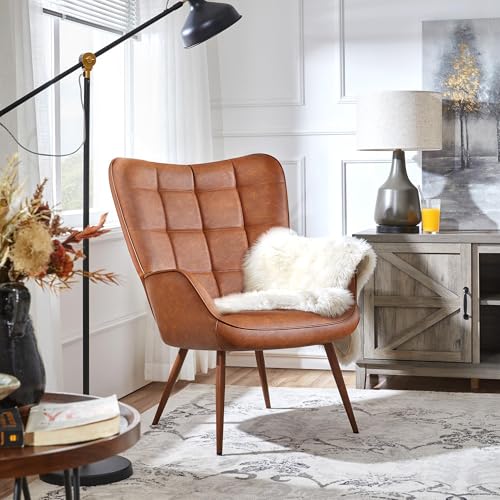
Key Takeaways
- Decide the chair’s main job first — reading, television, conversation, or guests — because that job sets the right back height, seat depth, and arm shape.
- Measure your space and your body before choosing a style; seat height and depth decide comfort more than upholstery colour ever will.
- Frame construction and suspension decide how many years the chair serves. Kiln-dried hardwood and sinuous springs outlast almost everything else at the same tier.
- Choose fabric for your household, not your mood: pets, children, and sunlight each rule out certain materials.
- Every pick in this guide is a real, widely sold model presented prose-only while verification is pending — check price on Amazon and confirm dimensions on the listing before ordering.
In this guide
Armchair Buying Guide: What an Armchair Does and the Main Types
An armchair is a single seat with two arms, a supported back, and enough structure to be sat in daily rather than admired occasionally. That sounds obvious, but it separates armchairs from accent chairs, which often trade support for silhouette, and from dining chairs, which are built for upright meals rather than an evening with a book. The armchair’s job is sustained comfort for one person, and everything in this guide — frame, cushion, fabric, proportions — should be judged against that job. A chair that performs it well becomes the seat everyone quietly competes for. A chair that performs it badly becomes expensive storage for cushions and coats.
Club Chairs
The club chair is the generous one: low, wide, and enveloping, with arms that curve into the back in one continuous sweep. Club chairs suit long, relaxed sits — films, slow mornings, conversation that runs past its planned end. Their footprint is the trade-off. A true club chair eats floor space, and its low seat can be hard work for anyone with stiff knees. In a large living room with a deep sofa, a club chair balances the arrangement beautifully. In a small flat, one club chair can crowd out everything else. Choose it when comfort is the priority and the room can afford the width, and pair it with a small side table rather than a bulky one, because the chair itself already supplies the visual weight.
Wingback Chairs
The wingback is the reader’s classic. Its tall back and projecting wings were designed to shield a sitter from draughts beside a fireplace, and they still create a small private zone in an open room. Wingbacks support the head and shoulders properly, which makes them the natural choice for reading corners, studies, and anyone who sits upright for long stretches. Modern versions soften the formality with cleaner lines and lighter fabrics, so a wingback no longer forces a traditional scheme on the whole room. The caution is proportion: a tall wingback beside a low modern sofa can look like it wandered in from another house. Keep something else tall nearby — a floor lamp, a bookcase — and the chair settles in.
Barrel and Tub Chairs
Barrel chairs wrap a curved, continuous back around the sitter, and tub chairs do the same in a slightly squarer form. Both are compact for armchairs, which makes them the default answer for bedrooms, hallways, and apartment corners where a club chair would overwhelm. The curved back encourages a slightly tucked posture — pleasant for conversation and short reads, less ideal for a three-hour novel. Many barrel chairs swivel, which adds real function in open-plan rooms where the seat must face the sofa, then the television, then the window. If you are furnishing a small space and can only fit one proper armchair, a barrel or tub chair is usually the honest compromise between presence and footprint.
Mid-Century and Modern Armchairs
Mid-century armchairs pair slim wooden or metal legs with angled backs and tailored upholstery, and their modern descendants keep the same light footprint. These chairs keep small rooms feeling open because you can see floor beneath them, and their firmer, more upright seats suit people who dislike sinking into cushions. They are the easiest armchairs to move, rearrange, and carry up stairs — a real consideration in rentals and walk-ups. The limitation is depth: many mid-century designs have shallower seats that tall sitters find perchy. If you are over six feet, sit-test this style with extra care, or look for the scaled-up modern versions that keep the look and add a couple of inches where it counts.
Recliner Armchairs
A recliner armchair trades some elegance for a mechanical gift: a back that tilts and a footrest that rises, turning one seat into a near-horizontal rest. For film nights, afternoon naps, and anyone whose back demands elevation, nothing else in this guide competes. The costs are bulk, weight, and a mechanism that must be maintained and eventually serviced. Recliners also need clearance behind and in front, which small rooms rarely have. Treat a recliner as a deliberate purchase for a defined spot — the television wall, the media room — rather than a flexible piece you will move around. Readers comparing supported seating for long sessions may also find our notes on the best living room chairs for back pain useful before committing to a mechanism.
Swivel and Glider Armchairs
Swivel armchairs rotate on a base, and gliders rock gently forward and back; both solve the problem of a seat that must serve more than one direction. In open-plan spaces, a swivel chair is social infrastructure — it joins the conversation, then turns to the view. Gliders earn their place in nurseries and in any room where a little motion settles the mind. The mechanics are simpler than a recliner’s and generally durable, but bases vary in quality, and a wobbly swivel is worse than none. If a swivel appeals, the related guide to swivel chairs for the living room goes deeper on bases and weight limits than we can here.
Whichever type you lean toward, the pattern to notice is that every silhouette is a posture in disguise. Club chairs recline you, wingbacks straighten you, mid-century chairs perch you, and barrel chairs tuck you in. Pick the posture you actually enjoy for the activity you actually do, and half the buying decision is already made. The other half is measurement and materials, which is where the next sections earn their keep. For a side-by-side look at how these differ from lighter occasional seating, see accent chair vs armchair.
Top Picks at a Glance
The five models below are the reference points used throughout this guide — real, widely available armchairs that between them cover the main types and tiers. They are presented prose-only while link verification is pending, so treat the table as a shortlist to investigate rather than a ranking carved in stone. Check price on Amazon for each, and always confirm the current dimensions and fabric options on the listing, because manufacturers revise both without ceremony.
| Pick | Badge | Type | Tier | Best for |
|---|---|---|---|---|
| Yaheetech Tufted Accent Armchair | Best Budget | Modern upholstered | Entry | First flats, guest corners, tight budgets |
| Christopher Knight Home Club Armchair | Best Overall | Club | Mid | Everyday living-room sitting |
| Furmax Modern Fabric Armchair | Best for Small Spaces | Compact modern | Entry | Apartments, bedrooms, reading nooks |
| Rivet Revolve Armchair | Best Swivel | Swivel | Mid | Open-plan rooms, conversation areas |
| Stone & Beam Bradbury Armchair | Best Premium | Traditional rolled-arm | Premium | Long-term, buy-once seating |
Notice what the table does not contain: prices and scores. Prices move too often to print honestly, and a single number cannot capture whether a chair fits your knees. Use the tier column to shortlist, the criteria sections below to interrogate, and the mini-reviews further down for the honest limitation of each model — every chair here has one, and knowing it in advance is the difference between a good purchase and a return label.
How Much Space Does an Armchair Actually Need?
Start with the room, because the room cannot be returned. An armchair needs its own footprint plus clearance: roughly a hand’s width from walls or neighbouring furniture so it does not read as wedged, and enough space in front for legs, a footstool, or a recliner’s mechanism. In practice, most armchairs occupy a square of floor somewhere around thirty inches in each direction, and generous club styles run wider. Measure the intended spot, then tape the outline on the floor with painter’s tape and live with it for a day. You will learn more from walking around that tape at breakfast than from any product photograph.
Doorways and stairs are the second measurement people skip. A chair that fits the room but not the hallway is a famous and avoidable disaster. Note the narrowest point on the delivery path — door frames, stair turns, lift interiors — and compare it with the chair’s smallest dimension, remembering that many modern armchairs ship with legs removed or backs detached, which helps considerably. Flat-pack and partially assembled models, including several picks in this guide, exist precisely because solid traditional armchairs are hard to move. If your home has a tight turn, favour chairs that assemble in the room, and keep the packaging until you are sure the chair is staying.
Finally, think about the chair’s relationship to the rest of the seating. An armchair pulled into a conversation group should sit at a distance where voices carry comfortably and a coffee table remains reachable — close enough to set down a drink without standing. If the chair will mostly face a screen, angle matters more than distance, and a swivel base quietly solves the geometry. Rooms feel right when chairs are placed for the activity, not pushed against walls by default, so give your new armchair a job in the layout from the start rather than a leftover corner by accident.
Which Upholstery Fabric Fits Your Household?
Fabric decides how an armchair ages, and households age chairs in very different ways. Performance polyester and polyester blends are the workhorses: they resist fading, shrug off most spills when treated promptly, and come in every colour at every tier. Linen and linen-look weaves breathe beautifully and suit relaxed, textured rooms, but they wrinkle, absorb spills faster, and show wear on arms sooner. Velvet — usually polyester velvet at consumer tiers — delivers the richest colour and a genuinely luxurious sit, at the cost of showing pile marks and collecting pet hair with enthusiasm. Leather, whether full-grain at premium tiers or bonded and faux at entry tiers, wipes clean and develops character, but it can feel cold in winter, sticky in summer, and it records scratches from claws and belt buckles permanently.
Match the fabric to the household honestly. Homes with dogs that are allowed on furniture want tight weaves and forgiving colours; hair releases from smooth weaves and leather, while it weaves itself into loose linen like it pays rent. Homes with small children want removable, washable covers or performance fabrics that tolerate the full beverage catalogue. Sunny rooms punish delicate fabrics and cheap dyes — a chair that lives in direct afternoon sun should be a fade-resistant synthetic or a leather you accept will lighten gracefully. And if anyone in the house has allergies, smooth surfaces that can be wiped and vacuumed beat deep textures that harbour dust. Our guide to rugs for the living room covers the same fabric-versus-household logic for the floor, and the two decisions look best made together.
One more fabric point that rarely appears in listings: rub count and weave density matter more than fibre romance. A tightly woven fabric with a high rub count in a boring colour will outlast a beautiful loose weave every time, especially on armrests, which take friction from sleeves, watches, and hands pushing up to stand. If a listing is vague about fabric construction, that vagueness is itself information — manufacturers with strong fabrics say so loudly.
How Firm Should the Seat Feel?
Seat comfort is a system, not a cushion. Under the upholstery sits a suspension — sinuous steel springs, webbing, or a solid base — and above it a cushion of foam, fibre, feathers, or a blend. Firmness is personal, but the failure modes are universal: a seat that is too soft lets your hips sink below your knees, which strains the lower back and makes standing an effort; a seat that is too hard concentrates pressure and shortens every sit. The middle ground most people enjoy is a seat that yields a little on contact and then supports — you sit in it slightly, not on it or through it.
Seat depth deserves the same attention as firmness. Sit in a chair and your back should meet the backrest while your feet rest flat and the cushion edge does not press behind your knees. Deep seats suit tall sitters and anyone who curls up sideways; shallow seats suit shorter legs and upright activities like conversation and desk-adjacent work. If a household spans both, a mid-depth seat plus a firm lumbar cushion is the classic compromise, and it is cheaper than two chairs. Seat height interacts too: lower seats feel lounge-like and pair with club styles, while higher seats are kinder to older knees and pair with wingbacks and traditional frames. When you compare listings, these three numbers — height, depth, and overall width — tell you more about your evenings than the colour name does.
Cushion filling predicts the future. High-resilience foam holds its shape for years and feels consistent; polyester fibre feels plush immediately and compacts sooner; feather blends feel wonderful and demand daily plumping to look like the photographs. None is wrong, but each sets a maintenance rhythm. If you know you will never plump a cushion, buy foam and be happy. If you love the soft, lived-in look, buy feathers and accept the ritual. The honest self-knowledge matters more than the filling.
What Frame and Suspension Should You Look For?
The frame is the chair’s skeleton and the part you cannot upgrade. Kiln-dried hardwood frames, with joints that are glued, dowelled, or corner-blocked, are the benchmark: the kiln drying prevents the warping and squeaking that plague cheap green timber. Engineered wood and plywood frames can be perfectly serviceable at mid tiers when the joinery is sound, and metal frames suit modern designs. What you want to avoid is a frame whose listing refuses to describe it at all, or one built from softwood stapled at the joints — those chairs announce themselves within a year through wobble and creak.
Suspension is the frame’s partner. Sinuous springs — continuous S-shaped steel wires — give a supportive, slightly lively seat and dominate good mid-tier chairs. Eight-way hand-tied springs are the traditional premium method, labour-intensive and excellent, though increasingly rare outside high-end makers. Elastic webbing is the budget method: comfortable when new, prone to sagging with years of use, and the usual culprit when a cheap chair develops a hammock where the seat used to be. You cannot see suspension in a photograph, which is exactly why it separates honest listings from decorative ones. If the suspension is named and the frame material is named, the maker expects scrutiny. If neither is mentioned, assume webbing and softwood and price your expectations accordingly.
Weight is a rough proxy worth using. All else equal, a heavier armchair usually contains more frame, more spring, and denser foam than a suspiciously light one. It is not a guarantee, but when two chairs look identical in photos and one weighs noticeably more, the heavier chair is rarely the worse built. The detailed head-to-head in the armchair review applies these frame tests to specific models, and armchair pros and cons weighs what the construction choices cost you in daily life.
How to Prioritise by Use Case
The Reader
Readers need head support, light, and a place for the book and the drink. Prioritise a tall or winged back, arms at a height that supports elbows without shrugging shoulders, and a seat firm enough that two hours does not become a negotiation with a cushion. Place the chair near a lamp and a side table as part of the purchase decision, not after it — a reading chair without light is a sculpture. Wingbacks and traditional rolled-arm chairs serve readers best, and a small footstool extends sessions considerably.
The Film and Television Watcher
Screen time wants recline, depth, and a back angle that does not force the neck forward. Club chairs and recliners lead here, and swivel bases help in rooms where the screen is not directly opposite the seating. Prioritise seat depth and a headrest position that supports the head at your viewing angle, and be honest about how long sessions last — the difference between a one-hour show and a three-hour film is the difference between several chair types. A throw within reach finishes the setup; our picks for blankets for the living room pair well with deep seats.
The Small-Space Dweller
Small rooms punish bulk and reward legs. Prioritise compact barrel and mid-century styles with visible floor beneath, shallower depth, and — if the chair must serve multiple directions — a swivel base. Measure twice, tape the outline once, and resist the club chair’s charm until the tape says yes. A single well-chosen compact armchair plus good light beats two cramped seats in every small room we have ever seen furnished.
The Busy Household
Families with children and pets should prioritise fabric first and silhouette second: performance weaves, mid-tone colours that forgive, removable covers where possible, and frames sturdy enough for a chair that will be climbed on despite every rule. Avoid delicate legs, pale linen, and feather cushions that cannot survive being a fort. The chair will still look good in five years if the fabric choice was honest in year one.
The Picks in Detail

Yaheetech Tufted Accent Armchair — Best Budget
Yaheetech’s tufted armchair is the entry-tier reference point: a modern upholstered chair with a button-tufted back, padded arms, and wooden legs, sold in a rotating cast of colours. It assembles in the room, which makes it a friend to narrow staircases, and its proportions suit smaller sitters and smaller rooms. The sit is firm and upright — good for conversation, short reads, and guest duty. Best for: first homes, spare rooms, and anyone furnishing on a strict budget. Not suited for: tall sitters wanting depth, or anyone expecting a decade of daily use from the cushioning. Strengths: easy assembly, honest price tier, wide colour range. Trade-offs: firm seat, modest cushion longevity, arms on the lower side. Check price on Amazon and confirm the current colour and dimension details on the listing.
Christopher Knight Home Club Armchair — Best Overall
Christopher Knight Home’s club armchairs are the mid-tier default for a reason: a proper low, enveloping club silhouette, stud or tailored detailing depending on the variant, and proportions that suit average-to-large sitters for long sessions. The seat is deeper and softer than the budget picks, the arms are wide enough to rest a book or a forearm properly, and the overall build feels a class above flat-pack furniture. Best for: the main living-room seat beside the sofa, film watchers, and households buying one good chair. Not suited for: very small rooms, or anyone who needs a high seat for easy standing. Strengths: genuine club comfort, substantial feel, versatile styling. Trade-offs: significant footprint, weight makes rearranging a two-person job, spot-clean fabrics on most variants. Check price on Amazon before ordering and measure your doorway against the listed width.
Furmax Modern Fabric Armchair — Best for Small Spaces
Furmax’s fabric armchair is the compact modern option: clean lines, a modest footprint, and a price tier that makes it a low-risk way to add a real seat to a bedroom, study, or rental living room. The back is upright and the seat on the firmer side, which suits shorter sits, laptop-adjacent perching, and conversation corners. Assembly is simple and the chair is light enough to move between rooms as needs change. Best for: apartments, bedrooms, and flexible spaces. Not suited for: long film sessions or sitters who want to sink in. Strengths: small footprint, easy to move, forgiving price tier. Trade-offs: firm cushioning, shallower seat, basic fabric range. Check price on Amazon and verify the seat depth against your household’s tallest sitter.
Rivet Revolve Armchair — Best Swivel
The Rivet Revolve brings a proper swivel base to a tailored, modern armchair shape, and in open-plan rooms that rotation is not a gimmick — it is how one chair serves a sofa conversation, a television, and a window view across a single evening. The upholstery is neat, the profile is compact for a swivel chair, and the base action on a good unit is smooth and silent. Best for: open-plan living, social rooms, and anyone whose seat must face more than one direction. Not suited for: anyone who dislikes any motion in a chair, or rooms where the chair sits on thick pile carpet that fights the base. Strengths: genuine swivel utility, modern styling, compact footprint. Trade-offs: base quality is the whole product — inspect on arrival; seat is mid-firm rather than plush. Check price on Amazon and confirm the base type on the current listing.
Stone & Beam Bradbury Armchair — Best Premium
The Bradbury is the buy-once end of this shortlist: a traditional rolled-arm armchair with the proportions, cushioning, and finish that justify a premium tier. The arms are shaped for resting rather than posing, the seat cushioning is layered for support over long sits, and the styling sits comfortably in both classic and transitional rooms. Best for: a permanent living-room anchor, traditional schemes, and buyers replacing a chair every few years with one chair for many. Not suited for: tight budgets, frequent movers, or very small rooms. Strengths: build and comfort at the top of this list, timeless shape, supportive arms. Trade-offs: premium tier cost, weight, and a footprint that needs a settled spot. Check price on Amazon and treat the delivery-path measurements seriously.
How the Tiers Differ, in Plain Terms
Because this guide prints no prices, it is worth explaining what the tiers actually buy, so the words entry, mid, and premium mean something when you check price on Amazon. At the entry tier, you are buying the shape of an armchair with simplified internals: engineered or softwood frames, webbing or basic spring support, fibre or standard foam cushions, and fabrics chosen for looks and cost. These chairs serve genuinely well in low-traffic roles — guest rooms, first flats, a corner that hosts occasional sitting — and they ask little of a budget. What they do not promise is a decade of daily sitting, and it is unfair to judge them as if they did.
The mid tier is where armchairs become furniture rather than furnishing. Frames get harder and better joined, suspension becomes real springs, cushions use denser foam that holds its shape, and fabrics gain rub resistance and often removable covers. Most households should shop here for a main living-room chair, because the jump in daily comfort and lifespan over the entry tier is the largest in the whole market. The premium tier then buys refinement more than survival: better leathers and weaves, hand-finished details, eight-way hand-tied springs in traditional makes, tailored upholstery with matched patterns, and arms and backs shaped with a care you feel rather than see. Premium is worth it for a permanent anchor chair in a settled home, and harder to justify for a household that moves every two years.
One honest warning about tiers: they are descriptions of construction, not guarantees attached to brand names. Every large brand sells across tiers, and a famous name on a webbing-suspension chair does not upgrade the webbing. Judge each model by the frame, suspension, cushion, and fabric tests in this guide, and let the tier language simply organise your shortlist. That discipline — construction first, badge second — is the whole secret of buying furniture well at any budget.
First Setup and Care Essentials
Assembly day decides more than people expect. Assemble the chair in the room where it will live whenever the design allows, because a finished armchair is always wider than its parts. Tighten legs and bolts firmly but evenly, then re-check them after a week of sitting — new joints settle, and a five-minute retighten prevents the wobble that owners later blame on the frame. Place the chair, sit in it, and adjust its position by the activity: reading chairs toward the light, conversation chairs toward the sofa, screen chairs toward the screen. Then live with it for a few days before deciding it is wrong; cushions and bodies both need a short negotiation period.
Care is mostly rhythm rather than effort. Vacuum upholstery weekly with an upholstery attachment, working into the seam where the seat meets the back, because that crease collects everything. Rotate and flip cushions where the design allows, on the same weekly rhythm, so wear spreads evenly instead of carving one permanent hollow. Treat spills immediately by blotting — never rubbing — and test any cleaner on a hidden patch first. Keep leather away from radiators and condition it occasionally; keep all fabrics out of relentless direct sun where you can, or rotate the chair’s position seasonally so fading, if it comes, arrives evenly. A chair cared for on this light schedule looks presentable for years; a chair ignored for a year and then attacked with chemicals rarely recovers its dignity. The step-by-step companion in how to choose an armchair turns these principles into a shopping checklist you can use in a showroom or on a listing page.
Mistakes to Avoid
The most common mistake is buying by photograph: a chair styled in a vast loft looks compact until it meets a real room. Measure, tape, and compare dimensions — always. The second mistake is choosing fabric for the photograph instead of the household, then spending years guarding a pale linen chair from the dog. The third is ignoring the delivery path and discovering, on the doorstep, that the chair and the hallway have irreconcilable differences. The fourth is buying a seat depth that fits nobody: too deep, and shorter sitters perch with a cushion behind their backs forever; too shallow, and tall sitters feel like guests at a child’s tea party.
Two quieter mistakes deserve mention. One is matching the armchair too exactly to the sofa — identical fabric and shape can make a room feel like a showroom set rather than a home; a complementary chair with its own character almost always looks better. The other is forgetting the supporting cast: an armchair without a reachable surface for a drink, and without light if it is a reading chair, underperforms no matter how well it is built. Budget a little attention for the side table and lamp, and the chair you chose so carefully will actually get used the way you imagined. If you are still weighing whether a dedicated armchair earns its space at all, is an armchair worth it works through that question honestly, and armchair reviews rounds up how the main models compare across households.
Arms, Backs and the Details That Decide Daily Comfort
Arms are in the product’s name, yet buyers routinely ignore them until the first long evening exposes the mistake. Arm height determines whether your elbows rest naturally or your shoulders creep toward your ears; arms that are too high shrug you, arms that are too low leave your arms dangling, and both errors tire the neck and shoulders across a film. Arm width matters too. Wide, flat or gently rounded arms double as a resting place for a book, a remote, or a forearm, while slim track arms save inches in tight rooms and give a cleaner line. Padded arms forgive hours; bare wooden arms look wonderful and announce their presence within twenty minutes. When you test a chair, rest your arms the way you actually sit — not the polite showroom posture — and stay there long enough for the truth to arrive.
The back deserves the same scrutiny. Back angle is a personality trait: upright backs suit conversation, reading, and anyone who works from the chair occasionally, while raked backs suit loungers and screen watchers. Lumbar support in an armchair is rarely adjustable, so the back’s built-in curve has to agree with your spine; a chair that pushes a firm curve into a back that prefers flat support will feel wrong every single day. Head support separates reading chairs from occasional chairs — if you read or watch for hours, a back tall enough to rest your head against changes the experience entirely, and it is the single feature most often missed by buyers who tested the chair for ninety seconds standing in a shop.
Then there are the details nobody photographs. The seam where seat meets back collects crumbs and coins in every chair, but deep-buttoned and channel-tufted backs collect more and clean harder. Legs and bases decide stability on your floor type: glides that suit hardwood can dig into carpet, and swivel bases want a reasonably level, firm surface. Cushion construction shows in the edges — a seat cushion with a clean, squared edge and a zip cover will age better and clean easier than a permanently fixed pad. None of these details is glamorous, and together they are most of what owning the chair actually feels like.
How to Shop: Tests to Run in a Showroom or on a Listing
Whether you buy in person or online, run the same sequence of tests. First, the sit test: sit down the way you would at home, stay seated for several minutes, shift positions, cross and uncross your legs, and stand up again. Standing up is a test in itself — a chair you have to haul yourself out of will annoy you daily, and it is a genuine barrier for older household members. Second, the frame test: lift one front corner of the chair a few inches; a well-built frame lifts as one rigid unit, while a weak frame twists so the opposite legs leave the floor unevenly. Third, the arm test: press down firmly on each arm and lean on it the way you would when rising — there should be no creak, wobble, or give.
Online, translate those tests into listing checks. Look for the frame material named in words, the suspension type named in words, the seat height and depth in numbers, and the fabric described by fibre and weave rather than adjectives. Read the assembly instructions if they are linked — they reveal the joinery honestly. Check the return terms before you fall in love, because a chair is a large parcel and return logistics vary enormously between sellers. And confirm the delivery path measurements one final time against the chair’s packaged and assembled dimensions, since the two are different and both matter. Our step-by-step guide to choosing an armchair lays this sequence out as numbered steps with worked examples for different households.
A Final Word Before You Order
Every test in this guide reduces to one habit: buy the chair your life describes, not the chair a photograph describes. The photograph cannot know about your knees, your dog, your low ceiling, your habit of reading for three hours on a Sunday, or the narrow turn at the top of your stairs. Your measurements know all of that. So measure the room and the doorway, name the chair’s main job out loud, choose the fabric your household can live with, insist on a frame and suspension described in plain words, and shortlist by tier before you ever look at colour. Do those five things and the armchair you order has every chance of becoming the seat your household quietly argues over — which is, in the end, the only review that matters. When you are ready, check price on Amazon for the shortlisted models, confirm the dimensions one last time on the listing, and order with the return terms already read.
Before You Commit: A Hands-On Fit and Compatibility Check for Armchair
This section exists to treat this as the final check before money changes hands, the point where a shortlist stops being a list of features and becomes a decision about one specific home. It adds a layer that a feature list cannot give you, grounded in the living room furniture context this armchair will actually live in. Where this guide names examples such as Yaheetech Tufted Accent Armchair, Christopher Knight Home Club Armchair, Furmax Modern Fabric Armchair, use them as test cases for the checks below rather than as shortcuts past them.
Consider the edge cases that sit just outside normal use, because a armchair will meet all of them eventually. The unusually large load, the unusually small task, the day you are in a hurry, the day something else in the room is broken and this has to cover for it. Versatility is not about a long feature list; it is about behaving predictably when conditions are imperfect. Where a design offers settings, modes, attachments or configurations, ask what each one is actually for in your home, and be suspicious of flexibility you cannot attach to a real occasion. One well-judged configuration used weekly beats five clever ones used once, and the honest armchair for your home is the one whose strengths line up with your most frequent edge case, not your rarest.
Build a simple decision checklist and score it in writing. Five lines are enough: fit in the space, fit with the routine, ease of cleaning or upkeep, quality of the parts that move or wear, and how the armchair will be stored or will look when it is not the centre of attention. Score each contender quickly, then look only at the lowest scores, because purchases are usually ruined by their weakest point rather than saved by their strongest. If two options tie, choose the one whose weakness is cheapest or easiest to live with. This sounds mechanical, and it is meant to: a written checklist is the best defence against the very human habit of falling for the last photograph you looked at.
Finally, plan the first fortnight. Decide where the armchair will live from day one, what it replaces, what accessory or companion it needs straight away and what small job you will use to learn its habits while returning it is still simple. Keep the packaging until that learning period is over, note anything that surprises you, and deal with a mismatch early rather than adapting yourself around a poor fit for years. The households that end up happiest with a armchair are rarely the ones that researched longest; they are the ones that checked fit honestly, bought for the ordinary week, and paid attention during the first days instead of assuming the decision ended at checkout.
One more angle is worth your time: the second-order costs. A armchair changes what happens around it. It can demand a different cleaning product, a new storage habit, a moved piece of furniture, a rearranged cupboard or a standing arrangement with the people you live with. List those knock-on effects before you buy and decide whether you accept them as part of the deal. Sometimes the answer is an easy yes, and the armchair earns its place by improving the whole routine around it. Sometimes the honest answer is that the supporting changes are the real project, and the purchase should wait until you are ready for them. Either answer is useful; the only bad outcome is discovering the knock-on effects by accident, one irritation at a time, after the decision can no longer be revisited.
It also helps to separate the problems a armchair can solve from the problems it merely moves. If the underlying difficulty is space, the answer may be a smaller format or a different location rather than a more elaborate model. If the difficulty is time, look for the option that removes steps rather than the one that performs each step slightly better. If the difficulty is that several people want different things, a compromise design that everyone rates as good enough will usually outlast a specialist design that one person loves and everyone else avoids. Naming the real problem in one sentence, out loud, before you order, is a surprisingly powerful filter, and many shoppers find that the sentence itself points at a different armchair than the one they started out researching.
Start with the unglamorous measurements. For a armchair, the numbers that decide satisfaction are rarely the headline ones in a listing; they are doorway width, turning space on the stairs, floor clearance and the distance to the nearest table or lamp. Write the real dimensions of your space down, including the awkward constraints you normally work around without thinking, and hold every contender up against that sheet rather than against a showroom photograph. Then walk the route the armchair will take on delivery day and during normal use. A choice that fits on paper but fights you every time it is moved, opened, cleaned or stored will lose its shine quickly, however strong its other qualities look in a comparison table.
Next, rehearse the week, not the ideal day. Picture the armchair inside movie nights, reading sessions, guests staying longer than planned and children treating every edge as a climbing frame. Most disappointment comes from buying for the best-case scenario: the tidy version of the household, the motivated version of yourself, the weather or the guest list you hope for rather than the one you usually get. If the armchair only makes sense when everything goes to plan, it is the wrong size, the wrong format or the wrong purchase for now. If it still looks useful on the tired, rushed, slightly chaotic version of the day, it has passed the most honest test there is, and the remaining questions are about detail rather than direction.
Frequently Asked Questions
What is the difference between an armchair and an accent chair?
An armchair is built for sustained daily sitting: full arms, a supportive back, and a frame and suspension designed for years of use. An accent chair prioritises appearance and occasional use, often with a lighter frame and less supportive seating. In practice the categories overlap, but if you will sit in it every evening, shop for an armchair’s construction — frame, springs, cushion — and let the accent quality be a bonus rather than the whole product.
How do I know what seat height is right for me?
Sit with your feet flat on the floor and your knees at roughly a right angle, or slightly more open. For most adults that means a seat height in the mid-to-upper teens of inches, with shorter sitters at the lower end and taller or older sitters — and anyone with knee trouble — at the higher end. When comparing listings, seat height is measured from the floor to the top of the compressed seat cushion, so allow a little for cushion give.
Which armchair fabric is best with pets?
Tightly woven synthetic fabrics are the practical winners: hair releases easily with a vacuum or a damp hand, and most spills blot out before they set. Smooth leather also sheds hair well but records claw scratches permanently. Avoid loose weaves and delicate linen, which trap hair and snag. A mid-tone or subtly patterned fabric hides the evidence between cleanings better than any solid pale colour.
How long should a good armchair last?
A well-built mid-tier armchair with a hardwood or quality engineered frame and spring suspension should serve daily use for many years, with cushion foam the first component to soften. Entry-tier chairs with webbing suspension typically give a few years of regular use before the seat sags. Lifespan depends heavily on use and care, but frame and suspension quality are the strongest predictors — which is why this guide weights them above fabric and styling.
Can one armchair work for both reading and watching television?
Yes, if you choose the middle of the range deliberately: a seat depth that supports your back without swallowing you, a back tall enough to rest your head when you lean back, and arms that support elbows while reading. A swivel base helps if the lamp and the screen sit in different directions. Add a footstool for film nights and a firm cushion behind your back for reading, and one chair covers both jobs well.
Should an armchair match the sofa exactly?
Usually not exactly. A chair in the same fabric and shape as the sofa can look like a showroom set; a chair that shares the room’s palette but differs in silhouette or texture looks intentional and more relaxed. The safe formula is coordination without duplication — pick up one colour or material from the sofa, then let the chair have its own shape. If you love a matched set, vary the cushions and throws so the pieces do not blur together.
Related Guides
Continue with the rest of this cluster: armchair review, armchair reviews compared, armchair pros and cons, how to choose an armchair step by step, and is an armchair worth it. For the neighbouring category, the accent chair buying guide applies the same tests to lighter occasional seating.


