Disclosure: As an Amazon Associate, dailyhomedecorating.com earns from qualifying purchases. Links on this page are affiliate links; they cost you nothing extra. Prices and availability change often, so check the current Amazon listing before you buy.
This armchair review takes one chair type seriously for several thousand words, because that is what the purchase deserves. The subject is the classic upholstered club-style armchair — the low, wide, enveloping seat that most people picture when they imagine a proper armchair — examined through the models that define it today, led by the Christopher Knight Home club armchair as the reference point. We look at what the design is, how it is built, how it performs across real evenings of reading, watching, working, and hosting, and where its honest limits lie. Products here are presented prose-only while link verification is pending, so check price on Amazon for current details and treat this review as the thinking, not the checkout.
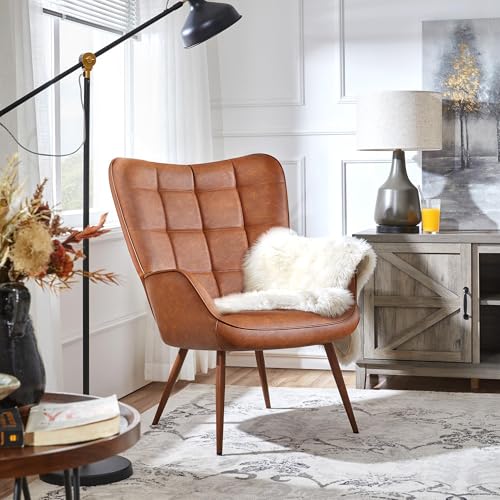
Key Takeaways
- Verdict in brief: the classic club armchair is the best all-round single seat for relaxed daily sitting, provided your room can afford its footprint.
- Suits: film watchers, evening readers who sit low and loose, and anyone furnishing a main living room around comfort.
- Does not suit: very small rooms, sitters who need a high firm seat to stand easily, or anyone wanting a formal upright posture.
- Build quality varies more than appearance suggests — frame and suspension separate the lasting chairs from the lookalikes.
- The Christopher Knight Home club armchair is the mid-tier reference; Yaheetech and Furmax cover the entry tier, the Stone & Beam Bradbury the premium end.
In this guide
Armchair Review: What This Chair Is and Where It Fits
The club armchair began as exactly that — the deep, leather seat of clubs and libraries — and its modern fabric descendants keep the essential geometry: a low seat, a back that wraps rather than stands, and arms that flow into the back so the sitter is held in a continuous curve. That geometry produces a specific posture. You sit low, slightly reclined, with your arms supported along their whole length and your shoulders free to drop. It is the posture of unwinding, and it is why the club style remains the default armchair a century after its invention: no other silhouette relaxes a body as completely without a mechanism.
Where does it fit in a modern home? Squarely in the living room, as the sofa’s partner and rival. A club armchair balances a three-seat sofa, completes an L-shaped arrangement, and gives a household its second distinct sitting personality — the sofa for company and sprawling, the club chair for one person’s deliberate comfort. It also works in a large bedroom or a study, anywhere a low, settled seat suits the room’s pace. What it is not is a space-saver or a formal chair. Households furnishing a dining-adjacent sitting area or a small flat’s only seat should read the comparison section carefully, because the club chair’s virtues are inseparable from its volume. Readers who want the full category picture first will find it in the armchair buying guide; this review assumes you are already interested in this type and want it examined closely.
The market segment matters too. Club armchairs exist at every tier, and the silhouette hides the differences ruthlessly: an entry-tier club chair and a premium one can look near-identical in a listing photograph while differing in frame timber, spring type, foam density, and fabric endurance — the four things that decide whether the chair is a five-year pleasure or a one-year lesson. This review therefore spends as much time under the upholstery as on it. The models referenced throughout — Christopher Knight Home at mid tier, Yaheetech and Furmax at entry, Rivet for the swivel variation, and Stone & Beam’s Bradbury at premium — are the reference points; check price on Amazon for each and compare the construction details the listings disclose.
Design, Build and Setup
Start with the silhouette. A true club chair reads as one continuous upholstered mass, with the arms and back forming a single shell and the seat cushion nested inside it. Better examples keep the proportions balanced — arms wide enough to use, a back high enough to lean into without swallowing a short sitter, and a seat deep enough for crossed legs without exiling shorter legs to a cushion prop. Detailing varies by maker: nailhead trim on traditional variants, clean welted seams on modern ones, and tufting on the more decorative models. The reference Christopher Knight Home chairs lean traditional, with tailored upholstery and stud detailing on several variants, and they photograph exactly as they sit — substantial, calm, and unmistakably club.
Underneath, the build follows the pattern this site always interrogates. The frame is the skeleton: kiln-dried hardwood with reinforced joints at the premium end, engineered wood with sound joinery in the honest middle, and lighter constructions at entry tier that trade longevity for price and shippability. Suspension in club chairs is usually sinuous springs under the seat — the right choice for this design, giving support with a little life — while the cheapest versions substitute webbing that will sag on a schedule. Cushioning is typically a foam core, sometimes wrapped in fibre for a softer first contact; feather blends appear at premium tiers and demand plumping. Arms on a club chair are structural as much as comfortable, because people push on them to stand, and a well-built club chair’s arms feel like part of the building. A wobbly arm on day one is a prophecy, not a quirk.
Specification Notes (General, for This Chair Type)
- Form: low, wide club silhouette; arms continuous with the back.
- Frame: hardwood or engineered wood depending on tier; joinery quality is the tell.
- Suspension: sinuous springs typical at mid tier and above; webbing at the lowest tiers.
- Cushions: foam core, often fibre-wrapped; feather blends at premium tiers.
- Upholstery: polyester blends, velvet, linen-look weaves, or leather by model and tier.
- Assembly: legs or minimal assembly on most flat-shipped models; larger traditional chairs may arrive fully built.
- Note: exact dimensions and materials vary by model — confirm on the current listing before ordering.
Setup is the club chair’s quiet advantage over its size. Most modern club armchairs ship with legs detached or as a small number of pieces, which transforms the doorway problem: the chair that would never turn a stair corner as a finished object arrives as manageable parts and becomes substantial only once it is standing in its room. Assembly, where required, is measured in minutes and basic fixings rather than an afternoon and a toolbox. Once built, placement follows the chair’s nature — angled toward the sofa for conversation or toward the screen for viewing, with a side table inside arm’s reach, because a club chair without a surface for a drink is a job half finished. Leave a little air around it; club chairs look best with breathing room, and the low silhouette reads as intentional rather than stranded when it is given a lamp or a table as a companion.
Performance in Real Use
Reading and Quiet Evenings
Reading in a club chair is a posture negotiation, and the chair mostly wins. The low, wrapped shape supports a relaxed read beautifully — book resting against the arms, legs crossed or stretched to a footstool, shoulders down. Long-form readers should note two refinements: the deep seat benefits from a firm lumbar cushion behind the back for upright stretches, and the arms, while generous, sit lower than a wingback’s, so the book rests lower too. Pair the chair with a proper reading lamp — the club silhouette provides no shade from a badly placed light — and sessions of an hour or two pass without the fidgeting that upright chairs induce. For readers who sit bolt upright with a book at eye level, a wingback remains the better tool; for readers who sink in with a novel and a drink, the club chair is the natural habitat. The comparison in accent chair vs armchair shows how much support is surrendered when a household tries to make a light accent chair do this job instead.
Films, Television and Long Sits
This is the club chair’s championship event. The reclined geometry, the full-length arm support, and the deep seat were effectively designed for the two-to-three-hour sit, and the chair delivers it without the mechanical complexity of a recliner. Necks fare well because the back’s angle does not force the head forward; a small cushion under the neck perfects it for shorter sitters. Where the club chair loses a point to recliners is the legs: without a footrest mechanism, long sessions want a footstool or ottoman, and households should budget the floor space for one from the start. With that addition, many owners find the club chair matches a recliner’s comfort while looking like furniture rather than equipment — a trade living rooms usually appreciate.
Conversation and Hosting
As a social seat the club chair is generous and slightly territorial. Guests love it — it is usually the seat visitors choose first — and its wrapped shape makes a single guest feel hosted rather than parked. The low seat does make rising less graceful for older guests, a small social cost worth knowing if your hosting skews multigenerational; offer the sofa’s higher end to grandparents and keep the club chair for yourself without a flicker of guilt. In a conversation grouping, the chair’s inward, settled posture works best angled toward the group rather than square to the room, and its visual weight anchors the arrangement so effectively that one club chair can organise a whole seating area around itself.
Everyday Living: Naps, Laptops and the Rest of Life
Real use includes everything brochures omit. The club chair naps respectably for a non-recliner — curled sideways it cradles one adult comfortably, and children treat it as a small country. Laptop work is possible for calls and short bursts, with the arms supporting elbows, but the low reclined posture is wrong for hours of typing; treat it as a thinking seat, not a desk. Pets adopt club chairs instantly, drawn by the enclosed shape, which makes fabric choice and a washable throw operational decisions rather than styling ones. And the chair collects life — books in the seat crease, a throw over one arm, reading glasses on the other — in a way that reads as lived-in rather than messy, because the design has the mass to carry it. Performance, in the end, is not a laboratory measure; it is whether the chair disappears into your evenings. The club chair, properly sized, does.
Strengths and Trade-Offs
Strengths
- Genuinely relaxing geometry: the low, wrapped, continuous-arm shape unwinds a sitter like nothing else without a mechanism.
- Long-sit endurance: deep seat and full arm support carry films, novels, and slow evenings without pressure points dominating.
- Room presence: one chair anchors a seating arrangement, balances a sofa, and gives a living room its finished look.
- Simple, durable concept: no mechanism to service, and a well-built frame and spring base can serve for many years.
Trade-Offs
- Footprint: the generous width and depth demand real floor space and breathing room, and small rooms feel it immediately.
- Low seat: harder to rise from for older sitters and anyone with knee trouble; the wrong chair for mobility-sensitive households.
- Needs a footstool for full long-sit comfort, which adds cost and more floor space to the true total.
- Budget versions imitate the silhouette with webbing and light frames — the look is easy to fake, the comfort is not.
The Reference Models in Focus
A type review earns its keep against specific chairs. The following models are this review’s reference points, presented prose-only while verification is pending; check price on Amazon for current details, dimensions, and fabric options.
Christopher Knight Home Club Armchair — The Reference
This is the chair the review is calibrated against: a proper club silhouette at a mid tier, with tailored upholstery, traditional detailing on many variants, and proportions that suit average-to-large sitters. In use it delivers the type’s full promise — a low, settled, enveloping sit that handles films and long evenings with ease — and its build feels a clear class above the entry tier in frame solidity and cushion density. Its honest limitations are the type’s own: a serious footprint, real weight, and a low seat that mobility-sensitive sitters should test mentally before ordering. If the club chair concept suits your home, this is the level at which to buy it.

Yaheetech Tufted Accent Armchair — The Entry Interpretation
Yaheetech’s chair borrows the club idea at entry tier: upholstered, tufted, arm-wrapped, and scaled a little smaller and firmer than the true club form. It reads well, assembles easily in the room, and serves guest corners and first homes honourably. What it does not do is reproduce the deep, sinking sit — the seat is firmer and more upright, and the cushioning is built to a price. Judge it as an affordable upholstered armchair with club styling rather than a club chair at a bargain, and it will not disappoint; expect the full club experience, and it will.
Furmax Modern Fabric Armchair — The Compact Cousin
Furmax’s fabric armchair trades the club wrap for a cleaner, more compact modern shape, and in doing so trades some long-sit indulgence for space manners and movability. It suits apartments, bedrooms, and secondary seats, and its upright sit actually beats the club chair for conversation and short work bursts. As a data point in this review it proves the type’s boundary: shrink the club form too far and you have a good armchair, but a different one. Households choosing between this and a true club chair are really choosing between flexibility and indulgence.
Stone & Beam Bradbury Armchair — The Premium Neighbour
The Bradbury is a rolled-arm traditional armchair rather than a pure club, and including it sharpens the review: beside the club chair’s low wrap, the Bradbury sits a little higher and more formally, with arms shaped for resting and a presence suited to classic rooms. Its premium tier buys the best construction and cushioning in this comparison, and its seat is kinder to sitters who rise often. Households torn between comfort and formality often land here, and the choice is legitimate — the club chair relaxes harder, the Bradbury behaves better. Neither is the wrong answer; they are answers to slightly different questions.
How It Compares
| Chair | Sit character | Space demand | Tier | Choose it if… |
|---|---|---|---|---|
| Christopher Knight Home Club Armchair | Low, deep, enveloping | High | Mid | You want the true club experience as a main seat |
| Yaheetech Tufted Accent Armchair | Firm, upright, compact | Moderate | Entry | Budget and guest duty come first |
| Furmax Modern Fabric Armchair | Upright, compact, tidy | Low | Entry | Space is tight and the seat is secondary |
| Rivet Revolve Armchair | Mid-firm, rotating | Moderate | Mid | One seat must face several directions |
| Stone & Beam Bradbury Armchair | Supportive, traditional | High | Premium | You want formality with real comfort |
The comparison clarifies what this review keeps circling: the club chair’s rivals beat it on specific axes — compactness, rotation, formality, price — and lose to it on the single axis of relaxed long sitting. Buying decisions get easier once that is admitted. If your evenings are films and novels in one settled spot, the club chair’s axis is the one that matters, and the mid-tier reference model is the sensible purchase. If your life needs the seat to move, rotate, or behave formally, a rival’s axis matters more, and the wider roundup in armchair reviews scores the whole field rather than this one type. The armchair pros and cons ledger is also worth reading alongside, since it weighs the category rather than the club form specifically.
Who Should Buy It — and Who Should Skip It
Buy the club armchair if you are furnishing a main living room and your sitting is relaxed and individual: films, streaming, novels, slow weekend mornings. Buy it if your room passes the tape test with room to spare and your doorway passes the parts of the chair, if not the whole. Buy it at the best construction tier you can reach, because the type rewards frame and cushion quality every single evening. Households with the space and the habit will find it becomes, quietly, the most contested seat in the home — the surest field sign of a correct furniture purchase.
Skip it if your room is small and honest about it: a club chair in a tight flat converts its main virtue into its main offence. Skip it if the primary sitter has mobility difficulties, because the low seat is a daily obstacle no cushion fully fixes — a higher, firmer traditional armchair or a lift-assist design serves that household better, and our notes on living room chairs for back pain cover supportive alternatives. Skip it if you need the seat to double as formal upright seating for work or dining-adjacent use. And skip the entry-tier imitations if the chair will be sat in daily for hours: the silhouette will arrive, but the comfort that justifies the footprint will not, and you will have bought the type’s costs without its benefits.
Pre-Purchase Checklist
- Floor outline taped and lived with for a day, with walking room preserved.
- Delivery path measured; assembly-in-room confirmed if any turn is tight.
- Seat depth checked against the main sitter’s legs; a footstool planned for long sits.
- Frame material and suspension type named in the listing, in words.
- Fabric matched to pets, children, and sunlight in the actual room.
- Side table and light planned, so the chair is usable the day it arrives.
- Return terms for a large item read before ordering, not after.
Setup, Care and Maintenance Essentials
Assemble in the destination room, tighten fixings evenly, and re-check them after a week of use as the joints settle. Position the chair at a conversational angle rather than flat against a wall, with its table within arm’s reach and its light — if it is a reading seat — coming over the shoulder rather than into the eyes. The first fortnight is a negotiation between cushion and body; foam softens slightly and the seat becomes more itself, so judge the chair at week two, not hour two, unless something is plainly wrong.
Care follows the rhythm this site recommends for all upholstered seating. Vacuum weekly with an upholstery tool, including the crease where seat meets back. Rotate the seat cushion if the design allows, and plump fibre or feather blends back into shape as part of sitting down, not as a separate chore. Blot spills immediately and never rub them in; test cleaners on a hidden patch first. Keep the chair out of punishing direct sun where possible, or rotate its position seasonally so fading, if it comes, spreads evenly. Once a year, check leg tightness and glance underneath at the suspension — ten minutes that catch small problems while they are still small. A club chair maintained on this light schedule holds its looks and its sit for years, and its frame for far longer. The step-by-step method behind these checks is laid out in how to choose an armchair.
Two repairs deserve mention because they extend this chair type’s life so effectively. The first is cushion re-foaming: when a good chair’s seat softens after years, a replacement foam core — cut to the cushion’s dimensions by any upholstery supplier — restores the original sit for a fraction of a new chair’s cost, and the frame and fabric carry on untouched. The second is leg and glide replacement, which cures the wobble and floor-scratching that owners sometimes mistake for structural failure. A chair type that accepts these small renewals is a chair type that can serve for a very long time, and that service life is part of the verdict this review has reached: the club armchair is not merely comfortable, it is maintainable, and maintainable furniture is the kind that stays in families.
Final Verdict
The classic club armchair earns its reputation. Examined closely — geometry, build, and evenings of real use — it remains the most relaxing single seat in the ordinary home, and the Christopher Knight Home reference model shows the type at its sensible best: honest construction, true proportions, and a sit that justifies its footprint every day. Its limits are equally clear: it needs space, it sits low, and its cheap imitations betray it. Buy the real thing at the best tier you can reach, give it a table, a lamp, and a footstool, and it will repay you in the currency furniture is actually for — evenings that feel better than they did before it arrived. Decide the remaining question — whether any armchair earns space in your home at all — with is an armchair worth it, and check price on Amazon for the models named here when you are ready to order.
A closing word on method, because it generalises beyond this chair. Every judgement in this review came from the same four questions: how is it framed, how is it sprung, how is it cushioned, and how is it covered — asked in that order, before style, before colour, before price tier. Those questions work on every armchair in this cluster and, frankly, on most upholstered furniture you will ever buy. A chair that answers all four in plain words is a chair whose maker expects to be examined, and that expectation is the most reliable quality signal in the entire furniture market. The club armchair that passes the four questions and fits your body’s three numbers is not a gamble. It is the closest thing furniture offers to a sure thing.
Rivet Revolve Armchair — The Swivel Variation
The Revolve is not a club chair, and that is its value in this review: it shows what the club form gives up to gain rotation. The Revolve’s tailored, mid-firm seat turns to face conversation, screen, or window from one footprint, which in open-plan rooms is worth more than depth. Against the club chair it loses the enveloping wrap and the low sunk posture; against everything else in a flexible room it wins on usefulness. Households whose seat must multitask should weigh it seriously — and should verify the base action on delivery, since a swivel chair is its base.
A Week With the Chair: How the Sit Settles
Chairs reveal themselves across days, not minutes, so it is worth describing the settling-in pattern a buyer of this type should expect. On the first evening, a good club chair feels almost formal in its newness: cushions are at their firmest, the fabric is uncreased, and the sitter is conscious of sitting in something new. By the third or fourth evening, the seat cushion has begun its slight, healthy softening, the sitter’s habits have colonised the chair — the throw migrates to one arm, the current book takes up residence in the crease — and the posture the chair encourages has become automatic. By the end of the first week, the honest verdict is available: either the chair has disappeared into the household’s evenings, which is success, or a specific discomfort has repeated itself every night in the same place, which is information.
The discomforts worth acting on are specific and diagnosable. A pressure point behind the knees means the seat is too deep for the sitter, fixable with a firm back cushion that shortens the effective depth. A neck ache after films means the head is unsupported at the viewing angle, fixable with a small neck cushion or a repositioned chair. A sense of climbing out of the chair means the seat is too low or too soft for that sitter’s knees — the one flaw cushions cannot fully fix, and the strongest argument for testing seat height numbers against your own body before ordering. Everything else — slight firmness, unfamiliar arm height — is the ordinary negotiation between a body and a new chair, and it resolves itself within the fortnight. Judge the chair at day fourteen, and judge it by whether you choose it over the sofa without thinking. That unthinking choice is the review metric that matters most, and the club chair, correctly sized, wins it in most households we know.
Fabric and Finish Options, Reviewed Honestly
The club chair’s upholstery decides its daily personality as much as its frame decides its lifespan. The common polyester and polyester-blend fabrics are the sensible default: they hold colour, resist the ordinary spill when blotted promptly, and keep the chair’s price in the tier where most households shop. Velvet versions transform the same chair into the room’s visual event — the wrapped club shape wears velvet beautifully, catching light along its curves — at the cost of pile marks, pet hair enthusiasm, and a cleaning routine that rewards gentleness. Linen-look weaves give the chair a relaxed, informal register that suits bright rooms, and they breathe well in warm climates, but they show arm wear earlier and absorb spills faster than tighter synthetics.
Leather club chairs are the type’s ancestral form and still its most durable luxury: the surface wipes clean, develops character instead of shabbiness, and suits the low wrapped shape’s library heritage. The honest costs are the tier jump, the seasonal temperature of the surface, and permanent scratch records from claws and hardware. Faux leather splits the difference — easier on the budget and the conscience of some buyers, easier to clean than fabric — with the caveat that lower-quality coatings can crack over years in a way neither real leather nor good fabric does. Whichever upholstery you choose, order the decision by your household’s facts: the dog, the children, the sunlight, the red wine. The chair will meet all of them.
Sizing the Chair to the Sitter
Because the club chair adjusts nothing, its numbers must match the body in advance, and three numbers do most of the work. Seat height decides rising and resting: lower suits relaxed lounging and shorter legs, while sitters with knee trouble should stay at the higher end of the type’s range. Seat depth decides back support: the sitter’s back should reach the backrest with feet supported — on the floor or a footstool — and no pressure behind the knees. Overall width decides the wrap: generous widths cradle broad sitters and crossed legs, while narrower versions keep the chair’s footprint honest in smaller rooms. Measure a chair you already sit in happily and carry those numbers to every listing; they predict your experience more reliably than any photograph or adjective.
Households with several sitters should size for the person who will use the chair most, not for an average of everyone — an averaged chair fits nobody in particular and becomes nobody’s favourite. The second sitter’s comfort can be tuned with cushions, which are cheap and replaceable; the primary sitter’s fit cannot be tuned at all, because it is built into the frame. This is the same advice the armchair buying guide gives for the whole category, and it applies with double force to a chair type whose entire value is the quality of one person’s sit.
The Club Chair in Different Rooms
The living room is the type’s natural stage, but the review would be incomplete without its other postings. In a primary bedroom with the floor space, a club chair creates a genuine retreat — a seat for reading and dressing that is entirely separate from the bed’s gravity — and its low profile keeps it from looming over the room’s most horizontal furniture. In a study or home office it serves as the thinking seat, the place for documents, calls, and consideration, and its comfort is a professional asset in disguise: people do their best slow thinking in chairs that do not nag them. In a hallway or landing, only the compact club-styled models earn their place, and even there the chair must justify blocking circulation space with daily use.
Two rooms argue against the type. Small children’s rooms and playrooms punish its low, climbable mass and its fabric exposure simultaneously; a simpler, washable seat wins there. And formal dining-adjacent sitting areas, where chairs are used upright for short social stretches, waste the club chair’s talents while exposing its casual register — a wingback or traditional armchair behaves better in that company. The pattern is consistent with everything this review has found: the club chair is a specialist in relaxation, and it performs best wherever relaxation is the room’s actual business.
Value Across the Tiers
This review prints no prices, but the tier structure of the club chair market is itself a finding. At entry tier, you buy the silhouette and a serviceable sit for light use; the construction compromises — webbing, lighter frames, thinner foam — are real but proportionate if the chair’s duties are light. The mid tier, where the reference Christopher Knight Home sits, is where the type becomes itself: spring suspension, a frame that feels like furniture, cushions with staying power, and fabrics that survive a household. The step from entry to mid is the largest quality jump in this market, and daily sitters should make it if they possibly can.
Premium club chairs — and the premium traditional chairs like the Bradbury beside them — buy refinement and longevity rather than a different experience: better hides and weaves, hand-finished detailing, superior springs, and tailoring that keeps its shape for many years. For a settled household buying a decade’s seat, that arithmetic can favour premium strongly; cost per year of a chair used daily falls quickly at every tier, and fastest where the chair is loved most. The dishonest zone is neither entry nor premium but the badly described middle, where mid-tier money buys entry construction under attractive fabric. The defence is the one this review has repeated throughout: frame, suspension, cushion, fabric — named in words, or walk away. Readers deciding whether the spend itself is justified will find the full value argument in is an armchair worth it.
Common Complaints About Club Armchairs, Answered
“It Is Harder to Get Out Of Than I Expected”
The most common club chair complaint is really a sizing confession. The low, deep, soft seat that relaxes a sitter also resists their rising, and the effect multiplies for anyone with knee or hip limitations. The answers, in order of honesty: choose a firmer cushion and the higher end of the type’s seat-height range at purchase; add a firm seat pad that raises the effective height slightly; use the arms — which is what they are structurally for — rather than the cushion edge when rising. And if rising is a daily medical concern rather than a mild annoyance, accept the review’s earlier advice and buy a higher traditional armchair instead. The club chair’s posture is its identity; fighting it with accessories has limits.
“The Seat Felt Great in the Shop and Soft at Home”
Two different effects hide inside this complaint. The first is normal: new foam softens measurably across its first weeks, and every chair’s week-two sit is gentler than its day-one sit — reputable chairs settle into their intended feel rather than collapsing past it. The second is construction: webbing-based seats and low-density foam continue past settling into sagging, and the sitter ends up in a hammock the design never intended. The distinction is time and trajectory — settling plateaus, sagging progresses. Buyers protect themselves at the listing stage, by insisting on named suspension and cushion construction, because once the chair is home the difference between the two effects takes months to prove and the return window has long closed.
“It Looked Smaller Online”
It always does. Furniture photography uses wide rooms, high ceilings, and lenses that flatter volume, and the club chair — all width and wrap — is the type most betrayed by the gap between image and room. The only defences are the unglamorous ones this review keeps prescribing: compare the listed dimensions against your taped floor outline, compare them against a piece of furniture you already own, and check the chair’s scale against the sofa it will sit beside, because a club chair that dwarfs the sofa makes both pieces look wrong. Households that do this arithmetic are never surprised by size; households that trust photographs are surprised every time, and the surprise is expensive to return.
“The Fabric Shows Everything”
Sometimes true, and almost always a selection error rather than a chair error. Pale, flat fabrics in busy homes, velvet under a shedding dog, linen beside a toddler’s cup — each is a mismatch between material and household that the listing photographs could never warn about. The remedies are the throw over the working arm, the weekly vacuum rhythm, prompt blotting, and, at replacement time, the honest fabric conversation this review recommends: performance weaves and mid-tones for hard-working homes, delicate fabrics reserved for quiet rooms. The chair’s shape is blameless in these stories; the fabric was simply never introduced to the household it would live with.
A Second Look After the First Impression: Testing Armchair Against Real Routines
This section exists to look again after the first impression has faded, because the qualities that sell a product in the first hour are rarely the ones that decide whether it is still liked in month three. It adds a layer that a feature list cannot give you, grounded in the living room furniture context this armchair will actually live in. Where this guide names examples such as Christopher Knight Home Club Armchair, Yaheetech Tufted Accent Armchair, Furmax Modern Fabric Armchair, use them as test cases for the checks below rather than as shortcuts past them.
It also helps to separate the problems a armchair can solve from the problems it merely moves. If the underlying difficulty is space, the answer may be a smaller format or a different location rather than a more elaborate model. If the difficulty is time, look for the option that removes steps rather than the one that performs each step slightly better. If the difficulty is that several people want different things, a compromise design that everyone rates as good enough will usually outlast a specialist design that one person loves and everyone else avoids. Naming the real problem in one sentence, out loud, before you order, is a surprisingly powerful filter, and many shoppers find that the sentence itself points at a different armchair than the one they started out researching.
Start with the unglamorous measurements. For a armchair, the numbers that decide satisfaction are rarely the headline ones in a listing; they are doorway width, turning space on the stairs, floor clearance and the distance to the nearest table or lamp. Write the real dimensions of your space down, including the awkward constraints you normally work around without thinking, and hold every contender up against that sheet rather than against a showroom photograph. Then walk the route the armchair will take on delivery day and during normal use. A choice that fits on paper but fights you every time it is moved, opened, cleaned or stored will lose its shine quickly, however strong its other qualities look in a comparison table.
Next, rehearse the week, not the ideal day. Picture the armchair inside movie nights, reading sessions, guests staying longer than planned and children treating every edge as a climbing frame. Most disappointment comes from buying for the best-case scenario: the tidy version of the household, the motivated version of yourself, the weather or the guest list you hope for rather than the one you usually get. If the armchair only makes sense when everything goes to plan, it is the wrong size, the wrong format or the wrong purchase for now. If it still looks useful on the tired, rushed, slightly chaotic version of the day, it has passed the most honest test there is, and the remaining questions are about detail rather than direction.
Pay close attention to the recurring friction points, because they compound. With a armchair, owners tend to run into fabric marking, cushions softening unevenly and legs scratching the floor when the piece gets dragged instead of lifted. None of these is dramatic on its own, and that is exactly why they get underestimated at buying time. Ask how the design you are considering handles each one: can the wearing part be replaced, can the awkward part be reached without tools, does the job take two minutes or twenty. A armchair that makes its own upkeep easy gets maintained; one that makes upkeep a project gets neglected, and neglected products perform badly in ways that then get blamed on the original purchase.
Use the listings as a checklist rather than as entertainment. For each armchair you shortlist, note the exact variant, the included parts, what is sold separately, and which photographs show the item in a setting like yours rather than in a studio. If a model named elsewhere in this guide catches your eye, treat it as a worked example for this process: run it through the same measurements, the same weekly rehearsal and the same friction list before letting familiarity turn into preference. Consistency is the whole trick. Shoppers go wrong not by choosing the objectively weaker armchair, but by judging one contender on features, the next on looks and the third on a single enthusiastic anecdote.
Think about who else has a vote. A armchair is usually shared, moved, cleaned or complained about by more than one person, and the second user’s priorities are often the ones that surface after the return window closes. Check height, weight, reach, noise, heat, sharp edges or sheer visual presence, whichever apply, against the smallest, oldest or least enthusiastic person who will live with it. If you are buying for a household that includes children, pets, elderly relatives or lodgers, run the clumsy scenario too: the spill, the knock, the curious tug, the door left open. A robust armchair choice survives other people; a fragile one only survives its buyer.
Frequently Asked Questions
What defines a club armchair compared with other armchairs?
The club armchair’s signature is its continuous, wrapped form: low seat, arms that flow into the back in one curve, and a deep, enveloping sit. Wingbacks stand tall and upright, barrel chairs wrap a smaller frame, and traditional rolled-arm chairs sit higher and more formally. If a chair invites you to sink and stay, with your arms supported along their whole length, it is working in the club tradition regardless of what the listing calls it.
Is a club armchair comfortable for tall people?
Often yes, with a check on depth. The deep seat and low posture suit long legs better than most chair types, and the wrapped back supports broad shoulders well. The number to verify is seat depth against your own leg length, plus back height if you want head support. Very tall sitters should also confirm overall width, since some compact club-styled chairs scale the whole design down. When the dimensions fit, tall sitters are among the club chair’s happiest owners.
How long does a mid-tier club armchair last?
A mid-tier chair with a sound frame and sinuous-spring suspension should give many years of daily use, with the seat cushion the first element to soften. Cushions can be re-foamed or replaced, which resets the chair’s comfort without replacing the chair. Entry-tier versions built on webbing typically show seat sag within a few years of daily use. Lifespan follows construction far more than brand, which is why this review weights frame and suspension so heavily.
Does a club armchair work in a small living room?
Only the compact end of the type, and only with honest measuring. A full-size club chair in a small room crowds walkways and dwarfs neighbouring furniture. If the tape outline on your floor leaves comfortable walking room and the chair will be the room’s one indulgence, a smaller club-styled model can work beautifully. If the outline fights the door swing or the sofa, choose a compact modern or barrel armchair instead and enjoy the room you have.
What should I put next to a club armchair?
A small side table within arm’s reach is the essential companion — the chair’s low arms put drinks and books at exactly table height. Add a footstool or ottoman for long sits, since the deep seat rewards raised legs, and a lamp positioned over the shoulder if the chair is a reading seat. A throw completes the setup for cooler evenings. These companions are part of the chair’s real cost and comfort, so plan them with the purchase.
How do I clean an upholstered club armchair?
Vacuum weekly with an upholstery attachment, working into the seat-back crease where debris collects. Blot spills immediately with a clean cloth — never rub, which drives liquid deeper — and use only cleaners tested first on a hidden area, following the maker’s fabric guidance. Rotate and plump cushions regularly to spread wear. Keep the chair out of harsh direct sun where possible, and deal with pet hair using the method your fabric tolerates best, from a damp hand on smooth weaves to a lint roller on velvet.
Related Guides
The rest of this cluster: armchair buying guide, armchair reviews, armchair pros and cons, how to choose an armchair, and is an armchair worth it. For a lighter single seat, compare the accent chair review.


