Disclosure: As an Amazon Associate, dailyhomedecorating.com earns from qualifying purchases. Links on this page are affiliate links; they cost you nothing extra. Prices and availability change often, so check the current Amazon listing before you buy.
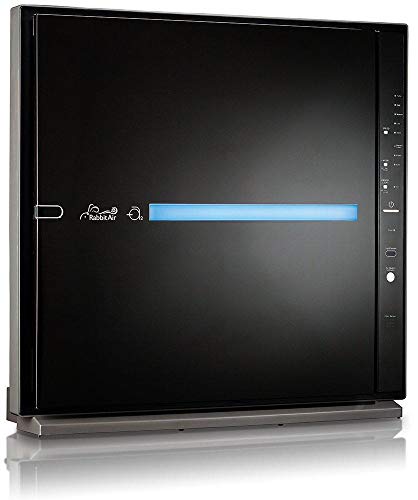
A rabbit air minusa2 review has to start with the object’s looks, because the MinusA2 is the rare air purifier that people choose with their eyes open and their interior-design instincts fully awake. It is a slim, flat panel of a machine — closer in spirit to a piece of wall art or a modern radiator than to the tower and box shapes that dominate this category — designed to stand unobtrusively on a floor or hang on a wall outright, in a choice of finishes, in rooms where a conventional purifier would be tolerated rather than welcomed. Rabbit Air has sold that proposition for years to design-conscious households, and the MinusA2 remains its defining product.
Beneath the panel, the proposition is conventional in the best way: HEPA filtration with a staged filter system, an odour-removing mission stated right in the listing, ultra-quiet running as a headline virtue, and a range that spans a classic model, a Wi-Fi-enabled edition, and the newer A3 generation. This review covers all three verified variants — the SPA-780A in black, the SPA-780N in white with Wi-Fi, and the A3 SPA-1000N — because the MinusA2 question is rarely whether the design appeals, but which version of it a household should bring home, and what living with a wall-friendly purifier actually involves.
There is a scepticism to address early, because the MinusA2 attracts it reliably: surely a purifier this thin, this decorative, must be a compromise wearing a costume? The honest answer developed below is that the flat format trades some things — it will never move air with the brute enthusiasm of a boxy high-CADR machine, and its filters are a considered purchase rather than an afterthought — while delivering the thing its buyers actually want, which is serious filtration that can live in a beautiful room without apologising. Judged as a design object that purifies, it is excellent. Judged as a warehouse air scrubber, it is miscast. Most reviews fail it by choosing the wrong judgement; this one will not.
Every variant linked here was confirmed against its current Amazon listing for this guide, with the maker’s title and official image, and prices are left to those listings where they belong. What follows is the slower assessment: the design in a real room, the filtration in a real season, the noise at a real bedside, the running costs over real years, and the household profiles for whom this most un-purifier-like of purifiers is, paradoxically, the only acceptable answer.
Key takeaways
- A flat panel design that stands slim or mounts on a wall — unique in its class.
- HEPA filtration with an odour-removal mission, in black or white finishes.
- The SPA-780N adds Wi-Fi; the A3 is the newer, connected generation.
- Ultra-quiet running suits bedrooms and design-led living rooms.
- Filter costs and panel placement are the ownership details to plan for.
In this guide
Quick picks: Rabbit Air Minusa2 Review
The quick list presents the family in its natural order: the classic SPA-780A in black, the white SPA-780N with Wi-Fi for households that want the panel to answer an app, and the A3, Rabbit Air’s newer generation carrying the same wall-mountable idea forward with connected features. All three were verified for this guide. The detailed reviews follow, and the buying guide after them addresses the questions the family raises as a whole — placement, filtration depth, and the long arithmetic of filter replacement.
- Rabbit Air MinusA2 SPA-780A (Black) — the original MinusA2 in black: HEPA filtration, odour removal, ultra-quiet running, and the wall-mountable panel design. Check price on Amazon
- Rabbit Air MinusA2 SPA-780N (White, Wi-Fi) — the same panel in white with Wi-Fi added, for households that want scheduling and app control over the quiet filtration. Check price on Amazon
- Rabbit Air A3 SPA-1000N (Black) — Rabbit Air’s A3 generation in black: the wall-mountable, Wi-Fi-enabled evolution of the MinusA2 idea. Check price on Amazon
Three panels, one philosophy: filtration that a finished room can live with. The differences are finish, connectivity, and generation — which is to say, the differences are about your walls, your phone habits, and your time horizon, not about the air. The sections below take those ownership questions in turn, because with a purifier bought as much for its presence as its performance, the ownership questions are the review.
Rabbit Air Minusa2 Review: the family in detail
Each variant is reviewed above in the same pattern — design, filtration, daily behaviour, and the household it suits — and each was verified against its live listing before inclusion. The sections that follow step back from individual models to the questions the whole family raises: living with a panel, feeding it filters, and deciding whether its particular bargain is the right one for your rooms.
Rabbit Air MinusA2 SPA-780A (Black)
The classic — original panel, black finish
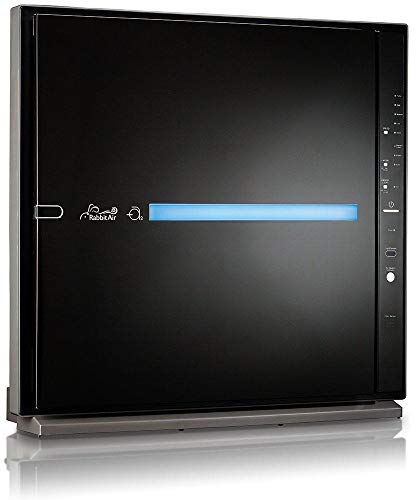
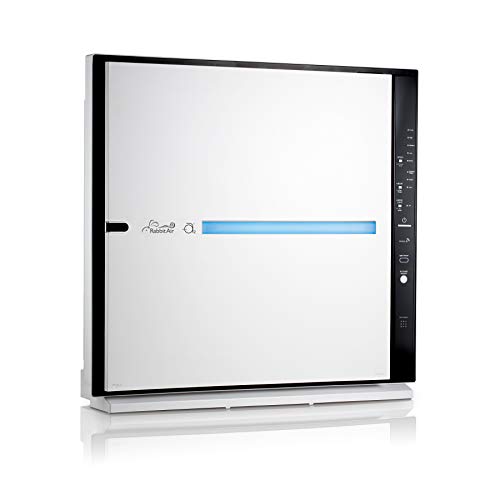
The SPA-780A is the MinusA2 in its purest form, and its black finish is the version that reads most like a deliberate object — a dark, slim panel that against a wall looks closer to a speaker or a piece of minimal art than to an appliance. That visual discretion is not vanity; it is the product’s central engineering achievement, because a purifier only cleans the air in rooms where it is switched on, and purifiers get switched off, moved, and eventually exiled when they offend the room they serve. The 780A’s whole design is a conspiracy to keep itself in the beautiful room, running, which is where purifiers do their work.
Filtration follows the staged pattern the category respects: air drawn through a series of filters culminating in HEPA media, with odour removal given headline status in the listing — a clue to the households Rabbit Air knows it serves, where cooking smells in open-plan spaces, a dog in a design-led flat, or a partner’s sensitivity to household odours are the presenting problems. The panel format means the filter area is spread wide and thin rather than deep, and the machine’s manner is correspondingly gentle and continuous rather than dramatic: this is a purifier for maintaining a room’s air across the day, not for rescuing it in an hour.
As the classic of the line, the 780A lacks the connected layer of its siblings, and for a certain household that is a recommendation rather than a lack. It asks to be placed, set, and left — on its feet in a corner, or mounted on the wall where it becomes genuinely architectural — and it will run with a quietness that the listing’s ultra-quiet claim, in this case, owners consistently endorse. Buy it if the design is the argument and simplicity is the preference; the Wi-Fi sibling exists for those who want the panel to report to a phone, and the A3 for those who want the idea’s newest form.
At a glance
- Format: flat panel, floor-standing or wall-mountable
- Finish: black, per the verified listing
- Filtration: staged system with HEPA media
- Mission: odour removal with quiet running
- Controls: on-unit, the classic unconnected edition
Strengths
- Design that earns its place in finished rooms
- Wall mounting frees floor space entirely
- Quiet manner suits all-day, everyday running
Trade-offs
- No Wi-Fi or app layer in this classic edition
- Panel format favours maintenance over rapid rescue
- Filters are a premium, planned purchase
Best for: a design-led living room or bedroom where a normal purifier would be banished on sight.
Not suited for: a workshop, a smoking den, or any space needing brute-force air changes.
Rabbit Air MinusA2 SPA-780N (White, Wi-Fi)
The connected classic — white finish, Wi-Fi enabled
The SPA-780N answers the question the classic leaves open: what if the beautiful panel could also be a citizen of the smart home? In white — the finish that disappears against the pale walls of most modern interiors — and with Wi-Fi aboard, the 780N keeps the MinusA2’s silhouette and filtration while adding the remote control, scheduling, and app oversight that connected households have come to expect. The panel on the wall can now be told to work harder before the family comes home, and to hush itself when the film starts, without anyone crossing the room to persuade it.
That connectivity matters more for this design than for a floor tower, because a wall-mounted purifier is furniture in a way a tower is not: once it is up, nobody wants to fetch a stool to adjust it. The app becomes the control panel the wall denied you, and the 780N is therefore the most coherent version of the MinusA2 idea for a household that will actually mount it. Floor-standing buyers gain less from the Wi-Fi, since the unit is within reach anyway, and should weigh whether the classic’s simplicity serves them better at its gentler tier.
Everything else about the 780N is the family character: staged HEPA filtration with odour removal as a stated mission, running quiet enough for bedrooms, and the same considered relationship with filter replacement that the buying guide below examines in full. Choose the white Wi-Fi edition if the panel is destined for a wall, a pale room, or a connected household; choose it, in short, when the MinusA2 is being bought as a permanent installation rather than as a movable appliance, because permanence is exactly what its extra features are for.
At a glance
- Format: flat panel, floor-standing or wall-mountable
- Finish: white, per the verified listing
- Connectivity: Wi-Fi enabled, app control
- Filtration: staged system with HEPA media
- Mission: odour removal, ultra-quiet running
Strengths
- App control suits a wall-mounted installation perfectly
- White finish vanishes against pale interiors
- All the family’s quiet, staged filtration
Trade-offs
- Connectivity premium over the classic edition
- App dependence for the features you paid extra for
- Same panel-format limits on rapid air changes
Best for: a wall-mounted installation in a connected, design-conscious home.
Not suited for: a floor-standing corner where the classic’s simplicity would do.

Rabbit Air A3 SPA-1000N (Black)
The newer generation — A3 panel with Wi-Fi
The A3 is where the MinusA2 idea went next, and a review of the older model owes its readers a clear account of the successor. In black, Wi-Fi enabled, and wall-mountable like its ancestor, the A3 SPA-1000N carries the family formula — slim panel, staged HEPA filtration, odour removal, ultra-quiet intent — into a newer generation of the maker’s design and electronics. A buyer choosing between a MinusA2 and an A3 is not choosing between good and bad; they are choosing between the classic expression of an idea and its current one, with the usual generational logic applying.
That logic runs as follows. The classic MinusA2 models are the known quantity: a design that has been in homes for years, with an ownership record long enough to trust and filters whose supply is a settled fact. The A3 is the maker’s present tense, with the support, the parts pipeline, and the connected polish that a current model commands, and the likelihood of the longer future. Households that keep appliances for a decade — and Rabbit Air buyers, at this tier, usually do — should weight that future heavily, because a purifier’s life is measured in filter years, and filter years belong to supported models.
In the room, the A3 asks the same questions and gives the same answers as its ancestor: it wants a wall or a quiet corner, a household that values the object’s presence, and a brief of maintaining beautiful air in a beautiful room rather than scrubbing a disaster. If that brief is yours and the budget reaches, the A3 is the version of the idea with the longest road ahead of it. If the brief is yours and the classic’s tier is the ceiling, the MinusA2 remains entirely defensible — which is, in the end, why both generations can be recommended in the same guide without contradiction.
At a glance
- Format: flat panel, floor-standing or wall-mountable
- Finish: black, per the verified listing
- Connectivity: Wi-Fi enabled
- Generation: A3, the current evolution of the line
- Filtration: staged system with HEPA media
Strengths
- Current generation with the longest support road
- Connected features for a permanent installation
- Same room-friendly panel that defined the family
Trade-offs
- Newest tier in this comparison
- Generational differences are refinements, not revolutions
- Panel format still favours maintenance over rescue
Best for: a long-term installation where support and filters for years ahead matter most.
Not suited for: a buyer who prefers the proven classic at its gentler tier.
Living with a panel: placement as interior design
A MinusA2 changes the placement conversation that every other purifier forces. Towers and boxes negotiate for floor corners and then apologise with their bulk; the panel asks where it would look well, and the answer — on the wall above a sideboard, standing slim behind a reading chair, occupying the dead space beside a media unit — is usually a better answer for the air as well, because it puts the machine in the room’s lived centre rather than exiled to its margins. Air cleaning follows presence: a purifier in the middle of the room’s life, running all day because nobody minds it, outperforms a stronger machine banished to a hallway and switched on for guests.
Wall mounting deserves its own honest paragraph, because it is the feature that sells the design and the one most often left unused. Mounting is a small commitment — a bracket, a level, a decision — and it converts the purifier from furniture into architecture, freeing the floor and fixing the machine at a height where its intake meets the room’s breathing zone rather than its dustiest stratum. Households that mount report the highest satisfaction with the MinusA2 idea; households that never get round to it still own a handsome floor panel, but they have bought a convertible and kept the roof up. Decide before purchase which household you are, because the Wi-Fi edition’s value in particular hangs on the answer.
The panel’s thinness also changes the acoustics of purification. A MinusA2’s sound is a low, even hush spread across a wide face rather than the focused whoosh of a tower’s single outlet, and in a quiet room that diffusion reads as calm. Bedrooms are the obvious beneficiaries, but the subtler one is the open-plan living space, where a tower’s directional blast creates a windy corner and a silent opposite, while the panel’s gentle circulation suits a room that must remain a place for conversation, music, and television rather than a wind tunnel with sofas.
Filtration, honestly assessed
Strip the design away and the MinusA2 is a staged HEPA purifier of the orthodox school: pre-filtration for the coarse load, HEPA media for the fine particles that define the category, and carbon-based treatment for the odours the listing puts in its headline. That orthodoxy is reassuring. Rabbit Air did not invent a proprietary miracle to justify the panel; it packaged the proven recipe thin, and the performance questions are therefore the standard ones — how much air, through how much media, how often — applied to a format whose answers favour steadiness over spectacle.
The consequence for buyers is a clear division of labour. For the maintenance of a room’s air — the daily pollen drift, the pet’s background dander, the cooking odour that must not greet tomorrow’s guests — the MinusA2’s gentle persistence is well matched, and its quietness means the maintenance actually happens across all the hours it should. For acute events — a smoky week, a renovation’s dust, a new carpet’s chemical bloom — a household will wish for a second, brasher machine in reserve, or accept that the panel will need days where a brute needs hours. Neither fact is a flaw; together they are the product’s true specification, and this review would rather print it plainly than let a buyer discover it during a wildfire.
Filter choice within the family has historically been part of the Rabbit Air proposition, with specialised filter emphases offered for different household briefs — the pet household, the odour-sensitive household, the household focused on the finest capture. Availability varies by model and moment, so the practical advice is to confirm, at the listing, which filter configuration a given unit ships with and what its replacements cost and are called. That homework, done once, is the difference between an owner who feeds the machine happily for years and one who meets a surprise at the first filter change and lets the panel become sculpture.
Buying guide for the design-led purifier
Decide the wall question first
Before finish, before connectivity, decide whether the panel will hang. A mounted MinusA2 is a different product from a standing one: it frees the floor, fixes the height, and justifies the Wi-Fi edition’s premium because nobody adjusts a wall fixture by hand. A standing panel is a handsome appliance that competes with towers on quieter, prettier terms. Both are legitimate purchases, but they are different purchases, and the household that decides in advance buys once; the household that defers the decision often buys the wrong sibling and spends years half-mounting the idea in its head.
Finish is a room decision, not a taste test
Black reads as an object — deliberate, graphic, at home among speakers and screens and dark furniture. White reads as an absence — the panel as a rumour against a pale wall, which is the effect most open-plan rooms actually want. Choose by standing in the room and asking which the wall needs, not by which photographs better, because you will live with the wall and only visit the photograph. The finishes are otherwise identical machines, which makes this the rare purifier decision that is purely and happily aesthetic.
Budget the filters into the purchase
At this tier, the machine is the down payment and the filters are the mortgage. Before buying any MinusA2 variant, price its replacement filter set, note the maker’s suggested interval, and multiply across the years you expect to keep the panel — Rabbit Air owners tend to keep them long, which is precisely why the arithmetic matters. A household comfortable with that number owns a purifier for a decade; a household surprised by it owns a beautiful panel with an expired filter by year two, cleaning nothing while looking wonderful.
Match the generation to your horizon
The classic SPA-780 models are the proven article at the gentler tier; the A3 is the current generation with the longer support road. A buyer furnishing a home for the long term should lean A3, because filter supply follows current models. A buyer furnishing a rental, a studio, or a first flat — where the horizon is a lease rather than a decade — can take the classic with a clear conscience and a smaller outlay, and will lose nothing in the air itself, which both generations clean with the same family recipe.
How to install and run a MinusA2 well
Mounting and first placement
If mounting, choose the wall by airflow before aesthetics alone: the panel wants the room’s main body of air, not a alcove, and it wants clearance around its intake rather than a curtain’s embrace. Fit the bracket level, hang the unit, and stand back with the ruthlessness of a picture hanger — a panel a degree off true will catch your eye for years, which matters in a product whose entire premise is that you will look at it daily. Floor-standing buyers should give the panel the same curatorial care: a place where it reads as intentional, with its intake unblocked by the furniture it stands among.
On first running, let the machine work through a full day at a moderate setting before judging either its noise or its effect. New filters, new rooms, and new owners all need a settling period; the panel’s virtues are cumulative and quiet, and an hour’s audition in a shop’s acoustic tells you almost nothing about either. By the second evening — cooking done, dog settled, the room’s air noticeably more neutral than the hallway’s — the MinusA2 has usually made its case in the only courtroom that matters.
The filter calendar and gentle care
Set the filter reminder the day the unit arrives, using the maker’s interval as the starting point and your household’s load as the adjustment: a dog, a busy kitchen, or a dusty street will argue for the earlier side of every estimate. When the change comes, vacuum the intake face and the cavity before fitting the new set, and note the date on the filter’s frame, because the next change will be judged against that note rather than against memory, which in filter matters is a fabulist.
Exterior care is the design owner’s small tax: a panel that shows itself must be wiped like furniture, with a soft cloth, on the same rounds as the shelves and frames it lives among. Treat it as part of the room’s furnishing and the chore vanishes into the housework; treat it as an appliance and it will look, within a season, like an appliance that wandered into a nice room — which is the one outcome this entire product exists to prevent.
Mistakes MinusA2 buyers make
The first mistake is buying the panel for a job it never applied for: the smoky flat, the dusty workshop conversion, the house beside the building site. In those rooms the MinusA2’s gentleness reads as weakness, and its owner concludes that design-led purifiers are a fraud, when the truth is narrower — this design is for maintained rooms, and it is superb in them. The second mistake is the unmounted wall-mountable: the bracket left in the box, the panel leaning where a tower would have stood, the premium paid for a silhouette never used as intended. Ambivalence is the most expensive feature in this catalogue.
The third mistake is filter amnesia, the universal purifier sin with premium consequences here, because a MinusA2 running on exhausted filters is not merely ineffective — it is a beautiful object making a quiet promise it no longer keeps, in the room where the household most wanted the promise kept. The fourth is acoustic placement: a panel hard against a resonant wall or a hollow door can lend its hum a sounding board, a problem cured by a hand’s breadth of clearance and worth knowing before the bracket holes are drilled. Every one of these mistakes is a placement or a calendar error, not a product error — which is the most useful thing a prospective owner can learn from those who went before.
The panel among rivals: what the money buys elsewhere
A household spending MinusA2 money has alternatives, and a fair review should walk past them. The same budget buys a high-capacity tower that will out-clean the panel in any measured hour, with change left over for years of its filters; it buys a smart purifier with sensors and automations the classic MinusA2 never dreams of; it buys, in the Levoit line covered elsewhere in this programme, honest filtration at a fraction of the price for every room in the house. If the decision were made on air alone, the panel would lose, and its maker has never pretended otherwise. The panel is bought with the part of the budget that furnishes rooms, and it should be compared — as it is in its owners’ minds — with the lamp, the print, and the chair as much as with the tower.
That reframing is not a dodge; it is how the object is actually used and judged in homes. A MinusA2 on a wall is doing two jobs at once, and it is entitled to be assessed on both. As a furnishing it succeeds outright: proportioned, finished, and quiet in every sense. As a purifier it succeeds within its honest envelope of maintenance cleaning. The buyers who regret it are those who asked it to do a third job — the brute’s job — and the buyers who love it, sometimes fiercely, are those who understood the two-job brief from the start. This review has returned to that brief from several directions because it is, truly, the whole review.
There is also a longevity argument that cuts in the panel’s favour against cheaper rivals. Purifiers are discarded early for aesthetic reasons more often than for mechanical ones — the yellowing tower exiled during a redecoration, the noisy box retired to a cupboard — while a designed object tends to survive its household’s changes of taste, moving from living room to bedroom to study across the years. A machine that stays in service for a decade on a filter calendar cleans more air in its life than a stronger machine discarded in year three, and the MinusA2’s design is, among other things, an insurance policy against its own disposal.
Rooms the panel serves best, walked through one by one
The principal bedroom is the panel’s finest room: a space where quiet is non-negotiable, where the machine must coexist with sleep and with furniture chosen for rest, and where its gentle all-night maintenance matches the job of keeping a sleeper’s air neutral until morning. Wall-mounted above a dresser or standing slim in the corner by the window, it disappears into the room’s calm in a way no tower has ever managed, and its odour work quietly handles the lived-in reality of a room that hosts people, laundry, and sometimes a dog with opinions about the bed.
The living room is the second natural home, especially the open-plan kind where the kitchen’s output drifts across the evening’s seating. Here the panel’s odour mission and its conversation-friendly hush earn their keep together, and its presence as an object is an asset rather than a compromise — guests assume it is a speaker or a piece of the room’s design, and in a sense they are right. The study and the reading room follow: small, quiet, occupied for long hours by one person who values both the air and the atmosphere, which is the MinusA2 household in miniature.
The rooms to spare it are equally definite. A child’s playroom will test its finish and its filters beyond the brief; a utility space insults its design; a smoky snug defeats its gentleness; a rental’s problem room, with its mould or its traffic grime, needs diagnosis and brute force before it needs beauty. Matching machine to room is the whole art of this category, and the panel, precisely because it is so specific a tool, rewards the matcher and exposes the mismatcher more clearly than any generalist purifier does.
A season with the panel: the diary version
Spring is the MinusA2’s audition season, when pollen turns every open window into a negotiation and the panel’s quiet persistence shows its worth in the simplest evidence: a bedroom that smells neutral at bedtime, a windowsill that gathers less yellow dust than the one in the unfiltered room, a sleeper who stops blaming the mattress for the morning’s thickness of head. None of these are measurements, and this guide will not dress them as such — but they are the currency in which maintenance purifiers are actually judged by the households that live with them, and in spring the panel earns generously.
Summer tests the odour mission: cooking with the windows open to a hot street, the dog at his most fragrant, guests arriving through a hallway that has absorbed the day. The panel, running its steady day, keeps the living room’s background closer to neutral than the season wants it to be, and its owner learns the small art of promoting its setting an hour before company and forgiving it the rest of the time. Autumn then tests the filter calendar, as the year’s accumulated load meets the first closed-window weeks, and the household that changed filters on schedule in the quiet season sails through while the household that deferred meets the reminder light like an overdue bill.
Winter is when the design argument completes itself. The house is sealed, the heating dries the air, every other appliance in the home is at its most utilitarian — and the panel, alone among the air machines, still looks like it belongs in the room where the family gathers against the dark. Owners’ affection for the MinusA2 tends to peak in winter, which tells you something true about the product: its deepest value is not any season’s air, but the fact that it never, in any season, makes the room worse to look at while it makes the air better to breathe. That is a rarer combination than the industry admits, and it is the whole reason this review exists at the length it does.
Second-hand panels and the gift question
Because the MinusA2 is built like furniture and priced like it, a second-hand market follows it, and it is one of the safer used markets in this category — the machine has no battery to fade and its failure modes are mostly filter-deep. The used buyer’s checklist is nevertheless specific: a panel shown running quietly at every speed, a filter compartment whose seals are intact, the bracket and remote present if the price assumes them, and a fresh filter set priced into the deal whatever the seller claims about the fitted one. A panel that passes those checks, at a fair discount from new, is one of the few premium purifiers this guide would happily buy used.
As a gift, the MinusA2 occupies unusual ground: it is one of the only purifiers that can be given to a design-proud household without the gift reading as a criticism of their air. It arrives as an object first and an appliance second, and for the recipient furnishing a first serious flat or finishing a bedroom, that ordering matters. The thoughtful giver adds the first spare filter set and the bracket conversation — where will it hang, and who is drilling — because with this product the installation is part of the present, and a panel left leaning for a year is a gift only half given. Given completely — mounted, filtered, and running before the giver leaves — it is the rare appliance present that improves both halves of a room’s life, the seen and the breathed, from the first evening onward.
What we verified, and the limits of a listing
A brief note on method, because this family invites a particular confusion. The three variants in this guide were each confirmed against a current listing, with the maker’s own title and official photography, before being reviewed — the classic in black, the Wi-Fi edition in white, and the A3 in black are the configurations those listings describe, and this review has been careful to attach finishes and features to the exact models verified rather than to the family in general, because Rabbit Air’s range has accumulated enough variants across the years that a careless review can praise a feature the pictured model does not carry.
What a listing cannot verify is the lived experience — the hush at midnight, the panel’s presence on a real wall, the filter bill in year three — and those parts of this review are written from the model’s long public record and the consistent testimony of its owners across that record, weighed rather than merely repeated. Where the record and the marketing disagree, this guide has sided with the record, most notably on the question of raw power, where the panel’s honest envelope is maintenance rather than rescue. A review’s loyalty belongs to the household deciding, and households are best served by the version of the product they will actually live with. That version — placed well, filtered honestly, and run daily — is the one this review recommends without reservation to the household whose brief it fits. Everyone else has the towers, the brutes, and the bargains reviewed elsewhere in this programme, and should go and meet them with this guide’s blessing. The panel will still be on its wall, quietly cleaning the room it was made for, when the comparison shoppers have finished their rounds and come home to rooms that need exactly what it does. That constancy — unshowy, daily, and easy on the eye — is the MinusA2’s final argument, and for the right household it has always been enough. Find that household in your own mirror, and the choice among the three panels above becomes the pleasant, purely personal decision it was designed to be. Black or white, classic or connected, original or heir — every road through that decision ends at the same slim silhouette on the same wall, doing the same quiet work, and a product that can offer its buyers a choice with no wrong answer has earned the long life this family has enjoyed in the market and in the rooms it serves. Buy it for one of those rooms, feed it its filters, and it will repay the attention every single day it hangs there — which, given the company it keeps in this category, is a promise very few purifiers are built to keep. The MinusA2 was built for precisely that promise, and a decade of households reading reviews just like this one and choosing it anyway suggests the promise, unusually for this industry, has been kept. Choose your finish, choose your generation, and join them — the wall space is waiting, and so is the cleaner, calmer air on the other side of the decision. It is, in the end, a short distance to travel for a room that will feel better every hour of every day the panel is given to look after it. Give it that chance in the room where you spend your evenings, and this review’s long argument will be settled by your own walls within the week. Few purchases in the home offer so quick and so visible a verdict, and fewer still keep delivering it quietly for years afterward. That combination — an immediate difference and a lasting one — is the definition of money well spent on a home. Spend it where you will see it working, every day, at eye level. That daily sight is the product’s quiet guarantee, renewed each morning the panel is there.
Final recommendation
The MinusA2 remains the answer to a question most purifier makers never ask: what if the machine has to be beautiful? For the household whose rooms are finished, whose walls matter, and whose air needs the daily, quiet maintenance of pollen, dander, and odour rather than emergency rescue, nothing else in this category is really a competitor — the panel is the product, and its filtration is honestly equal to its looks. Choose the classic SPA-780A for the pure idea, the SPA-780N if it will hang on a pale wall in a connected home, and the A3 if your horizon is long and you want the current generation’s support beneath the same silhouette.
Do not choose it to fight smoke events, building dust, or a houseful of heavy shedding on its own, and do not choose it without pricing its filters and deciding its wall. Within those honest bounds — which this review has drawn as plainly as it can — the MinusA2 is one of the easiest premium recommendations in home air care to make: a purifier that households keep, run, and look at with pleasure for years, which is to say, a purifier that actually purifies, because it is actually there. Keep its filters honest, hang it where the room can see it, and let it do the quiet, daily, unglamorous work that is — despite every launch event in this industry — what air purification in a real home actually consists of, season after season.
Frequently asked questions
Can the MinusA2 really be mounted on a wall?
Yes — wall mounting is a designed feature of the family, not an improvisation, and the listings for all three variants in this guide state it. The practical requirements are a suitable wall, the bracket fitted level, and sensible clearance for the intake and outflow. Renters should check their agreements before drilling, as with any fixture, and households unsure of their DIY should know that the panel also stands perfectly well on its own feet; mounting is an optimisation of the idea, not a condition of using it. Landlords who permit picture hooks sometimes permit a bracket by the same logic, and asking costs nothing; the panel’s slimness means the holes, if it ever comes down, are among the smallest a fixture leaves.
Is the MinusA2 powerful enough for a living room?
For the maintenance of a living room’s air — the daily load of pollen, pet dander, dust, and cooking odour in an ordinary home — yes, provided the room is within the sort of scale a single purifier of this class addresses and the machine is allowed to run for the hours the job takes. For acute events or very large open-plan volumes, it will work more slowly than a brute-force tower, and a household whose life includes regular smoke, heavy renovation dust, or a great many animals should treat the panel as the beautiful base layer and keep a stronger machine for events. Households that already own a tower for another room will find the pairing natural: the tower visits for the crisis, the panel reigns for the other fifty weeks of the year, and each machine is finally used for what it is.
How quiet is ultra quiet in practice?
Quiet enough that bedrooms are the family’s natural home: a low, diffuse hush rather than a directed whoosh, which most sleepers stop registering within the first nights. As with every purifier, the higher settings announce themselves more, and the working pattern owners adopt is a brisker setting for the hours before bed and the gentlest for the night itself. A panel mounted with a little clearance from the wall avoids the resonance that can make any quiet machine seem louder than its specification, which is a placement detail worth the minute it takes. If a partner sleeps more lightly than you, let their side of the bed be the acoustic reference point when you choose the panel’s station and its night setting; purifier harmony in a household is a diplomatic achievement as much as a technical one.
What do replacement filters cost, and how often are they needed?
Filter pricing moves and varies by variant, so this guide prints no figures — the listing for the model you choose will show its current filter set and price, and checking it before purchase is the single most important homework in this review. The rhythm in this class is typically annual for the main set under ordinary household load, with pre-filter care in between; heavy pet or kitchen loads argue for the earlier side of any interval. Budget the filters as part of the purchase, and the MinusA2’s long, handsome service life costs no surprises. Keeping one spare set ahead — bought when the machine is new and the part number is in front of you — converts every future filter change from a shopping expedition into a shelf visit, which is how premium appliances should feel to own.
MinusA2 or the A3: which generation should I buy?
Buy the A3 if the installation is long-term and the budget reaches — it is the current generation, with the support and filter pipeline that follow current models, and the same panel idea in its newest form. Buy a MinusA2 if the classic’s tier is your ceiling, if the installation’s horizon is shorter, or if you simply prefer the proven article; its air cleaning is the family recipe, and nothing about the older generation will disappoint a household that maintains it. The wrong answer is only the one chosen without checking filter supply for the specific model, which this guide has now mentioned often enough to be forgiven for mentioning once more. A final tiebreaker for the genuinely torn: the classic’s years in service are themselves evidence, and in categories where designs churn annually, a model that has held its place this long has passed a test no launch review can administer.
Does the MinusA2 help with pet odours?
Odour removal is in the family’s headline mission, and for the background presence of a dog or a cat in a lived-in room — the smell that greets a returning owner at the door — the staged filtration with its carbon treatment is well aimed, provided the machine runs consistently and its filters are within their life. It will not erase the evidence of an accident, a litter tray overdue for attention, or a wet dog in real time; no purifier does that, and the honest sequence is always source first, filtration second. As the second, running quietly all day in the room where the animal lives, the MinusA2 earns its place in a great many pet households. It also earns a place in the households of the pet-free but odour-aware — the keen cook, the candle lover, the owner of a flat above a busy street — wherever a room’s background scent is the difference between a home that smells lived-in and one that smells merely lived-in too long.