Disclosure: As an Amazon Associate, dailyhomedecorating.com earns from qualifying purchases. Links on this page are affiliate links; they cost you nothing extra. Prices and availability change often, so check the current Amazon listing before you buy.
If you have been shopping for a way to deal with a stubborn smell in a house, a car, or a rental property, you have probably run into a product category that sounds almost too good to be true, and you may be asking a simple question: what is an ozone machine, and is it really the heavy-duty odor solution sellers claim it is? An ozone machine, also called an ozone generator, is a device that deliberately produces ozone gas and releases it into an enclosed space. That one sentence already separates it from almost every other appliance in the air-care aisle, because ordinary air purifiers try to remove things from the air, while an ozone machine adds a reactive gas to it on purpose.
This guide answers the question in full, without selling you anything. In fact, this page deliberately recommends no ozone machine at all, and by the end you will understand why. You will learn how these devices make ozone, where the technology is legitimately used, why regulators and lung-health specialists treat indoor ozone so cautiously, and what actually works when the real problem is a smell that will not leave. If your goal is a fresher, healthier home, the honest answer to “what is an ozone machine” is the starting point, not the finish line.
Key Takeaways
- An ozone machine is a generator that creates ozone (O3) gas using either a high-voltage corona discharge or ultraviolet light, then releases that gas into a room or vehicle.
- Ozone is a reactive oxidizer. It can attack odor molecules, which is why the technology is used in professional, unoccupied-space treatments and in water disinfection.
- The same reactivity that breaks down odors also irritates lungs and airways. Ozone is a regulated air pollutant outdoors, and health agencies advise against running ozone generators in occupied indoor spaces.
- No ozone machine is recommended or linked on this page. For everyday home air care, filtration with a true HEPA filter, activated carbon for odors, ventilation, and removing the odor source are the safer, better-supported tools.
- If an ozone treatment ever happens in a property you own, it should be an unoccupied, timed treatment followed by thorough ventilation before anyone goes back inside.
In this guide
What Is an Ozone Machine, Exactly?
Start with the gas itself. Ozone is a molecule made of three oxygen atoms, written as O3, whereas the oxygen we breathe is O2, two atoms joined together. That third atom is loosely attached, which makes ozone unstable and eager to react. When an ozone molecule bumps into many other kinds of molecules, it tends to hand off that extra atom in a chemical reaction called oxidation, changing the other molecule in the process. High in the stratosphere, a natural ozone layer absorbs ultraviolet radiation and is genuinely protective. At ground level, in the air people actually breathe, ozone is a well-known component of smog and a respiratory irritant. Same molecule, completely different context.
An ozone machine is simply a box built to manufacture that gas on demand and push it into an enclosed space. Inside the box you will typically find a fan, a power supply, and one of two ozone-producing elements described in the next section. Outside the box there is usually a timer dial or a set of output controls, because the whole method depends on filling a sealed, empty space with ozone, letting it react for a set period, and then airing the space out. Sellers market these devices for smoke smell after a fire or years of cigarettes, for pet and musty basement odors, for cars that smell of mildew, and for landlords turning over a rental unit. The marketing language tends to promise that ozone “destroys” odors at the molecular level rather than covering them up, and there is a kernel of chemistry truth in that claim, wrapped inside a much bigger set of caveats.
It helps to place the ozone machine in its family tree. It is not a filter: nothing passes through a medium that traps particles. It is not an ionizer in the usual small-appliance sense, although some ionizers produce trace ozone as an unwanted by-product, which is a different situation from a machine whose entire purpose is ozone output. It is also not the same as the ozone used by municipal water plants, where ozone is generated and dissolved into water inside sealed industrial systems to disinfect it, with no one breathing it. The home and light-commercial ozone generator is its own category, and it deserves to be judged on its own evidence.
How does an ozone generator actually make ozone?
There are two production methods you will meet again and again, and understanding them explains a lot about the machines’ behavior, maintenance, and marketing claims.
Corona discharge: the miniature lightning bolt
Most higher-output ozone machines use corona discharge. Inside the unit, electricity at high voltage is passed across a gap or through a dielectric plate, creating a field of tiny electrical discharges, a controlled cousin of lightning. When ordinary air or oxygen crosses that field, some O2 molecules are split apart, and the freed oxygen atoms recombine with other O2 molecules to form O3. Corona discharge units are the ones advertised with the largest output figures, and their output plates gradually foul with the by-products of the process, especially when the feed air is humid, so performance can sag over time unless the plates are cleaned or replaced. Humidity matters more than most listings admit: moist air reduces ozone yield and encourages the formation of nitrogen oxide by-products when plain air is the feed gas.
Ultraviolet generation: the lamp method
The second method uses an ultraviolet lamp tuned to a wavelength that splits oxygen molecules in the air passing over it, after which ozone forms the same way. UV ozone generators tend to produce lower, steadier output and are common in smaller devices and in some water-treatment equipment. Their lamps age like any lamp does, quietly losing intensity, so a UV unit’s real output in year three may be well below its label. Neither method is inherently “the safe one” for indoor air: the method changes output level and consistency, not the fundamental fact that the gas produced is ozone and ozone reacts with whatever it meets, including airway tissue.
Output claims and why the numbers are slippery
Ozone machines are commonly sold with output figures expressed in milligrams per hour. Treat those numbers as rough indicators at best. There is no single consumer testing standard that forces every brand to measure output the same way, in the same humidity, with the same feed air, so two machines with similar printed figures can behave very differently in a real room. What matters for both effect and risk is the resulting concentration in the space, which depends on room volume, leakage, furnishings that absorb ozone, temperature, and run time. That is also why “just run it for less time” is not a tidy safety dial: concentration in a small sealed car can climb far faster than in a large empty warehouse, and the person who opens the door afterward gets the first concentrated breath.
Where is ozone technology legitimately used?
Ozone is not a scam substance; it is a serious industrial tool with a long track record in the right settings. Water treatment is the classic example. Many municipal and commercial systems generate ozone on site and bubble it through water in sealed contact tanks, where it disinfects powerfully and then breaks back down into oxygen. Food-processing plants use ozone in controlled wash water and in cold-storage environments under occupational rules. Laundries at commercial scale use ozone dissolved in wash water. Restoration professionals sometimes use high-output ozone in fire-damaged or long-vacant buildings as one step among many, with the building empty, sealed, and posted, followed by ventilation and often by cleaning and sealing of the actual odor sources.
Notice the pattern in every legitimate use: trained operators, controlled doses, engineered systems, and either no people breathing the gas or strict occupational exposure limits for the workers involved. The consumer version strips away most of that control structure and keeps the gas. That gap between professional context and home context is the entire story of the ozone machine debate. A technology can be genuinely effective in a treatment plant and still be a poor idea in a bedroom.
Why are health agencies so cautious about indoor ozone?
The caution is not bureaucratic fussiness; it follows directly from the chemistry. Ozone does not distinguish between an odor molecule, the fabric of your sofa, the rubber seals on your refrigerator, and the lining of a human airway. It oxidizes what it touches. In the respiratory system, breathing ozone can irritate the throat and airways, provoke coughing and chest discomfort, aggravate asthma, and make lungs more susceptible to infection, and these effects are the reason outdoor ozone is tracked and regulated as a pollutant with public alert days in many cities. People with asthma, children, older adults, and anyone with existing lung disease are more vulnerable, but no one is immune at high enough concentrations.
There is also a dosing paradox that undermines the consumer pitch. At ozone concentrations low enough to be tolerated by occupants, ozone reacts slowly and is largely consumed by walls, fabrics, and furnishings before it can do much to odor sources embedded in those same materials, so the odor benefit shrinks toward the negligible. At concentrations high enough to oxidize odor compounds aggressively, the space is not fit for people or pets to occupy, plants can be damaged, and rubber, elastic, and some dyes and fabrics can degrade. Sellers sometimes gesture at a middle zone where the machine “sanitizes” a lived-in room at safe levels; regulators who have reviewed the evidence have repeatedly concluded that this comfortable middle zone is not supported, and that ozone at safe levels is not an effective air cleaner. If you take one idea from this entire article, take that trade-off: effective dose and breathable dose do not overlap.
A further wrinkle is chemistry you did not ask for. Ozone reacting with common indoor substances, such as the fragrances in cleaning products and personal-care items, can generate secondary by-products including formaldehyde and ultrafine particles. So a room treated carelessly can end up with a different air-quality problem layered on top of the original smell. Add the practical hazards — a running machine forgotten by a returning family member, a pet shut in the wrong room, a child who opens a door mid-cycle — and the risk picture for casual home use becomes hard to defend when gentler tools exist.
What should you use instead of an ozone machine at home?
The buying-guide layer of this article is deliberately a guide to not buying an ozone generator, and to choosing the right tool for the job you actually have. Nearly every problem people bring to an ozone machine breaks down into one of three jobs: particles in the air, gases and odors in the air, or an odor source embedded in the home. Each job has a proper tool.
| The job | The right tool | Why it fits |
|---|---|---|
| Dust, pollen, dander and smoke particles floating in room air | A purifier with a true HEPA filter | Filtration physically captures fine particles; performance is measurable and the air stays breathable while it runs |
| Everyday cooking, pet and household odors in the air | Activated carbon filtration plus ventilation | Carbon adsorbs many odor-causing gases; opening windows and running exhaust fans removes them at the source |
| Odor soaked into carpets, upholstery, walls or a car interior | Cleaning, extraction, and sealing or replacing the material | The smell lives in the material, so the fix must reach the material; air treatments alone cannot |
| Whole-home background freshness | Source control and moisture control | Fixing leaks, drying damp areas, and removing the cause prevents the odor instead of chasing it |
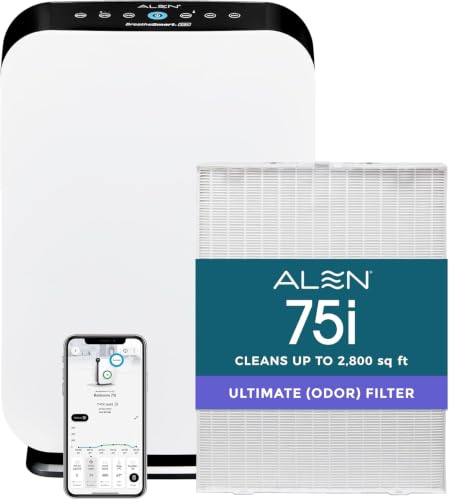
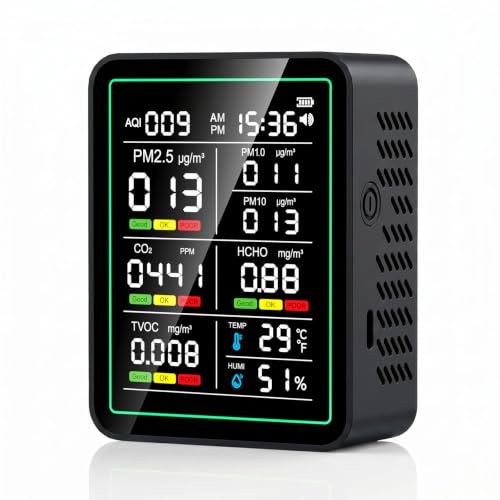
If particles are your issue, start with filtration and learn how the filter grades work in what is a HEPA filter and how the finer grades compare in HEPA H13 explained. If odors are the issue, a carbon-focused machine chosen from best air purifiers for odors works while you live in the room, which no ozone treatment can claim. For whole-room coverage questions, the whole-home purifier comparisons elsewhere on this site and best air purifiers for large rooms cover sizing, and if your real question is whether the air is bad in the first place, best PM2.5 air quality monitors and the background in indoor air quality statistics will help you measure before you spend. Readers weighing two appliance categories against each other may also find air purifier vs humidifier useful, because dry air and dirty air are often confused.
How do you actually get rid of a stubborn odor, step by step?
Here is the practical routine that restoration experience and plain building science agree on, and it works on the problems ozone machines are usually bought for: smoke, mustiness, pet odor, and the stale smell of a closed-up property.
Step one: find and remove the source
Odor that survives ordinary cleaning always has a reservoir. It might be carpet padding that wicked up pet urine, a drain trap that has dried out and is venting sewer gas, a damp crawlspace feeding a musty smell through the floor, cigarette residue filmed over walls and ceilings, or a forgotten bag of potatoes liquefying in a pantry. Walk the space slowly, nose first, room by room, and check the unglamorous places: under sinks, behind the refrigerator, inside the washing machine’s door seal, around toilet bases, and anywhere water has ever leaked. No air treatment, ozone included, outperforms removing the thing that smells.
Step two: clean the surfaces that hold the smell
Hard surfaces get washed with an appropriate cleaner; for smoke film that means a degreasing wash, sometimes repeated, because nicotine residue is stubborn and will keep off-gassing through fresh paint if it is sealed in dirty. Soft furnishings get extracted, laundered, or, when the padding or foam is saturated, honestly replaced. Carpets respond to hot-water extraction far better than to surface sprays. In cars, the equivalent routine is a full interior extraction, a cabin-filter replacement, and cleaning the evaporator housing if the smell is the classic sour air-conditioning odor.
Step three: ventilate like you mean it
Moving air is the oldest air cleaner there is. Cross-ventilation with windows on opposite sides, a fan blowing out of one window to pull fresh air through the home, and consistent use of kitchen and bathroom exhaust fans will clear ordinary odor loads in hours rather than days. This is also the mandatory final step after any professional ozone treatment, which tells you something about how much of the perceived “ozone worked” result is actually the airing-out that follows it.
Step four: filter the air while you live in it
Run a HEPA purifier for particles and a carbon stage for gases, sized to the room, with the doors in their normal positions. Give it days, not minutes; reservoirs release odor gradually, and steady filtration plus ventilation steadily wins. If a specific room defeats you, measure first and escalate deliberately rather than reaching for the strongest chemical option in the catalog.
If a property you own gets an ozone treatment anyway, what are the safety rules?
Sometimes ozone enters the picture without you shopping for it: a restoration contractor proposes it after a fire, or a landlord inherits a unit and a machine. If that happens, the non-negotiable rules are consistent across every responsible source. The space must be completely unoccupied — no people, no pets, and houseplants moved out — for the entire run and for a ventilation period afterward. The operator should work to a plan based on the size of the space rather than guesswork, seal the area as directed, and post it so nobody wanders in. After the run, the space gets aired thoroughly with outside air before re-entry, and anyone with asthma or other lung conditions should be extra conservative about returning early. Materials matter too: keep in mind that repeated or heavy treatments can age rubber gaskets, elastic, some fabrics and artwork, so valuables that can be removed should be removed.
Be skeptical of any proposal that breaks these rules. A service that offers to “ozone the house while you’re at home in the other room,” a seller who says a small unit is safe to run continuously in a nursery, or a listing that advertises an ozone machine as a health device for occupied rooms is telling you something important about its relationship with the evidence. Walk away from that version of the technology entirely. Equally, be wary of combination products that bury an ozone function inside an otherwise ordinary purifier without making the function, its output, and its off switch unmistakably clear; if a device you own has an ozone or “ionizer boost” mode you do not understand, leave it off and read the manual’s warnings section, which is usually blunter than the marketing page was.
What marketing claims about ozone machines should you distrust?
A short field guide to the sales language will protect you across the whole category. Claims that ozone “purifies the air you breathe” while you breathe it collide with everything in the safety section above. Claims invoking space agencies, hospitals, or hotels usually borrow the credibility of controlled professional systems — water treatment, unoccupied commercial work — and quietly apply it to a consumer box. The phrase “activated oxygen” is a rebrand of the same gas, not a gentler substance. Output figures quoted without test conditions are decoration. And testimonials about a car or room smelling “clean” after treatment are often describing the sharp, bleachy smell of residual ozone itself, which fades; whether the underlying odor returns in a week is the question testimonials rarely revisit. Finally, any claim that a home ozone machine treats, prevents, or improves a medical condition should end the conversation: that is precisely the kind of promise regulators have acted against, and precisely the kind this site will not repeat.
What are the most common mistakes people make with ozone machines?
The first mistake is running one in an occupied home because the listing made it sound like a normal purifier. The second is treating the timer as a formality and “just checking on it” repeatedly mid-run, breathing the highest concentrations at the doorway each time. The third is using ozone as a substitute for cleaning, then being surprised when the smell returns from its untouched reservoir within days. The fourth is escalating run times when the first treatment disappoints, which mostly escalates material damage and risk rather than results. The fifth is buying the machine for a mold problem: visible mold is a moisture and remediation problem, ozone does not remove mold growth or the water feeding it, and dead mold fragments left in place are still a mess to clean up properly. The sixth is assuming that because ozone occurs naturally outdoors, indoor exposure is automatically benign; lightning-fresh outdoor air after a storm contains ozone at very low, dispersed concentrations, which is a different world from a sealed room filled by a generator.
How did ozone machines end up in the consumer aisle at all?
A short history explains the category’s odd reputation. Ozone’s disinfecting power was recognized in the nineteenth century, and European cities were treating drinking water with it more than a hundred years ago. Through the twentieth century it remained mostly an industrial and municipal technology, generated on site because the gas cannot be bottled and shipped. The consumer chapter began when compact corona-discharge hardware got cheap: the same plates-and-transformer arrangement that served industry could be shrunk into a countertop box, and direct marketing did the rest. Through mail-order catalogs, late-night advertising, and eventually online marketplaces, ozone generators were sold with sweeping claims about purified air and sanitized homes, and regulators periodically pushed back against the health claims while the hardware kept selling on odor testimonials. Understanding that lineage matters because it explains the split personality you still see today: an engineering pedigree that is real, attached to household promises that the evidence never caught up with.
The regulatory position in the United States has been unusually consistent for a consumer product. Federal health and environmental agencies have stated for decades that ozone generators sold as air cleaners are not recommended for occupied spaces, that ozone at safe concentrations does little to clean indoor air, and that some devices can produce concentrations well above public-health standards. California went further and restricts indoor air cleaners by their ozone emissions, which is why you will see some purifiers advertised as meeting California’s emissions limits and some ozone machines carrying shipping restrictions or warnings aimed at that state. None of this makes owning a generator a crime, and professional use continues legitimately, but a shopper should notice when an entire category carries this much official caution while its listings carry this much enthusiasm.
What does a professional ozone treatment actually look like?
Because “the pros use it” is the strongest argument sellers have, it is worth describing professional practice accurately rather than letting the phrase do unearned work. In a typical restoration scenario — say a house with smoke odor after a kitchen fire, or a long-vacant property being prepared for sale — ozone, if it is used at all, comes late in the job. First the crew removes debris and the materials that cannot be saved. Then surfaces are cleaned, often repeatedly, because ozone cannot reach odor compounds buried under grease film or soaked deep into padding. Only then, with the building empty of people, pets, and plants, and with sensitive items removed or protected, does the technician set equipment sized to the volume of the space, seal the area, and run a planned cycle. Afterward the building is ventilated, sometimes for hours, and the crew re-enters cautiously to judge the result by nose at normal occupancy conditions, not in the bleachy after-smell of the treatment itself.
Professionals also know ozone’s failure modes from experience. It performs poorly against odors whose sources remain in place. It struggles in high humidity. It can set some odors oddly or shift a smell rather than eliminate it. It ages rubber and elastic, which is why a thoughtful operator protects or removes vulnerable items. And it is frequently paired with, or replaced by, other steps entirely: thermal fogging, hydroxyl-generator treatment in occupied-adjacent work (a different technology with its own debates), encapsulation sealers on prepared surfaces, and plain material replacement. When a homeowner buys a consumer machine, they are buying one step of that sequence, usually the least important one, without the cleaning that makes it meaningful or the controls that make it safe. That is the honest frame for every “professional strength” claim on a listing.
How do ozone machines handle the scenarios people actually buy them for?
The smoky car
Cars are the most common consumer use case because the space is small, sealable, and genuinely empty during treatment. Even here, the results people rave about usually follow the real work: a full interior clean, extraction of seats and carpets, a new cabin air filter, and attention to the air-conditioning system where sour smells breed. Ozone in a dirty car mostly perfumes the problem with its own sharp scent for a few days. In a clean car it can knock down residual odor in the headliner and vents, which is why detailers keep it in the toolbox — as a finishing step, with the car aired out thoroughly before the owner drives it, and never with anyone riding along during the run.
The rental turnover
Landlords face real pressure here: a unit that smells of cigarettes or pets rents slowly, and an ozone machine promises a weekend fix. The durable fixes are the boring ones — washing walls, sealing with an appropriate primer, replacing saturated carpet and pad, cleaning inside appliances and duct boots. Ozone used between tenants, in the empty unit, after that cleaning, is the professional pattern; ozone used instead of that cleaning is why some units smell fine at the first viewing and haunted by the second week of occupancy, when the reservoirs warm up and start releasing again.
The musty basement
Basement mustiness is moisture wearing a disguise. Until the water source is addressed — grading, gutters, a sump, a dehumidifier that actually keeps up — any odor treatment is a subscription, not a solution. Ozone in a damp basement also fights physics, since humidity suppresses output and feeds the underlying growth. The money an ozone machine costs is almost always better spent on drainage and drying, after which ordinary cleaning and air movement finish the job.
The “sick house” fear
Some buyers arrive at ozone after reading about mold, bacteria, or viruses, hoping for a whole-home sanitizing reset. This is where expectations need the most care. Sanitizing claims for occupied-home ozone are precisely the claims regulators have rejected, air in a real house is not a sealed test chamber, and surfaces throughout a home are not disinfected by a gas that is being absorbed by the first furnishings it meets. Households worried about illness should spend on ventilation, filtration, humidity control, and ordinary surface hygiene, and bring persistent health concerns to a clinician rather than to an appliance category.
Can you measure ozone at home, and does a low reading make a machine safe?
Curious owners sometimes buy handheld ozone meters or indicator cards, and the results tend to confuse more than clarify. Inexpensive sensors drift, respond to other gases, and measure at one spot while concentrations vary across a room — highest near the machine, lower behind furniture, different again at breathing height on the far side. A single reassuring number at the doorway does not describe what a child sleeping beside the unit would breathe across a night. There is also the by-product problem: a meter that reads ozone says nothing about the formaldehyde and fine particles created when ozone reacts with fragranced products in the room. Measurement has its place in professional hands with calibrated equipment and a plan. In consumer hands it mostly manufactures confidence, and confidence is the dangerous ingredient in this category, because it converts “run it empty and air it out” into “it says the level is fine, so the kids can stay.”
What if you already own an ozone machine?
Plenty of households have one in a closet, bought in good faith. Owning it does not obligate you to use it, and for routine home air care the advice stands: filtration and cleaning first. If you keep the machine for a genuinely empty-space job — a car you have already deep-cleaned, a vacant property between tenants — treat it with the respect you would give any tool that can hurt you. Read the manual’s warnings in full. Keep the plates clean per the manufacturer’s instructions, since fouled plates change output unpredictably. Store it where children will not experiment with it. Never lend it to a friend without the unoccupied-and-ventilate rules attached, in writing if necessary. And when it dies, do not replace it reflexively; ask whether the jobs you actually used it for would be better served by the cleaning and filtration tools this guide describes, because for most households they will.
Ozone versus the other air-cleaning technologies, honestly compared
Shoppers rarely meet ozone in isolation; they meet it on a shelf of competing promises. A fair comparison, technology by technology, shows why filtration owns the occupied home. Mechanical filtration — a fan and a HEPA filter — physically removes particles from air that passes through it, works continuously while people are present, and has performance that can be verified with standardized testing; its weakness is gases, which pass through a particle filter untouched. Activated carbon handles many of those gases and odors by adsorption, and it also works in occupied rooms, but carbon saturates and must be replaced, and it does nothing for dust or pollen. Ventilation dilutes everything at once and is unbeatable when outdoor air is clean, yet it depends on weather, pollen counts, and wildfire smoke staying cooperative. Ionization technologies occupy a middle band: some are near-silent and filter-light, but their real-world particle performance varies and ozone by-product is the question that follows the whole family around, which is why the dedicated explainer on what is PlasmaWave technology is worth reading before choosing any ion-based machine. Ultraviolet lamps inside ductwork or purifiers can inactivate microbes on surfaces or in fast-moving air under engineered conditions, but a lamp in a consumer box is not a whole-room sanitizer either. Against that field, the ozone generator’s single advantage — aggressive oxidation of odor compounds — comes bundled with the disqualifying condition that nobody can be home while it works. For a device category meant to improve daily life indoors, that condition decides the contest.
Questions to ask any contractor who proposes an ozone treatment
If ozone arrives in your life through a professional quote, you are in a stronger position than a retail shopper, because you can interrogate the plan. Ask what cleaning happens before the treatment and what the ozone step adds beyond it; a good answer names the reservoirs being cleaned and treats ozone as a finishing measure. Ask how the space will be verified empty, posted, and ventilated afterward, and how long before your family — including anyone with asthma — should return; a good answer is specific and conservative. Ask what materials they will remove or protect, which shows they understand ozone’s appetite for rubber and elastic. Ask what happens if the odor returns in a month, and whether the quote includes the sealing or material replacement that prevents that. And ask, plainly, whether they would run the same equipment in their own occupied home overnight; the pause before the answer will tell you most of what this article has tried to explain. A contractor who answers these questions well is probably using ozone the way the technology deserves. One who waves them off is selling you the consumer fantasy with a commercial invoice attached.
What does ozone do to the things in a room?
Material damage deserves its own short section because it surprises people who think of ozone as “just air.” Ozone is used industrially to age-test rubber precisely because it cracks and hardens it: think of the gaskets on a refrigerator or washing machine, the elastic in fitted sheets and clothing stored in a treated room, foam and latex components, and the seals around windows. Repeated treatments can fade dyes in fabrics and artwork, tarnish or corrode some metals and electronics contacts, and leave leather dry and unhappy. One careful treatment of an empty room is unlikely to ruin anything, and professionals plan around these sensitivities. The risk grows with the casual pattern — frequent, long, whole-home runs in a furnished house — which is, not coincidentally, the pattern consumer marketing encourages. A machine sold as gentle enough to run daily around your family is simultaneously strong enough, on its own advertising, to oxidize odor molecules out of existence; it cannot be selectively gentle toward everything else you own, and your lungs are part of everything else.
How long does ozone last, and what happens to it after a treatment?
Ozone is unstable by design. The same eagerness to react that makes it an oxidizer means it does not linger indefinitely: in typical indoor conditions it breaks down over a period measured in tens of minutes to a few hours, faster when the air is warm, humid, and full of surfaces to react with, slower in a cool, empty, sealed space. This is why generators must run continuously to maintain a concentration — switch the machine off and the level decays on its own — and why the ventilation step after a treatment is so effective: exchanging the room’s air for outdoor air dilutes what remains and sweeps out the by-products of all that reacting. It is also why “the smell is gone, so the ozone is gone” is an unreliable test. The sharp, electric, faintly bleachy odor of ozone is noticeable at very low levels for many people, and noses fatigue quickly; you can stop smelling a room you have been standing in while a fresh arrival notices it instantly. Time plus ventilation, not your nose, is the safe re-entry rule, and anyone who treated a space should err well on the generous side of both.
What ozone turns into is worth one more paragraph, because it closes the loop on the whole technology. When ozone oxidizes an odor molecule, the products are usually smaller, less smelly compounds, carbon dioxide, and water vapor — a genuine destruction of the odor, which is the truthful core of the sales pitch. When ozone instead reacts with the wrong partners — fragrance chemicals from a plug-in air freshener, solvents from a recent paint job, the terpenes in citrus cleaners — the products can include formaldehyde and other irritants, plus ultrafine particles formed in the air itself. The machine cannot choose its dance partners. In a stripped, cleaned, empty professional setting, the partners are mostly the intended ones. In a furnished family home full of scented products and soft materials, the chemistry set is far messier, which is yet another reason the same device is a tool in one context and a liability in the other.
A decision framework: the five questions that settle most ozone purchases
If you arrived here mid-shopping, run your situation through these five questions before anything goes into a cart. First, is the space going to be completely empty of people and pets during treatment and aired out afterward, every single time? If not, stop here. Second, have you already found and physically removed or cleaned the odor source? If not, do that first; it may end the project. Third, is your actual problem particles or gases in the air of a room you live in? Then filtration and carbon, running safely all day, are the answer instead. Fourth, is a professional already involved, with ozone as one late step in a documented cleaning plan? That is the one scenario where the technology earns its place. Fifth, are you hoping the machine will address mold, illness, or a health worry? Then the purchase is aimed at the wrong target entirely, and the money belongs in moisture repair, cleaning, ventilation, or a conversation with a clinician. Most readers will find their answer somewhere in the first three questions, and it will not involve owning an ozone generator — which is, in the end, the most useful thing a guide to what an ozone machine is can tell you.
Words you will meet in ozone listings, translated
A short glossary will save you from the category’s fog of terminology. “Corona discharge” is the high-voltage production method described earlier, not a quality badge. “Activated oxygen” and “energized oxygen” are marketing synonyms for ozone itself. “Output,” quoted in milligrams per hour, describes production at the machine under unstated test conditions, not the concentration your room will reach. “Shock treatment” is industry slang for a short, high-concentration run in an empty space; the word shock should tell you how the pros regard the dose. “Ozone-free” on a purifier means the device is designed and certified to emit little or no ozone, which is the claim you actually want on equipment for occupied rooms. “Ionizer” describes a charging technology that may or may not produce meaningful ozone depending on design, so it requires a follow-up question rather than a reflexive yes or no. “Hydroxyl” refers to a different reactive species generated by a separate class of devices; sellers sometimes blur hydroxyl and ozone together because both are oxidizers, but they are different technologies with different evidence and different operating rules. And “commercial grade” on a consumer listing means almost nothing regulated at all — it is an aesthetic, not a certification. Read every listing with this glossary open and the fog thins considerably: you will notice how rarely a seller answers the only questions that matter, which are how much ozone, in what space, with whom present, and what the plan is for airing the space out afterward.
Frequently Asked Questions About Ozone Machines
Is an ozone machine the same thing as an air purifier?
No. A conventional air purifier cleans air by moving it through filters that trap particles or adsorb gases, and it is designed to run while people are in the room. An ozone machine generates and releases a reactive gas into the space itself, and responsible use requires the space to be empty. They sit in the same shopping aisle but work on opposite principles, and health agencies that endorse filtration for home use consistently warn against occupied-space ozone generation.
Can I run a small ozone machine in my bedroom while I sleep?
That is exactly the use case to avoid. Sleeping occupants breathe the treated air for hours at close range, children and people with asthma are more susceptible to ozone’s airway effects, and at levels low enough to be considered tolerable the odor benefit is minimal anyway. For bedroom air, a quiet HEPA purifier sized for the room, run continuously, is the appropriate tool, and it is designed for precisely that overnight job.
Does ozone really remove smoke smell from a house?
Ozone can oxidize some odor compounds, which is why professionals sometimes include it as one step in fire and smoke restoration of empty buildings. But the heavy lifting in successful smoke jobs is physical: washing residue from surfaces, extracting or replacing soft furnishings, and sealing or repainting correctly prepared walls. A consumer machine run in a furnished, occupied home is not a shortcut around that work, and smoke odor that lives in carpet padding or wall film will outlast a casual ozone session.
Why do hotels and car detailers use ozone?
Because in their workflow the space is empty, the treatment is timed, and ventilation follows before the next guest or owner gets in. A hotel room or a car can be treated, aired, and verified by staff in a way a family living room cannot. The professional context is what makes the practice defensible; it does not transfer to running a generator around your own household.
Are ionizers and “plasma” purifiers the same as ozone machines?
Not exactly, but the family resemblance is worth understanding. Ionizers charge particles so they settle or collect, and some designs emit small amounts of ozone as a by-product; dedicated ozone machines exist to maximize ozone output, a difference of degree that becomes a difference of kind. If you are comparing powered air-cleaning technologies, the dedicated explainer on what is PlasmaWave technology walks through one manufacturer’s ionization approach and how it is positioned against ozone, and the virus-related filtration questions are handled carefully in do HEPA filters remove viruses.
What should I do if someone already ran an ozone machine in my home?
Ventilate first: open windows on multiple sides, run exhaust fans, and give the space time until the sharp, bleach-like smell is completely gone before spending time in the room, keeping children, pets, and anyone with lung conditions out for longer rather than shorter. If anyone has persistent coughing, chest tightness, or breathing difficulty after an exposure, treat that as a medical question for a clinician or urgent care, not a home-remedy question. Afterward, deal with the original odor using the source-removal routine in this guide so the machine does not get a second run.
The bottom line on ozone machines
So, what is an ozone machine? It is a device that manufactures a powerful, reactive gas — a gas that industry uses carefully in sealed systems and empty buildings, and that does not become gentle because a consumer version has a timer dial and friendly packaging. For the everyday goals that send people shopping — fresher bedrooms, less pet smell, relief from dust and pollen — filtration, carbon adsorption, ventilation, and honest cleaning do the work while you live your life in the room. Leave ozone to the professionals and their empty buildings, and spend your money on tools designed for occupied homes.
One last thought for the reader who came here hoping for permission to buy one: the desire underneath the purchase is almost always reasonable. You want a home that smells clean, a car you are not embarrassed to give a friend a ride in, a rental that does not carry the last tenant’s habits into the next lease. Those are good goals, and every one of them is achievable with the unglamorous sequence this guide laid out — find the source, clean what holds the smell, move fresh air through the space, and filter the air you actually breathe. The ozone machine promises to skip that sequence. What it actually skips is the part where the problem gets solved, and it charges your lungs and your belongings for the shortcut. Know what the machine is, respect what the gas does, and choose the slower tools that were built for homes with people in them.