Disclosure: As an Amazon Associate, dailyhomedecorating.com earns from qualifying purchases. Links on this page are affiliate links; they cost you nothing extra. Prices and availability change often, so check the current Amazon listing before you buy.
Some kitchen tools are bought; a thermoworks thermapen is adopted. The folding instant-read thermometer from ThermoWorks has spent years as the answer given by professional chefs, competition pitmasters and serious home cooks whenever the question “which thermometer?” is asked in earnest — and this guide exists to explain why, to separate the current flagship from its classic sibling and its budget stablemate, and to teach the technique that makes any instant-read thermometer tell the truth. Because the Thermapen’s real subject is not electronics. It is the moment in cooking when guesswork ends: the roast that is actually done, the chicken that is actually safe, the steak that is actually the colour you promised.
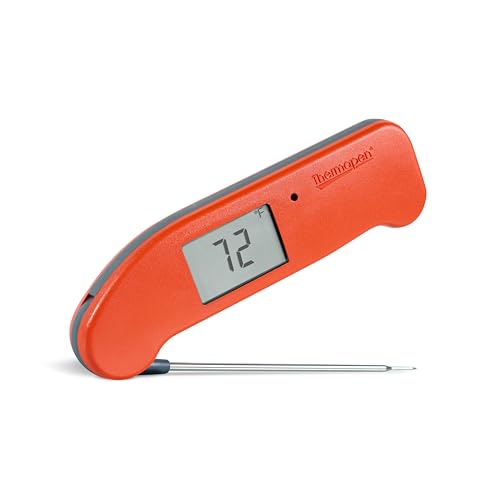
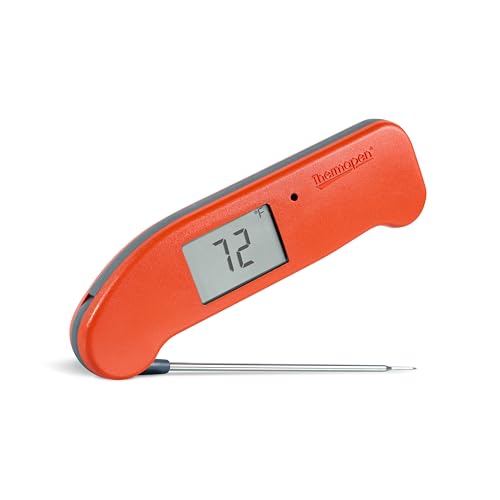
Three models anchor the page, all verified listings at the time of writing, and all — in the listings featured here — in the same Cayenne Pepper Red, which tells you something about the range’s confidence. The Thermapen ONE is the current flagship, described in its listing as the maker’s number-one recommended instant-read. The Classic Thermapen is the highly-rated original formula that built the reputation. The ThermoPop 2 is the value entry, a rotating-display pocket thermometer from the same house. Choosing among them is a genuine decision about speed, budget and how deep the thermometer habit runs in your kitchen — and it is a happier decision than most, because all three roads lead to the same destination: food cooked by temperature instead of by hope.
Key Takeaways
- An instant-read thermometer is the single highest-leverage tool in a kitchen: it converts doneness from folklore into a number.
- The Thermapen ONE is the flagship — the fastest, most refined expression of the folding-probe design ThermoWorks made famous.
- The Classic Thermapen remains the connoisseur’s value: the original design, highly rated, for cooks who do not need the newest refinements.
- The ThermoPop 2 is the household’s second thermometer and the beginner’s first — pocketable, rotating-display, from the same maker.
- Technique decides accuracy in practice: probe the thickest part, avoid bone, wait for the reading to settle, and verify in more than one spot on large cuts.
In this guide
Quick Picks
The flagship: Thermapen ONE — for the cook who will use it daily and wants the best the maker makes.
The classic: Classic Thermapen — the original, for the cook who values the proven design and its reputation earned over years of service.
The value: ThermoPop 2 — for first-time thermometer buyers, second-drawer duty, and gifts that convert the guessers.
Why a Thermometer, and Why This One?
Every other doneness cue in the kitchen is a proxy. Time-per-pound charts ignore your oven’s personality and your roast’s starting temperature. The poke test compares your steak to your own thumb, an instrument calibrated by nobody. Juices “running clear” is a poem, not a measurement. Colour lies in both directions — chicken can pinken safely and brown dangerously. Temperature is the only cue that describes the thing itself, which is why food-safety guidance is written in degrees and why professional kitchens, where the stakes are other people’s dinners, treat the thermometer as non-negotiable equipment. The home cook who adopts one is not being fussy; they are joining the professionals’ epistemology, in which “done” is a fact you check rather than a feeling you defend.
Within thermometers, the folding instant-read design that ThermoWorks popularised earns its throne on three grounds. Speed: a reading in a second or a few, while the oven door is open and the heat is escaping, versus the long negotiations of cheap dial thermometers. Accuracy and consistency: a serious maker calibrates its instruments and stands behind them, which is why the brand’s name functions as a recommendation in itself. And form: a probe that folds into the body, wakes when opened and sleeps when closed, lives in the apron pocket and the knife drawer without a sheath, a cable or a ceremony. The Thermapen is the reference design of that form — the one the imitations photograph themselves beside — and the listings on this page are the genuine article from the maker’s own range.

Thermapen ONE — the Flagship, and the One to Buy If You Will Use It Daily
Badge: Best overall — the maker’s number-one recommended instant-read, per its listing.
- Model: ThermoWorks Thermapen ONE, Cayenne Pepper Red in the featured listing
- Type: folding instant-read thermometer
- Positioning: the maker’s No. 1 recommended instant-read thermometer, per the listing
- Character: flagship speed and refinement in the classic folding form
The ONE is what happens when a company that already owns a category decides to remove every remaining compromise from its own design. The folding form is the one cooks know — probe out, reading taken, probe away, all one-handed while the other hand holds the tray — refined to the fastest, most settled expression the maker offers. In practice, flagship speed is not a specification-sheet vanity; it changes behaviour. A thermometer that answers almost as fast as you can move it gets used in five spots on the brisket, on every chicken thigh, on the thin end and the thick end of the fish — while a slow thermometer teaches its owner to sample once and hope. The ONE’s user is the cook whose thermometer lives in their hand through service, whether that service is a competition brisket at dawn or a Tuesday tray of chicken thighs with hungry witnesses.
Who should pay the flagship’s premium? The daily cook, the grill devotee, the baker whose caramels and custards live in narrow temperature windows, and anyone who has already worn out a lesser thermometer and learned the lesson it taught. Who should not? The occasional cook whose thermometer will surface twice a year — that reader’s money works harder in the ThermoPop and a good pair of tongs. The listing’s own superlative — the maker’s number-one recommendation — is, for once, the correct summary: if the question is simply “the best Thermapen,” the ONE is the answer its maker gives, and this guide concurs.
Strengths
- Flagship speed encourages the multi-spot checking that makes readings trustworthy.
- The folding, auto-waking form is the category’s reference design, refined over generations.
- Built and backed by the specialist maker whose calibration reputation is the product.
Trade-offs
- Premium pricing is real money for a single-purpose tool, however excellent.
- Its virtues are wasted on kitchens that cook by timer and habit twice a month.
- One thermometer, however fast, still cannot be in the oven and the pan at once — households may want a second, cheaper unit, which is the ThermoPop’s cue.
Best for: daily cooks, grillers, bakers and anyone upgrading from a thermometer that taught them patience. / Not suited for: the twice-a-year roaster, whose budget belongs in the value pick.
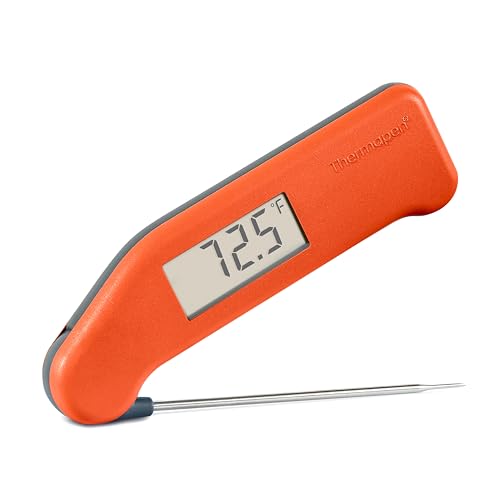
Classic Thermapen — the Original, Still Highly Rated
Badge: Best for traditionalists and for buyers who want the proven design.
- Model: ThermoWorks Classic Thermapen, Cayenne Pepper Red in the featured listing
- Type: folding instant-read thermometer
- Positioning: highly-rated instant-read thermometer, per the listing
- Character: the original Thermapen formula that built the reputation
Before the ONE, there was the Classic — the thermometer that converted a generation of cooks and filled the pockets of a decade of professionals. Its listing’s modest superlative, “highly-rated,” understates a career: this is the design against which the folding instant-read category is still described. In the hand it promises the same essential transaction as its younger sibling — open, probe, read, close — with the refinements of the flagship traded away for the virtues of the proven: a design whose behaviour in a decade of kitchens is a matter of record rather than of launch copy.
The Classic’s buyer is a recognisable figure: the cook who keeps tools for decades, distrusts novelty on principle, and would rather own the design that a thousand kitchens have already debugged. There is also a fleet argument — a small café, a barbecue team, a cooking school equipping several stations may rationally choose the Classic across the board for its balance of pedigree and cost per unit. What the Classic is not is a compromise to apologise for; it is the original answer to the question this whole page asks, still manufactured, still listed, still entirely capable of ending guesswork in any kitchen that adopts it.
Strengths
- The proven original design, with a long service record behind it.
- Same folding form and maker support as the flagship.
- A rational fleet purchase for teams, schools and small professional kitchens.
Trade-offs
- The flagship’s latest refinements and speed belong to the ONE.
- Buyers who keep tools for a decade may prefer to start at the top of the range.
- Availability and pricing relative to the ONE vary, so compare the two listings on the day.
Best for: traditionalists, fleets, and cooks who value a design’s record over its novelty. / Not suited for: buyers who want the maker’s fastest and newest, full stop.
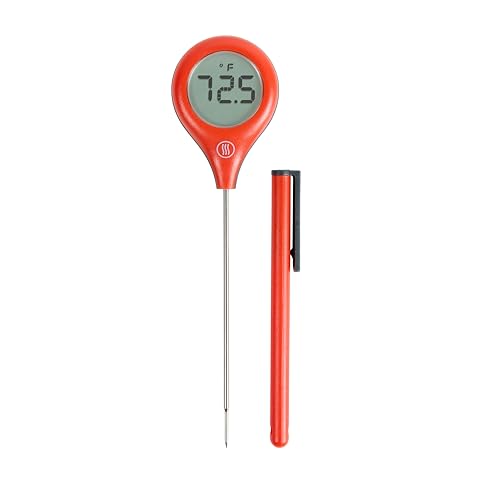
ThermoPop 2 — the Value Pick and the Perfect Second Thermometer
Badge: Best value — and the gift that converts guessers.
- Model: ThermoWorks ThermoPop 2, Cayenne Pepper Red in the featured listing
- Type: pocket instant-read thermometer with rotating display
- Positioning: the maker’s best-value instant-read, per the listing
- Character: simple, pocketable, ambidextrous
The ThermoPop 2 exists because ThermoWorks understands its own evangelism: not every kitchen will pay flagship money to end guesswork, but almost every kitchen can be converted by a tool at a friendlier figure that still carries the maker’s standards. The design is a pocket thermometer with a rotating display — a detail that sounds minor until you have read a temperature left-handed, upside-down, over a grill, and realised the display has politely turned to meet you. Its listing calls it the best-value instant-read in the range, and its role in this guide is double: the beginner’s first thermometer, bought to learn the habit; and the enthusiast’s second, living in the grill apron or the caravan while the flagship keeps the kitchen.
Judged against its siblings, the ThermoPop surrenders the folding form’s elegance and the flagship’s ultimate speed, and keeps the essential covenant — a fast, trustworthy number from the specialist maker. For the reader whose choice is between the ThermoPop and no thermometer, there is no contest at all, and for the reader furnishing a second station, a holiday home or a child’s first kitchen, it is the pick that respects the budget without respecting guesswork. Many a Thermapen ONE, in the wild, began life as a household’s ThermoPop promotion.
Strengths
- The maker’s value entry point, with the calibration pedigree intact.
- Rotating display reads comfortably from any angle, either hand, over any grill.
- Pocketable simplicity makes it the natural second thermometer and gift.
Trade-offs
- No folding probe; the form is a pocket stick rather than the classic fold.
- Flagship speed and refinements belong to the ONE.
- Serious daily cooks will likely promote themselves to the flagship in time.
Best for: first-time buyers, second stations, gifts and travelling cooks. / Not suited for: the professional-paced cook who wants the fastest tool the maker sells.
How to Take a Temperature Properly?
Step one: aim for the thermal centre
The reading you want is the coldest relevant point — the centre of the thickest part of the meat, away from bone, fat seams and the pan. Bone conducts heat differently and will lie to you in the optimistic direction; a probe resting against it reports the bone’s neighbourhood, not the dinner’s. Slide the tip into the thickest mass, and for flat cuts, come in from the side so the tip sits in the middle of the thickness rather than poking through it.
Step two: let the number settle
Even a fast thermometer is measuring a gradient as its tip equilibrates. Watch the display until it stabilises — with the flagship this is a breath, with lesser tools a small meditation — and take the settled figure, not the first one that flashes past on its way somewhere.
Step three: check more than one spot
Large cuts are landscapes, not points. A roast, a whole chicken, a brisket each deserve two or three probings, and the lowest reading is the one that governs your decision. This is where flagship speed stops being a luxury: the cook with a fast thermometer checks the map; the cook with a slow one checks a rumour.
Step four: mind the carryover
Meat’s temperature climbs as it rests, pulled upward by its own hotter exterior. Pull your roasts and steaks a few degrees before the target and let the rest finish the work, tented and unbothered. The thermometer’s job extends into the rest — a final check as you carve confirms the whole journey rather than its hopeful middle.
Step five: clean the probe, every time
A thermometer travels between raw and cooked, between the chicken and the sauce. Wipe or wash the probe between probings of different foods and always after raw meat, with the same seriousness you give the knife. The fastest thermometer in the world is a poor bargain if it moonlights as a ferry for cross-contamination.
Beyond Meat: The Thermometer’s Second Career
The cook who buys a Thermapen for steak discovers its empire within a month. Bread announces its doneness from the crumb’s interior long before the crust’s colour is trustworthy. Caramel, custards, crème anglaise and jam live in windows a few degrees wide that no amount of staring can judge. Chocolate tempering is temperature choreography pure and simple. Oil for frying, milk for yoghurt, water for delicate teas and coffees, the bath for a baby’s bottle warmed in a pan, the soil for seedlings, the fridge and freezer whose dials have lied for years — a fast, accurate probe colonises them all, because temperature is the hidden variable in half the processes of a house. This is the honest answer to the flagship’s price: divided across its empire, the cost per use of a tool this versatile falls to nearly nothing, and the cook who once asked “is it done?” now asks it of everything, with an instrument that answers.
Care, Calibration and Long Life
Treat the thermometer like the instrument it is. The probe is a sensor, not a skewer: do not pry, lever or leave it in a closed oven or grill beyond its design, and do not plunge a hot body into cold water or a cold body into flame in ways its maker warns against. Clean it as directed — probe washed, body wiped rather than drowned unless its rating invites immersion. Store it folded or sheathed, in a drawer where heavier tools cannot bully it. Batteries are the small tax of the digital age; a spare in the drawer is the difference between a dead thermometer and a five-minute resurrection mid-roast. And if a reading ever smells wrong — the chicken that reads cooked in a second at a suspicious spot — verify against a known reference, such as the maker’s suggested checks, before blaming the bird; instruments earn trust by being verified, and the maker’s support exists precisely for the day yours needs a professional opinion.
Common Mistakes
The canonical mistake is the single poke: one reading, taken wherever the probe landed, treated as the biography of a four-pound roast. The second is bone worship — trusting a reading taken against the leg bone of a chicken. The third is impatience, reading the display mid-climb and pulling the roast on a number that was still travelling. The fourth is the opposite sin: leaving a handheld instant-read in the oven like a probe thermometer, a job it was never built for, and mourning its death as a defect. The fifth is forgetting the rest — carving immediately and watching the juices, and the temperature’s final rise, escape onto the board. Each mistake survives because the food often forgives it; the thermometer’s promise is a kitchen where forgiveness is no longer on the menu’s critical path.
Final Recommendation
Buy the Thermapen ONE if you cook often and want the best instant-read its maker sells — which is to say, the best-regarded answer to the question this page’s title asks. Buy the Classic if its proven design and record speak to you more than novelty does. Buy the ThermoPop 2 if you are beginning the thermometer habit, equipping a second station, or converting a guesser with a gift. But buy one of them, and then use it with the technique above, because the distance between the cook you are and the cook who knows is exactly one honest number, taken in the right spot, at the right moment.
More for the kitchen: clearing the air after the roast · kitchen ventilation fans · towels worthy of the cook · what cooking releases into home air · the helmet for the ride to the market · ear plugs for the dawn alarm
A Cook’s Temperature Diary: What to Write Down and Why
The thermometer’s lessons compound only if they are kept, and the keeping takes a notebook’s smallest corner. Record, for the dishes you cook repeatedly, three numbers: the target you aimed for, the reading at which you actually pulled the food, and the verdict at the table. A roast chicken’s entry might note that the thigh read its number while the breast lagged, that the rest added its usual climb, and that the result was the best bird of the season — or that the thick end of the tray’s potatoes told a different story than the thin end. Within a dozen entries, the diary becomes a portrait of your oven, your pans and your habits that no recipe book can supply, because it was measured in your kitchen rather than in a test kitchen’s. Bakers keep the same diary for crumb temperatures and caramel stages; pitmasters keep it for stalls and rests; the home cook who keeps it for a single winter emerges with instincts that guests will call talent. The Thermapen is the diary’s pen — fast enough that recording never interrupts cooking — and the habit is the deepest answer this guide can give to the reader asking whether a premium thermometer is worth it: the tool pays for itself in information, and information, in a kitchen, is the one ingredient that never runs out.
Gifting a Thermapen, and Setting Up a New Cook
Few tools make better gifts for a cook who does not yet own one, because few gifts so reliably change the recipient’s results from the first use — and the ThermoPop 2 exists in this guide largely as that gift’s perfect form, serious enough to convert and priced to be given without ceremony. The etiquette of the gift is to include the lesson with the tool: show the new owner the thermal centre, the bone’s lie, the settling display and the resting climb, ideally over a meal you cook together, because a thermometer given without its technique is a number waiting to be mistrusted. For the new cook equipping a first kitchen, the order of purchase this guide endorses puts the thermometer ahead of almost every gadget with a plug: before the specialty appliance, before the second knife set, before the pan in the fashionable colour — because the thermometer improves every dish those other purchases will ever touch. Households equipping a student, a first flat or a wedding registry should write its name high on the list and let the couple’s relatives compete over who gives the tool that will still be in daily service at their tenth anniversary, long after the fondue set’s archaeology has been donated.
Recipes as Temperature Maps: Five Dishes Rewritten by the Probe
The roast chicken, finally consistent
The bird that humbles more home cooks than any other becomes a solved problem under the probe: thigh checked away from the bone, breast checked at its thickest, the bird pulled when the lowest reading arrives and rested while carryover completes the journey. The skin’s colour returns to its proper job — beauty — and the arguments about juices and wiggle tests retire. A cook who roasts six chickens with a diary open will produce the seventh from knowledge rather than from hope, and the difference is audible at the table.
The steak, to order
“Medium rare” stops being a personality trait and becomes a specification. The probe enters from the side, finds the centre of the thickness, and reports the only fact that matters; the sear’s theatre proceeds undisturbed, and the resting climb is budgeted rather than discovered. Steakhouse confidence at home is not a better pan or a costlier cut — it is this paragraph, practised.
The pork joint, rescued from folklore
No cut suffered more from inherited fear than pork, cooked for generations into apologetic dryness by rules written for another era’s farms. The thermometer restores it: cooked to the modern guidance for the cut, rested properly, and served at the juiciness its breeders intended. Readers should follow their own food-safety authority’s current figures for every meat — this guide teaches method, not tables — and the method’s gift to pork is the largest of any protein’s.
Bread, judged from inside
The thump-the-bottom test retires beside the probe, which reads the crumb’s interior and calls the loaf done on evidence. Enriched doughs, lean doughs and the temperamental sourdough each keep their own counsel, and the diary method from this guide turns a season of baking into a personal table of what done looks like in your oven, with your flour, at your altitude.
Sugar, custard and the narrow windows
Caramel’s stages, a custard’s trembling point, jam’s set — the sweet kitchen is a country of five-degree borders, and the probe is its passport. Cooks who fear confectionery usually fear its invisibility; temperature makes the invisible legible, and the first successful crème anglaise, probed rather than prayed over, converts as reliably as the first perfect chicken.
Speed, Accuracy and the Words on the Box, Translated
Thermometer marketing speaks in response times and tolerances, and a buyer deserves the translation. Response time describes how quickly the display approaches the food’s true temperature — but the figure depends on what the probe is measuring and how much of the change is being timed, which is why the honest comparison is behavioural: in a real roast, with the door open, does the number settle before your patience does? Accuracy describes how close the settled number sits to the truth, and its practical weight falls on the narrow-window work — sugar, custards, delicate proteins — where a degree or two is the dish. Resolution, the fineness of the display’s steps, matters least of the three and shouts the loudest in advertisements. The Thermapen family’s reputation rests on the first two behaving impeccably in kitchens rather than in brochures, attested by the professional installed base this guide has described; a buyer comparing any thermometer, from any maker, should ask the behavioural questions in a shop or at a friend’s stove, and let the answers outrank the box’s typography every time.
The Thermometer Drawer: Building a Household’s Full Kit Over Time
Because this guide has mentioned companions to the hero throughout, let the full drawer be assembled in one place, in the order a household actually acquires it. First, the scout: an instant-read, which for most households should be the best they can justify, because it will be used more than every other thermometer combined — the ThermoPop for the beginner’s budget, the Classic for the traditionalist, the ONE for the cook who already knows the habit is theirs. Second, when roasting and smoking become regular, the sentry: a leave-in probe with an alarm, which watches the long cook so the scout does not have to open the door and spend the oven’s heat on curiosity. Third, for the pan-and-griddle household, the surface reader — infrared, honestly labelled as a surface instrument — which judges a steel’s readiness and a pizza stone’s temper without contact. Fourth, the humble fridge-and-freezer thermometer, which audits the two appliances whose dials lie most fluently and whose failures cost the most food. Each addition follows the same law as the first: it is bought when a repeated question in the kitchen demands it, not when a sale assembles a set. A drawer built that way contains four instruments, every one of them employed, and the Thermapen at its head — the one that answers, daily, the question cooking asks most often, in the time it takes to ask it.
What Professionals Notice That Home Cooks Miss
Spend time in working kitchens and the thermometer’s subtler lessons accumulate. Professionals probe on the move, reading the map of a tray — the corner pieces against the centre ones — and adjusting the tray rather than the recipe. They check the cold spot of their own oven with a grid of readings and then cook as if the map were printed on the door. They temp the holding, not just the cooking: the sauce kept warm, the roast resting under foil, the buffet’s quiet middle hour where quality and safety both live or die by degrees nobody at home thinks to measure. They calibrate their trust by verifying their instrument against a known reference on a rhythm, the way a musician tunes, without drama and without exception. And they treat the thermometer as a communication device — a number that a colleague, an inspector or a diary can share exactly, replacing the poetry of “done-ish” with a language the whole kitchen speaks. The home cook who adopts even two of these habits has crossed the real border between the amateur and the professional kitchen, which was never about knives or pans. It was always about this: knowing, in numbers, what the food is doing — and the Thermapen, in its three forms on this page, is simply the fastest way across that border yet sold in a Cayenne Pepper Red coat.
Troubleshooting Readings That Do Not Make Sense
Even the best instrument occasionally reports a number the cook’s eyes dispute, and a calm protocol separates the tool’s faults from the food’s surprises. If a roast reads done at the surface spot and raw at the centre, the probe has been reading shallow — reinsert to the thermal centre and let the settled figure speak. If readings jump erratically, suspect the tip straddling a fat seam or resting in a juice pocket, and move to solid muscle. If the number seems impossibly high for the time cooked, check for the bone’s warm neighbourhood and for a probe tip that has pushed through the far side into the pan’s jurisdiction. If the display itself misbehaves — fading, freezing, refusing to wake — the battery is the first suspect and the maker’s support the second, in that order, before any verdict on the instrument. And if every reading in a session smells wrong by a similar margin, verify the thermometer against a reference the maker endorses, because an instrument that has drifted should be caught by its owner, not by a dinner party. The deeper lesson is the one this whole guide teaches in every dialect: a thermometer is a witness, and witnesses are cross-examined — by position, by patience and by a second spot — before their testimony decides the meal.
The Thermapen and the Seasons of a Cooking Year
A thermometer’s calendar deserves the same respect as its technique. In winter it governs the roasts and braises of the closed-window months and audits the fridge working its hardest against a warm kitchen. Spring brings the first grills and the lamb whose pinkness is a promise to be kept precisely. Summer is the flagship’s high season — barbecue’s long cooks, the picnic’s safety margins, the ice cream’s custard base, the jam pan’s narrow window — and the season when a fast probe earns its price weekly. Autumn returns the preserving pan and the game birds, and the diary’s second volume. A cook who buys the Thermapen in any season will find its empire waiting in the next one, which is the final economic argument for buying the best expression of the tool rather than the least: seasons turn, batteries are cheap, and the number — taken in the right spot, at the right moment, by an instrument that answers before the door’s heat escapes — remains the most useful sentence in the kitchen’s whole vocabulary. This guide has spent its length teaching that sentence’s grammar. The cooking, as ever, is yours.
From the Test Kitchen’s Side of the Counter: How Recipes Get Their Temperatures
Have you ever wondered where the temperatures in a good recipe come from — the oddly specific figures that separate a trustworthy book from a vague one? They are earned the way this guide has taught you to earn yours: by probing, repeatedly, in kitchens where the dish is made until its behaviour is a map rather than a rumour. The recipe writer’s Thermapen is the silent co-author of every reliable instruction you have ever followed, and understanding that changes how a home cook reads. A recipe that gives a temperature trusts you with the fact; a recipe that gives only a time trusts you with a hope dressed as a fact, and should be cooked — as the professionals say — to temperature anyway, with the time as a rough appointment for when to start checking. This is also why two cooks following the same vague recipe produce different dinners and blame their ovens: their ovens are indeed different, and only the probe could have told them by how much, in time to matter. The home cook who adopts the instrument joins the recipe’s intended readership at last — the one the test kitchen was writing for all along, thermometer in hand, checking the thickest part, waiting for the number to settle, and pulling the roast at the moment the map and the meal agree.
The Last Argument: Cost Per Correct Dinner
Guides that refuse to print prices owe their readers another arithmetic, so here is the Thermapen’s, stated without a single figure. A thermometer’s cost divides by the dinners it governs. For the flagship in a daily kitchen, that division runs into the thousands of meals across a tool’s long life, and the cost per correct dinner falls below the price of the herbs on any one of them — while the dinners it rescues, the roasts that would have been carved grey and the chickens that would have been served on faith, repay the whole sum in single sittings, repeatedly, for years. The value pick runs the same arithmetic at a friendlier numerator and reaches the same conclusion by a shorter road. What neither arithmetic permits is the comparison shoppers instinctively make — thermometer against thermometer, feature against feature — because the true alternative to a Thermapen is not a cheaper thermometer. It is the guess, and the guess, across a cooking life, is the most expensive instrument in the kitchen. Buy the number. It is the only ingredient that improves every recipe it touches, including the ones you have not met yet.
One Cook, Three Thermometers: A Year of Upgrades Retold
Let the range’s logic be told once as a biography, because many readers will live it. In January, a cook who has burned one chicken too many buys the ThermoPop 2 with modest expectations and discovers, within a fortnight, that the kitchen has acquired a new sense. By spring the diary has begun; by summer the Pop lives in the grill apron, where its rotating display reads upside-down over the coals without complaint, and the cook catches themselves saying “we” about a thermometer. Autumn brings the brisket era and with it the argument for the flagship: the ONE arrives, the Pop is promoted rather than retired — second station, travelling kit, the loaner that converts a brother-in-law over one Sunday lunch — and the household now owns the pair this guide recommended in its drawer section without ever having planned to. The Classic enters the story only in the telling’s alternative ending, where the cook’s grandfather, a man who kept one knife for thirty years, receives it at Christmas, weighs it in his hand like a tool rather than a gadget, and pronounces the only review that matters in that family. Three price points, three temperaments, one covenant: the number, honestly taken. Whichever door a reader enters by, the house on the other side is the same — a kitchen where doneness is a fact, and where the question that titles this page has been answered so thoroughly that it stops being asked.
The Confidence Economy: What Certainty Does to a Cook
There is a last effect of the instrument that no specification captures, and regular users name it more often than speed: confidence, and the cooking it unlocks. The cook who trusts their doneness experiments — attempts the larger joint, the unfamiliar fish, the dinner party menu that would once have been trimmed to the safe and the known — because the one variable that used to punish ambition has been brought under measurement. Guests taste the difference as courage; the cook knows it as arithmetic. That expansion of repertoire, compounded across years, is the Thermapen’s true return on its price, and it is why so many owners describe the purchase the way converts describe a conversion: not as buying a thermometer, but as the moment their kitchen grew up. The three models on this page are three doors into that same room. Choose the one your budget and temperament prefer, learn its technique from the sections above, keep its diary for a season — and then try the dish you have been avoiding. The number will be there when you probe it. It always was; now you can read it.
The Instrument’s Place in the Kitchen’s Hierarchy, Settled
Rank a kitchen’s tools by the dinners they have saved and the Thermapen stands in the first rank beside the knife and the pan — ahead of them, some converts argue, because a dull knife and a thin pan still produce dinner, while an unmeasured roast produces a gamble with garnish. That is the spirit in which to make the purchase this page recommends: not as a gadget among gadgets, but as infrastructure, bought once at the best level your cooking justifies and then used, daily and without ceremony, for the decade of dinners it will quietly govern. The flagship for the cook who lives in the kitchen, the classic for the cook who trusts records, the value model for the cook who is beginning — and for every one of them, the same first assignment when the box opens: a chicken, a diary, and the discovery, in one meal, of everything this long guide has been promising.
A thermometer, in the end, is a promise a cook makes to the people at the table: that the food will be what it claims to be — the steak at its colour, the chicken at its safety, the custard at its trembling point — not by luck, not by habit, but by evidence, taken fresh at every meal. Keep that promise with the best instrument your kitchen justifies, and the table will keep its side of the bargain for years.
Buy it once, then, at the level your cooking honestly occupies today — not the level a catalogue wishes for you — and let the instrument argue, meal by meal, for its own promotion in the years to come. That is how every Thermapen household in this guide’s stories actually began.
Frequently Asked Questions
What is the difference between the Thermapen ONE and the Classic?
The ONE is the current flagship — the maker’s number-one recommended instant-read, with the range’s latest refinements and speed. The Classic is the original design that built the reputation, still listed and highly rated. Both fold, both come from the same specialist maker; the choice is between the newest expression and the proven one.
Is the ThermoPop 2 a real ThermoWorks, or a budget imitation?
It is the maker’s own value model — a pocket thermometer with a rotating display, positioned in its listing as the best-value instant-read in the range. It trades the folding form and flagship speed for a friendlier entry point while keeping the house pedigree.
Where exactly should I probe a whole chicken?
In the thickest part of the thigh, away from the bone, and then in the thickest part of the breast; the lowest settled reading governs. Check more than one spot, because a whole bird is a landscape of temperatures, and let the rest finish the journey before carving.
Can I leave a Thermapen in the oven while food cooks?
No — it is a handheld instant-read instrument, designed to visit the food, take its reading and leave. Leaving it in a closed oven or grill is the classic way to kill one. For continuous monitoring, the category you want is a leave-in probe thermometer with a heat-rated cable, a different tool for a different job.
Why does my thermometer’s reading keep climbing after I insert it?
Because the probe tip is equilibrating with the food around it; the early figure is the journey, not the destination. Wait for the display to settle — a breath with a fast flagship — and read the stable number. If readings seem implausible for the food in front of you, reposition away from bone and check another spot.
Which colour should I buy?
The listings featured in this guide are Cayenne Pepper Red across all three models, but colour is the one specification with no wrong answer — except visibility. A bright thermometer is found faster in a crowded drawer and left behind less often on a competition table, which is a practical argument for the red that has nothing to do with taste.
The Thermapen in the Wild: Professionals, Pitmasters and Home Converts
Ask where the Thermapen’s reputation was actually minted and the answers cluster in three places. In professional kitchens, where a health inspector’s thermometer and a chef’s thermometer agree that temperature is the language of both safety and quality, the folding instant-read became the pocket standard because service allows no slower tool. In barbecue, where a brisket represents twelve hours and a small fortune in wood and patience, the final probing — tender as much as hot, the probe sliding in with the resistance of warm butter — is a ritual the Thermapen’s speed and thin tip serve better than any dial. And in home kitchens, the conversion story repeats with suspicious regularity: a cook sceptical of an expensive thermometer borrows one, checks a chicken they have roasted a hundred times, discovers what the number says, and is never again willing to cook blind. Reputation in tools is usually marketing’s echo; in this case it is the accumulated testimony of people whose dinners depended on the answer, which is why the listings’ quiet superlatives — number-one recommended, highly-rated — land with more weight than a page of adjectives would.
Instant-Read Versus the Other Thermometer Tribes
A complete guide should place its hero among its rivals. The leave-in probe, cabled to a base station or a phone, watches one spot continuously and owns the long roast and the smoker; it is a sentry, where the instant-read is a scout. The infrared gun reads surfaces only — superb for pans, griddles and pizza steels, blind to interiors, and a menace in the hands of anyone who points it at a chicken and believes the skin’s story. The old dial thermometer is cheap, slow and drifts out of calibration like a folksinger out of key, yet it asks no batteries and forgives everything; it is the tribe’s elder, respected and retired. The fork thermometer and the pop-up turkey timer survive as cautionary tales. Most serious kitchens end up owning a sentry and a scout — a leave-in for the long cooks, a Thermapen for everything else — and the ThermoPop’s existence as a second unit makes that pairing attainable in stages: scout first, sentry when the brisket era begins, flagship when the habit has proved it deserves the best.
Temperature as a Cooking Education
The deepest argument for the tool is pedagogical. A season of cooking with a thermometer rewires a cook’s instincts: you learn what your oven’s hot corner does to a tray’s far end, how a thick steak’s centre lags its surface, why the same cake recipe behaves differently in glass and in metal, how carryover differs between a chicken and a joint of beef. The numbers become a diary of your own kitchen’s physics, and the day eventually arrives — every thermometer evangelist swears to it — when you can call the reading before you probe, and the probe merely confirms you. That is not the tool becoming unnecessary; that is the tool having taught. Buy the Thermapen for the dinners it saves this month, by all means. Keep it for the cook it is quietly training you into, one honest number at a time.