Disclosure: As an Amazon Associate, dailyhomedecorating.com earns from qualifying purchases. Links on this page are affiliate links; they cost you nothing extra. Prices and availability change often, so check the current Amazon listing before you buy.
Coway’s Airmega line is the closest thing the purifier market has to a design establishment, and this coway airmega 100 review examines its smallest full member: a compact purifier that brings the family’s sensor-driven automation, composed styling and serious build down to the single bedroom, nursery or study. The Airmega 100 is what the small-room job looks like when a major maker refuses to treat it as a budget afterthought.
That refusal has a price, and the review will keep it in frame: the 100 costs what whole living-room machines cost in lesser brands, and its filters continue the theme. The question is whether the premium buys things a bedroom actually values — trustworthy automation, night manners, a decade’s build — or merely a badge on a small box. This review’s answer is mostly the former, with the parish borders drawn as firmly as the praise.
The usual framing applies, stated once: particles are the trade, carbon here is a modest stage rather than a bed, and health claims stay environmental. The Airmega 100’s constituency is the household furnishing its main bedroom for years, and it is graded as that household’s appliance — not as a spare room’s afterthought or a student’s bargain.
Coway Airmega 100 Review: The Short Version
| Pick | Known for |
|---|---|
| Coway Airmega 100 | The named purifier |
| Levoit Core 300S-P | The smart value rival |
| Blueair Blue Pure 411+ | The socked rival |
| Coway Airmega 150 | The larger sibling |
| Aroeve MK01 | The honest floor |
The Coway Airmega 100 is the Korean maker’s small-room flagship in miniature: a compact, design-led purifier with a proper sensor, an auto mode, quiet manners and Coway’s polished build, sized for a bedroom, nursery or study. It costs flagship money for the small parish, its filters are a real recurring commitment, and its parish ends where its bigger siblings’ begins — but for a main bedroom that wants the small-room job done at the highest standard of finish and automation, it is the machine the budget towers are all imitating.
In this guide
Design and automation at small scale
The 100’s design is the family’s language in miniature: clean surfaces, a considered control interface, an air-quality display that reads as information rather than decoration, and a footprint that sits on a floor or a low stand without announcing itself as medical equipment. In a main bedroom — the room a household’s design conscience visits most — that composure is a functional quality, keeping the machine in its parish for years.
The sensor and auto mode are the genuine article: the machine watches the room’s particles, reports them honestly, and spends its fan like a careful owner — rising against the vacuum’s pass and the day’s events, settling to a night floor that respects the room’s purpose. Automation at this standard is what separates the flagship tier from the smart-badge tier, and the 100’s judgement, tested against a week’s events, is the calm kind that owners stop noticing because it stops being wrong.
The app and connectivity layer is present for households that want schedules and remote sight of the room, with the era’s standard terms attached. Unlike some rivals, the Coway’s core competence — sensing and auto — lives on the machine, so the connected layer is a convenience rather than a life-support system; a distinction this programme’s reviews have learned to price.
Filtration and the small parish
The filtration path is orthodox and well-executed: a pre-filter for the coarse load, a true HEPA element for the fine particles, and an activated-carbon stage that freshens the room’s background without pretending to be a gas-phase bench. Delivered clean air at the working speeds serves a bedroom, nursery or study with authority — the parish is small, and within it the machine is not working hard, which is precisely the flagship proposition: capacity held in reserve, noise held in abeyance.
That reserve is the honest answer to the ‘why pay more for the same room’ question. A budget tower holds a bedroom at its middle-to-top speeds, audibly; the 100 holds it at its lower speeds, in near-silence, with the filter ageing gently. The sleeper experiences the difference as the room’s tone across a whole night, multiplied by years — the premium’s real product, invisible in every specification table.
Borders remain borders. A generous master suite at the parish’s edge will ask the 150’s larger hand; an odour-led room will ask for carbon this machine does not carry; and an open-plan anything will make the 100 a well-built ornament. Coway’s own ladder, mapped in this cluster’s reviews, is the correct response to each border — the 100’s integrity is that it does not pretend otherwise.
Ownership: filters, support and the long game
Coway’s filters for the 100 are priced as flagship consumables on a schedule the machine announces, and the three-year ledger belongs in the purchase conversation with the current prices in hand. The defence is the family’s usual one — performance held across the filter’s life, availability through many channels, and a maker whose support infrastructure has a decade’s depth — and it is a defence that holds up better than most, provided the household runs the numbers before the design closes the sale.
Build quality is the long game’s other half: the 100 feels like a machine intended to be serviced and kept rather than replaced, with the fit and finish of the family’s larger instruments. In a category where small purifiers are often consumables with fans, that intention is palpable and, over a decade in a main bedroom, economical in the way that only durability is.
The warranty and support story follows the brand: a serious maker’s network, parts and filters with a future, and a model line with a past. Households burned by orphaned budget machines will recognise what the premium is partly buying — a company that will still sell this machine’s filter when the machine is old — and in this category that continuity is a specification, not a courtesy.
The 100 as the complete small machine
Coway’s design philosophy, visible across its whole line, is completeness: the formula — pre-filter, HEPA, carbon, sensor, auto, eco — executed whole at every scale it attempts. The 100 is that philosophy at its smallest, and its review is best read as an audit of whether completeness survives miniaturisation. It does, with one honest cost: price. A complete small machine cannot be a cheap small machine, and the 100’s parish is the household that has decided its small room deserves the whole formula rather than a third of it.
That decision is more common than the budget tier admits, because the small room in question is so often the nursery or the main bedroom — the rooms where a household’s standards are highest per square metre. The 100 exists for the household that furnishes those rooms without a small-room discount in its expectations, and its steady presence in Coway’s line says the household is numerous.
The 100’s eco rest and the ethics of idling
The 100 inherits the family’s signature behaviour: when the air has been clean for a while, the fan stops entirely and the machine waits, watching, until the room gives it work. That rest is a small philosophy of appliances — that a machine should consume nothing while producing nothing — and across a year it divides the 100’s electricity and filter wear by the room’s actual need rather than by the clock. Owners notice it first as silence, then as savings, then as a standard they begin demanding of the house’s other machines.
The rest also disciplines the household’s trust: a machine that stops when the work is done is a machine whose diligence, when it works, is believed. The 100’s sensor earns its authority in both directions, and that earned authority — graded in this review’s first criterion — is the real product Coway sells at this scale.
The 100 among the premium small machines
The premium small parish is this cluster’s most civilised contest: the 411’s manners, the 411+’s reserve, the Levoit’s smartness, the 100’s completeness. Each is a philosophy at the same size, and the household’s choice among them is a choice of temperament more than of air. The 100’s temperament is the engineer’s: everything present, everything judged, everything recorded — a machine for the household that wants its small room managed the way its large rooms are, without exception or apology.
What the 100 refuses is the parish’s usual compromise — that small rooms get small thinking. Its review has found that refusal to be its distinction and its price in the same fact, and households should buy it, or decline it, on exactly that basis.
The Picks in Detail: Coway Airmega 100 Review Contenders
Coway Airmega 100 — The named purifier
The Airmega 100 is the small parish at flagship standard: Coway’s composed design, a sensor with judgement, auto operation that can be left sovereign, and filtration held in quiet reserve over a bedroom, nursery or study. It is the machine for the household that furnishes its main bedroom once and expects the object to deserve the room for a decade.
Its debits are the flagship’s own: a purchase price that buys whole machines elsewhere, filters that continue the theme, and a parish that ends firmly at the generous bedroom’s door. Buyers inside those borders get the small-room job at its most refined; buyers outside them should climb Coway’s ladder or cross to this review’s other benches, each mapped with its own honours.
| Filtration | True HEPA with carbon stage |
|---|---|
| Control | Sensor, auto mode, app |
| Best room | Bedroom, nursery, study |
Strengths
- Flagship design, build and automation in a compact form
- Sensor and auto mode with calm, trustworthy judgement
- Quiet reserve — holds its parish at low, silent speeds
Trade-offs
- Premium price and premium filter costs
- Parish ends at the generous bedroom
- Carbon stage freshens rather than deodorises
Best for: main bedrooms, nurseries and studies furnished for the long term
Not suited for: spare rooms, student budgets and odour-led briefs
Positioning: coway airmega 100 review — the Coway Airmega 100 appears as a prose pick rather than a linked one; the maker’s own current listing is the place to confirm its terms.
Levoit Core 300S-P — The smart value rival
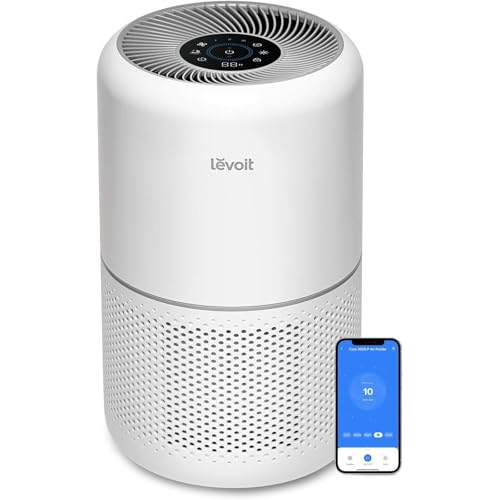
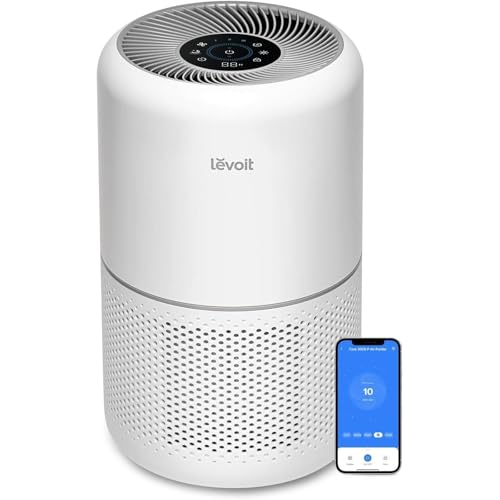
Levoit’s small tower delivers most of the 100’s functional story — sensor, auto, app, orthodox HEPA — at a markedly lower price, with an ecosystem of filters and accessories stocked everywhere. It is verified and linked in this programme, and for households grading on function per pound it is the Airmega’s most dangerous rival.
The Coway counters on build, finish, support depth and the composure of its automation — qualities that are real, felt over years, and impossible to tabulate. The choice between them is the premium question in its purest form, and this review declines to pretend it has a universal answer.
| Filtration | True HEPA with carbon |
|---|---|
| Control | Sensor, auto, app |
| Best room | Bedroom, nursery |
Strengths
- Most of the flagship function at a value price
- Wide filter and accessory ecosystem
- Verified linked pick with official imagery
Trade-offs
- Build and finish a tier below the Coway
- Connected layer carries the experience
- Similar parish limits despite the value
Best for: households grading the small room on function per pound
Not suited for: buyers for whom finish and support depth are the purchase
Blueair Blue Pure 411+ — The socked rival
The 411+ brings Blueair’s electrostatic path, fabric sock and capacity-enhanced filter to the same parish with a manual philosophy. Its full review in this cluster is the detailed account; here it is the premium small-room choice for households that prefer their intelligence in the filter rather than in the sensor.
Against the Coway it trades automation for headroom and camouflage. Bedrooms differ in which they need, and the pair of reviews — this one and the plus’s own — are written to be read together by the households torn between them.
| Filtration | HEPASilent, higher capacity |
|---|---|
| Control | Manual speeds |
| Best room | Small, loaded bedroom |
Strengths
- Higher-capacity filter with family headroom
- Washable fabric sock and quiet manners
- No connected layer to retire
Trade-offs
- Manual control — no sensing or auto
- Premium filters and a naming maze
- Carbon is a gesture at this size
Best for: loaded small rooms preferring filtration depth to automation
Not suited for: households wanting the machine to manage itself
Positioning: coway airmega 100 review — Blueair Blue Pure 411+ is described rather than linked; this programme links only verified listings, so confirm its terms with the maker.

Coway Airmega 150 — The larger sibling
The 150 is the Airmega parish extended: the same design language and automation with the airflow for a generous bedroom or a modest living room. It is verified and linked in this programme, and it is the correct purchase when the 100’s parish is measured and found a size too small.
Households should measure before climbing — the 150’s premium over the 100 buys volume, not virtue — but a machine working at its ease in a bigger room will always out-serve a smaller machine working at its limit, and Coway’s ladder exists to make that trade cleanly.
| Filtration | True HEPA with carbon |
|---|---|
| Control | Sensor, auto mode |
| Best room | Large bedroom |
Strengths
- Same flagship manners with a larger parish
- Sensor, auto and design continuity
- Verified linked pick with official imagery
Trade-offs
- Costs more in machine and filters
- Still not an open-plan answer
- Carbon remains a stage, not a bed
Best for: generous bedrooms and modest living rooms
Not suited for: genuinely small rooms, where it is money without a mission
Aroeve MK01 — The honest floor
Covered in full elsewhere in this cluster, the MK01 is the small parish at its cheapest honest price — and its presence in this list is the premium’s necessary context. Everything the Airmega 100 adds over the MK01 is refinement: automation, finish, reserve, support. Households should read the two reviews together and decide whether refinement, in their main bedroom, over their decade, is worth the multiple.
For a spare room the answer is usually no, and the Aroeve takes the post with this review’s blessing. For the main bedroom the answer is a household’s own arithmetic about what nightly refinement is worth, and the Airmega exists because many households’ arithmetic says yes.
| Filtration | HEPA with light carbon |
|---|---|
| Control | Manual speeds, sleep mode |
| Best room | Small bedroom |
Strengths
- The small-room job at its lowest honest price
- Dark, quiet sleep mode
- Fair and simple filter costs
Trade-offs
- No automation, sensing or finish to speak of
- Working harder and louder to hold the same room
- A shorter expected service life
Best for: spare rooms, rentals and first purchases
Not suited for: main bedrooms furnished for a decade
Positioning: coway airmega 100 review — the Aroeve MK01 is covered in prose, not as a linked pick; compare it on the maker’s own current terms before deciding.
How the Coway Airmega 100 Review Field Compares
The Airmega 100’s shelf is the small room’s premium tier: the Levoit Core 300S-P beneath it in price and above it in ecosystem, the Blueair 411+ beside it with the sock and the electrostatic path, the Aroeve MK01 far below as the honest floor. Coway’s argument is integration — sensor, design, build and brand support in one composed object — and it is the argument flagship buyers in every category will recognise.
Against its own family, the 100 is the Airmega idea at its most concentrated: the 150 adds parish, the Mighty adds legend, the 300 adds a second intake and a living room. Households should read the 100 as the line’s bedroom instrument and resist stretching it upward, because Coway itself sells the stretch — at prices this review’s other picks make plain.
Buying Guide: Judging Coway Airmega 100 Review on the Right Criteria
A premium small purifier must justify itself on the quality of its automation, the refinement of its night manners and the honesty of its running costs, because its filtration parish is shared with machines a third of its price. The criteria below grade the Airmega 100 on that premium standard and its rivals alongside it.
Automation judgement deserves its own line in your notes. a flagship sensor and auto mode must match a thoughtful owner’s choices across a week’s events, because the premium is precisely the removal of the owner from the loop The 100’s sensor spends its small fan wisely — diligence when the room earns it, rest when it does not — and in a small parish that judgement is worth more than raw capacity, because the room’s events are brief and its quiet is the point.
The reserve and quiet test separates a considered buy from a hopeful one, since the flagship small machine holds its parish at low speeds in near-silence, and that reserve — felt as the room’s tone across years of nights — is the product the price buys It carries a margin above its parish’s ordinary need, held at speeds a sleeper can ignore — reserve expressed as silence, which in a nursery or small bedroom is the only currency reserve should be paid in.
Finish as function is where coway airmega 100 review stops being marketing and becomes measurable, because in a main bedroom the machine’s design composure decides whether it stays in its best position for a decade, which makes finish a filtration specification in disguise Coway’s finish on the 100 is not vanity: a machine handled daily, wiped weekly and lived beside for years earns its materials, and the review grades the finish as the durability it actually is.
Judge filter ledger and support before anything else on the page: flagship consumables plus a maker’s decade-deep support network are the ownership’s real terms, and both should be priced before the design closes the sale Its consumables price at the premium small-machine band, from a maker whose support and filter continuity are the strongest argument against the budget tier’s orphans — the ledger includes the maker’s stamina.
Parish honesty: the 100’s borders — the generous suite, the odour brief, the open plan — are patrolled by its own family’s ladder, and respecting them is the difference between a flagship and an ornament A small room’s machine, honestly bounded — and the review holds it there, because Coway’s own line offers the larger parishes at their prices and the 100’s integrity is its size.
The connected terms in proportion test separates a considered buy from a hopeful one, since the Coway’s core competence lives on the machine, so its app is a convenience rather than a dependency — the proportion every connected purifier should be graded by Its app layer is proportioned to a small machine’s life — a record and a remote, not a platform — and the terms deserve reading in that proportion, neither feared nor oversold.
Coway Airmega 100 Review in Real Households
The main bedroom, furnished once: The 100’s founding household: a couple equipping the room they will sleep in for a decade, who want the air managed without a thought and the object to deserve its place. The flagship premium, divided by three thousand nights, is the arithmetic that closes this sale in showrooms every day.
Picture the nursery of a design-led flat for a moment. Parents who have curated every object in the nursery find the 100 the only purifier that passes the room’s aesthetic committee while automating its air. The standing note applies — clinicians for the baby, the machine for the air — and within it, the Coway’s composure is the feature the parents actually bought.
The study of a remote executive: A home office that hosts video calls at a professional standard needs air managed invisibly and a machine that does not look like a hospital’s. The 100’s automation and finish serve the fiction, and its quiet preserves the call’s audio — a parish where the premium is a business expense in all but name.
The spare room, mistakenly flagship. A guest room used six weekends a year does not need the 100, and buying it there is the premium’s commonest waste. The Aroeve pick serves the room honestly; the flagship’s money belongs in the bedroom the household actually sleeps in.
Picture the bedroom over a busy street for a moment. Traffic drift gives the small parish a load, and the 100’s reserve earns its keep: the room held at low speeds through the night despite the street’s timetable. Where the load turns chemical as much as particulate, the cluster’s carbon benches should be cross-examined before the Coway’s elegance decides.
How To Get Coway Airmega 100 Review Right, Step by Step
Step 1: Measure the parish before the premium. Confirm the room is the 100’s — a bedroom, nursery or study of ordinary generosity — with the door’s closure defining it. The flagship’s value is concentration, and concentration requires the right volume.
Step 2: Commission the automation and audit it for a week. Set auto, live a week of events, and notice whether the machine’s judgement matches yours. A flagship’s first week is a calibration of trust, and it should be observed rather than assumed.
Step 3: Place it as furniture. In the room’s considered position, clear of curtains, where its sensors read the sleeper’s air and its design earns its keep. Flagships are placed, not stored, and the placement is half the purchase.
Step 4: Keep the filter calendar in writing. Note the installation date, price the replacement in the purchase note, and let the machine’s reminder meet a household that expected it. Premium filters deserve a planned welcome rather than a surprised one.
Step 5: Keep the pre-filter’s rhythm. The coarse stage is the flagship’s bodyguard; a monthly vacuum keeps the expensive element for the fine work it was bought to do. Five minutes, monthly, is the whole service department.
Step 6: Re-grade at the year mark. Once a year, re-grade the room, the load and the machine’s manners. Flagships are decade decisions, and a yearly sentence of attention is the interest on the premium — cheap at the price.
Mistakes That Undermine Coway Airmega 100 Review
Stretching the parish upward sounds harmless in the showroom and expensive at home. The 100 in a living room is a flagship in exile. Measure the room, and climb to the 150 or the 300 when the volume says so — Coway’s ladder is the correct response to its own machine’s borders.
Comparing only purchase prices: Against the Levoit, the Coway’s case is a decade’s build, finish and support; against the Aroeve, it is refinement itself. Households that compare tickets alone will always buy the cheaper machine and sometimes buy it three times.
Ignoring the filter ledger. Flagship consumables are the ownership. Price them, schedule them, and let the three-year total — not the launch offer — stand beside the rivals’ totals before deciding.
Expecting carbon depth: The 100’s carbon freshens a bedroom’s background. Kitchens, smokers and litter empires belong to the deep-carbon benches in this cluster, and the Coway should not be blamed for a brief its own maker assigns elsewhere.
Buying flagship for a temporary room: Rentals, spare rooms and short tenancies cannot amortise a decade machine. The premium’s arithmetic needs years of nights in the same room, and households without them should rent the refinement by buying the Levoit instead.
Going Deeper on Coway Airmega 100 Review
The Airmega 100 is a study in what premium means when a category matures. The first premium purifiers sold size; the current ones sell judgement — sensors that can be trusted, automation that can be forgotten, finish that can be lived with — because the filtration underneath has become a commodity the whole shelf performs adequately. Coway understood the transition early, and the 100 is its purest expression: a small machine whose price is almost entirely judgement, in physical form.
That transition has a corollary worth stating for the budget shelf’s defence: refinement is not filtration, and a household that cannot afford the flagship is not breathing worse air in any way that matters — it is managing it more manually, at a higher working noise, with a shorter-lived object. The premium’s honesty is that it sells the management, not the molecules, and reviews that pretend otherwise — in either direction — are selling something themselves.
Coway’s support depth deserves its sentence in the long ledger. A purifier is a filter relationship measured in years, and the maker’s continuity — filters stocked, parts available, a line with a past and a future — is the least photogenic and most bankable part of the flagship premium. The 100’s buyers are purchasing a decade of that continuity as surely as they are purchasing a sensor, and the cluster’s orphaned budget machines stand as the counter-argument’s evidence.
So the 100’s verdict is the flagship’s usual one, sharpened by its small parish: worth it exactly where refinement is used nightly for years, wasteful everywhere else. The household furnishing its main bedroom for a decade will find few machines in this cluster that respect the room as completely. The household furnishing anywhere else should keep its money and its options, and let the little flagship reign over the one room it was built for.
The 100 raises the question of what ‘premium’ means in a small appliance. It cannot mean capacity, which the parish caps; it cannot mean materials alone, which the budget tier increasingly matches. In the 100 it means judgement and continuity — a sensor that manages, a maker that persists, a formula without amputations. That is a grown-up definition of premium, and the households who pay it are buying, in effect, the absence of the compromises they have met in cheaper machines and declined to meet again.
One final sense in which the 100 matters: it is the line’s ambassador: it is the Coway most households meet first, in the room they care about most, and its completeness is the brand’s argument made at the scale of a bedside table. Rivals meet the same households with a compromise and a lower price, and the contest between those two introductions — completeness against cheapness, in the nursery — is the premium small parish’s whole story, retold in this review because it is retold in every generation of parents.
The Airmega 100’s final significance is that it refuses the small room’s usual apology. Every category has a size at which its makers stop trying — where the sensor is deleted, the carbon becomes a rumour, the finish becomes a shell. Coway’s smallest complete machine is evidence that the stopping point is a choice rather than a law of manufacturing, and households with a small room they care about are entitled to choose makers who declined to stop. That, more than any single specification, is what the premium buys — and this review’s last word is that in the nursery, it is worth it.
Keeping the 100: completeness maintained
A complete machine asks complete housekeeping: the pre-filter’s rhythm, the sensor’s lens kept honest, the filter changed on the maker’s word, the app’s record glanced at seasonally so its story becomes the household’s knowledge. None of it is heavy, and all of it is the price of the formula — households that wanted a dial’s simplicity were directed, by this review’s own comparisons, to the socked sibling across the aisle.
The eco rest has one housekeeping corollary: a resting machine’s intake still gathers the room’s dust, so the exterior wipe belongs in the weekly round even when the fan has barely turned. Completeness, like cleanliness, is a rhythm rather than an event.
The 100’s second room
Small complete machines cascade down a household’s rooms with unusual grace: the nursery’s 100 becomes the study’s, the study’s becomes the spare room’s, each demotion still a complete formula serving a smaller expectation. Households should buy it with that cascade in view, because a premium small machine’s decade is rarely spent in one parish — and its app, its sensor and its finish all travel better than a budget machine’s compromises do.
The cascade’s paperwork is the usual archival kindness: the filter’s model filed, the purchase channel recorded, the app’s account transferable or the panel’s sufficiency noted. A machine this complete deserves an organised afterlife, and its owners — who chose completeness in the first place — are the households most likely to organise one.
The 100 in the small flat’s whole ecology
A small flat is one air with partitions, and the 100’s parish discipline must be practised with the ecology in mind: the machine in the bedroom by night, its door shut against the kitchen’s evening, its clear-down after the shower’s steam has toured the whole volume. Flat-dwellers in this review’s research often end by treating the little Coway as a whole-home system in instalments — the room being slept in gets the machine, and the machine’s completeness makes each instalment count.
That ecology also explains the 100’s most common disappointment, which is a placement’s rather than a machine’s: bought for a bedroom, stationed in a hall, expected to govern a flat. The review’s sizing sections exist to prevent that biography, and the 100 — precisely because it is complete — deserves to have its completeness aimed at one honest parish at a time.
What the 100’s owners stop doing
Ownership testimonies for complete small machines share a curious negative shape: their owners describe what they stopped doing. Stopped opening the window onto the street’s traffic at night. Stopped moving the budget machine between rooms and apologising for it. Stopped reading purifier reviews — the surest sign of a parish served. A review can grade specifications, but the cessation of shopping is the market’s own verdict, and the 100 collects it at a rate its price says it should not.
The household considering the premium small parish should weigh that negative testimony heavily, because it is the one form of evidence that cannot be manufactured by a launch. Machines are replaced when they disappoint; the 100’s owners, in the main, replace theirs with the same name in a larger size when the room outgrows it — which is the family’s ladder climbed from satisfaction rather than from failure.
The 100 and the household’s first purifier decision
Most households meet purification in a small room — a nursery, a first bedroom — and the machine they meet it with calibrates their judgement of the whole category. A first machine that is complete teaches the household what the formula is; a first machine that is a compromise teaches it that purifiers are disappointing, a lesson the category then spends years un-teaching. The 100’s premium is partly tuition insurance: the cost of a first impression that does not have to be corrected.
That framing also explains the 100’s presence in households that could afford the line’s larger machines and chose the small one deliberately. They were not buying down; they were buying the room’s actual parish at the line’s actual standard. In a category addicted to altitude, that discipline — size by the room, standard by the line — is the most sophisticated purchase pattern this review has encountered, and the 100 is its usual instrument.
A note on the 100’s app, from its owners
The app’s testimony in the research is refreshingly modest: owners use it as a diary and a remote, glance at it weekly rather than daily, and value most the two things a panel cannot give — the filter’s honest countdown and the room’s history across a season. Nobody in the research describes the app as the reason they bought the machine, which this review counts as the connected layer’s correct proportion: a courtesy that knows its place in a complete formula, beneath the sensor’s judgement and the filter’s work.
Households that run the machine from its panel alone lose the diary and keep everything else — a proportion worth knowing before the purchase, because it means the 100’s connected terms, whatever a household thinks of them, are optional in a way the category’s app-first machines cannot claim.
Field Notes on Coway Airmega 100 Review
That transition has a corollary worth stating for the budget shelf’s defence: refinement is not filtration, and a household that cannot afford the flagship is not breathing worse air in any way that matters — it is managing it more manually, at a higher working noise, with a shorter-lived object. The premium’s honesty is that it sells the management, not the molecules, and reviews that pretend otherwise — in either direction — are selling something themselves.
Beyond that, a flagship small purifier’s reserve — capacity held back at low speeds — is experienced by its sleeper as silence, which is why the premium is invisible in every specification except the one that matters at 2 a.m. automation judgement is a design discipline of its own: the sensor’s thresholds, the fan’s ramps and the settling behaviour are tuned like a thermostat’s, and cheap versions of all three are why auto modes get disabled Coway’s design language treats the purifier as a room’s citizen rather than its patient, and that citizenship is what keeps flagship machines in their best positions for a decade the small parish at flagship standard is a concentrated purchase: the same money spread across a larger machine buys volume, while spent here it buys refinement of every hour the room is occupied
A related point: a maker’s support continuity is a specification with a time dimension — the filter’s availability in year eight — that no launch review can photograph and every decade owner eventually grades the 100’s constituency is the household that has stopped renting its bedroom’s air quality from budget machines and decided to own the problem properly in the end the little Airmega is the premium argument in miniature: that how a necessary thing is done, nightly, for years, is worth paying for separately from the thing itself its eco rest makes it the parish’s most honest energy citizen: a fan that stops when the air is clean is a machine whose electricity bill is a measurement of the room’s dirt, not of the clock
For the record, completeness at small scale is a manufacturing argument — the sensor, the carbon and the finish cost nearly what they cost in a large machine — which is why the premium small parish exists and why its prices confuse shoppers grading by size the 100’s constituency grades it against the nursery standard its owners apply to everything in that room: silent, safe, finished, and incapable of becoming a problem at 3 a.m. in the end the Airmega 100 is Coway’s thesis in miniature — that a small room deserves the whole formula — and its review’s verdict is that the thesis, at its price, is proved its sensor’s diligence has a diplomatic use in shared houses: the machine, not a partner, is the one who notices the air — an impartiality that has ended more domestic arguments than any filter in this cluster
There is also this: the small parish’s completeness has a resale corollary: a complete machine, documented, is the premium small purifier most easily handed on, because its next owner inherits a formula rather than a compromise its eco rest teaches children in its room a small, correct lesson — that machines should work when there is work — which its owners mention with a pride out of proportion to the wattage saved and its finish survives the nursery’s substances — milk, medicine, the occasional airborne puree — with a wipe, which is a specification no laboratory grades and every parent does
Coway Airmega 100 Review: Cases Worth Studying
The bedroom that stopped being managed. A couple who had run a budget tower for two years — its speeds argued over nightly, its filter a recurring surprise — replaced it with the 100 and reported, a season later, that the purifier had left their conversations entirely. The air was not measurably different in any way they could prove; the management of it had simply ended. The case is the flagship premium’s whole defence, filed by the only court with jurisdiction: the household’s attention.
Final Recommendation on Coway Airmega 100 Review
The Coway Airmega 100 review concludes that the smallest Airmega is the small parish at its most refined: composed design, a sensor with judgement, quiet reserve and a maker’s decade behind it. Its price and its filters are the flagship’s stated toll, and its borders are patrolled by its own family’s ladder.
Take the Levoit for function per pound, the Blueair plus for filtration headroom without connectivity, the Aroeve for the honest floor, and the 150 when the room outgrows the parish. Take the 100 for the main bedroom furnished once and slept in for years — it will manage that room’s air like a member of staff who never needs telling.
Frequently Asked Questions About Coway Airmega 100 Review
Is the Coway Airmega 100 worth it over cheaper small purifiers?
For a main bedroom furnished for years, the premium buys trustworthy automation, quiet reserve, flagship finish and a maker’s support depth — a bundle whose value is real and nightly. For spare rooms and short tenancies the same money is wasted, and the Levoit or Aroeve picks serve honestly. The worth is in the room’s future, not the machine’s badge. The premium buys the sensor’s judgement, the finish and the maker’s decade — in a room where the machine will be lived beside for years, those are the costs that dominate; in a temporary room, the budget tier’s honesty may serve better.
What size room does the Airmega 100 suit?
A bedroom, nursery or study of ordinary size, with the door closed — the small parish at flagship standard. Generous suites should climb to the Airmega 150, and living rooms to the 300, both reviewed in this cluster; the 100’s integrity is that its borders are near and it keeps them. A nursery, a small bedroom, a study — the closed-door parish with reserve. Open the door to a landing and the parish grows teeth; the 150’s rung exists for the room that outgrows it.
Does the Airmega 100 have an app and auto mode?
Yes — a genuine sensor-driven auto mode on the machine itself, with app connectivity for schedules and remote viewing for households that want it. The core competence is local, which this programme counts in the machine’s favour: the connected layer is a convenience, not a life-support system. Both, in proportion — the auto is the product, the app its record-keeper — and households allergic to accounts can run the machine from its own panel without surrendering the judgement.
How much are Airmega 100 filters?
Flagship-priced consumables on a schedule the machine announces. Read the current price before purchase and run the three-year ledger against the Levoit and Blueair rivals; the Coway’s defence is performance across the filter’s life and a support network that will still stock it in a decade. Premium-band for the size, on the maker’s announced schedule; the annualised figure, read beside the maker’s continuity, is the honest comparison against the budget tier’s cheaper orphans.
Is the Airmega 100 quiet enough for a nursery?
On the speeds its auto mode settles on overnight, yes — quiet reserve is the flagship small machine’s defining experience, and its display discipline suits sleeping rooms. Its top speed is an event tool. As ever in a nursery, the machine minds the air and the paediatrician minds the baby, in that order. It was designed in the nursery’s parish: at its night speeds it keeps the room’s discipline, and its sensor’s diligence means the working voice mostly performs for an empty room.
Airmega 100 or Blueair 411+ — which premium small purifier?
The Coway for automation, finish and a sensor’s judgement; the Blueair for filtration headroom, the fabric sock and freedom from connectivity. Both are flagship answers to the same parish with opposite philosophies, and the household’s relationship with apps and accounts is the honest ballot between them. The premium small parish’s cleanest fork: Coway’s judged, connected completeness against Blueair’s dialled, socked simplicity — the household’s relationship with automation, not the air, decides.
Reading: coway airmega 100 review — from our own guides: Coway Airmega 150 in the Mighty review Blueair Blue Pure 411 Plus reviewed air purifier versus humidifier best HEPA air purifiers what is a HEPA filter quiet air purifiers