Disclosure: As an Amazon Associate, dailyhomedecorating.com earns from qualifying purchases. Links on this page are affiliate links; they cost you nothing extra. Prices and availability change often, so check the current Amazon listing before you buy.
Plus signs in product names usually promise a screen or a colour; in this blueair blue pure 411 plus review the plus is filtration. The Blue Pure 411+ takes the family’s smallest tower — the mini HEPASilent machine in its washable fabric sock — and gives it a higher-capacity particle filter and the headroom that comes with it, for the small rooms whose load is not small: the nursery on a busy road, the study of a pollen-reactive worker, the bedroom that hosts a dog and its dander.
The naming deserves a warning before the praise, because Blueair’s 411 line has worn its plus in different places across model years and markets, and the household’s first task is to verify which machine a given listing actually describes. This review addresses the 411+ proposition — the capacity-enhanced small tower — and its how-to section includes the verification steps that the family’s naming department has made necessary.
One framing note before the machine itself: particles are the trade, carbon is a whisper at this size, and the parish is one small room with the door shut. Within that parish the 411+ makes a specific claim — that it is the small Blueair for owners who will run it hard and keep it long — and the review tests the claim against its plainer sibling, which is its sternest competition.
Blueair Blue Pure 411 Plus Review: The Short Version
| Pick | Known for |
|---|---|
| Blueair Blue Pure 411+ | The named purifier |
| Blueair Blue Pure 411 | The plain sibling |
| Levoit Core 300S-P | The smart small-room rival |
| Aroeve MK01 | The budget alternative |
| Blueair Blue Pure 311 Auto | The larger automatic sibling |
The Blue Pure 411+ is the small-room Blueair with the extras turned on: the same HEPASilent mini tower and washable fabric sock as the plain 411, with a particle filter of greater capacity and, in its current form, the line’s compact answer for bedrooms that want more filtration headroom without a larger machine. It serves one small room — nursery, study, second bedroom — with the family’s quiet manners. Its naming history is genuinely confusing, its filters are premium for its size, and its parish is firmly one closed door’s worth of air.
In this guide
What the plus buys: capacity and headroom
A purifier filter’s capacity decides two things owners feel: how hard the fan must work to hold a room, and how long the filter serves before its performance fades. The 411+’s enhanced particle filter gives the small tower more of both — the ability to hold a small room at a lower, quieter speed, and a longer honest life under a heavy load. In a quiet-road bedroom the difference from the plain 411 is subtle; in a nursery over a bus route it is the difference between a machine coping and a machine coasting.
That headroom is the correct way to read the whole plus concept in this line: not a larger parish — the room is the same small room — but a deeper bench within it. Households that buy the plus expecting it to serve a bigger space will be disappointed by physics; households that buy it to serve a demanding small space at a lower effort will find the premium intelligible and, over the filter’s life, partly repaid.
The rest of the machine is the family’s small-tower standard: HEPASilent’s charged-particle path, the washable sock in its colours, manual speeds in the classic form, and a footprint that fits the floor beside a nightstand or the corner of a study. It is a purifier designed to be lived beside at close quarters, and its manners at that range — quiet, dark-friendly, unglamorous — are the family’s signature at every size.
The naming maze, navigated honestly
Blueair has sold the 411 in several forms — the original manual tower, the plus variant, the auto variant — and marketplace listings do not always distinguish them with the care a buyer would wish. The practical defence is to shop by specification rather than by badge: confirm the filter type the listing’s machine takes, the presence or absence of a sensor, and the exact model name on the maker’s own site before money moves. This programme’s own verification discipline exists because of listings like these.
The maze has one mercy: the family’s filters and socks follow the model, and a household that buys the machine its listing actually describes will find the ownership coherent. The failures happen at the border — a plus price paid for a plain machine, a plain filter ordered for a plus — and both are prevented by the two-minute specification check this review keeps recommending. In this line, the model name is a rumour; the filter part number is the fact.
None of this should be read as a scandal. Small product lines iterate, markets rename, and Blueair is guilty of nothing worse than the industry’s ordinary untidiness — compounded by success, since a popular small tower attracts more listings, more variants and more confusion than an unpopular one. The 411+ itself, correctly identified, is a coherent and likeable machine.
The small room, run hard
The 411+’s parish in practice: the nursery whose window faces the road, where the machine runs through the day at a working speed and the night at its floor; the study where a reactive worker spends the pollen season’s working hours; the second bedroom that hosts the cat’s preferred chair and a guest’s occasional night. In each, the plus’s headroom shows as composure — the room held at a lower speed, the filter ageing in years rather than in seasons of strain.
Noise at the night speed is the family’s usual whisper, and the sock keeps the machine’s appearance at furniture grade in rooms where everything is close and visible. Carbon at this size is a freshening gesture, and odour-led small rooms — the litter corner’s bedroom, the kitchen-adjacent bedsit — should look at the Medify pick in the Aroeve review or accept the gesture knowingly.
Ownership costs are the family’s premium consumables in miniature: filters priced above the budget class, on a schedule the load decides. The plus’s longer honest life under load is its economic argument, and households should run it explicitly — a filter that serves eighteen hard months can cost less per month than a cheaper filter that serves eight — before declaring the plain sibling the value pick.
Why headroom is a real specification
Headroom is the least marketable specification in the category, because it is invisible on the ordinary day: a machine with reserve and a machine without it produce the same clean air in a clean room at the same quiet speed. The difference appears on the load — the week the pollen count makes the news, the day the builders are in, the night the dog comes home from the river — when the machine without reserve must shout, and the machine with it merely works harder. Households buy headroom the way they buy insurance: against the distribution’s tail, not its middle.
The plus’s parish makes the tail unusually relevant. Small rooms concentrate their events: one visitor, one animal, one open window can double a nursery’s load in an hour, where a living room’s volume dilutes the same event into a percentage. Reserve in a small parish is therefore not a luxury specification but a sizing philosophy — and this review’s warmth toward the plus is a warmth toward sizing philosophies that respect the tail.
The plus beside its sibling: an honest audit
Set the two machines side by side and the audit is bracingly short: same parish, same manners, same sock-and-dial philosophy — the plus carrying more filtration capacity in reserve and a filter whose life stretches under equal load. Households whose room is ordinary will struggle to find the difference in a month of nights, and this review says so plainly, because a suffix audit that manufactures differences is a brochure with footnotes.
The audit’s other direction is equally plain: in the loaded room — the reactive sleeper’s, the dog’s, the street’s — the difference is the whole machine. The plus holds its parish’s standard at speeds the sibling must exceed, and in a nursery the speed is the sound, and the sound is the sleep. Buy the sibling for the room you have on its ordinary day; buy the plus for the room you have on its worst — the review’s verdict, and the family’s own logic, in one sentence.
The plus in the family’s fleet
Households rarely own one purifier for long; they own a fleet in instalments — the nursery’s machine, then the bedroom’s, then the study’s — and the family’s coherence becomes a specification in its own right. The plus shares its sibling’s grammar: the sock’s laundry, the dial’s logic, the filter’s channel. A household fluent in one is fluent in all, and fluency, across a decade of machines, is worth money that never appears in a comparison table.
The fleet view also settles the plus’s demotion path: the nursery’s plus becomes the study’s over-capacity luxury, the study’s sibling becomes the spare room’s adequacy, and the cascade serves every room at or above its need. Machines bought with their second parishes in mind — as this cluster’s reviews keep advising — repay the foresight in years, and the plus, with its reserve, demotes more gracefully than any machine in the family.
The Picks in Detail: Blueair Blue Pure 411 Plus Review Contenders
Blueair Blue Pure 411+ — The named purifier
The 411+ is the small Blueair for a demanding small room: the family’s HEPASilent mini tower and washable sock, with a higher-capacity particle filter that lets it hold its parish at lower effort and for longer under load. In a road-facing nursery, a pollen-season study or a pet’s favourite bedroom, that headroom is a daily, felt quality rather than a specification.
Its debits are the family’s — premium filters, a whisper of carbon — plus a naming maze the buyer must navigate by specification. Households that verify the model, price the filter’s life honestly and assign it a genuinely small, genuinely loaded room will find the plus earns its badge. Households with an ordinary small room should take the plain sibling and keep the change.
| Filtration | HEPASilent, higher-capacity particle filter |
|---|---|
| Control | Manual speeds |
| Best room | Small, high-load bedroom |
Strengths
- Higher-capacity filter: headroom and longer life under load
- Family HEPASilent quiet and the washable fabric sock
- Compact footprint for close-quarters rooms
Trade-offs
- Naming variants demand specification-checking before purchase
- Premium filter pricing for the small class
- Carbon is a gesture at this size — not an odour answer
Best for: demanding small rooms: road-facing nurseries, reactive workers’ studies, pet bedrooms
Not suited for: ordinary small rooms on a budget, and any odour-led brief
Positioning: blueair blue pure 411 plus review — no linked listing is offered for the Blueair Blue Pure 411+; it is covered in prose, so check the maker’s own current terms before deciding.
Blueair Blue Pure 411 — The plain sibling
The original 411, reviewed in full next door in this cluster, is the same philosophy with a standard filter and a lower price: the mini tower, the sock, the manual speeds, the family’s quiet. For the ordinary small room — average road, average load, average sleeper — it is not the lesser machine but the correctly sized one, and its review makes that case in full.
The plus exists for the rooms where ordinary ends. Households should grade their room’s load honestly — traffic, pets, pollen, hours of occupancy — and let the grade, not the badge’s glamour, choose between the siblings.
| Filtration | HEPASilent |
|---|---|
| Control | Manual speeds |
| Best room | Small bedroom |
Strengths
- Same family manners at a lower price
- Simpler specification, easier to identify and buy
- Fully sufficient for the ordinary small room
Trade-offs
- Less headroom under heavy load
- Filter life shortens where the load is high
- Same premium consumable family
Best for: ordinary small bedrooms, spare rooms and students
Not suited for: high-load small rooms, which are the plus’s reason to exist
Positioning: blueair blue pure 411 plus review — the Blueair Blue Pure 411 appears as a prose pick rather than a linked one; the maker’s own current listing is the place to confirm its terms.
Levoit Core 300S-P — The smart small-room rival
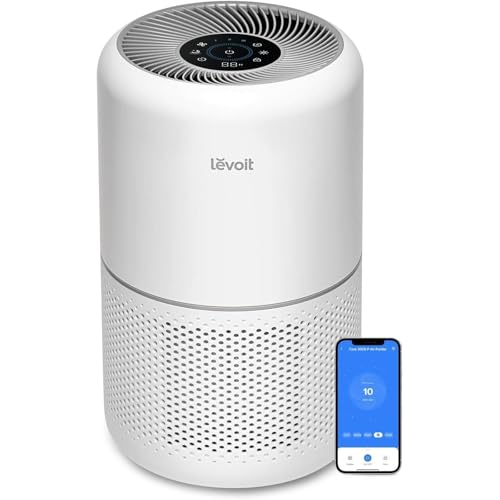
Levoit’s small tower answers the 411+ with a sensor, an auto mode, an app and an orthodox HEPA path — the full modern layer in the same parish. It is verified and linked in this programme, and for households that want the small room managed and reported rather than merely filtered, it is the stronger purchase at a comparable parish price.
The Blueair counters with the sock, the electrostatic quiet and the absence of anything to connect. The contest is the cluster’s recurring one — intelligence against simplicity — staged in the smallest room, where the household’s temperament is the only judge either machine recognises.
| Filtration | True HEPA with carbon |
|---|---|
| Control | Sensor, auto, app |
| Best room | Bedroom, nursery |
Strengths
- Sensor, auto mode and app in the small parish
- Orthodox HEPA path with wide filter availability
- Verified linked pick with official imagery
Trade-offs
- Connected layer to maintain and eventually retire
- No fabric camouflage for close rooms
- Filter costs recur on a seasonal rhythm
Best for: small rooms wanting automatic, reported management
Not suited for: simplicity households and the app-fatigued
Aroeve MK01 — The budget alternative
Reviewed in full in this cluster, the MK01 does the small room’s particle job for a fraction of the 411+’s price: genuine HEPA, a dark quiet sleep mode, and nothing else. It lacks the Blueair’s filtration pedigree, finish and headroom, and its filter economics are its own argument — but for a spare room or a student budget it is the honest floor of the category.
Households cross-shopping it against the 411+ are really deciding how long the machine will serve and how hard. A season in a rented room argues for the Aroeve; a decade in the nursery argues for the Blueair, and both arguments are respectable.
| Filtration | HEPA with light carbon |
|---|---|
| Control | Manual speeds, sleep mode |
| Best room | Small bedroom |
Strengths
- Lowest honest price for the small-room job
- Quiet, dark sleep mode
- No connectivity or complexity whatsoever
Trade-offs
- Less filtration headroom and finish than the Blueair
- Manual everything
- Token carbon, firmly small parish
Best for: budgets, spare rooms and short tenancies
Not suited for: long-service, high-load small rooms
Positioning: blueair blue pure 411 plus review — the Aroeve MK01 is covered in prose, not as a linked pick; compare it on the maker’s own current terms before deciding.
Blueair Blue Pure 311 Auto — The larger automatic sibling
When the ‘small room’ is actually a generous bedroom, the 311 Auto — reviewed in full in this cluster — takes the family’s philosophy up a parish: sensor, auto mode, no app, and airflow sized for the bigger volume. It is the upgrade path for households that outgrow the 411 parish or misjudged it at purchase.
It earns its place in this list as the family’s ladder made visible: 411 for the small room, its plus for the loaded small room, the 311 Auto for the generous room that should manage itself. Households should climb it by measurement rather than by hope.
| Filtration | HEPASilent |
|---|---|
| Control | Sensor, auto mode |
| Best room | Large bedroom |
Strengths
- Larger parish with sensor and auto mode
- No-app intelligence, family sock and manners
- Headroom the 411 class cannot offer
Trade-offs
- Costs more and occupies more than the mini towers
- Premium filters at the larger size
- Overkill for a genuinely small room
Best for: generous bedrooms and main rooms wanting unconnected automation
Not suited for: genuinely small rooms, where it is money and size wasted
Positioning: blueair blue pure 411 plus review — the Blueair Blue Pure 311 Auto appears as a prose pick rather than a linked one; the maker’s own current listing is the place to confirm its terms.
How the Blueair Blue Pure 411 Plus Review Field Compares
The 411 family tree needs a map, and this review provides one in its sections: the plain 411 is the manual original, the 411+ the higher-capacity variant, and the 411 Auto the sensor-driven sibling. Against the Levoit Core 300S-P the 411+ offers the sock and the electrostatic path against the Korean’s full smart layer; against the Aroeve MK01 it offers the family’s finish and filtration pedigree at several times the price. Its parish is the same small room in every comparison — the differences are what happens inside it.
Households should buy the 411+ for headroom: the room at the top of the small class, the sleeper with the heavier load, the nursery where the machine will run for years. Households whose room is genuinely small and whose load is ordinary will find the plain 411 the same philosophy with money left over, and this review’s verdict says so in as many words.
Buying Guide: Judging Blueair Blue Pure 411 Plus Review on the Right Criteria
A plus-model in a small line must justify itself on filtration headroom and parish authority rather than on features. The criteria below grade the 411+ on what the plus actually buys, and hold its plainer sibling and its small-room rivals to the same accounting.
Headroom under load is where blueair blue pure 411 plus review stops being marketing and becomes measurable, because the plus proposition is capacity: a filter that holds the room at lower effort and ages slower under traffic, pet and pollen loads — grade it by your room’s actual load, not its size alone The plus’s whole case is reserve: filtration capacity above its parish’s ordinary need, so that the bad day — the pollen spike, the visitor’s dog, the renovation’s dust — is met from stock rather than from hope.
Specification before badge. in this line the model name is a rumour and the filter part number is the fact, so verification of the exact variant is a purchasing criterion, not a courtesy A suffix is not a specification, and this criterion grades the plus by what its numbers and media actually add over the sibling it supplements — the discipline the whole review is built on.
Filter life economics: a premium filter that serves eighteen hard months can undercut a cheap filter that serves eight, and the honest unit is cost per month of held room Headroom reprices the consumable: a filter working below its ceiling ages slower, and the plus’s ledger should be read across that longer life rather than against the sibling’s sticker.
Night manners at close range deserves its own line in your notes. small rooms put the machine beside the sleeper, so its night speed’s volume and its display’s darkness are parish-critical in a way larger rooms forgive The small parish’s hardest test is distance — a machine close enough to touch, quiet enough to forget — and the plus inherits the family’s manners at exactly the range where manners are measured.
Carbon realism at small scale is where blueair blue pure 411 plus review stops being marketing and becomes measurable, because at this size carbon is a freshening gesture in every brand, and odour-led small rooms should be assigned to heavier-carbon machines or to source control Its carbon is a small room’s stage, honestly proportioned; the review holds it to the nursery’s background and the study’s drift, and sends chemistry’s heavy briefs to the deep beds by name.
Judge fleet coherence before anything else on the page: a household building room by room gains from one family’s filters, socks and habits, and the 411+’s value compounds if its siblings are already in the house A household running several of the family’s machines gains from shared logic — socks, dials, filter rhythms — and the plus’s place in that fleet is a real, if unglamorous, specification.
Blueair Blue Pure 411 Plus Review in Real Households
Picture the nursery over the bus route for a moment. The plus’s founding scenario: a small room, a heavy load, a sleeper who matters and cannot speak. The machine runs the day at a working speed and the night at its floor, its headroom keeping both sustainable, its filter ageing in years. Parents should keep the health conversation with the paediatrician and let the machine mind the air — which, in this room, it does with unusual authority for its size.
The reactive worker’s study. A pollen-season study is a small room with an economic output: the worker’s afternoons. The 411+ at a working speed through the season, door shut, sock washed monthly, is occupational infrastructure at a household price — with the standing note that the machine manages the room’s air, not the worker’s condition.
The cat’s favourite bedroom. The spare room the cat owns and guests borrow is a dander parish with intermittent human occupancy. The plus’s capacity absorbs the resident’s load between visits, and a clear-down before each guest turns the cat’s room back into a bedroom on schedule.
The ordinary box room is the situation readers describe most often. Here the plus is over-bought and the plain 411 is the correct machine: average load, average road, a sleeper who needs the family’s quiet at the family’s lower price. The scenario exists to keep the review honest — headroom is a purchase for a load, and a room without the load should not pay for it.
The bedsit’s sleeping corner: A bedsit is one room with a kitchen’s insults, and the 411+ will handle its particles while its carbon gestures at the cooking. Households in bedsits should read the Medify pick in the Aroeve review for the odour half of their problem, and treat the Blueair as the particle half of a two-part answer.
How To Get Blueair Blue Pure 411 Plus Review Right, Step by Step
Step 1: Verify the exact variant first. Before buying, match the listing’s filter type, dimensions and feature list against the maker’s own specification for the 411+. Two minutes of specification is the toll this line charges, and it is cheaper than a return.
Step 2: Grade your room’s load honestly. Traffic, pets, pollen, occupancy hours and door discipline: score the room before choosing between the plain and plus siblings. The load, not the room’s size, is the plus’s constituency.
Step 3: Place it in the breathing zone. Beside the bed or the desk, clear of curtains, with the door’s closure defining the parish. Small towers serve the metres around the sleeper first and the room’s corners eventually.
Step 4: Run the two-speed day. A working speed for the loaded hours, the floor speed for the night. Headroom means the working speed can be the quieter one — that is what the premium bought, so spend it.
Step 5: Wash the sock, log the filter. Sock in the monthly laundry, filter’s installation date written on the machine. In a high-load room these two habits are the difference between the plus’s promise and its disappointment.
Step 6: Review after the first season. Compare the filter’s condition against the schedule and the room’s feel against the spring. One season’s evidence grades the purchase and calibrates the next filter’s timing better than any published figure.
Mistakes That Undermine Blueair Blue Pure 411 Plus Review
Buying the plus for a bigger room sounds harmless in the showroom and expensive at home. The plus is capacity within the small parish, not a larger parish. Households that stretch it into a living room have bought headroom they cannot use in a volume they cannot serve.
Ordering by badge from a marketplace listing: The line’s variants make this the cluster’s most expensive clerical error. Verify the filter type and the sensor’s presence against the maker’s specification before the money moves.
Comparing filter prices without filter lives: The plus’s filter can look dearer and be cheaper per month. Run the division before the verdict, especially under a heavy load where lives diverge most.
Expecting small-room carbon to answer odour sounds harmless in the showroom and expensive at home. No mini tower in any brand carries the carbon mass for a litter empire or a smoker’s room. The gesture is real and insufficient, and the review’s alternatives exist for the households that need the substance.
Neglecting the sock in a high-load room. The plus’s headroom assumes its bodyguard is washed. A choked sock in a road-facing nursery taxes the expensive filter directly — the cheapest maintenance in the house protecting the dearest consumable in it.
Going Deeper on Blueair Blue Pure 411 Plus Review
The 411+ is a case study in what a mature product line owes its buyers: not novelty, but depth in the dimension that wears out. Small purifiers die by their filters — by capacity spent and performance faded — and a variant that spends its premium there is respecting the machine’s actual life rather than its launch. In a category addicted to screens and scores, a plus that means ‘more filter’ is a quiet act of integrity, and this review has graded it as one.
The naming maze around it is the counter-lesson: a line’s success multiplies its listings, its variants and its confusions until the buyer’s verification becomes part of the product’s real cost. Makers owe their bestsellers tidier names than this. Until they pay that debt, the specification check in this review’s how-to is the household’s toll booth, and it should be manned on every purchase in the line.
There is also a fleet story here. The 411+ rarely lives alone in a house for long: a household that trusts the small tower’s manners in the nursery tends to climb the family’s ladder for the main room, and the plus’s real competition is not the Levoit or the Aroeve but the plain 411 in the next room. Blueair’s ladder is built on that intra-household trust, and the plus is its most considered rung — the one bought by owners who already know the family’s manners and are buying depth.
So the verdict is a grading of loads. The 411+ is the right small Blueair for the room whose air works hard — and an unnecessary premium for the room whose air does not. Households that can tell the difference, and most can by the simple evidence of their windowsills’ dust, will buy the correct sibling the first time and keep it for years.
The plus raises a question the whole category avoids: why is reserve sold as a premium trim rather than as the standard? The honest answer is that most rooms, most days, do not need it — and that the households who do need it are precisely those least able to discover the need in advance, because their bad days are unpredictable by definition. The plus is therefore best understood as the maker’s acknowledgement that sizing is a distribution, not a number — and this review commends both the acknowledgement and the households who, reading it, recognise their own room’s tail.
There is a final, quieter point about naming. The family’s suffixes have confused buyers for years, and the confusion is a small tax on exactly the households least equipped to pay it. This review has tried to be the tax’s refund: the plus is headroom, the parish is unchanged, the sibling is honourable, and the choice is the room’s worst day. A category that named its machines by their parishes would need fewer reviews like this one — and would sell, this reviewer suspects, exactly the same number of machines, to households who understood them better.
The plus’s review should close on the virtue of its narrowness. It does not pretend to a larger parish, a chemistry brief or a flagship’s finish; it takes the family’s best small machine and gives it reserve. In a category of suffixes that promise transformations, that modesty is itself the finding — and households that buy it for exactly what it is will join the family’s quiet majority: owners who replace their machine, years later, with its own successor, and consider the matter closed.
A further consideration belongs to the plus’s defence: reserve is the only specification that improves the machine’s other specifications simultaneously — quieter at equal duty, longer-lived at equal load, calmer at the tail. Most upgrades trade; headroom compounds. That is why this review, which began by auditing a suffix with suspicion, ends by respecting it: the plus is the rare trim whose premium is a multiplier rather than an ornament, and households with a loaded small room will feel the multiplication nightly.
Keeping the plus: headroom’s housekeeping
Reserve is maintained, not merely bought: the sock washed so the media breathes, the intake clear so the capacity is real, the filter changed on the schedule its longer life earns rather than the sibling’s calendar borrowed from habit. Households upgrading from the standard 411 should re-mark the calendar on the day the plus arrives, because the old rhythm wastes exactly the life the premium purchased.
The plus also rewards the parish discipline its sibling taught: the door managed, the machine in the breathing zone, the load’s sources handled at the source where hands can reach them. Headroom is the second line, as this review said of the big machines; the first line is always the household’s own habits, and no suffix substitutes for them.
Who should not buy the plus
An honest review names its product’s wrong buyers, and the plus’s are identifiable: the ordinary small room with an ordinary load, whose sibling serves it completely at the kinder price; the larger room hoping a suffix will promote a parish, which it will not; and the chemistry brief — smoke, solvents, a renovation’s output — whose answer is carbon mass in another maker’s steel, not reserve in this one’s sock. Each of those households is served, by name, elsewhere in this cluster.
The plus’s right buyer is narrower and knows it: the small room with an above-ordinary load and a sleeper who grades the night by its worst hour. For that household the premium is not a badge but a sizing decision, and sizing decisions, as every review in this programme repeats, are the ones that decide whether a purifier is loved or merely owned.
The plus in the guest-room paradox
The spare room is the plus’s paradox: its load is ordinarily zero and occasionally total — a guest with a dog, a visiting grandchild in pollen season, the room’s month as a convalescent’s quarters. A standard machine serves the zero and is overwhelmed by the total; the plus was specified for exactly this distribution, and households whose spare room lives that double life will find the headroom argument more persuasive there than in any nursery. Parish, in other words, includes the calendar.
The same logic serves the home office whose door opens on the dog’s room, the study that becomes a sickroom, the nursery that hosts the au pair’s cat on weekends. Rooms have worst weeks as well as worst days, and the plus is the family’s way of sizing for the week without paying a larger machine’s rent in space and voice all year.
Field Notes on Blueair Blue Pure 411 Plus Review
The naming maze around it is the counter-lesson: a line’s success multiplies its listings, its variants and its confusions until the buyer’s verification becomes part of the product’s real cost. Makers owe their bestsellers tidier names than this. Until they pay that debt, the specification check in this review’s how-to is the household’s toll booth, and it should be manned on every purchase in the line.
Set against that, filter capacity is the small purifier’s stamina: it decides how quietly a room can be held and how long the holding lasts, which is why a plus spent on media outranks a plus spent on features a loaded small room — traffic outside, a pet inside, a sleeper all night — can consume a standard filter’s life in a season, and headroom is the difference between a schedule and a surprise the sock’s washability matters most in the highest-load rooms, where the coarse burden is greatest and the bodyguard earns its keep weekly naming confusion in a bestselling line is a tax on every buyer, collected in verification minutes, and the only refund is the habit of shopping by specification
Look closer and the plus’s parish discipline is absolute: depth within one small room, and households that respect the border are the ones writing the five-star reviews a nursery’s purifier is bought by people who will never sleep beside it, which makes its quietness a reported virtue and its reliability the real one the family’s ladder — 411, plus, 311 — is a sizing system disguised as a product range, and households that climb it by measurement rarely own a wrong machine in the end the 411+ is the connoisseur’s small Blueair: bought by owners who have read a filter specification and nodded, which is a smaller and more satisfied constituency than any launch can manufacture
A related point: headroom’s invisibility on the ordinary day is why it is chronically underbought: households shop on the day they shop, in the room as it is, and the tail of the distribution sends no representative to the showroom a small room’s load is spikier than a large one’s because volume is a buffer — the same event that dilutes into a living room’s percentage arrives in a nursery as a doubling, which is the plus’s whole argument in one physical fact the family’s shared grammar across its line — sock, dial, rhythm — is a fleet specification no single-machine review can price, and households that own two of the family’s machines discover it as a fluency they never bought on purpose in the end the 411+ is a sizing philosophy wearing a suffix: buy for the worst day the room actually has, and let the ordinary days be served from reserve — the review’s verdict, and the parish’s
One more consideration: reserve has a sound, or rather the absence of one: the plus meets its room’s worst hour at a speed the standard machine would have to exceed, so headroom is audible precisely as quiet — the specification light sleepers actually buy its filter’s longer life under equal load makes its ownership rhythm calmer: fewer changes, later changes, and a calendar that can be marked in seasons — a small administrative mercy that compounds across a fleet its reserve is most audible at the exact moment a nursery can least afford noise — the bad night’s clear-down, run at a working rather than a shouting speed while the room’s small occupant stays asleep the plus’s existence quietly reprices its sibling: households that audit the two honestly often discover their room was ordinary after all, and buy the standard with more confidence for having checked
One more consideration: a machine bought for a distribution’s tail teaches its household to think in tails — the same reasoning, applied to the house’s other systems, is worth more than the filter it was bought for and its fleet grammar means the plus can be operated by anyone the family has already taught on any sibling — babysitters included — which in a nursery’s economy of exhausted adults is a specification with a heartbeat
Blueair Blue Pure 411 Plus Review: Cases Worth Studying
The bus-route nursery. A nursery facing a bus route ran the plain small-tower class first and watched its filter grey within a season while the machine worked audibly to hold the room. The 411+ that replaced it held the same room a speed lower and a register quieter, and its filter was still presentable when the plain one’s successor would have been due. The case is the plus in one room: not a bigger parish, but a deeper bench within it.
Final Recommendation on Blueair Blue Pure 411 Plus Review
The Blueair Blue Pure 411 Plus review concludes that the plus is real: a higher-capacity filter giving the family’s beloved mini tower headroom and longevity in the small rooms that load it hardest. Verified by specification, priced by filter-months and assigned to a genuinely loaded small room, it earns its badge and its premium.
Take the plain 411 for the ordinary small room, the Levoit for smart management, the Aroeve for the budget, and the 311 Auto when the room outgrows the parish. Take the 411+ when the room is small and its air is not — the nursery over the road, the reactive study, the cat’s own bedroom — and expect it to hold that room, quietly, for years.
Frequently Asked Questions About Blueair Blue Pure 411 Plus Review
What does the plus in 411+ actually mean?
A higher-capacity particle filter and the headroom that comes with it: the same small tower and parish, able to hold a loaded small room at lower effort and to serve longer before the filter fades. It is not a larger room rating, a screen or a smart layer — the plus is filtration, which in this category is the honest kind of plus. In the maker’s line it denotes the uprated revision — more filtration headroom in the same small parish — and households should verify the exact revision’s specification at purchase, as this review’s second criterion insists.
411 or 411+ — which should I buy?
Grade the room’s load. Ordinary load — quiet road, no resident pet, average pollen — takes the plain 411 and keeps the change. Heavy load — traffic, dander, a reactive sleeper, long occupancy — earns the plus its premium in lower speeds and longer filter life. The siblings share everything else that matters. The sibling for the ordinary small room at the kinder price; the plus where the room’s load is above ordinary — the reactive sleeper, the dog’s room, the street-facing nursery — because headroom is bought for the bad day.
Is the 411+ the same as the 411 Auto?
No: the Auto is the sensor-driven sibling with an automatic mode; the plus is the capacity variant in the line’s classic manual form, though naming across markets and years is untidy enough that buyers should verify the exact specification of any listing rather than trusting the badge. This review’s how-to begins with that verification for a reason. No — the names describe different revisions in the family’s naming, and the confusion is the maker’s to answer for; check the exact model’s sensor and specification against the listing before money moves.
What size room suits the 411+?
One small room — a nursery, study or second bedroom — with the door shut. Its plus is depth within that parish, not breadth beyond it, and households with a generous bedroom should climb to the 311 models reviewed in this cluster. The same small parish as its sibling — nursery, small bedroom, study — served with reserve; a larger room wants the 311’s rung, and no suffix promotes a parish.
Does the 411+ remove odours?
Lightly, as every mini tower does: its carbon is a freshening gesture. Odour-led small rooms need heavier carbon — the Medify class — or source control, and this review’s scenarios say so where they apply rather than letting the plus be blamed for a brief it never accepted. A small room’s background, yes; a source’s output, no — the carbon is proportioned to its parish, and this review’s honesty about that proportion is the plus’s as much as the sibling’s.
How long does the 411+ filter last?
Longer under load than the plain model’s — that is the plus’s economic core — with the exact interval set by the room’s traffic, pets and hours. Inspect at the maker’s guidance, judge by condition, and divide the filter’s price by its served months before comparing it with any rival’s. Longer under the same load than the standard’s, because headroom is longevity in disguise — the maker’s schedule, read against the room’s actual load, is the calendar to keep.
Reading: blueair blue pure 411 plus review — from our own guides: Blueair Blue Pure 411 reviewed Blueair Blue Pure 311 Auto reviewed Aroeve MK01 reviewed best HEPA air purifiers what is a HEPA filter quiet air purifiers