Disclosure: As an Amazon Associate, dailyhomedecorating.com earns from qualifying purchases. Links on this page are affiliate links; they cost you nothing extra. Prices and availability change often, so check the current Amazon listing before you buy.
How To Sleep In A Car Safely: Start With The Rules That Keep You Safe
Learning how to sleep in a car safely begins with a sentence that should govern every decision in this guide: a car is an emergency shelter and an occasional travel tool, never a bedroom on wheels to be used carelessly. People sleep in cars for honourable and ordinary reasons. A driver too tired to continue makes the safest choice on the road by stopping. A traveller between homes, a worker between shifts, a camper whose tent failed in rain, a family evacuating ahead of weather, or a road-tripper stretching a budget may all spend a night in a vehicle. Done well, that night is legal, ventilated, temperature-aware, and forgettable. Done badly, it carries real risks: carbon monoxide, dangerous heat or cold, an illegal or unsafe parking place, and the simple vulnerability of being asleep and unaware in public.
So this guide is organised safety-first and comfort-second, deliberately. The first sections cover the non-negotiables: never sleeping with the engine running, keeping fresh air moving, choosing a legal and defensible place to park, and managing temperature in both directions. Only after those foundations does the article turn to the practical craft of making a flat, dark, reasonably comfortable sleeping space, and to the two verified products linked below, a back-seat air mattress and a set of magnetic privacy shades, each presented with its limits stated plainly. If you read nothing else, read this: engine off, windows cracked for air, parked legally and safely, someone who cares about you aware of where you are, and a plan to leave quickly if anything feels wrong. Comfort is a bonus. Waking up safe is the entire point.
In this guide
The Non-Negotiables: Five Safety Rules Before Anything Else
Rule one: never sleep with the engine running. A running engine produces carbon monoxide, an odourless, colourless gas that can accumulate around and inside a parked vehicle, especially in enclosed or semi-enclosed spaces, in snow that blocks an exhaust, or in still air in a dip or against a wall. Carbon monoxide poisoning can overcome a sleeping person without warning, which is precisely why the sleeping case is the dangerous one. Turn the engine off before you settle, keep it off through the night, and never treat idling for heat or air conditioning as a safe strategy. If you need climate help, the answer is clothing, bedding, shade, ventilation, location, and timing, covered below, not a running engine. Never sleep in a car inside a closed garage at all, running or recently run, and if you wake with a headache, dizziness, nausea, or confusion after sleeping near any running engine or generator, get into fresh air immediately and seek medical help.
Rule two: ventilate, always. Crack at least two windows slightly, ideally on opposite sides, to create a gentle cross-flow of fresh air through the night. A small opening, even a centimetre or two, changes the air in a sealed cabin over hours and reduces the stuffiness, condensation, and carbon dioxide build-up of a closed box occupied by a breathing sleeper. Rain guards or window visors, where fitted, let you crack windows with weather protection; mesh screens keep insects out where they are a problem. Ventilation is also your temperature tool in warm weather and your condensation tool in cold weather, which is why it appears in almost every section of this guide. A completely sealed car is never the right sleeping configuration.
Rule three: park legally, visibly sensibly, and with an exit. Laws and rules on sleeping in vehicles vary by country, state, city, landowner, and car park, and they change; the responsibility to check them is yours, every time, in the actual place you stop. Rest areas, truck stops, campgrounds, and certain large retail car parks are known in many regions for permitting or tolerating overnight parking under stated conditions and time limits, while residential streets, clearly signed no-overnight areas, private land without permission, and anywhere you would be causing an obstruction are not. When in doubt, ask, read the signs at the entrance rather than at midnight, and move on if the answer is unclear. Choose a level, well-kept, reasonably lit spot, park in the ordinary direction among other vehicles where possible, keep your keys and phone within reach, and always park so you can drive away forward without a complicated manoeuvre if you need to leave in a hurry.
Rule four: manage temperature as a health issue, not a comfort preference. A parked car’s cabin follows outside temperature with interest: it heats rapidly in sun, well beyond the outside air, and it cools toward the outside temperature overnight. Heat is the faster killer. Never sleep in a sun-heated car in hot weather, never leave a child or a pet asleep in a parked car in warmth under any circumstances, and treat a hot-weather night in a car as a problem to be solved with shade, timing, ventilation, and location, or not attempted at all. Cold is slower but equally serious across a whole night: dress and insulate for the temperature the night will reach at four in the morning, not the temperature at ten at night, and understand the early signs of hypothermia, including uncontrollable shivering, clumsiness, and confusion, as a signal to abandon the plan and find heated shelter.
Rule five: stay aware and stay connected. Tell someone where you are parked and when you expect to move on. Keep your phone charged, with a power bank or a charge taken before you park, since the engine stays off. Lock the doors once you are settled, keep valuables out of sight, and keep a torch within reach. Trust discomfort of the instinctive kind: if a place feels wrong, if someone takes an unusual interest in the car, or if circumstances around you change, leave early and calmly for a busier, better-lit alternative. No night’s savings or schedule is worth arguing with that instinct.
Choosing Where To Park: A Practical Hierarchy
The best sleeping places share four qualities: permission, level ground, other people at a respectful distance, and access to a toilet and water. Dedicated campgrounds sit at the top of the hierarchy for travellers who can plan, because permission is explicit, facilities exist, and sleeping in vehicles is an ordinary, expected activity; many also offer the safest answer of all, which is a tent pitch beside the car. Highway rest areas designed for fatigued drivers are the correct answer for the unplanned tiredness stop in many jurisdictions, subject to their posted time limits, which exist to serve exactly your situation: stop, sleep, recover, drive on safely. Truck stops and travel plazas commonly provide lit parking, facilities, food, and the company of professional drivers doing the same thing, in the areas designated for cars rather than among the trucks themselves.
Large retail and hospitality car parks occupy a middle tier that depends entirely on local policy and signage; some chains in some regions welcome overnight recreational vehicles and cars, others prohibit it, and individual managers’ decisions rule on the night. Asking inside, politely and before dark, converts a gamble into permission, and buying your supplies there is both courtesy and common sense. Hospital and transport-hub car parks sometimes serve people in genuine transit or family emergencies, again under their own posted rules. The bottom tier, to be avoided, includes residential streets where you are unknown, isolated rural lay-bys with no passing traffic, industrial areas that empty at night, anywhere with signage prohibiting overnight stays, and anywhere you must hide to feel acceptable; a place you have to conceal yourself in is telling you it is the wrong place.
Position within the place matters too. Level ground is a safety feature as much as a comfort one, because a sleeper who slides, rolls, or wakes disoriented on a slope starts the night at a disadvantage, and fluids, doors, and your own sense of balance all behave better on the flat. Park away from standing water, overhanging dead branches, and the direct line of other vehicles’ headlights and manoeuvres where you can, while staying inside the ordinary, populated part of the site rather than in its loneliest corner. Arrive late enough to be unobtrusive and leave early enough to be considerate, keep noise and light to a minimum, take every scrap of rubbish with you, and leave the place exactly as a welcome guest should: unmarked by your night there.
Temperature: Sleeping Safely In Heat And In Cold
In warm weather, the strategy is shade, timing, and moving air. Park in the shade the location will be in at sunrise, not merely the shade of the evening, because morning sun on a closed cabin ends sleep early and heats fast. Crack windows on opposite sides, use mesh or shades to keep insects and eyes out while air moves, and consider a small battery fan, run from its own power rather than the car’s, aimed along the cabin rather than at your face. Dress in the lightest layer that the night genuinely requires, sleep on top of insulation rather than wrapped in it, hydrate before sleep, and keep water within reach for the night. Know the warning signs of heat illness, including headache, nausea, rapid pulse, confusion, and skin that is hot and dry, and treat them as emergencies: get out of the vehicle into shade and air, cool down, drink, and seek help. If the night will simply be too hot, the safe decision is a room, a campground with facilities, or a different plan, and making that decision is competence, not failure.
In cold weather, the strategy is insulation below you, insulation above you, and dry layers throughout. Cold reaches a car sleeper first from underneath, through the seat or floor and the air beneath the car, so a proper insulating pad or mattress matters more than an extra blanket, and the air mattress discussed later should always be paired with an insulating layer on top of it in cold conditions, because air beds alone conduct the cold through. Wear a hat and dry socks to bed, change out of the day’s clothes if they hold any damp, and keep the next morning’s layers inside your bedding where they stay warm. Ventilation remains non-negotiable even in the cold: a small window opening prevents the condensation that would otherwise soak bedding and clothing by morning and make the following night colder. Never use a fuel-burning heater, stove, or candle inside a car; the fire and carbon monoxide risks in a small sealed volume are severe, and no warmth is worth them. Warmth comes from clothing, bedding, insulation, and location, or the plan changes to heated shelter.
Making The Sleeping Space: Flat, Dark, And Honest About Its Limits
With safety settled, comfort is mostly geometry. The flattest available surface wins: in many cars that is the folded rear seat opening into the boot or cargo area, giving a long, flat platform for one or two sleepers with heads toward the cabin; in others it is the reclined front seats for a short, upright emergency rest, which serves for a fatigue nap rather than a full night. Clear the space completely before dark, because arranging a bed by torchlight in a cramped cabin is how small miseries are made. Build the bed in layers: insulation first, then a sleeping pad or mattress, then a sleeping bag or duvet rated honestly for the night temperature, then a pillow, which can be a proper small pillow, a stuff sack of soft clothes, or a folded jacket, and which repays its tiny space cost in neck comfort all night.
Darkness and privacy are the second half of comfort, and they are also safety features, because a sleeper who is not on display sleeps more deeply and attracts less attention. Window shades or covers block light and sightlines; the magnetic set in our picks below is one verified example. A simple windscreen shade, towels or clothing hung carefully, or purpose-made covers all serve, provided they do not block the small window openings your ventilation depends on. Keep the driver’s seat and the path to it clear, always, so that waking and leaving remain simple, and keep keys, phone, torch, water, and shoes in the same memorised places every night, reachable in the dark without thinking.
The Two Products That Genuinely Help, And Their Limits
Most car-sleeping gear is decoration on top of the fundamentals above. Two categories earn their space in a small car: something flat and insulating to sleep on, and something to make the windows private without sealing them. The two products below were verified model by model before being linked, and each review states plainly what the product cannot do, because in a safety article the limits matter as much as the features.

DikaSun Car Air Mattress — For A Flat Back-Seat Bed In A Parked Car
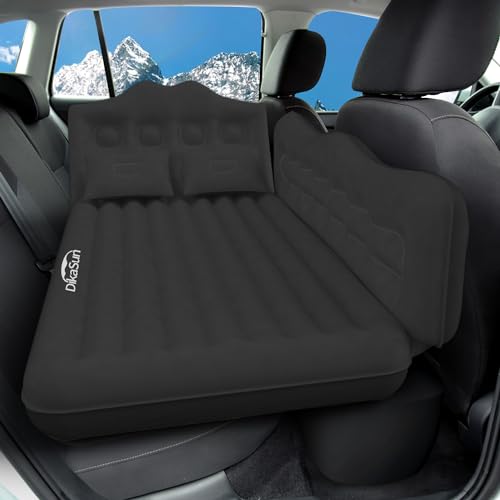
Badge: Best flat-bed helper. The DikaSun is an inflatable mattress shaped for the back seat and footwell area of SUVs, trucks, and larger cars, supplied with an air pump and two inflatable pillows in the configuration we verified. Its value is geometric: it bridges the seat and the gap in front of it to create a flatter, more continuous sleeping surface than cushions alone, which is the difference between a night of broken, twisted sleep and a night of actual rest. It is strictly a parked-car product. Inflate it after you have parked for the night, in a legal place, with the engine off; never travel with passengers on it, never use it in a moving vehicle, and never let it tempt you into sleeping somewhere the parking itself is unsafe or unlawful, because no mattress improves a bad location.
- Type: Inflatable back-seat air mattress
- Includes: Air pump and two pillows, as listed for this configuration
- Fit intent: Back seats of SUVs, trucks, and larger cars, as the maker describes
- Use: Parked vehicles only, for camping and travel rest
Strengths
- Creates a genuinely flatter sleeping platform across the back seat.
- Packs small when deflated, so it can live in the car for emergencies.
- Included pump and pillows reduce the extra kit you must assemble.
Trade-offs
- Air beds conduct cold from below; add an insulating blanket or pad on top in cool weather.
- Fit varies by vehicle; check your back-seat dimensions against the listing before buying.
- It improves comfort only; it changes nothing about ventilation, legality, or location safety.
Best for: planned car-camping and road-trip rest in larger vehicles, parked legally for the night. Not suited for: small cars it will not fit, moving vehicles under any circumstances, or cold nights without added insulation.
ZATOOTO Magnetic Car Window Shades, 4 Pieces — For Privacy Without Sealing The Car
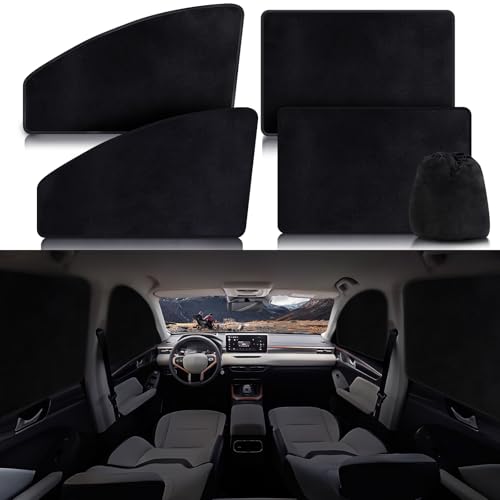
Badge: Best privacy helper. The ZATOOTO set covers side windows with magnetic-edged shades that the maker describes for privacy, sun shading, and heat insulation, in a four-piece set for camping, travel, and daily use. For the car sleeper, their job is threefold: they darken the cabin against site lighting and early sun, they remove the fishbowl feeling that keeps sleep shallow, and they reduce the attention a sleeping occupant attracts. Used correctly, they cover the glass while your small ventilation openings remain functional at the top of the window; used carelessly, any window covering can obstruct airflow or a driver’s visibility, so fit them only when parked, arrange them so ventilation survives, and remove or stow them completely before driving.
- Type: Magnetic side-window shades, 4 pieces
- Purpose: Privacy, sun shading, heat insulation, as the maker describes
- Fit: Side windows, magnetic attachment; check your window frames before buying
- Use: Parked vehicles; remove before driving
Strengths
- Fast, tool-free fitting and removal suits nightly use.
- Real privacy and light reduction improve sleep depth noticeably.
- Shading also slows morning heat build-up in the cabin.
Trade-offs
- Magnetic fit depends on your car’s window frames and will not suit every model.
- They must never cover the ventilation gap you depend on overnight.
- They provide privacy, not security; locks, location, and awareness still do that work.
Best for: regular car campers and road-trippers who sleep in lit, populated, legal overnight places. Not suited for: vehicles whose windows they do not fit, or any use while driving.
Beyond these two, the genuinely useful kit list is short, cheap, and mostly already in your home: a sleeping bag or duvet matched to the season, an insulating layer, a pillow, a torch, a charged phone and power bank, water, a small bag for rubbish, earplugs if site noise bothers you, and clothing for the coldest hour of the night. Readers setting up a home base between road days may also find our sleep-adjacent guides useful, including best anti snoring mouthguards for a partner whose snoring follows you everywhere, and the best humidifiers we tested for the dry hotel and rental rooms that punctuate long trips. Air quality on the road is its own topic; the principles in indoor air quality statistics apply surprisingly well to small cabins, and humidifiers vs diffusers explains why a travel diffuser is a scent toy, not an air treatment, in a car just as in a bedroom.
A Step-By-Step Routine For The Night
Before dark: choose and check your place, read its signs, ask permission where that is the custom, use its facilities, eat, hydrate, charge your phone, and tell someone where you are. Prepare the bed in daylight or early evening, fit the shades, set the ventilation openings, lay out keys, phone, torch, water, and shoes in their memorised places, and lock valuables out of sight in the boot or under the bed you have built.
Settling: visit the facilities one last time, change into sleeping layers, including dry socks and a hat in cold weather, lock the doors from inside, confirm the engine is off and will stay off, confirm the windows are cracked as planned, and set any alarm for a departure that respects the place’s limits and your own need to drive rested. If you are stopping purely from fatigue, even a shorter, disciplined sleep in a legal rest area serves you better than pressing on; drowsy driving is a proven danger, and stopping is the competent driver’s move.
Through the night: if you wake hot, cold, or uneasy, solve the actual problem in order: air first, layers second, location third, including leaving for a better place if instinct or circumstances say so. Never solve any night problem by starting the engine and going back to sleep. If you wake with symptoms that could suggest carbon monoxide exposure from any nearby source, headache, dizziness, nausea, confusion, get out into fresh air at once and seek help rather than reasoning with the symptoms.
In the morning: ventilate fully, dress, use facilities, walk around the car and check tyres and surroundings before driving, eat and drink something, and only drive on when you feel genuinely alert. Tidy the site completely. If the night went badly, be honest about why: most car-sleeping failures trace back to location, temperature, or a slope, and all three are fixable next time by planning rather than by buying more equipment.
Special Cases: Children, Pets, Health, And Weather Emergencies
Children raise every standard in this guide. A child must never be left alone asleep in a car, must never be in a car that could overheat, and needs the adult’s full, sober attention to temperature through the night; in practice, families should treat car sleeping with young children as a genuine last resort or a carefully planned camping choice in a legal site with facilities, never as an improvisation. Pets share the heat risk in full and add their own: they cannot open a window, call for help, or tell you they are unwell, so the same rule applies with no exceptions in warm weather, and in cool weather they need their own insulation, water, and ventilation considered as carefully as yours.
Anyone with a medical condition affected by temperature, breathing, circulation, or medication timing should plan car nights with that condition in the foreground, keep medication in its memorised place with water, and prefer serviced accommodation whenever the night threatens extremes. In weather emergencies, floods, fires, storms, and evacuations, official guidance overrides every word of general advice: follow the directions of local authorities about where to go and where not to park, never park in flood-prone dips, under trees in high wind, or in the path of the hazard you are escaping, and treat the car as the transport to shelter that it primarily is. Sleep is recoverable tomorrow; safety decisions are not.
Common Mistakes, Collected
The gravest mistake is idling the engine for climate while sleeping, for the carbon monoxide reasons stated at the start. The second is sealing the car completely against weather, insects, or embarrassment, and losing ventilation. The third is parking illegally or invisibly and spending the night anxious, moved on, or worse. The fourth is dressing and bedding for the evening temperature and meeting the coldest hour unprepared. The fifth is leaving the driver’s seat buried under luggage so that leaving quickly becomes a project. The sixth is telling no one where you are. Every one of these is a decision, not an accident, and the routine above exists to make the safer decision the default one, even when you are tired, which is exactly when defaults matter most.
Final Word
Sleeping in a car safely is a learnable, respectable skill, and its curriculum is short: engine off, air moving, place legal and level, temperature planned for the worst hour, someone informed, exit ready. Master those, and the comfort craft of flat beds, dark windows, and quiet routines turns an emergency measure into a manageable night and a planned road trip into a pleasure. Respect the limits, of the car, of the weather, and of the law where you stop, and let the standard be simple: you should wake up rested, legal, and entirely unharmed, with nothing to tell about the night except that you slept.
Planning A Deliberate Car-Camping Night, Step By Step
There is a difference between surviving a night in a car and planning one, and the planned version deserves its own walkthrough, because most of the safety work happens before the sun goes down. Begin a day ahead if you can: choose the destination area and identify two or three candidate overnight places in order of preference, a campground first, a known rest or travel facility second, and a further serviced option as the fallback you will genuinely use rather than a fiction. Check the rules for each candidate as far as they can be checked in advance, check the weather for the night rather than the day, including the pre-dawn low and any wind or storm warnings, and let that forecast decide your bedding and clothing list with no optimism allowed. A night that the forecast says will be extreme is a night to rebook, reroute, or upgrade to a roof, and deciding that at a desk is wisdom; deciding it at midnight in a lay-by is misery.
Pack the car as two separate systems. The driving system stays exactly as it should be for the road: clear windscreen and mirrors, accessible documents, fuel and charging in order, nothing loose that would matter in a sudden stop. The sleeping system packs as one contained kit: insulation layer, mattress if you use one, sleeping bag or duvet, pillow, shades, torch, water for the night, a small rubbish bag, and the clothing layer for the coldest hour, all reachable from the rear of the car without unpacking the driving system at the roadside. Test the whole arrangement once at home, in daylight, in your own driveway or parking place: build the bed, lie on it, check the fit of the mattress and shades against your actual vehicle, find the door handles and window controls by touch, and time how long setup and pack-down take. Every surprise discovered at home is a small misery removed from a dark car park, and fit problems with vehicle-specific products like back-seat mattresses are far better found beside your own kettle than beside a motorway.
On the day, drive the day’s distance with the night already decided, because tired drivers make poor parking decisions and the hierarchy of places in this guide deserves a rested judge. Arrive at your chosen place with light to spare, use its facilities, eat a real meal, and walk the site once as a pedestrian: notice the level spots, the lighting, the toilets, the exits, and the general company you will be keeping. Settle the car in its spot before dark, build the bed while you can see, fit the shades, set the ventilation, and organise the memorised positions for keys, phone, torch, water, and shoes. Then relax into the evening as a camper rather than a fugitive: a legal, prepared night in a car has its own quiet pleasure, stargazing through a cracked window and waking with the light among other travellers, and it is earned entirely by the planning that preceded it.
Accessibility and honesty belong in this walkthrough too. Travellers with limited mobility should test transfers into the sleeping position at home with particular care, keep mobility aids in their memorised place, and favour serviced sites where help and facilities are close. Travellers managing the night on a tight budget should know that the hierarchy in this guide still holds at zero cost in many regions, because rest areas provided for fatigued drivers exist precisely so that money is never the reason a tired person keeps driving. And every traveller should hold the plan loosely at exactly one point: if the place, the weather, or your own condition turns against the plan on the night, the fallback is not a worse parking spot, it is a different kind of shelter, chosen early and without embarrassment.
Fatigue, The Road Home, And Knowing When The Car Is The Answer
Most real-world car sleeping is not camping at all; it is the moment on a long drive when a responsible driver admits that the next hour at the wheel is more dangerous than a stop. That moment deserves direct treatment, because pride and schedule pressure talk people out of it every night on every highway. The signs are unmistakable once named: drifting attention, missed exits, heavy eyelids at the wheel, windows opened and music raised as countermeasures that have stopped working. At that point the hierarchy in this guide compresses into a single instruction: take the next proper rest opportunity, not the next shoulder, park legally among other stopped travellers, lock, ventilate, set an alarm, and sleep without negotiation. Coffee and fresh air buy minutes, not safety, and they buy them at a rising price; sleep is the only actual remedy for sleepiness, and a short, real sleep in a parked car is a proven, honourable driving skill.
The same honesty applies at the other end of the night, to the drive that follows the sleep. Waking in a car is not the same as waking rested for the road: allow time to be fully awake, walk, eat, drink, and assess yourself as frankly as you assessed the parking place. If you are still drowsy, the answer is more rest or a different plan, not a heroic departure, because a journey’s most dangerous miles are often the ones driven on determination after a broken night. Households planning long shared drives should build this into the plan itself, with two rested drivers rotating, scheduled stops that exist whether or not anyone admits tiredness, and an agreed rule that any driver can call a stop without argument or mockery. That rule, agreed in a kitchen weeks earlier, is a safety device as real as any product linked in this article.
Finally, a word for the readers for whom car sleeping is not a trip or an emergency but a season of life, between homes, between jobs, or inside a hard year. The safety core of this guide applies with extra force: legal, populated, serviced places; ventilation without exception; temperature planned without optimism; belongings secured and documents safe; a connection maintained with at least one person or service who knows your situation. Local charities, councils, and outreach services in many areas maintain specific guidance and safer-parking programmes for people living in vehicles, and using them is a strength, not a surrender. Everyone deserves to wake up safe, and the information in this article is offered in that spirit to every reader who needs it, whatever brought them to the page. Practical home-side reading for steadier times includes best anti snoring mouthguards for households reuniting sleep routines under one roof again.
Vehicle-Specific Notes: Small Cars, Estates, Vans, And Electric Vehicles
The principles in this guide are vehicle-proof, but their application flexes with the vehicle in front of you. In a small hatchback or saloon, space is the binding constraint: the reclined-seat rest is often the realistic option for a fatigue stop, the folded-seat platform may suit only shorter sleepers, and a back-seat mattress designed for larger vehicles may simply not fit, which is why the fit check at home matters more, not less, in a small car. Keep the kit minimal, because every object in a small cabin competes with the sleeper, and let ventilation and level parking carry a comfort burden that equipment cannot. In estates, SUVs, and larger cars, the flat cargo platform is the great asset this article’s mattress pick was designed around, and the discipline required is resisting the temptation to fill the extra space with loose belongings that migrate in the night and bury the driver’s seat, the exits, or the sleeper.
Vans and camper conversions change the picture again, usually for the better: standing or sitting headroom, purpose-built beds, fitted insulation, and ventilation designed rather than improvised. The same rules still govern them, with two emphases: purpose-built ventilation should be used as designed and never blocked by the very bedding it serves, and any installed systems involving fuel, gas, or combustion belong to professional installation and maintenance, with a working carbon monoxide alarm as a non-negotiable fitting in any vehicle designed for sleeping where combustion appliances exist nearby. Electric vehicles add their own note: climate features designed by the maker for stationary use are a different proposition from idling a combustion engine, and owners should follow their vehicle maker’s own guidance for stationary climate use, battery management, and sleeping configurations exactly, while keeping every other rule in this guide, about place, ventilation awareness, temperature, and exit readiness, entirely intact. Whatever the vehicle, the test is unchanged: engine and systems used only as their maker intends for a sleeping occupant, air moving, place legal, and a sleeper who can wake, orient, and leave without a struggle.
Keep one final distinction clear, because it organises every judgement in this guide: the difference between a car that is parked well and a car that is merely stopped. A stopped car is where the vehicle happened to be when tiredness won; a parked-well car has been placed, deliberately, in a legal, level, populated place, with its ventilation set, its bed built, its exits clear, and its driver committed to the engine staying off until morning. The transformation from one to the other takes ten minutes and no money, and it is available at the end of the longest, worst driving day, which is exactly when it matters. Make that transformation a habit so fixed that you perform it even when exhausted, especially when exhausted, and the rest of car sleeping, the comfort, the quiet, the small adventure of it, can look after itself.
And if the night goes well, as most well-planned nights do, notice what made it work and write it down where future-you will find it: the place, the setup, the layer that was exactly right, the one thing missing. Car sleeping improves faster than almost any travel skill, because its lessons are concrete and its feedback is immediate, and three documented nights will teach a traveller more than a season of other people’s videos. Share the good places and the honest lessons with the travellers who follow you, in the communities where such knowledge lives, because the culture of resting safely, legally, and considerately is built one reported night at a time, and every reader of this guide who parks well tonight makes the practice more welcome for the reader who needs it tomorrow.
Money, Documents and the Morning After
Safety guides concentrate on the night itself, but a surprising share of car-sleeping problems arrive at dawn. Plan the morning before you settle: know roughly where the nearest open facilities are, keep enough fuel or charge to reach them without anxiety, and make sure your phone has the battery to handle a call, a map and a payment if it has to. Keep payment cards and identification in the same place you keep them during the day, on your person or in a consistent, reachable spot, rather than scattered through the car during a tired rearrangement. If you are travelling with limited cash, decide in advance which expenses are protected, fuel home first, food second, because decisions made after a broken night in a cold car are rarely the decisions you would defend a day later.
Documents matter in a specific, practical way. If you are approached by an official, a landowner or a site warden, being able to produce identification and vehicle documents calmly, and to explain your situation briefly and politely, resolves most encounters in minutes. Keep documents together, current and reachable without unpacking the car. If your stop was forced by fatigue or a breakdown, say so plainly; people whose job involves roads hear the story often and respond better to a short, honest account than to an elaborate justification. If you are asked to move on, move on, even if the night feels barely begun. A shorter rest in a place you are welcome is worth more than an argument in a place you are not, and the next suitable stopping place is rarely as far as it feels at the time.
The morning itself deserves a routine. Air the car, move your body, drink water, and do not drive the moment you wake. Sleep in a car is fragmented sleep, and the grogginess that follows it can feel deceptively manageable for the first few minutes. Give yourself a genuine interval, a walk, a wash, food if you have it, before judging whether you are fit for a long drive. If the honest answer is not yet, the car has one more service to offer you: another hour of rest, in daylight, in a place where stopping is unremarkable. Arriving late is an inconvenience. Driving impaired by exhaustion is a danger to you and to strangers, and no schedule survives contact with that arithmetic.
Breakdowns, Bad Weather and Nights That Were Not Planned
The unplanned night is the one this guide most exists for, and it usually begins with a vehicle problem rather than a travel plan. If the car breaks down somewhere remote, the first decision is whether the car is your shelter or your hazard. On a fast road, the safest place is almost never inside a stationary vehicle in a live lane: follow the standard guidance for your country, leave by the doors away from traffic where that applies, move behind a barrier if one exists, and call for help rather than settling in. A car is only a bedroom when it is somewhere a parked car is safe to be. In a safe location, by contrast, a broken-down car with a charged phone, a known position you can describe to a recovery service, and enough warmth to wait comfortably is often best treated as exactly that: a waiting room, not a crisis.
Severe weather changes the calculation hour by hour. Heavy rain and wind argue for the most sheltered, authorised stopping place you can reach, away from trees with dead branches, flood-prone dips, and exposed ground where gusts hit the car broadside. Snow argues for visibility and against isolation: a cleared, used stopping place where others will pass is safer than a pristine empty one where you could be snowed in unnoticed. In any weather emergency, tell someone where you are, even by a short message with the location and your intention to stay put until conditions ease. That single message converts a private predicament into a situation at least one other person can act on if you stop replying.
Heat deserves a final, emphatic word in this section, because it is the condition in which a parked car turns dangerous fastest. A car interior can reach harmful temperatures in strong sun far more quickly than intuition suggests, and shade moves during the day, so a spot that is tolerable at dawn may be an oven by mid-morning. Never treat a hot car as a place to leave a child or an animal for any duration, and do not plan your own rest around the middle of a hot day in an unshaded place. If an unplanned stop in serious heat is unavoidable, the priorities are shade, ventilation, water and brevity, and the right ambition is to reach a building, not to endure the car.
Frequently Asked Questions
What should I keep in the car permanently in case I ever have to sleep in it?
A small, deliberate kit covers most unplanned nights without turning the car into a storage unit. Drinking water, a warm layer or blanket, a torch, a phone charging cable that works from the car, basic snacks that keep, any regular medication you would need overnight, and a note of key phone numbers in case the phone itself fails. In cold seasons add a hat and gloves, which weigh nothing and change a cold wait considerably. Check the kit when you check the car itself, at the start of winter and before long journeys, and replace water and snacks on that rhythm so the kit is real when it is needed rather than a memory of good intentions.
Should I tell anyone where I am stopping?
Yes, whenever the stop is unplanned, remote, or longer than a brief nap. A short message to a person who would notice your absence, giving the place as precisely as you can, the car you are in, and when you expect to move on or arrive, is one of the cheapest safety measures available. It costs a minute and creates a thread someone can act on. If you move to a different stopping place, update the message rather than assuming the first one is close enough. People travelling entirely alone benefit most from this habit, precisely because there is no passenger to notice if something goes wrong.
Is it legal to sleep in a car?
It depends entirely on where you are: national, state, and local laws, landowner rules, and car-park conditions all vary and change, and some places prohibit overnight sleeping in vehicles while others provide for it. Read the signage where you stop, use places that explicitly permit overnight or rest stays where possible, ask permission where that is appropriate, and move on whenever the position is unclear. This article gives safety guidance, not legal advice for any specific place.
Can I run the engine occasionally for heat or air conditioning while I sleep?
No. Sleeping with an engine running, or cycling it while you sleep, creates a carbon monoxide risk that a sleeping person cannot detect or escape in time, and it is the single most dangerous habit in car sleeping. Manage temperature with shade, ventilation, location, clothing, bedding, and insulation, and if the night is too hot or too cold for those tools, change the plan to proper shelter.
How much should I open the windows overnight?
Enough to keep fresh air moving: a small opening on at least two windows, ideally on opposite sides for cross-flow, balanced against weather, insects, and security in your specific place. The goal is a cabin that never becomes a sealed box. Rain guards or mesh can make a small opening practical in more conditions, and window shades should be arranged so they do not block the opening you are relying on.
Where is the safest place to stop when I am too tired to drive?
A designated rest area, travel plaza, or similar facility that permits rest stops, used within its posted time limits, is the standard answer in most regions: it is legal, populated, lit, and designed for exactly your situation. Choose a level, ordinary parking position among other vehicles, lock up, ventilate, and sleep. Stopping to sleep when fatigued is far safer than continuing to drive.
What temperature is too hot or too cold for sleeping in a car?
There is no single safe number, because sun, humidity, wind, clothing, bedding, and personal health all change the answer, and a parked cabin can become far hotter than the outside air in sun. Treat any hot-weather night that you cannot keep ventilated and shaded as a reason to choose proper accommodation instead, never leave a child or pet in a parked car in warmth, and in cold weather plan insulation for the coldest pre-dawn hour. If you are shivering uncontrollably, confused, or showing signs of heat illness, end the experiment and get help.
What should I do if I wake up in the night feeling unwell?
Stop sleeping and assess yourself in fresh air. Step out of the car if it is safe to do so, breathe the outside air, and take stock honestly: headache, dizziness, nausea, confusion, unusual breathlessness, or a racing heart after sleeping in or near any vehicle deserve to be treated seriously and promptly, with medical help called where symptoms are significant or do not settle quickly in fresh air. Do not drive yourself anywhere while feeling that way; call for help, alert someone nearby or the person who knows where you are, and let professionals judge. Feeling merely cold, stiff, or disturbed by noise is the ordinary discomfort this guide’s routines exist to reduce, and it is solved with air, layers, or a better location. The distinction is not always obvious at three in the morning, which is exactly why the rule leans toward fresh air and help whenever there is genuine doubt.
How can I sleep in a car without attracting attention?
By being a good guest rather than by hiding: park legally in an ordinary position, arrive and leave at considerate hours, keep light and noise down, use window shades for privacy, keep the car tidy and unremarkable, and leave no trace. Concealment in an unauthorised place is the wrong goal; quiet legitimacy in a permitted place achieves the privacy people actually want.