Disclosure: As an Amazon Associate, dailyhomedecorating.com earns from qualifying purchases. Links on this page are affiliate links; they cost you nothing extra. Prices and availability change often, so check the current Amazon listing before you buy.
This puroair hepa 14 240 review looks at one of the most searched-for mid-size air purifiers in the home category: a tower-style unit from PuroAir built around a high-grade HEPA filter, an air quality sensor that runs the machine automatically, and coverage claims aimed at bedrooms and living spaces rather than whole houses. We have structured this review the way we structure all of them: what the manufacturer actually claims, what those claims mean when you translate the marketing into filtration terms, who the machine suits, where its honest limitations sit, what it costs to own beyond the purchase, and how it compares with three credible alternatives if it is not quite your shape. Filter-grade language runs through this product’s marketing, so we also explain the “HEPA 14” label itself, because understanding that term is the difference between buying this purifier for the right reasons and buying it for a badge.
Key Takeaways
- The PuroAir 240 is a sensor-driven purifier for bedrooms and medium rooms, sold on the strength of its certified HEPA filtration, a carbon stage for odours, automatic operation via its PuroIQ sensor, and a quiet sleep mode.
- Its Amazon listing describes coverage up to 1,000 square feet; as with all such claims, treat that as a best-case figure and think in terms of air changes per hour in your actual room.
- The “HEPA 14” in the product’s marketing refers to a high filter grade in the European class family. It is a meaningful claim about the filter media, but the machine’s sealing, airflow, and your filter replacement habits decide real-world results.
- Ownership cost centres on the genuine replacement filter, which is widely available, including in multi-packs; price it before you buy the machine.
- Alternatives worth comparing: the Levoit Core 300-P for a simpler, widely owned compact, the Medify MA-25 for dual-filter design in smaller rooms, and the Winix 5510 for larger spaces and app control.
In this guide
Where to Buy and What You Are Buying
The PuroAir 240 is sold through Amazon and the brand’s own channels, with the listing varying by colour and pack configuration; a two-pack version exists for households equipping two rooms. What you are buying, in category terms, is a floor-standing purifier with a 360-degree intake, a combined filter cartridge containing the HEPA stage and a carbon stage the brand calls CarbonTech, a particle sensor that drives an automatic mode, and a control scheme built around set-and-forget operation rather than app features. It sits in the competitive middle of the market: more sensor-driven and design-conscious than basic compact purifiers, below the large-room flagships in both size and coverage ambition.

The Main Review: PuroAir 240 HEPA Air Purifier
Badge: Sensor-driven HEPA purifier for bedrooms and medium rooms.
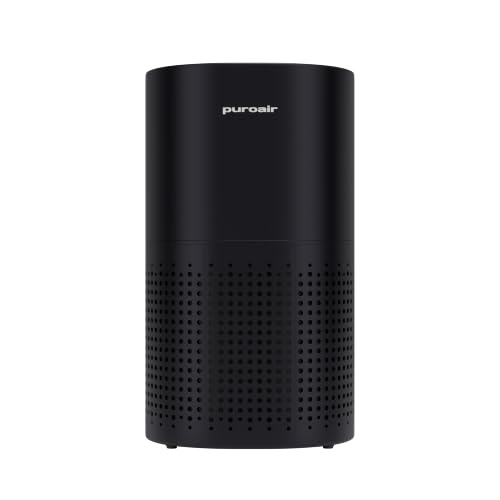
Mini spec box (from the manufacturer’s Amazon listing): Certified HEPA filtration with CarbonTech carbon stage; listed coverage up to 1,000 sq ft; PuroIQ sensor with auto mode; quiet sleep mode; 360-degree air intake; black finish in the listing reviewed.
Start with the filtration claim, because it is the product’s name and pitch. PuroAir markets this class of machine around a HEPA 14 grade filter, language that echoes the H14 class of the European EN 1822 standard, the stricter of the two HEPA classes in that system. The listing itself uses the phrase “Certified HEPA.” Our explainer on the neighbouring grade unpacks what these classes certify and what they do not: what H13 means and how the classes compare. The honest summary for this review is that the filter media claim is at the serious end of the market, and that this is a genuine reason to shortlist the machine, provided the rest of the design respects it. On the evidence of the design, a sealed cartridge path and full-perimeter intake, the 240 is built as if the filter matters, which is not true of every purifier wearing a high-grade badge.
The second pillar is automation. The PuroIQ sensor watches particle levels and adjusts fan speed in auto mode, which is how most owners will actually run the machine: harder when cooking particles drift in or a door opens on a polluted day, softer when the room is clean. Automation matters more than specification sheets admit, because a purifier only cleans when it is running at an appropriate speed, and human beings are forgetful operators. A sensor that notices the evening cooking spike so you do not have to is a real feature, not a gimmick. The sleep mode is the other half of the same philosophy: a low, quiet setting with dimmed presentation for overnight bedroom use, accepting slower cleaning in exchange for actually being tolerable at 2 a.m.
The carbon stage deserves its own paragraph because buyers routinely over-credit it. The CarbonTech element is aimed at odours and household gases: cooking smells, pet odours, and the general background of a lived-in home. A carbon stage integrated into the main cartridge is convenient and, for everyday odour softening, useful. It is not industrial gas removal, and no cartridge of this size can be; judge it as a meaningful comfort feature that takes the edge off smells, and keep source control and ventilation as your primary odour strategy.
Coverage is where marketing and physics negotiate. The listing’s figure of up to 1,000 square feet should be read as the manufacturer’s framing under favourable assumptions. In practice, this is a machine for a bedroom, a nursery, a home office, or a medium living room, where it can cycle the air repeatedly each hour on tolerable speeds. In a large open-plan space it will still improve the air near where it stands, but expecting whole-space control from any single unit of this class is how disappointment is manufactured. Buy it for the room it fits and it is generously sized; buy it for a space twice that and no filter grade will rescue the arithmetic.
Day-to-day ownership follows the category’s standard pattern. The combined cartridge keeps maintenance simple: one part to change rather than a stack of separate panels, with the genuine replacement sold singly and in multi-packs. The 360-degree intake makes placement forgiving compared with front-intake designs that sulk against walls, though it still wants clearance around its sides and should not be boxed in by furniture. Controls are on the unit, in keeping with its set-and-forget positioning; shoppers who want scheduling apps, voice control, and air quality histories should note their absence here and look at the Winix alternative below.
Strengths
- High-grade certified HEPA filtration as the centrepiece, paired with a carbon stage for everyday odours.
- Sensor-driven auto mode that responds to real particle events, plus a dedicated quiet sleep mode for bedrooms.
- Forgiving 360-degree intake and a simple single-cartridge maintenance routine with widely available genuine filters.
Trade-offs
- Coverage claims should be discounted to real room sizes; this is a one-room machine, not a whole-home answer.
- No app ecosystem: buyers who want remote control, schedules, and logged air quality data will not find them here.
- The carbon stage softens odours rather than eliminating strong gas or chemical problems, which still need source control and ventilation.
Best for: bedroom and medium-room owners who want strong filtration with automatic, quiet operation and minimal faff. Not suited for: large open-plan spaces, app-first smart-home households, or anyone whose main problem is gas, damp, or odour at source.
The Filter Question: What “HEPA 14” Should and Should Not Mean to You
Because the product name carries the grade, a short detour is owed. In the European EN 1822 family, H13 and H14 are the two HEPA classes, with H14 the stricter: its permitted penetration at the most penetrating particle size is roughly a tenth of H13’s. A brand describing its filter as HEPA 14 is claiming media at that top household grade. Two cautions keep the claim in proportion, and both are developed in our foundation explainer, what is a HEPA filter and how it works. First, a media grade is measured on the filter, while your lungs meet the output of a whole machine; sealing and airflow complete the story. Second, room air is filtered repeatedly, so delivery rate over an evening matters more than the last decimal of single-pass efficiency. The PuroAir 240 earns its keep not because 14 is bigger than 13, but because the grade is combined with a sensor, adequate sizing for real rooms, and a filter you can actually replace on schedule. If you are cross-shopping a similarly priced rival wearing an H13 badge, the rational order of comparison is room fit, noise at night speed, automation, and filter cost, with the grade as a supporting point rather than the headline.

Running Costs: The Genuine PuroAir 240 Replacement Filter
Best for: owners budgeting the machine’s real annual cost. Not suited for: anyone tempted by unbranded cartridges of unknown grade.
Every purifier review should include the filter, because the filter is where the money goes over the years. The genuine PuroAir 240 replacement is a 3-in-1 cartridge combining the pre-filter function, the HEPA stage, and the carbon stage, sold in multi-packs including the two-pack in the listing we verified. Buying genuine matters here more than in many categories: the whole value proposition of this machine is a certified high-grade filter sealed into a known housing, and an unbranded cartridge of unstated grade quietly deletes that proposition while saving a modest sum. Price the two-pack at the time you buy the machine, note the manufacturer’s stated replacement interval, and you have the honest annual running cost, which for this class of purifier is the difference between a considered purchase and a surprise.
- Strengths: one cartridge to change, keeping maintenance to minutes; genuine part, so the certified filtration claim survives the filter change; multi-packs suit two-room households and reduce per-filter cost.
- Trade-offs: combined cartridges mean replacing the carbon stage when the HEPA stage is spent, even if one feels fresher than the other; genuine filters cost more than unbranded alternatives; intervals shorten in smoky or dusty homes.
Alternatives Worth Your Shortlist
No review is complete until the main product survives comparison. These three alternatives were verified against the same catalogue, and each beats the PuroAir in a specific direction while conceding something in return.

Levoit Core 300-P: The Simpler Compact
Badge: The default compact recommendation.
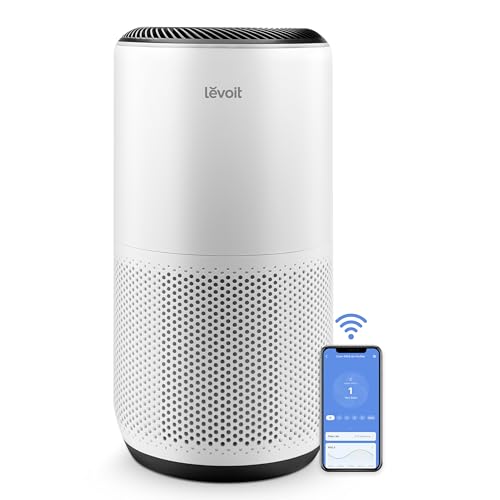
Mini spec box (from the manufacturer’s Amazon listing): 3-in-1 filter with HEPA stage; AHAM Verifide; listed coverage up to 1,073 sq ft; quiet HEPA sleep mode; white finish.
The Core 300-P is the machine the PuroAir has to argue against in most bedrooms. It is a compact cylinder with a 3-in-1 filter, a sleep mode, and the reassurance of independent AHAM verification behind its performance claims, a scheme that tests and publishes delivery rates, which makes its specification sheet easier to trust than most. Against the PuroAir it concedes the sensor-driven automation story and the higher filter-grade pitch; in return it offers simplicity, an enormous owner base, and a replacement filter ecosystem that is about as easy to source as any in the category. If your room is small to medium and your priority is a proven, uncomplicated appliance, this is the alternative to beat.
Strengths
- AHAM Verifide performance claims, a rare piece of independent structure in this market.
- Compact footprint and a quiet sleep mode suited to bedside duty.
- Genuine replacement filters are inexpensive to find and widely stocked.
Trade-offs
- No particle sensor driving a true auto mode in this base configuration.
- Smaller filter and airflow than the PuroAir class; large rooms expose it.
- Design and feature set are deliberately basic.
Best for: smaller bedrooms and first-time buyers who value verified simplicity. Not suited for: buyers who specifically want sensor automation or the highest filter grade on the label.

Medify MA-25: The Dual-Filter Option
Badge: Two filters, smaller rooms, medical-adjacent brand.
Mini spec box (from the manufacturer’s Amazon listing): Dual true HEPA filters; listed coverage 825 sq ft; sleep mode and timer; white finish, single pack.
Medify built its name on HEPA-forward purifiers, and the MA-25 is its compact expression: two filter cartridges working in parallel, a listed coverage of 825 square feet, and a control set that includes a timer, a small thing owners genuinely use. The dual-filter layout spreads airflow across more media, which is a legitimate engineering route to quieter operation at a given delivery rate. We review its bigger sibling in depth elsewhere: Medify MA-40 review. Against the PuroAir, the MA-25 is the pick for smaller rooms where its coverage is honestly sufficient and its brand’s filter focus appeals; it concedes the sensor automation and the larger-room headroom.
Strengths
- Dual HEPA filters give generous media area for its size.
- Timer and sleep mode cover the practical bedroom feature list.
- A brand whose range is built around filtration rather than lifestyle features.
Trade-offs
- Two cartridges to replace when filter time comes.
- Listed coverage is the smallest here; it is a small-room specialist.
- No air quality sensor automation.
Best for: small bedrooms and nurseries where a filtration-focused compact fits. Not suited for: medium living rooms or buyers wanting set-and-forget sensor operation.

Winix 5510: The Step Up for Space and Smart Control
Badge: Larger rooms, app support, the 5500-2 successor.
Mini spec box (from the manufacturer’s Amazon listing): True HEPA filtration with high-deodorisation carbon filter; listed coverage up to 1,881 sq ft in one hour; auto mode; app support; positioned as the new generation of the 5500-2.
If the PuroAir’s room ceiling is your concern, the Winix 5510 is the direction to look. It succeeds a long-running favourite in the category, adds app support to the formula, pairs true HEPA media with a carbon filter emphasising deodorisation, and claims coverage up to 1,881 square feet in an hour, which translates into genuinely comfortable sizing for larger living rooms. It is the alternative for the household that wants the purifier integrated into a smart home and the room that the PuroAir would strain to serve. The concessions are size, price tier, and complexity: more machine than a small bedroom needs or wants.
Strengths
- Headroom for large rooms that the other three here cannot honestly claim.
- App support and auto mode for owners who like control and data.
- A lineage from a well-regarded predecessor model in the category.
Trade-offs
- Bigger footprint and a higher tier of purchase and filter cost.
- More technology than a set-and-forget bedroom buyer may use.
- Carbon deodorisation still obeys the category rule: helpful on odours, not a substitute for ventilation.
Best for: larger living spaces and smart-home households. Not suited for: small bedrooms, minimalists, or buyers who will never open the app.
What Owners Usually Notice, Week by Week
Expectations set the review an owner writes in their head, so here is the realistic arc. In the first days, the noticeable change is at the margins: less dust settling on surfaces near the machine, a bedroom that smells more neutral in the morning, and the small theatre of the sensor reacting when a door opens or cooking drifts through. By the end of the first month, the honest owners report a subtler verdict: the machine has disappeared into the room’s furniture while the room has stayed at its best-day baseline more of the time. That, and not a single dramatic before-and-after, is what successful filtration feels like, because the product is a trend, not an event. Owners who expect an event, a room transformed in an afternoon, tend to return good purifiers; owners who watch the trend keep them for years and replace the filters on time. Set the expectation correctly and the 240 is easy to live with. Set it by advertisement and no purifier in this review, at any price tier, will meet it.
Head-to-Head Summary
| Model | Filter pitch | Listed coverage | Automation | Choose it if |
|---|---|---|---|---|
| PuroAir 240 | Certified HEPA, marketed at HEPA 14 grade, with carbon stage | Up to 1,000 sq ft | Sensor auto mode, sleep mode | You want strong filtration and hands-off running in a bedroom or medium room |
| Levoit Core 300-P | 3-in-1 with HEPA stage | Up to 1,073 sq ft | Sleep mode; no sensor auto in this configuration | You want verified, simple, compact value |
| Medify MA-25 | Dual true HEPA filters | 825 sq ft | Timer, sleep mode | Your room is small and filtration focus matters most |
| Winix 5510 | True HEPA with deodorisation carbon | Up to 1,881 sq ft in 1 hr | Auto mode plus app support | Your room is large or your home is app-run |
Read the coverage column the way this site always advises: as manufacturer framing, comparable within the table only loosely, and always subordinate to air changes per hour in your room. Our statistics guide explains how to sanity-check such numbers against guidelines and your own measurements: indoor air quality statistics explained.
How to Set Up and Live With the PuroAir 240
Unbox, remove every piece of packaging from the filter cartridge, since purifiers ship with the filter bagged inside the unit and running it bagged is the classic first-week mistake, then place the machine where its intake can breathe: floor placement with clearance on all sides, not wedged between a wall and a wardrobe. Run auto mode as your default for the first fortnight and simply observe: how often it ramps up, what your cooking does to it, how the room feels in the morning. Use the sleep mode overnight rather than switching the unit off, because eight steady hours at low speed do more for a bedroom than an hour of turbo before bed. Keep the exterior intake surfaces dusted, mark the filter replacement month in your calendar when you install the cartridge rather than trusting the indicator alone, and if the room also struggles with dryness or damp, remember that this machine does neither job; our comparison of the two appliance families explains the division of labour: air purifier vs humidifier.
Common Mistakes Buyers Make With This Class of Purifier
Buying the grade, not the room fit. A HEPA 14 badge cannot move air. Size first, badge second.
Running it only when the air feels bad. Particle build-up is cumulative and mostly invisible; steady automatic running is the product working as designed.
Saving money on unbranded filters. On a machine whose entire pitch is certified filtration, an uncertified cartridge is a false economy.
Expecting odour miracles. The carbon stage softens everyday smells. A litter tray, a damp problem, or a smoker needs source control first.
Sealing it into furniture. A 360-degree intake still needs air to intake. Give it space.
How This Review Was Put Together
A word about method, because this site does not claim hands-on testing it has not done. This review is a desk evaluation built from the manufacturer’s published listing information, verified against Amazon’s own product data on the day of writing, from the filtration standards the product’s claims reference, and from category knowledge of how this class of purifier behaves in homes. Where a figure appears, such as the coverage framings in the comparison table, it is the manufacturer’s figure and is labelled as such. Where we offer judgement, on sizing, on automation, on running costs, it is reasoning from those published facts and from the physics of filtration that our explainer guides set out. Readers should treat any review, including this one, as a structured shortlist rather than a laboratory report, and should weigh the current listing, which can change in configuration and price, before purchasing.
Design, Controls, and Daily Life With the Machine
The 240 follows the modern tower pattern: a vertical body that takes a modest patch of floor, draws air around its perimeter, and returns it from the top. In a bedroom that shape is easier to place than the squat boxes of a decade ago, and the black finish of the listing we reviewed suits the way these machines now live as furniture rather than appliances, visible in the room rather than hidden from it. The control philosophy matches the positioning: the sensor and auto mode are the interface, with manual speeds and the sleep mode as overrides. Owners of this class of machine typically interact with it in three ways after the first week: glancing at the air quality indication when something smells or looks dusty, pressing sleep mode at night if auto has not already settled, and ignoring it entirely the rest of the time. A purifier that supports being ignored is, paradoxically, the one most likely to be running correctly in month six.
Two daily-life details deserve mention. The first is light discipline: bedroom appliances live or die by whether their displays can be dimmed or sleep with the room, and a dedicated sleep mode exists precisely because a bright status light at eye level will get a machine unplugged by someone in the household. The second is the reset ritual after a filter change. Cartridge machines of this type track filter life and need the indicator reset when the genuine cartridge goes in; do it at the change, not weeks later, so the next reminder lands when it should. Neither detail appears in headline specifications, and both decide satisfaction more than a decimal of efficiency.
Noise, Energy, and the Overnight Test
We do not publish invented noise or wattage figures, so this section is about how to judge the machine from published information and first principles. A purifier’s overnight acceptability is set by its lowest effective speed: the question is never whether turbo is loud, since turbo on every machine in this class is audible, but whether the sleep setting moves enough air to hold a bedroom’s particle level down while staying below the threshold that disturbs light sleepers. The 240’s design brief, a named sleep mode on a sensor-driven machine, is the right brief. In practice, place the unit as far from the bed as the room allows, let auto mode do the evening’s heavy work before you sleep, and the overnight setting then only has to maintain, not rescue, the room’s air.
Energy follows the same pattern. Purifiers of this size are modest electrical loads compared with heating, cooling, or tumble drying, and the honest way to think about running cost is the filter cartridge first and electricity second. Running the machine continuously on low or auto, which is the usage pattern that actually delivers clean air, is also the pattern that keeps both noise and energy in their sensible ranges. Intermittent blasting is worse on all three counts: louder, hungrier, and less effective, because the room spends the off hours re-accumulating what the on hour removed.
The Brand Question: Who Is PuroAir?
PuroAir is a specialist air purification brand rather than a general appliance giant, and its range is built around a small number of purifier models and their filters. Specialisation cuts both ways for a buyer. On the positive side, the company’s catalogue depth is in filtration products and replacement filters, and the 240’s filter ecosystem, genuine cartridges in multi-packs, is properly supported, which is the thing that matters in year two. On the cautious side, a specialist brand offers no wider smart-home platform and no guarantee that a given model year will be supported as long as a giant’s bestseller; the Levoit alternative in this review is the safer pick for shoppers who weight ecosystem and ubiquity above all. The balanced view is that purifier ownership lives and dies by filter availability, and on that specific test the 240 is well served today. Re-check filter availability whenever you buy any purifier, including this one, because that check takes a minute and protects years.
Who Should Skip the PuroAir 240
Honest reviews name the buyers a product will disappoint. Skip this machine if your space is a large open-plan living area and you expect one unit to govern it; the Winix class exists for you. Skip it if your home runs on an app and a voice assistant and an appliance without either will feel broken; again, the Winix direction, or the smart variants in other ranges, fit better. Skip it if your air problem is primarily damp, mould growth on walls, or a chemical source you have not yet removed; a purifier is the supporting act in those stories, not the lead, and the money belongs first in extraction, repair, and source control. Skip it, finally, if you know you will not replace filters on schedule. A high-grade cartridge run far beyond its life strangles airflow until the machine is furniture. A cheaper purifier with filters you will actually buy serves that household better, and there is no shame in choosing for the owner you are rather than the owner in the advertisement.
Buying Scenarios: The 240 in Four Homes
The bedroom-first household. A couple wants cleaner overnight air in a main bedroom of ordinary size, with the door closed at night. This is the 240’s home fixture. Auto mode handles the evening, sleep mode the night, and the closed door concentrates the machine’s work where eight hours of breathing happen. Verdict: buy with confidence, and spend the saved deliberation on the first spare filter.
The pet household. Dogs in the living room, a cat with run of the flat, dander and odour as the standing complaints. The 240 serves the room it sits in well, and its carbon stage takes the edge off pet smell between cleans. But pet load is continuous and whole-home, so the honest setup is the purifier in the main living room or the bedroom, rigorous vacuuming as the partner technology, and no expectation that one tower perfumes a house. Verdict: a strong room-level answer; manage the whole-home expectation.
The wildfire-season household. For a few weeks a year, outdoor smoke drives the family indoors and air quality becomes the household’s main topic. Here the buying logic is the clean-room method: one refuge room, sealed as well as practical, with a purifier sized generously for it. The 240 fits a bedroom refuge properly; a living-room refuge argues for the larger Winix class or two units. Verdict: right machine, sized by the refuge room, bought before the season rather than during it when stock and prices misbehave.
The renter in a small flat. One person, a studio or one-bedroom, watching budget and floor space. The 240 works, but the Levoit compact may be the proportionate buy, with the PuroAir justified if the sensor automation and filter grade are worth the step up to this household. Verdict: decide on automation and grade, not on coverage numbers neither machine will be asked to prove.
The Sibling Question: PuroAir 240 or the Larger 400?
PuroAir sells a larger sibling, the 400, positioned for bigger rooms with a listed coverage around double the 240’s framing. We treat it here as a prose-only mention because this review verified the 240’s listing in depth; the comparison logic, though, is simple and worth stating. Choose the 400 if the target room is a genuinely large living space and you want to stay with the brand’s sensor-and-filter formula. Choose the 240 if the room is a bedroom or medium space, where the larger machine’s extra capacity buys little and its extra size and filter cost buy nothing. Brand-internal step-ups are the easiest upsell in the category; let room arithmetic, not range anxiety, make the call.
Value Verdict
Value in purifiers is a three-part sum: the machine, the filters across a few years, and the probability that you keep using it. The 240’s case is that automation raises the third term, which is the one most reviews ignore and most owners feel. A purifier that runs itself correctly is worth more than a marginally stronger machine that sits off. Against the Levoit it asks more money for more machine and more automation; against the Winix it saves money and space by conceding size and smart features. None of the four products in this review is a bad buy, which is precisely why the decision should be made on room, routine, and filter economics rather than on headline filtration language. On that basis the PuroAir 240 is our main recommendation for its target rooms, and the alternatives are recommendations, not warnings, for theirs.
Replacing the Filter: A Walkthrough and the Habits Around It
Because this machine’s value lives in its cartridge, here is the full ownership routine in one place. When the filter indicator calls, or when your calendar mark arrives, switch the unit off and unplug it. Open the filter compartment as the manual directs, lift the spent cartridge out by its frame or handle rather than by any exposed media, and seal it straight into a bag for household waste; a used cartridge holds a season of captured dust and deserves the same respect as a vacuum bag. Wipe the empty compartment and the intake surfaces with a dry or barely damp cloth, since this is the one moment the inside is accessible. Unpack the new genuine cartridge, remove all packaging, seat it fully so the seals meet as designed, close the compartment, and reset the filter-life indicator. Run the machine on a higher speed for the first hour to clear the disturbance dust, then return it to auto.
Three habits protect the investment between changes. First, keep the room-side dust load down with ordinary vacuuming and damp dusting, because every particle the vacuum takes is one the cartridge does not have to hold. Second, do not stretch the interval because the machine still sounds fine; loaded media raises resistance silently, airflow falls, and the purifier’s room performance declines while the fan note barely changes. Third, buy the replacement before you need it. A spare cartridge on the shelf converts filter day from a shopping delay, during which the old filter strangles on, into a ten-minute job, and multi-packs exist precisely to make that habit economical. Owners who adopt these three habits get the machine the specification sheet promised; owners who do not are reviewing a different, worse product of their own making, which is why so many purifier arguments online are really maintenance arguments in disguise.
A Final Word on the Name
It is worth closing the loop on the phrase that brought most readers here. “HEPA 14” is doing two jobs in this product’s name: it is a filtration claim, and it is a search term. As a claim, it points at the top HEPA class of the European grading family, and this review has treated it seriously, neither dismissing it as pure marketing nor accepting it as the whole story. As a search term, it has gathered every buyer who wants the strongest sensible filtration for a home room into one place, and those buyers are, mostly, asking the right question. The complete answer is the one this review has built piece by piece: grade plus airflow plus sealing plus automation plus filters you can buy and will replace. The PuroAir 240 assembles those pieces more completely than most of its direct rivals, and that assembly, not the numeral, is the recommendation.
The First Month: A Realistic Settling-In Pattern
Most purifier disappointment happens in the first month, and it usually follows a pattern that has little to do with the machine. In week one, expectations are at their highest and the machine runs at full speed in the middle of the room. By week two, the novelty has faded, the unit has been moved somewhere tidier, and the speed has been turned down because someone found the higher settings intrusive while watching television. By week four, the household has quietly settled into whatever routine requires the least thought, and the purifier’s real-world performance is the performance of that routine, not of the specification sheet. Judging the 240, or any purifier in this class, fairly means judging the settled routine: a moderate speed, run for long hours in a sensibly chosen position, with the door of the room mostly closed overnight.
There are three small habits that separate satisfied owners from disappointed ones in that first month. The first is choosing the permanent position before the first evening ends, rather than auditioning a new corner every few days; filtration rewards consistency. The second is agreeing the overnight setting with whoever sleeps nearest the machine, because a setting one person finds soothing and another finds maddening will not survive the month. The third is putting the filter-check date somewhere visible the day the machine arrives, on a calendar rather than in memory. None of these habits costs anything, and together they do more for results than any accessory or upgrade in this category.
It is also worth deciding, in that first month, what success will look like for your household, in words rather than numbers. Less dust on the shelf you wipe most often. Waking with a clearer nose during pollen weeks. A bedroom that no longer smells faintly of last night’s cooking. A purifier can plausibly contribute to outcomes like these, and checking against your own stated goal after a month is a fairer test than comparing your experience with the most enthusiastic account you can find online, written by someone with a different house, different sensitivities and possibly a different season.
Second Rooms, Second Machines and Knowing When to Stop
A common path for owners of a compact purifier like the 240 is to like it enough to consider a second machine, and the decision deserves a cooler head than the first purchase. The genuine case for a second unit is a second closed room with its own distinct need: a home office used all day, a child’s bedroom, a spare room that has become a permanent workspace. Air does not travel helpfully through closed doors, so a household with two such rooms has two separate problems, and one machine moved between them on a rota usually serves both worse than a settled machine in each. If the rooms are open to each other, by contrast, one larger or better-placed unit generally beats two small ones competing in the same volume of air.
The weaker case for a second machine is the feeling that if some filtration is good, more must be better. Beyond the point where a room’s air is being turned over steadily at a tolerable noise level, extra capacity buys diminishing returns: the remaining particles are increasingly the ones being generated right now, by the occupants, the bedding and the room itself. Money held back at that point is usually better spent on the unglamorous complements: replacement filters bought before they are urgently needed, bedding washed regularly, a vacuum cleaner whose own filtration is in good order, and the ventilation habit of opening windows deliberately when outdoor air is clean.
Knowing when to stop is, in the end, the mature skill in this whole category. A home needs air that is comfortable to live in and sleep in, not a laboratory result. The 240 earns its place by serving one room well at a running cost its owner can sustain. If it is doing that, the correct next purchase is usually no purchase at all, and the correct next action is simply to keep the routine going: door closed overnight, filter replaced on time, and the machine left alone to do the quiet, unremarkable job it was bought for.
Frequently Asked Questions: PuroAir Hepa 14 240 Review
Can I move the 240 between rooms during the day?
You can, and many owners do, but it works best as a fixed pattern rather than an improvised one. A workable rhythm is the living space during the hours it is occupied and the bedroom from an hour before bed through the night, with the bedroom door closed so the machine works on a defined volume while you sleep. What does not work well is moving it reactively for twenty minutes wherever a smell or a dusty moment occurs; filtration is a cumulative, whole-room process, and short visits achieve little. If you find yourself carrying it around daily and resenting it, that is useful information: the household probably has two room-scale needs and should plan accordingly.
What should I do if someone in the home finds the noise irritating?
Start by treating it as a placement and settings problem rather than a defect. Moving the machine off a hard, resonant surface, away from the head of the bed, and onto a lower speed for longer hours resolves the complaint in many homes, because steady low noise fades from attention in a way that a louder, nearer hum does not. Night modes exist precisely for this negotiation. If a particular person is sensitive to sound at any level, the honest answer may be to run the machine hard in the empty bedroom before bedtime and switch it off, or to its quietest setting, once they are in it, accepting somewhat less overnight filtration in exchange for sleep that actually happens.
Is the PuroAir 240 a true HEPA purifier?
Its listing describes certified HEPA filtration, and the brand markets the filter at HEPA 14 grade, the language of the top HEPA class in the European system. As with any purifier, the meaningful reading is that the media claim is strong; whole-room results then depend on sizing, sealing, and maintenance, which this review has covered in that order.
What room size is the PuroAir 240 really for?
The listing frames coverage up to 1,000 square feet. Practically, treat it as a bedroom, nursery, office, or medium living-room machine, where it can deliver repeated air changes per hour on usable speeds. In much larger or open-plan spaces, step up to a larger class such as the Winix above, or run two units.
How often does the filter need replacing, and what does ownership cost?
Follow the manufacturer’s stated interval for the cartridge and expect real life, dust, smoke, pets, to pull it earlier. The genuine replacement is sold in multi-packs; check its current price when you buy the machine and treat that, divided by the interval, as the annual running cost. There are no other significant consumables.
Is the PuroAir 240 quiet enough for a bedroom?
It is designed for that use, with a dedicated sleep mode intended for overnight running. Individual sensitivity varies, so place it a sensible distance from the bed, let auto mode settle the room before sleep, and use sleep mode overnight rather than a mid setting chosen at random.
Does it remove odours and smoke?
For particles, including the fine particles that make smoke visible and persistent indoors, HEPA filtration is the right tool and the machine’s core job. For odours, its carbon stage softens everyday household smells. Heavy or continuous sources still need removing at source plus ventilation; no cartridge purifier repeals that.
PuroAir 240 or Levoit Core 300-P?
Choose the PuroAir for sensor automation, the higher filter-grade pitch, and a little more machine for medium rooms. Choose the Levoit for compact simplicity, independently verified performance claims, and the easiest filter sourcing in the business. In a small bedroom honestly served by either, the deciding factors are automation taste and current pricing on the day you buy.
Delivery, Setup Time, and First-Evening Checklist
For buyers planning around a delivery day, the practicalities are simple. The machine arrives boxed with its cartridge bagged inside, as the category standard dictates. Budget ten unhurried minutes: unbox away from the bedroom if cardboard dust bothers you, fit or unbag the cartridge, place the unit with clearance, plug in, and run a higher speed for the first hour to clear the disturbance of installation itself. That evening, set auto mode, confirm the sleep setting behaves as you want before you actually need it at midnight, and note the date somewhere durable, a phone note or the manual’s first page, because that date anchors your filter calendar better than memory ever will. None of this requires tools, apps, accounts, or a firmware update, and in a category drifting toward software, that simplicity is itself a feature worth recording in a review.
One-Minute Decision Guide
If you have read this far and still sit between two machines, decide by room and routine alone. Measure the room: small and simple points to the Levoit or the Medify; medium and bedroom-centred points to the PuroAir; large or open-plan points to the Winix. Then audit your routine: if you will forget the machine exists, buy the one with the sensor; if you enjoy an app, buy the one that has one; if you will stretch every filter to twice its life, buy the one whose filters are cheapest to replace genuinely. Two questions, honestly answered, outperform every other comparison in this category, including several in this review.
Final Recommendation
The PuroAir 240 is a well-aimed purifier: a high-grade HEPA filter claim that its design takes seriously, a sensor that makes correct operation the default, and a size matched to the rooms most people actually purify. This puroair hepa 14 240 review concludes that it earns its shortlist place on those merits rather than on the number in its name. Buy it for a bedroom or medium room, run it on auto, feed it genuine filters on schedule, and it will do the unglamorous work of keeping that room’s particle load down day after day. If your room is larger, your home is app-run, or your budget points smaller, the alternatives above are not consolation prizes; they are the same argument made in different shapes, and the right one is the one that fits your room. One last piece of buying discipline applies to every product in this review equally: specifications and configurations in this category change quietly, pack contents vary, and prices move with seasons and promotions, so treat the listing on the day you buy as the final document, confirm that the filter in the box and the filter in the replacement listing are the same cartridge, and keep the manual’s replacement schedule rather than the internet’s folklore. Do that, and whichever of these four machines you choose, you will own it the way its designers intended, which is the only version of any purifier that has ever cleaned a room.