Where to buy
Check the latest price, availability and delivery on Amazon — most small homes should land well under the ceiling with the first picks below, and the checkout price is the one that counts. Orders are placed on Amazon.
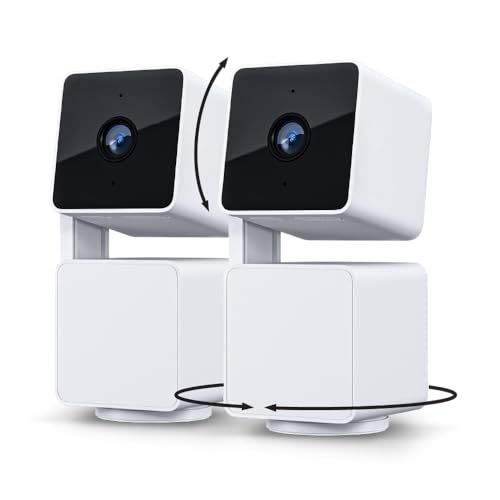
- Best pick under $300: Wyze Cam Pan v3, 2-Pack — check price on Amazon
- eufy SoloCam S220 — check price on Amazon
- Ring Indoor Cam (2nd Gen), 3-Pack — check price on Amazon
- eufy Security Indoor Cam S350 with HomeBase 3 — check price on Amazon
- Blink Outdoor 4, 3-Camera System — check price on Amazon
- Wyze Cam Floodlight v2 — check price on Amazon
Read the full guide ↓
Disclosure: As an Amazon Associate, dailyhomedecorating.com earns from qualifying purchases. Prices and availability change; the price at checkout is the final word.
The best security camera for small homes under $300 is rarely the one that costs $300. Small homes — cottages, bungalows, terraces, compact detached houses — concentrate their risk beautifully: one front door does most of the work, one hallway connects most of the rooms, and the back garden is often a single door away. That geometry means two cameras, sometimes one, deliver what a sprawling house needs five to achieve, and the honest job of this guide is to match the system to the footprint rather than sell the footprint a system it cannot use. Every pick below is labelled indoor, outdoor or both, and ordered by how naturally it fits a compact home’s scale.
The pool deliberately spans sizes of answer. The pan-and-tilt pair leads because two movable viewpoints genuinely complete most small homes — front room and hall, or living space and the door to the garden. The solar camera follows as the single outdoor sentinel for the one exposed approach. The indoor three-pack suits the small-but-many-roomed cottage. The hub flagship is the one-room-done-superbly option for open-plan compact living. The three-camera outdoor kit is included for small homes on large plots, where the building is compact but the approaches are not. And the floodlight closes the list for the small home whose driveway or back door justifies a wired deterrent — proportionality cuts both ways, and one real problem spot deserves a real answer.
Disclosures sized to the lens: in a small home, subscription arithmetic is stark. Ring’s indoor camera records nothing without a Ring Home plan — over a few years that plan can exceed the hardware’s price, a real consideration when the hardware itself is modest. Blink charges for cloud history and person detection, with USB backup through its hub as a local route. Wyze keeps local recording free and rents only the smart labels and cloud copies. Both eufy picks record locally with no fee at all. Battery endurance, solar charging, light output and weather ratings are manufacturer claims under the makers’ stated conditions throughout — and in a small home those conditions are easier to satisfy, because no camera sits far from the router, the door or the sunlit wall.
In this guide
Quick Picks
Ordered by fit for compact footprints: the completing pair first, the single sentinel second, then the many-small-rooms pack, the one-big-room flagship, and finally the two picks for small houses with large-plot problems. Most readers should stop at the first or second row.
| Camera | Best for | Key spec |
|---|---|---|
| Wyze Cam Pan v3, 2-Pack | Best complete coverage for a typical small home | 2 cameras, 1080p PTZ, rooms covered from one shelf each |
| eufy SoloCam S220 | Best single outdoor sentinel | 2K, solar charging, built-in 8GB storage |
| Ring Indoor Cam (2nd Gen), 3-Pack | Best for small homes with several rooms (cloud) | 3 cameras, 1080p, physical privacy cover |
| eufy Security Indoor Cam S350 with HomeBase 3 | Best one-room flagship for open-plan living | 4K + 2K telephoto zoom, HomeBase 3 local storage |
| Blink Outdoor 4, 3-Camera System | Best for a small house on a big plot | 3 outdoor cameras, 1080p, hub included |
| Wyze Cam Floodlight v2 | Best deterrent for the one problem approach | 2K, maker-rated 2,800-lumen floods, hardwired |
How These Picks Were Chosen
Proportionality was the first filter, applied as a genuine test: could this pick earn its place in a home with two or three rooms and one main door? Products that only make sense at house scale — sprawling kits, redundant coverage — were not excluded, because some small homes sit on large plots, but they were ordered last and labelled for that case. The leaders are picks whose natural unit matches the footprint: a pair that completes a cottage, a single solar camera for its one garden approach. The $300 ceiling was treated throughout as permission, not instruction — a guide for small homes that spends the whole budget by default has failed its readers.
Whole-cost arithmetic was the second filter, sharpened by the lens. In a small home the hardware is cheap, so the subscription becomes the dominant cost quickly: a plan that a large-system owner barely notices can exceed a small home’s entire camera spend within a couple of years. We therefore weighted fee-free local recording (eufy entirely; Wyze on memory cards) heavily, treated Blink’s plan-for-cloud model as a middle path with its USB backup noted, and stated Ring’s position without varnish: its indoor camera’s recording is the subscription, so its true price is hardware plus plan, indefinitely. Small-home buyers deserve that sum done for them, in the open.
Simplicity of upkeep was third. A compact home usually means a compact household — one or two adults, no spare weekends — so maintenance burden per camera mattered more than feature depth. Solar charging that ends the recharge chore, batteries with maker-claimed endurance measured in seasons, plug-in cameras that simply never stop: these scored above smarter cameras that demand attention. Maker claims were kept as claims — solar assumes real sun, battery figures assume default settings and modest traffic — but a small home flatters both, since its cameras sit near the router, near their doors and, often, on a sunlit wall rather than a distant fence.
Finally, interior manners. In a small home a camera is never far from the life it watches — there is no spare wing to put it in — so physical privacy controls scored as core features, not garnish: Ring’s slide-shut cover, Wyze’s lens-down privacy mode, eufy’s privacy positioning. A system a small household trusts enough to leave on is worth more than a sharper one that gets unplugged for every dinner party, and the ordering reflects that domestic reality.
The 6 Best Security Cameras for Small Homes Under $300
Each review opens with the footprint it fits. If a pick’s first lines don’t describe your home, skip it with confidence — in a small home, the discipline of not buying coverage you can’t use is the whole game.
Wyze Cam Pan v3, 2-Pack
Who it suits: The typical small home, full stop: one camera sweeping the main living space and front door, its twin on the hallway or the garden door — the whole footprint covered in one purchase.
Small rooms flatter pan-and-tilt cameras. Per Wyze’s specifications each unit pans 360 degrees and tilts through 180 degrees with motion tracking, and in a compact living room that means one camera on a shelf genuinely sees the door, the windows and the room itself — no blind cone behind the sofa, no second purchase to cover the corner. The second camera takes the hallway or watches the back door from inside, and the small home is, in the meaningful sense, done: every approach and chokepoint under watch for a fraction of the ceiling. Both cameras plug into ordinary outlets, set up in minutes, and move in seconds when furniture or life rearranges — which in small homes is often.
Costs stay proportionate too. A microSD card in each camera records locally — continuously if you like — with no plan required; Wyze’s optional Cam Plus adds cloud copies and person, pet and package labels, worth it mainly if alert volume annoys you. Privacy Mode rotates the lens down into the base, and in a small home where the camera shares your living space, that visible ‘off’ matters daily. The limits: 1080p, which in small rooms is less limiting than anywhere (distances are short, faces are near), and wired power, which in small rooms is barely a constraint either (outlets are near too). This is the rare guide where the first pick is simply the answer for most readers.
- Two viewpoints complete most small homes outright
- Short room distances make 1080p a non-issue
- Free local recording; plan purely optional
- Lens-down privacy mode suits camera-in-the-living-room life
Honest limitation: Wired power and modest resolution — both barely bind at small-home scale, but they bind.
Choose it if you want the whole home covered in one modest purchase and then to stop thinking about it. Skip it if your one worry is outdoors with no outlet in reach — the solar sentinel below exists for exactly that.
eufy SoloCam S220
Who it suits: The small home’s single outdoor approach — the garden door, the side gate, the path to the front step — watched by one wire-free camera that looks after its own power.
Most small homes have exactly one outdoor approach that matters, and this camera is sized to it precisely. The S220 records 2K video — at small-home distances, genuinely identification-grade — to 8GB of storage built into the camera, detects people and alerts you, and asks for no monthly fee. Its integrated solar panel carries eufy’s maker claim that a few hours of direct sun a day keeps the battery topped up indefinitely; on a small home’s sunlit front or back wall, that claim is at its most believable, and it converts the camera into a fit-and-forget fixture. Two screws and the app are the entire installation.
The limits are the honest pair: shade defeats solar — a north-facing, tree-covered mount will need occasional USB top-ups, especially in winter — and 8GB is a rolling window of days on a busy outlook, not an archive. In small-home geometry neither bites hard: the approach is usually sunny or near enough to a door that a rare top-up is a two-minute job, and a quiet residential path generates few events. If your home also needs interior cover, pair this with the Wyze twin-pack above and the whole property — inside and out — is watched for well under the ceiling, with no subscription anywhere in the system.
- One camera, correctly sized to one approach
- Solar top-up (maker claim) ends charging chores
- No subscription: storage built in, alerts fee-free
- 2K detail at small-home distances identifies faces
Honest limitation: Needs genuine sun for its claim; short rolling storage window.
Choose it if one outdoor approach needs a sentinel and you want zero upkeep and zero fees. Skip it if the approach is permanently shaded — a Blink camera’s swappable batteries forgive shade better.
Ring Indoor Cam (2nd Gen), 3-Pack
Who it suits: Small homes with several distinct rooms — the terraced cottage, the compartmented bungalow — where one camera per key room beats two cameras sweeping open space, inside a household already comfortable with Ring.
Some small homes are one big room; others are five small ones, and for the second kind this pack is the tidy answer: three identical 1080p indoor cameras for hall, living room and landing, one app, colour night vision and two-way talk per Ring’s specifications. The physical privacy cover on each unit earns special mention at this scale — in a compact home the cameras live where you live, and a cover you slide shut is a daily courtesy to everyone in the house, not a settings page nobody opens. If a Ring doorbell already guards the front, these complete the interior in the same ecosystem and timeline.
The arithmetic, done openly because small homes feel it most: these cameras record nothing without a Ring Home plan — no local storage exists on the model — so the plan is not an accessory but a permanent second price, and across a few years it can exceed what the cameras cost. That can still be the right buy: cloud footage survives a stolen camera, the app is excellent, and a household already paying Ring’s multi-device plan tier at the doorbell may find this layer effectively included. But a small-home buyer choosing fresh should compare that running total against the fee-free Wyze pair and eufy options before committing — at this scale, the plan is the purchase.
- One camera per room suits compartmented cottages
- Physical privacy covers for close-quarters living
- Cloud footage survives theft; one app with Ring doorbells
- Uniform, simple setup three times over
Honest limitation: Recording is entirely subscription-funded — the plan can out-cost the hardware over time.
Choose it if your small home has many rooms and you’re already in, or deliberately entering, Ring’s plan. Skip it if you’re buying fresh and fees matter — the same coverage is fee-free in the Wyze pair.
eufy Security Indoor Cam S350 with HomeBase 3
Who it suits: Open-plan small homes — the converted barn, the studio cottage, the one-big-room bungalow — where a single superb camera can see the whole living space and a fee-free hub anchors it.
Open-plan compact living is the one small-home layout where a flagship single camera makes sense: when the kitchen, living area and front door share one volume, the S350’s dual lenses — 4K wide plus a 2K telephoto with up to 8x hybrid zoom per the maker — on a 360-degree panning head can document the entire space, faces readable from wall to wall. Footage records to the included HomeBase 3 hub, tucked in a cupboard, with no subscription for recording or alerts: the architecture a small household can install and then ignore for years. The hub also leaves a door open — add a SoloCam for the garden later and the system grows within one app, still fee-free.
Proportionality demands the caveats. The camera is wired and indoor-only, and in a small home with separate rooms it sees exactly one of them — the Wyze pair covers that house better for less. The hub wants a discreet spot near the router, which in a small home means a kitchen cupboard rather than a dedicated closet, and if it were stolen the footage would follow it. And candidly, for a modest open-plan flat this bundle may be more camera than the room can use — buy it when the zoom and the fee-free hub are features you’ll actually exercise, not as the default.
- One camera can genuinely cover an open-plan small home
- Best detail here, with zoom that works at room scale
- Fee-free local hub storage — nothing to lapse or renew
- Growth path to a full eufy system in one app
Honest limitation: One wired indoor viewpoint; over-specified for compartmented or tiny homes.
Choose it if your small home is open-plan and you want it covered superbly, once, fee-free. Skip it if your rooms are separate — two sweeping cameras beat one stationary flagship.
Blink Outdoor 4, 3-Camera System
Who it suits: The exception that proves the lens: a small house on a large plot — rural cottage, corner terrace with a long garden — where the building is compact but its approaches are spread out and numerous.
Read the qualifier first: for a small home on a small plot, three outdoor cameras are more than the footprint needs, and this kit’s honest home is the small house with big-plot problems — front gate, driveway, back garden and side path strung around a compact building. There, three weather-resistant 1080p cameras with 143-degree views and the Sync Module 2 hub in the box cover every approach at once, and Blink’s maker claim of up to two years per battery set (default settings, modest traffic) suits a property where each camera is a walk away. A busy gate camera will drain far faster; place the kit’s cameras so the hardest-working is also the easiest to reach.
Fees, plainly: live view is free, cloud clip history and person detection need Blink’s subscription after the trial, and the hub’s USB backup offers a local copy route for the fee-averse. Indoors, these cameras work but waste their weather sealing — the Wyze or Ring picks serve rooms better. The security logic of the kit is coverage probability: incidents pick their approach, and a plot with four approaches needs four viewpoints’ worth of luck. If your small home’s plot is equally small, honour the lens and buy the pair or the sentinel instead — this kit will still be here if a future move changes the geometry.
- Three approaches covered at once, hub included
- Long maker-claimed battery life suits spread-out plots
- Cloud plan or USB backup — evidence options both ways
- Weather-resistant and discreet at gates and paths
Honest limitation: Over-coverage for genuinely compact plots; cloud history sits behind the plan.
Choose it if your small house has a big plot’s worth of approaches. Skip it if your plot is as small as your home — the pair or sentinel fits it honestly.
Wyze Cam Floodlight v2
Who it suits: The small home with one outsized problem: a driveway that has lost parcels, a back door on a dark lane — where a wired floodlight deterrent at that single approach is worth more than broader, quieter coverage.
Proportionality is about matching spend to risk, and some small homes concentrate risk in one wired spot. The Floodlight v2 replaces that spot’s existing outdoor light: a 2K camera with a 160-degree view, twin LED panels Wyze rates at 2,800 lumens firing on motion, a siren the maker rates at 105 dB, and colour recording under its own light. On a compact property that single installation can cover the driveway, the front door’s approach and the garden gate in one frame — small geometry again working in your favour — and being mains-powered, it never sleeps, never needs charging, and cannot be quietly unplugged.
The costs are the installation itself — an existing fixture box and a proper wired swap, breaker off or an electrician hired — and the permanence: the fixture’s position is the camera’s view, so check framing in the app before final tightening. Storage is Wyze’s fair split: microSD local recording with no plan, Cam Plus optional for cloud copies and person/vehicle labels. For most small homes this is the second purchase, after a pair or sentinel covers the basics; for the small home whose one dark approach has already had its incident, it is correctly the first.
- Deterrence sized to the whole approach of a compact home
- Mains power: permanently awake, zero upkeep
- Colour night evidence under its own light
- Local recording free; cloud and labels optional
Honest limitation: Hardwired install at an existing fixture; fixed single viewpoint.
Choose it if one dark approach carries your home’s real risk and a fixture already watches it. Skip it if no fixture exists there, or you rent — cover the basics with the pair and sentinel instead.
Comparison Table
Sized for small homes: the columns that matter are fit and running cost. A plan that looks minor beside a large system can dominate a small home’s whole camera budget — the plan-reality column is priced in words so you can price it in money.
| Camera | Placement | Headline spec (maker) | Storage | Plan reality |
|---|---|---|---|---|
| Wyze Cam Pan v3, 2-Pack | Indoor or sheltered outdoor (IP65, maker rating) | 1080p pan/tilt/zoom, 360° pan, colour night vision, motion tracking | Local microSD recording on each camera; optional Cam Plus cloud | No plan required for local recording; Cam Plus gates cloud event video and person/pet/package detection |
| eufy SoloCam S220 | Outdoor, wire-free | 2K resolution, integrated solar panel, two-way talk, works with HomeBase 3 | Built-in 8GB local storage on the camera; no cloud required | No monthly fee for core recording and alerts |
| Ring Indoor Cam (2nd Gen), 3-Pack | Indoor only | 1080p HD, colour night vision, manual privacy cover, two-way talk | Cloud only — no local storage on this model | Ring Home plan required to record and review video at all |
| eufy Security Indoor Cam S350 with HomeBase 3 | Indoor (camera) + indoor hub | Dual cameras: 4K wide + 2K telephoto, 8x hybrid zoom, 360° pan / 75° tilt | Local on HomeBase 3 (16GB built in, expandable); optional eufy cloud | No plan required for recording or core AI alerts |
| Blink Outdoor 4, 3-Camera System | Outdoor (also usable indoors) | 1080p HD, 143° diagonal field of view, infrared night vision, two-way talk | Cloud via Blink Subscription Plan; local clip backup via Sync Module 2 + USB drive (sold separately) | Plan required for cloud history and person detection; live view free |
| Wyze Cam Floodlight v2 | Outdoor, hardwired at an existing fixture box | 2K HD, 160° wide view, twin LED floods (maker-rated 2,800 lumens), 105 dB siren (maker figure) | Local microSD recording; optional Cam Plus cloud | No plan required for local recording; Cam Plus adds cloud history and smart detection labels |
How to Choose the Best Security Camera for Small Homes Under $300
Small-home camera buying is an exercise in enough. The steps below run from footprint to fees to specs, and at each step the correct small-home answer is usually the smaller one — until a specific, named risk argues otherwise. Named risks win arguments; vague anxieties should not.
Step 1: Count your approaches honestly
Walk the property and count the ways in: front door, back or garden door, side gate, ground-floor windows that open. Most small homes land at one main approach plus one secondary — a geometry that one outdoor sentinel and one interior camera, or one PTZ pair, covers completely. Only when the count reaches three-plus real approaches does a kit enter the conversation. Write the count down; it is the budget. Every camera beyond it buys redundancy, not security, and redundancy is a luxury purchase to make knowingly if at all.
Step 2: Match the camera count to the room plan
Open-plan small homes concentrate beautifully: one sweeping PTZ or one flagship camera sees the living volume and the door. Compartmented small homes — several small rooms off a hall — distribute: the hallway chokepoint plus the main room, which is the Wyze pair’s exact shape, or a camera per key room if doors stay closed, which is the Ring pack’s. Let the floor plan, not the marketing bundle, decide whether your second camera exists.
Step 3: Do the three-year fee sum before admiring hardware
Small hardware budgets make subscriptions the main event. Ring’s model charges for recording itself; Blink charges for cloud history and person alerts; Wyze charges for cloud copies and smart labels while local recording stays free; eufy charges nothing for core use. Multiply any plan by thirty-six and add it to the box price — then compare. In a small home that sum routinely reverses the ranking the box prices suggested, and it is better reversed on paper now than in your bank statement in year two.
Step 4: Prefer power you will never think about
Compact households have no maintenance rota. Solar on a sunny wall, mains at a fixture, plug-in at a shelf, batteries with maker-claimed endurance in seasons — in that rough order of forgettability, adjusted for what your home offers. The claims behind battery and solar figures assume stated conditions (default settings, modest traffic, real sun), and small homes flatter them: cameras sit near doors, near routers, near the sunlit wall. Even so, choose the power source whose failure mode — a flat battery in February — you are least likely to meet.
Step 5: Let specs settle ties, not start fights
At small-home distances, most spec anxiety evaporates: faces are three metres away, not fifteen, so 1080p identifies perfectly well and zoom is a luxury. What still matters: night clarity at your door, a field of view that matches the room, privacy controls you’ll use daily because the camera shares your space, and an app whose alerts you won’t mute. Buy those, in that order, and stop — the leftover budget is this guide’s most honest recommendation.
Running Costs, Storage and Honest Limits in a Small Home
The subscription question shrinks to its clearest form in a small home: the hardware is modest, so the fee is the story. A plan sustained over three years can exceed the entire camera spend of a compact household — which does not make plans bad, but makes them the decision. Ring’s architecture puts recording itself behind the plan; Blink puts the cloud archive and person detection there; Wyze puts cloud copies and smart labels there while local recording remains free; eufy’s picks here put nothing core there at all. A small-home buyer should choose the fee model the way they choose a utility tariff — by the three-year total, in writing, before the trial period chooses for them.
Storage follows the same small-scale logic. Local storage — the eufy hub in a cupboard, microSD cards in the Wyze pair, the SoloCam’s built-in memory, Blink’s USB backup — costs nothing monthly and keeps a small home’s interior footage inside the home, which many compact households prefer simply because the cameras are always near the life being lived. Cloud storage buys theft-survival and effortless review at a running price. In a small home there is a neat hybrid the pool supports naturally: local recording indoors, where privacy matters most, and cloud backup considered only for the one outdoor camera whose footage would matter after an incident. Proportionality applies to architecture too.
Power claims, finally, deserve their conditions stated once more — battery endurance is a manufacturer claim under default settings and moderate traffic; solar endurance assumes hours of direct sun; light output and siren volume are maker figures; weather resistance is a maker rating. Small homes are where these claims come closest to true: no camera is fifty metres from its hub, no mount is in a forest’s shade unless the garden is genuinely wild, and the one busy camera is steps from the door for a battery swap. Even so, the claims are ceilings, and the reviews above mark where a shaded wall or a busy gate will pull reality below them.
And the standing honesty note, sized to the lens: cameras are not an alarm system, at any footprint. Nothing here is monitored, nothing dispatches help, and a small home’s real protection remains its locks, its lighting and its neighbours. What these systems add — deterrence at the door, awareness on your phone, evidence if the worst happens — is genuinely valuable and, in a small home, achievable completely and cheaply. That combination is the good news of this category: the small home is the one property type where ‘fully covered’ is a modest purchase rather than an aspiration. Buy exactly that, and no more.
There is one more small-home advantage worth spending a paragraph on, because it quietly improves every pick in this guide: proximity. In a compact home, no camera is far from the router, so Wi-Fi dropouts — the gremlin behind missed events and drained batteries in large houses — are rare. No mount is far from a door, so a battery swap or a solar panel wipe is a two-minute errand rather than a ladder expedition. And no room is far from the camera, so faces are near, voices on two-way talk are clear, and 1080p performs like a higher resolution would at twice the distance. Small homes do not just need less security hardware; they make the hardware they have work better. That is the deepest reason this guide keeps steering you to the smaller purchase: at this footprint, the modest system is not a compromise — it is the full-strength version.
Ecosystems, finally, in small-home terms: even a two-camera household is choosing a platform, because both cameras will share one app, one alert style and one plan decision. The pool above is brand-paired so the natural small-home builds stay coherent — the Wyze pair indoors with the option of the same brand’s floodlight later, the eufy sentinel outside pairing with the eufy hub camera inside, Ring’s pack joining a Ring doorbell, Blink’s kit standing alone as a complete outdoor layer. At this scale the practical advice is simply to make the pairing decision once, consciously, when the first camera is bought — because in a small home the second camera arrives sooner than expected (the first one always reveals one more corner), and it will almost certainly wear the same badge as the first.
Placement in a Small Home: Few Cameras, Perfectly Placed
Chokepoints are a small home’s superpower. Nearly every route through a compact house crosses one hallway or one open-plan volume, so a single camera placed high in that space — corner-mounted, angled to include the front door — documents the whole interior story. Put the second viewpoint, if you buy one, on the secondary approach: the garden door from inside, or the back room whose window opens onto the lane. Resist scattering cameras room by room; in small homes that buys duplicates of the same corridor and triples the alert noise for no new information.
Outdoors, height and aim stay simple: eight to ten feet up, angled across the path to your door so faces present themselves, with activity zones drawn to your path and step — not the pavement, not the neighbour’s frontage. A small home’s short distances are an identification gift: faces at three metres are clear on any camera in this guide, so spend your effort on the angle and the light rather than on resolution. For the solar camera, the sun test is literal — watch the wall for a day, and mount where the panel will actually drink light, not where the drill felt convenient.
Wi-Fi is rarely a small home’s problem, which is a genuine advantage of the footprint: one router usually reaches every room and the front wall comfortably. Still test the exact mount points, especially the garden-facing wall, where brick and distance conspire. Then tune alerts tightly — in a small home the camera hears your whole life, so person detection, tight zones and occupied-hours privacy modes are what stand between a trusted system and a muted one. A five-minute monthly check that each camera’s latest clip plays is the entire maintenance contract; in a small home, that is finally a promise a household can keep.
Because a small home needs so few cameras, each one deserves the full ceremony: trial the position for a day on a temporary perch before committing, review one evening’s footage at full size on the biggest screen you own, and confirm that faces at the door are faces — not silhouettes against the light. Backlighting is the small home’s one common placement trap, since doors and windows dominate small walls; angle the camera so the door is lit from the side, or accept a porch sentinel outside instead. Ten unhurried minutes per camera, once, is the entire installation discipline this footprint demands — another line in the long list of ways a small home makes security easy.
Common Buying Mistakes
Buying house-scale coverage for a cottage. A five-camera system in a two-room home buys duplicate corridors and alert fatigue. Count approaches, cover them, stop. The ceiling is permission, not a target.
Ignoring the three-year plan sum. At small-home hardware prices, a subscription quickly becomes the main cost — Ring’s recording itself is the plan. Do the multiplication before the trial does it for you.
Putting the only camera in the wrong room. A camera in the study sees the study. The hallway or open-plan chokepoint sees the house. Place for routes, not for furniture.
Mounting the solar camera in decorative shade. The maker’s solar claim assumes real sun. A pretty shaded wall makes a battery camera with extra steps — test the light for a day before drilling.
Recording the neighbours’ frontage. Small homes sit close to others. Aim at your path and door, zone out the shared and public ground, and keep the building’s goodwill — and your legal footing — intact.
Expecting alarm-system protection. Cameras deter, inform and evidence; they do not monitor or dispatch. In a small home as anywhere, locks and lighting remain the protection, cameras the knowledge.
Final Recommendation
For most small homes the search ends at the first pick: the Wyze Cam Pan v3 pair covers the living space and the hallway or garden door, records locally with no fee, respects privacy with a lens that visibly closes, and leaves most of the $300 unspent — which is not a consolation prize but the correct outcome for this footprint. Add the eufy SoloCam S220 for the one outdoor approach and the property is covered inside and out, still fee-free, still under budget. That two-purchase system is this guide’s honest headline recommendation for the typical compact home.
Deviate only for named reasons: the compartmented cottage that needs a camera per room and accepts Ring’s plan as its price; the open-plan home that wants one flagship eufy camera and a hub for the long term; the small house on a big plot that genuinely has four approaches for the Blink kit; the one dark driveway that has earned the floodlight. Each is a good purchase when its reason is real. What a small home should never buy is scale it cannot use — the footprint that makes your security cheap is an advantage, and the best system here is the one that banks it.
- Wyze Cam Pan v3, 2-Pack — the completing pair — whole interior covered, fee-free, budget mostly unspent
- eufy SoloCam S220 — the outdoor half — one sunny sentinel for the one approach
- eufy Security Indoor Cam S350 with HomeBase 3 — the open-plan upgrade — one room done superbly on a fee-free hub
Frequently Asked Questions
How many cameras does a small home actually need?
Usually two: one covering the main interior chokepoint (hallway or open-plan living space) and one for the main approach — which can be the second camera of a pair indoors, or a single outdoor sentinel. Three-plus cameras make sense only for many-roomed cottages or small houses on large plots. Count approaches first; the count is the answer.
Which picks work with no subscription at all?
Both eufy picks record locally with no fee, and the Wyze pair records to microSD free with its plan optional. Blink’s live view is free but cloud history and person detection need its plan, with USB backup as a partial local route. Ring’s indoor camera records nothing without a Ring Home plan — at small-home scale, that running cost deserves particular scrutiny.
Is 1080p enough for a small home?
Generally yes. Identification depends on distance and light more than headline resolution, and small-home distances are short — faces a few metres from the lens are clear at 1080p. Spend the savings on placement, a second viewpoint or the outdoor sentinel. The exception is a long open-plan space, where the S350’s zoom earns its place.
Are the solar and battery claims believable?
They are manufacturer claims under stated conditions — a few hours of direct sun daily for solar; default settings and modest traffic for batteries. Small homes flatter both: mounts are sunny walls near doors, not remote fences. A shaded mount or a very busy gate will still fall short of the claims, and the reviews flag those cases.
My small home is rented — what changes?
Choose shelf-and-plug-in cameras (the Wyze pair, the eufy hub bundle) that leave no trace, and treat any exterior mount or wired fixture as a landlord-permission question. The floodlight in particular needs written consent in a rental. The good news: small rental footprints are the easiest of all to cover without touching the building.
Do I still need locks and lighting if I have cameras?
Yes — cameras are not an alarm system and summon no help. They deter, inform and record evidence. In a small home, a solid door lock and a lit approach do more preventing than any camera; the camera’s job is to watch those defences and tell you what happened at them.


