Where to buy
Check the latest price, availability and delivery on Amazon for every pick below. Each camera was shortlisted for this guide to the best outdoor security camera for small homes under $200 at the time of research; street prices move, so confirm the current listing still sits under $200 before you buy. Orders are placed on Amazon. We may earn a commission from qualifying purchases.
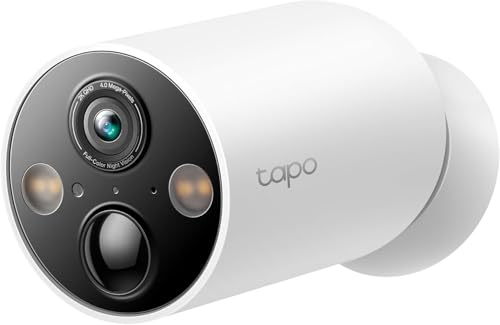
- Best overall for small homes: TP-Link Tapo C425 Wire-Free MagCam — Check on Amazon
- eufy SoloCam S340 — Check on Amazon
- Wyze Battery Cam Pro — Check on Amazon
- Reolink Argus 4 Pro with Solar Panel — Check on Amazon
- Ring Spotlight Cam Plus, Battery — Check on Amazon
- Arlo Pro 5S 2K Spotlight Camera — Check on Amazon
Read the full guide ↓
Disclosure: As an Amazon Associate, dailyhomedecorating.com earns from qualifying purchases. Links to Amazon on this page are affiliate links; they cost you nothing extra. Listing details such as price and availability change often, so check the current Amazon listing before you buy.
The best outdoor security camera for small homes under $200 is rarely the biggest camera in the shop. A small home — a cottage, a bungalow, a compact semi with a short drive and a garden you can cross in twenty paces — has a different geometry from the sprawling properties in camera adverts. Distances are short, so extreme zoom is wasted. One or two viewpoints cover everything, so multi-camera kits are overkill. And the camera itself is simply closer to your life: mounted by the door you use ten times a day, above the window you sleep beside, in a garden where a bulky unit and a blinking light are part of the view.
This guide ranks six under-$200 outdoor cameras for that compact reality. Proportion comes first: fields of view matched to small plots, bodies that do not dominate a small facade, and mounts that suit short walls and low eaves. Economy comes second, in the whole-life sense — a small home gains nothing from a subscription that quietly doubles a camera’s cost over five years, so we state plainly which of these cameras record locally for free, which rent their recording (Arlo and Ring save no video at all without a plan), and which split the difference. Power is the third test, because small homes often lack outdoor sockets exactly where the camera needs to go.
Everything here is a true outdoor camera, maker-rated for the weather, and every figure quoted — resolution, weather resistance, battery endurance — is the maker’s published specification or claim under their conditions. Small homes also enjoy one quiet advantage this guide exploits: with short distances and few approaches, a modest camera correctly placed outperforms a flagship badly placed, and most of these picks are decidedly modest in size while being anything but modest in ability.
In this guide
Quick Picks
| Camera | Best for | Key spec |
|---|---|---|
| TP-Link Tapo C425 Wire-Free MagCam | Best overall for small homes | 2K QHD video, magnetic mount, rechargeable battery, microSD local storage, free on-device person, pet and vehicle detection |
| eufy SoloCam S340 | Best one-camera whole-property cover | 3K wide + 2K telephoto dual lenses, pan and tilt, removable solar panel, 8GB built-in local storage |
| Wyze Battery Cam Pro | Best for covering two small spots affordably | 2.5K HDR video, radar plus PIR motion detection, removable rechargeable battery, integrated spotlight and siren, microSD local recording |
| Reolink Argus 4 Pro with Solar Panel | Best for a wide small plot or corner house | 4K dual-lens 180-degree panoramic view, ColorX colour night vision, battery plus 6W solar panel, microSD local storage |
| Ring Spotlight Cam Plus, Battery | Best front-door presence for small homes | 1080p HD video with HDR, LED spotlights, colour night vision, security siren, Quick Release battery pack |
| Arlo Pro 5S 2K Spotlight Camera | Best image in the smallest spaces, with a plan | 2K HDR video, 160-degree field of view, dual-band Wi-Fi, integrated spotlight and siren, removable rechargeable battery |
How we chose
We shortlisted outdoor cameras in single configurations under $200 and re-scored them for compact properties. Field of view was judged against real small-home sightlines — a five-metre path, a single-width driveway, a pocket garden — where a well-chosen 130-to-160-degree view covers the whole job and an ultra-wide panorama mostly photographs the neighbours. Physical size, mount simplicity and the absence of hubs or extra boxes mattered, because small homes have small hallways, small consumer units and no patience for extra hardware.
Running costs were weighted as heavily as purchase fit. A camera that records to its own storage with no fee suits a small home’s one-camera reality perfectly, since there is no fleet discount to soften a per-camera plan. We still included the two plan-based cameras, with their terms stated openly, because their doorbell ecosystems already live in many small homes. Solar support scored well: compact roofs and short walls often put a panel in sun more easily than a big shaded plot does, and a small home’s single camera is exactly the one you least want to keep taking down to charge.
The 6 best picks in detail
TP-Link Tapo C425 Wire-Free MagCam
The Tapo C425 is the friendliest camera in this tier to actually live with. Its party trick is the magnetic base: the camera snaps onto a small mounted plate and can be pulled down by hand for charging or repositioning, then clicked back at a slightly different angle in seconds. Behind the trick is a serious spec sheet — 2K QHD video, colour night vision with a starlight sensor and built-in spotlights, and a wide view that suits porches, balconies and garden gates.
The running-cost story is one of the best here. Person, pet and vehicle detection runs on the device and is free, and recording goes to a microSD card in the camera with no subscription required; TP-Link’s optional Tapo Care plan adds cloud storage and richer notifications for people who want them, but it is genuinely optional. That local-plus-free-detection combination is rare at any price and almost unheard of in the value half of this tier.
TP-Link rates the large built-in battery for very long standby-style endurance as a maker claim — up to around 300 days under the maker’s lab conditions with light triggering — and real life with daily motion, cold weather and frequent live view will be shorter, as with every battery camera. An optional solar panel can be added later. The housing carries a maker-rated IP66 weather resistance. The magnetic mount’s one caveat is reach: mount it high or out of easy grabbing range, because what you can pull down in two seconds, someone else theoretically could too.
The C425 fits a small home like it was measured for one. Its body is compact, the magnetic base disappears onto a porch wall or a low eave, and its 2K view is precisely the scale of a small home’s whole outdoor world — door, path, gate, bins, car nose — in one frame. Free person detection and local recording mean the one camera a small home needs carries no monthly tail, and when it needs charging you lift it down one-handed rather than fetching the ladder from the shed it shares with everything else you own.
- Magnetic mount makes charging and re-aiming genuinely effortless
- Free on-device person, pet and vehicle detection
- Local microSD recording with no required subscription
- Strong 2K image with colour night vision
Honest limitation: The magnetic mount should be placed out of easy reach, and the very long battery figures are maker lab claims that busy, cold or frequently viewed installations will not match.
Choose it if you want one compact, fee-free camera that mounts anywhere and asks nothing monthly. Skip it if your only spot is at grabbing height on an open frontage.
TP-Link Tapo C425 Wire-Free MagCam — Check on Amazon
eufy SoloCam S340
The SoloCam S340 is the camera that makes the under $200 tier feel like a step up rather than a compromise. It carries two lenses on one motorised head: a 3K wide-angle lens that watches the whole scene and a 2K telephoto lens that zooms toward faces and number plates at the same time, with hybrid zoom and detail at distance that eufy rates to about 40 feet as a maker specification. The head pans a full circle and tilts, and on-device detection for people and vehicles lets it follow movement across a driveway or garden instead of staring at one fixed patch of wall.
Power is the second half of the pitch. A removable solar panel tops up the built-in rechargeable battery, and eufy rates standalone battery life at around three months as a maker claim under typical conditions, with the panel extending that indefinitely in a sunny mounting spot. Because the panel detaches, you can put the camera in shade and the panel in sun a short cable run away. Weather resistance is rated IP65 by the maker, which covers rain jets and dust for ordinary exposed mounting.
On money after purchase, this is the cleanest story in the group. Recording goes to 8GB of built-in local storage on the camera itself and eufy sells this model with no monthly fee required for recording, playback or its on-device person and vehicle detection. An optional HomeBase S380 can add much larger central storage and extra recognition features, but it is an upgrade, not a ransom: the camera works on its own out of the box. There is no memory card slot to budget for, though the fixed built-in capacity means heavy-traffic spots cycle through older clips sooner.
If a small home has exactly one sensible mounting point — the corner where the drive meets the path, the wall above the porch — the S340 makes that single point do the work of two cameras. Its head pans to follow the action across a compact plot, the telephoto lens reads a face or plate at the gate, and on the sunny wall most small homes can offer, the solar panel keeps it fed indefinitely. It is the largest body here, so place it where its presence is welcome; in capability per mounting point, nothing else in the guide matches it.
- Dual lenses record a wide view and a zoomed view at once
- Solar panel removes most battery-charging chores in sunny spots
- No subscription required for recording or smart detection
- Pan and tilt covers a corner or driveway from one mount
Honest limitation: The built-in 8GB of storage is fixed and not expandable on the camera itself, so a very busy street-facing mount recycles footage quickly unless you add a HomeBase.
Choose it if one mounting point must cover the whole plot and the wall gets sun. Skip it if a discreet, small body matters more than coverage.
eufy SoloCam S340 — Check on Amazon
Wyze Battery Cam Pro
The Wyze Battery Cam Pro is the value pick that refuses to feel cheap. It records 2.5K HDR video with colour night vision, carries an integrated spotlight and siren, and detects motion with a radar-plus-PIR pairing that Wyze uses to cut the false alerts that plague purely heat-based sensors — the passing-car and waving-branch alerts that train people to ignore their cameras. The battery is removable and rechargeable, so a spare pack turns a charging gap into a ten-second swap.
Wyze’s fee structure needs the same honesty as Arlo’s and Ring’s, in miniature. Local recording to a microSD card works without any plan, and basic motion alerts are free. But Wyze’s Cam Plus subscription is what unlocks person, pet and package detection, full-length cloud event recording and the smart notification labels; without it, cloud event clips and detection intelligence are limited and the camera is noticeably dumber. The plan is inexpensive by category standards, yet it is still a plan — count it if you want the smart features in the brochure.
The housing is maker-rated IP65 for outdoor use, no hub is required, and an optional solar panel can keep the battery topped up on a sunny wall. What you give up versus the top of this tier is refinement: the app and firmware experience is more utilitarian than Arlo’s or Ring’s, and the brand’s cloud-first history means privacy-minded buyers should read the current policy and lean on local recording. For the money under this ceiling, though, the hardware-per-dollar is hard to beat.
Small homes often have two modest worries rather than one grand one: the front door and the back gate, the car out front and the shed behind. The Battery Cam Pro’s price is what turns ‘choose one’ into ‘cover both’, with local recording keeping the pair fee-free at the base level and radar-calm alerts keeping a small, busy plot from overwhelming your phone. Buy one first if you are unsure; its natural destiny in a small home is to become a matched pair, and the pair still respects the spirit of this budget better than most single flagships.
- Radar-assisted detection reduces nuisance alerts
- Removable battery and optional solar panel keep power flexible
- Local microSD recording works without a subscription
- Spotlight, siren and 2.5K video at a value-tier position
Honest limitation: Person and package detection and full cloud recording sit behind the Cam Plus subscription; without it the smart features are limited even though local recording still works.
Choose it if two modest spots both need watching and the budget should cover both. Skip it if you want smart detection included free on every camera.
Wyze Battery Cam Pro — Check on Amazon
Reolink Argus 4 Pro with Solar Panel
The Argus 4 Pro solves the oldest outdoor-camera problem — the blind spot at the edge of the frame — by stitching two lenses into a single 180-degree panoramic image. One camera watches an entire side of a house, a full garden width or both directions of a corner at once, in 4K resolution as the maker specifies it. Its ColorX night vision uses a very fast lens and a large sensor to keep night footage in colour without leaning on a spotlight, which matters if you want to describe a jacket or a car colour after dark.
This listing bundles the camera with Reolink’s solar panel, so the rechargeable battery is topped up by daylight and manual charging becomes an occasional event rather than a routine; as with every battery camera here, endurance figures are maker claims that depend on how much motion the camera sees and how cold the winter gets. The housing is rated IP66 by the maker, a notch above most rivals here for driving rain. Dual-band Wi-Fi, including Wi-Fi 6 support as specified by Reolink, helps on congested home networks.
Recording is local-first: clips save to a microSD card in the camera (budget for a card, since one is not the point of this bundle), and Reolink does not require a subscription for recording, playback or its person, vehicle and animal detection. An optional Reolink Cloud plan and the optional Home Hub exist for people who want off-camera backup, and FTP support suits tinkerers, but nothing essential is locked behind a plan. That combination — panoramic 4K, colour night vision and no required fee — is why it anchors the top of this tier.
The Argus 4 Pro is the specialist for the small home on a wide or corner plot, where the garden wraps, the drive bends, or the house sits exposed on two sides. Its single panoramic view swallows that whole awkward geometry at once, in colour after dark, with no fees attached. On a standard narrow plot it is more camera than the sightlines need — the edges of its stitched view will live on the neighbours’ fences — so judge it by your plot’s shape, not its spec sheet. For the right small home, it replaces a two-camera plan single-handedly.
- One camera covers a full 180-degree width with no side blind spots
- Colour night vision without depending on a bright spotlight
- No subscription required; local microSD recording included by design
- Solar panel bundled in this listing
Honest limitation: The stitched panoramic image can look stretched at the far edges, and the camera sits near the top of this budget, so check the current listing price before assuming it fits under the ceiling on a given day.
Choose it if your small plot is wide, wrapping or corner-exposed. Skip it if your plot is narrow — its panorama will mostly film the neighbours.
Reolink Argus 4 Pro with Solar Panel — Check on Amazon
Ring Spotlight Cam Plus, Battery
Ring’s Spotlight Cam Plus is built around deterrence you can see. Two LED spotlights switch on with motion, the camera records 1080p HD video with colour night vision, and a remote-activated siren, two-way talk and motion warnings let you speak to whoever is at the gate from the app. For households already using a Ring doorbell or Alexa displays, it slots into the same app, the same routines and the same voice controls with almost no learning curve.
The subscription disclosure matters more here than anywhere else in this guide. Ring cameras do not record to local storage at all — there is no memory card and no hub recording — and saving, reviewing and sharing video requires a Ring Protect subscription (now sold under Ring’s home plan naming). Without a plan you still get live view and real-time motion alerts, but no recorded history: the moment passes and it is gone. With a plan, you get the recorded library and richer features. Neither is a trick, but you should choose with your eyes open, because the plan is effectively part of this camera’s price for as long as you own it.
Power comes from a Quick Release Battery Pack — one is included and the housing holds two, so adding a second pack roughly doubles the time between charges as a maker-described configuration; an optional solar panel exists too. Battery endurance is a maker claim that depends heavily on how often the spotlights fire. Resolution is the trade-off against the sharper 2K, 3K and 4K cameras here: you are paying for the ecosystem, the lights and the siren rather than pixel count.
A small home’s front door is close to the street, close to the pavement and close to every parcel left on the step — which is exactly where the Spotlight Cam Plus’s lights and voice earn their place. It watches a compact frontage completely, announces itself to anyone approaching, and joins the Ring doorbell many small homes already have. Its costs are the familiar ones, stated plainly: 1080p softness in a sharper tier, and recording that exists only while its plan does. For deterrence at the one door that matters, it remains a rational buy.
- Bright motion-activated spotlights plus a siren deter actively
- Seamless fit for homes already using Ring or Alexa
- Battery housing holds a second pack to stretch time between charges
- Simple, well-supported app and accessories
Honest limitation: No local storage option at all, and recorded video requires a Ring subscription; without one you only get live view and alerts. Video is 1080p in a tier where rivals offer 2K and above.
Choose it if front-door deterrence and the Ring ecosystem are the priority. Skip it if you want recording without a plan, or the sharpest image.
Ring Spotlight Cam Plus, Battery — Check on Amazon
Arlo Pro 5S 2K Spotlight Camera
The Arlo Pro 5S is the polished all-rounder of this tier: 2K video with HDR for scenes that mix bright driveways and shaded porches, a wide 160-degree field of view, colour night vision helped by an integrated spotlight, a siren, and two-way talk. Its dual-band Wi-Fi is a genuine practical advantage — it can use a 5GHz network where many battery cameras are stuck on crowded 2.4GHz bands — and the removable battery pack swaps in seconds if you keep a spare charged.
Now the honest part, because Arlo’s running costs are the highest in this group. Cloud recording, the searchable video history, rich notifications with thumbnails and the smart object detection that tells a person from a parcel are Arlo Secure subscription features. Without a plan, after any included trial ends, you get live view and basic motion alerts, but the camera does not save the library of clips most people buy it for, and this model has no memory card slot of its own; local recording only enters the picture with a separate Arlo SmartHub setup. Budget the plan into the real price of owning this camera.
Weather resistance, mounting and the app experience are all mature: the camera is built for exposed outdoor mounting as a maker-rated weather-resistant housing, the magnetic and screw mounts are well sorted, and the app is one of the most refined here. If you accept the subscription as part of the deal — the way you would with Ring — the Pro 5S delivers the most complete mainstream package under the ceiling. If you refuse monthly fees on principle, look at the eufy, Reolink or Tapo picks instead.
The Pro 5S is the connoisseur’s pick for a small home: the best image here, squeezed into short sightlines where its HDR handles the classic small-plot problem of a shaded porch against a sunlit street, and dual-band Wi-Fi for the crowded networks of denser streets. A small home needs only one, which softens — but does not remove — the subscription reality: recording is rented, and the rent is per camera. If your single camera must be the finest available and the plan is acceptable, this is it; if the plan offends you, the cameras above deliver most of the result for none of the rent.
- Excellent 2K HDR image with a very wide view
- Dual-band Wi-Fi copes better with busy home networks
- Spotlight, siren and polished app in one package
- Removable battery makes swaps quick
Honest limitation: Cloud recording and smart detection require an Arlo Secure subscription after the trial; without a plan the camera does not keep a recorded video history.
Choose it if you want the best single-camera image and accept the plan as part of the house bills. Skip it if a one-off purchase was the whole point.
Arlo Pro 5S 2K Spotlight Camera — Check on Amazon
Comparison table
| Camera | Video | Power | Storage | Subscription |
|---|---|---|---|---|
| TP-Link Tapo C425 Wire-Free MagCam | 2K QHD | Built-in rechargeable battery | microSD local (card separate) | None required |
| eufy SoloCam S340 | 3K wide + 2K telephoto | Battery + removable solar panel | Built-in 8GB local | None required |
| Wyze Battery Cam Pro | 2.5K HDR | Removable rechargeable battery | microSD local (card separate) | Cam Plus for smart detection |
| Reolink Argus 4 Pro with Solar Panel | 4K panoramic, 180 degrees | Battery + bundled solar panel | microSD local (card separate) | None required |
| Ring Spotlight Cam Plus, Battery | 1080p HD with spotlights | Quick Release battery (holds two) | No local storage | Ring plan required for recording |
| Arlo Pro 5S 2K Spotlight Camera | 2K HDR, 160 degrees | Removable rechargeable battery | Cloud via plan; no card slot | Arlo Secure required for recording |
A small home usually runs one or two cameras, which makes the subscription maths unusually stark: there is no scale, just a monthly charge per camera, forever, on the plan-based models. Over a typical ownership span, that charge can exceed the camera’s purchase price — worth paying for Arlo’s or Ring’s cloud convenience if you value it, and pure waste if you do not. The Tapo, eufy and Reolink in this guide record to storage you own and stop costing money the day they are installed; the Wyze keeps that local base and rents only its smartest tricks.
Local storage also suits small homes practically: footage of your own small plot stays in your own home, on a card or built-in memory you can hold. Its known weakness — a stolen camera takes its archive — is manageable at this scale, because a small home’s camera can almost always be mounted high on its own wall, out of reach, overlooking the one approach a thief would need to use. Decide which risk you prefer, theft of the archive or rent for it, and this tier happily supplies either answer.
Installing on a small home: one careful afternoon
A small home rewards a slow hour of planning more than any other property type, because one mount usually has to do everything. Walk the plot with your phone and photograph the view from each candidate point: above the front door, the corner where drive meets path, the wall facing the back gate. Compare the photographs at the kitchen table. The right point is the one where a single frame holds the door, the approach and the place a car or a parcel sits — and in a compact plot, that point almost always exists.
Fit the camera temporarily first, as you should anywhere, but expect the small-home surprise: proximity. At short distances, a camera mounted too high looks down on heads and hats; mounted at the natural height of a porch or a low eave it catches faces. The other proximity trap is light — your own porch light, inches away, blooming across the night image. Offset the camera from the light fitting, test after dark, and only then make the fixing permanent. Small homes forgive this iteration because everything is reachable from a step stool rather than a ladder.
Finish by shrinking the camera’s attention to your plot’s true size. Draw the activity zone along your own boundary and no further, set alerts to people where the feature is included, and walk your own path once while watching the phone: you should trigger exactly one alert, see yourself clearly, and hear nothing about the street beyond your gate. A small home’s camera, set this way, becomes effectively invisible in daily life — which is the entire point of buying proportionate equipment.
How to choose the best outdoor security camera for small homes under $200
Walk your boundary first, phone in hand, and count the approaches honestly: most small homes have two, a front and a back, and many have one that matters plus one that merely worries you. Stand at each candidate mounting point and photograph the view at phone height — that photograph is almost exactly your camera’s future, and it will tell you whether one camera covers the plot, whether a panning or panoramic model earns its premium, and whether the second approach justifies an affordable second camera instead of a dearer first one.
Then fit the camera to the house’s realities. Low eaves and short walls favour compact bodies and magnetic or simple mounts; a sunny gable favours solar and deletes charging; a shaded, socketless wall favours the longest battery claims and a swappable pack. Set your fee position once — local and finished, or cloud and budgeted — and set activity zones tightly on day one, because a small plot’s camera sits close to the street’s life and will otherwise report all of it. In a small home, restraint in the settings is what makes a camera feel invisible rather than intrusive.
Small home, small upkeep: power and weather through the year
The upkeep of one or two cameras is mercifully light, but a small home concentrates the consequences of neglecting it: when your only camera is flat, you have no camera. Tie its care to habits that already exist. Check its battery in the app when you check the weather for the weekend; charge it the same day the warning appears, not the following week; wipe its lens when you clean the front windows. Cameras maintained by rhythm do not become emergencies.
Solar suits small homes better than the marketing suggests. A compact roofline usually offers some sunlit wall, and several picks here let the panel sit apart from the camera, so the shadiest, best viewpoint can still be solar-fed from the sunny corner two metres away. Where no sun exists at all, the swappable-battery models turn charging into a ten-second exchange — keep the spare charged in a drawer and the camera never leaves its post.
Weather asks little of you beyond honesty about the seals. Maker IP ratings assume port covers closed and mounts sound; after every charge, press the cover home, and once a year, glance at the fixing screws and the cable if you have one. Small homes also shelter their cameras better than exposed plots — porches, eaves and fences break the worst of the rain — so a camera that would struggle on a gable often lives an easy life on a cottage wall. Proportion, again, works in your favour.
One camera or two: the small-home maths
The small-home decision is rarely which camera — it is how many. One excellent camera on the main approach covers the majority of what a compact plot needs, and for a home whose back garden is overlooked, enclosed or simply uninteresting to anyone but you, one is honestly enough. The case for two is the asymmetry of approaches: front doors get visitors and parcels, but side gates and back paths get the unobserved traffic, and a modest second camera there contributes more security than upgrading the front camera to a flagship ever will.
Budget the pair as a pair. This tier is kind to the strategy: a fee-free main camera plus a value second camera, both recording locally, can cost less across five years than one plan-based flagship once its subscription is counted. That is the small-home version of a general truth in this guide — running costs are part of the price, and on a compact plot with one or two cameras, they are proportionally the biggest part of it.
Whichever count you choose, resist the third camera until a specific, named worry demands it. Unwatched footage and unreviewed alerts grow with every device, and a small home’s charm is that its security can stay proportionate: one or two views, understood completely, maintained by habit. A system you fully understand protects you better than a larger one you merely own.
Common mistakes
Buying a multi-camera kit for a one-camera plot. Small homes rarely need four viewpoints. One well-placed camera, or an affordable pair, covers a compact plot; the spare kit cameras end up watching a fence from a drawer.
Oversizing the field of view. An ultra-wide lens on a narrow plot spends its pixels on the neighbours’ gardens and shrinks your own door to a thumbnail. Match the view to the plot; detail on your path beats panorama of the street.
Ignoring the subscription because the camera was cheap. On a small home’s single camera, a per-camera plan is proportionally the largest running cost in this guide. Count it across the years you will own the camera before choosing a plan-based model.
Mounting beside the porch light. Small homes put doors, lights and cameras in the same square metre. A camera next to a bright porch light spends its nights half-blinded; offset it, and test the night view before fixing it for good.
Forgetting the back gate because the front looks covered. The classic small-home gap. If budget forces a sequence, cover the front first — then add the affordable second camera for the rear approach rather than upgrading the front one.
Final recommendation
For the typical small home, the Tapo C425 is the sweet spot: compact, fee-free, free-detecting and mounted in minutes at exactly the scale of a small plot. The eufy makes one sunny mounting point cover everything, the Wyze turns one camera’s budget into two viewpoints, and the Reolink waits for the wide or corner plot that genuinely needs it. Ring and Arlo remain the ecosystem and image-quality choices, bought with their plans understood. Small homes do not need more camera than this tier offers — they need the right one, in the right spot, and every pick here can be exactly that.
A closing thought on fit, because fit is this guide’s whole argument. A small home is not a compromised version of a large one; it is a different problem with its own elegance — fewer approaches, shorter distances, one or two viewpoints that genuinely see everything. The cameras ranked highest here respect that elegance: compact bodies, honest fields of view, no fees nibbling at a one-camera household, no hardware demanding a hallway cupboard of its own. Choose the pick whose size, view and running costs match your plot’s actual shape, mount it once with care, and let it do its quiet work. On a small home, the right camera does not feel like surveillance equipment at all — it feels like part of the house, and that is exactly what it should be.
If you are ordering today, order the card with the camera where one is needed, charge everything the evening it arrives, and give the installation one unhurried afternoon rather than a snatched half-hour between other jobs. Small homes reward that care disproportionately, because a single camera placed exactly right, zoned exactly to the boundary and fed by exactly the right power arrangement will serve for years without asking for anything back — the definition, in the end, of a good buy.
Start with the TP-Link Tapo C425 Wire-Free MagCam if you want the safest single buy, and keep the eufy SoloCam S340 on your shortlist as the strongest alternative for the situations described above.
Frequently asked questions
How many outdoor cameras does a small home actually need?
Usually one or two. One well-placed camera covers the main approach of most compact plots; a second, often an affordable model like the Wyze, closes the back-gate gap. More than that is typically redundancy rather than security.
Can one camera cover my whole small garden and driveway?
Often, yes. A panning camera like the eufy S340 or a panoramic one like the Reolink Argus 4 Pro can watch an entire compact plot from a corner mount. Photograph the view from the mounting point with your phone first — it previews the coverage honestly.
Do I need a subscription for a single camera on a small home?
No. The Tapo, eufy and Reolink picks record locally with no required fee, and the Wyze records locally free as well. Only the Arlo and Ring cameras here require a plan to save recorded video.
Where should I mount a camera on a small house?
High enough to be out of easy reach, angled at the approach a person must use — the path, the gate, the door — rather than straight down at the doorstep or straight out at the street. Test the night view before final fixing; porch lights are the usual surprise.
Will a solar camera work on a small, shaded plot?
Solar needs some direct sun on the panel, though panels can sit apart from the camera on several picks here. On a fully shaded plot, choose a long-battery or swappable-battery model instead and plan a seasonal charging habit; maker battery claims assume gentler conditions than a busy, shaded street.
Are these cameras too big or intrusive for a small facade?
The Tapo and Wyze are compact enough to disappear onto a porch wall. The eufy is the most substantial body here. All six let you tighten activity zones to your own plot, which keeps both the alerts and the neighbour relations proportionate.
Is a wired camera better for a small home since distances are short?
Short distances do make wiring easier, and a wired camera never needs charging. But the battery models here remove the electrician from the equation entirely, and at small-home ranges their convenience usually wins. Choose wired only if you specifically want continuous recording.
My plot is tiny. Is a camera overkill?
Not if things arrive at your door, a car sits out front, or you want to know who came while you were out — those are distance-independent jobs. A compact, zone-tightened camera on a small plot is a modest, proportionate tool, not an extravagance.


