Where to buy
Check the latest price, availability and delivery on Amazon. Orders are placed on Amazon, and we may earn a commission from qualifying purchases. Every pick in this guide to the best baby security camera for apartments under $150 sits at or under the ceiling at the time of writing; prices in this category move often, so confirm the live listing before you buy.
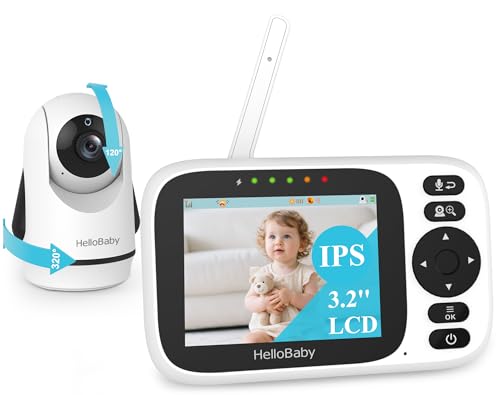
- Best overall for apartments: HelloBaby HB6339 — Check on Amazon
- VTech VM819 — Check on Amazon
- VTech VM923 — Check on Amazon
- Owlet Cam 2 — Check on Amazon
- VTech VM350 — Check on Amazon
- Infant Optics DXR-8 PRO — Check on Amazon
Read the full guide ↓
Disclosure: As an Amazon Associate, dailyhomedecorating.com earns from qualifying purchases. Links to Amazon on this page are affiliate links; they cost you nothing extra. Listing details such as price and availability change often, so check the current Amazon listing before you buy.
Choosing the best baby security camera for apartments under $150 is a different problem from choosing one for a house, and the difference is not the baby. It is the building. Apartment Wi-Fi is a crowded neighbourhood of its own, with dozens of neighbouring networks fighting over the same airwaves, which is exactly the environment where an app-based camera stutters at the worst moment. Apartment leases forbid the drill holes that tidy camera mounting usually assumes. Apartment nurseries are often a corner of the parents’ bedroom rather than a separate room, which changes both the camera angle you need and how much a glowing, murmuring parent unit will disturb the adults sleeping three feet away. And apartment walls are shared, so a monitor’s job quietly expands: it is also how you know whether the cry you heard was yours.
Those constraints push this guide towards the dedicated monitors. Five of our six picks link camera to parent unit over a private radio signal that ignores your building’s Wi-Fi congestion entirely, needs no landlord permission, no screws and no network password, and keeps working when the building’s internet does not. We kept one Wi-Fi pick, the Owlet Cam 2, because its small footprint and phone-based viewing genuinely suit some small flats, especially where a parent works away. But it is ranked with its dependence on congested apartment Wi-Fi stated plainly, not hidden. Every pick can sit on a shelf or dresser rather than being screwed to a wall, which is the mounting method your deposit will thank you for.
Our short answer for renters: start with the HelloBaby HB6339, whose IPS screen, steerable camera and VOX mode suit a nursery corner in a shared bedroom better than anything else here. If your building’s Wi-Fi is notoriously bad and you want the longest battery as well, the VTech VM819 is the calm choice. The VM923 adds remote steering for a crib tucked into an awkward alcove, the VM350 brings a big screen for a studio layout, and the DXR-8 PRO is the premium closed-circuit option when its live price cooperates. The Owlet suits the apartment where shelf space is the scarcest resource of all and the phone is always in hand anyway. Each is judged below on renter criteria first and spec sheets second.
A safety note that applies to every pick in this guide. A baby camera is a convenience for checking in; it is not a medical device, it does not monitor breathing or oxygen, and it never replaces direct supervision or safe-sleep practice. Any sleep or movement insights a maker describes are the maker’s own claims about its app, not medical measurements you should act on. Placement matters more than features: mount or set the camera so that the camera and, above all, its power cord stay well out of your child’s reach. Cords within reach of a crib are a strangulation hazard. Follow the maker’s instruction to keep the camera and cord at least three feet from the crib, route the cord where a standing toddler cannot grab it, and re-check that distance every time your child learns to stand, climb or reach further than last month.
In this guide
Quick Picks
In a hurry? This table matches each system to the situation it handles best in this guide.
| Buyer type | Pick | Why it stands out | Link |
|---|---|---|---|
| Best overall for apartments | HelloBaby HB6339 | 3.2-inch IPS parent display, 720p-listed camera, remote pan-tilt, VOX mode, temperature display | Check on Amazon |
| Best for avoiding Wi-Fi congestion | VTech VM819 | 2.8-inch parent display, 480p fixed camera, up to 19 hours video streaming (maker claim), temperature sensor | Check on Amazon |
| Best steerable camera for tight nurseries | VTech VM923 | 2.8-inch parent display, remote pan-tilt-zoom camera, 1,000 ft maker-rated range, temperature sensor | Check on Amazon |
| Best app camera for small spaces | Owlet Cam 2 | 1080p Wi-Fi camera, app viewing, temperature and humidity sensors, sound, motion and cry notifications | Check on Amazon |
| Best big screen for a shared wall | VTech VM350 | 5-inch parent display, fixed camera with 2X zoom, 1,000 ft maker-rated range, temperature sensor | Check on Amazon |
| Best premium closed-circuit pick | Infant Optics DXR-8 PRO | 720p camera, 5-inch parent display, no Wi-Fi (FHSS), interchangeable lenses, Active Noise Reduction | Check on Amazon |
How we chose
We filtered for apartment life before picture quality. First, installation had to be drill-free: every pick can work from a shelf, dresser or other flat surface, because a camera that needs wall anchors is a deposit deduction waiting to happen. Second, connection resilience: dedicated non-Wi-Fi links were favoured because they are immune to the interference of a building full of competing routers, and the one Wi-Fi pick was required to justify itself on footprint and app convenience. Third, shared-bedroom manners: sound-activated screens, dim or sleeping displays and sensible audio behaviour matter when the parent unit lives on your own nightstand. Fourth, coverage from a corner: in a compact nursery the camera often cannot sit opposite the crib, so pan and tilt range and screen readability at an angle were scored as practical necessities, not luxuries. Fifth, the usual honesty checks applied: real products, verified specifications, live-view-only systems labelled as such, and no subscription surprises left unstated.
Detailed reviews
Each system below is judged on the same ground: who it suits, what it genuinely does well, one honest limitation stated plainly, and when to choose it or skip it. Specifications are the makers’ own listing figures; range and battery numbers in particular are best-case maker claims, and real rooms with real walls will trim them.
HelloBaby HB6339 — Best overall for apartments
The HB6339 is HelloBaby’s IPS-screen answer to the VTech pair. The listing pairs a 3.2-inch IPS parent display, which holds its contrast better at off-angles than the basic LCD panels in this class, with a camera listed at 720p capture resolution that pans and tilts remotely from the parent unit. The connection is a no-Wi-Fi FHSS link rated by the maker for up to 1,000 feet, and the feature list includes infrared night vision, two-way talk, a room-temperature display, lullabies and a VOX mode that keeps the screen dark and silent until sound in the nursery crosses the threshold you set.
VOX is the feature tired parents end up loving most, because a monitor that glows and murmurs all night becomes part of the sleep problem it was bought to solve. Set the sensitivity once and the HB6339 behaves like an audio monitor until there is something worth seeing. The IPS panel also makes this the easiest of the compact units to share between two parents at an angle on a nightstand. The honest limitations are brand-scale ones: HelloBaby’s support network and accessory range are smaller than VTech’s, extra cameras must be matched to the exact model variant before ordering, and like every non-Wi-Fi pick here it offers live view only, with no clips and no phone access when you are out of the house.
Through the apartment lens: the HB6339 wins the rental brief on manners. VOX keeps its screen dark in your shared bedroom until the baby actually makes noise, the IPS panel reads clearly from wherever the nightstand ended up, and the steerable camera covers a crib wedged into a corner from a shelf you already own. No drilling, no Wi-Fi password, no app account: three boxes ticked before the picture quality even enters the argument.
- IPS screen stays readable at an angle when two parents share the view
- Remote pan-tilt camera plus VOX sound-activated screen and display sleep
- Temperature display, night vision and two-way talk included
- No Wi-Fi, no app and no subscription costs
Honest limitation: Smaller brand support network than VTech, and extra cameras must match the exact variant.
Choose it if you want an IPS screen, a steerable camera and a VOX mode that keeps your room dark. Skip it if you prefer the larger support and accessory network of a bigger brand.
VTech VM819 — Best for avoiding Wi-Fi congestion
The VM819 is the endurance pick. Its listing leads with battery life: a 2,600 mAh rechargeable parent unit that VTech rates for up to 19 hours of video streaming, or up to 29 hours in audio-only mode, figures the maker describes as best in class. The camera is a fixed 480p unit with automatic night vision and 2X zoom, the link is a private 2.4 GHz FHSS connection with a maker-rated range of up to 1,000 feet, and the parent unit shows a 2.8-inch colour screen with a room-temperature readout, two-way talk, two lullabies and two soothing sounds, plus a sound-activated screen that wakes when the nursery gets loud.
Nothing about the VM819 is glamorous, and that is its strength. It is the monitor you charge on Sunday and stop thinking about, the one grandparents can operate without a tutorial, and the one that keeps working when the home Wi-Fi is down. The 480p picture is noticeably softer than the 720p and 1080p picks here; you can read sleep position, a kicked-off blanket and a standing toddler perfectly well, but fine detail is limited. The honest limitation is that fixed, lower-resolution camera: no remote pan or tilt, no recording, no app. If your nursery is one crib in one place, that trade is usually worth it. If you expect to follow a roamer, step up to the VM923, which shares this unit’s battery philosophy and adds the motorised camera.
Through the apartment lens: the VM819 is the answer to bad building Wi-Fi. Its private radio link does not care how many neighbours are streaming, its battery outlasts a full night plus a morning, and its small footprint suits a parent unit that lives on a kitchen counter by day and a nightstand by night. In a one-bedroom flat, that simplicity is a feature no spec sheet captures.
- Longest maker-rated battery life in this roundup, in video and audio-only modes
- Dead-simple plug-and-play setup with no Wi-Fi, app or account
- Temperature sensor, lullabies, soothing sounds and sound-activated screen
- Private FHSS link keeps working during internet outages
Honest limitation: 480p fixed camera is the softest picture here, with no pan, tilt or recording.
Choose it if battery life, simplicity and value matter more to you than picture sharpness. Skip it if you want remote pan and tilt, a sharper picture or any recording.
VTech VM923 — Best steerable camera for tight nurseries
The VM923 takes the compact 2.8-inch parent unit format and adds the feature the VM819 lacks: a motorised camera you can steer from the sofa. VTech’s listing rates the camera to pan up to 270 degrees side to side and tilt up to 105 degrees up and down, with digital zoom on top, all controlled from the parent unit over the same secure non-Wi-Fi FHSS link rated for up to 1,000 feet. Automatic night vision, two-way talk, lullabies, a temperature sensor and a sound-activated screen are all on the listing, and the maker rates the rechargeable parent unit for up to 19 hours of use between charges.
Remote steering changes how a monitor gets used after the newborn stage. A baby who rolls to the far corner of the crib, and later a toddler who has escaped to the bookcase, can be re-framed without opening the nursery door and undoing twenty minutes of settling. The small screen is the compromise you accept for the price and the battery life: faces are clear enough to read breathing movements and sleep position, but this is not the screen for admiring eyelashes. The honest limitation is that the 2.8-inch display is the joint-smallest here, and the pan range, while generous, still cannot see behind the camera, so placement on a high shelf with a clear sweep matters.
Through the apartment lens: alcoves, sloped ceilings and cribs placed at odd angles are where the VM923 earns its ranking. A camera you can steer from the parent unit lets a single shelf position cover a nursery corner that a fixed camera would only half-see, which means no extra furniture and no wall fixings bought just to host a camera.
- Remote pan, tilt and zoom from the parent unit at a budget-friendly tier
- Temperature sensor, night vision and two-way talk all included
- Long maker-rated battery life and 1,000 ft rated range
- No Wi-Fi, no app account and no subscription
Honest limitation: Small 2.8-inch screen, and the camera cannot see behind itself, so placement still matters.
Choose it if you want a steerable camera and long battery life at the budget end of the tier. Skip it if a 2.8-inch screen feels too small for comfortable overnight viewing.
Owlet Cam 2 — Best app camera for small spaces
The Cam 2 is the one true Wi-Fi camera in this roundup, and it plays a different game. Owlet lists 1080p HD video streamed over encrypted Wi-Fi to the Owlet app on your phone, with a wide-angle view, 4X digital zoom, automatic night vision and two-way talk, plus room temperature and humidity sensors and notifications for sound, motion and crying. When an event is detected, the app captures a short video clip you can review later, which none of the dedicated-monitor picks here can do. There is no parent unit in the box; your phone is the screen, and background audio lets you keep listening while the phone does other things.
That architecture brings honest costs the other five picks do not have. Everything depends on your home Wi-Fi and on Owlet’s app and servers, so an outage or an app change is outside your control in a way a direct radio link never is. Owlet has offered optional paid plans around its app features, so check the current terms on the listing and in the app before you buy, and confirm which clip and notification features are included without one. The Cam 2 also does not measure heart rate or oxygen; those are functions of Owlet’s separate sock products, not of this camera, and no camera in this guide is a medical device. Choose the Cam 2 when phone access from anywhere, event clips and humidity data matter more to you than a dedicated screen that simply always works.
Through the apartment lens: the Cam 2’s apartment case is space, not signal. It is the smallest thing here, needs no parent unit on your limited surfaces, and lets a parent at work see the nursery a grandparent is sitting in. Its weakness is equally apartment-specific: it rides the same congested Wi-Fi as everyone else in the building, so test it on your network during the return window.
- Sharpest picture here at 1080p, viewable from anywhere through the app
- Sound, motion and cry notifications plus reviewable event clips
- Temperature and humidity sensing, not temperature alone
- No extra screen to charge; background audio keeps listening on your phone
Honest limitation: Depends entirely on Wi-Fi and the maker’s app; check current plan terms, and there is no dedicated parent unit.
Choose it if checking in from anywhere, event clips and humidity data matter more than a dedicated screen. Skip it if you want a monitor that works without Wi-Fi, an app account or any plan terms to check.
VTech VM350 — Best big screen for a shared wall
The VM350 is VTech’s big-screen, keep-it-simple entry: a 5-inch colour parent display paired with a fixed nursery camera, connected over a secure non-Wi-Fi transmission that VTech rates for up to 1,000 feet of range in open conditions. The listing includes automatic infrared night vision, two-way talk, a set of lullabies, a room-temperature sensor with on-screen readout, and a parent-unit battery the maker rates at up to 12 hours of video streaming per charge. The camera itself does not pan or tilt remotely; you angle it by hand at setup and use the 2X digital zoom to tighten the framing afterwards.
That fixed camera is the deliberate trade. In a standard nursery where the crib does not move, a fixed camera aimed once and forgotten is arguably the most reliable design of all, because there are no motors to fail and no reason to touch it again. The large screen makes overnight checks genuinely easy on tired eyes, and the temperature readout answers the most common middle-of-the-night question after ‘is she asleep’, which is ‘is the room too warm’. The honest limitation is coverage: once your baby is a mobile toddler, a fixed lens cannot follow, and there is no recording or app view, so what you see live is all you get. A two-camera version, the VM350-2, exists for families who need a second room covered.
Through the apartment lens: in a studio or open-plan flat, the VM350’s big screen does a job the compacts cannot: it reads clearly from across a room, so the parent unit can live in the kitchen zone while the crib occupies the sleeping zone. Its fixed camera suits a crib that stays in one place, which in most small flats it must.
- Large 5-inch screen that is easy to read at arm’s length overnight
- Temperature sensor, lullabies and two-way talk in one no-fuss package
- No Wi-Fi, no app and no subscription; pairing is done at the factory
- Maker-rated battery life covers a full night of video streaming
Honest limitation: Fixed camera cannot pan or tilt to follow a moving toddler, and there is no recording.
Choose it if you want the biggest screen, a temperature readout and a camera that never needs steering. Skip it if your child is already mobile and you need the camera to follow movement around the room.
Infant Optics DXR-8 PRO — Best premium closed-circuit pick
The DXR-8 PRO is the closed-circuit flagship in this price band. Infant Optics lists it with a 720p camera feeding a 5-inch parent display over a direct FHSS radio link, which means there is no Wi-Fi network involved, no app account to create and no cloud server between the camera and the screen in your hand. The maker rates its Active Noise Reduction (A.N.R.) system to filter out background hiss from fans and white-noise machines, and the camera supports interchangeable optical lenses, so a wide-angle or zoom lens can be swapped in as the room layout changes. Remote pan, tilt and zoom, infrared night vision and two-way talk round out the listing’s headline features.
In daily use the appeal is steadiness. The feed is live-only: this system does not record clips, does not store anything locally and has nothing to subscribe to, which some families will read as a limitation and others as the entire point. The 5-inch screen is the joint-largest in this roundup, and because the connection never touches the internet, the picture does not depend on your broadband behaving at 3 a.m. The honest limitation is twofold. First, there is no room-temperature readout on this model, a feature several cheaper rivals include. Second, its street price moves around more than any other pick here and sits closest to the under-$150 ceiling, so check the live listing carefully before you buy; if it has drifted above the ceiling on the day you shop, the VTech VM350 below gives you the same screen size for less.
Through the apartment lens: the DXR-8 PRO is the upgrade pick for renters who plan to stay put. The interchangeable lenses solve the classic small-nursery problem, a too-wide or too-narrow view from the only available shelf, without moving furniture, and its closed-circuit link is as indifferent to building Wi-Fi as the budget picks. Just confirm the live price is under the ceiling before it goes in the basket.
- 720p picture on a large 5-inch dedicated display, with no app and no account
- Interchangeable lenses adapt the same camera to different rooms and crib positions
- No Wi-Fi, no cloud and no subscription of any kind, ever
- Active Noise Reduction is a maker-rated answer to fan and white-noise hiss
Honest limitation: No temperature sensor, no recording, and a street price that hovers nearest the ceiling of any pick here.
Choose it if you want the clearest dedicated picture, lens flexibility and zero ongoing costs, and its live price is under the ceiling when you order. Skip it if you need a temperature readout or any kind of recording, neither of which this system offers.
Live view, recording and subscriptions: the honest version
Apartment shoppers are often sold app cameras on the promise of clips and history, so the trade deserves plain words. The five dedicated monitors here record nothing: no card, no cloud, no archive. What they offer instead is a feed that does not cross your building’s congested Wi-Fi, cannot be reached through any online account, and costs nothing per month for as long as you own it. In a rented flat, where the internet package may be the landlord’s choice rather than yours, that independence is a practical security feature, not a missing one. The one Wi-Fi pick, the Owlet Cam 2, does save short event clips in its app and can be checked from outside the building, which is genuinely useful if a partner or grandparent needs access while you are out.
On subscriptions, the dedicated five are simple: there are none, ever. For the Owlet, read the current plan terms on the listing and in the app before you commit, because app feature sets change and the included tier of today is not a promise about next year. If your tenancy is short or your building’s network is unreliable, weight the dedicated systems’ boring reliability accordingly. A feed that always works in the flat you live in beats a smarter feed that depends on infrastructure you do not control.
Comparison table
The six systems side by side. Recording and connection type are the two rows that most change daily life, so read those first.
| Pick | Display | Camera | Connection | Recording | Best for |
|---|---|---|---|---|---|
| HelloBaby HB6339 | 3.2-inch IPS parent unit | Pan-tilt, temperature display, VOX | No Wi-Fi (FHSS) | None, live view only | Best overall for apartments |
| VTech VM819 | 2.8-inch parent unit | 480p fixed, temperature sensor | No Wi-Fi (FHSS) | None, live view only | Best for avoiding Wi-Fi congestion |
| VTech VM923 | 2.8-inch parent unit | Pan-tilt-zoom, temperature sensor | No Wi-Fi (FHSS) | None, live view only | Best steerable camera for tight nurseries |
| Owlet Cam 2 | Your phone (app) | 1080p, temp and humidity, notifications | Wi-Fi app | Event clips in app | Best app camera for small spaces |
| VTech VM350 | 5-inch parent unit | Fixed, 2X zoom, temperature sensor | No Wi-Fi (FHSS) | None, live view only | Best big screen for a shared wall |
| Infant Optics DXR-8 PRO | 5-inch parent unit | 720p, pan-tilt-zoom, interchangeable lenses | No Wi-Fi (FHSS) | None, live view only | Best premium closed-circuit pick |
How to choose the best baby security camera for apartments under $150
Begin with your building’s Wi-Fi, honestly assessed. If video calls freeze when neighbours come home, an app camera will inherit that behaviour in the nursery, and no resolution figure fixes a congested network. A dedicated monitor sidesteps the problem entirely by using its own radio link, which is why five of the six picks here are built that way. If you do choose the Wi-Fi pick, place your router as close to the nursery as the flat allows and test the feed at your building’s busiest hour, not on a quiet Sunday morning.
Plan placement around the lease. The workable apartment positions are a dresser top, a bookshelf, or a corner shelf that already exists, all of which argue for a camera that can pan and tilt to compensate for an imperfect vantage point. Whichever position you choose, the safety rule does not bend for small spaces: camera and cord at least three feet from the crib and out of reach, with the cord routed down behind furniture where a standing child cannot find it. In a shared bedroom this usually means the camera watches the crib corner from the parents’ dresser, which is exactly the arrangement the steerable picks handle best.
Think about the parent unit’s night-time behaviour, because in an apartment it shares your room. A screen that glows all night and audio that never sleeps will cost you the rest the monitor was bought to protect. Sound-activated screens and VOX modes, which wake the display only when the nursery gets loud, are worth more in a one-bedroom flat than any resolution upgrade. Battery life matters for the same reason: the parent unit will migrate between kitchen, sofa and nightstand, and a unit that survives that whole journey on one charge gets used; one that lives tethered to a charger gets left behind.
Finally, consider the move. Apartment families move more often, and a monitor that reinstalls in five minutes in the next flat, with no wall damage to repair in the old one and no network setup to redo, is worth real money over a lease or two. Dedicated monitors reinstall by being plugged in. That, plus a box you can pack in a kitchen crate, is the unglamorous apartment advantage that spec comparisons miss.
Placement, cords and the first month in a rented home
Apartment placement is a negotiation between the view you need, the surfaces you have and the lease you signed, and it is worth doing deliberately. Begin by inventorying the furniture that already faces the crib corner: a dresser top is the classic host, a bookshelf shelf the runner-up. Both keep the camera high enough for a downward view of the whole mattress without a single screw. Test the position in the dark as well as the light, because night vision is how the camera will mostly be used, and a shelf that works at noon may put a lamp’s glare in frame at midnight. If the angle crops the crib, prefer a steerable camera that compensates from the parent unit over any solution involving brackets, adhesives strong enough to take paint with them, or furniture bought solely to hold a camera.
The cord rule does not shrink with the room. Camera and cord stay at least three feet from the crib and out of reach, with the cord dropped behind the host furniture and run along the wall to the socket. In small rented rooms the temptation is to let the cord drape where it falls, because every route is short; resist it, and re-audit the route at each mobility milestone, because a standing toddler in a small room is within reach of nearly everything in it. Cable clips that press on without nails exist for tidiness, but distance and routing, not clips, are what make the setup safe. When you move, the same discipline packs up with you: photograph your working layout before you unplug anything, and the next flat’s nursery is set up in minutes, correctly, the first time.
Your first month in the flat will also teach you the building’s rhythms, and the monitor is part of that education. You will learn which neighbour’s door slam wakes the baby and which sounds are the building settling, and a sound-activated screen lets you learn it without a glowing display narrating every pipe tick. You will learn whether your Wi-Fi sags at eight in the evening, which is the empirical test of whether an app camera would have served you; dedicated-monitor owners get to skip that lesson entirely. And you will learn your own pattern: most apartment parents end up using the monitor most during naps and evenings, when the baby sleeps in the crib corner and the adults reclaim the rest of the flat, which is precisely the scenario these compact, polite, battery-rich systems were ranked for.
Finally, think about the neighbours you cannot hear. Thin walls carry a crying baby far more effectively than any monitor, and nothing in this guide changes that; what a good monitor changes is your response time and your certainty, so you settle your baby faster and stop hovering at the door listening, which is its own courtesy. Set two-way talk volume sensibly, keep lullaby playback at nursery volume rather than building volume, and the monitor becomes what it should be in a shared building: invisible to everyone except the people it serves.
What changes as your baby grows in a small rented nursery
In the newborn stage, an apartment nursery is a still life: a crib in a corner, a camera on the nearest dresser, parents learning the building’s sounds alongside the baby’s. The monitor’s work is mostly reassurance, and its manners matter more than its range, because the whole arrangement shares air with the adults’ bed. A sound-activated screen and a private radio link that ignores the evening Wi-Fi rush are the features this stage actually tests, night after night.
Rolling and sitting rearrange a small nursery more violently than a large one, because there is no spare floor to absorb the change. The crib may rotate, the dresser may migrate, and the camera position that worked in month one can lose its view entirely in month seven. This is the apartment argument for steerable cameras and shelf-based setups in its purest form: the system that re-aims from the parent unit and relocates without fixings adapts to each rearrangement in minutes, while a mounted, fixed installation turns every furniture decision into a camera decision. The cord audit belongs in this stage too; a pulling-up baby in a small room is close to everything, and the three-foot rule must be re-measured, not remembered.
By the toddler stage, the apartment itself becomes the nursery. The monitor’s subject roams from crib to kitchen doorway, and its role shifts from sleep-watching to room awareness: where is she, what is that noise, is the gate closed. Coverage and two-way talk now lead; the ability to steer the camera across a lived-in room, and to deliver a parent’s voice into it, is worth more than any newborn-stage refinement. Families who chose adaptable systems watch this stage arrive as an upgrade in usefulness. Families who bought narrowly for the newborn corner often buy again, which in a deposit-conscious household is the one outcome this guide exists to prevent.
A short note on maker claims, read like a renter
Every figure in this guide that sounds like a promise, range up to 1,000 feet, battery up to 19 hours, is a maker’s best-case number measured in conditions your building will not reproduce. Concrete, brick, metal studs and a dozen competing networks all take their cut, and the honest way to read these figures is comparatively: they tell you which systems a maker built for endurance and which for economy, not what your third-floor flat will deliver on a rainy Tuesday. That is why this guide ranks on architecture first, a private link over a congested network, a sleeping screen over a glowing one, steering over fixed framing, and treats the numbers as supporting evidence. Buy the architecture that suits rented life, verify it in your actual rooms during the return window, and the figures will take care of themselves.
Common mistakes apartment parents make with a baby camera
Drilling into walls the lease protects. Every pick here works from a shelf or dresser. Save the anchors, and the deposit, by choosing placement before hardware.
Assuming the building Wi-Fi will cope. Congested evening networks are the top cause of stuttering app feeds in flats. A dedicated radio link ignores the problem; a Wi-Fi camera must be tested at peak hours.
Letting the parent unit light up the shared bedroom. In a one-bedroom layout the monitor sleeps where you do. Choose VOX or a sound-activated screen so it stays dark and quiet until needed.
Squeezing the camera and cord within reach to get the shot. Small rooms tempt close placement. The three-foot, out-of-reach rule for camera and cord still applies; a steerable camera gets the angle without the risk, and cords near a crib are a strangulation hazard.
Buying for a separate nursery you do not have. A corner-of-the-bedroom crib needs wide coverage from an angle, not a long-range spec. Match the camera to the room that exists.
Forgetting the monitor must move house too. Complicated mounts and network setups are a tax at every move. Simple, shelf-based systems reinstall in minutes.
Final recommendation
For apartment life, the HelloBaby HB6339 is the most complete answer under the ceiling: drill-free, indifferent to your building’s Wi-Fi, polite in a shared bedroom and steerable enough for a corner crib. If battery endurance is your top concern, the VTech VM819 is the calm alternative. Step to the VM923 for steering on a tighter budget, the VM350 for a big screen in an open-plan layout, the DXR-8 PRO for the premium closed-circuit experience, or the Owlet Cam 2 if phone viewing matters more than network independence. Place it safely, keep the cord out of reach, and enjoy the one apartment luxury a good monitor provides: certainty about whose baby is crying.
Frequently asked questions
Will a baby monitor work through apartment walls?
Dedicated monitors use a direct radio link rated by their makers for up to 1,000 feet in open conditions; walls, concrete and metal reduce that in practice, but within a single flat the range is rarely the issue. Interference and distance between floors are the real limits, so keep the parent unit in the same home and test the far corners during the return window.
Do I need Wi-Fi for a baby camera in an apartment?
No, and in a building with congested Wi-Fi you may be better without it. Five of the six picks here link camera and parent unit directly, with no network involved. Only the Owlet Cam 2 needs Wi-Fi, because it streams to a phone app.
Can I mount a baby camera without drilling holes?
Yes. Every pick in this guide can sit on a dresser, shelf or other flat surface, and the steerable models can compensate for the imperfect angle that shelf placement gives. That keeps landlords and deposits happy while still covering the crib.
How do I stop the monitor disturbing us in a shared bedroom?
Choose a model with a sound-activated screen or VOX mode, like the HelloBaby HB6339, so the display stays dark and the audio stays quiet until sound in the nursery crosses the level you set. Positioning the parent unit face-down is a workaround, not a solution; the feature is worth having.
Is a baby camera a security risk in an apartment building?
Dedicated monitors broadcast only to their paired parent unit over an encrypted-style private link and are not on the internet at all. A Wi-Fi camera depends on your account security and the maker’s servers, so use a strong unique password and keep the app updated. No camera here is a medical device or a replacement for supervision.
Where is the safest place for the camera in a small nursery?
On a stable surface or mount with a clear view of the crib, at least three feet away from it, with the power cord routed out of reach behind furniture. Re-check that distance as your child learns to stand and climb, because a cord within reach of the crib is a strangulation hazard.


