Where to buy
Check the latest price, availability and delivery on Amazon. Orders are placed on Amazon. We may earn a commission from qualifying purchases.
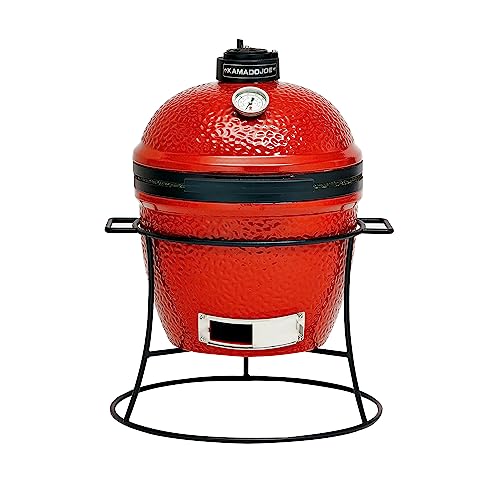
- Best overall for small patios: Kamado Joe Joe Jr. 13.5-Inch Portable Ceramic Grill — Check on Amazon
- Weber Traveler Portable Gas Grill — Check on Amazon
- Napoleon TravelQ PRO285 Portable Gas Grill — Check on Amazon
- Oklahoma Joe’s Rambler Portable Tabletop Charcoal Grill — Check on Amazon
- Everdure CUBE Proflame 360 Portable Propane Gas Grill — Check on Amazon
- Weber Lumin Compact Portable Electric Grill — Check on Amazon
Disclosure: As an Amazon Associate, dailyhomedecorating.com earns from qualifying purchases. Links to Amazon on this page are affiliate links; they cost you nothing extra. Listing details such as price and availability change often, so check the current Amazon listing before you buy.
The best portable grill for small patios under $1500 is a study in square inches — not the ones on the grate, but the ones on the ground. A small patio punishes a grill twice: once while it cooks, when its footprint competes with the table, the chairs and the cook’s own elbows, and again while it stores, when a badly shaped grill eats the corner where the plants, the storage box and the door swing all need to be. A flagship budget is genuinely useful here, because the premium end of the portable market is where the clever storage engineering lives: grills that fold upright like the Weber Traveler, tabletop machines that sit on a small stand and lift away after dinner like the Napoleon TravelQ PRO285 and the Oklahoma Joe’s Rambler, a compact kamado that does everything on a two-foot circle like the Kamado Joe Joe Jr., and — for patios where flame is restricted by a landlord or an HOA — a premium electric, the Weber Lumin Compact, that was designed for exactly this footprint. What $1,500 buys on a small patio is not a bigger grill. It buys a better-shaped one, built from materials that survive being stored outdoors in the little weather a small patio offers.
This guide measures what other roundups wave at. For each pick we talk about the cooking footprint and the stored footprint separately, because they are different numbers and the second one decides whether you still like the grill in February. We talk about heat clearances honestly, because on a small patio the grill is always closer to a railing, a fence or a cushion than its owner would choose, and the safety discipline has to be designed into the layout rather than improvised per cook. And we talk about capacity without flinching: a small patio grill feeds two to six people well, and the flagship versions do it with better heat, better materials and better manners than the cheap tabletops — but none of them feeds twelve, and this guide will steer party households to the pairings that actually work rather than pretend otherwise.
The shortlist runs from fire to plug. The Joe Jr. is the charcoal heart of it: a complete ceramic kamado on a stand, with the smallest serious footprint in the category. The Traveler is the storage champion, a full 320-square-inch gas grill that folds against a wall. The TravelQ PRO285 is the tabletop gas professional — dual burners, cast-iron grids, a lid that folds down over a footprint smaller than a serving tray’s. The Rambler is the heavyweight tabletop charcoal sear station. The Everdure CUBE Proflame 360 is the design-led propane tabletop with a roasting hood. And the Lumin Compact is the electric answer for flame-restricted patios, searing at temperatures that end the argument about whether electric can grill. Smaller budgets scale the same thinking down in Best Portable Grill For Small Patios Under $500 and Best Portable Grill For Small Patios Under $700, and the travel-first flagship roundup is at Best Portable Grill Under $1500.
In this guide
Quick Picks: The Best Portable Grill for Small Patios Under $1500 at a Glance
| Pick | Format | Cooking area | Small-patio virtue |
|---|---|---|---|
| Kamado Joe Joe Jr. | Ceramic kamado on stand | 150 sq in | Full kamado range on a two-foot circle |
| Weber Traveler | Gas, folding cart | 320 sq in | Folds upright against a wall — best stored footprint |
| Napoleon TravelQ PRO285 | Gas tabletop, dual burner | 285 sq in | Two burners and cast-iron grids on a tabletop footprint |
| Oklahoma Joe’s Rambler | Charcoal tabletop | 218 sq in | Serious searing station that lifts away after dinner |
| Everdure CUBE Proflame 360 | Propane tabletop with hood | Compact grate + roasting hood | Design-led, light, quick — the weeknight tabletop |
| Weber Lumin Compact | Electric | Compact Lumin format | For flame-restricted patios; 600°F-class searing |
How These Picks Were Chosen
Small patios set the first filter: a pick had to earn its floor space in both modes — cooking and stored — and anything whose stored shape was “a grill, but in the way” scored down no matter how well it cooked. The second filter was verification: every pick is a current manufacturer model with specifications taken from the manufacturer or the Amazon listing itself, and every Amazon link was cross-checked against Amazon’s catalogue data. The Oklahoma Joe’s Rambler, Everdure CUBE Proflame 360 and Weber Lumin Compact titles were confirmed through the Amazon Creators API; the remaining linked picks were verified against their live Amazon listings after the API run hit a rate limit, as recorded in this article’s source notes. The third filter was a U.S. Consumer Product Safety Commission recall screen: no pick here is under an active recall — a screen that matters in 2026, when a popular 3-in-1 gas grill was recalled over a shattering glass hazard and wire-bristle grill brushes were recalled in the millions. (You will notice there is no Cuisinart pick anywhere in this guide, and no wire-bristle brush in its cleaning advice; both absences are deliberate.) Finally, we weighted the small-patio virtues that spec sheets hide: how fast the grill cools and covers, whether it can live on a table you already own, and how its heat behaves a foot from a railing.
The Six Picks in Detail
1. Kamado Joe Joe Jr. — Best Overall for Small Patios
Who it suits: the small-patio cook who refuses to cook small. If your patio fits a bistro set and a grill, and you want that grill to sear, roast, bake and smoke like the big ceramics — for two to four people at a time — the Joe Jr. is the complete answer on the smallest serious footprint here.
The package is a thick-walled ceramic kamado in an included cast-iron stand: a 13.5-inch stainless grate, 150 square inches of cooking surface, and — the inclusion that makes it a system rather than a toy — a heat deflector for indirect cooking. The stand’s footprint is roughly a two-foot circle, which is the entire floor claim; the cooking claim is the full kamado repertoire, because ceramic does not scale down its physics. It heats on a modest handful of lump charcoal, holds a low smoking temperature with an efficiency that borders on miserly, and shuts down sealed and tidy — a real virtue when the grill lives three feet from your back door. At roughly 76 pounds it stays where you put it during the week and moves with a planned two-person lift when the patio is rearranged or the grill travels. On a small patio, permanence-in-place is a feature: this is the grill that becomes furniture, in the best sense.
Pros:
- Complete kamado cooking — grill, smoke, roast, bake — on a stand footprint of about two feet.
- Heat deflector and stand included; lifetime warranty on ceramics.
- Efficient charcoal use and a sealed shutdown suit close-quarters living.
- Premium build that treats outdoor storage under a cover as normal life.
Honest limitation: 150 square inches feeds four, not fourteen, and ceramic is heavy and drop-sensitive. If your small patio hosts big parties, this is your quality station, not your only station.
Choose it if your cooks are small and your standards are not. Skip it if you need the grill to vanish between cooks — that is the Traveler’s party trick.
2. Weber Traveler — Best Stored Footprint
Who it suits: the patio where floor space is negotiated weekly. The Traveler is for households that need a family-size grill on Saturday and its complete absence on Sunday — folded upright against the wall, out of the door swing, out of the way of the storage box and the bikes.
The mechanism is the product: a collapsible cart with big wheels that raises and folds one-handed, carrying a 320-square-inch porcelain-enamelled cast-iron grate over a single 13,000 BTU burner. Cooking, it is a proper mid-size gas grill — the largest grate in this roundup — with Weber’s build and parts network behind it. Stored, it is a few inches of wall. That transformation is why it wins small patios that no tabletop can: a tabletop grill still needs its table, forever, while the Traveler needs a wall only when it is not cooking. It runs a full tank at home via an adapter hose, or disposable cylinders when it travels. The trades are a single burner’s improvised two-zone and gas’s neutral flavour; on a small patio, where the alternative is often no grill at all, those trades are easily worth it.
Pros:
- Folds flat and stands upright — the best stored footprint of any full-size portable.
- 320 sq in of cast-iron grate: family capacity that disappears after dinner.
- One-hand fold, big wheels, quick gas heat and quick cool-down.
- Weber quality and long-term parts availability.
Honest limitation: you are storing a cart as well as a grill — the folded package is slim but tall, so measure the wall it will lean on. One burner limits true two-zone technique.
Choose it if storage is your binding constraint and your headcount is family-size. Skip it if charcoal flavour is the point of your patio — the Joe Jr. and Rambler are waiting.
3. Napoleon TravelQ PRO285 — Best Tabletop Gas Grill
Who it suits: the small patio with a sturdy table and a cook who wants real gas-grill technique — two burners, two zones, cast-iron grids — without a cart, a stand or a permanent footprint. When dinner ends, the PRO285 lifts off the table and the patio is a patio again.
Napoleon’s PRO line is the professional end of its travel range: 285 square inches of cooking area under a high lid, dual stainless steel burners totalling 12,000 BTU for genuine two-zone control (the feature most tabletops fake), porcelain-coated cast-iron WAVE cooking grids that hold heat and mark food properly, and an ACCU-PROBE temperature gauge in the lid. It runs on disposable cylinders at the table or a full tank with an adapter, and its all-aluminum-and-steel build is a class above the stamped tabletops it competes with. For a small patio the proposition is precise: the cooking ability of a small cart grill, the storage claim of a suitcase. What it asks in return is a genuinely sturdy, heat-resistant table — treat that as part of the purchase — and the usual gas discipline about connections and storage.
Pros:
- Dual burners and 285 sq in — real two-zone gas cooking on a tabletop.
- Cast-iron WAVE grids and a high lid for roasting, not just grilling.
- Lifts away after dinner; stores like luggage.
- Napoleon build quality with a long limited warranty.
Honest limitation: tabletop means table — budget and space for a proper heat-resistant stand if your patio lacks one. Two burners on cylinders drink fuel faster than one; the tank adapter is the economical route at home.
Choose it if you want gas technique without a cart. Skip it if your patio has no suitable table and no room for one — the Traveler brings its own legs.
4. Oklahoma Joe’s Rambler — Best Tabletop Charcoal Sear Station
Who it suits: the charcoal loyalist on a small patio — the cook who wants cast-iron-over-coals searing and is happy for the grill to live on a sturdy table or stand and lift into the storage box when the season turns.
The Rambler is built like a small bank vault: heavy-duty steel, thick cast-iron grates, and 218 square inches of cooking space with a height-adjustable charcoal tray that raises or lowers the fire — the single most useful control a tabletop charcoal grill can have, because distance to the coals is temperature. Air intakes and a damper fine-tune from there, a gauge reads the lid temperature, and a removable ash pan keeps a small space tidy. On a small patio its manners are good: the fire is contained, the footprint is a tabletop’s, and when it is cold it stores like the dense, compact object it is. Its weight is the honest cost — this is a two-hand lift onto its perch — and charcoal’s cool-down discipline applies in full before it moves or covers.
Pros:
- Adjustable charcoal tray plus dampers: real temperature control at tabletop scale.
- Cast-iron grates deliver the sear small grills usually promise and miss.
- Heavy steel build; removable ash pan suits tidy small spaces.
- 218 sq in is generous for a tabletop — feeds four to six in batches.
Honest limitation: heavy for its footprint class, and it needs a genuinely heat-resistant, load-bearing surface. Charcoal ash discipline — full cool-down, metal container — is non-negotiable this close to the house.
Choose it if charcoal searing is your patio’s purpose. Skip it if you want set-and-forget or instant-on — look at the gas and electric picks.
5. Everdure CUBE Proflame 360 — Best Design-Led Propane Tabletop
Who it suits: the weeknight patio cook who values speed, tidiness and objects that look considered. Everdure — the brand built with Heston Blumenthal’s input — makes the CUBE line for people who think a grill should be designed, not just assembled, and the Proflame 360 is its portable propane flagship.
The specification is compact and purposeful: an 8,500 BTU stainless burner under a cast-iron grate, in a lightweight tabletop body with a roasting hood and a built-in thermometer — the hood being the feature that separates it from open tabletops, because it lets this little grill roast and bake as well as sear. It lights instantly, runs on propane, and its whole presence on a small patio is closer to a piece of kitchen equipment than to patio furniture: quick out, quick cook, quick cool, quick away. It will not smoke, it will not feed eight, and its single burner is a single zone; within its brief — fast, handsome, competent cooking for two to four — it is the most civilised tabletop here.
Pros:
- Roasting hood with thermometer — bakes and roasts, not just grills.
- Cast-iron grate and instant propane heat in a light, compact body.
- Design and finish a class above typical tabletops; stores easily.
- Fast cool-down suits small spaces where the grill must be put away promptly.
Honest limitation: one burner, one zone, modest capacity — a precision instrument for small cooks, not a party machine. Premium pricing buys design and finish as much as function.
Choose it if your patio cooking is frequent, small and weeknight-shaped. Skip it if you need two zones or crowd capacity — the PRO285 and Traveler are the answers.
6. Weber Lumin Compact — Best for Flame-Restricted Patios
Who it suits: the small patio where flame is not allowed — the condo with HOA rules, the rental with a lease clause, the wooden-deck townhouse where the household has decided electric is the only sane answer. The Lumin Compact is the pick that keeps those patios grilling at a flagship level.
Weber built the Lumin line for city balconies and small spaces, and the Compact is its smallest form: an electric grill that reaches searing temperatures in the 600°F class — the specification that separates it from every weak electric that came before — on a porcelain-enamelled cast-iron grate, in a body sized for a balcony corner or a small patio table. There is no fuel to store (a genuine rule-satisfier where propane cylinders are also restricted), no ash, a fast cool-down, and Weber’s accessory system around it, including a matching stand and cover for patios that want it off the table. Its limits are electric’s limits: it needs an outlet within a sensible cord’s reach, it will not make smoke on its own, and its compact grate cooks for two to four. For the patios it serves, those are the right trades — it is the grill that exists at all where the others cannot.
Pros:
- 600°F-class electric searing — flagship heat with no flame and no fuel storage.
- Compact Lumin format designed for balconies and small patios.
- Weber build, accessories (stand, cover) and parts support.
- Fast heat-up and cool-down; the lowest-fuss ownership here.
Honest limitation: outlet-dependent and smoke-free by nature; capacity is couples-scale. If your patio allows flame and you cook for six, the gas picks serve you better.
Choose it if rules or prudence rule out flame on your patio. Skip it if you have no outdoor outlet — solve the power question first, or choose a flame pick where permitted.
Comparison Table
| Product | Fuel | Cooking area | Stored footprint | Link |
|---|---|---|---|---|
| Kamado Joe Joe Jr. | Charcoal | 150 sq in | Stand circle, ~2 ft across | Check on Amazon |
| Weber Traveler | Propane | 320 sq in | Folds upright against a wall | Check on Amazon |
| Napoleon TravelQ PRO285 | Propane | 285 sq in | Tabletop; stores like luggage | Check on Amazon |
| Oklahoma Joe’s Rambler | Charcoal | 218 sq in | Tabletop; dense and compact | Check on Amazon |
| Everdure CUBE Proflame 360 | Propane | Compact + hood | Light tabletop; shelves easily | Check on Amazon |
| Weber Lumin Compact | Electric | Compact format | Tabletop or stand; smallest stored claim | Check on Amazon |
How to Choose the Best Portable Grill for Small Patios Under $1500
Measure twice, in both modes. First the cooking mode: pace out the patio, place an imaginary grill, and check the clearances the safety section demands — from railings, fences, siding, cushions and the door swing — because on a small patio the layout is the specification. Then the stored mode: where exactly does this object live at midnight in February? A wall for the Traveler, a storage box or shelf for the tabletops, a two-foot circle and a cover for the kamado. The pick whose two answers both fit is your pick; a grill that fits only while cooking will be resented for the other twenty-three hours of every day.
Next, the rules of your specific patio. Owned house, no restrictions: the full list is open, and fuel preference decides — charcoal for flavour (Joe Jr., Rambler), gas for speed and storage (Traveler, PRO285, CUBE Proflame), with our Best Charcoal Grill For Small Patios Under $1500 and Best Gas Grill For Small Patios Under $1500 guides going deeper on each family. Rented or HOA-governed patio: read the clause before the catalogues, because flame and fuel storage are commonly restricted, and the Lumin Compact exists for exactly that signature on a lease — the same problem our Best Portable Grill For Apartments Under $1500 guide works through in full. Finally, capacity honesty: size for the household’s median cook, and handle the annual party with a borrowed second grill or a menu built on batches, rather than buying a grate your patio cannot store.
One last small-patio truth belongs in the choosing: noise and light are neighbours too. A pellet grill’s fan, a late cook’s bright work light, a gathering that drifts past the hour your patio’s other households sleep — none of these appear on a spec sheet, and all of them decide whether your grilling is welcomed or merely tolerated. The picks in this guide are all quiet machines — flame and electric make no mechanical noise worth naming — but the habit matters more than the hardware: cook at hours that fit the building, keep the light aimed at the grate rather than the fence, and let the patio’s social licence renew itself. A small patio is a shared acoustic space even when it is a private legal one, and the flagship grill that gets used for a decade is the one its neighbours never learned to resent.
Fire Safety on a Small Patio — Clearances Are the Layout
Small patios compress every safety margin, so the rules here are stricter in practice, not just in print. Cook on a stable, level, heat-resistant surface — pavers, concrete, or a rated grill mat over decking — and keep the manufacturer’s clearances from anything combustible: railings, fences, siding, outdoor cushions, stored items and plantings. Tabletop grills radiate downward as well as outward: never set a charcoal or gas tabletop directly on a wooden or composite surface; use a proper heat-resistant stand or mat rated for the purpose, and remember that a kamado’s shell and a charcoal tray’s underside stay hot long after the food is done. Never cook under a covered patio roof, awning or umbrella, and never in a garage or enclosed porch: every fuel in this guide produces carbon monoxide, and small covered spaces concentrate it fastest. Charcoal ash, this close to the house, gets the full discipline: cool completely in the closed grill for at least a day, then into a metal container with a tight metal lid stored outdoors away from the building — never into the patio storage box, never into a plastic bin, never “probably cold” beside the door. Propane cylinders store upright and outdoors, leak-checked with soapy water at each change; spare cylinders never live inside. Electric picks remove the flame but not the grease: empty the drip tray on schedule and keep cords short, heavy-gauge and outdoor-rated. And clean every grate with a bristle-free tool — nylon brush on a cool grate, wooden scraper or steam — because wire-bristle brushes have been recalled in the millions in 2026 for shedding bristles into food; a small patio’s dinner is eaten two feet from the grill, and that risk has no place at the table.
Common Mistakes on Small Patios
Buying by grate size alone. The stored footprint decides your February happiness. A 320 sq in grill that folds to a wall (Traveler) can be the smaller patio citizen than a 200 sq in grill that squats on the only table forever.
Putting a tabletop grill on any table. Plastic folding tables melt and sag; wooden tables scorch. The surface must be sturdy, level and heat-resistant — budget for a proper stand or mat as part of the grill.
Cooking closer to the railing “just this once.” Clearances are not a suggestion scaled to your patio’s size; they are the physics of radiant heat and grease. Set the spot once, correctly, and let it stay set.
Storing the propane cylinder in the storage box. Cylinders live outdoors, upright, ventilated — never sealed in a box, a closet or indoors. The small patio does not change the rule; it just makes following it a deliberate choice.
Skipping the cover because the patio is covered. Wind-driven rain, dust and pollen reach everywhere on a small patio. A fitted cover is what makes a flagship grill a five-year grill in a space with no garage to retreat to.
The Small Patio Layout: Zones in a Handful of Feet
A small patio works when it is zoned like a ship’s galley: everything within reach, nothing in the way. Put the grill zone on the patio’s most open edge — the spot with the best sky above it and the fewest combustibles around it — because smoke and radiant heat both need somewhere to go that is not your seating or your door. Put the eating zone at the opposite edge, so the cook’s two steps between grill and table never cross the guests’ knees. Between them, one landing surface — the table the tabletop grill sits on can double for this outside cooking hours, or a slim console earns its keep year-round. Storage belongs vertical on a small patio: the folded Traveler against the wall, covers and tools in a deck box that doubles as a bench, the kamado’s stand circle doubling as the plant stand’s spot in winter if it must. Lighting deserves a sentence of its own: a small patio’s grill is often used after dark at arm’s length from the cook, and a grill light or a warm string of patio lights is a safety feature disguised as ambience. Worked out once, on a tape-measure afternoon, this layout stops being renegotiated at every cook — which is the real luxury a small space can offer. Guests feel it too, even if they never name it: a patio that flows is a patio people ask to come back to.
Two Grills, One Small Patio: When a Second Station Fits
It sounds like a contradiction, but the second station is sometimes the small patio’s best idea — provided the pair is chosen by stored shape, not by appetite. The workable pattern is one resident and one visitor. The resident is the grill that lives on the patio: the Joe Jr. on its stand, or the Traveler folded to its wall. The visitor is a tabletop — the Rambler or the CUBE Proflame — that lives in the storage box or a closet and comes out for the cooks that need a second fire: the searing queue beside the kamado’s smoke, the vegetarian station that must never share a grate, the dessert skillet while the main grill holds dinner warm. Because the visitor stores indoors, the patio’s floor plan never pays for it on ordinary days. The unworkable pattern is two residents: two standing grills on a nine-foot patio is a storage unit with chairs, and it is the single most common way small patios die. Judge any second purchase by where it sleeps, and the arithmetic stays honest.
A Week on a Small Patio: How Each Pick Actually Lives
Specifications describe a grill; a week describes owning one. Monday, the CUBE Proflame or the Lumin Compact earns the tier’s keep: out, lit and cooking in minutes, because a small patio’s grill competes with the oven for weeknight duty and wins only when its friction is lower. Wednesday, the Traveler unfolds for the family’s burger night and folds away before the chairs are stacked — the cook who chose it for storage discovers, again, that they chose correctly. Friday, the PRO285 runs two zones on the table for friends: sausages holding on the cool side, peppers blistering on the hot, the cook seated more than standing. Saturday is the kamado’s day — the Joe Jr. lit at four, a chicken roasting indirect by five, the patio smelling like a much larger property’s — and Sunday is the Rambler’s twenty minutes of glory, steaks over a fresh tray of coals while the week’s other grills rest. No household runs all five rhythms, and none should own all five grills; the exercise exists so you can find your week in the list and buy the pick that owns it. The grill that matches your actual week gets used three hundred times. The grill that matches your aspirational week gets used nine times and stored forever — and on a small patio, storage is the one bill that always comes due.
Measuring Your Patio: A Ten-Minute Audit Before You Order
Every mistake in this category is a measurement that did not happen, so here is the audit, in order, with a tape and a phone. One: the cooking spot — measure the clear floor at your chosen edge and check it against your shortlist’s cooking footprint plus the manufacturer’s clearances on every side; if the clearances do not fit, the spot moves or the pick changes, and it is better to learn that today. Two: the stored spot — the wall length for a folded Traveler, the box or shelf dimensions for a tabletop, the circle for the kamado’s stand — measured, not estimated, with the door swing and the storage-box lid arc included. Three: the route — the path from storage to cooking spot, its narrowest point, its steps, its turns; a 76-pound kamado crosses a level patio happily and a flight of deck stairs only with two people and a plan. Four: the power and fuel geography — the outlet’s location for the electric pick, the cylinder’s outdoor storage spot for the gas picks, the dry indoor bin for charcoal. Five: the table audit, if a tabletop is on your list — wobble it, weigh its rating, consider its surface. Photograph all five with the tape in frame. Ten minutes, and the grill that arrives is the grill your patio would have chosen for itself.
Final Recommendation
For most small patios, the best portable grill for small patios under $1500 is the Kamado Joe Joe Jr.: the complete kamado repertoire on a two-foot circle of floor, built to live outdoors and cook far above its size. It wins this guide because it makes the fewest demands on the space around it while making the largest promise about the food — and because, years from now, it will still be sitting in its circle under its cover, having outlasted two generations of the folding chairs around it. Choose the Weber Traveler if the grill must disappear between cooks, the Napoleon TravelQ PRO285 for two-burner gas technique on a table, the Rambler for charcoal searing, the Everdure CUBE Proflame 360 for fast and handsome weeknight cooking, and the Weber Lumin Compact where flame is not an option. Every pick here was chosen to respect the patio’s scarcest resource — space — in both of its modes, cooking and stored. Buy the one whose two footprints both fit your life, keep the clearances sacred, and a small patio stops being a compromise and becomes what it should have been all along: the most-used room in the house. That transformation — from leftover space to favourite room — is the real product this budget buys, and every pick in this guide was chosen because it moves a small patio one step closer to it, cook by cook and season by season, without ever asking the patio to be bigger than it is.
FAQ
What is the smallest footprint of any grill here?
Stored, the Weber Traveler folded upright claims the least floor — a slim profile against a wall — while the Kamado Joe Joe Jr. claims the least while cooking, at roughly a two-foot circle for its stand. The tabletops claim least of all when they are put away in a box or on a shelf, at the price of needing a table while cooking.
Can I use a charcoal grill on a small patio?
If the patio is yours and local rules allow it, yes — with the full discipline: heat-resistant surface, manufacturer clearances from everything combustible, no cooking under a roof or awning, and ash cooled completely and stored in a lidded metal can outdoors. If you rent or have an HOA, check the rules first; charcoal is the most commonly restricted fuel.
Is a tabletop grill stable enough to be safe?
On the right surface, yes — that is the condition. A sturdy, level, heat-resistant stand or table, out of the traffic path and away from edges, with the grill’s feet planted and the cord or hose routed so nobody trips it into a fall. Most tabletop accidents are surface accidents, not grill accidents.
How many people can a small patio grill feed?
Two to four comfortably on the kamado and tabletops, four to six in batches on the Traveler and PRO285. For the occasional big gathering, borrow a second grill, choose batch-friendly menus, or hold finished food properly warm — do not buy a grate your patio cannot store for the sake of one evening a year.
What if my patio has no outdoor outlet for an electric grill?
Then the Lumin Compact needs a solution before it needs a shopper: a heavy-gauge outdoor-rated cord from an indoor GFCI outlet is the common workaround, run without pinching it in the door. If that is impractical, choose a flame pick where your rules allow it — the outlet question is a first-order filter, not an afterthought.
How do I protect a grill that has to live outdoors on a small patio?
A fitted cover, always; a dry, ventilated spot out of standing water; vents closed and ash out between cooks; and a seasonal once-over of gaskets, igniters and connections. Premium materials — ceramic, cast aluminum, porcelain enamel — tolerate outdoor life well, but the cover is what turns tolerance into longevity.
Can I cook on a small patio in winter?
Yes, and the premium picks handle it better than cheap ones: ceramic and cast aluminum hold temperature in cold air that defeats thin steel, and gas and electric light without ceremony in any weather. Budget more fuel for charcoal cooks in the cold, keep pellets dry, and give every grill extra cool-down respect on icy surfaces — the safety rules do not take the season off.
What is the best grill here for a wooden deck?
The one used with the most discipline: a rated grill mat under any of them, clearances respected, and never a tabletop set directly on the boards. If the household wants the lowest-risk answer, the electric Lumin Compact removes open flame from the equation entirely — paired with grease management, it is the deck-friendly flagship.
Do I need a stand for a tabletop grill, or is my patio table fine?
Your patio table is fine only if it is sturdy, level, load-rated for a dense grill plus food, and heat-resistant — and you accept the marks it may collect. Most households end up happier with a dedicated stand or a heat-proof mat on a solid table; treat the surface as part of the grill purchase, because functionally it is.
Is it worth spending this much when the patio is small?
Arguably more than anywhere else. A small patio gives a grill nowhere to hide: you see it daily, store it visibly, and cook on it at arm’s length, so build quality, finish and storage shape are experienced constantly rather than occasionally. The cheap grill on a big patio is an eyesore at a distance; the cheap grill on a small patio is a roommate. Flagship money, spent on shape and materials, is the tier where small patios stop compromising. It also buys back the patio itself: a grill that folds, lifts or stands in a two-foot circle returns the rest of the space to the people it belongs to, every single day, which over a decade of evenings is the most-used feature any of these machines will ever have. And it buys quiet confidence in the background of daily life — no wobbling, no rust streaks on the pavers, no appliance apologising for existing — which on a small patio, where the grill is practically a piece of the room’s furniture, is worth as much as anything it does with fire. A small patio rewards the owner who thinks this way — in evenings used, in space returned, in equipment that never becomes the thing the patio has to apologise for — and it punishes, gently but relentlessly, every purchase made by grate size alone, because the grate is the one dimension of a small-patio grill that the patio itself never experiences — the footprint is what it lives with, morning after morning, season after season, through every version of the household’s life outdoors, all year round.


