Where to buy
Check the latest price, availability and delivery on Amazon. Orders are placed on Amazon. We may earn a commission from qualifying purchases.
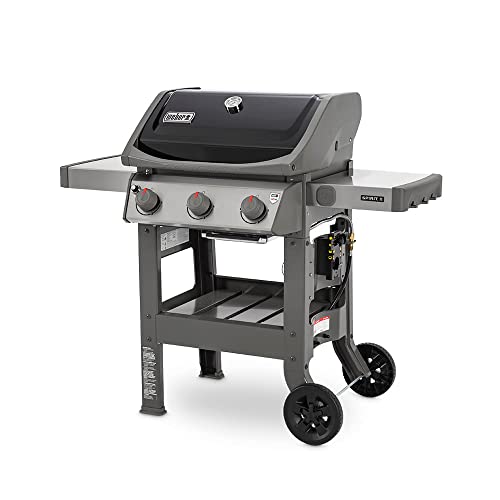
- Best small-patio cart grill: Weber Spirit II E-310 Gas Grill — Check on Amazon
- Best premium compact on a stand: Weber Q3200 Liquid Propane Grill — Check on Amazon
- Best for tiny patios and storage: Weber Traveler Portable Gas Grill — Check on Amazon
- Largest grill a small patio can honestly hold: Weber Genesis E-325s Liquid Propane Gas Grill — Check on Amazon
- Best folding-shelf midsize (dealer/retail pick, no Amazon link): Napoleon Rogue 525 — see the review below
- Included as a skip pick (no link in this guide): Weber Genesis E-415 — too wide for most small patios
Read the full guide ↓
Disclosure: As an Amazon Associate, dailyhomedecorating.com earns from qualifying purchases. Links to Amazon on this page are affiliate links; they cost you nothing extra. Listing details such as price and availability change often, so check the current Amazon listing before you buy.
The best gas grill for small patios under $1500 is a study in restraint, because a small patio punishes the usual premium-grill logic. The $1500 tier normally buys width — four, five, six burners across five feet of stainless — and width is precisely what a small patio cannot spend. Every inch the grill takes is an inch the chairs, the table and the people lose, and a grill that fits on paper can still ruin the space in practice: shelves that block the door swing, a lid that opens into the railing, a cart that leaves no passing lane to the garden. So this guide inverts the usual ranking. It starts with the smallest true cart grill from a major maker, moves through the premium compacts that cook far above their size, and only then admits the one full-size Genesis that a genuinely small patio can hold — with the tape-measure math to prove whether yours is that patio. Two larger grills appear without links as honest boundary markers: one whose folding shelves make it a maybe, and one that is simply too wide, included so you can stop wondering.
The good news hidden in the constraint: small-patio grilling at this budget is not a compromise category. The picks below carry cast-iron grates, multi-burner zoning and decade-grade parts support in footprints between a folding cart and a 52-inch cart grill, and they leave most of the $1500 unspent — money a small patio converts, dollar for dollar, into the shade, seating and storage that make the space work. Read the footprint section before the reviews; on a small patio, the tape measure is the first reviewer.
In this guide
Quick Picks: best gas grill for small patios under $1500
| Pick | Best for | Burners | Primary cooking area | Link |
|---|---|---|---|---|
| Weber Spirit II E-310 | Best small-patio cart grill | 3 | 424 sq in | Check on Amazon |
| Weber Q3200 | Premium compact on a stand | 2 | 393 sq in | Check on Amazon |
| Weber Traveler | Tiny patios; folds to storage | 1 | 320 sq in | Check on Amazon |
| Weber Genesis E-325s | Largest honest fit — measure first | 3 + sear zone | 513 sq in | Check on Amazon |
| Napoleon Rogue 525 | Folding shelves shrink storage width | 4 | About 525 sq in | Prose-only — no verified Amazon listing captured |
| Weber Genesis E-415 | Skip pick for most small patios | 4 | 646 sq in | Prose-only in this guide — see why |
The short version: most small patios should buy the Spirit II E-310 — three burners, real zoning, the narrowest full cart in this series. Patios tighter than that, or cooks who value a tidy stand over a cart, should buy the Q3200. Patios that double as walkways should buy the Traveler and store it folded. And the minority of small patios with a genuine five-foot wall and clearance to spare may buy the E-325s — after measuring, twice.
How we chose these small-patio gas grills
Footprint was the first filter and it was applied in working dimensions, not parked ones: a grill’s real claim on a patio is its width with shelves up, its depth with the lid open and the cook standing at it, and the clearance its manual requires from walls and railings. Models earn their place here by shrinking one of those numbers — folding shelves, folding tables, a folding cart, or simply a narrower cart — without surrendering cast-iron grates or burner zoning. Cooking capacity was then judged per household, not per party: a small patio’s grill feeds two to six, and every linked pick does that well.
Verification followed the series rule: linked picks have a verified ASIN and a price sighting for that exact model under the $1500 ceiling. The Napoleon Rogue 525 could not be verified to that standard on Amazon and is prose-only. The Genesis E-415 is prose-only here by editorial choice — its listing is verified in our base guide — because on a small patio it is a cautionary example, not a recommendation. Recall checks found no open recall on the grill itself for any pick in this guide.
Heat behavior at close quarters also entered the scoring. On a small patio the cook and the guests are always near the grill, so we favored models whose lids and fireboxes radiate less stray heat to the sides, whose controls stay readable at arm’s length, and whose grease systems do not drip toward the seating side. A grill that throws its heat upward through the food rather than outward into the room is not just more efficient here — it is the difference between a patio that gathers around the cooking and one that retreats from it. The cast-aluminum Q design and the enclosed Genesis and Spirit fireboxes all behave well in this respect; thin-walled budget carts, whatever their width, do not, which is one more reason this guide’s honest picks are premium compacts rather than cheap full-size grills squeezed into small places.
One more criterion mattered here and nowhere else in the series: stored appearance. On a small patio the grill is always in the room, visible from the chairs and often from indoors. Enclosed tanks, tidy covers and carts that tuck flat against a wall scored accordingly — a small patio has no “behind the grill” to hide a mess in.
The 6 best gas grills for small patios under $1500, reviewed
1. Weber Spirit II E-310 — best small-patio cart grill
Who it suits: small-patio households of two to six who want a permanent, full-featured grill — three burners, real indirect cooking, a warming rack — in the least space a true cart grill can occupy.
At about 52 inches wide with fixed shelves, the Spirit II E-310 is the narrowest mainstream three-burner cart in this series of guides, and its specification is anything but mini: 32,000 BTU across three stainless burners, 424 square inches of primary cooking area and 529 in total, porcelain-enameled cast-iron grates, and Weber’s GS4 ignition, flavorizer bars and front-access grease tray. The three-burner layout is the point for a small patio: it gives a genuine indirect zone for roasting and a hot zone for searing in a footprint only modestly larger than two-burner rivals, so the patio keeps a grill that cooks like the household’s main appliance rather than its camping spare. The open cart keeps weight down and tank swaps easy, and the whole grill rolls on two large wheels for the seasonal shuffle between wall and cooking position.
Pros: three-burner zoning in a 52-inch cart; cast-iron grates and GS4 reliability; front-pull grease tray that services without moving the grill — vital when the grill lives against a wall; parts and covers everywhere; a price historically far below this guide’s ceiling.
Honest limitation: the side shelves do not fold, so 52 inches is the permanent claim, and on a patio under about eight feet wide that claim must be planned around the door swing and the seating. The open cart also shows the tank and collects patio dust, and there is no enclosed storage for tools — a small deck box, linked in the how-to-choose section, is the standard companion purchase.
Choose it if your patio fits a 52-inch cart with working room. Skip it if every inch is contested — the Q3200 and Traveler shrink further. Check on Amazon
2. Weber Q3200 — best premium compact on a stand
Who it suits: patio cooks who want the tidiest possible permanent setup — a grill that reads as furniture, hides its tank, and cooks for four without apology.
The Q3200 pairs two burners (21,700 BTU) and 393 square inches of split porcelain-enameled cast-iron grate with a stationary stand that screens the tank behind a panel, folding side tables that drop when the patio needs the width back, a lid thermometer and electronic ignition. Its cast-aluminum body holds heat with an efficiency that makes the modest BTU figure misleading: this grill roasts whole chickens and sears steaks at a level guests do not associate with its size. For a small patio, the stand format has a subtle advantage over a cart — no cabinet doors to swing, no cart corners to catch chairs, and a visual lightness that suits a designed space. The split grates also accept Weber’s griddle insert on one side, giving a small patio a grill-and-griddle station in one footprint.
Pros: premium cooking in a stand footprint; folding tables return width to the patio; tank hidden; griddle-ready split grates; the long-running Q line means every accessory and part is easy to find.
Honest limitation: 393 square inches is a hard ceiling for entertaining — six is a batch-cooking exercise, eight is a project. The stand is stationary rather than rolling, so repositioning for seasons is a two-person lift. And the current Amazon listing for this model has shown intermittent availability; verify stock and configuration before planning the patio around it.
Choose it if tidy and compact outrank maximum capacity. Skip it if you entertain six-plus often — the Spirit II’s third burner and larger grate will matter more than the saved inches. Check on Amazon
3. Weber Traveler — best for tiny patios and shared space
Who it suits: the smallest patios, patios that double as the path to the garden, and anyone whose outdoor space must return to empty between cooks.
The Traveler’s answer to a small patio is to not be on it most of the time. Its scissor cart folds flat in one motion, so the grill stores upright in a corner, a closet or a storage box, and deploys in under a minute when cooking starts. On the patio it occupies a modest footprint — one burner, 13,000 BTU, 320 square inches of porcelain-enameled cast-iron grate — and cooks with a conviction that embarrasses larger cheap grills: burgers, chicken pieces, sausages and vegetables for four come off with real sear marks and real flavor. Fuel flexibility is a small-patio virtue too: 1-pound canisters for everyday use keep a full-size tank off a tight patio entirely, while the optional adapter hose allows a standard tank when space and rules permit.
Pros: zero permanent footprint — the only pick that fully returns the patio; fast deployment; canister fuel avoids tank storage; cast-iron grate performance well above portable norms; doubles as the picnic and tailgate grill.
Honest limitation: one burner means one zone, managed by moving food to the edges; the low lid limits tall items like beer-can chicken; and at about 49 pounds it is a short carry, not a light one. Per-cook cost on canisters exceeds tank propane, so frequent cooks should plan the adapter-and-tank route for home use where permitted.
Choose it if your patio is tiny, shared or multi-purpose. Skip it if you have room for a permanent grill and cook most nights — the Spirit II’s zoning will spoil you. Check on Amazon
4. Weber Genesis E-325s — the largest grill a small patio can honestly hold
Who it suits: small patios with one genuinely available wall — roughly five feet of width plus working clearance — and cooks who refuse to compromise on sear performance or build life.
Let the math lead. The E-325s is a three-burner Genesis: 39,000 BTU plus a dedicated sear zone, 513 square inches of primary grate, an expandable top grate to 787 total, porcelain-enameled cast-iron grates, an enclosed cart with storage, and the line’s long warranty and parts depth. It is also approximately five feet wide on its shelves and needs the manual’s clearance behind and beside it, plus a cook’s standing room in front. On a patio of, say, ten by twelve feet with the grill against the long wall, that is a workable station that still seats four to six. On a patio of seven by nine, it is the patio’s only feature. Both statements are in this review because the difference between them is your tape measure, not the grill.
Pros: full Genesis cooking — sear zone, even heat, expandable second level — for patios that pass the measurement test; enclosed cart keeps a small space tidy; a decade-scale ownership proposition.
Honest limitation: no side burner, and no forgiveness on size: if the measurement is close, it is too big, because the working footprint includes you. Assembly is the full Genesis project, and on a small patio you will assemble it where it stands or not at all.
Choose it if the tape measure says yes with room to spare. Skip it if the tape measure requires optimism — the Spirit II gives up little and fits honestly. Check on Amazon
5. Napoleon Rogue 525 — folding shelves shrink a four-burner (prose-only)
Who it suits: small-patio cooks who need four burners for family cooking but can only store a grill that tucks narrowly against the wall between cooks.
The Rogue 525’s patio trick is mechanical: both side shelves fold down, cutting the stored width dramatically compared with fixed-shelf four-burners, so the grill cooks like a midsize and stores like a compact. The cooking specification is fully midsize — four burners at 48,000 BTU, about 525 square inches of main area (711 total), porcelain-coated cast-iron WAVE grids and dual-level sear plates — and Napoleon’s warranty on recent model years runs long. Parked with shelves down and a cover on, it is one of the least intrusive four-burners a patio can host.
Pros: four-burner capacity with a genuinely smaller stored footprint; folding shelves on both sides; strong warranty; even-heating sear plates.
Honest limitation: no verified Amazon ASIN and price sighting could be captured for this model to this series’ standard, so it is reviewed without a link — expect a dealer or general retailer purchase, and confirm the price against the ceiling there. Shelves-down storage also means shelves-up cooking still claims full midsize width while you cook; the saving is in storage, not in operation.
Choose it if storage width is your binding constraint and four burners are your requirement. Skip it if you want Amazon delivery and maximum parts availability — the Spirit II is the safer small-patio buy.
6. Weber Genesis E-415 — the skip pick (prose-only)
Who it suits: almost no small patios — and it appears here because it tops general “under $1500” lists, so small-patio shoppers meet it first and deserve a direct answer.
The direct answer: the E-415 is an excellent grill — our top four-burner in the base guide — whose virtues are all purchased with width. At roughly five and a half feet across with deep shelves, plus required clearances, plus the cook’s standing room, it consumes the working area of a typical small patio and leaves the seating to negotiate with the leftovers. Its 646 square inches also answer a question small patios are not asking: the households that fit a small patio rarely cook for ten. Buying it for a small patio produces the familiar sequence — a season of squeezing past it, then a cover that never comes off, then a listing on a resale site. The Spirit II and Q3200 exist to prevent exactly that story, at half the footprint and with money left for the patio itself.
Pros: as a grill, nearly everything. Honest limitation: as a small-patio grill, its width and depth are disqualifying in the typical case.
Choose it if your “small patio” is actually a generous terrace with a measured five-plus feet of free wall and clearance — in which case read our base guide and buy it there. Skip it if the patio is genuinely small; that is the entire point of this guide.
Comparison table
| Grill | Burners | Primary area | How it saves space | Watch out for |
|---|---|---|---|---|
| Weber Spirit II E-310 | 3 | 424 sq in | Narrowest full cart (about 52 in) | Fixed shelves; open cart |
| Weber Q3200 | 2 | 393 sq in | Stand format; folding tables | Capacity ceiling; stationary stand |
| Weber Traveler | 1 | 320 sq in | Folds flat; stores off the patio | Single zone; low lid |
| Weber Genesis E-325s | 3 + sear | 513 sq in | Three-burner Genesis footprint | Measure honestly; no side burner |
| Napoleon Rogue 525 | 4 | About 525 sq in | Both shelves fold for storage | No verified Amazon listing |
| Weber Genesis E-415 | 4 | 646 sq in | It doesn’t — skip pick | Width and clearance demands |
The table’s fourth column is the one to shop by: every honest small-patio grill saves space by a named mechanism, and a grill without one is just a large grill in a small place. Readers comparing budgets within the same footprints should see our Best Gas Grill For Small Patios Under $700 guide, where several of these shapes appear at lower tiers.
How to choose a gas grill for a small patio
Measure three footprints, not one. Parked: the grill against its wall, shelves in their stored state. Working: shelves up, lid open, you standing at the controls with a tray in hand. Social: the working footprint plus the chairs and table in their places, with a walking lane preserved. A grill must pass all three. Most small-patio mistakes pass the first measurement and fail the third, which is why the failure is discovered at the first dinner party rather than at delivery.
Count the door and the lid. Two swings rule a small patio: the house door’s swing, which a grill shelf must never block, and the grill lid’s arc, which needs its depth plus clearance from railings and siding per the manual. The Q3200’s stand and the Traveler’s low profile are kind to both; a deep cart with a tall lid is where small patios get into trouble.
Prefer zoning over area. On a small patio you cook for two to six, and what those cooks need is a hot side and a warm side — two burners minimum, three ideally — not a banquet surface. The Spirit II’s three burners in 52 inches deliver more useful cooking than a cheap five-burner in 60, in less space, which is the whole thesis of this guide.
Plan storage as part of the patio. Tools, the brush, the cover and the spare canisters need a home that is not the grill’s shelves. A slim deck box — see our Best Deck Box For Small Patios Under $1500 guide — doubles as a side table and keeps the patio’s one appliance from becoming its one clutter magnet. Seating that stacks or folds, like the chairs in our Best Adirondack Chair For Small Patios Under $1500 guide, returns the floor when the grill needs the room.
Spend the savings on the room. Every linked pick here leaves a large share of the $1500 ceiling unspent. On a small patio that is not leftover money; it is the shade sail or umbrella, the outdoor rug where permitted, the string of evenings the space gets used. A small patio with a right-sized grill and finished surroundings beats a small patio dominated by a flagship grill on every measure except a specification sheet.
Common mistakes when buying a grill for a small patio
Measuring the grill and forgetting the cook. The working footprint includes a person, a tray and an open lid. If the patio fits the grill but not the grilling, it does not fit.
Trusting the headline width. Manufacturer widths are usually quoted shelves-up, but depth with the lid open and the clearance behind the grill are separate numbers — and on a patio against a railing, the sum is what matters. Pull all three figures from the manual before ordering.
Blocking the only path. A grill parked across the patio’s walking lane turns every garden trip into an obstacle negotiation and every hot tray carry into a risk. Keep the lane; shrink the grill.
Skipping the cover because the patio is covered. A roof stops rain, not dust, pollen, grease film or the drip line from the eaves. Small patios show dirt faster than big ones because everything is close; the cover is what keeps the room’s largest object presentable.
Assuming a fire pit will be easier. Small-patio shoppers sometimes pivot to a fire pit for ambiance and discover stricter rules and worse clearances than any grill. Our Best Fire Pit For Small Patios Under $1500 guide covers that category honestly — read it before assuming the pivot is simpler.
Final recommendation
Buy the Weber Spirit II E-310 if your small patio fits a 52-inch cart with working room: it is the most complete grill per inch in this guide, with three-burner zoning and a decade of parts behind it. Buy the Weber Q3200 if tidy matters more than capacity, and the Weber Traveler if the patio must empty between cooks. Reserve the E-325s for patios that pass the measurement test with room to spare — and let the rest of the budget finish the patio, which is what the space was for.
Small-patio care: keeping a close-quarters grill clean
Proximity changes maintenance from a chore into a courtesy. A grill three feet from the seating must not smoke like a chimney or smell like last month’s grease: burn off after cooks, brush the grates warm, and empty the grease tray on a schedule rather than a symptom — on the Spirit II the tray pulls from the front, so the job takes seconds without moving the grill from its wall. Wipe the exterior as you would furniture, because on a small patio it is furniture: stainless and enamel finishes show pollen and fingerprints at conversational distance. Store the cover dry, keep canisters and tools in the deck box, and do a monthly two-minute check of the hose and connections, which live closer to seating and foot traffic here than in any other setting in this series. A small patio rewards the tidy grill and exposes the neglected one; the picks above were chosen to make tidy easy.
The small patio as a room: layout patterns that work
Three layouts cover most small patios, and each favors a different pick. The wall layout puts the grill against the long wall, seating opposite, and the walking lane along the short edge; it suits the Spirit II and the Q3200, keeps smoke off the diners when the breeze cooperates, and leaves the patio’s center free for a low table. The corner layout tucks the grill diagonally or squarely into the least useful corner — the one the door swing and the view both ignore — and suits the E-325s on larger small patios, provided the corner still gives the lid its clearance and the cook a stance that is not inside a flower bed. The empty layout stores the grill off the patio entirely — the Traveler’s pattern — and lets the space be a reading patio on weekdays and a grill patio on Saturdays; for patios under about sixty square feet, it is frequently the only layout in which both uses are genuinely comfortable.
Whichever layout you choose, two details decide daily satisfaction. The first is a landing surface at the grill: a folding side table, the deck box’s lid, or the grill’s own shelf kept religiously clear, because a cook holding a raw tray with nowhere to set it will set it on a chair, and the evening declines from there. The second is light: a small patio’s grill corner is usually its darkest, and a warm lamp or string lights over the station — placed clear of the grill’s heat — turn night cooking from squinting into pleasure. Neither detail costs much; both are what the unspent premium budget is for.
Cooking for six on a small grill: the batch playbook
The fear that sells oversized grills is the six-person dinner. On the picks in this guide it is a solved problem, and the solution is sequencing rather than area. Start with what holds: sausages, chicken thighs and corn cook first and rest on the warming rack or the cool zone under a tent of foil, losing nothing in twenty minutes. Follow with what does not hold — burgers, steaks, fish — in one confident batch that goes straight to the table. Vegetables split the difference: peppers, onions and zucchini can char early and serve at room temperature as part of the spread, a trick Mediterranean cooks have used on small grills for generations. The Spirit II runs this playbook with a true indirect zone to hold in; the Q3200 runs it with its upper area and a warm oven as the auxiliary holder; even the Traveler runs a four-person version with its edges as the holding zone. What none of them can do is six individual steaks to six temperatures simultaneously — and neither, honestly, can most cooks on any grill. Sequence is not a compromise; it is how small-grill cooking has always worked, and the food is better for the cook’s undivided attention on one batch at a time.
Winter, rain and storage on a small patio
A small patio offers no hidden corner, so storage decisions are aesthetic decisions. The covered grill against the wall is the winter picture for the Spirit II, Q3200 and E-325s: choose a fitted cover in a color that suits the space, keep it clean, and the stored grill reads as intentional rather than abandoned. The Traveler wins the season outright by leaving — folded in a closet, it returns the whole patio to winter use and skips the freeze-thaw entirely. For tank storage, the rules do not shrink with the patio: tanks stay outdoors, upright, ventilated, and never in a sealed box or an indoor closet; canisters for the Traveler store in a ventilated spot away from heat. Rain discipline matters in proportion to proximity: a grill two steps from the door gets wiped, checked and covered as part of coming inside, which is why small-patio grills, paradoxically, often outlast their backyard cousins — they are simply looked at, and therefore looked after, every day.
Rules on small patios: the townhouse and condo edition
Many small patios belong to townhouses and condos rather than detached houses, and that ownership shape brings rules a detached-house patio never meets. HOA documents commonly regulate grill placement, fuel type and even storage appearance on patios visible from common areas; some communities permit grills only on ground-level patios and require them kept a set distance from the structure, and some restrict tank size. None of this is a reason to abandon the purchase — ground-level townhouse patios are exactly where the Spirit II and Q3200 shine — but it is a reason to read the community documents before the grill arrives, to keep the grill’s station visibly tidy (a fitted cover does quiet diplomatic work), and to store the tank and tools the way the rules describe rather than the way the patio tempts. Our apartments guide in this series covers the rule-checking process in depth, and its discipline applies word for word to the condo patio: permission first, purchase second, and everything in writing when the answer is yes.
What to do with the leftover budget: a worked allocation
Because every honest pick in this guide sits well below the ceiling, the allocation question deserves a concrete answer. A sensible small-patio budget runs: the grill first; then the fitted cover and a spare grate or griddle insert; then the storage that keeps the patio clear — a slim deck box; then comfort — shade for the seating, a small table, lighting over the grill station; and finally a reserve for the consumables of the first two seasons, from canisters or a second tank to the replacement igniter that will eventually be wanted on a Sunday evening. Readers are often surprised that the reserve matters, but small-patio grilling is frequent grilling — the grill is right there, visible from the kitchen — and frequent use is precisely the pattern that rewards having the spare part on the shelf. What the allocation should not do is creep back into grill size: the moment leftover money starts arguing for a wider grill, return to the three footprints in the how-to-choose section and let the tape measure settle the argument again.
Choosing between the three honest sizes
Strip the guide to its skeleton and three sizes remain, each answering a different patio. The folding size — the Traveler — answers the patio that is also something else: a walkway, a yoga corner, a shared terrace. Its owners grill as often as anyone; they simply refuse to let the appliance own the room, and they gain a portable grill for every other part of life as a dividend. The stand-and-cart size — the Q3200 and the Spirit II — answers the patio that is a dedicated outdoor room for two to six people: the grill is permanent, the cooking is complete, and the room still seats its household in comfort. This is where most small-patio buyers should land, and the choice between the two is temperament: the Q3200 for tidiness and griddle flexibility, the Spirit II for the third burner and the warming rack. The full-Genesis size — the E-325s — answers the patio that is small only by the standards of suburban yards: a townhouse terrace, a wide condo patio, a courtyard corner with a true five feet to give. Its owners are not compromising at all; they are simply the minority whose tape measures said yes.
If your budget is smaller than this guide’s ceiling — and on a small patio it rationally should be — the same three shapes recur at lower tiers, and our Best Gas Grill For Small Patios Under $500 guide maps them at that level. The shape decision comes first and survives every budget; the tier decision is only about how much build quality, warranty depth and grate iron the shape carries. Decide the shape with the tape measure, decide the tier with the calendar — how many years this patio is home — and the purchase makes itself.
FAQ
What is the biggest grill a small patio can handle?
For most small patios, a three-burner cart around 52 inches wide — the Spirit II E-310 — is the practical maximum with working room. A three-burner Genesis like the E-325s fits only the larger end of “small,” and only after measuring parked, working and social footprints. Four-burner grills are almost always a mistake at this scale.
How much clearance does a gas grill need on a patio?
Follow your grill’s manual — manufacturers specify minimum distances from combustible surfaces at the sides and rear, and the grill should sit on a level, non-combustible surface with nothing overhead unless the manual allows it. Treat the manual’s figures as the floor, and add the cook’s standing room in front.
Are folding shelves worth it?
Yes, when storage width is the constraint: the Rogue 525’s folding shelves and the Q3200’s folding tables return real inches between cooks. Remember the saving applies to storage — while cooking, shelves-up width is what your patio must hold.
Can a portable grill really replace a patio grill?
For households of two to four, the Traveler comes close: real cast-iron searing, a family-size grate and zero permanent footprint. What it cannot do is multi-zone cooking or tall roasts. If most of your grilling is weeknight dinners for a small household, the trade is often worth it.
Why does a $1500 guide recommend grills that cost far less?
Because on a small patio the binding constraint is space, not money. The grills that fit the space are compact models at lower prices; the premium tier’s extra money buys width you cannot use. The right move is a right-sized grill plus the patio finished with the remainder.
Why is the Napoleon Rogue 525 not linked?
We could not verify a standard Amazon ASIN and price sighting for it to the standard this series requires, so it is reviewed as a prose-only pick sold through dealers and general retailers.
How do I stop a small patio from smelling like a grill?
Keep the grease system clean — tray emptied, grates burned off — because old grease, not fresh cooking, is what lingers. Cook with the lid down to direct smoke upward rather than across the seating, position the grill so the prevailing breeze carries smoke away from the chairs, and let the grill cool with the lid open before covering it. A small patio that hosts a clean grill smells like dinner for an evening and like a patio again by morning.
Is a two-burner grill enough for a family?
For a family of four that cooks in the sequenced style described in this guide, yes — the Q3200’s two burners and 393 square inches handle weeknight dinners and small gatherings comfortably. Families of five or six who cook everything at once, or who entertain often, will feel the ceiling and should take the Spirit II’s third burner as the minimum.
Should I anchor or lock a grill on a small patio?
On a private patio, a cover and the grill’s own weight are usually enough. On shared or street-visible patios, a cable lock through the cart and a stored-indoors policy for the portable picks are the sensible precautions — one more practical advantage of the Traveler, whose home is a closet rather than the patio itself. Whatever you choose, keep the tank valve closed when the grill is not in use.
What flooring should a grill sit on in a small patio?
A level, non-combustible surface — concrete, pavers or stone — is the standard answer, with the grill kept off wooden decking unless the manual explicitly permits it and a heat-resistant grill mat rated for the purpose is used as the manual directs. Keep the surface clear of leaves and stored items; on a small patio the area under and behind the grill is part of the safety system, not spare storage.
How long will a compact premium grill last?
With a cover and basic care, the Weber picks in this guide are decade-class appliances, with igniters, grates and flavorizer bars as the expected wear items along the way. Compact grills often outlast larger ones in practice, because they are easier to cover, easier to clean and — on a small patio — impossible to ignore when they need attention.
Can I use a small-patio grill through the winter?
Yes — compact grills are often the best winter grills, because the cook’s trip is short and the preheat is quick. Keep the cover discipline, clear snow and ice from the lid and the area in front of the controls, and expect slightly longer preheats and a little more propane per cook in deep cold. The Traveler has the easiest winter of all: it cooks from a doorway-adjacent spot and returns to indoor storage the same evening, which is why apartment and small-patio owners in cold climates rate it so highly.
One last test before ordering?
Tape the grill’s working footprint on the patio floor with painter’s tape, chairs and table in place, and live with the outline for a day. If the taped patio still works as a room, the grill will too.


