Where to buy
Check the latest price, availability and delivery on Amazon. Orders are placed on Amazon. We may earn a commission from qualifying purchases.
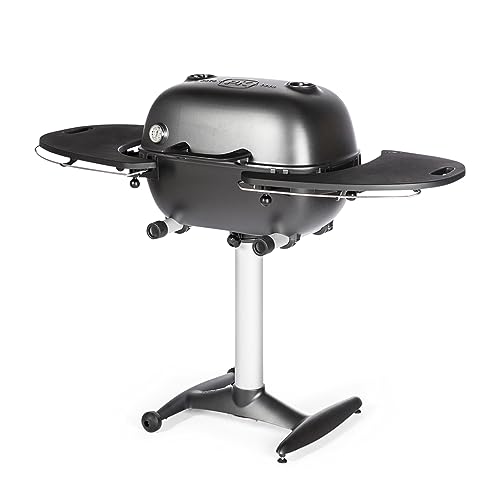
- Best overall for entertaining: PK360 Grill & Smoker (PK360-BTBX-D, Graphite) — Check on Amazon
- HALO Versa 16 Outdoor Pizza Oven — portable pizza oven, not a grill — Check on Amazon
- Traeger Tailgater 20 Portable Pellet Grill (TFB30KLF) — Check on Amazon
- Weber Traveler Portable Gas Grill — Check on Amazon
- Oklahoma Joe’s Rambler Portable Tabletop Charcoal Grill — Check on Amazon
- Big Green Egg MiniMax with Carrier — sold through authorized Big Green Egg dealers rather than a standard Amazon listing, so it is covered in prose below with no purchase link.
Disclosure: As an Amazon Associate, dailyhomedecorating.com earns from qualifying purchases. Links to Amazon on this page are affiliate links; they cost you nothing extra. Listing details such as price and availability change often, so check the current Amazon listing before you buy.
The best portable grill for outdoor entertaining under $1500 is not really a grill question — it is a hosting question. Entertaining outdoors fails in predictable ways: the cook disappears into fire management while the party happens elsewhere; the first batch of burgers is gone before the second is on; the one vegetarian option shares a grate with the brisket; the host eats standing up, last, and cold. A flagship budget fixes those failures structurally, and that is how this guide spends it: not on the largest single grate, but on a portable cooking system — a high-control main grill, a hands-off second station that runs itself, a fast grill for the opening rush, and, for the households that want it, the pizza oven (clearly labelled: not a grill) that turns guests from audience into participants. Portable matters here for a reason hosts understand: the party is not always at your house. The same system that runs your patio on Saturday runs the rented pavilion, the lake house and the tailgate, because every piece of it was built to move.
The cast of this roundup is chosen for roles, the way you would cast a kitchen brigade. The PK360 is the executive chef: a cast-aluminum charcoal capsule with 360 square inches of stainless grate and the finest two-zone control in portable cooking, for the protein that anchors the meal. The Traeger Tailgater is the tireless sous-chef: a digitally controlled pellet grill that holds a long cook — ribs, a shoulder, trays of chicken — at a set temperature for hours while its owner holds a conversation instead. The Weber Traveler is the line cook: folding, fast, gas-fired, built for the burger-and-sausage rush when twelve people arrive hungry at once. The Oklahoma Joe’s Rambler is the searing station: a heavy tabletop charcoal grill with cast-iron grates for the steaks and skewers that want violent heat. The HALO Versa 16 is the entertainment itself: a rotating-stone pizza oven that guests operate, argue over and remember. And the Big Green Egg MiniMax — dealer-sold, covered here without a link — is the showpiece kamado, the small ceramic theatre piece that sears two perfect steaks at a time and gives the host a story to tell while doing it.
Not every household needs every role filled. A couple that hosts six friends twice a month may need only the PK360 and discipline. A family that hosts thirty twice a summer needs the brigade. This guide reviews each machine in its role, then shows the pairings and the party timeline that make the system work. For the same category judged purely as travel gear, see Best Portable Grill Under $1500; for a smaller entertaining budget, Best Portable Grill For Outdoor Entertaining Under $700 scales the same thinking down.
In this guide
Quick Picks: The Best Portable Grill for Outdoor Entertaining Under $1500 at a Glance
| Pick | Role | Capacity signal | Best for |
|---|---|---|---|
| PK360 Grill & Smoker | Main grill | 360 sq in, two-zone | Best overall — the anchor protein, grilled or smoked |
| HALO Versa 16 | Pizza station (not a grill) | 16-inch rotating stone | Guest-participation pizza nights |
| Traeger Tailgater 20 | Hands-off second station | 300 sq in, set-and-forget | Long cooks that run themselves during the party |
| Weber Traveler | Fast grill | 320 sq in, gas | The opening rush — burgers, sausages, corn |
| Oklahoma Joe’s Rambler | Searing station | 218 sq in, cast-iron grates | Steaks and skewers at serious heat |
| Big Green Egg MiniMax | Showpiece kamado | 133 sq in | Small-batch theatre — dealer-sold, prose-only |
How These Picks Were Chosen
Entertaining imposed its own filters on top of the usual ones. The usual ones first: every pick is a current, verified manufacturer model with specifications taken from the manufacturer or the Amazon listing itself; every Amazon link was cross-checked against Amazon’s catalogue data — the HALO Versa 16 and the Oklahoma Joe’s Rambler titles were confirmed through the Amazon Creators API, and the remaining linked picks were verified against their live Amazon listings after the API run hit a rate limit, as this article’s source notes record. The Big Green Egg MiniMax is prose-only because it is dealer-sold and no stable manufacturer-backed Amazon listing could be verified. And every pick passed a U.S. Consumer Product Safety Commission recall screen — a screen with real teeth in this category in 2026, when a popular 3-in-1 gas grill was recalled for a shattering glass hazard and wire-bristle brushes were recalled in the millions; nothing under recall is named as a pick anywhere in this guide.
The entertaining filters were about flow. Throughput: how much food per hour can this machine actually produce, in batches a host can manage? Attention cost: how many minutes per hour does it demand from the one person who is also hosting? Forgiveness: what happens to the food when the cook is pulled away for ten minutes by a spilled drink and a good story — does it wait gracefully, or burn? And role fit: does this machine free the other machines to do their jobs? A grill can be excellent and still fail these tests — a superb solo kamado is a bottleneck at a party of twenty — which is why this guide recommends systems and pairings, not just products, and why the final recommendation is a configuration rather than a single name.
The Six Picks in Detail
1. PK360 Grill & Smoker — Best Overall for Entertaining
Who it suits: the host who cooks the centrepiece. If your parties have a main event — a reverse-seared tri-tip, a smoked brisket sliced to order, a whole side of salmon — the PK360 is the stage it deserves, and its two-zone control is the difference between a host who manages the fire and a host who merely visits it.
The capsule is thick cast aluminum, which holds heat evenly and cannot rust, and its four vents give the finest airflow control in portable grilling: bank the coals, set the vents, and the 360-square-inch stainless grate becomes two appliances — a searing zone and a holding-roasting zone — side by side. That second zone is the entertaining feature nobody advertises: finished food holds at serving temperature on the cool side while the next batch sears, which smooths the batch problem that ruins party timing. The lid thermometer reads where the food is, the shelves give the host landing space, and the capsule lifts off its stand when the party moves to someone else’s yard. It asks for charcoal skills and charcoal time; in exchange it produces the food guests talk about on the drive home.
Pros:
- Best two-zone control in portable cooking — sear and hold simultaneously.
- 360 sq in stainless grate: the largest single cooking surface here.
- Cast aluminum build shrugs off seasons of outdoor party duty.
- Grills and smokes at competition level; capsule travels when the party does.
Honest limitation: it is one grate, however good — at twenty guests it needs a partner station, which is why this guide pairs it. Charcoal timing also means the fire is lit an hour before the first guest, not when they arrive.
Choose it if your entertaining has a centrepiece protein and you cook over charcoal. Skip it as a solo act if your parties are large and your attention is the scarcest resource — pair it with the Tailgater, or start there.
2. HALO Versa 16 — The Pizza Station (Pizza Oven, Not a Grill)
Who it suits: the host who has noticed that the best parties gather around an activity. The Versa 16 is labelled here, in the buy box and in the table, as what it is — a portable pizza oven, not a grill — and its entertaining value is precisely that it is not another grill: it is the station guests run themselves.
A 16-inch rotating stone under a patented dual-burner propane system cooks large pizzas evenly in about five minutes at temperature, with the stone doing the turning that defeats beginners on static-stone ovens. The format scales socially in a way grills cannot: dough and toppings laid out buffet-style, each guest building their own, a five-minute cook, a two-minute rest, and the oven is never the bottleneck a single grill becomes. The hinged lid makes launching forgiving, the unit sits on a table or cart at the edge of the party rather than in a cook’s corner, and it travels to the venues where parties migrate. Its honest limits: it does pizza and high-heat flatbread-and-skillet work superbly and nothing else, it wants a level heat-resistant station, and dough logistics — proofing, stretching, a cool place for supplies — are a host’s homework the oven cannot do for you.
Pros:
- Rotating stone makes excellent pizza achievable by every guest, not just the host.
- Five-minute cooks keep a pizza line moving at party pace.
- Turns feeding people into the entertainment itself — the highest social return in this guide.
- Portable, lidded, and available with a fitted cover for transport between venues.
Honest limitation: a specialist. If your parties are steak-and-bourbon affairs, this is an expensive ornament; if they are pizza nights, it is the main event and the grill is the support act.
Choose it if pizza is your party’s native language. Skip it if you entertain rarely — rent the experience at a restaurant and put the budget into the grill pairing instead.
3. Traeger Tailgater 20 — The Second Station That Runs Itself
Who it suits: every host, honestly — but especially the solo host, the one with no co-cook, whose party succeeds only if one appliance can be trusted alone for four hours. The Tailgater is the highest-leverage second purchase in this guide.
Three hundred square inches, an 8-pound hopper, a Digital Arc controller holding set temperature up to 450°F, a meat probe reporting doneness, and a Keep Warm mode that holds finished food safely while the party finds its way to the table: the specification sheet reads like a hosting checklist because it is one. Ribs go on at noon and need nothing but a glance; a shoulder cooks through the entire afternoon of setup; trays of chicken thighs hold at temperature while the fast grill handles the rush. It needs an outlet and dry pellets, it will not sear like charcoal, and at 62 pounds on folding legs it moves between venues with a two-hand lift. What it returns is the scarcest commodity at any party: the host’s presence.
Pros:
- Set-and-forget digital control — the only pick that hosts while you host.
- 300 sq in plus probe and Keep Warm: built for party timing.
- Wood-fired flavour for the long cook without fire tending.
- Folding legs make it a genuine second station, at home or away.
Honest limitation: power-dependent and sear-limited. At an off-grid venue it needs an inverter plan, and its food still benefits from a finishing pass over real fire — which is what its partner station is for.
Choose it if you host alone or your parties run long. Skip it if your entertaining is a single fast grill session — the Traveler covers that with change.
4. Weber Traveler — The Opening-Rush Grill
Who it suits: the host whose parties start hungry. The Traveler’s job in the brigade is the first forty minutes: burgers, sausages, corn and halloumi for a crowd that arrived together, produced fast on gas, while the centrepiece finishes elsewhere.
The numbers suit the role: 320 square inches of porcelain-enamelled cast-iron grate over a 13,000 BTU burner, instant ignition, no chimney to wait for, and a folding cart that lets the whole station appear from the garage in two minutes and disappear before dessert. A single burner means the two-zone trick is a hot side and a gentler side — enough for the rush, where the food is forgiving and the queue is not. At home it runs a full propane tank through an adapter hose; at the pavilion it runs on disposable cylinders. Its party weakness is flavour neutrality — gas tastes like the food, not the fire — which is why in this guide it is a specialist in volume and speed, supporting charcoal and pellet partners that bring the smoke.
Pros:
- Fastest station to deploy and to first food — the rush-hour specialist.
- 320 sq in of cast-iron grate handles a full batch for a crowd.
- Folds flat for storage and transport between venues.
- Weber build and parts support under party-duty wear.
Honest limitation: one burner, no smoke, and a cart that wants a dry home. As a party’s only grill it is competent; as its fast station it is superb — buy it for the role it is cast in.
Choose it if your parties start with a hungry rush. Skip it if your gatherings build slowly around one long cook — the Tailgater’s patience fits better.
5. Oklahoma Joe’s Rambler — The Searing Station
Who it suits: the host whose menu runs on char: steaks finished to order, skewers, wings with crisped skin, the high-heat work that a crowded main grill does badly. The Rambler is the tabletop heavyweight you light for the twenty minutes when everything needs fire at once.
Oklahoma Joe’s built the Rambler from heavy-duty steel with thick cast-iron grates over 218 square inches, a height-adjustable charcoal tray that moves the fire closer or further from the food — the tabletop equivalent of a throttle — plus air intakes, a damper, a temperature gauge and a removable ash pan. In party service it sits on a sturdy table or stand at the edge of the cooking zone as the dedicated hot station: the main grill holds its two zones for the centrepiece and the sides, and the Rambler takes the searing queue. It is a dense, serious piece of steel — plan its perch and its lift — and like all charcoal it wants its cool-down respected before it moves. For hosts who already own a main grill, it is also the most affordable way in this guide to add a genuine second fire.
Pros:
- Cast-iron grates and an adjustable charcoal tray deliver real searing control.
- Heavy steel construction at a tabletop footprint — a true second fire.
- Air intake and damper give it more temperature range than most tabletops.
- Removable ash pan keeps a busy station tidy.
Honest limitation: heavy for its size and charcoal-paced — it is a station, not a system. It needs a genuinely sturdy, heat-resistant surface; a plastic folding table is not one.
Choose it if your menus are sear-led and your main grill is spoken for. Skip it if you are buying your first and only grill — start with the PK360 or the Traveler.
6. Big Green Egg MiniMax — The Showpiece Kamado (Prose-Only)
Who it suits: the host of small, serious dinners. The MiniMax is not a crowd machine and this guide will not pretend otherwise: it is the two-steak theatre, the small ceramic stage on which the host sears the main event for four people who appreciate watching it happen. Big Green Egg sells through authorized dealers, and no stable manufacturer-backed Amazon listing could be verified for it, so it appears here without a purchase link.
Its credentials for the role are genuine: a 13-inch grid with 133 square inches inside the original kamado brand’s travel body, the included carrier, and the full Egg temperature range — from low smokes to the fierce heat that makes a steakhouse crust — in a package under 20 inches tall that can sit on a sturdy outdoor table as the party’s focal point. Big Green Egg rates it for a 12-pound turkey, four burgers, a vertical chicken, two steaks or a rack of ribs; for entertaining, read that as a main course for two to four, cooked as performance. The dealer channel suits the purchase: you will see it, lift it (roughly 76 pounds in the carrier), and register its lifetime ceramic warranty in person.
Pros:
- Unmatched small-batch theatre and searing heat in a portable ceramic.
- Carrier included; designed to travel between homes and venues.
- Dealer advice and warranty registration; deep accessory ecosystem.
- The intimate-dinner counterpart to the crowd machines above.
Honest limitation: capacity is the story — this is not feeding twelve. Dealer pricing varies, and the brand’s accessories spend the rest of a budget quickly.
Choose it if your entertaining is small and serious. Skip it if your guest list runs to double digits — your money belongs in the PK360-plus-Tailgater pairing.
Prose-only pick: no Amazon link, by design. Buy through an authorized Big Green Egg dealer.
Comparison Table
| Product | Fuel | Cooking area | Attention cost | Link |
|---|---|---|---|---|
| PK360 Grill & Smoker | Charcoal | 360 sq in | Medium — rewards a visiting cook | Check on Amazon |
| HALO Versa 16 (pizza oven, not a grill) | Propane | 16-in stone | Low — guests run it | Check on Amazon |
| Traeger Tailgater 20 | Pellets + electricity | 300 sq in | Lowest — set and forget | Check on Amazon |
| Weber Traveler | Propane | 320 sq in | Medium — fast batches | Check on Amazon |
| Oklahoma Joe’s Rambler | Charcoal | 218 sq in | High for short bursts — searing | Check on Amazon |
| Big Green Egg MiniMax | Charcoal | 133 sq in | Medium — small-batch focus | Dealer-sold — no link |
How to Choose the Best Portable Grill for Outdoor Entertaining Under $1500
Start with your real guest count and your real menu, in writing. The count sets the throughput you need: as a working rule, a single 300-plus-square-inch station serves about eight grilled portions per batch comfortably, and parties above twelve stop being a one-grill problem no matter the budget. The menu sets the brigade: a centrepiece protein wants the PK360’s two zones; a long, social afternoon wants the Tailgater’s patience; a burger-led family party wants the Traveler’s speed; a pizza tradition wants the Versa 16; a steak-led small dinner wants the Rambler’s fire or the MiniMax’s theatre. Then count the cooks. One host means automation is worth more than grate area — the Tailgater rises. Two cooks mean parallel charcoal stations become practical. Finally, price the system, not the grill: stands and a sturdy table for the tabletop picks, covers for everything, a second set of tools so stations do not share tongs, and the serving kit in Best Grill Accessories For Outdoor Entertaining Under $1500. The households that entertain best at this tier are the ones that spent the budget across the evening, not on a single badge.
A Party Timeline: How the System Runs an Evening
Five hours out, the Tailgater takes the long cook — a shoulder or ribs — and is not thought about again except with pleasure. Ninety minutes out, the PK360’s chimney is lit; an hour out, the centrepiece goes on and the grill settles into its two zones. Thirty minutes out, the Traveler unfolds for the opening rush and the Rambler’s charcoal is lit if steaks or skewers are on the menu; the Versa 16’s stone starts heating if pizza is the first course or the children’s dinner. Guests arrive to food already happening — the single strongest signal a party can send. Through the evening, finished food holds on the PK360’s cool zone and in the Tailgater’s Keep Warm; batches flow from fast stations to the table without the host vanishing. Dessert, if the party is ambitious, is grilled fruit over the Rambler’s dying coals or a skillet cookie in the Versa 16 as it cools. Then the safety close: vents shut on the charcoal grills, the pellet grill run through its shutdown, gas off at the tank, and ash left exactly where it is until tomorrow — cold — before it moves to the metal can.
Fire Safety When the Yard Is Full of Guests
A party multiplies both the fire load and the distractions, so the safety setup happens before the first guest, not during the first flare-up. Place every station on a stable, heat-resistant surface with the manufacturer’s clearances from siding, fences, eaves and anything combustible — and then add the party margin: a marked boundary that keeps guests, children and dogs out of the cooking zone, because a portable grill at a party is a hot object at shin height in a crowd. Never cook under a canopy, in a garage or on a covered porch; every fuel here produces carbon monoxide, and party tents have killed the ventilation argument more than once. Manage grease before it manages you: drip trays emptied before the party, not during, and a metal ash can with a tight lid staged away from the house for tomorrow’s cold ash — ash stays in the closed grills overnight, because it can hold live heat for more than a day and a party’s worst headline is the bin fire at 2 a.m. Keep propane cylinders upright, outdoors and leak-checked before the event; keep a grease-rated extinguisher or a hose within reach and know that water never goes on burning grease — lid closed, fuel off, extinguisher if it grows. Clean every grate with bristle-free tools only: wire-bristle brushes have been recalled in the millions in 2026 after bristles ended up in food, and party food — cooked fast, eaten in the dark, by guests who trust you — is the last place that risk belongs. And when the party moves to a second venue, the same rules travel: the designated area at a park or pavilion, the venue’s own grill rules, and never a grill on a balcony or under a roof, at any address.
Common Mistakes Hosts Make
Buying one giant grill instead of a system. One grate, however large, makes the host a bottleneck and the menu a queue. Two complementary stations out-serve any single machine at a party.
Testing a new grill on party day. Every pick in this guide has a learning cook in it — vent behaviour, hot spots, pellet appetite. Burn that cook on a Tuesday, not in front of twelve guests.
Forgetting the vegetarians’ real estate. A corner of a grate shared with brisket is not a vegetarian option. The second station — or the Versa 16’s stone — is how everyone at the party eats the same meal.
Letting the fire schedule eat the host. If the menu needs the cook at the grill for three continuous hours, the menu is wrong for the party. Build the evening on one long hands-off cook and short fast batches, as the timeline above does.
Clearing ash at midnight. The party ends; the ash does not. Leave it sealed in the grill until it is cold tomorrow, then into the lidded metal can. More post-party fires start in bins than at grills.
Menus That Play to Each Station
A system earns its keep when the menu is written for it, so here is how experienced hosts assign dishes. The Tailgater takes anything long, fatty and forgiving: pork shoulder, ribs, whole chickens, trays of thighs, a smoked queso that becomes the party’s campfire. The PK360 takes the centrepiece and the sides that want two zones: the tri-tip or brisket flat on the indirect side, corn and peppers blistering on the hot side, a cast-iron pan of beans living in the middle distance. The Traveler takes the children’s dinner and the opening rush — burgers, dogs, sausages — plus the delicate fast work like fish fillets on its cast-iron grate when the charcoal stations are committed. The Rambler takes the steak course and the skewers, anything whose quality is measured in crust. The Versa 16 takes pizza in all its party forms, including the dessert pizza that ends the evening. Notice the pattern: every dish sits on the station whose temperament matches it, nothing queues behind an ill-suited fire, and the host’s movements shrink to a slow circuit with a drink in hand. That is not an accident of these six products; it is what the budget was for.
Entertaining Away From Home: The Venue Kit
Half the value of a portable system is realised at other addresses, and a venue kit makes those parties as smooth as the home ones. The kit is a single tote and a routine. In the tote: two sets of tongs and spatulas so stations never wait on tools, an instant-read thermometer, heat gloves, a headlamp for the cook after dark, a small first-aid kit with burn gel, aluminium trays for transport and holding, and a roll of foil that has saved more parties than any appliance. The routine: arrive early enough to claim the designated cooking area and check the venue’s rules — charcoal permitted or not, ash disposal provided or carry-out, water and power where you hoped. Set the stations with the same clearances and guest boundary you use at home; a rented pavilion’s wooden deck deserves the same respect as your own. Plan the cold-ash answer before you light anything: ash that cannot stay overnight travels home only when fully cold, in the lidded metal can that lives in the kit for exactly this reason. Hosts who run this routine discover the real promise of the category — the party is no longer tied to the one yard with the good grill, because the good grill is in the car.
Throughput Math: Planning Portions Without Panic
Hosts overbuy food and underbuy cooking capacity, and a little arithmetic prevents both. Work backwards from portions per hour. A 360-square-inch grate holds roughly a dozen burgers, eight chicken thighs or two racks of ribs per batch; a fast gas station turns a batch every ten minutes at the rush, a charcoal station every fifteen with better flavour and more judgement involved. Twenty guests eating a burger and a sausage each is forty items — two Traveler batches, or one batch each on the Traveler and the PK360 with the Tailgater holding finished food warm. A long-cook menu inverts the math: one shoulder feeds twelve, the ribs beside it feed the rest, and the fast station exists only for appetisers and the inevitable extra sausages. Pizza math is its own discipline: the Versa 16 turns a pizza in about five minutes, so a party of sixteen eating a pizza each is eighty minutes of oven time — start the stone early, stretch dough in batches, and let the line be part of the evening rather than a queue to apologise for. The lesson under all of it: capacity problems are solved by sequencing and holding, not by grate envy, and the systems in this guide are built around exactly those two tools.
The Host’s Setup Checklist: The Morning of the Party
The system works when the morning does, so here is the sequence experienced hosts run. Walk the cooking zone first: stations placed with clearances, surfaces stable, the guest boundary decided, the extinguisher or hose where it belongs, the ash can staged for tomorrow. Check fuels with your eyes, not your hopes — charcoal enough for two fires, pellets dry and sufficient for the long cook plus a margin, the propane tank hefted and a spare cylinder located. Empty every drip tray, scrape every grate with a bristle-free tool, and run the pellet grill’s startup once if it has sat for a month. Stage the cold side: trays, foil, two tool sets, the thermometer, a cooler for raw proteins kept separate from the drinks cooler, and a hand-washing answer for the cook. Then light in the order the timeline demands — long cook first, centrepiece second, fast stations last — and be standing, drink in hand, in a yard that already smells like a party when the first guest arrives. None of this is talent. It is a checklist, and at this budget the equipment has finally stopped being the variable; the checklist is what the money was buying all along.
When One Grill Is Enough: An Honest Counterweight
Systems are seductive, so here is the case against one. If your entertaining is six people, four times a year, around a menu you have already mastered, a single flagship — the PK360 for charcoal cooks, the Traveler for gas households — plus a cover and good tools will serve you for a decade, and the unspent budget will serve you better elsewhere. The second station earns its place at a measurable threshold: when you regularly cook two incompatible things at once (a low smoke and a hot sear, a meat main and a vegetarian main, a noon start and a six-o’clock start), or when the guest count regularly passes what one grate feeds in two batches. Below that threshold, complexity is its own cost — more to clean, more to store, more to maintain — and the discipline of one grill, well chosen and well kept, is the mark of a host who knows their own parties. Buy the system when your evenings demand it, not when a guide — including this one — makes it sound inevitable.
Final Recommendation
The best portable grill for outdoor entertaining under $1500 is a configuration: the PK360 as the anchor, the Traeger Tailgater as the hands-off second station, and the rest of the budget held for covers, tools and the venue kit. That pairing feeds a crowd with one host’s sanity intact, travels to any venue the party migrates to, and covers the full menu arc from a noon shoulder to a midnight sausage. It also ages well as a purchase: each half of the pairing is a complete grill in its own right, so the system can split — one to the lake house, one staying home — without either household losing its footing, and each can be replaced or upgraded on its own schedule years from now. Add the Weber Traveler when your parties start with a rush, the Rambler when they run on char, the HALO Versa 16 when pizza is the party, and the MiniMax when the party is four people and a serious steak. Entertaining is the use case where this tier stops being a luxury and becomes logistics: you are not buying grills, you are buying your own presence at your own party — and that is worth the budget every time. The guests will remember the food and the evening; the host will remember being part of both, and that difference is precisely what the money was for.
FAQ
How many people can one portable grill feed at a party?
Comfortably, a 300–360 sq in station serves eight to ten grilled portions per batch. Beyond twelve guests, plan two stations or a menu built on a long cook (which serves from a holding grill) plus a fast grill for batches. The pairings in this guide scale to twenty without new equipment.
What is the best two-grill combination for entertaining?
The PK360 plus the Traeger Tailgater: charcoal control and capacity for the centrepiece, digital patience for the long cook, two fuels, two temperaments, one host. A grill plus the HALO Versa 16 is the best combination when pizza is central to your parties.
Can I run these stations at a park or rented pavilion?
Yes — portability is the point — subject to the venue’s rules. Many parks designate grill areas and some restrict charcoal or require permits; check before the party, use the designated surfaces, and take your ash home cold in a metal container rather than leaving it in a park bin.
How do I keep food warm safely during a long party?
Use the tools built for it: the Tailgater’s Keep Warm mode, the PK360’s cool zone for short holds, and chafing dishes for the table. Keep hot food properly hot and cold food cold, and retire anything that has sat out beyond a couple of hours — a party is not worth a food-poisoning story.
Is a pizza oven a sensible purchase for entertaining?
If pizza is a recurring party format, it is the highest-delight purchase in this guide, because guests cook their own and the host stops being the bottleneck. If pizza is an annual event, it is an expensive ornament — be honest about your party’s native cuisine before buying a specialist.
What is the safest way to handle ash after a party?
Leave it in the closed grill overnight. The next day, when it is completely cold, transfer it to a metal container with a tight-fitting metal lid, stored outdoors away from the house and anything combustible. Never put party-night ash — however cold it feels — into a plastic bin or bag.
What should I buy first if I cannot afford the whole system at once?
The anchor grill for your menu — the PK360 for charcoal-led parties, the Tailgater if you host solo — and a fitted cover. Add the second station next season; the system in this guide is designed to be built in stages, and a covered flagship bought first beats two uncovered bargains bought together.
How do I handle a vegetarian menu on shared equipment?
Give it its own real estate: a dedicated zone kept meat-free from the first cook, its own tools, or its own station — the Versa 16’s stone and the Traveler’s grate are the usual answers. Cook the vegetarian mains first or in parallel, never as an afterthought in the brisket’s drippings, and say so plainly to the guests it matters to.
Do portable grills really work as well as full-size grills for a party?
At this tier, yes — with sequencing. The cooking quality of the flagship portables here matches their full-size siblings; what you give up is single-batch volume, and what recovers it is the host’s toolkit: long cooks started early, food held properly, fast items batched on the quick station. Parties fail on logistics far more often than on equipment, and logistics is a plan, not a purchase.
Which pick is best for a tailgate-style party away from home?
The Weber Traveler for gas convenience and the fastest setup, or the Traeger Tailgater if the venue has power and the menu runs long. The Rambler and the kamados travel well too, with the charcoal discipline this guide repeats: light them in the venue’s designated area, and bring the ash home cold in a metal can if the venue provides no disposal. Whatever travels, the host’s kit travels with it — tools, thermometer, gloves and a plan for the ride home are part of the grill’s job description at any address, and the parties remembered best are usually the ones where none of that had to be improvised in a stranger’s driveway at dusk, with the guests already arriving, the light already going, and the host already smiling through it all anyway.
Related guides
- Best Portable Grill For Outdoor Entertaining Under $700
- Best Portable Grill Under $1500
- Best Gas Grill For Outdoor Entertaining Under $1500
- Best Charcoal Grill For Outdoor Entertaining Under $1500
- Best Propane Fire Pit For Outdoor Entertaining Under $1500
- Best Grill Accessories For Outdoor Entertaining Under $1500


