Where to buy
Check the latest price, availability and delivery on Amazon. Orders are placed on Amazon. We may earn a commission from qualifying purchases.
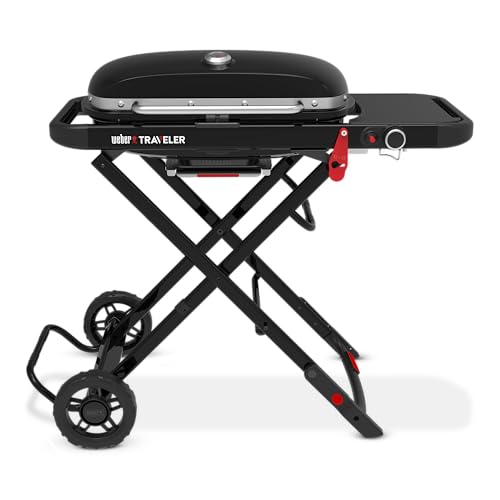
- Best overall for entertaining: Weber Traveler Portable Gas Grill — Check on Amazon
- Best for big batches: Coleman RoadTrip 285 Portable Propane Grill
- Best hands-off hosting: Traeger Tailgater Portable Wood Pellet Grill and Smoker
- Best for varied menus: Traeger Ranger Portable Wood Pellet Grill and Smoker
- Best for mixed loads: Napoleon TravelQ PRO285X Portable Propane Gas Grill with Scissor Cart
- Best for foodie guests: Kamado Joe Joe Jr. 13.5-inch Portable Ceramic Charcoal Grill (KJ13RH)
Read the full guide ↓
Disclosure: As an Amazon Associate, dailyhomedecorating.com earns from qualifying purchases. Links to Amazon on this page are affiliate links; they cost you nothing extra. Listing details such as price and availability change often, so check the current Amazon listing before you buy.
The best portable grill for outdoor entertaining under $700 is judged by a standard no solo cook would invent: it must feed a group, in waves, without imprisoning the host. Entertaining changes everything about what ‘best’ means. Raw cooking area matters, but so does recovery heat when the lid opens for the tenth time; a holding zone matters as much as a searing zone; and the most valuable feature of all may be automation, because a host tethered to a fire is a host missing their own party. The six grills below were chosen and ranked for party service specifically — capacity, pacing, menu range and the ability to appear from storage and vanish again when the guests go home.
The ranking reflects entertaining logic rather than spec-sheet order. The Weber Traveler leads on fold-away capacity; the Coleman RoadTrip 285 chases it with three-burner output at a value price; the two Traegers sell the host’s freedom — the Tailgater with area, the Ranger with a griddle that turns one grill into a brunch station; the Napoleon PRO285X offers the two-zone control mixed loads demand; and the Kamado Joe Joe Jr. closes the list as the small-gathering connoisseur’s pick, the grill for six food-loving friends rather than sixteen hungry ones. Every linked pick was verified by brand and model and screened against recall records, and the guide’s safety section covers the party-specific risks — crowds, children, grease and darkness — that ordinary grill guides skip.
In this guide
Quick Picks: Best portable grill for outdoor entertaining under $700
Short on time, or comparing several options at once? Each row below names a buyer type and the grill that suits it, with a link to the listing where one is available.
| Buyer type | Pick | Why it stands out | Link |
|---|---|---|---|
| Best overall for entertaining | Weber Traveler Portable Gas Grill | The largest grate here on a grill that folds away when the party ends | Check on Amazon |
| Best for big batches | Coleman RoadTrip 285 Portable Propane Grill | Three burners and 20,000 BTU built for continuous, crowd-paced cooking | Check on Amazon |
| Best hands-off hosting | Traeger Tailgater Portable Wood Pellet Grill and Smoker | Pellet automation that lets the host leave the grill and join the party | Check on Amazon |
| Best for varied menus | Traeger Ranger Portable Wood Pellet Grill and Smoker | Grill plus included griddle: burgers, breakfast and fajitas from one tabletop unit | Check on Amazon |
| Best for mixed loads | Napoleon TravelQ PRO285X Portable Propane Gas Grill with Scissor Cart | Two-zone gas control for searing and holding at the same time | Check on Amazon |
| Best for foodie guests | Kamado Joe Joe Jr. 13.5-inch Portable Ceramic Charcoal Grill (KJ13RH) | Ceramic kamado theatre and flavour for smaller, food-focused gatherings | Check on Amazon |
How These Picks Were Chosen
Entertaining picks were filtered on party physics. Throughput: how much food per round, and how fast the grate recovers heat between rounds. Zoning: whether finished food can hold warm without overcooking while the next round sears. Attention cost: how many minutes per hour the grill demands from its cook — the filter that elevates the pellet picks. And logistics: the grill must deploy from storage and return to it without turning party prep into a construction project, because a grill that takes forty minutes to set up will be left in the garage by the third invitation.
Verification and safety screening matched the rest of this series: brand-and-model cross-checked listings, maker specifications, recall records checked for every model (recalled models are excluded outright), and bristle-free cleaning guidance only, wire-bristle brushes being a recalled ingestion hazard. Budget honesty applied as usual: all six picks here sit inside the tier in buyable configurations, and the guide says plainly where a pick’s party role is narrow — the kamado’s — rather than inflating its capacity.
The Picks in Detail: Best portable grill for outdoor entertaining under $700
Weber Traveler Portable Gas Grill — Best overall for entertaining
The Traveler is the entertainer’s default because it solves the two problems parties pose: volume and disappearance. Open, it offers about 320 square inches — the largest grate in this guide — under a high lid, on a stable cart with a real side table for trays and tongs. Closed, it folds one-handed and rolls away upright, so the patio returns to the guests instead of hosting a cooling appliance all evening. For the host, that vanishing act is worth as much as the cooking area.
In service it cooks like a family gas grill: fast preheat, even heat, burgers in party-sized rounds, whole chickens under the lid while the grate handles sides in shifts. The single burner is the management task — one zone means holding finished food takes lid-space strategy, foil pans on the warming side of the grate, and sequencing rather than simultaneity. Experienced hosts will barely notice; new hosts should read the how-to-choose section’s party workflow and plan the menu in waves, which this grill rewards.
Who it suits: Hosts of six to ten who want maximum portable capacity that stores to almost nothing between parties.
Pros:
- Largest cooking area here; genuine party throughput
- Folds and rolls away mid-event if space tightens
- High lid handles chickens and roasts between burger rounds
- Side table supports real tray-and-tong workflow
Honest limitation: One heat zone: holding and searing simultaneously requires sequencing technique.
Choose it if your parties are the biggest use case and storage between them is tight. Skip it if you need a true holding zone running beside the searing zone all evening — see the Napoleon.
Check on Amazon — check price on Amazon for the current listing, configuration and delivery options.
Coleman RoadTrip 285 Portable Propane Grill — Best for big batches
If the party is measured in dozens of burgers, the RoadTrip 285 is the workhorse bid: three burners, 20,000 BTU and about 285 square inches that recover heat fast when cold food lands in waves. It stands at full height on a wheeled frame, slides its side tables out for staging, and folds down when the night ends. Per dollar, nothing in this guide cooks more food, and for big casual gatherings — team parties, family reunions, neighbourhood nights — that arithmetic is the argument.
Its entertaining style is throughput over finesse: hot, direct, continuous. The three burners do allow a cooler edge for holding, which rescues it from pure single-zone duty, and the accessory griddle turns it into a breakfast or smash-burger station for morning-after or brunch events. Finish and delicacy trail the premium picks; nobody’s guests have ever sent back a burger for that. Buy it for crowds, and let the finesse picks in this guide handle the dinner parties.
Who it suits: Big, casual gatherings where volume per dollar and fast heat recovery decide the night.
Pros:
- Three burners, 20,000 BTU: the throughput leader per dollar
- Burner layout allows a cooler holding edge
- Accessory griddle extends it to brunch and smash burgers
- Stands full-height; folds for storage and transport
Honest limitation: Finish and fine control trail premium picks; a hot-and-direct specialist.
Choose it if your guest lists run large and your menu runs classic. Skip it if your entertaining is small, slow and culinary — the kamado or Napoleon fit that room better.
Check on Amazon — check price on Amazon for the current listing, configuration and delivery options.
Traeger Tailgater Portable Wood Pellet Grill and Smoker — Best hands-off hosting
The Tailgater’s party trick is absence: the host’s. Set the temperature, load the roughly 300 square inches with ribs, chicken or a pork shoulder hours before guests arrive, and the controller minds the fire while you mind the people. When guests eat, they eat food that tastes attended-to, produced by a grill that asked almost nothing. For hosts who consistently miss their own parties, that trade — a little smoke intensity for all of your attention back — is the best bargain in this guide.
Party logistics suit it too: folding legs for storage and travel, porcelain grates that handle mixed loads, and pellet flavour mild enough to please a crowd rather than challenge it. The constraints are the pellet constants — mains power at the party site, dry pellets in store, and direct-sear limits for steak-night menus. Run it as the low-and-slow and poultry station beside any hot grill, or as the whole show for pulled-pork economics, and it shines.
Who it suits: Hosts who want to be at their own party: set-and-forget cooking for four to eight, especially low-and-slow menus.
Pros:
- Automatic temperature holding frees the host for hours
- About 300 square inches for party-sized loads
- Mild pellet flavour pleases mixed crowds
- Folds for storage between events
Honest limitation: Needs power and pellets; direct searing is its weakest party trick.
Choose it if your menus centre on ribs, chicken and shoulders, and your presence matters. Skip it if your parties are steak-and-sear showcases — a gas or kamado pick leads those.
Check on Amazon — check price on Amazon for the current listing, configuration and delivery options.
Traeger Ranger Portable Wood Pellet Grill and Smoker — Best for varied menus
The Ranger is the menu-expander: a tabletop pellet grill whose included cast-iron griddle quietly doubles the party menu. Grill burgers and wings on the grate; swap to the griddle for smash burgers with lacy edges, a full breakfast service, fajita peppers and onions, or grilled-cheese production for a crowd of kids. In entertaining, menu range is a form of capacity — guests remember the grill that did brunch — and no other pick here covers as many occasions in one footprint.
Its roughly 184 square inches cap the crowd at intimate scale, and it needs power and pellets like its sibling. Position it as the second station beside a bigger grill, or as the whole kitchen for gatherings of four to six, and its controller’s calm competence — set temperatures held, keep-warm mode for latecomers — makes hosting feel organised rather than improvised.
Who it suits: Small-gathering hosts and brunch entertainers who prize menu range over raw area.
Pros:
- Included cast-iron griddle: a second menu in the box
- Controller with keep-warm mode suits staggered arrivals
- Tabletop format sets up anywhere with power
- Pellet flavour plus griddle searing in one unit
Honest limitation: Area caps at intimate gatherings; needs power and dry pellets.
Choose it if your parties are small, varied and menu-driven. Skip it if your guest lists are large — the Tailgater or Traveler should lead.
Check on Amazon — check price on Amazon for the current listing, configuration and delivery options.
Napoleon TravelQ PRO285X Portable Propane Gas Grill with Scissor Cart — Best for mixed loads
Mixed loads are where parties are won: steaks searing while corn finishes gently, burgers holding while the last skewers char. The PRO285X’s two burners make that simultaneity real in a portable — a fierce side and a gentle side, over cast-iron Wave grates that mark food like a steakhouse — and its scissor cart folds flat when the evening ends. For the host who cooks a composed menu rather than a single item in bulk, it is the most capable instrument here.
Its roughly 285 square inches serve six to eight in waves, the lid thermometer and wind-resistant burners keep order outdoors, and the whole package travels to rented houses and campsites as happily as it deploys at home. Premium pricing is the admission; cooks who will actually run two zones will pay it gladly and once.
Who it suits: Composed-menu hosts cooking mixed loads for six to eight, at home or at a rented venue.
Pros:
- True two-zone cooking: sear and hold simultaneously
- Cast-iron Wave grates for steakhouse marks
- Folds flat for storage and venue travel
- Composed in wind and at party pace
Honest limitation: Premium price; two-zone skill is wasted on single-item bulk menus.
Choose it if your parties feature varied menus cooked in parallel. Skip it if your parties are one-item marathons — the Coleman’s throughput is cheaper capacity.
Check on Amazon — check price on Amazon for the current listing, configuration and delivery options.
Kamado Joe Joe Jr. 13.5-inch Portable Ceramic Charcoal Grill (KJ13RH) — Best for foodie guests
Not every party is a crowd. For six friends who care about food, the Joe Jr. turns entertaining into theatre: a ceramic kamado on the patio, holding a shoulder low all afternoon, then opened up to sear steaks over live coals while guests watch the fire do its ancient work. The flavour ceiling is the highest in this guide, and the small grate — roughly 150 square inches — forces the intimate format that makes such evenings good: courses in sequence, cooked to order, eaten slowly.
Choose it with open eyes: it will not feed sixteen, its ceramic weight makes deployment a planned act, and charcoal asks the host’s attention in a way pellets do not. As the centrepiece of small, food-first gatherings — and as the weeknight grill for the household the rest of the week — it offers something none of the bigger boxes can: a reason for the party to gather around the grill itself.
Who it suits: Small, food-focused gatherings where the cooking is part of the entertainment.
Pros:
- Highest flavour ceiling here: real charcoal, ceramic control
- Low-and-slow and searing in one unit
- Cooking-as-theatre for intimate parties
- Complete system with stand, deflector and ash tool
Honest limitation: Feeds intimate groups only; charcoal demands host attention and ash discipline.
Choose it if your entertaining is six people, several courses, no hurry. Skip it if your entertaining is sixteen people, one course, no time — take the Coleman or Traveler.
Check on Amazon — check price on Amazon for the current listing, configuration and delivery options.
Comparison Table
| Grill | Fuel | Best for | Link |
|---|---|---|---|
| Weber Traveler Portable Gas Grill | Propane | Best overall for entertaining | Check on Amazon |
| Coleman RoadTrip 285 Portable Propane Grill | Propane | Best for big batches | Check on Amazon |
| Traeger Tailgater Portable Wood Pellet Grill and Smoker | Wood pellets | Best hands-off hosting | Check on Amazon |
| Traeger Ranger Portable Wood Pellet Grill and Smoker | Wood pellets | Best for varied menus | Check on Amazon |
| Napoleon TravelQ PRO285X Portable Propane Gas Grill with Scissor Cart | Propane | Best for mixed loads | Check on Amazon |
| Kamado Joe Joe Jr. 13.5-inch Portable Ceramic Charcoal Grill (KJ13RH) | Charcoal (ceramic kamado) | Best for foodie guests | Check on Amazon |
How to Choose: Best portable grill for outdoor entertaining under $700
Plan the party workflow before the grill. Entertaining menus succeed in waves: something low-and-slow started early (a pellet pick’s home ground), a hot round at arrival (gas recovery heat), a holding strategy for latecomers (a second zone, a keep-warm mode, or foil pans at the grate’s edge), and a final fast round — sausages, skewers, dessert bananas — that forgives timing chaos. Match the grill to the wave it must own: if it must own all of them, prioritise area plus zoning (Napoleon, Traveler with technique, Coleman with its cooler edge).
Count mouths with the same honesty as the other guides in this series, then add the party multiplier: guests eat more, over longer, than family. Roughly 300 square inches serves eight to ten in waves; 285 with two zones serves similar numbers with better composure; 150–185 serves four to six in courses. If your list regularly exceeds ten, the honest answer is a portable as the second grill beside a main cooker — a role every pick here plays beautifully — rather than a portable straining alone.
Finally, rehearse the logistics once before guests depend on them: deploy from storage, light, preheat, cook a test round, fold away. Note the clearances your space really has, where the grease goes, where finished food stages, and where the host stands without blocking the lid. Parties forgive imperfect food; they do not forgive a host visibly wrestling their equipment.
Fire Safety Every Portable Grill Owner Should Follow
Party conditions multiply grill risk: more people, more movement, children, drinks, darkness. Establish the grill station as a defined zone — heat-resistant surface, maker’s clearances from fences, furniture and foot traffic, roughly three feet minimum and more for charcoal — with the cook’s workspace behind the grill and guests routed in front of a visible boundary, never through the cooking line. Keep a three-foot child-and-pet exclusion zone and assign it an enforcer who is not the cook.
Fuel and fire discipline at parties is unglamorous and absolute. Never leave a lit grill unattended; if the host must step away, a named adult takes the station. Charcoal ash cools fully in the closed grill and goes to a lidded metal container away from the house — never into party rubbish, where a hidden ember meets paper plates. Gas connections get a soapy-water leak check before the season’s first party; pellets and charcoal stay dry and stored away from the grill’s heat. Carbon monoxide rules do not bend for weather: no grilling in garages or under enclosed roofs, ever, even mid-downpour with guests waiting.
Grease is the party fire that actually happens: manage drip systems before they overflow, keep foil pans under rich loads, and have sand or a suitable extinguisher placed at the station — water spreads grease fires. Clean grates with bristle-free tools only (coiled-wire brushes, wooden scrapers, foil in tongs): wire-bristle brushes shed bristles that have caused serious injuries and mass recalls, and party food moves too fast for anyone to spot one. When the night ends, the grill cools fully before it folds or stores — a warm grill in a garage is tomorrow’s incident report.
Common Mistakes With Portable Grills at This Tier
The entertainer’s first mistake is buying for the biggest party of the year and suffering it at every ordinary one — or the reverse, falling for a charming small grill that meets a fourteen-person list in June. Count your three most recent gatherings, not your imaginings, and let the median party choose the grill; rent or borrow for the outlier. The second mistake is menu-grill mismatch: a searing showcase planned on a mild pellet grill, a low-and-slow feast planned on a hot-and-direct value grill. The picks above are labelled by party style precisely to prevent it.
Third: single-grill heroics. Hosts who refuse help from a second heat source — the oven indoors holding at low heat is a legitimate holding zone — turn simultaneity problems into stress. Fourth: deploying untested equipment to an audience. Every folding mechanism, ignition and controller in this guide deserves one private rehearsal before its public debut. Fifth: the cleanup deferral — grease systems and ash left ‘until tomorrow’ after every party, compounding into the flare-up at the next one. The ten minutes after the guests leave are part of the grill’s price; pay them.
Final Recommendation
For most hosts, the Weber Traveler is the entertaining pick: the most fold-away capacity in the guide, cooked with gas immediacy. Big casual crowds on a budget should take the Coleman RoadTrip 285; hosts who want their evenings back should take the Traeger Tailgater, with the Ranger as the menu-expanding second station; composed mixed menus belong to the Napoleon’s two zones; and small, food-first gatherings belong to the Kamado Joe Joe Jr. and the fire it cooks over. Choose by the parties you actually throw, and every pick here will earn its storage space.
Start with the Weber Traveler Portable Gas Grill if it matches your space and fuel rules — check price on Amazon before you buy.
Party Menus, Matched to Grills: What to Cook on Each Pick
The fastest way to choose among these six is to write your three favourite party menus and see which grill cooks all three without strain. The burger-and-dogs classic belongs to throughput: the Coleman RoadTrip 285 and the Weber Traveler, whose area and recovery heat turn rounds quickly, with the Coleman’s cooler third-burner edge holding finished burgers while the Traveler’s high lid roasts the corn in parallel batches. Add a foil pan of onions on either grate and the menu is complete; add a second wave of guests and both grills simply run another round, which is what they are for.
The low-and-slow feast — pulled pork, ribs, brisket-style chuck, whole chickens — belongs to the Traeger Tailgater, started in the morning and ignored with confidence until serving, with the Ranger running the sides: griddled vegetables, smash-burger appetisers for the early arrivals, a breakfast service if the party is a brunch. The composed dinner — steaks, fish, vegetables, each at its own doneness — belongs to the Napoleon PRO285X and its two zones, the only pick here that can sear, finish and hold in true parallel. And the tasting evening — courses in sequence, cooked to order, eaten slowly — belongs to the Kamado Joe Joe Jr., whose charcoal theatre is not a limitation on that menu but its entire point.
Notice what the exercise reveals: entertaining grills are menu decisions wearing hardware. Hosts who buy by spec sheet end up with area they do not need and zones they never use; hosts who buy by menu end up with the grill that disappears into the evening, leaving only the food and the company visible. If two of your three menus point at different picks, you have learned something else valuable — your entertaining genuinely spans styles, and the right answer may be the portable that covers your most frequent menu, paired with the indoor oven or a borrowed second grill for the outlier.
Running the Party: A Timeline From the Hosts Who Get It Right
Good cookouts are scheduled backwards from the moment guests sit down. The low-and-slow items start hours ahead — on a pellet pick, in the morning; on the kamado, by early afternoon — because they hold beautifully and free the grill for the fast work later. The grill station is set before the first guest arrives: fuel checked, grate cleaned with a bristle-free brush, drip system emptied, tools, trays, thermometer and a lidded bin for waste all placed, the extinguisher or sand bucket present and unremarkable. A host who sets the station early never has to leave a conversation to find tongs.
Arrival hour runs on appetisers and forgiving items — sausages, skewers, griddled vegetables — that tolerate conversation-paced cooking and give the cook a read on the grill’s mood that day. The main round is sequenced by thickness and doneness, rested in foil pans at the grate’s gentle edge or in a low oven, and served in the waves the how-to-choose section describes. Dessert, if the grill does it — stone fruit, bananas, pound cake slices — goes on while the grate is still warm and the cook is finally seated nearby, which is where the host should be for the last hour: near the grill, not at it.
The close is part of the craft. Food waste goes to the bin while the grill is still warm enough to scrape clean with the bristle-free brush; grease systems are checked before they are forgotten; charcoal ash stays in the closed grill until it is provably cold, then moves to the metal container — never into the night’s rubbish bags. The grill cools fully before it folds or covers. Fifteen unglamorous minutes, and the next party starts from a clean station instead of a cautionary tale. Entertaining at this tier is a skill built from these repetitions, and every pick in this guide was chosen to reward them.
Two Party Failures, Diagnosed — and the Picks That Prevent Them
Failure one is the queue. Sixteen guests, one small grill, burgers cooking four at a time while the line at the patio door develops its own weather system. The diagnosis is never the cook; it is a capacity decision made months earlier by someone picturing a dinner party while planning a block party. The prevention lives in this guide’s throughput picks — the Traveler’s area, the Coleman’s burners — or in the honest two-grill strategy: the portable as the second station beside any main cooker, with the menu split so each grill owns the items it cooks best. Hosts who have lived the queue once tend to overcorrect and buy enormous grills; the calmer lesson is to count the three most recent gatherings and size for the largest of those, borrowing capacity for the true outliers.
Failure two is the vanishing host. The food is ambitious, the grill demands constant management, and the person everyone came to see spends the evening in a smoke column, apologising. The diagnosis is an attention mismatch: a high-maintenance grill paired with a high-sociability host. The prevention is the pellet picks’ entire reason for being in an entertaining guide — automation that returns the host to the party — or, where charcoal is non-negotiable, a menu redesigned around it: one low-and-slow centrepiece cooked ahead, finished and held, with the live-fire work reduced to a short, theatrical searing round that guests experience as entertainment rather than absence. Both failures are common, both are survivable once, and both are optional thereafter. That optionality — the ability to choose the failure out of your parties — is what a $700 entertaining budget really buys.
Drinks, Sides and the Grill: Coordinating the Whole Table
A cookout is a table, not a grill with garnish, and the hosts who coordinate the whole spread get more from any pick in this guide. Cold sides — salads, slaws, breads — should be entirely finished before the grill lights, because they are the buffer that lets hot food arrive in waves without anyone eating air. Hot sides belong where the grill has spare capacity or a second zone: corn in the Traveler’s lid space, vegetables on the Ranger’s griddle, peppers blistering at the Napoleon’s gentle edge while the steaks rest. Drinks deserve the same logistics as food: a station placed away from the grill’s working side, so guests fetching a bottle never cross the cook’s path or the hot zone’s boundary, and ice that outlasts the party rather than defining its end.
Dessert is the coordinating detail guests remember disproportionately. Grilled stone fruit, bananas in their skins, pound-cake slices kissed by the grate — all take minutes on a cooling grill and convert the cookout’s last act from a fade into a finish. They also give the host a graceful reason to do the first cleanup pass at the station while everyone is still outside. None of this requires a bigger grill; it requires the menu thinking this section and the party-menus section model. The grill is the loudest instrument at the party, but the table is the music.
Feeding Everyone: Dietary Mix, Timing and the Second Wave
Real guest lists are not uniform, and entertaining grills earn their ranking in how gracefully they handle the mix: the vegetarian skewers that must not taste of the burgers, the fish that needs two gentle minutes while the steaks need six fierce ones, the children’s plain portions that must arrive before the adults’ ambitious ones, and the latecomer whose dinner starts when everyone else’s ends. Zoning is the hardware answer — the Napoleon’s second burner, the Coleman’s cooler edge, a pellet grill’s even gentleness that cooks vegetables and proteins in peaceful coexistence — but technique carries half the load on any pick: cook in families, rest in foil, and keep a clean corner of grate for the items that must stay separate, using foil trays as portable zones on single-zone grills.
The second wave deserves its own plan, because parties breathe: a first rush at arrival, a lull, then a return of appetites around the time the cook has sat down. Grills with fast recovery (the gas picks) or held temperatures (the pellets) absorb the second wave without a relight or a rebuild, and the host who has kept a reserve — a tray of sausages, skewers marinating, corn wrapped and ready — turns the wave from a disruption into a second act. The kamado, for all its intimacy, handles the wave its own way: a banked fire that can be roused in minutes is the original second-wave technology, older than every controller in this guide. Entertaining well is mostly this: anticipating the party’s rhythm and owning a grill whose strengths rhyme with it.
What Guests Actually Remember: A Host’s Honest Debrief
After enough parties, a pattern emerges that no spec sheet predicts. Guests remember whether the food was hot when it reached them, whether the host was present, whether there was enough — in that order — and they almost never remember the grill. This is liberating information for a buyer. It means the entertaining ranking in this guide is really a ranking of three services: heat logistics (area, recovery, holding), host freedom (automation, forgiveness, menu fit), and sufficiency (capacity matched to counted mouths, with a reserve plan). A pick that delivers all three at a modest spec level will out-entertain a flagship that delivers two brilliantly and one not at all — the exquisite kamado that seats the host in smoke all evening, the vast gas grill whose single zone turns the second wave lukewarm.
It also means the marginal dollars in this tier are best spent on the service your parties lack. Hosts whose food is already loved should buy freedom — the pellet picks. Hosts whose parties strain at capacity should buy area and recovery — the Traveler, the Coleman. Hosts whose menus have outgrown one zone should buy the second burner — the Napoleon. And hosts whose parties are really dinners with better scenery should buy the theatre and the flavour — the Joe Jr. — and stop apologising for the guest list being short. The grill is a means; the remembered evening is the end; this guide’s six picks are six honest routes to it, and the right one is the route your own parties keep asking for.
Weather Plans: Entertaining When the Forecast Disagrees
Every experienced host has a weather story, and the portable format is quietly the best insurance against the genre. A folding grill relocates to the patio’s dry corner, the garage doorway’s edge — outside the garage itself, always, for carbon-monoxide reasons this guide will not stop repeating — or the lee of the house when wind turns a cookout into an endurance event. Pellet controllers compensate for cold and gust better than any human fire-tender; gas burners with wind-resistant designs, like the Napoleon’s, hold their composure when lesser flames dance; the kamado treats weather as a rumour. The host’s part is choreography: a station position chosen for the forecast rather than habit, a serving plan that moves indoors without moving the cooking indoors, and the discipline never to solve rain by grilling in an enclosed space — the one adaptation that is never acceptable, at any party, for any guests.
Cold weather deserves its own sentence, because winter cookouts are better than their reputation: food tastes more vivid, guests cluster happily around a warm station, and the pellet and kamado picks hold temperature with an ease that surprises people who associate grilling with July. Budget more fuel, expect longer preheats, keep the lid closed with religious discipline, and serve in smaller, hotter waves. The portable you chose for summer parties turns out to be a four-season instrument; the hosts who discover that get a second entertaining year out of every calendar one.
The Morning After: Resetting the Station
The last entertaining skill is the reset, done while the memory of the party is still warm. In daylight, the station tells the truth: grease that travelled further than it should, a tray that nearly overflowed, a grate whose cleaning was postponed past the point of ease. Fifteen honest minutes — scrape and brush with bristle-free tools, empty and wash the grease system, check the fuel store, note what ran low, fold or cover the grill — returns the station to a state where the next invitation is a pleasure to accept rather than a chore to dread. Hosts who reset ritually entertain more often, and hosts who entertain more often get better at it; the picks in this guide were chosen to make the reset short, because the reset is where the next party actually begins.
A Note on Borrowing, Renting and the Grill Library of Friends
One last piece of entertaining economics deserves air before you buy: parties are social, and grill capacity can be social too. The host network most of us actually live in — neighbours, siblings, the friend two streets away with the same hobby — already owns more cooking area than any single party needs, and a portable at this tier is precisely the class of grill that travels between houses gracefully. Buying the pick that complements your circle’s existing grills, rather than duplicating the biggest one, can leave every household in the network better equipped for the parties you throw together. It is not a reason to under-buy for your own counted gatherings; it is a reason to count the network’s gatherings too, and to let the occasional fourteen-person night be solved by friendship and a second folding grill rather than by owning a monster alone.
One More Round: The Case for Leftovers by Design
Plan, finally, for the grill to cook slightly more than the party eats. A portable working at this tier makes leftovers a feature rather than an accident: the extra chicken thighs become tomorrow’s salad, the surplus sausages become the next morning’s breakfast beside the Ranger’s griddle, and the host who cooked one deliberate portion too many never faces the only unforgivable entertaining failure — running out. Abundance, within reason, is a hosting strategy, and the capacity headroom in this guide’s larger picks exists to make it a cheap one.
Related Guides
Comparing across budgets and patio setups? These guides on this site cover the neighbouring tiers and spaces: Best Portable Grill Under $700 · Best Portable Grill For Outdoor Entertaining Under $500 · Best Portable Grill Under $300 · Best Fire Pit For Outdoor Entertaining Under $700 · Best Portable Grill Under $1500.
FAQ
How big a grill do I need for entertaining?
For eight to ten guests eating in waves, around 300 square inches with fast heat recovery works well. Two-zone control (or a holding strategy) matters as much as raw area once the second round starts.
Which grill lets the host enjoy the party?
A pellet grill with a digital controller — the Traeger Tailgater or Ranger here — holds temperature automatically for hours, so low-and-slow party food cooks while the host socialises.
Gas or charcoal for parties?
Gas for pace, recovery heat and mixed crowds; charcoal for flavour and theatre at intimate scale. Many hosts run gas for the crowd and keep a kamado for the inner circle.
How do I keep food warm during a party?
Use a second burner zone turned low, a pellet grill’s keep-warm mode, foil pans at the grate’s cooler edge, or a low indoor oven as the holding station — and sequence the menu in waves so holding is brief.
What safety rules matter most at a cookout?
A defined grill zone with clearances and a child-and-pet boundary, an attended grill at all times, disciplined ash and grease handling, and bristle-free cleaning tools only.
Can one portable grill handle a whole party?
For up to about ten guests with a waved menu, yes — the larger picks here are built for it. Beyond that, run the portable as the second grill beside a main cooker or the oven.


