Where to buy
Check the latest price, availability and delivery on Amazon. Orders are placed on Amazon. We may earn a commission from qualifying purchases.
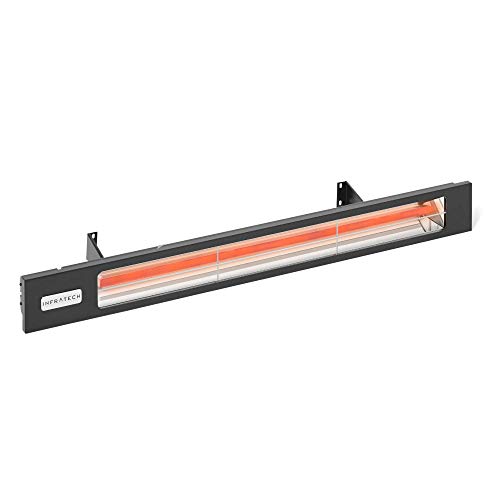
- Best realistic renter pick: Infratech SL-1612 Slimline 1600W, 120V — Check on Amazon
- Best for owned condos and low ceilings: Bromic Platinum Smart-Heat Electric 3400W (BH0320005) — Check on Amazon
- Best compact 240V zone heater: Bromic Tungsten Smart-Heat Electric 2000W (BH0420030) — Check on Amazon
- Best flush-mount option: Infratech WD-4024 SS Dual Element 4000W — Check on Amazon
- Best for long narrow balconies with permission to hardwire: Infratech SL-4024 SS Slimline 4000W — Check on Amazon
- Best for large owner-occupied terraces: Bromic Platinum Smart-Heat Electric 4500W (BH3622000) — Check on Amazon
Read the full guide ↓
Disclosure: As an Amazon Associate, dailyhomedecorating.com earns from qualifying purchases. Links to Amazon on this page are affiliate links; they cost you nothing extra. Listing details such as price and availability change often, so check the current Amazon listing before you buy.
Searching for the best patio heater for apartments under $1500 requires an honest conversation before any product talk, because apartment outdoor space operates under rules that houses never meet. If you rent — and most apartment dwellers do — your balcony is governed by your lease, your building’s house rules, your local fire code and often an HOA or condo association, and several of those authorities restrict outdoor heating before you ever get to choose a model. The headline fact is this: open-flame and fuel-burning heaters are prohibited on the balconies of most multifamily buildings. The International Fire Code, Section 308.1.4, prohibits open-flame devices on balconies and within ten feet of combustible construction in multifamily occupancies, with narrow exceptions that do not rescue a propane patio heater, and NFPA 1 carries the same prohibition. Many leases and condo rules go further and ban fuel storage on balconies outright. So this guide contains no gas, no propane and no flame-effect heaters at all — recommending one for an apartment balcony would be recommending a code violation, a lease violation and a genuine fire risk to the neighbours above you, in a single purchase.
What remains is electric radiant heat, and within that category the apartment lens changes the ranking completely. The questions stop being “how much output can I buy” and become “what am I actually allowed to install, what circuit do I have, and how much of this can I take with me when I move?” Most renters cannot hardwire anything: drilling into the building envelope and adding a 240-volt circuit is the landlord’s decision, not the tenant’s, and it usually requires permits the tenant cannot pull. That is why the top pick in this guide is the one premium heater that runs on ordinary 120-volt power and mounts with a bracket rather than a building project. For apartment owners and condo owners with real authority over their terraces, the bigger hardwired picks further down the list come into play, and the $1500 budget becomes what it is in our main guide — a system budget covering a commercial-grade heater, its control and a proper installation. Readers who own their outdoor space outright will find the wider fuel discussion in Best Outdoor Heater For Apartments Under $1500, and renters working with a smaller spend should start with Best Patio Heater For Apartments Under $500, where the same rules are applied at a friendlier tier.
Our short answer, by situation. Renting, no permission to modify anything electrical: the Infratech SL-1612 is the one honest premium answer — a 1,600-watt, 120-volt slimline heater that covers a small seating area and can be uninstalled when you leave. Renting with a landlord who will approve a bracket and an existing outdoor outlet: the same pick, mounted properly, still wins. Owning a condo with a low ceiling: the Bromic Platinum 3400W, recessed or surface-mounted, is the design-led choice. Owning a unit with a proper terrace and an electrician booked: the WD-4024 or the Platinum 4500W give you a genuine two-zone-capable system. And if your lease bans heaters entirely — some do — the correct purchase is no purchase, and this guide will tell you that plainly rather than sell you a problem.
In this guide
Quick Picks: The Best Patio Heater for Apartments Under $1500, by Living Situation
Every pick below is electric. There are no exceptions in this category, whatever other guides may suggest.
| Situation | Pick | Why it stands out | Link |
|---|---|---|---|
| Renting, 120V only | Infratech SL-1612 Slimline | 1,600W on standard 120V power, 29.5-inch body, covers about 6 × 6 ft | Check on Amazon |
| Owned condo, low ceiling | Bromic Platinum 3400W (BH0320005) | Tinted glass-ceramic face, minimal glow, recess options | Check on Amazon |
| Small balcony, 240V available | Bromic Tungsten Electric 2000W (BH0420030) | Compact single element rated for about 65 sq ft | Check on Amazon |
| Flush-mount finish | Infratech WD-4024 SS | 39-inch dual-element heater that can recess into a ceiling | Check on Amazon |
| Long narrow balcony, hardwiring approved | Infratech SL-4024 SS Slimline | 4,000W stretched along a slim 63.5-inch body | Check on Amazon |
| Large owned terrace | Bromic Platinum 4500W (BH3622000) | Rated up to about 143 sq ft behind a discreet glass-ceramic screen | Check on Amazon |
How the picks were chosen
The first filter was legal and practical, not thermal. A pick had to be electric, because combustion heaters conflict with the fire-code provisions that govern multifamily balconies — IFC Section 308.1.4 and its NFPA 1 counterpart — and with the balcony and fuel-storage clauses in typical leases and condo rules. It also had to be a fixed or bracket-mounted radiant heater rather than a freestanding appliance: balconies are small, traffic paths are tight, and a tall freestanding unit in a five-foot-deep space is a tip-over and clearance problem wearing a product listing. Tabletop and portable fuel heaters were excluded for the same code reasons, and we excluded every product family that appears in a CPSC recall notice, as we do across this site.
The second filter was electrical realism. Apartment outdoor power usually means one weather-resistant outlet on a shared 15- or 20-amp circuit, if it means anything at all. A pick that only works on 240 volts is therefore a pick for owners, and we label it that way rather than letting a renter discover it at the checkout. The SL-1612 leads this guide precisely because it is the rare commercial-grade heater specified for 120 volts. The third filter was verification: every linked model was matched to its manufacturer model number through the Amazon Creators API, with the returned listing title recorded in this article’s source notes, and every specification quoted — wattage, dimensions, mounting height, coverage — comes from the manufacturer’s own documentation. Where a well-known apartment-friendly model could not be matched with confidence, it was left out rather than linked on a guess.
Finally, we applied the removability test that apartment life demands. Renters should be able to reverse an installation: a bracket screwed into a permitted surface, screw holes that can be filled, nothing cut into the building’s structure or wiring. Owners can go further, and the guide says where the line sits. If a pick fails your lease, it fails, full stop — no heater in this article is worth a deposit, an insurance problem or a confrontation with a fire marshal.
The picks in detail
1. Infratech SL-1612 Slimline — the realistic renter pick
Who it suits: Renters and owners of small balconies who have a standard outdoor outlet, landlord permission for a bracket-mounted fixture, and a seating area of two to four chairs.
The SL-1612 is the smallest member of Infratech’s Slimline family: a 29.5-inch, single-element quartz heater producing 1,600 watts from a 120-volt supply — the only pick in this guide that does not ask for an electrician to add a circuit. Infratech’s coverage table puts it at about 6 by 6 feet in average conditions, 8 by 8 in a protected spot and 4 by 4 when it is genuinely cold, mounted between 6 and 8 feet. Read those numbers the right way: this is a heater for a defined little zone — two lounge chairs and a side table, a bistro set, a reading corner — and within that zone, radiant heat at close range feels far more luxurious than its wattage suggests, because none of it is wasted on empty air. The anodized body is slim and quiet in appearance, the T-slot brackets allow angled mounting, and there is no glow management problem to solve because the element sits in a proper commercial housing, not a novelty lamp.
Pros:
- Runs on ordinary 120V power — no new circuit, no electrician for the supply itself
- Honest published coverage for small zones, with mounting heights that suit balcony ceilings
- Bracket-mounted and removable; an installation a renter can reverse at move-out
- Commercial build from a specialist manufacturer, with real control options
Honest limitation: It is still a hardwired-style fixture in spirit: Infratech specifies permanent installation by a qualified person in line with local codes, it needs its clearances (18 inches to the sides, 36 inches in front, 6 inches behind), and you must have your landlord’s written permission before anything is screwed to the building. It will not heat a whole large balcony, and on a very cold, exposed night its little zone shrinks — dress for the edges.
Choose it if you rent and want real radiant heat within the rules. Skip it if your lease prohibits mounted fixtures or outdoor heaters entirely — in that case the honest answer is no heater, plus warmer furniture and blankets. Check on Amazon
2. Bromic Platinum Smart-Heat Electric 3400W (BH0320005) — best for owned condos
Who it suits: Condo and apartment owners with authority to hardwire, a finished balcony ceiling or soffit, and a strong preference for equipment that disappears into the design.
The Platinum 3400W is the heater for balconies that appear in architecture photography. Its tinted Schott glass-ceramic screen spreads heat across a rated area of up to about 108 square feet while keeping visible glow to a minimum, so dinner on the balcony feels warm without looking like a tanning salon. The stainless body is slim, the mounting options include recess kits that set it nearly flush — including low-clearance arrangements for the modest ceiling heights apartment terraces usually have — and Bromic’s Affinity dimmer controls let you tune output the way you tune lighting. For an owner, this is a permanent improvement to the unit, installed once by an electrician and forgotten.
Pros:
- Minimal visible glow behind a tinted glass-ceramic face
- Recess and low-clearance mounting for finished, low ceilings
- Rated coverage up to about 108 sq ft — generous for a balcony zone
- Smooth dimming with Bromic Affinity controls
Honest limitation: This is an owner’s product. It needs a 240-volt circuit, a licensed electrician, and the association’s approval where your condo documents require it — many do for anything touching the exterior or the electrical system. Bromic’s minimum floor clearances (72 inches wall-mounted, 96 inches ceiling-mounted) must be achievable on your balcony, and renters should not buy it on the hope of permission later.
Choose it if you own the unit and the balcony is a designed space. Skip it if you rent, or your ceiling is too low to meet clearances. Check on Amazon
3. Bromic Tungsten Smart-Heat Electric 2000W (BH0420030) — best compact 240V zone heater
Who it suits: Owners of small balconies or loggias who have 240-volt capacity and want the Tungsten line’s wind-tough mesh-front design in its smallest, single-element form.
Not every balcony needs 6,000 watts, and the 2000W Tungsten is the proof: a single-element, 44-inch heater rated by Bromic for areas up to about 65 square feet, which on a balcony means the whole seating area rather than a spot within it. It shares the family traits that matter outdoors — a stainless body, a mesh front that keeps the element performing in moving air, wall, ceiling and recess mounting options, and compatibility with on/off, dimmer and multi-zone remote controls. Mounted at Bromic’s specified heights and aimed at the chairs, it turns a small balcony into a three-season room with one modest appliance.
Pros:
- Sized honestly for small spaces — no oversizing, no wasted circuit capacity
- Mesh-front design performs well in the breezy conditions balconies specialise in
- Full Bromic control ecosystem, including dimming
- Multiple mounting options, including recess frames
Honest limitation: It is a 240-volt hardwired appliance despite its modest output, so the installation cost can rival the heater’s role in the budget — worth it for owners, hard to justify for anyone who might move within a year or two. Its 65-square-foot rating is a protected-conditions figure; a high, exposed balcony will feel less.
Choose it if you own a small balcony and want one-and-done quality. Skip it if you only have 120V access — that is the SL-1612’s job. Check on Amazon
4. Infratech WD-4024 SS — best flush-mount option
Who it suits: Owners renovating a balcony or terrace ceiling who want the heater recessed into the structure so that nothing visibly hangs below the finished surface.
The WD-4024 is a 39-inch, dual-element, 4,000-watt heater from Infratech’s W/WD family — the branch of the range designed to work with flush-mount frames. Two elements mean staged output: one element for a mild evening, both for a cold one, switched through a duplex switch or integrated into Infratech’s control panels. Infratech’s coverage data for this class puts a unit of this size at roughly an 8 by 10 foot zone at typical mounting heights, which maps neatly onto a balcony dining set or a pair of loungers. Recessed into a terrace ceiling, it delivers the most architectural result in this guide: heat with no visible appliance at all.
Pros:
- Flush-mount capability for a completely integrated ceiling finish
- Dual elements give genuine half/full staging
- Compact 39-inch body suits modest balcony widths
- Stainless construction, no moving parts, nothing to vent
Honest limitation: Flush mounting is construction, not shopping: it needs a ceiling cavity, framing for the mount, an electrician, and usually association approval in a condo. The heater also cannot be surface-hung as an afterthought in the same way — plan it as part of a renovation, with the manufacturer’s clearances engineered in from the start.
Choose it if you are renovating and want invisible heat. Skip it if the ceiling is finished and staying finished. Check on Amazon
5. Infratech SL-4024 SS Slimline — best for long, narrow balconies
Who it suits: Owners of the classic long, shallow apartment balcony — a strip of outdoor space running along the living room — who have permission and power to hardwire.
Balcony geometry is a real constraint: a wide heater centred on a narrow balcony wastes half its throw on the railing and the wall. The SL-4024 answers with length instead of width — 4,000 watts at 240 volts spread along a 63.5-inch slim body that can run parallel to the seating line, mounted on the wall or ceiling line above it. Infratech rates it at about 10 by 10 feet in average conditions from an 8-to-11-foot mount, and its T-slot brackets land where your structure allows. Run along a six-seat balcony dining arrangement, it warms the row evenly in a way a single centred unit never will.
Pros:
- Long, narrow form matches balcony geometry instead of fighting it
- Published coverage and flexible bracket placement
- Anodized finishes that blend with balcony trim
- Works with switches, infinite regulators and Infratech control panels
Honest limitation: A single element means staging comes from the control, not the heater; it needs 240 volts and professional installation; and its clearances — 18 inches to the sides, 36 inches in front — must be checked against your railing furniture and any balcony storage before ordering.
Choose it if your balcony is a corridor with chairs. Skip it if you rent without hardwiring permission. Check on Amazon
6. Bromic Platinum Smart-Heat Electric 4500W (BH3622000) — best for large owned terraces
Who it suits: Owners of penthouse-style terraces and large condo outdoor rooms, where one discreet panel must cover a dining zone that would swallow smaller heaters.
The 4500W Platinum extends the Platinum formula to a rated coverage of up to about 143 square feet behind the same tinted glass-ceramic screen, in a body only modestly larger than the 3400W model. On a big terrace it plays the role the 6,000-watt Tungsten plays in our main guide — the anchor zone heater — while keeping the low-glow, design-first character that finished outdoor rooms demand. Paired with Affinity dimming, it scales from background warmth during drinks to full output when dinner runs late into a cold night.
Pros:
- Largest discreet coverage in this guide, up to about 143 sq ft rated
- Same low-glow glass-ceramic face and recess options as the 3400W
- Full dimming control for long evenings
- Stainless, weather-resistant construction for semi-enclosed terraces
Honest limitation: It is the most infrastructure-hungry pick here: a 240-volt circuit sized for the load, professional installation, association approval where applicable, and Bromic’s floor clearances respected. On a small balcony it is simply oversized — radiant heat cannot be folded, and too much output in a tiny space is discomfort, not luxury.
Choose it if you own a genuinely large terrace. Skip it if your balcony fits a bistro set and a bike. Check on Amazon
Comparison table
| Pick | Power | Output | Rated coverage | Best for |
|---|---|---|---|---|
| Infratech SL-1612 | 120V | 1,600W single element | ~6 × 6 ft average | Renters with an outdoor outlet |
| Bromic Platinum 3400W | 240V | 3,400W | Up to ~108 sq ft | Owned condos, low ceilings |
| Bromic Tungsten 2000W | 240V | 2,000W single element | Up to ~65 sq ft | Small owned balconies |
| Infratech WD-4024 SS | 240V | 4,000W dual element | ~8 × 10 ft zone | Flush-mount renovations |
| Infratech SL-4024 SS | 240V | 4,000W single element | ~10 × 10 ft average | Long narrow balconies |
| Bromic Platinum 4500W | 240V | 4,500W | Up to ~143 sq ft | Large owned terraces |
How to choose: rules first, then hardware
Step one: read your documents. Before any product page, read your lease’s balcony and alterations clauses, your building’s house rules, and — for owners — your condo or HOA documents. You are looking for four things: whether outdoor heaters are mentioned at all, whether fuel or open flame is prohibited on balconies (in multifamily buildings the fire code already answers this: IFC Section 308.1.4 and NFPA 1 prohibit open-flame devices on balconies outside narrow exceptions), whether electrical alterations need written approval, and whether anything may be fixed to the exterior. Ten minutes of reading prevents the most expensive mistake in this category, which is buying first and asking later.
Step two: get permission in writing. If you rent, ask the landlord or property manager a specific question — the exact model, where it mounts, what it plugs into — and keep the written yes. A verbal shrug from a leasing agent is not permission, and “the previous tenant had one” is not either. If the answer is no, it is no: the remainder of this budget is better spent on the things that make a balcony feel warm without an appliance — layered outdoor textiles, a rug underfoot, and lighting that makes the space inviting, such as the options in Best Outdoor String Lights For Apartments Under $150.
Step three: audit your power honestly. Find the outdoor outlet, if any, and learn what circuit it sits on and what else shares it. A 120-volt outlet on a lightly loaded circuit supports the SL-1612 class of heater. Anything beyond that is an electrician’s project requiring the owner’s involvement. Never solve a power shortage with an extension cord: heaters of this class must be connected as their manufacturers specify, and a cord draped across a balcony is a trip hazard, a weather exposure and a code problem in one.
Step four: measure the zone, then the clearances. Balcony seating zones are small, which is good news: a 6-by-6-foot zone is a real balcony’s living room. Mark it, then check that a heater can sit at the manufacturer’s mounting height with its full clearances — to the ceiling above, the wall behind, the furniture below and the neighbour’s balcony beside. If the clearances do not fit, the heater does not fit, whatever the listing says. Storage matters too: a balcony that must also hold bikes and boxes has less heater room than its floor plan suggests, which is why compact storage from Best Deck Box For Apartments Under $150 often has to be planned alongside the heat.
Step five-and-a-half: think about the building, not just your unit. Apartment heating decisions have externalities that house decisions do not. Your installation touches a shared facade, a shared electrical system and a shared fire-safety regime, and your building’s insurance may have its own view of exterior appliances that no individual lease mentions. This is not a reason for paralysis — it is a reason the paper trail matters. Written landlord or association approval, a licensed installer, a permit where one is required and a model with proper safety certifications together form the file that answers every future question, from a new property manager’s audit to an insurer’s inquiry after an unrelated incident. Keep that file. It takes an afternoon to assemble and it is the difference between an improvement and a liability.
Step five: spend the budget where your tenure justifies it. Renters: the SL-1612, professionally or carefully installed with permission, and stop there — the rest of the $1500 stays in your pocket for the deposit on the next place. Owners: the budget works as a true system budget — heater, control, electrician — and buys a permanent improvement. Matching the spend to the tenure is the whole financial logic of this category.
Safety: the section to read twice
Fire code and combustion. Open-flame devices do not belong on multifamily balconies. IFC Section 308.1.4 prohibits them on balconies and within ten feet of combustible construction in multifamily occupancies, outside narrow exceptions for certain fixed, piped installations that do not describe portable apartment heaters; NFPA 1 mirrors the rule. Propane and natural-gas patio heaters, fire pits and flame-effect towers are therefore excluded from this guide, and you should treat any guide that recommends them for an apartment balcony as unreliable. The reason is structural, not bureaucratic: a balcony fire exposes the unit above, the facade and the building’s egress, and it exposes your neighbours — who never consented to your heater — to the consequences.
Carbon monoxide. Electric radiant heaters produce no carbon monoxide, which is one of their decisive apartment advantages. The CO rule still matters here for what you must not do: never bring a fuel-burning heater, grill or fire feature into a balcony that has been enclosed with screens, glass or plastic sheeting, and never use one indoors “just for an evening”. Enclosure turns outdoor equipment into indoor poisoning risk.
Clearances and neighbours. Respect every clearance in the manufacturer’s documentation — sides, front, above and behind — and think in three dimensions: your ceiling is your neighbour’s floor, and heat rising past your railing reaches their balcony furniture, plants and stored items. Keep the zone in front of the heater free of cushions, throws, drying laundry and stored belongings, and never leave any heater running unattended or while you sleep.
Tip-over and stability. This guide deliberately contains no freestanding heaters: on a small balcony, a tall appliance in a tight traffic path is a risk without a compensating benefit. Fixed, bracket-mounted heaters remove the tip-over question entirely. If you already own a freestanding electric unit, use it only on a level surface, away from the railing edge and the door swing, with its tip-over switch functional — and never where a child or pet can pull it over.
Electrical discipline. Outdoor circuits should be GFCI-protected and weather-rated; hardwired heaters belong to licensed electricians; permits and association approvals are part of the job, not paperwork to dodge. Check any model you are considering against the CPSC recall database before buying, and stop using any heater that appears in a recall notice.
Common mistakes apartment shoppers make
Buying a propane heater for the balcony. The most common and most serious error in this category: it conflicts with fire code in multifamily buildings, with most leases, and with basic neighbourliness. If a product page shows a flame tower on a balcony, the photograph is marketing, not permission.
Asking forgiveness instead of permission. A hardwired heater installed without the landlord’s written consent can cost you the deposit and the heater. Ask first, in writing, with the model named.
Oversizing the heater. Balcony zones are small. A 6,000-watt ceiling panel over a bistro set is not luxury; it is a sunburn with a switch. Match the coverage chart to your measured zone.
Solving power with an extension cord. Cords are for temporary, attended, light-duty use. A heater that needs a circuit gets a circuit, installed by an electrician, or it does not get bought.
Ignoring the balcony above. Your clearances include the space your heat travels into. If the upstairs neighbour stores cushions on their balcony floor, your ceiling-mounted heater’s clearances are not met, however tidy your own space is.
Forgetting move-out. Every renter installation should be reversible: bracket holes that fill cleanly, no cut wiring, no modified building systems. If you cannot undo it in an afternoon, do not do it in a rental.
Renting vs owning: two different budgets wearing the same number
The $1500 in this keyword means opposite things depending on your tenure, and understanding that is the difference between a smart purchase and an expensive ornament. For a renter, the budget is mostly a ceiling you should not reach. The realistic renter system is one 120-volt heater, a bracket, written permission and perhaps an hour of an electrician’s time to mount and connect it properly — a fraction of the headline figure. The remainder is not a challenge to spend; it is money that stays available for the parts of balcony life that actually compound: better chairs, a rug that makes the floor feel finished, storage that keeps the small space usable. A renter who spends the whole budget on a hardwired system has bought a permanent improvement for somebody else’s property and a removal problem for their own future.
For an owner, the same figure becomes a genuine capital budget, and it should be spent like one. Heater, dimmer control, electrician, permits and any association approval process together form the project, and the correct question is not “which heater can I afford” but “which completed installation can I afford”. Owners should also think about the unit’s next decade: a recessed or hardwired heater from a specialist manufacturer, with replaceable elements and a support network behind it, is a fixture of the home in the same sense as a ceiling light — it will be there, working, through many winters, and it will be photographed in the listing when the unit eventually sells. That is the context in which the Platinum and WD-Series picks justify themselves.
There is a middle case worth naming: the long-term renter with a stable home, a cooperative landlord and a balcony that functions as a second living room. For that household, a mid-step is rational — the SL-1612 installed beautifully, perhaps with a proper outdoor circuit added at the landlord’s written agreement, with the improvement left behind as part of the deal. What is never rational, at any tenure, is spending first and negotiating with the building afterwards.
Planning by balcony: size, exposure and floor
The small Juliet-adjacent balcony. A few feet of depth, two chairs, a railing planter. The honest heated zone is the two chairs, and the SL-1612 at its lowest mounting heights is the only pick scaled to it. Anything larger does not warm the space better; it warms the railing, the facade and the sky, at higher cost and with worse clearances.
The standard six-to-eight-foot-deep balcony. This is the apartment outdoor room proper: a small dining set or a pair of loungers, room to move, a ceiling or soffit above. Renters stay with the SL-1612 and aim it carefully. Owners gain real choice — the Tungsten 2000W for a single zone, the Platinum 3400W where the ceiling is finished and low, the SL-4024 where the balcony runs long along the facade.
The high-floor, exposed balcony. Height buys views and pays for them in wind. Radiant heat survives wind better than any alternative, but coverage shrinks and aiming matters more: mount at the lower end of the manufacturer’s range, angle the heater at the seating rather than across it, and prefer mesh-front or glass-front designs that hold their output in moving air. On the highest, most exposed balconies, the honest advice is to size for the calm-evening case and accept that stormy nights belong indoors.
The ground-floor terrace. The apartment outlier: more space, often a slab, sometimes a garden edge. Owners here can think almost like house owners — a WD-4024 flush in a pergola soffit, a Platinum 4500W over a dining zone — while the fire-code fundamentals stay unchanged: this is still a multifamily building, and combustion heaters on the terrace remain a code and lease problem, not a loophole.
The enclosed or enclosable balcony. If your balcony has, or you plan to add, glass, screens or sheeting that close it in, treat it as an indoor space for heating purposes. Electric radiant remains appropriate within its clearances; anything that burns fuel is disqualified absolutely, because enclosure is exactly the condition that turns combustion by-products into a poisoning risk.
Final recommendation
For renters, the answer is deliberately narrow: the Infratech SL-1612, with written permission, on a proper outdoor circuit, heating a small zone well. It is the one premium heater whose power supply matches apartment reality, and the money it leaves unspent is a feature, not a failure of ambition. For owners, the Platinum 3400W is the balcony heater as design object, the WD-4024 is the renovator’s invisible option, the SL-4024 solves the long balcony, and the Platinum 4500W covers the rare genuinely large terrace. For everyone, the rule that outranks every product in this guide is the first one: read your lease and your fire code before you read a listing. Apartment outdoor living rewards people who work within its rules — and within them, a small zone of real radiant warmth on a cold evening is one of the best upgrades a balcony can get. If you are furnishing the rest of the balcony to match, Best Outdoor Wall Light For Apartments Under $100 covers the lighting layer that makes a heated balcony feel finished.
If a heater is not allowed: warming the balcony anyway
Some readers will reach this point with a lease that bans heaters, a landlord who said no, or an association that prohibits exterior fixtures entirely. That outcome is common enough that it deserves a constructive, practical answer rather than a shrug, because a great deal of perceived cold on a balcony is not air temperature at all. Radiant heat feels luxurious partly because it warms surfaces and skin directly; several no-appliance measures borrow the same logic. A dense outdoor rug under the seating zone removes the single largest source of discomfort — a cold slab pulling heat from feet and chair legs. Cushions with real fill, kept dry in storage, turn metal or resin chairs from heat sinks into insulation. A throw per chair, stored indoors and brought out for the evening, outperforms a marginal heater at a tiny fraction of the cost.
Wind is the second lever. Much of a balcony’s chill is moving air stripping warmth from clothing, which is why a permitted privacy screen or planter line on the windward railing can change the feel of the space more than a small appliance would — subject, always, to your building’s rules about railing attachments and facade appearance. Lighting is the third lever, and it is purely psychological in the best way: warm-toned light at low level makes a space read as sheltered and evening-ready, which is why the lighting guides linked in this article pair so naturally with a small heated zone. Finally, schedule honestly: a balcony with a modest heater or none at all is a three-season space with a few bonus winter evenings, and planning gatherings for the calm, clear nights — rather than demanding the space perform in a gale — is the apartment version of the zoning discipline this guide preaches everywhere else.
None of this is a consolation prize. Combined with the one permitted heater where a heater is allowed, these measures are exactly how small balconies become the most-used room in the home. And where no heater is allowed, they are the difference between a balcony that sits empty from October and one that hosts coffee on every bright cold morning of the year.
FAQ
Are propane patio heaters allowed on apartment balconies? In multifamily buildings, generally no. IFC Section 308.1.4 prohibits open-flame devices on balconies outside narrow exceptions, NFPA 1 carries the same rule, and most leases and condo documents ban them and fuel storage as well. Always check your own documents and local amendments — but plan on electric.
Can I use a patio heater if my lease says nothing about heaters? Silence is not permission for alterations. A plug-in-class, bracket-mounted electric heater still needs the landlord’s written approval for the fixing, and fire code applies regardless of the lease. Ask, in writing, naming the model.
What size heater does a small balcony actually need? Far less than marketing suggests. A zone of two to four chairs is typically 25 to 65 square feet; the 120V SL-1612 covers the small end and the 2000W Tungsten the larger end. Use the manufacturer’s coverage table for your mounting height.
Do I need an electrician for a 120V heater? The supply already exists, but Infratech specifies permanent installation in line with local codes, and balcony work often needs the association’s or landlord’s approval regardless. When in doubt, have an electrician do the mounting and connection — it is a short visit and it documents the installation properly.
Will a balcony heater annoy my neighbours? Electric radiant heaters are silent and produce no fumes, which removes most objections. The remaining ones are heat spill and light glow: aim the heater at your zone, respect clearances to the balcony above, choose a low-glow model like the Platinum if the upstairs balcony is close, and switch off when you go in.
Can I take a hardwired heater with me when I move? Technically an electrician can remove one, but the economics rarely work for renters: removal, making good the mounting surface, and re-installation at the next home — which needs its own permission and circuit — usually costs more than the remaining value of staying put with a simpler setup. That is why this guide steers renters to the 120V bracket-mounted pick, whose removal is an afternoon of filling screw holes rather than a trade visit.
Does a balcony heater raise my electricity bill noticeably? It depends on size and hours, in a predictable way: a 1,600-watt heater run for an evening uses 1.6 kilowatt-hours per hour at full output, and the larger 240V picks use proportionally more. Zoning discipline — heating the chairs you are sitting in, at the output the evening actually needs, for the hours you are actually outside — keeps the cost in the category of a deliberate small luxury rather than a shock.
What if my building bans outdoor heaters entirely? Then the correct purchase is none. Put the budget into insulation you can feel — outdoor rugs, cushions, throws, wind screening where permitted — and into lighting that makes the balcony pleasant within its season. A ban is a constraint to design around, not a rule to sneak past. Buildings adopt these rules because their fire risk is collective: one resident’s appliance exposes every neighbour, the facade and the building’s insurance position. Respecting the ban protects your deposit, your tenancy and your relationships in the building — and the alternatives in this guide can still give you a balcony that earns its rent on cold, bright days.


