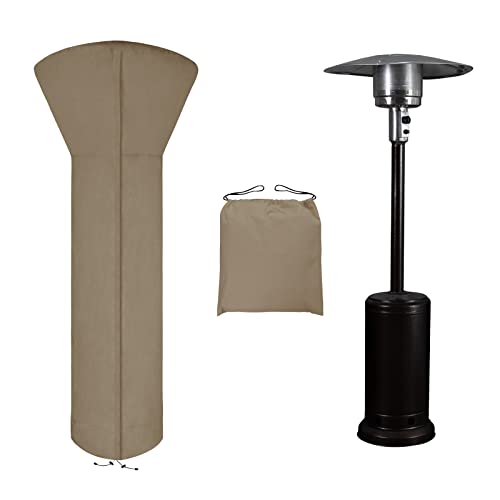
Where to buy
Check the latest price, availability and delivery on Amazon. Orders are placed on Amazon. We may earn a commission from qualifying purchases. Every product below is an accessory or personal warmer — none of them is a patio heater, and each is labelled with its true type.
- Best overall accessory: Easy-Going Patio Heater Cover, 89 in. H x 33 in. D x 19 in. B — Check on Amazon
- Best for tabletop heater owners: Classic Accessories Veranda Water-Resistant 21 Inch Round Table Top Patio Heater Cover — Check on Amazon
- Best efficiency upgrade for a heater you own: Heat Focusing Reflector Shield for Round Propane Patio Heaters, 10 Panels — Check on Amazon
- Best safety and planning accessory: DOZYANT Propane Tank Gauge Level Indicator with Leak Detector, QCC1 Type 1 — Check on Amazon
- Best repair part for a heater that will not stay lit: FD4 Thermocouple and Dump Switch Repair Kit for Propane Patio Heaters, 350 mm — Check on Amazon
- Best personal warmth under $20: Lerat Rechargeable Hand Warmers, 2 Pack, Electric Pocket Warmers — Check on Amazon
Read the full guide ↓
Disclosure: As an Amazon Associate, dailyhomedecorating.com earns from qualifying purchases. Links to Amazon on this page are affiliate links; they cost you nothing extra. Listing details such as price and availability change often, so check the current Amazon listing before you buy.
The search for the best patio heater for apartments under $20 runs into two walls, and an honest guide has to show you both. The first is price: as the base version of this guide explains, no genuine patio heater exists at or under $20 anywhere — the appliance’s burner, valve, reflector and safety hardware cost more than that before assembly. The second wall is specific to apartments, and it matters more: on most apartment balconies, a combustion patio heater is not merely expensive or impractical, it is prohibited. Fire codes and leases converge on the same answer, and no bargain changes it. This guide therefore does something more useful than pretend otherwise — it explains the rules precisely, then shows you what $20 legitimately buys a renter who wants to use a balcony on cool evenings.
The prohibition first, because everything else follows from it. The International Fire Code, Section 308.1.4, provides that charcoal burners and other open-flame devices shall not be operated on combustible balconies or within 10 feet of combustible construction, with narrow exceptions such as one- and two-family dwellings and balconies protected by an automatic sprinkler system. NFPA 1, the Fire Code, carries parallel restrictions, and local amendments plus your lease and building rules are usually stricter, not looser — many buildings ban gas appliances and cylinder storage on balconies outright, and transporting a standard propane cylinder through common areas raises its own code problems. A mushroom heater on a typical apartment balcony fails on flame, on clearance and on fuel storage simultaneously. Do not buy one for a balcony, and do not let a listing’s lifestyle photograph tell you otherwise.
Electric heating is the only category a renter can even discuss — and it comes with its own hard limits, which this guide covers in its own section below: balcony outlets are often absent or not yours to use, a typical circuit offers limited capacity that a heater consumes almost entirely, extension cords and power strips are prohibited for heater use by fire-safety guidance, and many leases ban balcony heaters of every kind. Where your building does allow a small electric unit, it belongs to a higher budget tier than this one anyway. So the honest apartment answer at $20 is the same shape as everywhere else, with a renter’s twist: accessories for a heater you legitimately use elsewhere, protection for a tabletop unit your building permits, and — most relevant for most renters — personal warmth that no fire code restricts.
That is what the six picks below are. Each is labelled with what it truly is — an accessory, not a heater. The hand warmers and the cover will matter to almost every renter; the gauge, reflector and repair kit matter to renters who also have a house, a garden plot, a family patio or a permitted ground-floor terrace where a real heater lawfully lives. Read the balcony-rules section before you buy anything with a flame in its future, and check your lease before you buy anything at all.
In this guide
Quick Picks
In a hurry? The table below matches each need to the one product in this guide that fits it. Read the type column with care — at this budget you are buying protection, repair, monitoring and personal warmth, not a heater, and knowing exactly what each object is will save you a wasted purchase.
| Buyer type | Pick | Type | Why it stands out | Link |
|---|---|---|---|---|
| Best overall accessory | Easy-Going Patio Heater Cover, 89 in. H x 33 in. D x 19 in. B | Cover — accessory, not a heater | Sized for the standard standing-heater silhouette, so it covers the reflector dome instead of stopping halfway down the pole | Check on Amazon |
| Best for tabletop heater owners | Classic Accessories Veranda Water-Resistant 21 Inch Round Table Top Patio Heater Cover | Tabletop cover — accessory, not a heater | Correct scale for tabletop units, so it does not pool, flap or drag the way an oversized cover does | Check on Amazon |
| Best efficiency upgrade for a heater you own | Heat Focusing Reflector Shield for Round Propane Patio Heaters, 10 Panels | Reflector — accessory, not a heater | Redirects heat that would otherwise be lost above the reflector toward the seating area | Check on Amazon |
| Best safety and planning accessory | DOZYANT Propane Tank Gauge Level Indicator with Leak Detector, QCC1 Type 1 | Gauge — accessory, not a heater | Color-coded dial readable at a glance, even in low evening light | Check on Amazon |
| Best repair part for a heater that will not stay lit | FD4 Thermocouple and Dump Switch Repair Kit for Propane Patio Heaters, 350 mm | Safety repair part — accessory, not a heater | Addresses the single most common patio-heater fault: a heater that lights but will not stay lit | Check on Amazon |
| Best personal warmth under $20 | Lerat Rechargeable Hand Warmers, 2 Pack, Electric Pocket Warmers | Personal warmer — accessory, not a patio heater | Real, immediate warmth for one or two people at a budget where area heating is impossible | Check on Amazon |
How These Picks Were Chosen
Picks for the apartment variant were chosen under three filters that the base guide does not need. First, nothing that requires a flame on a balcony could be recommended for balcony use — so every combustion-related pick here is framed for the places renters may lawfully use a real heater: a permitted ground-floor terrace, a house or garden elsewhere, or a heater owned jointly with family. Second, every pick had to be small, storable and movable: renters move, storage is a closet, and a purchase that cannot survive a change of address is a poor purchase. Third, recall listings were checked for every product, as in every variant of this guide, and anything recalled was excluded. Within those filters, the same value logic applies as in the base guide: protect first, repair second, improve third, and where no heater is lawfully possible, warm the person rather than pretending to warm the air.
The 6 Best Patio Heater Accessories for Apartments Under $20: Best patio heater for apartments under $20
Each review follows the same honest structure: who the product suits, what it genuinely does well, its real limitation stated without varnish, a variant-specific note on how it earns its place in this version of the guide, and a clear choose-or-skip verdict.
Easy-Going Patio Heater Cover, 89 in. H x 33 in. D x 19 in. B
Type: Cover — accessory, not a heater. This is a full-length cover sized for a standard mushroom-style standing heater: 89 inches tall, with a 33-inch dome diameter and a 19-inch base diameter in the listing title. It closes with a zipper, comes with a storage bag, and is described by the maker as waterproof and resistant to dust, UV and wind. A cover is the single highest-value purchase in this entire guide, because the heater you already own — or the heater you are saving toward — dies from the top down. Rain sits in the reflector, rust blooms across the emitter screen, spiders nest in the burner orifice, and by the second winter a heater that should have lasted a decade lights reluctantly or not at all. A cover that goes on in thirty seconds, every time, quietly prevents almost all of that.
Who it suits: For renters, the cover’s relevance is geography: it belongs wherever your lawful heater lives — a designated ground-floor terrace if your building provides one, a family member’s patio, a garden you rent separately. Its renter virtues are that it is flat-pack small, weighs little, and moves house effortlessly, protecting a heater through the storage periods that renting imposes more often than owning does.
Pros
- Sized for the standard standing-heater silhouette, so it covers the reflector dome instead of stopping halfway down the pole
- Zipper closure means one person can fit or remove it without lifting the whole cover over the dome
- Storage bag keeps the cover itself clean and findable in the off-season instead of balled up in a garage corner
- Protects the parts that actually fail first: reflector, emitter, burner and ignition area
Honest limitation: A cover protects a heater; it does not warm anyone, and it cannot rescue a heater that is already rusted through or mechanically faulty. It must also only ever go on a completely cold heater — covering a warm emitter traps heat against fabric and is a fire risk, so the routine is: heater off, heater cold, then cover. Finally, a cover is not a substitute for proper storage of the propane cylinder, which should be disconnected and stored outdoors, upright and away from ignition sources, exactly as the heater manual directs.
Choose it if the job it does is the job you have; skip it if you were hoping it was a heater — it is not, and nothing at this budget is. Check on Amazon
Classic Accessories Veranda Water-Resistant 21 Inch Round Table Top Patio Heater Cover
Type: Tabletop cover — accessory, not a heater. Tabletop heaters live a harder life than standing models: they sit at elbow height, catch every splash and gust, and are usually the first thing knocked when a table is cleared. This 21-inch round cover from Classic Accessories’ Veranda line is made for that smaller format. It is water-resistant rather than fully waterproof in the maker’s description — an honest distinction worth respecting — and it turns a tabletop heater from a permanently weather-exposed object into one that at least spends its idle hours dry. If your household already owns a tabletop unit, this is the purchase that keeps its reflector bright and its pilot assembly free of the grit and moisture that make small heaters temperamental.
Who it suits: The tabletop cover is the apartment variant’s conditional pick: if — and only if — your building permits a tabletop heater in a lawful location, this is how you protect it between uses, because permitted terrace space is shared space and weather there is nobody’s job but yours. If no tabletop heater is lawful anywhere in your life, skip this pick without regret and put the money toward personal warmth.
Pros
- Correct scale for tabletop units, so it does not pool, flap or drag the way an oversized cover does
- From an established outdoor-cover maker with a consistent sizing system across its lines
- Water-resistant shell sheds dew, drizzle and splashes — the everyday moisture that corrodes small burners
- Small and light enough that using it is a ten-second habit rather than a chore
Honest limitation: Water-resistant is not waterproof: in driving rain or a wet winter stored outdoors, moisture will eventually get through, so a covered tabletop heater still belongs under a roofline or in a shed for the off-season. And the same rule as every cover applies — cold heater only, never cover a unit that has run within the last hour. It also does nothing for a tabletop heater’s real weakness, which is its small fuel supply and modest heat radius; it preserves the heater, it does not improve it.
Choose it if the job it does is the job you have; skip it if you were hoping it was a heater — it is not, and nothing at this budget is. Check on Amazon
Heat Focusing Reflector Shield for Round Propane Patio Heaters, 10 Panels
Type: Reflector — accessory, not a heater. A standard mushroom heater throws a large share of its heat upward and outward into the night sky. A focusing reflector shield — this one a 10-panel design with a 12-inch height in the listing — clips around the existing reflector and bends more of that radiant energy down and out toward the people sitting around the heater. Owners fit these for two reasons: a seating circle that feels noticeably warmer at the same burner setting, and the option to run the burner lower for the same comfort, which stretches each propane cylinder further. Of everything in this guide, this is the pick that most changes how an evening feels — provided you already own the heater it attaches to.
Who it suits: A reflector has no balcony role in an apartment building, and this guide will not pretend otherwise. Its place here is for the renter with a lawful heater elsewhere — the family patio you host at, the house you part-own or are saving for — where improving an existing heater’s reach is worth more than any balcony workaround. Bought for that heater, it is excellent; bought for a balcony, it is a ornament. Choose accordingly.
Pros
- Redirects heat that would otherwise be lost above the reflector toward the seating area
- Can let you run a lower burner setting for similar comfort, saving propane across a season
- Panel design adapts to round natural-gas and propane heaters of the standard format
- No fuel, no power, no moving parts — fit it once and it simply works every night
Honest limitation: It is an attachment, not a heat source: with no heater to mount it on, it is a shaped piece of metal and nothing more. Fit must be checked carefully against your heater’s reflector diameter and mounting style before ordering, and like any part that lives above a burner it must be installed exactly per its instructions, on a cold heater, with every panel secure — a loose panel above a flame is unacceptable. It also cannot fix an undersized heater for a large space; it improves distribution, not total output.
Choose it if the job it does is the job you have; skip it if you were hoping it was a heater — it is not, and nothing at this budget is. Check on Amazon
DOZYANT Propane Tank Gauge Level Indicator with Leak Detector, QCC1 Type 1
Type: Gauge — accessory, not a heater. Running out of propane mid-evening is the most common patio-heater failure of all, and it is entirely preventable. This brass-bodied gauge screws between the cylinder valve and the heater’s regulator on standard QCC1 Type 1 connections, fits the 5- to 40-pound cylinders listed in its title, and shows a color-coded dial reading of how much fuel remains. It also incorporates a leak-detector function: if the dial drops abnormally with everything off, you have early warning of a leak worth investigating before the next lighting. It is a small, unglamorous object that removes the two worst surprises in propane heating — the silent empty tank and the silent leak.
Who it suits: The gauge earns its apartment place through the grill, not the heater: many renters lawfully use a propane grill in a designated area even where heaters are banned, and the same QCC1 gauge that serves a patio heater serves that grill — preventing the dead-cylinder dinner and adding leak awareness wherever a cylinder is lawfully connected. It is also the pick most likely to be borrowed by every propane user you know.
Pros
- Color-coded dial readable at a glance, even in low evening light
- Fits the standard QCC1 Type 1 connection used by the great majority of patio heaters and grills
- Leak-detection behavior adds a genuine safety function, not just convenience
- Solid, simple, no batteries — it works by pressure and lasts for years
Honest limitation: A pressure-based gauge is an estimate, not a laboratory measurement: readings shift with temperature, and the dial is best treated as ‘plenty, getting low, swap soon’ rather than a precise percentage. It also only fits QCC1 Type 1 connections, so older POL-style fittings need a different solution. And a gauge never replaces the soapy-water leak test after every cylinder change — it complements that habit, it does not cancel it. Fit it hand-tight plus the maker’s specified turn, check for leaks, and only then light the heater.
Choose it if the job it does is the job you have; skip it if you were hoping it was a heater — it is not, and nothing at this budget is. Check on Amazon
FD4 Thermocouple and Dump Switch Repair Kit for Propane Patio Heaters, 350 mm
Type: Safety repair part — accessory, not a heater. Two small components decide whether a propane patio heater works at all. The thermocouple sits in the pilot flame and proves to the gas valve that a flame exists; when it fails, the heater lights, you release the knob, and it dies. The FD4 dump switch — the tilt switch — cuts the gas if the heater tips. This kit pairs a 350 mm thermocouple with an M8x1 valve thread and an FD4 dump switch, the combination that fits a wide range of standard propane patio heaters. If your heater’s only fault is the classic light-and-die pattern, this kit is very often the difference between a working heater and a scrapped one — for less than the cost of a single propane refill.
Who it suits: Renters should read this pick as a knowledge asset as much as a part. The light-and-die pattern, the thermocouple’s role, the tilt switch’s purpose — understanding them makes you a safer user of any gas appliance you encounter, including a landlord-provided grill or a heater at a rented holiday home. Buy the kit when you have a lawful heater with that exact fault and the confidence to fit it; otherwise, let the knowledge alone justify its place in the guide.
Pros
- Addresses the single most common patio-heater fault: a heater that lights but will not stay lit
- Includes the tilt/dump switch, so the tip-over safety function is renewed at the same time
- 350 mm lead length suits the standard tower format; M8x1 thread is the common valve fitting
- Far cheaper than a replacement control valve, let alone a replacement heater
Honest limitation: Fit is everything: the listing itself says to verify fit, and you must confirm your heater uses an M8x1 valve thread and a comparable thermocouple length before ordering — tower, tabletop and pyramid models differ. This is also gas-appliance work. If you are not confident testing for leaks with soapy water after reassembly, or your heater has any other fault — a cracked hose, a corroded valve, a damaged regulator — the correct purchase is a qualified technician’s time, not a parts kit. Never bypass or tape down a tilt switch to keep a heater running; that switch is the tip-over protection.
Choose it if the job it does is the job you have; skip it if you were hoping it was a heater — it is not, and nothing at this budget is. Check on Amazon
Lerat Rechargeable Hand Warmers, 2 Pack, Electric Pocket Warmers
Type: Personal warmer — accessory, not a patio heater. Everything else in this guide supports a heater. This pick takes a different, honest route: if the budget cannot buy area heat, it can still buy personal heat. This two-pack of slim rechargeable hand warmers — the listing gives a maximum temperature of 131 degrees Fahrenheit — puts warmth in a coat pocket or a pair of gloves, one unit per hand or one for each of two people. For a single person on a chilly patio, personal warmth is surprisingly effective, because cold hands are usually what send people indoors first. Rechargeable also means no disposable packets to keep buying: charge them with the evening’s dishes, drop them in your pockets, and the patio stays usable a little longer.
Who it suits: For apartments, the hand warmers are not the fallback — they are the headline. They are the only pick that warms anyone on the balcony itself, they break no rule in any building, they need no outlet, no fuel and no permission, and they travel to every future home. Two people, two pockets, one throw: that is the entire lawful heating system of most apartment balconies, and at under $20 it is a good one.
Pros
- Real, immediate warmth for one or two people at a budget where area heating is impossible
- Slim pocket format works with gloves, coat pockets and laps under a blanket
- Rechargeable, so there is no ongoing cost in disposable warmers
- Useful far beyond the patio — commuting, dog walking, stadium seats, cold workshops
Honest limitation: Be precise about what this is: a hand warmer warms hands. It will not raise the temperature of a patio, a seating circle or a dinner party by a single degree, and it is not a patio heater in any sense. Battery care matters too — charge on a hard, non-flammable surface, never charge unattended overnight, stop using any unit that swells, overheats or is damaged, and check the exact model against current recall listings before buying, as some rechargeable hand warmers from other makers have been recalled for battery overheating. Runtime varies with heat level, so the highest setting is best saved for the coldest hour.
Choose it if the job it does is the job you have; skip it if you were hoping it was a heater — it is not, and nothing at this budget is. Check on Amazon
Comparison Table
| Pick | Type | Best for | Link |
|---|---|---|---|
| Easy-Going Patio Heater Cover, 89 in. H x 33 in. D x 19 in. B | Cover — accessory, not a heater | Best overall accessory | Check on Amazon |
| Classic Accessories Veranda Water-Resistant 21 Inch Round Table Top Patio Heater Cover | Tabletop cover — accessory, not a heater | Best for tabletop heater owners | Check on Amazon |
| Heat Focusing Reflector Shield for Round Propane Patio Heaters, 10 Panels | Reflector — accessory, not a heater | Best efficiency upgrade for a heater you own | Check on Amazon |
| DOZYANT Propane Tank Gauge Level Indicator with Leak Detector, QCC1 Type 1 | Gauge — accessory, not a heater | Best safety and planning accessory | Check on Amazon |
| FD4 Thermocouple and Dump Switch Repair Kit for Propane Patio Heaters, 350 mm | Safety repair part — accessory, not a heater | Best repair part for a heater that will not stay lit | Check on Amazon |
| Lerat Rechargeable Hand Warmers, 2 Pack, Electric Pocket Warmers | Personal warmer — accessory, not a patio heater | Best personal warmth under $20 | Check on Amazon |
Read the table as a toolkit, not a ranking: the right purchase is the one whose job matches your situation, and buying two picks that solve your two real problems beats buying the whole table.
Safety First: Fire, Carbon Monoxide, Clearance and Tip-Over Protection
Every patio heater manual opens with the same warnings, and they are repeated here because no budget changes them. A propane or natural-gas patio heater is a combustion appliance. It produces carbon monoxide, which has no smell and no color, and which can kill in an enclosed or poorly ventilated space. That is why these heaters are for outdoor use only — never in a garage with the door half open, never in a tent, a screened room with the screens down and still air, a conservatory, or any space that behaves like indoors. If anyone near a running heater develops a headache, dizziness, nausea or watery eyes, turn the heater off if it is safe to do so, move everyone into fresh air, and treat the symptoms as the emergency they may be.
Clearance is the second non-negotiable. Manufacturer manuals for standard mushroom heaters typically require at least three feet of clearance from combustible materials at the sides, and clear space above the reflector as the manual specifies — and those figures are minimums, not targets. Furniture cushions, throws, paper, cardboard, dry planting, curtains on an open door, and the fabric of a gazebo or umbrella all count as combustibles. The heater itself becomes extremely hot in use; the reflector and emitter can ignite material that touches or leans against them, and children and pets must be kept from contact. Site the heater on a firm, level, non-combustible surface where it cannot be knocked, and never leave a running heater unattended.
Tip-over protection is the third. Modern propane heaters include a tilt or dump switch that cuts the gas when the heater leans or falls, and a thermocouple that shuts the valve if the pilot flame goes out. These devices only protect you if they work: never bypass, tape down or defeat a tilt switch, test that a heater shuts down as its manual describes, and replace a faulty thermocouple or switch with the correct part — one of this guide’s picks exists for exactly that job. Finally, fuel discipline: connect and disconnect cylinders only with the heater cold and off, leak-test every new connection with soapy water, store cylinders outdoors, upright, away from heat and ignition sources, and never store a spare cylinder under or beside a running heater. If you smell gas at any point: shut off the gas at the cylinder if safe, extinguish open flames, move away, and call your gas supplier or fire department from a safe distance.
How to Choose as a Renter: Rules First, Then Warmth
Begin with documents, not products. Read your lease’s balcony and appliance clauses, then your building’s house rules, then — if both are silent — your local fire code’s adoption of the IFC and any municipal amendments. The order matters because the strictest rule wins in practice: a lease can ban what the code allows, and a building can ban what the lease omits. Questions worth asking your landlord or manager in writing: Are any heaters permitted on balconies? Are propane cylinders permitted anywhere on the premises? Is there a designated ground-floor area where grills or heaters may be used? Written answers protect you; verbal shrugs do not.
Then match the purchase to your real geography. If your only outdoor space is a balcony where combustion is prohibited — the common case — your $20 buys personal warmth and nothing else, and the hand warmers in this guide, layered with a throw and warm clothing, are the entire honest answer. If you have access to a lawful place to run a real heater — a ground-floor patio your building designates, a family home, an allotment or garden — the cover, gauge, reflector and repair kit become relevant in the base guide’s order: protect, monitor, improve, repair. If your building explicitly permits a small electric tabletop unit and provides a suitable outdoor outlet, that appliance belongs to a higher tier; the tabletop cover here will protect it once bought.
Finally, buy for the move. Every pick in this guide packs into a drawer or a small box, travels in a car boot, and remains useful at the next address — including the house some renters are saving toward, where the cover and gauge will be needed on day one. Apartment spending that survives the apartment is the only spending that makes sense at this budget.
Balcony Rules and Electrical Limits, Stated Plainly
The fire-code position deserves one precise restatement. IFC Section 308.1.4 addresses open-flame cooking devices, and fire officials apply the same logic to open-flame heating devices: they shall not be operated on combustible balconies or within 10 feet (about 3 metres) of combustible construction. Most apartment balconies are combustible or surrounded by combustible construction within that distance, and most are far smaller than the clearance a mushroom heater’s own manual demands — typically at least three feet at the sides plus clear space above the reflector. The exceptions are narrow: one- and two-family dwellings, and balconies protected by automatic sprinklers, sometimes with tiny one-pound LP-gas containers permitted for cooking devices. A standard 20-pound cylinder heater fits none of them. NFPA 1’s fire code provisions and NFPA 58’s rules on LP-gas storage and transport point the same way, and local codes frequently add their own bans. This guide will never encourage a reader to test a fire marshal’s patience: the rule is the rule, and the fine, the lease violation and the fire risk are all real.
Electric heat has a different constraint: capacity. A typical residential circuit is rated at 15 amps at 120 volts, and a plug-in heater on its high setting draws close to that circuit’s practical continuous limit by itself — which is why heater guidance insists on a dedicated wall outlet, never an extension cord or power strip, and why a balcony outlet shared with lighting or indoor loads is a poor foundation. Add three renter-specific problems: many balconies have no outlet at all; running a cord through a door or window defeats the door’s seal and creates a trip and pinch hazard; and a heater left outdoors must be rated for outdoor use, which indoor space heaters are not. If your building permits a small outdoor-rated electric unit on a proper outlet, treat that as a higher-tier project with its own guide — and never bring a combustion heater indoors or onto a prohibited balcony as a substitute, because carbon monoxide does not respect good intentions.
Making a Balcony Feel Warm Without Heating It
Since the balcony itself cannot lawfully be heated by flame and rarely by electricity, it is worth collecting the measures that genuinely change how a balcony feels on a cool evening — because perceived warmth is a real quantity, and renters are allowed all of it. The largest factor is wind. Moving air strips warmth from skin and clothing faster than still air several degrees colder, so the single most effective balcony improvement is a wind shadow: sit in the building’s lee, angle a lawful screen or the balcony’s own furniture to break the prevailing breeze, and choose the corner the wind reaches last. None of this involves an appliance, a rule or a purchase, and experienced balcony users rate it above every gadget.
The second factor is contact. Cold flows into the body through chair seats, metal armrests and balcony floors far faster than through the air, which is why a cushion under you, a throw over legs and warm footwear change an evening more than their simplicity suggests. The third factor is the body’s own state: a hot drink in both hands, a meal eaten outdoors rather than carried out cold, and movement — the balcony gardener pruning, watering and rearranging is warmer than the balcony sitter at the same temperature, which is one reason balcony gardens get tended so lovingly in October. Layer the hand warmers from this guide into that system — pockets warmed, hands warm around a mug — and a balcony that cannot be heated can still be inhabited, lawfully and comfortably, weeks longer into the autumn.
There is a final, strategic point. Every one of these measures is portable to the home many renters are saving toward, where a real heater will one day be lawful and this guide’s other picks will come into their own. The renter who learns wind, contact and layering now will also site that future heater better, choose its format more wisely, and waste less money learning. Apartment constraints feel like a wall; treated properly, they are a training ground — and the $20 in this guide is tuition that transfers.
Common Buying Mistakes
Assuming a small heater is a permitted heater
Tabletop size does not change combustion. A small propane unit on a combustible balcony still involves open flame, clearance failures and cylinder storage, and is prohibited in the same way as a full-size heater. Size is not an exception in the fire code.
Storing a cylinder on the balcony or in a closet
Propane cylinders belong outdoors, upright and away from ignition sources — and on most apartment premises they do not belong at all. A cylinder in a storage cage against the building, a hallway or a balcony corner violates both code logic and most leases.
Running an indoor space heater on the balcony
Indoor heaters are not outdoor-rated: dew, rain and balcony dust attack appliances built for dry rooms, and the cord through the door adds its own hazards. If it is not rated for outdoor use, it does not go outdoors.
Using an extension cord or power strip
Heater guidance is unambiguous: plug directly into a wall outlet. Cords and strips overheat under sustained heater loads, and a cord draped across a balcony is also a trip hazard in the dark. No suitable outlet means no electric heater — not a longer cord.
Trusting a verbal ‘probably fine’
Balcony rules are enforced by fire marshals, insurers and landlords, none of whom accept ‘the manager shrugged’ as a defense. Get the answer in writing before any heater purchase, and keep it with your lease.
Buying the heater before checking anything
At higher tiers this mistake costs renters real money: an appliance that cannot lawfully be used, stored or fueled at your address. The $20 version of the same discipline is this guide’s order of operations — rules first, then products.
Final Recommendation
For most renters, the honest purchase in this guide is the Lerat rechargeable hand warmers: lawful everywhere, useful at every future address, and genuinely warming for the one or two people a balcony actually holds. If you also have lawful access to a real heater elsewhere, protect it with the Easy-Going patio heater cover and monitor its fuel with the gauge. And if your building is one of the rare ones that permits more, read the higher-tier guides linked below with your lease in hand — rules first, warmth second, always in that order.
Frequently Asked Questions
Are patio heaters allowed on apartment balconies?
Combustion patio heaters are effectively prohibited on most apartment balconies. IFC Section 308.1.4 bars open-flame devices on combustible balconies and within 10 feet of combustible construction, with narrow exceptions, and leases and building rules are usually stricter. Electric units depend on your lease, building rules and having a suitable outdoor outlet. Always get your building’s position in writing.
Can I use a small tabletop propane heater on my balcony instead?
In almost all cases, no. The prohibition is about open flame, fuel storage and clearance, not size — a tabletop propane heater fails on the same grounds as a full-size one, and its manual’s clearances alone exceed most balconies. Small is not an exception.
What about an electric heater on the balcony?
Only if your lease and building allow it, the unit is rated for outdoor use, and it plugs directly into a suitable wall outlet — never an extension cord or power strip. A typical heater consumes most of a 15-amp circuit’s practical capacity, so shared circuits are a problem. Many buildings ban balcony heaters entirely; check first.
Can I store a propane cylinder on my balcony or in my storage unit?
Generally no. Cylinders must be stored outdoors, upright and away from ignition sources, and most apartment premises prohibit them outright. Indoor storage — closets, hallways, storage cages inside the building — is exactly what the rules exist to prevent, because leaking propane pools in low, enclosed spaces.
How can I stay warm on a cool balcony without a heater?
Warm the person, not the air: rechargeable hand warmers in your pockets, layered clothing, a throw over legs, warm drinks, and a windbreak position out of the breeze. For one or two people this combination is surprisingly effective, it is lawful everywhere, and at this budget it is the only real warmth available.
My landlord said a heater is probably fine. Is that enough?
No. Ask for the answer in writing, and check it against your lease and local fire code — the strictest rule is the one that will be enforced after an incident, and insurers read documents, not recollections. If the written answer permits an electric unit, the higher-tier guides linked below will help you choose one safely.
Related Guides
When you are ready to look beyond this tier — with your building’s written rules in hand — start with Best Patio Heater Under $50 and the apartment-specific Best Patio Heater For Apartments Under $50, compare the parallel budget picture in Best Outdoor Heater For Apartments Under $20 and Best Fire Pit For Apartments Under $20, and see what the standard standing models look like at Best Patio Heater Under $150 for the day a lawful space is yours.


