Where to buy
Check the latest price, availability and delivery on Amazon. Orders are placed on Amazon. We may earn a commission from qualifying purchases.
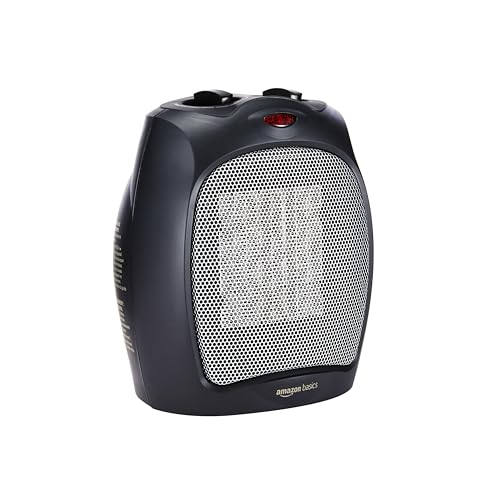
- Best apartment pick (electric, covered use): Amazon Basics Ceramic Space Heater, 1500W (Black) — Check on Amazon
- Best for a shared balcony seat: Amazon Basics Oscillating Ceramic Space Heater, 1500W (Black) — Check on Amazon
- Best for mild evenings: GiveBest Portable Electric Space Heater, 1500W/750W — Check on Amazon
- Best looking for a small balcony: Lasko Small Space Heater, 16-Inch Tower, 1500W — Check on Amazon
- Best for one chair, tiny footprint: Amazon Basics Ceramic Mini Heater, 500W (Black) — Check on Amazon
- Not for balconies — ground-level only: Buyplus Propane Heater, 15,000 BTU (Tank-Top) — Check on Amazon
Read the full guide ↓
Disclosure: As an Amazon Associate, dailyhomedecorating.com earns from qualifying purchases. Links to Amazon on this page are affiliate links; they cost you nothing extra. Listing details such as price and availability change often, so check the current Amazon listing before you buy.
The best patio heater for apartments under $50 is a search that begins with a rule, not a product: on most apartment balconies, combustion heaters are prohibited, full stop. International Fire Code Section 308.1.4 bars open-flame devices on combustible balconies and within ten feet of combustible construction in multi-family buildings, the NFPA fire code points the same way, and most leases repeat the ban in plain language — which means the propane and flame products that dominate patio-heater marketing are not bargains for apartment dwellers, they are lease violations with a price tag. This guide therefore ranks what an apartment resident can actually use: compact personal electric heaters for a covered balcony or patio, used dry, supervised and plugged straight into a wall outlet, each labelled honestly as a personal electric heater — not a mushroom heater. The single propane pick is included only to mark the boundary clearly: it is for open ground-level space, never for a balcony.
Within that boundary, the news is good. An apartment outdoor space is small by definition, and small is exactly what personal heat does well. A 1,500-watt ceramic heater aimed at one balcony chair or a two-person bench creates a genuinely comfortable pocket on a cool evening, stores in a closet afterwards, and costs little to run for the hour or two an apartment evening usually lasts. The picks below were chosen for apartment realities: tiny footprints, gentle electrical draws for older building circuits, quiet-enough fans for close neighbours, and safety systems that matter more, not less, when other homes sit feet from yours.
Two apartment-specific warnings run through this guide and are worth meeting early. First, check your lease and building rules before any purchase — some buildings restrict even electric heaters on balconies, and no guide can overrule your landlord. Second, never solve a short cord with an extension lead across a balcony; if the outlet cannot serve the seat safely, rearrange the seat. With those terms accepted, here is what $50 honestly buys an apartment.
In this guide
Quick Picks
Short on time? Each row names a buyer type and the product that suits it. Every pick is labelled with what it actually is — at this budget, honest labels matter more than marketing names.
| Buyer type | Pick | What it actually is | Link |
|---|---|---|---|
| Best apartment pick (electric, covered use) | Amazon Basics Ceramic Space Heater, 1500W (Black) | personal electric heater — not a mushroom heater | Check on Amazon |
| Best for a shared balcony seat | Amazon Basics Oscillating Ceramic Space Heater, 1500W (Black) | personal electric heater — not a mushroom heater | Check on Amazon |
| Best for mild evenings | GiveBest Portable Electric Space Heater, 1500W/750W | personal electric heater — not a mushroom heater | Check on Amazon |
| Best looking for a small balcony | Lasko Small Space Heater, 16-Inch Tower, 1500W | personal electric tower heater — not a mushroom heater | Check on Amazon |
| Best for one chair, tiny footprint | Amazon Basics Ceramic Mini Heater, 500W (Black) | personal electric mini heater — not a mushroom heater | Check on Amazon |
| Not for balconies — ground-level only | Buyplus Propane Heater, 15,000 BTU (Tank-Top) | tank-top propane heater — not a mushroom heater | Check on Amazon |
Why Apartments Change the Answer Completely
In a house, choosing a patio heater is a shopping problem. In an apartment, it is first a compliance problem. Fire codes written for multi-family buildings — IFC Section 308.1.4 is the widely adopted example — prohibit open-flame cooking and heating devices on combustible balconies and close to combustible construction, because a balcony fire is never one household’s fire. Property managers enforce the same rule through leases, and insurers enforce it after incidents. That framework removes every flame product from apartment consideration: no mushroom heaters, no tabletop propane units such as the Cuisinart COH-514 or BALI OUTDOORS models (which in any case priced above this budget when checked), and no personal propane heaters such as the Mr. Heater Little Buddy, whose indoor approval is a product certification, not a permission slip for a rented balcony. What survives the filter is electric personal heat on a covered balcony — and even that survives only where your lease allows it, the balcony stays dry, and a wall outlet is within the heater’s own cord reach.
The physics cooperate with the rules for once. Apartment balconies concentrate life into one or two seats, and a personal heater’s warm zone matches that scale almost exactly. You are not trying to heat a yard; you are trying to keep one reader or two coffee-drinkers comfortable, and 1,500 watts at three feet does it, while the 500-watt mini does it for a single chair with a third of the electrical draw — a real consideration in older buildings whose balcony outlets share circuits with half the living room.
How These Picks Were Chosen
Every candidate for this guide passed an apartment filter before a quality filter. Rule one: no combustion — anything with a flame was excluded from balcony recommendation regardless of price or fame, and the one propane product included is fenced off explicitly as ground-level-only context. Rule two: the product had to be a real listing inside the under-$50 tier when checked, with check price on Amazon shown instead of any fixed figure. Rule three: electric picks needed tip-over and overheat protection, because in a multi-family building a heater’s safety systems protect your neighbours as much as you. Rule four: footprint and storage were scored as primary features, not afterthoughts — a heater an apartment cannot store is a heater that lives on the balcony in the rain, which fails rule five: every electric pick is indoor-rated, so it must be a product a person can realistically carry inside after each use. Candidates were also screened against U.S. Consumer Product Safety Commission recall records, and any model under an active recall was excluded outright. The result is a short, honest list shaped by apartment life rather than by a warehouse catalogue.
Two standing rules shaped every line of the reviews that follow. No product price is printed anywhere in this guide, because prices in this category change constantly — where a product is linked, the listing itself is the price source, via check price on Amazon. And no fixed star ratings or review counts appear, for the same reason: those numbers move, and a guide that prints them is quietly going stale from the day it is published. What does not move is the hardware — output, safety systems, fuel, footprint — and that is what the reviews judge.
Detailed Reviews: Every Pick for Best patio heater for apartments under $50
1. Amazon Basics Ceramic Space Heater, 1500W (Black) — personal electric heater — not a mushroom heater
Who it suits: one favourite covered-porch or balcony chair, occupied by one person who wants steady, direct warmth.
This is the heater most under-$50 patio shoppers actually end up using, and it is important to name what it is before praising it: a compact indoor ceramic fan heater, roughly the size of a shoebox stood on end, that earns its place on a covered patio because it puts a focused cone of warm air on one or two seated people sitting close to it. The maker rates it at 1,500 watts on high and 900 watts on low, with a fan-only mode, an adjustable thermostat, tip-over protection and overheat protection. It weighs a little over two pounds, so moving it from a desk to a porch chair takes one hand, and the housing stays cool enough to reposition by its body while it runs on low. On a covered patio, the honest way to use it is at chair-side distance: set it on a hard, level surface a couple of feet from your legs, angled slightly upward, and it takes the edge off a cool evening for the person in that chair. It will not warm a seating circle, it will not fight wind, and the moment the air around you is moving, most of its output is carried away. Within those limits it is genuinely effective, because radiant-and-fan personal heat is about proximity, not square footage.
The controls are as simple as this class gets: a mode dial and a thermostat dial, no remote, no timer, no display. That simplicity is a virtue outdoors, where a heater lives in dust, pollen and the occasional splash of rain under a cover, and where a membrane keypad would age badly. The thermostat does cycle the element to hold a rough temperature in a still, enclosed-ish space such as a screened porch; in open air it will simply run continuously on high, which is the setting nearly every patio user ends up choosing. The fan is audible — a steady whoosh that most people stop noticing after a few minutes but that will compete with very quiet conversation if the unit sits on the table beside you rather than on the ground.
For apartments: the fixed Amazon Basics is the default balcony buy — the smallest full-power option, simple dials, and a body that vanishes into a closet. Aim it once at your chair and the evening is handled.
Pros:
- Full 1,500W output with a 900W low setting and fan-only mode
- Tip-over and overheat protection built in
- Featherweight at a little over two pounds — trivial to carry in and out
- Simple dials that tolerate dusty porch conditions better than touch panels
Honest limitation: It is an indoor-rated personal heater, so it belongs only on dry, covered patios, plugged directly into a wall outlet — never on an extension cord, never in rain, and never left running unattended. Its heat bubble is personal-sized: expect comfort for one chair, not a patio.
Choose it if the description above matches your seat and your space. Skip it if you need to warm a group, an open deck, or any space where the sitter is more than a few feet away.
2. Amazon Basics Oscillating Ceramic Space Heater, 1500W (Black) — personal electric heater — not a mushroom heater
Who it suits: two people sharing a bench, swing or loveseat who want one heater to serve them both in turn.
The oscillating sibling of the fixed Amazon Basics ceramic heater solves the one complaint the fixed model invites: a single narrow cone of heat that serves exactly one seat. This version keeps the same 1,500-watt ceramic element, the same high, low and fan-only settings, the same adjustable thermostat and the same tip-over and overheat protection, and adds a motorised oscillation that sweeps the warm air across a wider arc. On a covered patio that sweep matters more than the raw wattage suggests. Two people sharing a porch swing or a couple seated side by side on a bench both pass through the warm zone in turn, which feels far more generous than the same watts parked on one pair of knees. The trade is rhythm: instead of constant heat, each person gets waves of it, and on a cold, still evening some users prefer the fixed model’s unbroken stream.
Physically it is the same compact footprint, a little over two pounds, with the oscillation base adding a small amount of height and one more moving part to keep clean. Oscillation on a patio raises one placement point the fixed model does not: the unit needs a truly level, hard surface, because a wobbling base on deck boards or a rug edge makes the sweep uneven and can trip the tip-over switch mid-evening. Set it on a side table or a flat section of deck, give the sweep a clear arc with nothing flammable parked in front of it, and it behaves well. Like every electric pick in this guide, it is an indoor-rated appliance moonlighting outdoors: dry covered spaces only, direct wall outlet only, carried back inside when the evening ends.
For apartments: if your balcony seat is a two-person bench or a pair of chairs, the oscillating model is the upgrade that matters; the sweep shares one heater fairly, which on a small balcony beats buying two.
Pros:
- Oscillation shares one heater between two adjacent seats
- Same 1,500W/900W/fan settings and thermostat as the fixed model
- Tip-over and overheat protection
- Same light, compact body — easy to store indoors between uses
Honest limitation: Oscillation delivers heat in waves rather than a constant stream, which some people find less satisfying on the coldest evenings, and the moving base needs a genuinely flat surface or the tip-over switch can cut in. Still indoor-rated and dry-covered-patio only.
Choose it if the description above matches your seat and your space. Skip it if you sit alone and want an unbroken stream of heat rather than a sweeping rhythm.
3. GiveBest Portable Electric Space Heater, 1500W/750W — personal electric heater — not a mushroom heater
Who it suits: mild evenings and older circuits, where a gentler low setting matters as much as maximum output.
The GiveBest is the value benchmark in small ceramic heaters: a 1,500-watt high setting, a 750-watt low setting that the Amazon Basics pair does not offer in quite the same way, a fan-only mode, an adjustable thermostat, and tip-over and overheat protection, in a compact body with a carry handle moulded into the top. The 750-watt setting is the detail that earns this heater its place in a patio guide. On a mild evening, when 1,500 watts aimed at your shins feels like too much and nothing feels like too little, the low setting lands in between — and it also halves the electrical load, which matters on older porch circuits shared with string lights or a speaker. The maker describes it as heating up to around 200 square feet in enclosed indoor spaces; treat that as an indoor figure, because outdoors its useful zone is the same chair-side bubble as every other pick here, but within that bubble the two-step output gives it finer manners than most.
The thermostat is a simple dial, the controls are mechanical, and the fan noise sits in the same noticeable-but-ignorable band as its rivals. GiveBest sells this heater in very large numbers, which cuts both ways: parts and replacements are a non-issue and the design is well proven, but you should do the same first-evening checks you would with any budget heater — run it supervised, confirm the tip-over switch cuts power when you tilt it, and make sure the plug and cord stay merely warm, never hot, after an hour on high. Used on a dry covered patio, at close range, plugged straight into the wall, it is one of the most sensible ways to spend this budget.
For apartments: the GiveBest earns special mention for older buildings — its 750-watt setting keeps a mild evening comfortable while halving the load on a shared circuit that may also be feeding indoor lights.
Pros:
- 750W low setting is ideal for mild evenings and kinder to older circuits
- Thermostat, tip-over and overheat protection included
- Carry handle and compact footprint suit chair-side placement
- Fan-only mode earns its keep on warm nights too
Honest limitation: A budget-built unit: fit and finish are a step below the Lasko, and the thermostat is a coarse dial rather than a precise control. Indoor-rated, so dry covered patios only, no extension cords, and no unattended running.
Choose it if the description above matches your seat and your space. Skip it if you want premium fit and finish, or a precise digital thermostat.
4. Lasko Small Space Heater, 16-Inch Tower, 1500W — personal electric tower heater — not a mushroom heater
Who it suits: buyers who care how the porch looks and need full power from the smallest floor footprint.
The Lasko tower is the pick for people who find the shoebox-style heaters visually intrusive and audibly busy. Stretching the same 1,500 watts into a slim 16-inch tower with oscillation changes the character of the heat: instead of a knee-level blast, warm air leaves the tall grille across a vertical band, so a seated person’s legs and lap both sit in the stream, and the oscillation sweeps it across a loveseat or a pair of chairs. Lasko rates it with two quiet heat settings, an adjustable thermostat, overheat protection and a cool-touch exterior, and the tower format keeps the footprint to a dinner-plate circle — useful anywhere floor space is the scarcest resource. It is also the most finished-looking appliance in this guide, the one a design-conscious buyer can leave on a screened porch without feeling the space has been colonised by a workshop tool.
Two cautions come with the format. First, a tower’s height makes it the pick most sensitive to placement: on an uneven deck board or a thick outdoor rug it can rock, and while the safety systems are there to cut power if it falls, a heater that wobbles in a breeze is a heater placed wrong — it wants the flattest, hardest spot you have. Second, the taller grille tempts people to set it farther away and expect room-style coverage; resist that. It is still 1,500 watts, still a personal-zone heater outdoors, and it performs best at the same close chair-side distance as the others, just with a broader, gentler delivery. Dry, covered, supervised, straight into a wall outlet — the same rules as every electric pick here.
For apartments: the Lasko tower suits the balcony you can see from the sofa — it reads as a household appliance rather than equipment, and its dinner-plate footprint respects the tightest floor plan in this guide.
Pros:
- Tall oscillating grille warms legs and lap together, not just shins
- Smallest footprint of the 1,500W picks — a dinner-plate circle
- Two quiet settings and a cool-touch exterior
- The most porch-presentable design in this guide
Honest limitation: The tall body is the most placement-sensitive here: it needs a hard, level surface and dislikes thick rugs and uneven boards. It is also the easiest pick to over-trust at a distance — outdoors it remains a close-range personal heater.
Choose it if the description above matches your seat and your space. Skip it if your only spot is an uneven board run or a thick rug where a tower can rock.
5. Amazon Basics Ceramic Mini Heater, 500W (Black) — personal electric mini heater — not a mushroom heater
Who it suits: a single reader or worker in one chair, and anyone adding a second warm seat on a budget.
Five hundred watts sounds like a rounding error next to the 1,500-watt picks, and in a living room it would be. At the distance this little heater is designed for — on a side table beside one chair, or on the floor directly in front of one pair of feet — it is honestly sufficient on all but the coldest evenings, and it brings three advantages the bigger units cannot match. It weighs about a pound and a half and stands under six inches tall, so it disappears into a storage tote and perches on surfaces the towers cannot use. It draws roughly a third of the current, which makes it the safest electrical citizen on a circuit that is also running lights, a speaker or a second heater. And its single, simple job — one heat output, tip-over protection, a power indicator — leaves almost nothing to mis-set. Think of it as the heated-throw-blanket of this guide: not a room heater, not a patio heater in the mushroom sense, but a personal warmth appliance that does its small job reliably.
The limits are absolute and worth stating plainly. There is no thermostat to cycle it and no low/high choice to make; it is on, producing its modest stream of warm air, or it is off. Move it three feet away and you will barely feel it; add a breeze and you will not feel it at all. It earns a place in this guide for the tightly-defined jobs — one reader in one chair on a covered porch, one person at a small table — and for buyers whose electrical situation rules out a full 1,500-watt draw. If your evenings involve more than one person or genuinely cold air, step up to one of the 1,500-watt picks and treat this one as the second unit you add later for the far chair.
For apartments: the mini is arguably the most apartment-shaped product here: one chair, one small side table, a third of the electrical draw, and storage in a drawer-adjacent tote. For solo balcony readers it may be all you ever need.
Pros:
- Tiny and featherweight — fits side tables and stores anywhere
- 500W draw is gentle on shared or older circuits
- Tip-over protection and the simplest possible controls
- The natural second heater for the far end of a seating pair
Honest limitation: No thermostat and a single heat setting, and its warmth reaches one close person only — a few feet of distance or any breeze defeats it. Indoor-rated: dry covered use, direct outlet, supervised only.
Choose it if the description above matches your seat and your space. Skip it if more than one person needs warming, or your evenings are properly cold rather than cool.
6. Buyplus Propane Heater, 15,000 BTU (Tank-Top) — tank-top propane heater — not a mushroom heater
Who it suits: open, ground-level outdoor spaces with room for a wide clearance ring and no need for an outlet.
This is the only pick in the guide that is a true outdoor propane heater in the traditional sense, and its format explains both its appeal and its demands. A tank-top heater mounts directly onto a standard 20-pound propane cylinder, which becomes its base, its fuel supply and most of its weight. The maker rates this unit at up to 15,000 BTU with three adjustable settings and a safety shut-off valve, and 15,000 BTU of radiant propane heat is a different species from 1,500 watts of fan-blown air: it throws warmth several feet, works in moving air that defeats the electric picks, needs no outlet, and can run for many hours on a tank. For an open, ground-level outdoor space where cords cannot reach, it is the only under-$50 format that behaves like the patio heaters people picture.
Now the demands, which are not footnotes. A tank-top unit is an open-flame appliance with a very hot radiant head at roughly knee-to-waist height once mounted. It needs a wide, disciplined clearance zone — the maker’s instructions govern, and as a working rule you keep it well away from furniture, cushions, deck rails, siding and foot traffic, on open ground where nothing can be knocked into it. It produces carbon monoxide as all propane combustion does, so it is for open outdoor air only, never a garage, tent, screened enclosure or covered balcony. It is absolutely not an apartment-balcony appliance. Assembly and the tank connection must be leak-checked with soapy water before the first lighting of the season, and the tank valve is closed whenever the heater is off. Respect those terms and it is a capable, honest tool; skip them and no bargain justifies it.
For apartments — read carefully: this propane unit is NOT a balcony product. It appears in this guide solely so apartment readers can recognise the category and its boundary: open-flame, carbon-monoxide-producing, ground-level open air only. If your building has a shared ground-level courtyard and management confirms in writing that such a heater is permitted there, that is the only apartment-adjacent scenario it fits.
Pros:
- Real radiant propane heat that works in wind and needs no outlet
- Three settings up to a maker-rated 15,000 BTU
- Runs for many hours on a standard 20 lb tank
- Safety shut-off valve fitted
Honest limitation: Open-flame combustion: open ground-level outdoor use only, wide clearances, carbon monoxide rules out any enclosed or covered space, and it is prohibited territory for apartment balconies. The 20 lb tank is bought separately and is part of the real cost and footprint.
Choose it if the description above matches your seat and your space. Skip it if your space is covered, enclosed, a balcony, or too small for a wide enforced clearance zone.
Comparison Table
| Pick | Fuel and output | Realistic coverage | Safety equipment | Best setting |
|---|---|---|---|---|
| Amazon Basics Ceramic 1500W (Black) | Electric, 1,500W/900W | One seat, fixed cone | Tip-over + overheat | Covered patio, chair-side |
| Amazon Basics Oscillating 1500W | Electric, 1,500W/900W | Two seats, sweeping | Tip-over + overheat | Covered patio, shared seat |
| GiveBest 1500W/750W | Electric, 1,500W/750W | One–two seats | Tip-over + overheat | Mild evenings, older circuits |
| Lasko 16-inch Tower 1500W | Electric, 1,500W | One–two seats, tall grille | Overheat protection, cool touch | Finished porches, tight floors |
| Amazon Basics Mini 500W | Electric, 500W | One seat, very close range | Tip-over protection | Single chair, side table |
| Buyplus Tank-Top 15,000 BTU | Propane, up to 15,000 BTU | Small open-air circle | Safety shut-off valve | Open ground-level yard only |
Coverage figures describe the zone in which a seated person actually feels warmth outdoors, not a maker’s enclosed-room rating. Every electric pick in this table is a personal electric heater — not a mushroom heater — and the propane pick is a tank-top unit, not a tabletop or tower model.
Apartment Safety: Fire Codes, Carbon Monoxide and Neighbours
Start with the prohibitions, because in an apartment they are the safety section. Open-flame devices — propane patio heaters, tabletop burners, fire pits — are barred on combustible balconies and within ten feet of combustible construction under International Fire Code Section 308.1.4 as adopted in many jurisdictions, with parallel provisions in the NFPA fire code, and most leases and condo rules impose the same ban independently. Storage follows the same logic: propane cylinders do not belong inside an apartment or on many balconies at all. Carbon monoxide is the second prohibition engine: any combustion heater produces it, balconies trap air against the building, and CO drifting through a neighbour’s open window is a harm you can cause without ever feeling it yourself. This is why the guide’s only propane pick is fenced to open ground-level ground, and why no adapter, hack or ‘small flame’ argument changes the answer. On refill adapters specifically: never use an adapter to refill disposable 1 lb propane cylinders — they are not built for refilling, the leak and overfill risk is real, and in a multi-family building that risk is imposed on everyone around you.
For the electric picks you can use, apartment discipline is specific. Confirm your lease allows a heater on the balcony at all. Use the heater only on a covered, dry balcony, on a hard level surface, with three feet of clearance from cushions, throws, rail planters and the building wall. Plug directly into the wall outlet — extension cords across a balcony are both a fire risk and a trip line over a drop. Never run the heater unattended, never while sleeping, and bring it indoors after use rather than leaving an indoor-rated appliance out in weather. Keep the fan’s noise in mind after quiet hours; your neighbours are close. And before each season, check your heater’s model against the CPSC recall database — a recalled heater in a multi-family building is a building-wide problem, not a personal choice.
How to Choose the Best Patio Heater for Apartments Under $50
Question one is permission: read your lease’s balcony and appliance clauses and, if they are silent, ask management — in writing — before spending anything. Question two is cover: an uncovered balcony rules out every electric pick in this guide, because indoor-rated heaters and rain do not mix; in that case your honest options are blankets and waiting for a higher budget, not a braver product. Question three is the seat count: one chair points to the fixed Amazon Basics or the 500-watt mini; a shared bench points to oscillation. Question four is your circuit: older buildings reward the GiveBest’s 750-watt setting and the mini’s 500-watt draw, while a modern dedicated balcony outlet can feed any 1,500-watt pick. Question five is storage: measure where the heater will live indoors, because the best apartment heater is the one that actually gets carried in. Work through those five in order and the right pick usually names itself.
Common Mistakes Apartment Buyers Make
The costliest mistake is importing a house product into an apartment: a tabletop propane heater bought because it is small, used on a balcony where open flame is prohibited, discovered by management or, worse, by an insurer after an incident. Second is assuming a product’s ‘indoor safe’ label settles the question — certification describes the appliance, not your lease or your fire code. Third is the extension cord snaked from indoors, which adds a fire risk, a trip hazard and a door that no longer closes against the weather. Fourth, renters leave indoor-rated electric heaters on the balcony all season; a few rain cycles later the safety systems they were counting on are corroded guesses. Fifth is storing propane cylinders indoors or on the balcony ‘just for winter’, against both code and common sense. Sixth, buyers ignore the neighbours: a fan heater rattling against a shared rail at midnight is a complaint with a plug. Finally, many apartment shoppers never ask management the one question that decides everything, and learn the building’s rule from a violation notice instead.
Final Recommendation
For apartment readers the ranking is simple: the fixed Amazon Basics 1500W for a single covered-balcony seat, its oscillating sibling for a shared one, the GiveBest where wiring is old, the mini where the balcony and the circuit are both small, and the Lasko where looks count. The propane pick stays fenced to permitted ground-level space and plays no part in a balcony plan. If your lease bans balcony heaters outright, this guide’s honest final word is to believe it and spend the $50 elsewhere in this series — no evening’s warmth is worth a lease, a deposit or a neighbour’s safety.
Living With a Balcony Heater: A Renter’s Routine
Apartment heating succeeds or fails on routine, so it is worth designing yours before the first cold evening. Start with the permission paper trail: keep management’s answer — the lease clause or the email — somewhere you can find it, because the resident who can show the rule was checked is in a different conversation from the resident who assumed. Set a storage home indoors the day the heater arrives: a closet corner or a tote by the door. The balcony itself is never the storage plan; an indoor-rated appliance that lives outside in weather is quietly becoming a different, unverified appliance, and in a building full of neighbours that is not a private risk.
The evening routine itself is short. Carry the heater out, place it on the hard, level spot you have already chosen — the spot that preserves three feet from cushions, throws and the planter rail — plug it directly into the wall outlet, and let it pre-warm your chair while you make the drink. During the evening, treat the cord as part of the furniture: routed along the wall, never across the walking line between door and chair. When the evening ends, heater off, a moment to cool, back inside. Ninety seconds of ritual is the entire maintenance contract, and it is why the electric picks suit renters so well: there is no fuel to store, no tank to hide, no flame to explain — the three things apartment rules are actually written about.
One neighbour note, offered plainly: a balcony heater is audible and visible to the homes around you, and both facts argue for the quieter settings after dark. The GiveBest on low or the mini at close range will keep you comfortable without broadcasting fan noise across the stack of balconies, and a heater used considerately is a heater nobody ever complains about — which, in a rented home, is a feature as real as wattage.
Frequently Asked Questions
Can I use a propane patio heater on my apartment balcony?
In most cases, no. Fire codes such as IFC Section 308.1.4 prohibit open-flame devices on combustible balconies in multi-family buildings, and most leases ban them independently. Treat propane as prohibited unless your local code and your landlord both clearly say otherwise in writing.
Is an electric heater allowed on a balcony?
Often, but not always — your lease decides. Where allowed, use it only on a covered, dry balcony, plugged directly into a wall outlet, supervised, with three feet of clearance, and store it indoors after use.
Why is there a propane heater in an apartment guide at all?
To mark the boundary honestly. Some apartment residents also have access to permitted ground-level courtyards, and many readers arrive here shopping for propane. The guide includes one propane pick fenced with its rules rather than pretending the category does not exist.
What if my balcony has no outdoor outlet?
Do not use an extension cord. Rearrange seating toward an existing outlet, or accept that a heater does not fit this balcony. A cord across a balcony is a fire and trip hazard, not a solution.
Can I store a 1 lb propane cylinder on my balcony?
Many codes and leases restrict or prohibit propane storage in multi-family buildings, and refilling disposable cylinders with an adapter is dangerous and should never be done. Apartment readers are better served by the electric picks, which need no fuel storage at all.
How do I check if my heater has been recalled?
Note the brand and model from the label and search the U.S. Consumer Product Safety Commission database at cpsc.gov. If it is listed, stop using it and follow the recall remedy — in an apartment, tell your building management as well.
One more apartment-specific consideration deserves space before the questions below: the difference between a covered balcony and an open one is not a detail, it is the whole decision. A covered balcony gives these indoor-rated electric heaters the dry, sheltered conditions they are built for, and the picks above can serve there for years. An open balcony gives them weather — wind that steals the heat and rain that must never reach the appliance — and no product in this tier fixes that. If your balcony is open, the honest reading of this guide is that your money is better spent on the seat, the blanket and the string lights in the related guides, and on a heater only when a covered space enters your life. Renters move; a heater bought for the wrong balcony is a heater stored with regret, while the same heater bought for the right one becomes part of the home’s evening ritual within a week. Let the roof decide, and the rest of the choice — footprint, wattage, sweep — falls into place behind it.
Related Guides
Keep researching with these guides from the same series:
- Best Patio Heater Under $75 — the next tier up, for readers whose buildings allow more.
- Best Fire Pit For Apartments Under $50 — read this before assuming any flame product suits an apartment.
- Best Outdoor Rug Under $50 — define a dry, level zone for your balcony seat.
- Best Outdoor String Lights Under $50 — low-heat ambience that apartment rules rarely restrict.
- Best Adirondack Chair Under $75 — upgrade the seat your heater will serve.


