Where to buy
Check the latest price, availability and delivery on Amazon. Orders are placed on Amazon. We may earn a commission from qualifying purchases. One honesty note before the list: three of the six picks below are links, and all three are clearly labelled accessories — fuel and repair parts, not heaters. The three actual heaters in this guide sit in higher price tiers, so they are covered in words only, with no link, rather than linked at a price this budget cannot support.
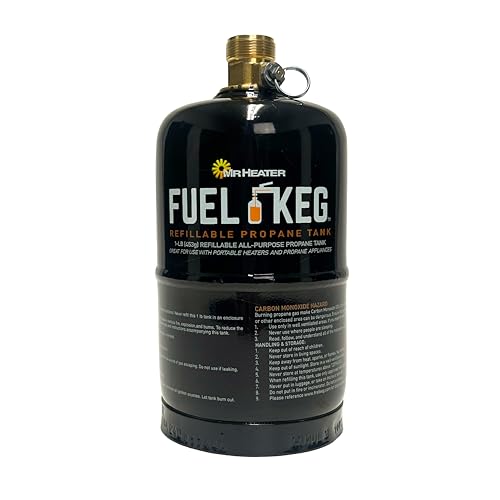
- Best honest spend under $20 (accessory — not a heater): Mr. Heater Fuel Keg 1 lb Refillable Propane Tank — Check on Amazon
- Best repair part (accessory — not a heater): Thermocouple and Tilt Switch Repair Kit for Patio Heaters — Check on Amazon
- Best fuel-cost cutter (accessory — not a heater): Gogoonike Propane Refill Adapter for 1 lb Tanks — Check on Amazon
The heaters themselves — covered in this guide, priced above this tier: Mr. Heater Little Buddy MH4B, Dr. Infrared Heater DR-238 (electric) and Cuisinart COH-500 tabletop heater. Each is reviewed in full below, judged by the measure a small patio actually imposes — footprint and clearance, not headline output; none is linked, because none belongs in an under-$20 list.
Read the full guide ↓
Disclosure: As an Amazon Associate, dailyhomedecorating.com earns from qualifying purchases. Links to Amazon on this page are affiliate links; they cost you nothing extra. Listing details such as price and availability change often, so check the current Amazon listing before you buy.
The best outdoor heater for small patios under $20 does not exist — and on a small patio, the missing heater is only half the story. The other half is geometry. A small patio — a townhouse slab, a courtyard corner, the paved patch outside a cottage door — might offer sixty or eighty square feet in total, furnished with a table, two or four chairs, a planter or two and a storage box, with a wall on one side and a fence or hedge on the other. Into that geometry, a heater must fit not as a product but as a set of distances: every real heater carries manufacturer clearances, measured in feet, inside which nothing combustible may sit — and on a small patio, the clearances are the product. A heater whose heat is perfect and whose safety zone swallows the whole patio is not a small-patio heater at all. When we researched this guide, no complete, safe heater from a verifiable maker existed at this budget in any case — the cheapest genuine portable we could verify sells in a tier several times higher — but the small-patio shopper should know that even with money in hand, this is the hardest brief in the series, and it is won by measuring before shopping.
What $20 honestly buys is, as elsewhere in this series, the supporting cast — and on a small patio the supporting cast has a specific virtue: it is small. This guide reviews the three under-budget purchases that genuinely pay: a certified refillable 1 lb fuel cylinder, which replaces a shelf of disposable bottles with a single known quantity of fuel; the repair kit that fixes the most common reason an existing patio heater will not stay lit; and a refill adapter that connects the cylinder to bulk fuel economics. Alongside them, reviewed without links, are the three heater formats that can honestly work in tight space when the budget grows: the smallest reputable portable radiant, whose clearances are the least demanding of any flame heater; a wall-mounted electric infrared bar, which consumes no floor at all and produces no flame; and the tabletop format, reviewed with its clearances stated plainly, because on a genuinely small patio its 3-foot side clearances are a decision, not a detail. If your small patio is an apartment balcony, stop here and read the apartment edition of this guide first — balconies in multi-family buildings carry lease and fire-code prohibitions that this guide’s ground-level patios do not, and no product advice outranks them.
Safety on a small patio is clearance discipline in its purest form, and this guide treats it that way. Every propane heater here is for open-air use only; every clearance figure is a manufacturer’s minimum to be held with margin; wind funnelling between fences and walls counts as a clearance problem, because it pushes heat, curtains and throws sideways into the zone you measured on a calm day. Before any purchase, at any tier, check the model against the U.S. Consumer Product Safety Commission’s recall listings — this category has seen heaters recalled for gas leaks, fire risk and carbon monoxide, and any recalled model is excluded from this guide entirely. Below you will find a quick picks table, detailed notes on all six picks, a comparison table, a measuring-first buying checklist, the mistakes small-patio shoppers make, and answers to the questions that come up again and again.
In this guide
Quick Picks
Short on time, or comparing several options at once? Each row names a small-patio situation and the product that suits it. The footprint column is the one to read first — at this address size, space is the specification.
| Small-patio situation | Pick | What it is | Footprint reality | Link |
|---|---|---|---|---|
| Best honest spend under $20 | Mr. Heater Fuel Keg 1 lb Refillable Propane Tank | Accessory — fuel cylinder, not a heater | One cylinder the size of the disposable it replaces; no shelf of spares | Check on Amazon |
| Best way to revive a dead heater | Thermocouple and Tilt Switch Repair Kit | Accessory — replacement part, not a heater | A drawer-sized kit that returns your existing heater — and its known footprint — to service | Check on Amazon |
| Best fuel-cost cutter | Gogoonike Propane Refill Adapter for 1 lb Tanks | Accessory — refill fitting, not a heater | Fits in a drawer; presumes a 20 lb tank that itself needs a lawful home | Check on Amazon |
| Smallest real flame heater | Mr. Heater Little Buddy MH4B | Heater — higher tier, no link | An 8-inch round stand — but 24 inches clear in front and 30 above, always | Prose only — see review |
| Zero floor footprint | Dr. Infrared Heater DR-238 | Heater — electric, higher tier, no link | Wall or ceiling mounted; needs height and 3 ft clearances instead of floor | Prose only — see review |
| Tabletop dining heat | Cuisinart COH-500 Tabletop Patio Heater | Heater — higher tier, no link | No floor used — but 3 ft at the sides, which many small tables cannot give | Prose only — see review |
How These Picks Were Chosen
We applied the four filters used across this series, then ranked what survived by the small-patio measure. The filters: existence — a complete heater, not a part in a heater’s photograph. Safety equipment — tip-over shutoff, thermocouple on gas models, an oxygen depletion sensor where the maker approves a portable for enclosed spaces. Verifiability — model number and specifications from the maker’s documentation or a major listing. Recall status — checked against U.S. Consumer Product Safety Commission notices, with anything under an active recall for fire, gas leak or carbon monoxide excluded outright.
No complete heater passed at this price. The accessories passed, and each solves a small-space problem as well as a money problem: fuel stored as one certified cylinder instead of a drifting collection of disposables; a dead heater revived in place instead of replaced by a bigger stranger; a refill path that makes the small cylinder economical enough to be the only cylinder. The heaters reviewed without links were chosen as the three honest answers to the footprint question. The smallest portable flame heater, because its stand is tiny and its clearances are the least a flame can ask. The mounted electric bar, because the only footprint smaller than small is none. And the tabletop, because small patios are usually dining patios — included with its wide clearances printed in full, so the reader can measure their table and reach their own verdict. Specifications throughout come from manufacturer manuals and product pages, and coverage figures are the makers’ enclosed-space numbers, which open air — even a small patio’s sheltered air — will always trim.
Safety First: Fire, Carbon Monoxide and Clearance in Tight Space
On a small patio, safety and geometry are the same subject. Start with the clearances quoted in this guide, and treat them as the floor plan: the portable propane model needs 30 inches above, 24 inches in front and 6 inches at the sides; the tabletop needs 3 feet at the sides and 2 feet above; the electric bar needs 3 feet from combustibles on every side. Draw those zones on your patio honestly — from the heater’s position to the wall, the fence, the storage box, the planter, the chair backs, the cushion pile — and notice how much of a small patio a single heater’s zone consumes. That drawing, not any product page, decides which format you may buy. If no format’s zone fits with margin, the correct purchase is no heater, and the warmth budget belongs to blankets, cushions and a windbreak — an outcome this guide respects rather than apologises for.
Carbon monoxide discipline does not shrink with the patio. Propane heaters are open-air appliances: never indoors, never in a garage or shed, never in the increasingly common small-patio enclosure — the screened gazebo, the plastic-curtained pergola — where air stops moving. A small patio against a house wall can hold still, sheltered air on a calm night; that is comfort, not enclosure, as long as the space is genuinely open on its sides. The moment sides go on, flame heaters come out. The portable in this guide carries an oxygen depletion sensor and maker approval for certain ventilated enclosed spaces such as workshops; a patio, however small, should stay what it is — outdoors — and the sensor should stay what it is: a safety net, never a reason to close the sides.
Wind behaves badly in small spaces, funnelling between wall and fence and arriving in gusts from unexpected directions. It pushes radiant heat sideways, carries throws and napkins toward hot faces, and rocks anything tall. Small patios should host small, low, stable heaters — one more argument for the portable and the mounted bar over any column — sited on flat, hard, level ground, never on decking edges, gravel that shifts, or grass. Children and pets compress clearances further: in a small space they are always close, so the printed minimums get a margin, heaters are never left burning unattended, and radiant surfaces — which stay burn-hot after shutoff — cool fully before the patio returns to ordinary life. Fuel storage is the last discipline: cylinders outdoors, upright, shaded, away from ignition; on a small patio that usually means one cylinder in the heater and at most one spare in a ventilated outdoor spot, which is yet another reason the refillable system in this guide suits the setting. And the standing rule of the whole series: check any model on the CPSC recall database before buying, and before each season’s first lighting.
The Picks in Detail
1. Mr. Heater Fuel Keg 1 lb Refillable Propane Tank — Best Honest Spend Under $20 (Accessory — Not a Heater)
What it is. A 1 lb — 16 oz — propane cylinder (model F200048) from the maker of the portable heaters in this guide, built and DOT certified to be refilled rather than thrown away. It threads into the same socket as disposable green 1 lb bottles, arrives empty, and fills only with the maker’s matching refill kit, sold separately. On a small patio its virtue is singularity: one cylinder, of known fullness, in the heater — instead of a storage box colonised by half-empty disposables nobody can gauge.
Who it suits. Small-patio households running a 1 lb portable or tabletop heater regularly, where storage is measured in inches and every object must justify its place twice. The refillable cylinder justifies itself as fuel and as tidiness: cheaper per hour than disposables, refillable on a schedule, and the end of the shelf of mystery bottles that small spaces cannot afford to keep.
Pros. A verifiable product from the category’s most established maker — published model number, genuine refill certification, a valve designed for the job. It fits every 1 lb appliance without adapters, including both propane heaters in this guide. Its size is exactly the size of the bottle it replaces, so nothing about a tight setup’s balance or storage changes. And a cylinder that can be topped up before a planned evening removes the small patio’s classic failure: the heater that dies at dusk with no spare in the house.
Honest limitation. It is not a heater and warms nothing alone; if your $20 must produce heat this weekend and you own no heater, this is not your purchase. It arrives empty and needs the maker’s refill kit — a further purchase — before its first fill. One pound is a few hours of heat, and a small patio’s correct cylinder inventory is small — one in the heater, perhaps one spare — so heavy users will make refill trips part of the routine. Store it outdoors, upright and shaded, as all cylinders must be stored.
Choose it if you run a 1 lb heater and your storage is tight. Skip it if you own no propane appliance — bank the money toward the heater. Check price on Amazon, and confirm the listing is the refillable cylinder itself, not the refill kit or a bundle.
2. Thermocouple and Tilt Switch Repair Kit — Best Way to Revive a Dead Heater (Accessory — Not a Heater)
What it is. A replacement thermocouple and dump — tilt — switch set of the pattern used by round stand-up and pyramid propane patio heaters. The thermocouple is the probe in the pilot flame whose signal holds the gas valve open; the tilt switch cuts the gas if the heater tips. Manufacturers’ troubleshooting guides point to these two wear parts first when a heater lights and dies, or will not stay lit.
Who it suits. The small-patio owner whose existing heater — chosen, once, to fit this exact space — has developed the won’t-stay-lit fault. Replacement is a worse option here than anywhere else in the series, because a replacement heater restarts the whole geometry problem: new footprint, new clearances, new doubts. Repairing the heater whose zone you have already proven on your patio preserves the one arrangement you know works.
Pros. The lowest price in this guide, against a service call or a replacement at many times more. It restores safety components with safety components — the repaired heater keeps its flame-failure and tip-over protection. The kit itself stores in a drawer, the work is hand-tool level and documented in makers’ manuals, and a repaired heater gets a test burn that doubles as a rehearsal of its clearances on your actual patio.
Honest limitation. It is a part, not a heater — nothing here helps a patio with no heater on it. Compatibility is broad, not universal; match your model’s parts diagram before ordering. If the burner, reflector or valve is corroded or cracked, repair is the wrong verb — that heater retires. Any smell of gas after reassembly means stop, close the valve, call a professional. And a heater under active recall is never repaired back into service; follow the recall remedy instead.
Choose it if your heater lights and dies and its geometry already fits your patio. Skip it if you have no heater, or its damage is structural. Check price on Amazon.
3. Gogoonike Propane Refill Adapter for 1 lb Tanks — Best Fuel-Cost Cutter (Accessory — Not a Heater)
What it is. A solid brass adapter joining a 1 lb cylinder thread to the QCC1/Type 1 fitting of a standard 20 lb propane tank, with an on/off control — the standard design sold across this category, for filling a certified refillable cylinder from bulk propane. In a small-patio household it usually serves a tank that already exists for a grill, kept in its proper outdoor place.
Who it suits. Small-patio households running the refillable-cylinder system with a grill tank on the premises and a portable heater in weekly use — the combination where disposable-bottle costs are both highest and most absurd, because the bulk fuel is already standing ten feet away. For the twice-a-season user, it solves a problem they do not have.
Pros. Brass, standard fittings, the lowest price in this guide, and a physical footprint of approximately nothing — it lives in a drawer, which on a small patio is a genuine product feature. It makes the refillable system economical enough to be permanent, and by making the safe system easy, it removes the temptation toward the dangerous one.
Honest limitation — read this one twice. This adapter is only safe and legal with cylinders designed and certified for refilling. Disposable 1 lb bottles must never be refilled: their valves are not built for it, overfilling is easy, and transporting a refilled disposable is prohibited. Adapter listings often mention disposable cylinders; ignore that language. Fill outdoors, away from ignition, never overfill, and use a propane dealer if any step is unclear. The adapter also heats nothing, and it presumes a 20 lb tank with a lawful outdoor home — if your small patio cannot house one correctly, the system is not yours to build.
Choose it if you run refillable cylinders and keep a bulk tank. Skip it if either condition fails. Check price on Amazon.
4. Mr. Heater Little Buddy MH4B — The Smallest Real Flame Heater (Heater — Higher Tier, No Link)
What it is. A radiant propane heater rated at 3,800 BTU per hour, running on a single 1 lb cylinder screwed into its base, with one-button piezo ignition and a compact 8-inch round stand. The maker rates it for spaces up to 95 square feet — an enclosed-space figure; read it outdoors as one or two people sitting close — and lists about 5.6 hours per cylinder. Its safety package is the category’s reference set at this size: an oxygen depletion sensor, an accidental tip-over shutoff, and published clearances of 30 inches above, 24 inches in front and 6 inches at the sides.
Who it suits. The small-patio household whose geometry passed the drawing test in this guide’s safety section: a hard, level corner where two feet of clear space in front and thirty inches above can genuinely be held, with one or two chairs drawn up close. For that household this is the first rung of real heat — the smallest heater from a maker that publishes manuals, parts and clearances, and the natural savings target at the next tiers, as the step-up guides in this series, including Best Outdoor Heater For Small Patios Under $50, set out.
Pros. The smallest physical footprint of any real heater in the series, the least demanding clearances of any flame heater here, and the longest run time per cylinder in this guide. No assembly, light enough to carry in and out — which solves small-patio storage elegantly, since the heater can live in a cupboard rather than colonising the patio all week. Its single setting leaves nothing to misadjust, and the Fuel Keg above fits it directly.
Honest limitation. It lives in a higher tier — several times this budget — and is unlinked here on principle. Its output is personal: two people close by, not a patio warmed. The clearances, though the smallest here, are absolute — 24 inches in front means the chairs sit where the zone says, not where the table legs prefer, and on the smallest patios even this zone may not fit, in which case the next pick is the answer. It is not sold in Massachusetts or Canada, per the maker, and its oxygen sensor does not license enclosed-space use beyond the maker’s own ventilated-space approval.
Choose it if your patio’s drawing test passes and your party is one or two people. Skip it if the front clearance cannot be held — look at the mounted electric route — or if you need a table of four warmed, where the tabletop after next is the honest format.
5. Dr. Infrared Heater DR-238 — Zero Floor Footprint (Heater — Higher Tier, No Link)
What it is. A carbon infrared bar heater for wall or ceiling mounting: 1,500 watts on a standard 120-volt plug, three heat levels (900, 1,200 and 1,500 watts), a remote with a timer, and an IP55 weather rating per the maker’s documentation, in an aluminium housing about 35 inches long. Infrared radiates warmth onto people and surfaces rather than heating air, which suits outdoor use. The manual requires at least 3 feet of clearance from combustibles at front, sides and top, and the maker’s mounting guidance sets a minimum mounting height of about 94.5 inches — it is designed to wash a seating area from above.
Who it suits. The small patio whose floor plan failed every flame heater: no square of hard ground can spare a clearance zone, but a wall or beam above the seating can host a bar that takes no floor, stores no fuel and makes no flame. It is also the natural answer where the patio is really a balcony-like structure at a house — and for true apartment balconies, the apartment edition of this guide, Best Outdoor Heater For Apartments Under $20, works through the lease and code questions that must be answered before even this flameless route is used.
Pros. No flame, no fuel, no carbon monoxide, no floor consumed — the four small-patio constraints answered at once. Instant, silent, directional heat in three strengths, adjusted by remote from the chair it warms. The IP55 rating suits exposed, damp positions. Running cost is the electricity tariff and nothing else: no cylinders to store in a space that has no storage.
Honest limitation. A premium-tier product relative to this budget, unlinked here. Height is its geometry tax: a minimum mounting height around 94.5 inches is above many patio ceilings, pergola beams and fence lines, and mounting needs a suitable structure — renters may also need a landlord’s written permission to fix anything. It draws 12.5 amps at full power, wanting a proper outdoor-rated outlet and circuit, never an improvised extension cord. And 3 feet of clearance still applies in every direction: on a truly tiny patio, even a flameless bar must be placed with discipline around cushions, curtains and climbing plants.
Choose it if your floor cannot spare a zone but your wall can host a bar at height. Skip it if mounting height or permission fails — in that case the honest small-patio answer is the non-heater kit of throws, cushions and windbreak, funded by the money this guide has saved you from wasting.
6. Cuisinart COH-500 Tabletop Patio Heater — Dining Heat, If the Table Allows (Heater — Higher Tier, No Link)
What it is. A tabletop propane heater from a major kitchen brand: 11,000 BTU of radiant heat from a reflector-topped unit about 25 inches tall and roughly 8.5 pounds, standing on the table, running on a 1 lb cylinder in its base or — with the maker’s optional regulator hose — from a 20 lb tank. The maker rates its warmth at about 30 square feet and specifies clearances of 3 feet at the sides and 2 feet above; safety equipment includes a thermocouple, an anti-tilt shutoff and a burner screen guard. Outdoor use only.
Who it suits. Small patios that are, in truth, dining rooms outdoors — where the table is the patio’s whole purpose and it is a genuinely spacious table. Heat at table height is the most comfortable format for seated people, and a tabletop heater consumes no floor at all. But read the limitation before falling for the format: this pick is in the guide so that its clearances can disqualify it honestly on the patios where it does not belong.
Pros. The strongest output in this guide delivered exactly where diners sit; a real brand with a real manual, certification and parts; adjustable output; light enough to store in a cupboard between uses, which small patios should count as a headline feature; and a hose option for long evenings where a tank can lawfully and safely sit beside the table.
Honest limitation. A premium-tier product, unlinked here. Three feet at the sides is the whole story: measured from the heater at the table’s centre, that clearance reaches past the edges of most small-patio tables and into the chairs, the serving dishes and the guests’ sleeves. A bistro set cannot host this heater safely; a large garden table on a medium patio can. A 1 lb cylinder lasts roughly two hours at full output, and the heater remains an open flame — open air only, never under a low cover, and never a reason to enclose the patio’s sides.
Choose it if your table, measured honestly, can hold its clearances with the diners seated. Skip it if the measuring tape says no — the portable and the mounted bar exist for the patios the tape describes.
Comparison Table
The six picks side by side, with the column a small patio lives by: the space each one truly occupies, clearances included.
| Pick | Type | Key verified figures | True space cost | Link |
|---|---|---|---|---|
| Mr. Heater Fuel Keg | Accessory — refillable fuel cylinder | 1 lb / 16 oz; DOT certified; fills via maker’s refill kit | One bottle’s shelf space | Check on Amazon |
| Thermocouple & Tilt Switch Kit | Accessory — repair part | Fits common round stand-up and pyramid propane heaters | A drawer’s corner; heater keeps its proven footprint | Check on Amazon |
| Gogoonike Refill Adapter | Accessory — refill fitting | Brass; QCC1/Type 1 to 1 lb thread; on/off valve | A drawer’s corner; presumes a lawfully housed 20 lb tank | Check on Amazon |
| Mr. Heater Little Buddy MH4B | Heater — higher tier | 3,800 BTU; up to 95 sq ft (maker, enclosed); ~5.6 hrs per cylinder; ODS + tip-over shutoff | 8 in stand + 24 in front / 30 in above / 6 in sides | Prose only |
| Dr. Infrared Heater DR-238 | Heater — electric, higher tier | 1,500 W; levels 900/1,200/1,500 W; IP55 per maker; ~94.5 in min mounting height | No floor; wall/ceiling + 3 ft clearances | Prose only |
| Cuisinart COH-500 | Heater — higher tier | 11,000 BTU; ~30 sq ft (maker); ~25 in tall; thermocouple + anti-tilt | Table centre + 3 ft sides / 2 ft above | Prose only |
How to Choose the Best Outdoor Heater for Small Patios Under $20
Small-patio choosing is measuring before it is shopping. Work through these five steps in order; the tape measure outranks every review, including this one.
1. Draw the patio to scale — on paper or in chalk. Mark the furniture as it actually sits, the door swing, the storage box, the planters, the path from door to chairs. Then draw each candidate heater’s clearance zone from the figures in this guide: the portable’s two feet in front, the tabletop’s three feet at the sides, the electric bar’s three feet everywhere. Most small-patio heater mistakes are visible at this step, for free, in chalk.
2. Count the seats the heat must serve. Small patios host small numbers honestly: one or two chairs argue for the portable used close; a dining table argues for the tabletop if — and only if — step one’s drawing allows it; a bench under a wall argues for the mounted bar. If your patio regularly hosts six, the honest conclusion is that it hosts them in summer, or indoors in winter, because no safe heater geometry serves six in sixty square feet.
3. Decide flame or electric before deciding models. Flame brings fuel storage, open-air discipline and the strictest clearances; electric brings a circuit, an outdoor-rated outlet and a mounting or placement question, but no fuel and no exhaust. On the smallest patios the electric bar’s zero floor footprint settles the argument often enough that the higher tiers in this series — Best Outdoor Heater For Small Patios Under $75 among them — give mounted and compact electric models their own comparisons.
4. Solve storage before purchase. Where does the heater live on the 160 evenings a year it is not lit? A portable that fits a cupboard, a tabletop that shelves away, a bar that never comes down — each is a storage plan. A heater with no home becomes patio furniture by default, weathering in the way, and small patios cannot spare the way. Fuel gets the same question, with its own rules: outdoors, upright, shaded, minimal inventory.
5. Spend the $20 where your situation says. Own a heater that fits and falters? The repair kit. Own a working 1 lb heater? The refillable cylinder, and the adapter if a bulk tank lawfully lives with you. Own nothing? The $20 is a deposit on the tier where your drawn-to-scale patio’s heater actually lives — the step-up path runs through Best Outdoor Heater Under $50 — and the flame-free ambience options in Best Fire Pit For Small Patios Under $20 territory deserve an honest look for the evenings when glow matters more than degrees.
Common Buying Mistakes
Shopping by headline output. On a small patio, the biggest heater is usually the worst purchase: its clearances eat the space and its output scorches the near chair while the far one freezes. Fit first, output second — the correct heater is the one whose zone your patio can hold.
Measuring the product instead of the zone. An 8-inch stand sounds tiny until its 24 inches of front clearance evicts the coffee table. The product is the zone it legally occupies; measure that, always, with margin for moving chairs and wandering throws.
Enclosing the patio to keep the heat in. Curtains, screens and plastic sides turn an outdoor patio into the enclosed space propane heaters are forbidden in. If the sides go up, the flame goes out — or the household switches to the electric route, with its clearances still respected.
Believing the photograph. The classic under-budget listing shows a handsome heater and ships a part or a cover. Read the title’s nouns, the dimensions and the weight; demand a model number, a manual and clearance figures. On a small patio the cost of a fake is doubled — the money, and the season spent discovering it.
Refilling disposable cylinders. Single-use bottles are not built for refilling, and a refilled disposable must never be transported. The certified refillable cylinder in this guide is the safe version of the same economy, and it is the same size as the bottle it replaces — small patios lose nothing by doing it properly.
Forgetting the overhead and the wind. Small patios collect hazards above and between: low pergola beams, climbing plants, festoon lights, and gusts funnelling between wall and fence. Audit upward and sideways before the first lighting, and re-audit when the garden grows — plants do not respect last spring’s clearances.
A Worked Example: The Eight-by-Ten Patio
Numbers persuade better than adjectives, so here is the drawing test run on the most common small patio there is: a slab eight feet by ten, a door on the long wall, a bistro set for two, a storage box in one corner and a planter along the fence. Eighty square feet, furnished, loved — and, on paper, a candidate for “a small heater in the corner”.
Place the portable radiant in the corner opposite the door, facing the bistro chairs. Its zone — 24 inches in front, 6 at the sides, 30 above — carves a rectangle roughly two and a half feet deep along that corner. The bistro chairs, drawn up to the zone’s edge, sit with their occupants’ knees at the warm boundary and their faces in genuinely heated air; the table stands just outside the zone, close enough for drinks, far enough for safety. The storage box must move six inches — it was inside the side clearance — and the planter along the fence stays, because the zone never reaches it. Verdict: the portable fits, with the discipline of one relocated box. Now try the tabletop on the bistro table. Its 3-foot side clearance, measured from the table’s centre, describes a circle six feet across — wider than the table, wider than the chairs’ span, reaching the storage box, the planter and both diners’ sleeves. Verdict: it does not fit, and no discount changes the geometry. Finally, the mounted bar: the wall above the door offers a fixing line, but at the height the patio’s ceiling line allows — below the maker’s minimum mounting height — the bar would sit too low and too close to the seated heads beneath it. Verdict: not on this wall; on a taller gable end, it would have been the winner. One patio, three formats, three different answers — and the whole exercise cost a tape measure and ten minutes. That is the small-patio method in miniature: the patio decides, the shopper merely transcribes.
Final Recommendation
The best outdoor heater for small patios under $20 does not exist, and on a small patio that news comes with a gift attached: the drawing test that tells you what will fit costs nothing, and it is the most valuable step in this entire guide. If you already own a heater whose geometry fits and whose lighting has gone temperamental, buy the repair kit and restore it — the only purchase here that produces warmth this week: check the thermocouple and tilt switch kit on Amazon. If you run a working 1 lb heater, buy the fuel system that suits tight storage — the Mr. Heater Fuel Keg refillable cylinder, plus the refill adapter if a bulk tank lawfully lives with you. If you own no heater, draw the patio first, then save toward the format the drawing approves: the Little Buddy for a close pair of chairs, the mounted DR-238 where only a wall can host heat, the Cuisinart tabletop where a genuinely spacious table allows. A small patio rewards the household that measures — its pleasures are concentrated, and with the right zone honoured, so is its warmth.
Frequently Asked Questions
What is the smallest real outdoor heater? Among verifiable makers, the single-setting portable radiant class — the Little Buddy in this guide, on an 8-inch round stand — is the smallest complete heater with a full safety package. But its true size is its clearance zone: 24 inches in front, 30 above, 6 at the sides. The smallest heater is the one whose whole zone fits your patio.
Can a tabletop heater work on a small patio? Only if the table can hold 3 feet of clearance at the heater’s sides with diners seated — a large garden table, not a bistro set. Measure from the heater’s position at the table’s centre to chair backs, serving items and sleeves. If the tape says no, the format is wrong for your patio at any price.
Are electric heaters better for small patios? Often, yes: a mounted infrared bar consumes no floor, stores no fuel and makes no flame, which answers the small patio’s three scarcest resources — space, storage and clearance — at once. Its constraints are mounting height, permission to fix it, and a proper outdoor circuit. The higher-tier guides in this series compare compact electric models in detail.
Is there really no heater under $20 for a small patio? No complete, safe one from any verifiable maker, for a patio of any size. The cheapest genuine portables sell in tiers several times higher. At this budget the honest purchases are this guide’s accessories — or a savings start toward the heater your measurements approve.
How do I check whether a heater has been recalled? Search the exact model on the U.S. Consumer Product Safety Commission’s recall site before buying and before each season’s first use. This category has seen recalls for gas leaks, fire risk and carbon monoxide. A recalled heater comes out of service immediately and is handled through the recall remedy.
My patio is a balcony. Does this guide apply? Only partly, and the difference matters: balconies in multi-family buildings sit under lease terms and fire-code provisions that commonly prohibit flame devices entirely and restrict fuel storage. Read the apartment edition of this guide and your lease before applying anything here — the ground-level patio this edition assumes is a different legal place from a balcony.


