Where to buy
Check the latest price, availability and delivery on Amazon. Orders are placed on Amazon. We may earn a commission from qualifying purchases.
- Best for most small patios: 1500W Portable Electric Heater (Model YXC-150R) — Check on Amazon
- Mr. Heater Little Buddy MH4B — prose-only pick: an 8-inch footprint with the best small-propane safety package, at a step-up price
- Texsport Portable Outdoor Propane Heater (Item 14215) — prose-only pick: the smallest flame option documented; no verified in-budget listing
- Cuisinart COH-500 Tabletop Patio Heater — prose-only pick: saves floor space by living on the table, premium-priced well above this tier
- Dura Heat TT-15CSA Tank Top Heater — prose-only pick: price unverified, and its clearance needs disqualify it on most small patios
- Mr. Heater MH15T Single Tank Top Heater — prose-only pick: sightings just above budget; included to close the tank-top question for small spaces
Read the full guide ↓
Disclosure: As an Amazon Associate, dailyhomedecorating.com earns from qualifying purchases. Links to Amazon on this page are affiliate links; they cost you nothing extra. Listing details such as price and availability change often, so check the current Amazon listing before you buy.
The best outdoor heater for small patios under $50 is decided less by heat than by geometry. A small patio — eight by ten feet, say, with two chairs, a side table, a planter, and a railing — has perhaps one spot where a heater can stand with the clearance safety demands, and that spot is also where a chair leg, a footpath, and a cushion all want to be. Every heater in this guide is therefore judged first on footprint and placement honesty: how much floor it takes, how much clear space around itself it requires, how it stores when the patio has to be a patio again, and only then on how warm it makes the two people the patio actually holds. The good news is that small patios are the one setting where this budget’s weakness stops mattering. A heater that warms “only” two close chairs is a failure at a party and a perfect fit here, because two close chairs are the entire brief.
The verified buy in this guide — the one pick with a confirmed in-budget Amazon price during research, and the only one we link — is a compact plug-in electric heater that takes almost no floor, makes no flame and no carbon monoxide, and stores in a closet. Around it, honestly labeled and unlinked, sit the small-propane alternatives for patios with open air and room to spare: the Little Buddy on its dinner-plate stand, the featherweight Texsport, and a tabletop Cuisinart that saves floor space by spending table space instead, at a premium price. The two tank-top heaters appear at the end as a documented “no”: they are fine tools whose clearance appetite simply does not fit the square footage in this keyword, and this guide shows the arithmetic rather than letting a search result talk you into one.
In this guide
Best Outdoor Heater for Small Patios Under $50: Quick Picks
Each row names a small-patio situation and the heater that fits it. Only the electric pick carries a purchase link, because only it had a verified in-budget Amazon price at research time.
| Small-patio situation | Pick | Why it stands out | Link |
|---|---|---|---|
| Best for most small patios | 1500W Portable Electric Heater (Model YXC-150R) | Minimal footprint, no flame, no fuel, closet storage — check price on Amazon | Check on Amazon |
| Smallest propane footprint | Mr. Heater Little Buddy MH4B | 8-inch round stand, oxygen depletion sensor, tip-over shut-off; prose-only step-up | Prose-only — see review |
| Lightest, most storable flame | Texsport Portable Outdoor Propane Heater (Item 14215) | Featherweight burner with auto shut-off valve; prose-only, no verified listing | Prose-only — see review |
| Zero floor space (uses the table) | Cuisinart COH-500 Tabletop Patio Heater | 11,000 BTU at torso height with tilt switch; prose-only premium step-up | Prose-only — see review |
| Too much clearance for most small patios | Dura Heat TT-15CSA Tank Top Heater | 15,000 BTU that needs open ground; prose-only, price unverified | Prose-only — see review |
| Same verdict, big-brand version | Mr. Heater MH15T Single Tank Top Heater | 10,000–15,000 BTU house-and-yard tool; prose-only, sightings just above budget | Prose-only — see review |
The Small-Patio Safety Geometry: Clearance, Tip-Over, and Air
Clearance is a floor-plan problem. The working rule used across this site — at least three feet of clear space around a heater, more where its manual specifies, and nothing combustible overhead — consumes most of a small patio by itself. Draw it honestly: a heater plus its clearance circle is a five-to-six-foot disc of your eight-by-ten patio, inside which no cushion, planter, railing curtain, or stored anything may sit. If that disc leaves no room for the chairs it is meant to warm, the heater does not fit, and the correct purchase is the format whose disc is smallest and whose heat is flameless: the electric pick, whose clearance still matters (its face gets hot; keep fabrics and feet at a sensible distance) but which carries no flame, no exhaust, and no fuel into the geometry.
Tip-over is a small-space statistic. On a small patio, everything is within one stumble of everything else. Prefer published shut-offs: the Little Buddy’s tip-over switch, the Cuisinart’s tilt switch, the Texsport’s flame-failure valve, the electric pick’s overheat protection. A heater with no shut-off and an exposed burner — the tank-top format — asks a small patio for a traffic-free zone it cannot provide, which is the practical reason, beyond raw clearance, that this guide votes no on tank-tops here.
Air behaves like a room’s air. A small patio walled on three sides, roofed, or screened is outdoors in name and semi-enclosed in fact. Propane exhaust — carbon monoxide included — can linger in that stillness and drift through the door beside you. Flame picks in this guide belong only on genuinely open small patios, run only while everyone is awake, and never while anyone naps in the lounger beside them. The category’s safety record includes a fatal case of a tabletop propane heater used inside a camper; the lesson generalizes to any space where air does not move. When in doubt about your patio’s airflow, the electric pick is not the compromise — it is the answer.
Storage is part of the footprint. A small patio has no shed corner. Your heater will live in a closet, and its fuel, if any, needs a legal, ventilated home that is not a living space. The electric pick and the one-pound-cylinder picks store like luggage. A 20 lb tank system stores like furniture with rules. Count the closet before you count the BTUs.
How These Picks Were Chosen
The budget filter ran first and strictly: a purchase link requires a verified Amazon price inside the budget at research time. Only the compact electric heater passed — check price on Amazon when you shop. The Dura Heat’s listing carried no featured offer, so no price could be verified; the MH15T’s street sightings sit just above the tier; the Little Buddy’s verified price sits above it; the Cuisinart’s normal price is far above it; and the Texsport’s Amazon listing could not be verified at all. All five are prose-only, each with its position stated in its review.
The second filter was documentation and recall status: verified outputs, footprints, and named safety devices for every pick, plus a check of the U.S. Consumer Product Safety Commission recall record for this category — gas patio heaters recalled for fire and burn hazards, electric heaters recalled for overheating — with any model under a current recall excluded entirely and named nowhere below. The third filter was the small-patio test itself: footprint, clearance appetite, storage size, and heat pattern matched to two chairs. That test reorders this category completely — the strongest heaters finish last, because strength was never the scarce resource in a small space. Space was.
Detailed Reviews: Every Pick Measured Against a Small Floor Plan
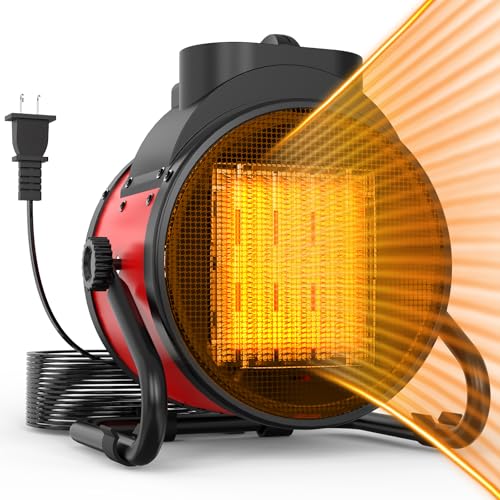
1500W Portable Electric Heater (Model YXC-150R) — Best for Most Small Patios
Who it suits. The typical small-patio household: two chairs, an outdoor outlet on the house wall, a closet for storage, and evenings measured in an hour or two of reading, coffee, or conversation.
Model YXC-150R is a compact plug-in heater sold on Amazon under a descriptive listing — 1500 watts, three heat modes, a fast-heating element, published overheat protection. On a small patio its spec sheet reads like it was written for the keyword. It occupies a patch of floor smaller than the side table it can sit beside. It makes no flame, so the clearance disc shrinks from a fire rule to a common-sense margin. It makes no carbon monoxide, so the patio’s still, walled air stops being a variable. It stores no fuel, so the closet question disappears. And its warmth — personal, directional, a few feet deep — is sized exactly to a two-chair patio: place it between or beside the chairs, plug it directly into the wall outlet (never a light extension cord; 1500 watts is a full household load), and the space is done.
Pros. The only verified in-budget Amazon price in this guide. The smallest total footprint here once clearance and storage are counted honestly. Flameless and exhaust-free, with overheat protection published. Instant on and off suits small-space sessions, and it comes inside in one hand when the evening ends.
Honest limitation. No weather-resistance grade could be verified from the listing, so it is a deploy-and-store appliance: out for the evening, in before rain, never a permanent patio resident. Its heat ends a few feet from its face — fine here, because everything on a small patio is a few feet from everything else. It is an unbranded marketplace listing, so rely on its published protections and Amazon’s return window rather than brand reputation. And it needs that outlet: a small patio without exterior power is a propane conversation, below.
Choose it if you have the outlet — most small-patio readers should stop here. Skip it if your patio has no exterior power and running a cord would mean pinching it through a door, which is never the right answer.
Mr. Heater Little Buddy MH4B — Smallest Propane Footprint
Who it suits. A small but genuinely open patio with no usable outlet, owned by someone who will keep flame discipline in a tight space and pay a step-up price for the best safety engineering in small propane heat.
The Little Buddy (MH4B, stock F215100) stands on an 8-inch round base — a dinner plate’s footprint — and delivers 3,800 BTU of radiant heat, running about five and a half hours per one-pound cylinder by the maker’s figures, at under six pounds with one-button ignition. Its oxygen depletion sensor and accidental tip-over shut-off are precisely the devices a small patio needs, because small patios are where heaters get clipped by chair legs and feet. It is CSA certified, and its heat pattern — one or two people, close — matches the space’s population exactly.
Pros. The tiniest engineered footprint in propane heating. Tip-over and oxygen shut-offs published and proven across a long production run. No outlet required. Stores on a closet shelf with its cylinder detached and stored per the rules.
Honest limitation. Its verified price sits above this budget, so it is prose-only — the right heater at the next tier’s price, not a bargain at this one. It is still an open flame with stored fuel: on a covered, walled, or balcony-like small patio, check your building and local rules before you even consider it, keep its full clearance disc clear, and never run it while anyone sleeps out there. One fixed setting means distance is your only thermostat.
Choose it if your patio is open-air, outlet-free, and your budget stretches. Skip it if your small patio is covered or enclosed-feeling — the electric pick exists for exactly that geometry.
Prose-only pick: verified price above this budget, so no purchase link is given. It competes fairly in Best Outdoor Heater For Small Patios Under $75.
Texsport Portable Outdoor Propane Heater (Item 14215) — The Lightest Flame
Who it suits. A camper-household with a small open patio, a stock of one-pound cylinders, and a preference for the simplest possible hardware that still carries a real safety device.
Texsport’s item 14215 is a stainless burner on a wide base plate with its own regulator and adjustable output up to roughly 2,900 BTU, fed by 16.4-ounce or 14.1-ounce disposable cylinders, with a safety grid and an automatic shut-off valve that closes the fuel supply if the flame goes out. Review sources put the unit at around a pound or two — the lightest heater in this guide — and its manual warns plainly that enclosed-space use can be fatal.
Pros. Featherweight and shelf-small; the easiest flame pick to store. Adjustable output, unlike the Little Buddy’s single setting. The flame-failure valve addresses the worst failure mode of a simple burner. Historically sighted by review sites at the very bottom of this budget band.
Honest limitation. No live Amazon ASIN or current in-budget price could be verified during research, so it is prose-only with no link and no stock promise. It has no tip-over switch, so on a small patio — where contact is likely — its stability plan is its wide base and your placement, full stop. Its sub-3,000 BTU output is lap warmth for close sitters. If those trades do not suit your space, they are not supposed to: that is what the comparison is for.
Choose it if you find it stocked in budget and your open patio has a flat, traffic-free corner for it. Skip it if you want engineered tip-over protection or push-button ease.
Prose-only pick: no verified in-budget Amazon listing at research time, so no purchase link is given.
Cuisinart COH-500 Tabletop Patio Heater — Zero Floor Space, at a Premium
Who it suits. A small-patio household whose floor is fully committed — chairs, planters, storage — but whose table is the social center, and whose budget will eventually stretch several tiers for heat that spends table space instead of floor space.
The COH-500 puts 11,000 BTU of radiant propane heat above one patio table, with a reflector top, adjustable output, a burner screen guard, and a safety tilt switch, over a maker-stated range of about 30 square feet. On a small patio, that trade — no floor footprint at all — is genuinely clever, and its per-evening appetite (roughly a couple of hours per one-pound cylinder at full output, per independent reviewers, with an optional hose to a bulk tank) matters less for short table sessions. The warranty runs one year on defects in material and workmanship.
Pros. The only pick that adds heat without consuming floor. Heat at torso height for both chairs at the table. Tilt switch and burner guard fitted to a shared surface. A real brand with a real manual.
Honest limitation. Its normal price is far above this budget — a premium step-up, included because small-patio readers ask for it constantly — and its listing showed no featured offer on research day, so it is prose-only twice over. A flame on a small table also concentrates the clearance problem rather than solving it: sleeves, paper, and planters all live on that table, and the reflector’s heat reaches everything nearby. It needs a stable, non-flammable table and a disciplined surface, outdoors only, never under a low cover.
Choose it if the table is your patio’s whole world and your budget grows to its tier. Skip it if this budget is the point — the electric pick warms the same two chairs for a verified in-budget price.
Prose-only pick: premium step-up well above this budget, so no purchase link is given.
Dura Heat TT-15CSA Tank Top Heater — The Documented No, Part One
Who it suits. On a small patio: essentially no one, and this short review exists so the reasoning is on the record, because tank-top heaters dominate budget search results and their heater-head prices look deceptively gentle.
The TT-15CSA is a 15,000 BTU radiant head (three settings, verified ASIN) that mounts on a 20 lb propane tank. The head is compact; the system is not. Add the tank’s footprint, then the clearance disc an exposed burner of this output demands — three-plus feet in every direction, more per its manual, nothing overhead, no traffic — and the system claims a clear area larger than many small patios contain, before a single chair is placed. Its stability is a tall tank’s stability in the space where stumbles happen most. Its price, on research day, could not even be verified: the listing carried no featured offer. At a house, on open ground, it is the strongest value in this guide’s wider family. Here, it is a category error.
Pros (in its proper setting). Most heat per dollar in the guide, lowest running cost, established brand and warranty.
Honest limitation (in this setting). Clearance appetite, tank storage, exposed burner, unverified price. Four strikes against the keyword itself.
Choose it if your “small patio” is actually a large open slab with room to spare — measure first. Skip it if your patio matches this keyword’s plain meaning.
Prose-only pick: price unverified and format mismatched to small patios, so no purchase link is given. See its proper context in Best Outdoor Heater Under $50.
Mr. Heater MH15T Single Tank Top Heater — The Documented No, Part Two
Who it suits. The same verdict as the Dura Heat, from the bigger brand: the MH15T (stock F242100) adjusts from 10,000 to 15,000 BTU on a 20 lb tank, with an automatic safety shut-off valve and the best documentation in its class, at street sightings just above this budget. None of its virtues shrink its clearance disc, stabilize its tank on a crowded slab, or find it closet space. A famous name does not change geometry. Small-patio readers who love this heater’s reputation should file it for a future yard, where this site’s backyard guide gives it the starring role its format deserves.
Pros (in its proper setting). Adjustable output, named shut-off valve, excellent manuals and parts, long runtime per tank.
Honest limitation (in this setting). The format itself: bulk fuel, exposed burner, wide clearance, traffic sensitivity — each one a small-patio failure, together a complete one.
Choose it if a bigger outdoor space is in your near future. Skip it if you are furnishing the small patio in this keyword.
Prose-only pick: sightings just above this budget and format unsuitable for small patios, so no purchase link is given.
Three Small Patios, Laid Out in Words
The eight-by-ten with an outlet. This is the most common small patio in the country: a slab against the house, sliding door on one long side, railing on the other, two chairs angled at the view, a side table between them. The electric pick stands on the slab beside the side table, a foot or so from the wall, facing the chairs’ fronts. Its cord runs straight back to the exterior outlet without crossing a single footpath. The clearance it needs is a sensible margin from the cushions and the planter — achievable without moving a single piece of furniture — and when the evening ends it unplugs and shelves in the hall closet, returning the patio to its full eight by ten by morning. No other pick in this guide fits this floor plan without negotiation, which is why it leads.
The open L-shaped patio with no power. A corner patio open on two sides, genuinely outdoors, where the wind moves and the nearest outlet is inside the kitchen. Here the propane conversation is legitimate. The Little Buddy stands on its dinner-plate base in the L’s inner corner — the most sheltered, least trafficked spot — with its clearance disc overlapping the corner’s two walls’ bases, where nothing combustible sits, and its face turned to the two chairs drawn up in front of it. The chairs sit closer than they would to a bigger heater, because 3,800 BTU is a close-range friend, and the disc’s remaining edge is the walkway, kept clear by the simple fact that the corner is not on the way to anywhere. On this patio the Texsport is the budget alternative if found stocked in tier, accepting its missing tip-over switch in exchange for the corner’s natural protection — a trade this guide accepts only because the corner, not the heater, supplies the stability.
The dining patio: four chairs, one table, nothing else fits. Some small patios are a table with a border. Floor-standing heat of any kind steals the border the chairs need to push back, so this patio’s options narrow to two honest shapes. The first is the electric pick placed under the table’s edge zone — no, precisely: beside the table at the house wall, aimed at legs and laps, with its cord hugging the wall; under-table placement of any heater, electric included, crowds cords, feet, and heat into the patio’s most trafficked cubic foot and is not a layout this guide endorses. The second shape is the tabletop Cuisinart at its future tier, heating torsos from the table’s center while the floor stays free. Between today’s verified electric compromise and someday’s tabletop ideal, this patio’s host should also weigh the simplest option of all: dining earlier, while the day’s warmth is still in the slab, and letting the heater question wait for the tier that solves it properly.
What all three layouts share. In every working layout, the heater owns a fixed address that is not in a walkway, the chairs come to the heat rather than the heat chasing the chairs, and storage was decided before purchase. In every failed layout we have described in the mistakes section, one of those three gave way — usually the walkway. A small patio forgives a modest heater; it never forgives a badly addressed one.
Storage and the Off-Season: Owning a Heater in a Small Home
Small-patio ownership is mostly storage, so this section deserves its place. The electric pick stores best: cool, dry, in its closet, with its cord loosely coiled rather than kinked, ready in one trip. Keep its face and vents dust-free — a heater that has breathed closet dust all summer announces it on the first autumn evening — and test it on the season’s first cool night rather than the first cold one, while a return or replacement is still a calm errand. The small propane picks store nearly as small, with one governing rule: the cylinder comes off the heater and is stored according to its own rules — upright, outdoors or in a detached ventilated space per local guidance, never in a living area, never in a hot car or a sealed closet with the heater. A one-pound cylinder is small enough to tempt indoor storage and exactly the wrong object to yield to that temptation. Tank-top systems, by contrast, store like the furniture they are: a head on a shelf is easy, but the 20 lb tank’s year-round home is a real estate decision a small home feels monthly — one more entry in this guide’s geometric case against them here. Whatever you own, the off-season ritual is the same: clean it, check cords and connections for damage, confirm the shut-offs still move freely, and write the model’s recall status into your spring checklist — a thirty-second search each year is the cheapest safety device in this entire guide.
Microclimates: Why Two Identical Patios Heat Differently
Buyers are often puzzled when the same heater delights one small patio and disappoints an identical-looking one. The difference is microclimate, and small patios have stronger microclimates than big yards precisely because every wall, railing, and surface is close enough to matter. Three factors dominate. The first is wind geometry: a patio whose open side faces the prevailing evening breeze is a wind tunnel with furniture, and radiant heat — which travels in straight lines until it lands — survives wind better than any warmed-air effect, but the people in the chairs still lose heat to moving air faster than any small heater replaces it. A windbreak on the breeze side, even a railing-height panel or a dense planter row, routinely does more for a small patio’s warmth than stepping up a heater class, and it costs no clearance and burns no fuel. The second factor is surface: a concrete slab stores the day’s sun and returns it through the evening, while a wooden deck over open air starts cold and stays cold, chilling feet and anchoring cold air at ankle height where heaters aim least. A rug is not decoration in this analysis; on a deck it is insulation, and on both surfaces it marks the warm zone’s floor plan for guests and furniture alike. The third factor is the ceiling that is not there: patios open to the sky lose radiant heat upward without limit, while a patio under a balcony or pergola keeps a fraction of it in play — one reason covered patios feel disproportionately warmer, and also the reason their air needs the respect this guide’s safety section describes when flame is involved.
The practical upshot is a buying order that surprises people: measure and fix the microclimate first — windbreak, rug, chair placement out of the draft line — then buy the smallest heater that serves the improved space. On a well-arranged small patio, the verified electric pick’s few feet of warmth cover two chairs completely, and the propane step-ups become pleasures rather than necessities. On an unarranged one, even the Cuisinart’s tier will feel like a compromise. Small patios reward arrangement more than expenditure, which is the most hopeful sentence in this guide: the biggest upgrade available to you costs almost nothing and is already in your floor plan.
Renters, Balconies, and the Small-Patio Overlap
Many small patios are apartment balconies wearing a friendlier name, and readers in that overlap should know that this guide’s geometry is necessary but not sufficient for them: a balcony adds a rules layer on top of the floor plan. Fuel-burning heaters are banned on many apartment balconies by leases, HOA rules, and local fire codes, propane storage is restricted in many buildings, and even electric heaters need a genuine exterior outlet and a building that permits outdoor appliances. If your small patio has a landlord, read this site’s apartment guide to this same tier before you act on anything here — its rules-first process decides which of this guide’s picks you may even consider. If your small patio is unambiguously yours — a townhome slab, a cottage terrace, a ground-floor patio with no governing documents — then this guide’s geometry is the whole decision, and the layouts above are yours to use as drawn. Either way, the order of operations is the same shape: permission first where permission exists as a question, floor plan second, product third. Small patios punish every shortcut in that order faster than big spaces do, because there is nowhere on them for a mistake to be far away.
Comparison Table
All six picks side by side, with the small-patio math stated openly. Outputs are the makers’ published figures.
| Pick | Fuel / power | Published output | Key safety features | Small-patio fit | Link |
|---|---|---|---|---|---|
| 1500W Portable Electric Heater (YXC-150R) | Electric, plug-in | 1500W, 3 modes | Overheat protection; no flame, no CO | Best — tiny footprint, closet storage | Check on Amazon |
| Mr. Heater Little Buddy MH4B | Propane, 1 lb cylinder | 3,800 BTU, single setting | Oxygen depletion sensor; tip-over shut-off | Good on open patios — 8-inch stand | Prose-only |
| Texsport Portable Propane Heater (14215) | Propane, 1 lb cylinder | Up to ~2,900 BTU, adjustable | Automatic shut-off valve; burner grid | Good if supervised — lightest to store | Prose-only |
| Cuisinart COH-500 Tabletop | Propane, 1 lb cylinder | 11,000 BTU, adjustable | Tilt switch; burner screen guard | No floor space, premium price | Prose-only |
| Dura Heat TT-15CSA Tank Top | Propane, 20 lb tank | 15,000 BTU, 3 settings | Safety shut-off valve; tank stability | Poor — clearance exceeds most small patios | Prose-only |
| Mr. Heater MH15T Tank Top | Propane, 20 lb tank | 10,000–15,000 BTU, adjustable | Automatic safety shut-off valve | Poor — same format, same math | Prose-only |
How to Choose a Small-Patio Heater at This Budget
Measure before you shop. Pace out your patio, mark the chairs, and draw the clearance disc for any heater you are considering: the heater plus at least three feet in every direction, with nothing combustible inside it and nothing overhead unless the manual allows it. Most small-patio decisions make themselves at this step.
Count total footprint, not heater footprint. Heater plus clearance plus fuel storage plus off-season closet space is the true cost in a small home. By that honest accounting, the electric pick is the smallest heater in this guide and the tank-tops are the largest, whatever their boxes say.
Let the outlet decide the fuel debate. An exterior outlet on the patio makes the flameless, verified, in-budget electric pick the default answer. No outlet, on a genuinely open patio, opens the small-propane conversation — Little Buddy first, for its shut-offs. A covered or walled patio closes that conversation again: still air and propane exhaust are a bad mixture at any size.
Match heat to the two chairs. Small patios hold two people; every pick here except the tank-tops is honestly sized for that. Resist oversizing — a bigger heater in a small space buys clearance problems, not comfort.
Furnish the smallness well. The right supporting pieces multiply a small heater’s effect: chairs that block wind, a rug underfoot, storage that swallows the heater between uses. Readers building the whole space pair this guide with Best Adirondack Chair For Small Patios Under $75, Best Deck Box For Small Patios Under $50 for that storage, and Best Fire Pit For Small Patios Under $50 — read with this guide’s clearance discipline firmly in mind, because a fire feature on a small patio obeys the same geometry as any flame.
Common Mistakes on Small Patios
Buying the tank-top deal. The head is cheap and compact; the system — tank, clearance, traffic zone — is neither. On a small patio it is the most common expensive mistake in this category.
Shrinking the clearances to fit. “It is only a small heater” has started real fires. If the disc does not fit, the heater does not fit; choose the format whose disc does.
Tucking the heater under the table or cover. Overhead clearance is part of the disc. A low patio cover plus a flame heater is a combination manufacturers’ manuals exist to forbid.
Forgetting the closet. A heater with no storage home becomes patio clutter ten months a year — on a small patio, clutter is the whole patio.
Running a cord through the sliding door. Pinched, weather-exposed, feeding a full 1500-watt load: a fire risk, not a workaround. No exterior outlet means the electric pick is not your pick.
Napping beside a propane heater. Outdoor-only means awake-only, in moving air. The lounger nap next to a burning heater is exactly the scenario the safety warnings describe.
Final Recommendation
For the small patio in this keyword, the decision is refreshingly simple. If you have an exterior outlet, buy the verified pick — the 1500W Portable Electric Heater (YXC-150R), check price on Amazon — and let its flameless, closet-sized profile do what it does best between your two chairs. If your patio is open-air and outlet-free, save toward the Little Buddy and its shut-offs rather than settling for a lesser flame. And whatever a search result tells you, leave the tank-tops to the yards they were built for: on a small patio, the smartest heater is the one whose whole system — heat, clearance, fuel, and storage — fits inside your floor plan with room left over for you.
Frequently Asked Questions
What size heater does a small patio actually need? Far less than marketing suggests. Two chairs a few feet from a 1500W electric heater, a 3,800 BTU Little Buddy, or even the Texsport’s modest output will feel genuinely warm in still air. Small spaces concentrate heat; your constraint is clearance, not output.
Can I put a propane heater on a small patio? Only if the patio is genuinely open-air, the heater’s full clearance fits with the furniture in place, local and building rules allow it, and it runs only while everyone is awake. Covered, walled, or balcony-like small patios should default to electric.
Is a tabletop heater a good space-saving idea? It saves floor space and spends table space and clearance instead — a fair trade only on a stable, non-flammable table with a disciplined surface, at the Cuisinart’s premium tier. At this budget, the floor-standing electric pick is the better space trade.
Where do I store a patio heater in a small home? The electric pick and the small propane units shelf like luggage in a closet. Cylinders must be stored per their rules — never in living spaces — which is one more reason small homes and tank systems mix badly.
Can a small patio support two heaters? Two small heaters, yes — if each one keeps its own clearance and the pair does not turn the walkway into a slalom. The natural pairing at this tier is the electric pick at the chairs plus, on an open patio, one small propane pick at a supervised second station. Two flame heaters on one small patio is where this guide draws the line: the clearance discs overlap, the supervision doubles, and the space stops being a patio and becomes a heater room. One well-placed heater and good arrangement will serve you better.
Does a windbreak really help a small patio that much? On most small patios, yes — more than a heater upgrade would. Moving air strips warmth from people faster than small heaters replace it, so blocking the breeze at the railing line raises the effective warmth of every pick in this guide at once. A panel, a dense planter row, or even repositioning storage against the windward side can be the highest-value change available to you, and it needs no clearance, no fuel, and no outlet.
Why are the strongest heaters ranked last here? Because on a small patio their strength is unusable: their clearance needs exceed the space itself. This guide ranks by fit for the keyword, and in this keyword, fit beats output.
Can I put the electric heater under my patio table? We advise against under-table placement for any heater. The space under a table concentrates feet, cords, chair legs, and dropped napkins in exactly the zone a heater needs clear, and its warmth would rise through the table rather than reach the people around it. Beside the table, against the wall, aimed at the chairs, is the layout that works.
How close can chairs be to a small heater? Close enough to feel it, outside the clearance its manual specifies — for the small picks in this guide, think in terms of a few feet from the heater’s face, never within arm’s reach of a flame or a glowing element, and never with cushions, blankets, or clothing draped into the space between. If a chair must sit inside the manual’s clearance to feel warm, the heater is undersized for the spot or the spot is wrong for the heater.
Is a small patio heater worth it for a rental I might leave in a year? The verified electric pick is arguably the most rental-friendly heater in this guide: no installation, no fuel infrastructure, closet storage, and it moves house in a car trunk. If your current patio has the outlet, it is one of the few purchases here that a future home — patio, porch, or garage corner — will also find a use for.


