Where to buy
Check the latest price, availability and delivery on Amazon. Orders are placed on Amazon. We may earn a commission from qualifying purchases.
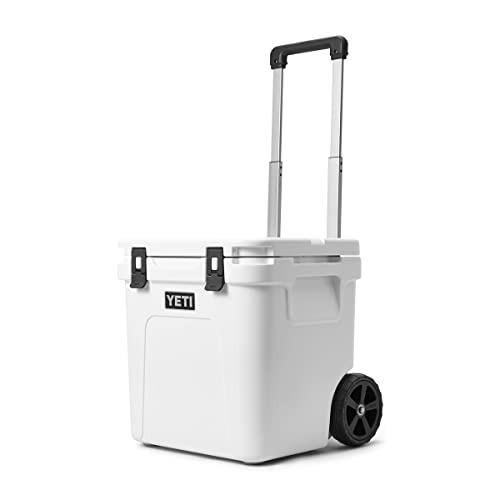
- Best overall for small patios: YETI Roadie 48 Wheeled Cooler with Retractable Periscope Handle — Check on Amazon
- Smallest electric for the tightest patios: Alpicool C15 Portable Car Freezer, 16 Quart — Check on Amazon
- Best compact cooler for hosting: Ninja FrostVault 45QT Cooler with Wheels and Dry Zone Drawer — Check on Amazon
- Best patio fridge, no ice ever: BougeRV CRPRO 30QT 12V Portable Refrigerator — Check on Amazon
- Best full-size flagship — only if you have storage: YETI Tundra 65 Hard Cooler (Charcoal) — Check on Amazon
The premium compact electric, honestly over budget: the Dometic CFX3 45 is reviewed below as a prose-only pick — it currently sells above this guide’s ceiling, so it carries no purchase link.
Read the full guide ↓
Disclosure: As an Amazon Associate, dailyhomedecorating.com earns from qualifying purchases. Links to Amazon on this page are affiliate links; they cost you nothing extra. Listing details such as price and availability change often, so check the current Amazon listing before you buy.
Let us start with the truth that shapes this entire guide: on a small patio, $700 is not a budget, it is an abundance. When you shop for the best outdoor cooler for small patios under $700, the binding constraint is never money — it is square inches. A small patio might offer a strip beside the door, a dead corner by the railing, or the space under a bistro table, and every cooler in this guide was chosen to fit one of those real places rather than to impress a specification sheet. The flagship rotomolded giants that dominate cooler marketing are, for this space, mostly a category error: a cooler that eats a quarter of your patio floor and still needs two people to move it has failed before the first drink is poured, no matter how many days its ice survives.
What actually wins on a small patio is a short list of virtues, and they are different from the camping virtues. Footprint first — tall and narrow beats wide and low, because patios run out of floor long before they run out of air. Wheels second, because a small patio’s cooler gets moved constantly: out for the evening, back against the wall after, rolled inside when the weather turns. Third, dual-purpose design — a cooler that is also a side table, a seat, a drinks fridge between weekends — because on a small patio nothing earns its place doing only one job. And fourth, for the many small patios with an outlet within reach, the electric option deserves its moment: a compact compressor fridge deletes ice, meltwater and the whole drainage question, which on a balcony-style patio with rules about water over the rail is not a detail but the decision itself.
Our short answer: the YETI Roadie 48 is the small-patio default — a tall, wheeled, rotomolded cooler with a footprint closer to a carry-on suitcase than to a storage tub. The Alpicool C15 is the pick when even that is too much cooler. The FrostVault 45QT is for hosts; the BougeRV for the patio that wants a permanent drinks fridge. And the honest budget advice runs through every section below: buy the premium compact that fits, spend a little of the difference on the shelf, cover and accessories that make it live well, and keep the rest. This guide will not pretend you need to spend $700 to cool drinks on forty square feet — it will show you the best that money can do here, and where it stops helping.
In this guide
Quick Picks
In a hurry? This table matches each cooler to the small-patio situation it handles best.
| Small-patio situation | Pick | Why it stands out | Link |
|---|---|---|---|
| Best overall for small patios | YETI Roadie 48 | Tall, narrow footprint; wheels; stands wine bottles upright | Check on Amazon |
| Tightest spaces | Alpicool C15 | 16-quart compressor fridge around 20 lb — the smallest real cooler here | Check on Amazon |
| Hosting on a small patio | Ninja FrostVault 45QT | Wheeled 45 qt with a dry food drawer — big function, modest footprint | Check on Amazon |
| Permanent patio fridge | BougeRV CRPRO 30QT | Set a temperature and forget ice; doubles as a drinks fridge | Check on Amazon |
| Full-size flagship (storage permitting) | YETI Tundra 65 | The benchmark ice chest — brilliant, and big; buy it only with a storage plan | Check on Amazon |
| Premium splurge (over budget) | Dometic CFX3 45 | The benchmark compact fridge — currently priced above $700 | Prose-only pick |
How we chose the best outdoor cooler for small patios under $700
Small-patio judging begins with a tape measure. We scored footprint before capacity: the exterior dimensions a cooler presents to your floor, the shape of that footprint (tall-and-narrow scores over low-and-wide), and whether the cooler can live in a patio’s natural dead spaces — the corner by the door, the strip along the railing, the end of the bench line. Second came movement in miniature: on a small patio a cooler is repositioned constantly and often through a doorway, so wheels, handles and one-person weight counted for more than expedition toughness. Third came the meltwater question, which on small and rented patios is also a rules question — electrics that produce no drainage at all scored heavily, and every ice chest here drains cleanly enough to be emptied indoors. Fourth came dual-purpose value: seating lids, table-height tops, and fridges that work indoors between weekends. Beneath everything, the batch rules held: verified real models, manufacturer-confirmed specifications, Amazon prices sighted at or under $700 for every linked pick, and a CPSC recall screen that removed a major rolling-cooler family from consideration.
We also enforced this lens’s honesty rule: no pick was allowed to pretend a small patio needs it to be huge. One famous flagship appears on this list with an explicit condition attached — buy it only if your storage lives somewhere other than the patio — and one famous compact fridge appears without a link because its price currently breaks the ceiling. A guide that respects a small space has to respect its reader the same way.
The six best small-patio outdoor coolers under $700, reviewed
1. YETI Roadie 48 — best overall for small patios
Who it suits: The typical small-patio owner: drinks for two to eight, a footprint that must behave, and a cooler that also leaves the patio for picnics and weekends away.
The Roadie 48’s shape is its argument. Where most 48-quart coolers sprawl low and wide, the Roadie stands tall and comparatively narrow — a footprint closer to a piece of carry-on luggage than to a storage tub — which lets it claim the patio’s dead spaces: the corner beside the door, the end of the bench, the strip inside the railing where nothing else fits. The tall interior is not wasted air, either: it stands wine and two-liter bottles upright, so the patio’s drink station presents like a cellar instead of a rummage. Under the shape sits a real YETI — rotomolded shell, thick insulation, freezer-style gasket — on solid NeverFlat wheels with a retractable Periscope handle, so the evening’s setup is a one-handed roll from inside to out, and the end of the night is the same roll reversed. At roughly twenty-eight pounds empty it is manageable through doorways and up a step, and its dry goods basket keeps the snacks out of the meltwater. It is flagship money for mid-size capacity, and on a small patio that is exactly the right trade: you are buying back your floor.
- Pros: The most patio-shaped footprint in the premium class; wheels and luggage handle for constant repositioning; upright bottle storage; rotomolded durability and ice retention.
- Honest limitation: Premium price per quart, and 48 quarts still will not anchor a large party alone — pair it with the kitchen fridge as overflow, as most small patios do anyway.
Choose it if you want one premium cooler that fits the patio and travels beyond it. Skip it if your patio’s cooler never leaves its corner — an electric below lives that life more cheaply.
2. Alpicool C15 — the smallest serious cooler we could verify
Who it suits: The genuinely tiny patio and the solo-or-couple household: a balcony strip, a Juliet railing’s worth of floor, a couple whose gathering is two chairs and a sunset.
The C15 is a real compressor fridge-freezer — not a thermoelectric novelty — in a 16-quart (15-liter) box of roughly twenty pounds. It holds a set temperature anywhere from −4°F to 68°F, runs from a patio outlet, a kitchen socket or a vehicle’s 12V supply, and occupies about the floor space of a shoebox’s taller cousin. On a small patio its virtues compound: no ice means no meltwater to drain over anyone’s railing or rules; its full capacity is usable because none of it is ice; and between outings it slides into a closet, under a bench or into the car’s footwell without negotiation. The limits are the honest ones of size: this is drinks and food for two to four, tall bottles are a squeeze, and it will not cater a party. But as the answer to “my patio is six feet by four and I refuse to give a cooler a quarter of it,” nothing else in this guide — or, frankly, in the verified market we surveyed — comes close.
- Pros: Smallest footprint of any real compressor cooler here; no ice, no drainage, no mess; light and genuinely portable; leaves nearly all of the budget unspent.
- Honest limitation: Sixteen quarts is a couple’s cooler; a gathering of six outgrows it, and it needs a power source within cable reach.
Choose it if floor space is your scarcest resource. Skip it if you host groups — the FrostVault below is your size.
3. Ninja FrostVault 45QT — compact hosting, with a dry drawer
Who it suits: Small-patio hosts: the six-to-ten-friend gathering on forty square feet, where the cooler must serve a crowd without consuming the venue.
The FrostVault 45QT packs the entertaining feature of this entire series — Ninja’s Dry Zone drawer, a fridge-temperature compartment that keeps food cold and dry beneath the drink ice — into a wheeled 45-quart footprint that a small patio can actually host. The drawer matters more as space shrinks: on a small patio there is no spare table for a separate food tray, no second cooler in the corner, so one box that cleanly separates the cheese and salads from the cans is worth more than raw quarts. The wheels let it roll out for the event and back against the wall after; the build quality reads as an appliance rather than camping gear, which suits a space that is also your outdoor living room. Ice retention is multi-day rather than expedition-grade — irrelevant at patio timescales — and the drawer needs the same wipe-down discipline as any fridge shelf. For the host whose patio is small but whose standards are not, this is the pick.
- Pros: Dry food drawer replaces a second cooler and a serving table; right-sized 45 quarts; wheeled for tight-space positioning; appliance-grade finish for a lived-in patio.
- Honest limitation: Still a substantial object on the smallest patios — measure your corner — and it is not rotomolded, so it is a home-base cooler, not a travel one.
Choose it if hosting is the patio’s main event. Skip it if the patio is a two-chair balcony — the Alpicool or BougeRV fits that life better.
4. BougeRV CRPRO 30QT — the patio drinks fridge
Who it suits: Patios with an outlet and a routine: the cooler that lives in its corner all season, holding drinks at drinking temperature, ready every evening without a setup ritual.
The CRPRO reframes what a patio cooler is. It is a 30-quart compressor fridge-freezer that holds any set point from −8°F to 50°F, runs quietly from mains or vehicle power, and turns a small patio’s dead corner into permanent cold storage. Thirty quarts with no ice displacement serves a small patio’s real life generously — a gathering’s drinks, a barbecue’s ingredients staged at a safe temperature, the household’s overflow on a hot week — and its modest footprint leaves the patio’s floor for the people it belongs to. There is no meltwater to drain, no ice to buy, and no pre-party setup beyond opening the door. The ownership notes are an appliance’s, not a cooler’s: give the vents a few inches of air, keep it under cover and out of direct rain and midday sun, and route the cable so nobody trips on it in the dark. Do those three small things and this is the lowest-effort cold a small patio can own.
- Pros: No ice or drainage ever; exact temperatures; quiet, efficient, always ready; doubles as an indoor drinks fridge in winter.
- Honest limitation: Needs power and shelter, so it is a corner appliance rather than a roam-the-yard cooler, and 30 quarts supports a party rather than anchoring a big one.
Choose it if your patio has a covered corner and an outlet. Skip it if the cooler must live in open weather or leave home regularly — the Roadie is the traveller.
5. YETI Tundra 65 — the flagship, with the storage condition stated plainly
Who it suits: Small-patio owners whose cooler life is bigger than their patio: the camper, angler or tailgater whose home base happens to be compact. This pick comes with a condition, and we would be failing this guide’s lens not to print it in the review itself: buy it only if it has somewhere to live that is not the patio.
As a cooler, the Tundra 65 needs no defense — it is the benchmark rotomolded ice chest, with up to three inches of insulation, a freezer gasket, T-latches and a decade-scale build, reviewed in full in our main Best Outdoor Cooler Under $700 roundup. As a small-patio resident, it is a problem: its footprint will dominate a small floor, and loaded it is a two-person lift through a doorway. The households this pick suits keep it in a garage, a storage cage or a generous closet and bring it to the patio as a guest, not a tenant — for the big weekend, the party that spills over, the trip it was really bought for. If that is your pattern, buy it with confidence and let the smaller picks above handle patio Tuesdays. If the honest storage answer is “the patio itself,” believe this guide when it steers you to the Roadie 48: same badge, same build philosophy, shaped for your actual life.
- Pros: The best all-round ice chest in the business; unmatched accessories and longevity; worth every cent when its real job is travel and big weekends.
- Honest limitation: Its footprint and loaded weight are the opposite of small-patio virtues — this is a conditional pick, and the condition is storage.
Choose it if you have off-patio storage and a travel-heavy cooler life. Skip it if it would live on the patio — that is the one outcome this guide exists to prevent.
6. Dometic CFX3 45 — the premium compact fridge (prose-only, over this budget)
Who it suits: The small-patio buyer who wants the single best compact electric cooler made and is willing to hunt a promotion. We include it because a flagship guide should name the benchmark — and we leave it unlinked because, at the time of writing, it sells above the $700 ceiling in this guide’s title.
The CFX3 45 packs 45 liters of fridge-freezer capacity — cooling to −7°F — into a rugged, app-controlled unit with an efficient variable-speed compressor and a five-year limited warranty, a combination honed by years of overlanding use. On a small patio its appeal is precision in a modest footprint: exact temperatures, a cabinet that uses every liter, and build quality that makes the “buy once” argument as well as any product in this series. Were it priced within this guide’s ceiling, it would contest the BougeRV’s place directly, and in some households — those who will also run it in a vehicle for years — the stretch is defensible. But a ceiling is a ceiling: our linked electric recommendations remain the BougeRV and the Alpicool, which cover small-patio life at a fraction of the cost, and the CFX3 stays here as the honest answer to “what would I get if money were no object in this size?”
- Pros: Benchmark build, efficiency and warranty in a compact electric; true freezer range; app control; every liter usable.
- Honest limitation: Currently priced above this guide’s entire ceiling — the sole reason it has no purchase link here.
Choose it if a genuine promotion brings it within reach and you want the best compact fridge outright. Skip it if $700 is a hard ceiling — the BougeRV delivers the daily experience for far less.
Prose-only pick: no purchase link, because we could not verify a price at or under $700 for this model.
Comparison table
| Cooler | Type | Capacity | Wheels | Small-patio standout | Best for |
|---|---|---|---|---|---|
| YETI Roadie 48 | Rotomolded, wheeled | 48 qt | Yes, solid | Tall, narrow footprint; upright bottles | Most small patios |
| Alpicool C15 | Compressor fridge-freezer | 16 qt | No | Smallest real cooler; ~20 lb | Tiniest patios and balconies |
| Ninja FrostVault 45QT | Insulated wheeled chest | 45 qt | Yes | Dry Zone food drawer | Hosting in small spaces |
| BougeRV CRPRO 30QT | Compressor fridge-freezer | 30 qt, all usable | No | Permanent set-temperature corner fridge | Patios with an outlet |
| YETI Tundra 65 | Rotomolded ice chest | 65 qt class | No | Flagship performance — storage permitting | Travel-first owners |
| Dometic CFX3 45 | Compressor fridge-freezer | 45 L | No | Benchmark compact electric | Splurge — currently over $700 |
How to choose a cooler for a small patio (measure first, buy once)
Measure the corner, not the catalogue. Small-patio buying starts with the actual space: tape the footprint of the corner, strip or bench-end the cooler will occupy, and note the doorway and any step on the route in. Compare those numbers to exterior dimensions, not capacity figures — on a small patio, a cooler that fits is infinitely larger than a cooler that does not. If two picks both fit, prefer the taller one: floor is the scarce dimension, air is free.
Decide the cooler’s address. Will it live on the patio permanently, visit from a closet, or commute from a garage? Permanent residents should be weather-tolerant, covered, and — if electric — placed with vent clearance and a tidy, trip-free cable run. Visitors need wheels and handles above all. Commuters need the Roadie pattern: luggage manners and a shape that fits a car as happily as a corner. Most small-patio disappointment is an address mismatch, not a product failure.
Count your real gathering. Small patios cap guest counts physically, which caps cooler size honestly: two to eight people need 16 to 48 quarts depending on format, with electrics punching above their number because none of their volume is ice. Buy for the gathering you host monthly; for the annual exception, the kitchen fridge and a borrowed tub are a system, not a compromise. Readers working to smaller ceilings will find the same logic in our Best Outdoor Cooler For Small Patios Under $300 and Best Outdoor Cooler For Small Patios Under $500 guides.
Spend the difference on the patio, not the badge. The correct small-patio budget looks like this: a premium compact that fits (the Roadie, FrostVault, or an electric), then a short list of enablers — a low stand or riser that lifts the cooler off the floor and into serving height, a fitted cover for outdoor residents, a set of ice packs shaped to your freezer if you chose ice, and decent lighting for the corner the cooler serves. What remains is not unspent budget; it is the patio itself getting better. The companion guide for the same footprint in apartment form, our Best Outdoor Cooler For Apartments Under $700 edition, reaches many of the same conclusions for readers whose patio comes with a lease.
Designing a small patio around its cooler
A small patio works when every object has a home and the homes do not fight. The cooler, as the patio’s largest appliance, deserves to be placed first in that plan rather than squeezed in last. Three placements cover most small patios. The door corner — the dead space beside the patio door that no chair can use — suits a tall cooler perfectly: the Roadie 48 was practically drawn for it, close to the kitchen for loading, out of the seating’s way, and on the natural route for its wheels. The railing end suits a serving setup: cooler at the end of the railing line, a small side surface beside it, seating facing inward, so the drink station anchors one end of the patio’s social geometry instead of interrupting its middle. And the under-cover corner — the driest, most sheltered spot, if the patio has one — is the electric’s natural home, where the BougeRV or Alpicool can live plugged in year-round with its vents breathing and its cable hugging the wall.
Two refinements separate a patio that works from one that merely contains things. The first is height: a cooler on a low stand or riser serves at a friendlier height, keeps its base out of patio puddles and wash water, and — for the electrics — guarantees the vent clearance underneath that corners otherwise steal. The second is the lid’s second job. On a small patio the cooler’s top is valuable real estate: a serving surface during events, a plant stand between them for the ice chests (never for an electric, whose top vent and heat need respect), and overflow seating when the rotomolded picks are in furniture mode. Plan the patio with the lid in the inventory and the whole space gains a piece of furniture you did not have to buy or store.
Finally, light and traffic. A drink station guests cannot find in the dark becomes a lid held open under a phone torch; a station placed in the patio’s only walkway becomes an obstacle course. Put the cooler where the evening’s light already falls — near the door light or the string lights’ end — and where a person can stand in front of it without standing in the way. These are thirty-second decisions made once, and they are worth more to a small patio’s evenings than any specification in this guide.
Ice on a small patio: the logistics nobody mentions
Readers who choose an ice chest for a small patio inherit a small, specific logistics chain, and it is worth describing honestly because it decides whether the cooler is loved or resented by August. Ice begins in a small freezer, where it competes with food: the workable system is a standing stock of flat reusable packs and two frozen bottles, rotated without thought, rather than bagged ice bought per event and stored nowhere. The cooler itself should be loaded where it will be emptied — on the patio if the weather allows — because a loaded ice chest crossing a living room is a drip risk with handles. During the event, meltwater is the patio’s problem in miniature: a quality drain plug opened over a bucket, never over the rail, handles it in a minute, and the wheeled picks in this guide exist partly so that even that minute can happen at the kitchen sink instead.
Storage closes the chain. A small patio’s ice chest usually stores in a closet, which means it must arrive there dry: drain, towel, an hour open in the apartment’s air, then away with the lid cracked on a strip of cardboard. Skip the drying once and the closet will explain the mistake at length. None of this is onerous — it totals minutes per event — but it is real, and it is the honest counterweight to the electrics’ plug-and-forget life. Choose the ice chest with these minutes in mind and they become routine; choose it imagining they do not exist and the cooler slowly trains you to leave it in the closet. The picks above were chosen, in part, for how gracefully they accept this routine: drains that seal, interiors that hose clean, shapes that store like luggage rather than like furniture.
The small patio across four seasons
A small patio’s cooler earns its floor in summer, but it has to coexist with the other three seasons, and the picks divide honestly on how gracefully they do it. In spring and autumn — the shoulder seasons when a small patio is arguably at its best — the electrics shine quietly: the BougeRV holds the drinks for a cool evening without any of the ice overhead that a two-hour gathering cannot justify, and the Alpicool’s small appetite matches the season’s smaller occasions. The ice chests, by contrast, ask for a full load-and-ice ritual whatever the gathering’s size, which is why shoulder seasons are when small-patio owners most often find themselves simply not bothering — and why a cooler that gets skipped is, by the only metric that matters, underperforming its specification sheet.
Winter separates the residents from the visitors. An ice chest winters anywhere dry — closet, garage, storage cage — asking only for a cracked lid and a clean gasket. An electric in year-round service winters as what it already is the rest of the year: a drinks fridge, now holding the holiday overflow, entirely unbothered by the season. The patio residents — coolers that live outside through winter — should be the rotomolded picks under a fitted cover, off the floor on a stand, with the understanding that UV and weather, not use, are what age them. Plan the winter when you buy, and no season will find your cooler in the way: that, on a small patio, is the whole game, because a space this size forgives nothing that does not have a home.
A last measurement habit: mock it up before it arrives. Before ordering any pick in this guide, mark its footprint on the patio floor with painter’s tape and live with the outline for a day — walk around it, set the chairs out, open the door against it. Small patios forgive nothing, and a tape outline has saved more readers from a wrong cooler than any review paragraph, including ours. Do the same for the storage spot and the doorway route, and the cooler that arrives will feel less like a purchase and more like a piece of the patio that was always supposed to be there. It takes ten minutes, it costs a roll of tape, and it is the single most reliable step in this entire buying guide.
Common small-patio cooler mistakes
Buying capacity in quarts instead of fit in inches. The defining small-patio error. A cooler that dominates the floor will be resented daily and used reluctantly; a cooler that fits will be used constantly. Fit is the capacity that matters here.
Ignoring the doorway. A patio cooler that cannot pass the door, the step or the turn between storage and station will live wherever it was first dropped. Measure the route as carefully as the corner.
Draining over the rail. Many small patios — and most rented balconies — prohibit or frown on drainage over the edge. Ice chests here should be wheeled indoors to drain, or choose an electric and delete the issue entirely; it is one of the quiet reasons electrics lead so much of this series’ small-space advice.
Blocking the vents of an electric. A compressor fridge pushed flush into a corner, vents buried against the wall or a cushion, works harder, runs louder and ages faster. A few inches of air is the entire requirement — plan the corner with them included.
Skipping the recall check. A major rolling-cooler family was recalled in 2025 over a handle hazard affecting more than a million units, and small-space gear is often bought used. Every pick in this guide passed a CPSC screening; give anything you bring home the same minute of diligence.
Why not simply buy a cheap cooler and keep the change?
It is the obvious question at this lens, and it deserves a straight answer rather than a sales pitch. For a patio used a few times a summer, a basic cooler honestly is enough, and our lower-tier guides in this series exist for exactly that reader. The premium compact earns its premium in three specific currencies. The first is shape: cheap coolers are almost never tall, narrow and wheeled in the Roadie’s proportions, because those proportions are expensive to build — and on a small patio, shape is the feature. The second is the compressor: the Alpicool and BougeRV are real refrigeration at temperatures a thermoelectric box cannot reach in summer heat, and that capability, not their badges, is what their prices buy. The third is time: a small patio’s cooler is handled, moved, opened and stored more often per quart than any other kind, and hardware — latches, hinges, handles, wheels — is where cheap coolers spend their savings and their owners spend their patience. Buy premium here when the cooler will be a weekly appliance in a space you look at every day. Buy modestly when it will be a monthly guest. Both are rational; this guide’s job is to make the distinction visible, and its picks are ordered so that each budget instinct finds its right answer named.
Final recommendation
For most small patios, buy the YETI Roadie 48: it is the rare premium cooler designed around a footprint, and its wheels, upright bottles and rotomolded build make it the one pick that serves the patio and everything beyond it. Judge it — and every pick here — by the small patio’s own test, which is not how cold it keeps a drink but how completely it disappears into the space’s life: out in one hand for the evening, back against the wall in one motion after, never once the reason the patio feels smaller than it is. The Roadie passes that test more completely than any cooler we verified for this guide, and it passes the older tests too — ice for a weekend, a shell for a decade, a brand that will still sell you a latch in year nine. On a small patio, where every object is on permanent display and permanent trial, that combination is what flagship money is actually for. If your patio is truly tiny, the Alpicool C15 is the honest answer; if you host, the FrostVault 45QT; if you have a covered corner and an outlet, the BougeRV will quietly become the most-used appliance you own outdoors. The Tundra 65 remains a wonderful cooler for people whose storage is not their patio, and the Dometic remains the dream at a price this guide refuses to pretend is under $700. For the full flagship field without the footprint filter, see the main Best Outdoor Cooler Under $700 roundup.
FAQ
What size cooler fits a small patio? Work from the footprint, not the quarts: most small patios happily host a cooler in the 16-to-48-quart class if its shape is tall rather than sprawling. Measure your corner, compare exterior dimensions, and remember that electrics deliver more usable capacity per quart because none of their volume is ice.
Is an electric cooler practical on a small patio? It is often the best answer there: no ice, no meltwater to drain, exact temperatures, and a second life as a drinks fridge. It needs a reachable outlet, a few inches of vent clearance and shelter from direct rain — a covered corner is ideal.
Can a cooler double as patio furniture? The rotomolded picks can: their lids are built to sit on, and at serving height a cooler makes a natural side table for the chair beside it. On a small patio, that double duty is not a bonus — it is part of how the cooler earns its floor.
How do I handle meltwater on a rented patio or balcony? Choose a wheeled cooler and drain it indoors at the sink or tub, or choose an electric and produce no meltwater at all. Never assume draining over the rail is acceptable; in many buildings it is expressly prohibited.
Is $700 overkill for a small patio? For capacity, yes — and this guide says so throughout. What the budget legitimately buys here is quality in a compact shape: real wheels, a real compressor or a real rotomolded shell, in a footprint your patio can host. Spend to that standard, equip the corner properly, and keep the change.
Where should a small patio cooler live in winter? Cleaned, dried and stored with the lid cracked — in a closet or garage if it is an ice chest, or in its corner under cover if it is an electric in year-round service as a drinks fridge. Gaskets and compressors both reward the same thing: dry, ventilated rest rather than a sealed, damp box.
My patio is a narrow balcony. Which single pick should I look at first? Start with the Alpicool C15 if the balcony is truly a strip — its footprint is the smallest here and it asks nothing of the space but an outlet and a few inches of air. If the balcony is narrow but long, the Roadie 48’s tall, luggage-like shape is the other natural fit, claiming the end of the balcony rather than its width. Measure both against your actual railing-to-door depth before ordering; on a balcony, two inches of exterior depth is the difference between a cooler that lives there and one that lives in your way.
Can I run an electric patio cooler from a small power station instead of an outlet? Yes — an efficient 12V fridge like the BougeRV or Alpicool draws modest power, and a compact portable power station will run one through an evening event or a long afternoon comfortably. It is the standard solution for patios and shared spaces without a reachable outlet. Just keep the station itself under cover, budget its capacity for the fridge’s start-up draw as well as its running draw, and treat the pairing as event equipment rather than a permanent installation.
How do I stop a small patio cooler becoming a clutter magnet? Give it a lid rule and keep it: during events the top is a serving surface, between events it is either clear or holding exactly one intended thing — a plant, a lantern — never a drift of mail, tools and half-finished projects. A cooler whose lid is permanently buried stops being opened, and a cooler that stops being opened stops being a cooler. The rule takes a week to become habit and protects the most-used appliance on the patio from the fate of every flat surface in a small home.
What if my small patio has no shade at all? Then shade becomes part of the cooler purchase, in effect if not in name: a light-colored pick, a fitted cover that goes on between uses, and a position against the wall that catches the building’s own shadow for part of the day will together recover much of what a tree would have given you. An electric suffers most in a shadeless spot, because its compressor fights the ambient heat directly — if your patio is a true sun trap with no covered corner, weight your choice toward the rotomolded picks, whose insulation does not care where its cold comes from, and let the electric wait for a patio that can shelter it.


