Where to buy
Check the latest price, availability and delivery on Amazon. Orders are placed on Amazon. We may earn a commission from qualifying purchases.
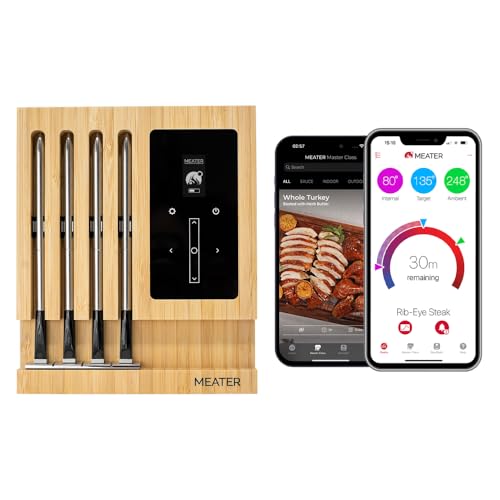
- Best host’s monitoring hub: MEATER Block 4-Probe WiFi Smart Meat Thermometer — Check on Amazon
- Best prep, serving and drinks station: Keter Unity XL Portable Outdoor Table and Storage Cabinet — Check on Amazon
- Best carving-station checker: ThermoWorks Thermapen ONE — Check on Amazon
- Best second-zone monitor: ThermoPro TempSpike TP960 Truly Wireless Meat Thermometer — Check on Amazon
- Best serving-side tool set: Weber Precision 3-Piece Grilling Tool Set — Check on Amazon
- Best safe cleaning pick: GRILLART Grill Brush and Scraper, Bristle Free — Check on Amazon
Read the full guide below.
Disclosure: As an Amazon Associate, dailyhomedecorating.com earns from qualifying purchases. Links to Amazon on this page are affiliate links; they cost you nothing extra. Listing details such as price and availability change often, so check the current Amazon listing before you buy, and confirm the listing still sits inside this budget before ordering.
The best grill accessories for outdoor entertaining under $700 are bought for an audience, and that changes the priorities completely. This guide to the best grill accessories for outdoor entertaining under $700 is organised around the host’s real problem on the day: four dishes that must finish together, a dozen guests who should never watch you panic, and a grill station that has to double as a serving station the moment the food comes off. The budget needs the same honest framing as every tier on this site — the figure is the total for a complete entertaining system, not the price of a single accessory, because individual accessories are modest purchases and almost nothing in this category legitimately costs the whole amount alone. Spent as a system, though, the money buys the three things entertaining actually runs on: monitoring that frees the host from the grill, a prep-and-serving station that keeps food, drinks and gear in one place, and precision at the carving moment when every guest is watching. At the prices sighted during research, the six verified picks below land under the ceiling together, with a little headroom for the consumables a party consumes.
Entertaining also raises the safety stakes, and this guide treats that plainly. A backyard grill on a party day feeds children, neighbours and friends who did not choose your equipment — so there is no wire bristle grill brush anywhere in these picks. In 2026 the U.S. Consumer Product Safety Commission announced recalls covering millions of metal wire bristle brushes — Weber, Nexgrill and Cuisinart models among them — because shed bristles stick to grates and food and can be swallowed without being noticed, in reported cases requiring medical treatment to remove. The single cleaning pick below is bristle-free by design. Every linked pick was verified on its exact Amazon listing during research, with a price sighted on that exact ASIN; anything we could not verify that way appears in prose without a link. For the setting around the grill station, Best Patio Dining Set Under $700 and Best Outdoor Sectional Under $700 cover where guests actually sit, and Best Outdoor String Lights Under $75 covers the light after sunset — this guide covers the station they gather around.
In this guide
Quick Picks: The Best Grill Accessories for Outdoor Entertaining Under $700 at a Glance
| Pick | Best for | Entertaining strength | Link |
|---|---|---|---|
| MEATER Block | Timing a multi-dish menu | Four wire-free probes plus WiFi, so the host can leave the grill | Check on Amazon |
| Keter Unity XL | Prep, serving and drinks in one station | Stainless top, 78-gallon storage, wheels to the table | Check on Amazon |
| ThermoWorks Thermapen ONE | Confident carving and serving | About one-second checks in front of guests, no guesswork theatre | Check on Amazon |
| ThermoPro TempSpike TP960 | A second grill, smoker or oven dish | Long stated range with booster; app alerts for the overflow cook | Check on Amazon |
| Weber Precision 3-Piece Tool Set | Turning and serving at the grate | Beveled spatula, locking tongs, basting brush; dishwasher safe | Check on Amazon |
| GRILLART Bristle-Free Brush and Scraper | Resetting the grate between courses | Coil head plus scraper; nothing to shed into guests’ food | Check on Amazon |
A party menu is a scheduling problem wearing an apron. The brisket needs hours, the chicken needs one hour, the vegetables need twelve minutes and the halloumi needs ninety seconds — and all of it is supposed to arrive warm, together, while the host also holds a conversation and a drink. That is why this table leads with two monitoring systems rather than one: the Block’s four probes run the main grill’s programme, while the TempSpike watches the second zone — the smoker, the kettle across the patio, the roast finishing in the kitchen oven — so no dish is ever the forgotten one. The Unity XL is the physical stage: prep on it in the afternoon, serve from it in the evening, and let guests help themselves to drinks from the same station instead of trailing through the kitchen. The Thermapen is the closer, the tool that turns the carving moment from a gamble into a demonstration. And the bristle-free brush works between courses, resetting the grate for the next round without endangering the next round’s eaters. Hosts building the same party system at a lower ceiling will find it staged in Best Grill Accessories For Outdoor Entertaining Under $500.
How These Picks Were Chosen
Candidates were mapped against a party timeline — afternoon prep, the long first cook, the overlapping second cook, the serving rush, the between-course reset, and the next-day cleanup — then filtered on verification before quality. A linked pick required an exact Amazon listing opened and confirmed during research, a price sighted on that exact ASIN fitting a sensible share of a total system budget under the ceiling, specifications matching the manufacturer’s own description, and no open safety recall. Cleaning tools faced the site’s absolute rule against individual metal wire bristles, following the 2026 CPSC recalls — a rule that matters most precisely here, where the food is served to other people’s families.
Entertaining-specific judgement followed. Monitoring was scored on host freedom: how many dishes can be watched at once, and from how far away, because a host chained to the grill is a party with an absent centre. That is why the hub here is a four-probe WiFi system with a standalone display, and why a second, long-range single probe earns a slot as overflow coverage rather than being treated as a duplicate. The station was scored on its double life — prep surface by day, serving and drinks surface by night — plus enclosed storage, because party gear multiplies and a host rummaging through the garage mid-service is a host who has left the party. The instant-read was scored on speed and theatre: at the carving board, in front of guests, a one-second answer reads as mastery and a five-second wait reads as doubt. Finally, the kit was totalled as a buyer would total it: at sighted prices the six picks sit under the ceiling with headroom for fuel, drip pans and the extra serving ware every real party needs — reported honestly, because a guide that inflates single items toward a budget number teaches its readers to shop badly.
Detailed Reviews
1. MEATER Block — The Hub That Lets the Host Leave the Grill
Who it suits: Anyone who has ever hosted a cookout from beside the grill — apron on, drink warming in hand, watching the party happen twenty feet away. If your entertaining problem is absence, this is the pick that returns you to your own event.
The Block holds four completely wire-free probes in a bamboo charging station with built-in WiFi and its own display. Each probe reads a dish’s internal temperature and the ambient heat around it, so the party menu’s four timelines — the pork shoulder, the whole chickens, the beef roast, the late tray of sausages’ neighbouring salmon — run in parallel on one screen, each with its own alert, instead of in one anxious head. The WiFi is the entertaining feature, not a spec-sheet flourish: the block joins the home network, so the cook is visible from the kitchen while you dress the salads, from the table while you sit down for a course, from anywhere the host’s duties actually happen. Standalone mode keeps the readings on the block’s own display for guests who wander over to admire the operation. Wire-free probes also ride a rotisserie without cables, for hosts whose centrepiece spins. Between parties the block lives in the kitchen like an appliance, probes charged and ready, which is why it gets used on ordinary Tuesdays too — and a monitoring system that only comes out for parties is one whose batteries are always dead on the day.
Pros: Four dishes monitored at once with individual alerts; WiFi range that follows the host, not the grill; standalone display for phone-free hosting; wire-free probes suit rotisserie centrepieces.
Honest limitation: It is the premium end of thermometer pricing, justified only by menus that genuinely run in parallel — a two-person burger night does not need it. It wants a 2.4 GHz home network for its cloud features, the probes are too thick for thin party nibbles like skewers’ smallest items, and four probes means four guests’ worth of washing-up afterwards.
Choose it if your parties run multi-dish menus and you intend to attend them. Skip it if your entertaining is one protein at a time — a single probe plus the instant-read below hosts that party perfectly well. Check on Amazon, and weigh its live price first, since it is the largest single share of this system.
2. Keter Unity XL — Prep Station by Day, Serving Station by Night
Who it suits: Hosts whose parties currently migrate — prep in the kitchen, cooking outside, serving wherever a flat surface survives — and whose guests keep ending up in the kitchen because that is where everything is.
The Unity XL is a wheeled cabinet with a stainless steel top and a maker-rated 78 gallons of enclosed storage, and entertaining is the use case it was born for. In the afternoon it is the prep bench beside the grill: sheet pans, marinades, rubs and tools laid out once, in order, instead of ferried through a doorway twelve times. In the evening it becomes the serving station — carve on the steel top, set the platters down, let guests serve themselves at the station while the grill behind you starts the next course — and, with the cabinet stocked, it doubles as the drinks point that keeps the party outdoors where the party is. The weather-resistant resin body lives outside permanently, the casters let you reposition the station between the prep layout and the serving layout in a minute, and the enclosed storage swallows the entire entertaining kit between events: tools, probes’ companions, drip pans, the brush, the rotisserie hardware. For a host, that permanence is the real luxury — party day starts with a stocked station, not a scavenger hunt.
Pros: One station for prep, serving and drinks; large enclosed storage that keeps the party kit together; stainless top that carves and wipes clean; wheels reconfigure the layout between courses.
Honest limitation: Assembly is a real project to schedule before party season, not on party morning. The resin body is sturdy furniture, not a butcher’s block — carve on a board, not the top — and the unit needs level ground to serve drinks safely. Measure the patio corner it will claim.
Choose it if your entertaining lacks a home base outdoors. Skip it if a built-in outdoor kitchen already gives you counters and storage. Check on Amazon for the current listing and dimensions.
3. ThermoWorks Thermapen ONE — The One-Second Answer at the Carving Board
Who it suits: The host at the moment of maximum scrutiny: knife in hand, guests gathered, a whole roast about to be opened. If you have ever carved into pink-or-grey uncertainty in front of an audience, this thermometer is the end of that scene.
The Thermapen ONE gives full readings in about one second, with maker-stated accuracy around half a degree Fahrenheit, on a backlit display that rotates to whatever angle you probe from — including the low, sideways angle of a carving board at dusk, which is exactly when entertaining checks happen. Its body is waterproof to IP67, so a rinse between the beef and the chicken is a second’s work, and there is no app, no pairing and no battery drama between the host and the answer. At a party its speed is social, not just technical: a one-second check reads as quiet mastery, keeps the serving line moving, and lets you verify the chicken thighs at the back of the platter and the beef’s centre with the same unhurried motion. It also quietly protects the menu’s economics — a premium roast is the most expensive item at most cookouts, and the difference between resting it perfectly and overcooking it by ten degrees is the difference this thermometer exists to prevent. This is the pick guests will ask about, and the one whose absence experienced hosts feel first.
Pros: Reference-grade speed and accuracy at the serving moment; display readable at dusk and at carving angles; waterproof for between-protein rinses; zero software friction.
Honest limitation: It only works where the host stands — it monitors nothing — so it complements rather than replaces the hub and the overflow probe. It is also a premium price for a single-purpose instrument, and genuine units should be confirmed on the listing, since the model is also sold through the maker’s own store.
Choose it if you carve or serve expensive roasts in front of people. Skip it only if a fast, trusted instant-read already lives in your apron pocket. Check on Amazon for the current listing.
4. ThermoPro TempSpike TP960 — The Overflow Probe for the Second Cook
Who it suits: Hosts whose parties outgrow one grill — the smoker running low across the patio, the kettle doing vegetables, the second roast finishing in the kitchen oven while the main grill performs outside.
Every big entertaining cook has a second zone, and it is always the zone that gets forgotten, because the host’s attention lives at the main grill with the guests. The TempSpike exists in this system to be that zone’s supervisor. Its maker states a Bluetooth 5.2 range of up to 500 feet in open air, relayed through a booster in its charging case — a headline figure no patio will fully deliver, but the headroom is precisely what survives a wall, a doorway and a closed lid between the smoker and the host. The probe is wire-free with dual sensors for internal and ambient temperature, an IP67 rating for easy rinsing between duties, maker-stated accuracy of plus or minus 1.8 degrees Fahrenheit — roast-grade, and honestly sufficient for the overflow role — and app alerts with guideline temperatures, so the second cook taps the host on the shoulder digitally instead of burning quietly. Probe battery life is stated well beyond a party’s length, so it can be deployed at noon and trusted at nine. In system terms, it is the cheapest insurance in this guide: the dish it saves is always the one nobody was watching.
Pros: Long stated range aimed at second-zone supervision; wire-free probe suits smokers, kettles and ovens alike; alerts replace attendance; rinseable IP67 probe.
Honest limitation: Real-world range through building materials is a fraction of the headline figure — place the booster thoughtfully, near the path between the second zone and where you host. Its stated accuracy is a step below the hub-and-instant-read pairing, which is why final doneness at the carving board still belongs to the Thermapen.
Choose it if your parties run a second cooker or an oven dish in parallel. Skip it if everything you serve comes off one grill — the Block’s four probes already cover that menu. Check on Amazon, confirming the single-probe TP960 configuration.
5. Weber Precision 3-Piece Tool Set — Serving-Side Tools That Behave in Company
Who it suits: Hosts who cook and serve with the same tools in front of guests — where a spatula that tears the fish or tongs that drop a sausage are not private embarrassments but part of the show.
The Precision set is the three tools entertaining actually uses: locking tongs with the grip control to portion sausages, turn skewers and lift a whole chicken without drama; a spatula with a three-sided beveled edge that slides under delicate fish and party vegetables cleanly instead of shoving them through the grate; and a full-size silicone basting brush for the glazes and sauces that define party food, which rinses clean between flavours instead of carrying the last sauce into the next. Soft-touch handles stay secure in saucy hands, hanging loops park the set on the station’s hooks between courses, and the whole set is dishwasher safe — the unglamorous feature that decides whether tomorrow’s cleanup is twenty minutes or an hour of scrubbing marinade out of hinges. Weber’s two-year warranty stands behind it. And as in every guide on this site, note what the set omits: a cleaning brush. After the 2026 wire-bristle recalls — Weber’s own wire models included — that job belongs solely to the bristle-free pick below, especially when the eaters are guests.
Pros: The exact three tools serving requires, well made; beveled spatula protects delicate party food; dishwasher-safe recovery after the event; hanging storage on the station.
Honest limitation: Party-scale cooking will eventually justify a second set of tongs — one for raw, one for cooked — and hosts who grill whole fish often add a wide spatula. The set is the core kit, not the final collection.
Choose it if your current tools flex, tear or drop food. Skip it if your tongs and spatula are already company-grade. Check on Amazon for the current listing.
6. GRILLART Bristle-Free Brush and Scraper — The Between-Course Reset, Safely
Who it suits: Every host, without exception — because entertaining is the one context where your cleaning tool’s failure lands on somebody else’s plate.
Party grilling is course grilling: delicate fish after sausages, vegetables after chicken, a second wave of burgers after the first. Between those rounds the grate needs a fast, genuine reset — and it needs it with guests’ food next in line. The GRILLART’s bristle-free coil head, dipped in water and worked over the hot grate, steam-cleans in the minute between courses, while its integrated scraper clears the carbonised edges the coils polish over. The safety case needs no softening: the CPSC’s 2026 recalls covered millions of Weber, Nexgrill and Cuisinart wire bristle brushes after shed bristles were swallowed and, in reported cases, required medical treatment to remove. A wire brush used in a hurry, between courses, on a grill feeding twenty people, is the single worst risk in outdoor entertaining — and it is entirely optional, because this design cleans properly without shedding anything. The maker rates the head for porcelain, ceramic, steel and cast iron grates, the 18-inch handle keeps the host’s hands clear during a hot reset, and the head’s wear is visible when it finally ages, so replacement is a decision rather than a surprise.
Pros: No wire bristles to shed into guests’ food; fast steam reset between courses; scraper for edges and heavy residue; suits all common grate materials.
Honest limitation: The method wants a hot grate and a wet head, so it resets beautifully mid-party but is not a cold-grill restoration tool; a season’s neglect still takes repeated passes. The head is a consumable — budget its eventual replacement.
Choose it if you feed anyone besides yourself, which is the definition of this guide’s reader. If a wire bristle brush is your current party tool, this replacement precedes every other purchase on the page. Check on Amazon, and confirm the listing says bristle free before ordering.
Comparison Table
| Pick | Party role | Standout specification | Watch out for |
|---|---|---|---|
| MEATER Block | Main-grill programme | 4 wire-free probes; built-in WiFi; standalone display | Premium share; 2.4 GHz WiFi needed |
| Keter Unity XL | Prep and serving station | Stainless top; 78-gallon storage; wheeled | Assembly; carve on a board |
| ThermoWorks Thermapen ONE | Carving and serving checks | About one-second readings; IP67; rotating backlit display | Handheld only |
| ThermoPro TempSpike TP960 | Second-zone supervision | Bluetooth 5.2 booster; stated 500 ft open-air range; IP67 | Range shrinks through walls |
| Weber Precision 3-Piece | Cooking and serving tools | Beveled spatula; locking tongs; dishwasher safe | Core set; add tongs at scale |
| GRILLART Bristle-Free | Between-course reset | Coil head plus scraper; 18-inch handle | Best hot and wet; consumable head |
For hosts whose parties outgrow even four probes, one flagship alternative is worth a prose mention: the MEATER Pro XL, a four-probe wire-free system whose probes and charger add a built-in display and higher heat resistance at the very top of the category’s pricing, sold by its manufacturer as the line’s flagship. If your entertaining regularly runs two grills’ worth of proteins, it is the logical research direction. We cover it without a purchase link because, during this research round, we verified the manufacturer’s specifications and pricing but did not confirm an exact Amazon ASIN for it — and this guide does not guess links. Search it by full name and apply the same listing checks described below. Similarly, the grill itself is a prose matter here: hosts shopping the cooker for a party-first patio will find the relevant shortlist in Best Gas Grill For Outdoor Entertaining Under $700.
How to Choose Grill Accessories for Outdoor Entertaining
Plan backwards from the serving time. Write the menu, note each dish’s cook time, and let the schedule choose the gear. Menus with three or more overlapping timelines need multi-probe monitoring; menus built around one centrepiece need carving precision instead. The accessories follow the timetable, never the reverse.
Buy the host’s freedom first. The scarcest resource at a party is the host’s attention. Monitoring that reports from anywhere — WiFi at the hub, long-range relay at the second zone — is worth more than any single cooking gadget, because every minute it returns is a minute the party gets its host back.
Give the party a station. Prep, serving, drinks and storage in one wheeled place ends the kitchen relay, keeps guests outdoors, and makes the grill corner look like an occasion rather than a worksite. If the budget forces a choice between a fancier thermometer and the station, hosts should take the station and the mid-tier thermometer.
Protect guests explicitly. Bristle-free cleaning is the floor, not a preference, when other people’s children eat from your grill. The same logic extends to the instant-read: verifying the chicken in front of guests is hospitality, not fussiness. Readers staging this system at lower ceilings will find it in Best Grill Accessories For Outdoor Entertaining Under $300 as well as the mid-tier guide linked earlier.
Rehearse the reset. Between-course cleaning, a second set of tongs for the serving phase, drip pans under the rich courses — the party system is the one that survives contact with the second round. Choose gear whose mid-party behaviour you have actually thought through.
Verify on the listing like the party depends on it — it does. Entertaining purchases are deadline purchases, and deadline purchases are where variant errors hurt most: the hub that arrives as a single-probe model, the tool set in the wrong configuration, the station whose dimensions were assumed rather than read. Check the exact variant, the probe count, the dimensions and the delivery estimate on the live listing when you order — every pick in this guide repeats that instruction because a party cannot be rescheduled around a return label. Order the party-critical pieces a week earlier than feels necessary; monitoring gear also wants a quiet test cook before its debut, both to charge and pair everything and to teach the host its alerts’ rhythm without an audience. A host who has run the system once, alone, on a Tuesday, operates it on Saturday like furniture. A host unboxing it Saturday morning is running an experiment with guests as witnesses, and no accessory at any price can rescue that decision after the fact.
Common Mistakes
Hosting from beside the grill. Buying more cooking capacity while owning no remote monitoring guarantees the host misses the party. Supervision range is an entertaining feature; treat it as one.
One thermometer for a four-dish menu. A single probe on a parallel menu is a schedule written in pencil. Either monitor the menu you planned or plan the menu your monitoring can run.
Using the household wire brush for the party clean. The pre-party deep clean is when a tired wire brush sheds most — directly before the maximum number of guests eats from the grate. After the 2026 recalls, that sequence is indefensible; retire the wire brush before the season, not during it.
No serving plan. Food that comes off perfectly and then waits on the grill’s side shelf while someone hunts for a platter is a logistics failure wearing a cooking costume. The station, the platters and the carving board are part of the menu.
Spending the whole ceiling on the grill corner. Parties also consume fuel, ice, drip pans, serving ware and replacement cleaning heads. A system bought with headroom hosts the second party too.
The Party Timeline, Run on This System
Accessories for entertaining earn their keep on a schedule, so here is the schedule this system was built around — a Saturday party for a dozen, with a menu that would defeat an unequipped host. The day before, the station does its first shift: the Unity XL’s cabinet is already stocked with the kit, the probes charge in the Block in the kitchen, and the menu’s shopping is checked against the consumables — fuel, drip pans, a fresh cleaning head if the old one is tired. None of that is glamorous, and all of it is the difference between a host and a caterer of emergencies.
Party day, late morning: the long cook starts. The pork shoulder or brisket goes on with the Block’s probes assigned — meat, second meat, grate-level ambient — and the block joins the home WiFi before the first guest is even expected. Prep happens at the station, outdoors, in the cook’s own territory: salads dressed later stay inside, but everything grill-bound is trimmed, rubbed and trayed on the steel top, in order, once. Early afternoon, the second zone wakes up — the kettle or smoker across the patio, or the oven indoors — and the TempSpike takes that watch, because experience says the overflow dish is the one that burns in silence while the host performs at the main grill. Its alert is the only supervision that dish needs and the only one it would otherwise get.
Guests arrive to a party that is already visibly under control, which is a form of hospitality in itself: the station set as a drinks point, the grill working, the host holding a glass instead of a guess. The middle courses run on the reset rhythm — sausages off, a one-minute steam-and-scrape of the hot grate with the bristle-free head, vegetables on — and the probes keep reassigning as dishes rotate: the chicken’s probe becomes the salmon’s warning system, then retires to the block. The centrepiece moment, the roast at the carving board, belongs to the Thermapen: one-second checks at the centre and the ends, in front of the audience, turning the most anxious minute of the party into the most confident one. Dessert-course grilling — fruit, pound cake, the late tray of halloumi for the stragglers — runs on the pocket tools and habit, with the monitoring stood down and charging.
And the next morning is in the design too. The tools went through the dishwasher during the party’s last hour, not after it. The probes were wiped as they were pulled. The station’s doors close on a kit that is together, dry and accounted for, so the next invitation starts from readiness instead of archaeology. Entertaining systems fail in the boring hours — the prep, the reset, the cleanup — far more often than at the grill itself, and every pick in this guide was chosen with a boring hour in mind. That is what the budget buys a host: not a more impressive grill, but a party whose machinery never becomes the entertainment.
Hosting More, Hosting Less: Scaling the System
Not every reader entertains at the same scale, and the system scales honestly in both directions. For the regular six-person dinner party — one grill, one centrepiece, sides indoors — the Block can step down to a single-probe monitor without changing the rest of the logic: the station, the instant-read, the tools and the bristle-free reset carry that party, and the TempSpike returns when a second zone appears. For the twice-a-year twenty-person event, the pressure points arrive in order: serving surface first, then probe count, then duplicate tools for the raw-and-cooked separation at volume. The flagship four-probe alternative discussed in the comparison section exists for that top end. What does not scale is the safety layer: a two-person dinner and a twenty-person party get the same bristle-free rule, the same verified doneness at the carving board, and the same suspicion of any accessory whose listing cannot be checked. Guests are guests at every headcount.
The Host’s Checklist: The Night Before, the Hour Before
Systems succeed on checklists, so here is this one in the form hosts actually use. The night before: probes in the Block and charging; the TempSpike’s booster charged; the station wiped down and its cabinet checked for the unglamorous essentials — drip pans, fuel, a working lighter, a fresh-enough cleaning head; the carving board, platters and serving tongs laid out on the station rather than in three different cupboards; the menu’s timeline written once, on paper, with each dish’s start time counted back from the serving hour. The hour before: the long cook already running and reporting; the station reconfigured from prep layout to serving layout; drinks staged at the station so the first guests’ first move is outdoors, not into the kitchen; the instant-read in the apron pocket; and a two-minute walk of the guest route — gate to patio, patio to station — clearing anything a person carrying a platter should not meet. During the party, the checklist shrinks to three habits: glance at the hub when you pass it, reset the grate between courses, and verify at the carving board before anything is sliced. Hosts who run even the short version of this list discover the system’s real product, which is not temperature data at all — it is the absence of the mid-party scramble, the missing pan, the forgotten dish, the anxious carve. Parties are remembered for how they felt; the machinery in this guide exists to make them feel effortless, which is the most expensive feeling there is, bought here for the price of a well-chosen kit.
Final Recommendation
Build the party system around freedom and flow. Replace any wire bristle brush first — before the season, before the guests. Then free the host: the MEATER Block running the main programme, the TempSpike watching the second zone, so the cook can happen while the hosting does. Give it a home in the Unity XL, which preps in the afternoon and serves at night. Keep the Thermapen ONE in the apron for the carving moment, the Weber tools doing the visible work, and the bristle-free brush resetting the stage between courses. At research-sighted prices the six pieces sit under the ceiling together, with headroom for the consumables a real party burns through. That is what the best grill accessories for outdoor entertaining under $700 means in practice: not expensive objects, but a party where the food lands together, the guests are safe, and the host is actually there.
One last host’s note: tell your regular guests nothing about any of this. The system is at its best when it is invisible — when the food simply arrives together, the host simply seems relaxed, and the only visible technology is a bamboo block someone mistakes for a utensil crock. Entertaining gear that demands to be discussed has failed at entertaining. Buy it, rehearse it once, and let it disappear into the background of parties that people remember for the company and the food, in that order — which is, in the end, the only review that matters.
Frequently Asked Questions
Why does an entertaining guide need two monitoring systems?
Because party menus run in parallel and often across two heat sources. The four-probe Block runs the main grill’s programme; the long-range TempSpike supervises the second zone — a smoker, a kettle or an oven dish — that hosts otherwise forget. Together they mean no dish is ever the unwatched one.
Is a prep station really an entertaining accessory?
It is the central one. The Unity XL preps beside the grill in the afternoon, then serves as the carving, platter and drinks station at night, with the whole party kit stored inside it between events. It ends the kitchen relay that pulls hosts away from guests.
What is the safest way to clean the grate between courses?
A bristle-free coil brush used hot and wet, with its scraper for the edges — the method in this guide. Wire bristle brushes were recalled in the millions in 2026 because shed bristles can be swallowed and may require medical treatment; between courses, in a hurry, in front of guests’ next round of food, is the worst possible place for that risk.
Can the wire-free probes handle a rotisserie centrepiece?
Yes. With no cable to wind around the spit, a wire-free probe in the turning food reports continuously — one reason the Block anchors this system. Confirm your grill’s rotisserie setup separately, since kits are model-specific.
How much of the budget should the thermometer hub take?
The hub is this system’s largest single share after the station, and that is correct for menus that run in parallel. If your parties are single-protein affairs, drop to a single probe, keep the instant-read, and let the station and tools claim the difference — the staged versions in the lower-ceiling guides linked above show both shapes.
How far ahead should party gear be bought?
At least one test cook ahead. Monitoring systems need pairing, charging and one rehearsal run; the station needs an assembly afternoon that should never share a date with a guest list; even the simple pieces behave better once the host has handled them without an audience. Bought a week out and rehearsed once, the whole system performs like furniture. Bought the day before, the same system performs like a science project — the difference is not the gear, and this guide cannot sell you the week.
What if it rains on party day?
The system degrades gracefully, which is a design argument for it. Monitoring matters more, not less, when the host cannot stand outside: the WiFi hub and the long-range probe were built for exactly that separation. The station’s enclosed storage keeps the kit dry between courses, and the serving moment moves under whatever cover you have, with the instant-read — waterproof — entirely unbothered.
Is this system a good gift for someone who hosts?
The pieces are, individually, excellent gifts — the instant-read above all, since hosts rarely buy themselves the premium version. The full system as a single gift is a lot of presumption about someone else’s patio and grill fit, particularly the station’s footprint and any fit-specific gear. Gift the thermometer and the tools; let the host choose the infrastructure.
Related Guides
See the entertaining guides at lower ceilings, the gas grill guide for party patios, and the dining, seating and lighting guides linked in the sections above.


