Where to buy
Check the latest price, availability and delivery on Amazon. Orders are placed on Amazon. We may earn a commission from qualifying purchases.
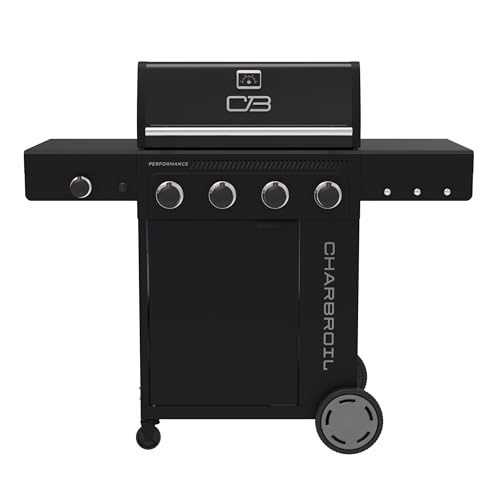
- Best for entertaining overall: Char-Broil Performance Series 4-Burner Gas Grill Cabinet with Side Burner — Check on Amazon
- Most total cooking area: Monument Grills Mesa 410MBZ 4-Burner Propane Gas Grill — Check on Amazon
- Most reliable heat for a long party: Weber Spirit II E-310 3-Burner Liquid Propane Grill — Check on Amazon
- Best for small gatherings: Weber Spirit II E-210 2-Burner Liquid Propane Grill — Check on Amazon
Two more picks worth a look (prose-only — buy through the maker or a grill retailer; we could not confirm current Amazon US listings inside this budget for these exact models):
- Napoleon Freestyle 425 (F425DPGT) — premium grates, shelves that fold between parties
- Napoleon Rogue 425 — the benchmark that usually sells above this budget
Read the full guide ↓
Disclosure: As an Amazon Associate, dailyhomedecorating.com earns from qualifying purchases. Links to Amazon on this page are affiliate links; they cost you nothing extra. Listing details such as price and availability change often, so check the current Amazon listing before you buy.
Entertaining exposes a grill in ways a Tuesday dinner never does. The best gas grill for outdoor entertaining under $700 is not necessarily the best grill in our main roundup — it is the one that gets twenty burgers, a tray of chicken, two ears of corn per guest and a pot of beans to the table hot, at the same time, while the cook still gets to be at the party. That is a workflow problem before it is a cooking problem: burner zones that can run hot, medium and holding simultaneously; a warming rack that works as a genuine second deck; a side burner that keeps the cook out of the kitchen; enough preheat recovery that batch three sears like batch one; and a fuel gauge that never lets the tank die in front of an audience. This guide re-ranks the six verified under-$700 grills from our Best Gas Grill Under $700 roundup by exactly those entertaining criteria — and says plainly where each one’s party capacity actually ends, because the most common entertaining mistake is buying a grill for the party in your imagination instead of the parties you throw.
The verification behind the list is unchanged: every linked pick was confirmed by exact model number and Amazon ASIN with a recent price sighting for that ASIN inside the budget, specifications come from the manufacturers, and a CPSC recall check found no current recall on any model here. The two Napoleons are prose-only — the Freestyle 425 because its confirmed US pricing is at grill retailers rather than a verifiable Amazon US listing, the Rogue 425 because it normally sells above $700. If your entertaining happens in a yard rather than on a patio, the Best Gas Grill For Backyards Under $700 guide weighs weather and placement more heavily; if your parties are six people and a folding table, skip ahead to the E-210 review and save your money for the food.
One promise about how this guide talks about capacity: every party-size figure below assumes real hosting — mixed food, real spacing, a cook who also socializes. Where a manufacturer’s marketing would claim a bigger number for the same grate, we use ours. Entertaining is disappointing exactly when the brochure’s party and your party turn out to be different events, and this guide is written so that never happens to its readers. Keep that lens as you read the reviews: the rankings reward the grill that makes your actual party feel easy, which is a stricter and more useful test than any spec sheet applies.
In this guide
Best gas grill for outdoor entertaining under $700: quick picks
| Pick | Entertaining angle | Burners | Output | Primary area | Where to check |
|---|---|---|---|---|---|
| Char-Broil Performance 4-Burner (463253925) | Side burner + area per dollar | 4 + side | See listing | 435 sq in | Amazon |
| Monument Mesa 410MBZ | Biggest total area; fast recovery | 4 | 39,000 BTU | 570 sq in total | Amazon |
| Weber Spirit II E-310 | Even heat, fuel gauge, holding zone | 3 | 30,000 BTU | 424 sq in (529 total) | Amazon |
| Napoleon Freestyle 425 (prose-only) | Premium grates; folds away after | 4 | 38,000 BTU | 425 sq in | Maker / retailers |
| Napoleon Rogue 425 (prose-only) | Benchmark build and warranty | 3 | See maker listing | 425 sq in | Maker / retailers |
| Weber Spirit II E-210 | Intimate gatherings of 4–6 | 2 | 26,500 BTU | 360 sq in (450 total) | Amazon |
How picks were chosen
Same pool, same verification as the base guide — model numbers Weber 45010001 and 44010001, Char-Broil 463253925, Monument Mesa 410MBZ, Napoleon F425DPGT; ASIN-level sightings inside $700; manufacturer specs; model-specific recall check, clean across the board (Char-Broil’s publicized recalls involve unrelated electric and older bistro models). The entertaining re-rank weighted five party-specific traits. Zone count: how many genuinely different temperatures the grate can hold at once, because mixed menus are the entertaining default. Holding capacity: warming-rack size and how usable it is as a second deck. Auxiliary cooking: a side burner or sear zone that keeps sides and sauces out of the kitchen and off the main grate. Recovery: grate mass and output, which decide whether the third batch cooks like the first. And host ergonomics: fuel gauges, caster mobility, shelf space and grease handling — the unglamorous features that decide whether the cook enjoys the party. We do not print prices or star ratings in this guide; check the live listing for the number that counts.
Party-size claims deserve a methodological note, because manufacturers’ “serves X” figures assume a grate tessellated with burgers and a cook who never opens the lid. Our comfortable-party-size column in the comparison table discounts that: it assumes mixed food, flipping room, a holding strategy and a host who also talks to people. If your parties are single-food and your cook is dedicated, every pick here stretches a size class higher; if your parties are grazers over hours, the holding capacity matters more than the peak number. Either way, the honest unit is not burgers-per-grate but guests-fed-well-per-evening, and that is the unit this guide ranked on.
The best gas grill for outdoor entertaining under $700 picks, reviewed in detail
Char-Broil Performance Series 4-Burner — the entertaining value champion
Who it suits: Hosts who entertain six to fourteen people regularly and want every entertaining feature — four zones, a side burner, a cabinet, casters — without leaving the value end of the tier.
For pure party workflow per dollar, nothing in this guide touches the Performance 4-Burner (463253925). Start with the side burner, the only one among the linked picks: beans, barbecue sauce, sautéed onions and peppers, a pot of corn — the sides that otherwise exile the cook to the kitchen all cook beside the main event, under a lid, while the grate runs burgers on two zones, chicken on a third and a holding pattern on the fourth. The 435 square inches of primary area is honestly sized for a dozen burgers at once, the warming rack holds finished food properly, and the four-caster cabinet rolls to wherever the party is — patio today, driveway for the block party tomorrow. At a gathering, that mobility is a feature nobody lists on a spec sheet and every host understands by the second party.
The compromises are the known Char-Broil ones: lighter steel than the premium brands, a shorter warranty, and low-end temperature control that asks a bit more of the cook during long, gentle cooks. For entertaining duty — mostly high and medium heat, mostly attended — those compromises matter less than anywhere else in this series of guides, which is exactly why this grill tops the entertaining ranking while placing second or third elsewhere.
A party-day detail worth naming: the cabinet is not just storage, it is staging. Buns, trays, a spare set of tools and the thermometer all live behind the doors, at the cook’s hip, instead of on a trip back through a house full of guests. Hosts who entertain in yards set back from the kitchen feel this most — the grill becomes a self-contained station, and the only indoor trips left are for ice and dessert. Combined with the casters, it is the closest any pick here comes to a catering setup, and at this price that is a genuine distinction.
Honest limitation: The lid thermometer is a rough guide; for a party built around thick steaks or a whole roast, a probe thermometer is mandatory equipment. And the finish will age faster than a Weber’s if the grill lives uncovered.
Choose it if you entertain often and want the full party toolkit for the money. Skip it if your parties are small or your priority is decade-long finish quality. Check on Amazon
Monument Grills Mesa 410MBZ — the capacity and sear pick
Who it suits: Hosts whose parties are steak nights and burger bars for ten-plus, and who want one synchronized serve instead of waves.
The Mesa 410MBZ’s entertaining case is arithmetic plus heat. Arithmetic: 570 square inches of total cooking space is the most in this guide, and used as a primary grate plus a true holding deck, it stages a full party menu without an oven relay. Heat: four burners at 39,000 BTU and a ThermSear broil zone mean the grate recovers fast between batches and steaks get a real crust — the two things that separate a party grill from a big grill. When twelve people are holding plates, the Mesa is the pick that keeps the line moving.
Entertaining-specific cautions: the grill is heavy and happiest placed once, so decide its party position (near the seating, out of the traffic lane, with its clearances) before the first event, not during it. Stainless panels at this price want a cover and a wipe-down to stay party-presentable, and the brand’s long-term parts story is still young — a consideration for hosts planning a decade of Saturdays.
One more party trait in the Mesa’s favor: theater. A big stainless grill running a full grate of steaks over a sear zone is the visual center of a cookout, and guests gather where the action is. Hosts who enjoy performing the cook — carving at the grill, serving straight off the grate — will find this the most satisfying stage in the guide. Hosts who prefer the cooking invisible should note the flip side: this grill draws a crowd around itself, so place it where a crowd can stand.
Honest limitation: No side burner, so sauces and sides compete for grate corners or go inside; and all that output is thirsty work for a single tank at a long party — the spare-tank rule applies double here.
Choose it if your parties are big and steak-led. Skip it if you need a side burner or roll the grill between spots. Check on Amazon
Weber Spirit II E-310 — the reliable host
Who it suits: Hosts of six to ten who entertain often and value a party with no surprises over maximum capacity.
The E-310 (45010001) is the grill for hosts who have learned that parties fail on logistics, not recipes. Its three burners hold an honest hot-medium-holding layout across 424 square inches; the GS4 ignition lights first time, every time, in front of guests; the built-in fuel gauge removes the classic mid-party tank death; and the grease system keeps flare-ups — the party trick nobody wants — to a minimum with fatty loads. The warming rack brings total area to 529 square inches, enough to hold a full first wave while the second wave cooks. Even heat is its party superpower: chicken for eight cooks at one pace, so everything finishes together instead of in a dribble of early and late pieces.
Where it yields to the two picks above: no side burner, and at twelve-plus guests you are cooking in deliberate waves — which, managed with the warming rack and a rested-meat tray, most guests experience as “the food kept coming,” not as a shortage.
There is also a confidence argument that frequent hosts will recognize. Parties are when a grill’s small unreliabilities — a lazy igniter, a burner that sulks in wind, a grease tray that overflows at the worst moment — choose to perform. The E-310’s decade-deep track record and parts availability are, in entertaining terms, insurance against the one story every host dreads. If your parties include the boss, the in-laws or the new neighbors, that insurance has a value the spec table cannot print.
Honest limitation: The open cart shows the tank and offers no enclosed storage for the party tool clutter; hosts who stage a lot of gear will want a deck box beside it.
Choose it if your parties are frequent, mid-sized and menu-driven. Skip it if you regularly feed fifteen at once. Check on Amazon
Napoleon Freestyle 425 — the polished party grill (prose-only)
Who it suits: Hosts who entertain on a patio or deck where the grill is part of the scenery, and who store it folded between events.
The Freestyle 425 (F425DPGT) entertains with finesse: four burners and 38,000 BTU over 425 square inches, WAVE cast-iron grids that give food the kind of sear marks guests photograph, JETFIRE ignition that lights each burner with a jet of flame — a small theater at party start — and folding shelves that open into work space during the event and disappear after it. The graphite enamel finish looks composed in a furnished outdoor room in a way raw value stainless does not. US grill retailers price it within this budget; we could not verify a current Amazon US listing for the exact model, so it is prose-only here.
Honest limitation: Total area is mid-pack for a four-burner, so the very largest parties still cook in waves, and US parts ordering takes more planning than Weber’s same-day availability.
For design-conscious hosts there is one more consideration: this is the grill in the guide that looks most at home among furnished outdoor rooms — the graphite finish and tidy lines sit comfortably next to good patio furniture rather than announcing themselves as equipment. If your entertaining is as much about the setting as the serving, that composure is a real feature, and it costs nothing in cooking ability to have it.
Choose it if presentation and folding storage matter to your entertaining. Skip it if you want the Amazon purchase path.
Napoleon Rogue 425 — the benchmark above the budget (prose-only)
Who it suits: Hosts comparing at the tier’s edge — and anyone who catches it on promotion.
The Rogue 425’s entertaining résumé is strong: heavy WAVE grids, three even burners, folding shelves, and the class’s best warranty at fifteen years — the grill you buy once and entertain on for a very long time. It appears here, without a link, because its normal retail price sits above this guide’s $700 ceiling. Treat it as the reference point: if a genuine sale pulls it into budget, it challenges the E-310 for the reliability crown; at full price, the hosts in this guide are better served spending the difference on the party itself.
Honest limitation: Price first, and a confusing trim lineup (base, Pro, Pro-S, infrared variants) that demands model-number verification wherever you buy.
Choose it if a promotion lands it in budget. Skip it if the ceiling is firm.
Weber Spirit II E-210 — the small-gathering specialist
Who it suits: Hosts whose “entertaining” means four to six friends, a long evening and food cooked to order rather than in bulk.
Not every party is a crowd. The E-210 (44010001) is the connoisseur’s small-party grill: two burners, 26,500 BTU, 360 square inches that handle a deliberate menu beautifully — a whole spatchcocked chicken, then vegetables, then bread, cooked in courses while the cook sits between them. Its fold-down table and compact body suit the patios where intimate entertaining actually happens, and Weber’s ten-year warranty and parts depth apply in full. For hosts who entertain small and often, the money saved against the four-burners buys a season of better ingredients.
Honest limitation: Eight guests is its comfortable ceiling and twelve is a juggling act; if your guest list grows, this is the wrong pick no matter how good it is.
Choose it if your parties are dinners, not events. Skip it if they are events. Check on Amazon
Comparison table
| Grill | Zones | Holding space | Auxiliary cooking | Comfortable party size | Host-friendly detail |
|---|---|---|---|---|---|
| Char-Broil Performance 4-Burner | 4 | Warming rack | Side burner | 10–14 | Casters; cabinet storage |
| Monument Mesa 410MBZ | 4 | 570 sq in total | ThermSear zone | 12+ | Fast recovery between batches |
| Weber Spirit II E-310 | 3 | 529 sq in total | None | 8–10 | Fuel gauge; tidy grease system |
| Napoleon Freestyle 425 (prose-only) | 4 | Warming rack | None | 8–12 | Folding shelves; JETFIRE ignition |
| Napoleon Rogue 425 (prose-only) | 3 | Warming rack | Varies by trim | 8–10 | 15-year warranty |
| Weber Spirit II E-210 | 2 | 450 sq in total | None | 4–6 | Compact; cooks in courses |
Running a party on one grill: the workflow that works
Stage in zones, serve in waves. Set the grill up before guests arrive: one hot zone for searing, one medium zone for cooking through, one low or off zone — plus the warming rack — for holding. Cook in deliberate waves ordered by tolerance: chicken first (it holds happily), then burgers and dogs, then steaks and delicate items last and to order. Resting meat on the holding zone, tented, buys the cook a drink and a conversation between waves.
Keep the cook at the party. Everything the cook needs should live within one step of the grill: raw tray on one side, clean cooked tray on the other, tools on hooks, sauces on the side burner or shelf, a small trash bowl for skewers and bones. The Char-Broil’s cabinet and the Freestyle’s shelves earn their keep here; on the Webers, a folding side table beside the grill closes the gap. If the cook keeps disappearing into the kitchen, the setup — not the menu — is the problem. And set the scene around the grill: seating from our Best Patio Furniture Set Under $700 guide arranged in earshot of the cook, drinks stationed away from the heat, and a Best Patio Heater Under $700 if your parties run into cool evenings — an entertained guest is a warm, seated guest with a drink, and none of that is the grill’s job.
Fuel and fire discipline for crowds. Start every party on a tank you have checked — the E-310’s gauge spoils you; on the others, the hot-water or weight check before guests arrive is the ritual. Keep the spare tank staged. Manage grease before the party, not during: an empty tray and a clean catch pan are what stand between a fatty burger load and a flare-up performance. And assign the grill one operator; a grill with three helpful co-cooks has none.
How to choose an entertaining grill under $700
Count your real guest list. Write down the size of your last four gatherings. If the honest number is eight, a three-burner with a good holding rack is your grill and the E-310 is the pick. If it is fourteen, you need four burners and the Char-Broil or Monument math. Buying for the annual block party and suffering it at every family dinner is the classic error.
Decide whether a side burner is real for you. Hosts who cook beans, sauces, onions or breakfast outdoors will use it weekly; hosts whose sides come from the kitchen will use it twice a year. It is the single feature that most changes the ranking between the Char-Broil and the Webers, so decide it honestly.
Value recovery over headline area. A party loads the grate with cold food repeatedly. Heavy cast-iron grates and strong output — the Monument’s profile — keep batch three honest. A big grate on weak burners is a steamer by the second wave.
Think about where the party happens. Patio parties near the kitchen forgive a smaller grill; yard parties far from the house reward the full station — side burner, cabinet, casters. Match the grill to the geography of your entertaining, and if the entertaining spot is a yard first and a patio second, cross-check the placement advice in our backyard grilling guide.
Ask who does the work. Some hosts cook; others conduct. If you are the only pair of hands, prioritize ignition reliability, zone stability and holding space — the features that forgive a host who is also pouring drinks. If your household cooks as a team, raw capacity can rank higher, because someone is always at the grill to manage its demands. The same grill is a different purchase depending on the crew behind it.
Consider the second life of the purchase. An entertaining grill also cooks 200 ordinary dinners between parties. The rankings here are party-first, but every pick was required to be a sane weeknight grill too — quick to light, reasonable on fuel, easy to clean on a Wednesday. A party monster that annoys you weekly is a bad buy wearing a fun hat.
Common mistakes hosts make
Lighting the grill when guests arrive. Preheat, zone setup and the first wave’s prep all belong to the half hour before. A host who starts cold starts behind, and the party feels it.
Cooking everything at once. A grate loaded edge-to-edge with raw everything is a traffic jam: no zones, no holding, no recovery. Waves are not a compromise; they are the technique.
Trusting the lid thermometer for a crowd. One undercooked chicken piece at a party undoes a year of good hosting. An instant-read thermometer, used without apology, is the host’s best tool after the grill itself.
Running out of propane in front of an audience. It has happened to every host exactly once. Gauge, spare tank, or pre-party check — pick your system and keep it.
Forgetting the vegetarians’ zone. A mixed party needs a corner of the grate — or a dedicated pan or basket — where vegetables and plant-based items cook away from meat drippings. Plan it into the zone layout, not as an afterthought on a crowded grate.
Menus that test a grill — and which pick handles each
The classic burger-and-dog cookout. Volume, recovery and holding decide this menu. The Monument’s area and output and the Char-Broil’s four zones plus rack are built for it; the E-310 handles it in two calm waves. The failure mode to avoid is a cold-loaded grate steaming the first batch — preheat longer than feels necessary and load in sections.
The steak night. Searing is the whole exam. The Monument’s ThermSear zone and the Napoleons’ heavy WAVE grids are the specialists; the Webers’ cast iron sears respectably with a full preheat and dry, room-temperature steaks. For a table of steak lovers, grate mass matters more than any other spec in this guide.
The mixed-grill feast. Chicken, sausages, vegetables, corn, bread — five foods, four temperatures, one grill. This is the side burner’s menu (Char-Broil) and the four-zone layout’s moment; on a three-burner, the warming rack becomes the vegetable holding deck and the cook sequences ruthlessly. The E-210 hosts this menu only at dinner-party scale, in courses — which, done deliberately, guests experience as a tasting menu rather than a limitation.
The long afternoon. Grazing parties — food appearing over hours — reward the grill that holds a gentle temperature indefinitely and sips fuel politely: the Webers’ evenness and the E-310’s fuel gauge shine here, and the host’s discipline (lid down, zones stable, batches small and frequent) matters more than hardware.
Breakfast and brunch outdoors. A griddle plate over any of these grills turns it into a flat-top for eggs, pancakes and bacon — the dark-horse entertaining move of the tier, and a reason to value even, controllable medium heat (Weber, Freestyle) over maximum output.
The host’s timeline: party day, hour by hour
The day before: Check the tank, clean the grease tray, confirm the igniter, and count your zones against the menu. Shop for the spare tank today if the gauge says anything but comfortable. Two hours out: Proteins seasoned and staged, vegetables prepped, the grill area set — trays, tools, side table, trash bowl, drinks away from the heat. Thirty minutes out: Grill lit, zones set, grates brushed and oiled, first-wave items that hold well (chicken, sausages) ready to go on as guests arrive so the party opens with the smell of cooking. During: Waves in holding order, thermometer in use, lid discipline kept, one operator. The cook’s drink is refreshed by a designated guest — hosting is a team sport. After: Burn-off while the grill is hot, grates brushed, tank closed, and the full clean left for morning if the party ran long — but the grease tray checked before the next cook, whenever that is.
None of this requires the biggest grill. It requires a grill whose zones, rack and fuel you trust, and a host who treats the timeline as part of the recipe. That is why the rankings in this guide reward workflow features — side burners, gauges, casters, racks — that a spec-sheet comparison undervalues.
Grill placement for parties: flow, smoke and seating
Where the grill stands during a party shapes the party. Place it at the edge of the gathering, not the center: guests orbit the cook socially, but the heat plume, the smoke drift and the raw-food traffic should not cross the seating. Keep the manufacturer’s clearances from the house and anything combustible, angle the grill so the prevailing breeze carries smoke away from the table — a five-minute experiment with the lid open before guests arrive tells you more than any diagram — and light the cook’s area if the party runs past dusk; a host squinting at chicken is a host guessing. The serving flow matters as much: cooked food should land on a surface that guests can reach without passing the grill’s hot side, and the raw tray should never share that surface. On a patio, this is usually a folding table on the grill’s cool side; in a yard, the Char-Broil’s casters let the whole station migrate to wherever the flow works best that day.
Children and parties change the geometry again: a defined boundary — furniture, a planter row, simple habit taught early — keeps small guests out of the hot zone while the grill is working and cooling. And plan the end of the night at the start: the grill cools where it stands, the cover waits until morning if the metal is still warm, and the tank valve closes before the last guest leaves, not the next day.
Entertaining on a budget: where the money beyond the grill goes
Hosts fixate on the grill’s price and under-budget everything that makes the party. The honest entertaining budget includes the cover (protecting the asset between parties), the spare tank (protecting the party itself), an instant-read thermometer (protecting the food), a griddle plate or vegetable basket (expanding the menu more than a burner upgrade would), and enough seating that guests are not balancing plates standing — the single most common entertaining failure that has nothing to do with cooking. This is why the E-210 and the Char-Broil are such rational entertaining buys at opposite ends of the size range: both leave real money in the $700 envelope for the ecosystem, and a fully equipped mid-size grill out-hosts a bare flagship every single Saturday.
Evening and cool-weather entertaining
Parties that run past sunset test different traits: wind steals heat and stretches preheats, so the heavier-lidded, better-sealed grills (Weber, Napoleon) hold their zones more calmly after dark, while high-output models (Monument) simply out-muscle the breeze. Plan for both effects — position the grill out of the wind’s main path, preheat longer, and expect the holding rack to work harder as guests graze slowly through the evening. Lighting is the other evening variable: a lit cooking surface is not a luxury when chicken skin color is your doneness cue, and a simple clip light or nearby fixture pays for itself at the first dusk party. In genuinely cool weather, the entertaining calculus adds the guests’ comfort to the cook’s — the party migrates toward the grill’s warmth, which is pleasant, provided the placement rules and clearances were set with that migration in mind.
When one grill is not the answer: honest alternatives
A few entertaining patterns outgrow every pick in this guide, and honesty serves hosts better than a forced recommendation. Weekly gatherings of twenty-plus belong to larger grills or a deliberate two-grill setup — a main cart plus an inexpensive portable for overflow — which sits outside this budget’s intent. Smoking-led parties (brisket, pork shoulder for a crowd) are a pellet or dedicated smoker’s game; these gas grills can hold a low zone for ribs and chicken, but they are not smokers and this guide will not pretend otherwise. And hosts who entertain twice a year should run the rental math in reverse: a mid-size grill like the E-310, owned happily for weeknights, plus party waves, beats a seldom-used giant that dominates the patio for 363 days to shine on two. The best entertaining grill is the one matched to your actual calendar — which is the note this whole guide has been sounding.
The entertaining buyer’s ten-minute checklist
Before ordering, walk this list with your actual parties in mind. One: guest count — your four most recent gatherings, averaged, plus two. Two: menu shape — mostly one food in bulk (favor area and recovery: Monument, Char-Broil) or mixed menus (favor zones and a side burner: Char-Broil, E-310). Three: the holding plan — where do finished foods wait, and is the warming rack big enough for your first wave? Four: the fuel plan — gauge or ritual, plus a spare tank staged. Five: the station plan — where trays, tools and the cooked-food landing surface live, and whether the grill’s shelves and cabinet cover it or a side table must. Six: the placement plan — party position chosen, clearances honored, smoke drifting away from the table, a boundary for kids. Seven: the after-party plan — who cleans, when the grease tray gets checked, where the cover lives. A grill that survives this checklist against your real parties is the right grill; a grill that only survives a spec comparison is a gamble with a warranty card.
Notice what is not on the list: the headline BTU, the number of tool hooks, the LED knobs. Entertaining success is a logistics outcome wearing a cooking costume, and the hosts who internalize that buy once and host happily for years.
What we left out, and why
Three categories of grill knock on this guide’s door and were turned away deliberately. Griddles and flat-tops are wonderful entertaining tools — for smash burgers and breakfasts they may beat everything here — but they are a different appliance with a different keyword and a different guide; a host whose parties are flat-top parties should shop that category directly. Kamado and pellet grills own the smoke-led party, and no gas grill in this tier should be sold as their substitute; hosts whose signature is brisket need a different fire, not a bigger gas grate. And the giant warehouse-club carts with five or six burners at suspicious prices failed this guide’s verification standard: unstable model identities and listings we could not tie to a manufacturer spec sheet. An entertaining grill you cannot verify is a party risk, not a bargain — the six picks above are the ones whose identities, prices and safety records we could stand behind.
Final recommendation
For most hosts, the Char-Broil Performance 4-Burner is the best gas grill for outdoor entertaining under $700: the side burner, four zones, cabinet and casters make it the complete party station at a value price. Steak-led big parties belong on the Monument Mesa 410MBZ; hosts who entertain eight to ten people often and hate surprises should take the Weber Spirit II E-310’s even heat and fuel gauge; and small-gathering hosts should buy the E-210 and spend the savings on ingredients. The Freestyle 425 rewards hosts who shop beyond Amazon, and the Rogue 425 waits for a promotion. Whichever you choose: zones set before guests arrive, tank checked, thermometer in pocket — and the cook gets to be at the party.
A closing thought from every experienced host’s notebook: guests remember the evening, not the equipment. They remember food that arrived hot together, a cook who was present, and a party that never felt like it was waiting on anything. Buy the grill that gives you that evening at your party size — for most households reading this guide, one of the four linked picks does it with money left for the menu — and then stop comparison-shopping and start a guest list.
FAQ
How many burgers can these grills cook at once?
Realistically, with flipping room: roughly sixteen to eighteen on the three- and four-burner primaries, about a dozen on the E-210. The warming rack multiplies serving capacity by holding finished batches, which is how a mid-size grill feeds a big party.
Is a side burner worth it for entertaining?
If your menus include sauces, beans, sautéed toppings or anything in a pot, yes — it keeps the entire meal outdoors and the cook at the party. If your sides are salads and chips, it is shelf space you paid burner prices for.
How do I keep food warm without overcooking it?
Use the lowest zone or the warming rack, tent with foil, and cook in waves ordered by how well items hold — chicken and sausages hold well; steaks and fish should be cooked last and served promptly.
What if more guests show up than the grill can handle?
Slow the wave rhythm, lean on the holding rack, and put a cast-iron pan or griddle on one zone for overflow items like vegetables and rolls. A calm host with a system beats a bigger grill with none.
Should I get a second grill instead of a bigger one?
For a few very large events a year, no — rent the moment with waves and holding space. Households that entertain twenty-plus monthly are shopping above this tier or pairing a main grill with a portable second unit.
How far ahead should I replace the tank before a party?
Check it the day before, not the hour before: gauges, weight or the warm-water test all work. If there is any doubt, swap it — a party is the wrong laboratory for fuel experiments, and the partial tank remains useful for weeknights.
Can one of these grills handle a party of twenty?
With waves, a holding rack and a menu ordered by tolerance, the four-burners can — burgers and dogs for twenty is a logistics exercise, not a capacity crisis. What twenty guests cannot get is twenty steaks cooked to individual temperatures simultaneously; that menu belongs to a restaurant or a much larger grill.
What is the best grill feature for a host who is also a guest at their own party?
Predictability. Even heat, reliable ignition and a fuel gauge let the cook set zones and walk away for stretches. Of the picks here, that is the Weber E-310’s home ground — the Char-Broil wins on toolkit, the Weber on autopilot.
How do I stop the grill from becoming the party’s bottleneck?
Prep everything before guests arrive, set zones before food goes on, cook in waves ordered by holding tolerance, and keep one operator. Nine times out of ten the bottleneck is workflow, not grate size — which is good news, because workflow is free. The tenth time, it is a grill bought two sizes too small for the guest list, which is why this guide keeps asking for your real numbers.


