Where to buy
Check the latest price, availability and delivery on Amazon. Orders are placed on Amazon. We may earn a commission from qualifying purchases.
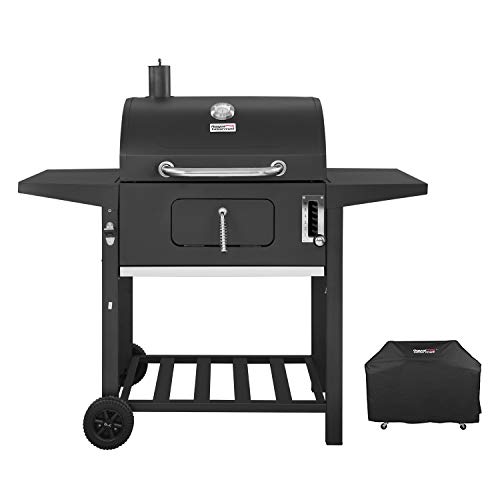
- Best for entertaining overall: Royal Gourmet CD1824AC 24-Inch Charcoal Grill with Cover — Check on Amazon
- Best all-round host’s grill: Weber Original Kettle Charcoal Grill, 22-Inch, Black — Check on Amazon
- Best second station for searing and sides: Oklahoma Joe’s Rambler Portable Tabletop Charcoal Grill — Check on Amazon
- Best make-ahead smoker for parties: Char-Griller AKORN Jr. Portable Kamado Charcoal Grill and Smoker, Ash — Check on Amazon
- Best overflow and away-game grill: Weber Jumbo Joe Charcoal Grill, 18-Inch, Black — Check on Amazon
- Best appetizer station: Weber Go-Anywhere Charcoal Grill — Check on Amazon
Read the full guide ↓
Disclosure: As an Amazon Associate, dailyhomedecorating.com earns from qualifying purchases. Links to Amazon on this page are affiliate links; they cost you nothing extra. Listing details such as price and availability change often, so check the current Amazon listing before you buy.
Entertaining outdoors is a different sport from grilling, and the best charcoal grill for outdoor entertaining under $200 is the one that understands the difference. A weeknight grill answers to the cook. A party grill answers to the evening: food has to come off in waves that match how people actually eat — something small and hot when guests arrive, the main event when everyone is hungry at once, and a forgiving tail of seconds and late plates for the people who drift back an hour later. The host has to be part of the party, not a silhouette behind a smoke column. And the grill has to absorb the chaos of a real gathering — a batch that needs five more minutes, a vegetarian guest nobody mentioned, a second round of burgers at nine o’clock — without the whole evening hinging on one grate and one prayer.
That is why this guide ranks the six strongest charcoal grills under $200 by hosting criteria, and why the order looks different from our general ranking in Best Charcoal Grill Under $200. Total cooking area matters, but so does the warming rack that lets you hold finished food at serving temperature. A second heat control matters, because party cooking is constant small adjustments. The ability to refuel without lifting a loaded grate matters more at a party than anywhere else in grilling. And the two-grill strategy — a main grill plus a small second station — matters most of all, because it is how experienced hosts actually run an evening, and this budget, unusually, lets you build that setup in stages without overspending. If your gatherings happen away from home as often as in the yard, the travel-first ranking lives in Best Portable Grill For Outdoor Entertaining Under $200; this page is for the home host.
A word about scale before the picks. These grills entertain honestly for groups of about six to twelve. Past that, you are not shopping for a bigger grill so much as a different system — batch cooking, make-ahead smoking, and a second station — and, happily, that system is exactly what several picks below were chosen to build. The host who understands pacing will feed fifteen people happily from this tier. The host who buys square inches and wings the timing will struggle with twice the grill. Choose for the evening you actually host.
In this guide
Quick Picks: The Best Charcoal Grill for Outdoor Entertaining Under $200 at a Glance
Match your party style to a row. Every pick links to its Amazon listing so you can confirm the live price and dimensions before you buy.
| Hosting role | Pick | Why it stands out | Link |
|---|---|---|---|
| Best for entertaining overall | Royal Gourmet CD1824AC 24-Inch Charcoal Grill with Cover | 587 sq. in. total, a warming rack for pacing, an adjustable charcoal pan and a cover included | Check on Amazon |
| Best all-round host’s grill | Weber Original Kettle Charcoal Grill, 22-Inch, Black | The two-zone kettle that cooks a party menu in sequence and cleans up in seconds | Check on Amazon |
| Best second station | Oklahoma Joe’s Rambler Portable Tabletop Charcoal Grill | Cast iron searing and an adjustable coal tray — steaks, sides and the vegetarian batch, off to the side | Check on Amazon |
| Best make-ahead smoker | Char-Griller AKORN Jr. Portable Kamado Charcoal Grill and Smoker, Ash | Smoke the main event hours early, hold it, and be a guest at your own party | Check on Amazon |
| Best overflow grill | Weber Jumbo Joe Charcoal Grill, 18-Inch, Black | A second real kettle for overflow batches — and it travels to other people’s parties too | Check on Amazon |
| Best appetizer station | Weber Go-Anywhere Charcoal Grill | Skewers, wings and grilled bread at the edge of the party while the main grill works | Check on Amazon |
How These Picks Were Chosen
The price gate matches our other guides: a verifiable United States Amazon listing with a price sighting inside the under $200 tier. Grill prices move with the seasons, so this article prints no static figures — check price on Amazon for the live number on the day you shop.
Hosting then set the criteria. Pacing capacity came first: not just raw grate area, but the ability to hold food at serving temperature while the next batch cooks — a warming rack, a genuine indirect zone, or a lid that turns the grill into a holding oven. A grill that can only cook is a grill that makes the host choose between hot food and timely food. Refuel-ability came second: parties outlast single loads of charcoal, so a front fuel door, a hinged situation or an adjustable tray that buys time all scored; a grill that must be unloaded to refuel lost points it would keep in a weeknight guide. Forgiveness came third: party fires get neglected while the host answers the door, so temperature stability — insulation, thermal mass, predictable dampers — was weighted as a hosting feature, not a spec. And the second-station question ran through everything: several picks are here because of how they pair, not just how they perform alone. The gathering side of the same budget — seating and setup for the guests themselves — is covered in Best Adirondack Chair For Outdoor Entertaining Under $200, and hosts planning a bigger equipment step can see the next tier in Best Charcoal Grill Under $500.
The Six Picks in Detail
1. Royal Gourmet CD1824AC 24-Inch Charcoal Grill with Cover — Best for Entertaining Overall
Who it suits: The regular host: six to twelve guests, a menu with a main and sides, and a strong preference for eating with everyone instead of performing short-order cooking beside them. This is the only grill in the tier designed around a crowd’s rhythm, and it leads this guide for exactly that reason.
What stands out when entertaining: Start with the number that matters — 587 square inches of total cooking area once the warming rack is counted — and then with what the rack does to an evening. Burgers finish and move up to hold, warm and ready, while the next batch cooks below; buns toast in the gaps; the early eaters and the late eaters both get hot food. The height-adjustable charcoal pan is the second hosting feature: crank it up to sear the first wave hard, drop it to cruise while people graze. The front charcoal door is the third: at hour two, when the fire needs feeding, you open a door and add coals instead of lifting a grate loaded with somebody’s dinner in front of an audience. Add the lid thermometer, the side shelf as a staging surface, and the included cover for a grill that lives where the parties happen, and you have the most complete entertaining package under $200 we could verify.
Pros:
- Warming rack turns one grill into a cook-and-hold system — the pacing feature hosts actually need
- Largest total cooking area in this guide
- Adjustable charcoal pan adapts heat to each wave of the evening
- Front fuel door makes mid-party refueling calm and quick
- Side shelf stages trays and platters; cover included for outdoor living
Honest limitation: The body is painted steel, not enamel, so this grill’s long life depends on its cover being used — a fair trade at this price, but a real one. Assembly is the longest here, so build it the weekend before the party, not the morning of. And for a household that entertains twice a year and cooks for two the rest of the time, it is more grill than the calendar justifies; the kettle below is the better everyday answer.
Choose it if hosting is a regular part of your life and pacing is your pain point. Skip it if your parties are four people and a bottle of wine — you need a kettle and a second bottle, not 587 square inches.
Check on Amazon — check price on Amazon and confirm the listing is the with-cover configuration before ordering.
2. Weber Original Kettle Charcoal Grill, 22-Inch, Black — Best All-Round Host’s Grill
Who it suits: The host who cooks a menu rather than a mountain: a whole spatchcocked chicken or two, a two-zone steak service, a full grate of burgers with vegetables working the edges. For parties of four to eight with a cook who enjoys the cooking, the 22-inch kettle remains the most flexible single grill in this tier.
What stands out when entertaining: The two-zone fire is a hosting system in disguise. Bank the coals to one side and the kettle becomes two appliances: a searing station over the coals and a gentle roasting-and-holding zone beside them, where finished food waits at serving temperature and delicate items cook through without burning. A party menu sequences beautifully across that split — appetizers over the coals, mains seared then finished indirect, desserts (yes, grilled fruit and s’mores count) as the fire dies down. The One-Touch ash system keeps the grill pleasant across a long evening and makes the next day’s cleanup a lever turn. The enamel build shrugs off the weather between parties, the lid hooks on the bowl instead of occupying your staging table, and when something wears out in year six, the part exists. Hosts also underestimate the kettle’s social geometry: guests gather around it, drink in hand, and the cook is at the center of the party rather than exiled from it.
Pros:
- Two-zone cooking gives a built-in sear station and holding zone in one grill
- 363 sq. in. covers parties of four to eight with a sequenced menu
- One-Touch ash sweeping — the fastest cleanup in this guide, before and after parties
- Enamel durability and an unmatched parts and accessory ecosystem
- The grill guests naturally gather around; the host stays in the party
Honest limitation: There is no warming rack and no thermometer in base form, and the standard grate is not hinged — a long party that needs more charcoal means lifting the loaded grate with mitts, which is manageable and unglamorous. Capacity is also a real ceiling: past eight hungry people eating the same thing at the same moment, you are batching, and the Royal Gourmet’s rack or a second station becomes the smarter buy.
Choose it if your parties are menu-driven and mid-sized. Skip it if your signature event is twelve people and a mountain of burgers all at once.
Check on Amazon — check price on Amazon for the current listing.
3. Oklahoma Joe’s Rambler Portable Tabletop Charcoal Grill — Best Second Station
Who it suits: The host who already owns a main grill — or plans to — and understands that the second station is where parties are won. Steaks searing while the kettle roasts. The vegetarian batch cooking in peace. Sides and grilled bread happening in parallel instead of in queue. Set the Rambler on a sturdy stand or heavy table at the edge of the action and the whole evening speeds up.
What stands out when entertaining: The crank-adjustable charcoal tray is the finest party trick in this guide: raise the coals to the cast iron grates and you have a searing station that marks steaks like a steakhouse; lower them and the same grill gently finishes chicken or grills vegetables without scorching. Cast iron holds heat through the door-open, guests-arriving moments that crash a thin grill’s temperature. The lid gauge lets you cook closed — less smoke in guests’ faces, more host in the conversation — and the removable ash pan means the station resets cleanly between waves. As a standalone main grill for a small gathering it is entirely capable, with 218 square inches and the best heat control here; as a second station it is close to unfair.
Pros:
- Adjustable coal tray plus cast iron — the best searing station in this tier
- Parallel cooking doubles a party’s throughput without a second full-size grill
- Keeps dietary-separate batches genuinely separate
- Thick steel holds temperature through the chaos of hosting
- Removable ash pan for fast resets between waves
Honest limitation: It needs a genuinely sturdy, heat-safe stand or table — budget for one if you do not own it — and at close to fifty pounds it is a station, not a traveler. Its list price also sits above this tier; it earns its place on street pricing, so check price on Amazon and be ready to wait for the right week.
Choose it if you host with a main grill already, or cook small gatherings where searing quality is the headline. Skip it if it would be your only grill for big parties — pair it or pick the Royal Gourmet.
Check on Amazon — check price on Amazon for the current offer.
4. Char-Griller AKORN Jr. Portable Kamado Charcoal Grill and Smoker — Best Make-Ahead Smoker
Who it suits: The planner-host: the one who would rather smoke the main event at noon, hold it warm, and spend the party holding a drink instead of tongs. Pulled pork, ribs, a smoked chicken — the kamado turns entertaining’s hardest problem (timing) into its easiest, because the food is done before the guests arrive and only improves while it rests.
What stands out when entertaining: Insulation is a hosting feature. The AKORN Jr.’s triple-wall steel body holds a low temperature for hours on a small load of charcoal, unattended in a way no thin-steel grill can match — set it in the morning and it minds itself. When guests arrive, the same cooker, vents opened, sears appetizers or finishes sausages at high heat. Its 155-square-inch cast iron grate is small, and in the make-ahead strategy that barely matters: the smoked main is already resting, and the kamado becomes the evening’s finishing station. It is also the most fuel-efficient cooker here, so a long party does not burn through your charcoal stash, and its compact footprint tucks into a patio corner between events.
Pros:
- Holds low-and-slow temperatures for hours — the main event cooks itself before guests arrive
- Make-ahead menus free the host completely at party time
- Sears at high heat for appetizers and finishing once vents open
- Extremely fuel-efficient across a long event
- Compact footprint; locking lid for storage between parties
Honest limitation: As a live party grill for a crowd, the small grate is a hard ceiling — this is not the grill for twelve burgers at seven o’clock. It is a strategy grill: spectacular inside a make-ahead menu, wrong for a cook-to-order party. Steel also needs its cover and ash discipline between events, and its street price wanders, so verify it sits inside the tier when you buy.
Choose it if your entertaining style is smoked mains and relaxed evenings. Skip it if your parties run on burgers cooked to order — take the Royal Gourmet and its warming rack.
Check on Amazon — check price on Amazon; this model is sold in more than one color, each its own listing.
5. Weber Jumbo Joe Charcoal Grill, 18-Inch, Black — Best Overflow and Away-Game Grill
Who it suits: Two kinds of host: the one whose parties occasionally outgrow the main grill and who needs an overflow kettle that is a real grill, not a toy — and the one whose entertaining happens at parks, campsites and other people’s yards, where the party travels and the grill has to travel with it.
What stands out when entertaining: Overflow capacity that cooks properly. The Jumbo Joe’s 240 square inches of enamel kettle is a full second batch — the extra burgers, the corn, the second wave of chicken — running beside the main grill, and because it cooks exactly like a 22-inch kettle, whoever you deputize as second cook already knows how to run it. The lid lock makes it the party you can bring: it rides in a trunk to the lake house or the tailgate and sets up in minutes. At home between parties it stores in a fraction of a full-size grill’s space, and its enamel build means the overflow grill is not the rusty grill.
Pros:
- 240 sq. in. of real kettle cooking as an overflow or travel grill
- Lid locks for clean transport to away-game parties
- Enamel build; ash catcher keeps a host’s patio tidy
- Same technique as the full-size kettle — deputize a second cook easily
- Stores small between events
Honest limitation: It cooks low — ground or table height — and a party station at knee height is nobody’s favorite ergonomic experience over a long evening. As a party’s only grill it caps at small gatherings. It is a supporting actor, cast perfectly, and should be bought as one.
Choose it if you need overflow capacity or a party that travels. Skip it if you need one grill to carry the whole event — start at the top of this list.
Check on Amazon — check price on Amazon for current availability.
6. Weber Go-Anywhere Charcoal Grill — Best Appetizer Station
Who it suits: The grazing-party host. If your evenings run on skewers, wings, grilled bread, halloumi and vegetables arriving in small hot waves while people stand around talking, this little rectangular grill is not a compromise — it is the correct tool, placed at the edge of the gathering where the grazing happens.
What stands out when entertaining: The rectangular 160-square-inch grate is shaped for appetizer food in a way round grates are not: a full row of skewers, corn in a line, sausages wall to wall. It lights fast, cooks fast and asks so little attention that the host can run it one-handed with a drink in the other — the only pick here that genuinely supports that posture. Its legs fold up to lock the lid, so it stores in the garage like a toolbox and appears when the party plan calls for a starter station, a kids’-burgers annex, or a dessert finish of grilled peaches while the main grill cools. Enamel construction means years of this occasional duty without rust.
Pros:
- Rectangular grate is purpose-shaped for skewers and appetizer waves
- Lights and cooks fast; minimal attention while hosting
- Stores flat; legs lock the lid for carrying to any venue
- Perfect annex for kids’ items, desserts or dietary-separate small batches
- Enamel build tolerates years of occasional use
Honest limitation: Capacity is the ceiling: two to three eaters per batch, no ash system beyond a cooled tip-out, and no business being a party’s main grill. Bought as an appetizer station it delights; bought as the main event it disappoints by the second round.
Choose it if your parties graze and your main grill is spoken for. Skip it if you need it to feed the party — it is the opener, not the headliner.
Check on Amazon — check price on Amazon; Weber has refreshed this model over the years, so confirm the listing configuration matches this description.
Comparison Table
| Pick | Format | Cooking area | Hosting strength | Watch out for |
|---|---|---|---|---|
| Royal Gourmet CD1824AC | Cart grill | 587 sq. in. total | Capacity plus a warming rack for pacing | Painted steel needs its cover |
| Weber Original Kettle 22-Inch | Full-size kettle | 363 sq. in. | Two-zone menu cooking | No warming rack or thermometer |
| Oklahoma Joe’s Rambler | Tabletop | 218 sq. in. | Sear station and parallel cooking | Needs a sturdy stand; heavy |
| Char-Griller AKORN Jr. | Kamado | 155 sq. in. | Make-ahead smoking | Small grate for live party cooking |
| Weber Jumbo Joe 18-Inch | Portable kettle | 240 sq. in. | Overflow and travel parties | Low cooking height |
| Weber Go-Anywhere | Portable box | 160 sq. in. | Appetizer waves | Smallest capacity here |
How to Choose for the Parties You Actually Host
Count your real guest list, then subtract the fantasy. Most “parties of twelve” are eight people, two of whom eat lightly. Eight is kettle territory with a sequenced menu; a true, regular twelve is the Royal Gourmet’s warming-rack math or a two-grill setup. Buy for the median party, and handle the annual blowout with batching and a borrowed portable.
Decide whether you cook live or ahead. Live cooking is theater and the host is the show — choose capacity and a warming rack. Cooking ahead is hospitality and the host is a guest — choose the kamado and a menu that rests well. Most experienced hosts blend: a smoked or roasted main done early, live appetizers and a seared finish at party time, which is precisely the AKORN Jr. plus Go-Anywhere or Rambler combination this guide keeps circling.
Build the second station before you upgrade the first. A main grill plus a small station out-cooks a single bigger grill at the same money, because parties fail on parallelism, not on peak capacity. The accessories that support hosting — a chimney for fast relights, platters, a probe thermometer, a cover for the resident grill — are gathered in Best Grill Accessories For Outdoor Entertaining Under $150.
Plan the unglamorous flow. Where do raw and cooked platters live so they never share a surface? Where does the hot lid go? Where does ash go at midnight, and what is still warm at cleanup? The best entertaining grill is the one whose answers to those questions are easy in your space — shelf, hook, catcher, door — and the reviews above grade each pick on exactly those answers.
Common Entertaining Mistakes
Cooking everything to order. The host who grills every burger on request spends the party taking orders. Batch, hold warm, and let people eat when food is ready — the warming rack and the indirect zone exist for this.
One grill, one temperature, one timeline. A single grate at a single heat forces appetizers, mains and sides into a queue that ends with cold food and a frazzled host. A second station or a two-zone fire breaks the queue.
Forgetting the second load of charcoal. Parties outlast fires. Running out of coals at eight o’clock — or owning a grill you cannot refuel without unloading it — is the classic unforced error. Keep a full chimney’s worth in reserve and know your grill’s refuel move before guests arrive.
Lighting up when the first guest arrives. Charcoal needs its time: light thirty to forty-five minutes before you want to cook, so the first food lands as people settle in, not an hour after. The make-ahead hosts have this solved by definition.
Buying peak capacity instead of pacing. A huge grate with nowhere to hold food produces a mountain of burgers going cold together. Pacing — racks, zones, stations — is what guests actually taste.
The Host’s Timeline: How a Party Runs on These Grills
Morning: If the kamado is in the plan, it is lit by late morning with the smoked main aboard, and then it is ignored — that is the point. Marinades, skewers and sides are prepped and refrigerated. The resident grill gets its ash emptied and its grate brushed while nobody is watching, because a party is the wrong time to discover last month’s ash.
An hour before guests: The main grill’s chimney is lit. Appetizer fuel goes in the small station. Platters are staged — raw on one, cooked on another, never the same one twice — and the host eats something, because the host who skips lunch makes timing mistakes by seven.
As guests arrive: The Go-Anywhere or the kettle’s hot zone produces the first hot bites — skewers, wings, grilled bread — in small waves. This is the highest-value cooking of the evening: it sets the tone, takes the edge off everyone’s hunger, and buys the main event all the time it needs.
The main wave: The Royal Gourmet’s rack fills as batches finish, or the kettle’s indirect zone becomes the holding area, or the rested smoked main comes off the kamado to be sliced to order. Seconds are already warm. The vegetarian batch has its own station and its own tongs. The host is eating.
The long tail: A small second fire — or the dying first one, raked together — handles the nine-o’clock burgers and the grilled dessert. Ash goes nowhere tonight; it cools in the closed grill until morning, when the One-Touch lever or the ash pan makes the reset a two-minute job. That timeline is not a fantasy of a bigger budget. It is what the six grills in this guide, chosen well and paired sensibly, were picked to do.
Menu Engineering: Building a Party Around a Charcoal Fire
Design the menu in waves, not courses. A charcoal party menu should be written the way the fire behaves: hot and fast at the start, broad and steady in the middle, gentle at the end. Wave one is finger food that cooks in minutes over direct heat — skewers, wings, grilled bread, sliced sausage — because arriving guests are hungry immediately and the fire is at its fiercest. Wave two is the batch main: burgers, chicken pieces or sausages in quantity, cooked as the fire settles into its steady middle age, with the warming rack or indirect zone holding each batch as the next one lands. Wave three is the long tail: the rested smoked main sliced to order, seconds of everything, and finally dessert over the dying coals. A menu written this way never asks the fire to do something it cannot, and never leaves a gap where guests stand around watching a closed lid.
Assign every dish a station before the party. With two fires running, the plan writes itself: the main grill owns the batch main, the second station owns appetizers, sides and the dietary-separate batch. With one grill, the zones do the same work — coals for searing, indirect for holding and roasting. What matters is that the assignment happens on paper, in the afternoon, with quantities: how many pieces per wave, which platter each wave lands on, and what the trigger is to light the reserve chimney. Hosts who improvise this at seven o’clock, tongs in hand, are the ones whose parties run an hour late.
Respect the protein math. Guests eat less variety and more volume than hosts expect: two mains done well beat four done anxiously, and the second-most-popular item at any cookout is whatever came off first, hot, while people were hungry. Buy the appetizer wave generously and the experimental dish modestly, keep a reserve pack of sausages frozen for the party that runs long, and remember that a rested, sliced smoked main from the kamado can quietly absorb any number of extra guests that a cook-to-order menu cannot.
Weather, Wind and the Host’s Plan B
Wind is the party variable nobody plans for. A windy evening makes every charcoal grill burn faster and less evenly, blows ash, and pushes smoke horizontally into the seating. The defenses are placement and equipment: set the grill on the sheltered side of the space before guests arrive, favor the insulated kamado or the heavy Rambler on gusty nights because mass and insulation shrug off what a light kettle cannot, and keep lids closed as a discipline, not a preference. If the forecast is genuinely bad, the honest move is to shift the menu to the make-ahead strategy — smoke early in the calm, reheat and finish at party time — rather than fighting a gale with a chimney at six.
Rain changes the venue, not the menu. Charcoal never moves under a roof, a canopy or a garage doorway — ventilation is not negotiable, and neither is carbon monoxide safety. What rain changes is where guests stand and how food travels: a staging table near the door, platters that move in covered, and a host who accepts getting wet so the party does not have to. The grills in this guide, enamel first among them, tolerate a wet evening without complaint; it is the plan, not the equipment, that usually fails.
Heat and cold cut both ways. A hot afternoon argues for lighting later and cooking the appetizer wave as the shade arrives; a cold evening argues for the kamado’s efficiency and for serving the main wave earlier, while the fire — and the guests — are at their warmest. Experienced hosts read the evening the way they read the fire: as a set of conditions to cook with, not against. The equipment in this tier, chosen well, gives you a workable answer to every one of those conditions, which is more than can be said for a budget twice this size spent on a single, inflexible grill.
Setting the Scene Around the Grill
The grill is the hearth of the party — arrange around it honestly. Guests will gather near the fire whether the plan says so or not, so give that gathering a shape: the grill at the edge of the seating rather than in its center, close enough that the cook is in the conversation, far enough that smoke and heat are atmosphere rather than weather. A staging surface within the cook’s reach, a clear path from grill to table that does not cross the children’s game or the dog’s patrol route, and the drinks station placed so that refills do not require crossing behind a hot grill — these are the decisions that make an evening feel effortless, and none of them appear on a spec sheet.
Light the space for the second half of the party. Cookouts outlive the daylight for most of the year. The cook needs honest light on the grate — guessing doneness by phone light is how the main wave gets ruined — and the party needs softer light everywhere else. Solve the cook’s light first and the mood second; a well-lit grill and a dim yard is a working party, while the reverse is a photograph.
Plan the ending when you plan the beginning. Ash cools in the closed grill until morning. Food that is left over gets refrigerated within a sensible window, not left grazing on the table until midnight. The cover goes on tomorrow, after the cleanup, every time — because the host who protects the grill between parties is the host whose next party starts with equipment that works. Entertaining well is a loop, and the last step of this party is the first step of the next one.
Hosting for Mixed Crowds: Dietary Batches and Timing
The separate batch is a system, not an afterthought. Most parties include someone whose food cannot share a grate or a pair of tongs with everything else — a vegetarian, a guest with an allergy, kids whose food needs to be plain and early. The two-station setup handles this gracefully by design: the small grill or the kettle’s indirect zone becomes the protected batch’s home, with its own tongs, and nobody’s dinner is an improvisation. Hosts who plan the separate batch in advance — what it is, where it cooks, when it lands — find it costs almost nothing; hosts who discover it at the grill, mid-service, find it costs the whole evening’s rhythm.
Kids eat on a different clock. The appetizer station doubles as the children’s service: early, simple, fast — small burgers, sausages, corn — served while the adults are still on wave one. A Jumbo Joe or Go-Anywhere running the early shift keeps young guests fed and settled, and it frees the main grill from the one batch that cannot wait for the party’s timing. It is the least glamorous use of a second grill and, parents will confirm, the most valuable.
Communicate the wave plan. Guests relax when they know food is coming in stages; they hover and snack anxiously when they fear the one batch is all there is. A sentence at the start — starters soon, mains at seven, something sweet off the coals later — turns the pacing system into part of the hospitality, and it is the cheapest hosting upgrade in this entire guide.
Final Recommendation
If entertaining is the job, hire the grill built for it: the Royal Gourmet CD1824AC, whose warming rack, adjustable pan and fuel door turn party pacing from a juggling act into a system — and keep its cover on between parties so it stays that good. If your parties are smaller and menu-driven, the Weber Original Kettle 22-Inch remains the host’s classic, and if your style is make-ahead and mingle, the Char-Griller AKORN Jr. will quietly change what hosting feels like.
Whichever leads, consider the pairing before you consider an upgrade: a Rambler searing beside a kettle, a Go-Anywhere opening the evening, a Jumbo Joe absorbing the overflow. Parties are won in parallel. Check price on Amazon before you order, light the chimney earlier than feels necessary, and go be a guest at your own party.
FAQ
How big a charcoal grill do I need for a party of ten?
You need pacing more than size. A 24-inch cart grill with a warming rack handles ten comfortably in waves; a 22-inch kettle handles ten with a sequenced menu and an indirect holding zone; and any main grill plus a small second station handles ten easily. What does not handle ten is a small grill cooking strictly to order.
What is the best party menu strategy on a budget charcoal grill?
Something smoked or roasted ahead (kamado or indirect kettle), appetizers cooked live in small waves, a main that batches well — burgers, chicken pieces, sausages — and a grilled dessert as the fire dies. The strategy matters more than the grill, and every pick here supports some version of it.
How do I keep food warm while more cooks?
Use the holding tools your grill offers: a warming rack, the indirect side of a two-zone fire, or a low oven indoors for finished batches — no points are deducted for the oven. Keep cooked food covered and above serving temperature, and do not hold it indefinitely; waves of fresh batches beat one giant batch held forever.
Is a second small grill really better than one bigger grill?
For parties, usually yes. Two fires mean two temperatures at once: appetizers while mains rest, a sear while vegetables roast, a separate batch for guests who need it. One bigger grill gives you more of a single temperature. Hosts who try the two-station setup rarely go back.
What should I cook for a first party on a new grill?
Forgiving food, in waves: skewers and wings to open, burgers and chicken pieces as the main batch, and a simple grilled dessert to close. Save the ambitious smoked centerpiece for the second or third party, once you know your grill’s vents and timing by feel. A first party is for learning the equipment while the menu carries itself — and for discovering that your guests cared about hot food and a relaxed host far more than about difficulty.
How much charcoal should I have on hand for a party?
More than the cook needs — a full chimney for the light, a reserve chimney for the second wave or the long tail, and the bag stored dry. Running out mid-party is the one supply failure guests remember, and it is entirely preventable.


