Where to buy
Check the latest price, availability and delivery on Amazon. Orders are placed on Amazon. We may earn a commission from qualifying purchases.
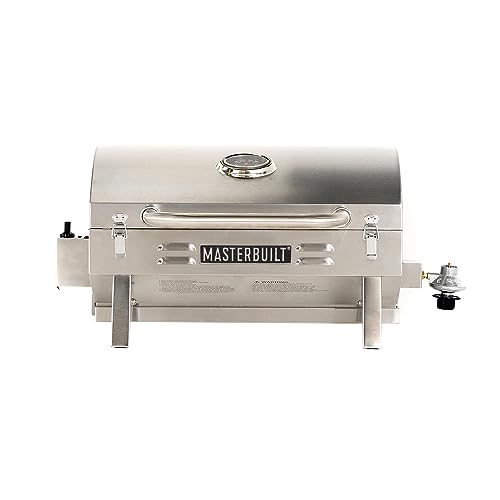
- Best overall for entertaining: Masterbuilt Portable Propane Gas Grill (MB20030819) — Check on Amazon
- Cuisinart Chef’s Style Portable Propane Tabletop Gas Grill (CGG-306) — Check on Amazon
- Royal Gourmet GT1001 Portable Propane Gas Grill — Check on Amazon
- Weber Go-Anywhere Portable Charcoal Grill — Check on Amazon
Benchmark picks, currently priced above this guide’s ceiling when we checked: the Coleman RoadTrip 225 stand-up grill and the Weber Traveler Compact cart grill are both reviewed below in prose. Hosts love their built-in stands, but both sat above the under-$200 ceiling at our most recent check, so neither carries a purchase link here — check price on Amazon if you want to watch for a sale.
Read the full guide ↓
Disclosure: As an Amazon Associate, dailyhomedecorating.com earns from qualifying purchases. Links to Amazon on this page are affiliate links; they cost you nothing extra. Listing details such as price and availability change often, so check the current Amazon listing before you buy.
Choosing the best portable grill for outdoor entertaining under $200 is really choosing how your party feels. Entertaining is the hardest job a small grill does, because the cooking is only half of it: food has to come off the grate in a flow that matches guests arriving, grazing and going back for more; finished food has to stay hot without drying out while the next batch cooks; the menu has to bend around the guest who eats no meat and the one who wants their steak properly rested; and the cook — you — is supposed to be at the party, not exiled beside a struggling grill doing relay batches in silence. A grill that cooks a fine dinner for four can fail completely at a gathering of ten, not because it cooks badly, but because it has no holding space, no second zone, and no capacity rhythm. This guide ranks its picks by hosting performance first and solo cooking second.
The Masterbuilt leads because entertaining runs on its two signature assets: the largest cooking area of the linked picks at 288 square inches, and a warming rack — the holding zone that lets a host cook in waves and serve continuously. The Cuisinart CGG-306 is the menu-flexibility pick, with two independent burners that let incompatible foods cook side by side at different temperatures. The Royal Gourmet GT1001 delivers near-Masterbuilt capacity at a value position for hosts counting dollars. The Weber Go-Anywhere is the second-grill secret weapon: a charcoal finishing and flavour station that turns a one-grill party into a two-station event. Two prose-only benchmarks — the Coleman RoadTrip 225 and the Weber Traveler Compact — represent the stand-up and cart formats hosts instinctively picture; both were priced above this guide’s ceiling when checked, so they are reviewed honestly, without links, for comparison. Every pick was checked against the CPSC recall database before inclusion. And because entertaining means guests, children, drinks and distractions, the safety thread runs heavier here than in any other guide in this series: a stable heat-resistant setup with real clearance from anything combustible, a grill position guests do not brush past, no combustion grill under covers or in garages because of carbon monoxide, charcoal ash cooled completely and sealed in metal, and bristle-free cleaning tools only — wire-bristle brushes have been recalled in the tens of millions in 2026 and are a hazard no party needs.
In this guide
Quick Picks
Short on time, or comparing several options at once? Each row below names a hosting situation and the grill that suits it, with a link to the listing where one is offered.
| Hosting situation | Pick | Why it stands out | Link |
|---|---|---|---|
| Best overall for entertaining | Masterbuilt Portable Propane Gas Grill (MB20030819) | 288 sq. in. plus a warming rack — cook in waves, serve continuously | Check on Amazon |
| Best for mixed menus | Cuisinart Chef’s Style Tabletop Gas Grill (CGG-306) | Two independent 10,000 BTU burners — two temperatures, one grill | Check on Amazon |
| Best value capacity | Royal Gourmet GT1001 Portable Propane Gas Grill | 285 sq. in. over a 10,000 BTU U-burner at a value-tier position — check price on Amazon | Check on Amazon |
| Best second grill / flavour station | Weber Go-Anywhere Portable Charcoal Grill | Charcoal finishing fire that frees the main grill and thrills the purists | Check on Amazon |
| Stand-up benchmark above the ceiling | Coleman RoadTrip 225 Portable Propane Grill | Two burners on a folding wheeled stand — prose-only at its current price; check price on Amazon | Prose-only |
| Cart benchmark above the ceiling | Weber Traveler Compact Portable Gas Grill | One-hand folding cart format — prose-only at its current price; check price on Amazon | Prose-only |
How These Picks Were Chosen
Entertaining imposed its own criteria on top of the standard ones used across this series. Capacity was measured the way a host experiences it: not just grate area, but holding area — a warming rack or a genuine second zone — because a party is fed in waves, not in one batch. Menu flexibility mattered next: the ability to run two temperatures, or two grills, so that vegetables, chicken, burgers and the inevitable late arrival’s portion can coexist. Setup dignity mattered too: a host’s grill lives on a table or stand in front of an audience, so every pick had to present and operate like equipment, not camping improvisation. The standard gates still applied in full: every linked pick was confirmed through an Amazon Creators API cross-check as a real, orderable listing at or under the $200 ceiling when checked; the two stand-format favourites whose checked prices sat above the ceiling were demoted to prose-only benchmarks rather than linked against the budget; every model was checked against the CPSC recall database and would have been excluded entirely if recalled; specifications are stated only where the manufacturer or the verified listing states them; and no star ratings or review counts are used, because those numbers churn constantly and measure a listing’s age, not its worth at your party.
The Best Portable Grill for Outdoor Entertaining Under $200: Full Reviews
1. Masterbuilt Portable Propane Gas Grill (MB20030819) — Best Overall for Entertaining
Who it suits: Hosts who feed eight to twelve people from a portable and refuse to let the cooking dictate the party’s rhythm. If your gatherings run on grazing — food appearing steadily, guests eating in waves — this is your grill.
Start with the number that matters most at a party: 288 square inches of total cooking space, the largest among this guide’s linked picks. Then notice how the Masterbuilt divides it. The main grate does the high-heat work in batches; the chrome-coated warming rack above it holds everything that is finished — sausages resting, chicken staying hot, buns toasting, corn keeping warm — without cooking it further into dryness. That rack is the difference between a host who serves and a host who shuttles. Without holding space, every batch is an emergency: eat it now, while the next batch is raw and the line forms. With it, the cook works one batch ahead all evening, and the food table never stands empty. The stainless body presents well on a patio table or stand, the legs fold for storage between events, and push-button ignition keeps restarts effortless when the grill is cycled off and on across a long afternoon.
The honest trade is heat management: a single burner serves the whole grate, so there is one temperature landscape, hottest at the centre. Hosts learn to run it as a map — searing in the middle, gentler items toward the edges, finished food up on the rack — and for the classic party menu of burgers, sausages, chicken pieces and vegetables, that map is entirely sufficient. What the Masterbuilt cannot do is run two truly different temperatures at once; that is the CGG-306’s party trick, below. For sheer feeding capacity per dollar of effort, though, nothing else linked in this guide hosts as easily.
Pros: Largest total area here; warming rack enables wave cooking and continuous serving; stainless, presentable, folds away; push-button ignition. Honest limitation: Single heat zone; centre-to-edge gradient needs managing with big mixed loads; bulky to store between parties.
Choose it if headcount and serving flow are your party problems. Skip it if your menus are varied and technique-driven — take the CGG-306’s two zones — or your parties are small, where any pick here suffices.
2. Cuisinart Chef’s Style Portable Propane Tabletop Gas Grill (CGG-306) — Best for Mixed Menus
Who it suits: The host-cook whose parties have a menu, not just a pile of burgers: steak and salmon, chicken and charred vegetables, food that cannot share one temperature without one of them losing.
Two stainless burners of 10,000 BTU each under 275 sq. in. of grate give the CGG-306 the one capability no single-burner grill here can imitate: two climates at once. At a party that means the high side sears steaks and burgers in small, fresh batches — the way guests actually want them, cooked to order in waves of two or three — while the low side holds a tray of vegetables, finishes chicken gently, or keeps a pan of beans warm at the edge. It means the vegetarian skewers are not queueing behind the ribs. It means the cook can say yes to requests instead of announcing a single sitting. The lid thermometer supports the slower, closed-lid cooking that bigger cuts need, and the stainless tabletop format sits handsomely on a serving table as part of the party’s furniture rather than an appliance apologising in the corner.
Its entertaining limitation is the absence of a warming rack: holding happens on the low zone, which works well but spends grate area to do it, so for very large groups the Masterbuilt’s rack-and-grate arrangement ultimately moves more food. The CGG-306’s party is the eight-person dinner with a real menu; the Masterbuilt’s party is the twelve-person graze. Know which party you throw. Either way, put this grill on a proper stand or table with a heat-resistant mat beneath it, keep its cylinder connection checked, and it will cook through an entire evening on a one-pound cylinder with a spare in reserve — the host’s version of a full tank.
Pros: True two-zone cooking for mixed menus; strong twin burners; lid thermometer; presentable stainless tabletop form. Honest limitation: No warming rack — holding spends grate space; for the largest grazing parties the Masterbuilt flows better.
Choose it if your entertaining is a cooked-to-order menu for up to eight or so. Skip it if your parties are big, simple and continuous — the Masterbuilt or a GT1001-plus-second-grill pairing serves that better.
3. Royal Gourmet GT1001 Portable Propane Gas Grill — Best Value Capacity
Who it suits: Hosts who need maximum mouths-fed per dollar: the family reunion cook, the team-celebration parent, the neighbour whose yard is the default venue and whose budget is not.
The GT1001’s 285 sq. in. of cooking area sits within a breath of the Masterbuilt’s headline figure, and its 10,000 BTU stainless U-burner is shaped to heat that area evenly — flame along both arms of the U, not a single stripe down the middle — so the grate’s corners cook food instead of merely warming it. For a host, evenness is throughput: every square inch that cooks properly is another portion per batch, another minute shaved off the queue. The stainless body, folding legs and lockable lid complete a package that sets up on a party table, works all afternoon, and folds back into storage when the yard returns to normal. At its value-tier position in this guide’s budget, it leaves money for the things parties also need — a second cylinder, a cover, decent tools, a bristle-free cleaning kit — without the host feeling the compromise at the grate.
What the savings cost is holding strategy: there is no warming rack, and one burner means one temperature. The experienced GT1001 host adapts with party craft — a lidded tray or foil-covered pan at the grate’s cool edge as the holding station, batches sequenced so forgiving foods (sausages, chicken) cook first and hold while the fast, fussy items (burgers to order, fish) cook last. It works, and hosts have run bigger parties on less. But if effortless wave cooking is the dream, that is precisely what the Masterbuilt’s rack buys, and the price difference between the two is the honest price of it.
Pros: Near-largest area at a value position; even-heating U-burner; folding legs, lockable lid; stainless body. Honest limitation: No warming rack; single temperature zone; holding takes technique and a tray.
Choose it if capacity per dollar decides. Skip it if you host often enough that the Masterbuilt’s rack will repay its premium in calm.
4. Weber Go-Anywhere Portable Charcoal Grill — Best Second Grill and Flavour Station
Who it suits: Hosts who already have a main grill plan — or buy one above — and want the move that separates a good party from a talked-about one: a live charcoal station running beside it.
Two-station entertaining is how small-grill hosts beat big-grill hosts. The gas grill runs the volume — chicken, sausages, vegetables, the children’s food, on schedule. The Go-Anywhere, lit with a compact chimney of coals, runs the theatre and the flavour: steaks seared over real charcoal to order, skewers kissed with smoke, corn blistered in its husk. Guests gather at a charcoal fire in a way they never gather at a gas appliance; the station becomes the party’s hearth. The Weber’s design suits the role — 160 sq. in. is plenty for a finishing and feature grill, its dampers let the host ride the fire’s temperature across an evening, its two-piece grate allows coal-tending mid-service, and its legs lock the lid so it arrives and departs as one tidy box. When the party ends, it is also the grill that stores on a shelf, leaving the patio clear.
The charcoal duties at a party are stricter, not looser, for the audience. Site it like a professional: on a non-combustible surface, well clear of the house, fences, dry planting and — above all — guest traffic, especially children, who must never be able to brush against a lit grill on their way past. It is never left unattended while lit; a host who cannot staff it does not light it. Ash stays in the closed grill until completely cold — a full day — then goes into a lidded metal container stored outdoors away from combustibles; party-night ash tipped warm into a bin is a fire that starts after the guests leave. And it never, under any weather excuse, moves under a roof or into a garage: charcoal carbon monoxide kills in enclosed air. Managed with that discipline, it is the highest-joy-per-dollar pick in this guide.
Pros: Charcoal flavour and theatre no gas grill matches; perfect second-station size; damper control; packs and stores as one box. Honest limitation: Needs staffing and siting discipline at a busy party; ash routine is unforgiving; small as a party’s only grill.
Choose it if you entertain with a main grill already in hand. Skip it if it would be your only grill for more than four guests, or your space cannot give charcoal a safe, traffic-free station.
5. Coleman RoadTrip 225 Portable Propane Grill — Stand-Up Benchmark (Prose-Only)
Who it suits: Hosts whose ideal party grill stands on its own legs at serving height beside the drinks table — and who want to know what that format costs against this budget.
The RoadTrip 225 in its stand-up form pairs two burners and 20,000 BTU with Coleman’s Instastart ignition on a collapsible wheeled stand: the grill rolls out, the stand scissors open, and the host is cooking at standing height with no table sacrificed to the appliance. For entertaining, that format has real virtues — the serving table stays a serving table, the grill can be positioned for the cook’s workflow rather than the furniture’s, and the whole station folds flat against a wall when the season turns. Two burners bring the two-zone technique described for the CGG-306, and the RoadTrip ecosystem’s swap-top griddles extend it to party breakfasts and smash burgers.
It is prose-only for the budget reason stated throughout this series: when its current Amazon price was cross-checked through the Creators API during the writing of this guide, it sat above the $200 ceiling. Hosts who find it on sale inside the ceiling should shortlist it immediately — it competes with everything linked here, with the stand as its trump card. Hosts holding the line should know the in-budget substitute: a tabletop pick like the CGG-306 or Masterbuilt on a sturdy grill stand reproduces the working height for a modest one-time addition, and the cooking itself loses nothing. Check price on Amazon before deciding the stand is out of reach.
Pros: Integrated folding stand with wheels; two burners, 20,000 BTU; matchless ignition; strong accessory ecosystem. Honest limitation: Currently priced above this guide’s ceiling, hence no purchase link; the stand makes it a larger stored package than the tabletops.
Choose it if a sale brings it into budget. Skip it if the ceiling is firm — the linked tabletops on a stand host just as happily.
6. Weber Traveler Compact Portable Gas Grill — Cart Benchmark (Prose-Only)
Who it suits: The host who entertains in more than one place — home patio this weekend, a rented picnic shelter or a friend’s yard the next — and dreams of a grill that folds like a hand truck and rolls to the car.
The Traveler Compact is the premium expression of the portable idea: a gas grill on a folding cart that collapses with one hand, rolls on real wheels, and opens into a stable cooking station with side-table utility where it lands. For mobile entertaining it removes the tabletop format’s one dependency — a suitable table at the destination — and its compact grate is sized for the travelling party of four to six. Weber’s build quality and support network stand behind it, as they do across the brand’s range. As a piece of hosting equipment, it is the one guests ask about.
Its limitation in this guide is the same as the RoadTrip’s, only larger: cross-checked through the Creators API at the time of writing, its current price sat well above the $200 ceiling, so it appears as a prose-only benchmark and carries no purchase link. It defines what the extra money buys — the cart, the fold, the finish — and lets you judge whether that is worth roughly the price of a linked pick plus its stand, cylinder and tools combined. For most hosts inside this budget, it is not; the linked picks cook the same food for the same friends. For the host who entertains away from home monthly, the calculation may honestly differ — check price on Amazon and decide with your calendar in hand.
Pros: One-hand folding cart with wheels; no destination table needed; premium build and support. Honest limitation: Priced well above this guide’s ceiling at check time, hence prose-only; compact grate for the money.
Choose it if mobile entertaining is your life and the budget bends. Skip it if the party is at home — the linked picks host it for far less.
Comparison Table
| Grill | Fuel | Cooking area | Holding strategy | Hosting strength | Watch out for |
|---|---|---|---|---|---|
| Masterbuilt MB20030819 | Propane | 288 sq. in. incl. warming rack | Warming rack | Wave cooking for 8–12 | Single temperature zone |
| Cuisinart CGG-306 | Propane | 275 sq. in. | Low second zone | Mixed menus cooked to order | Holding spends grate space |
| Royal Gourmet GT1001 | Propane | 285 sq. in. | Cool edge + tray technique | Value capacity | No rack; one zone |
| Weber Go-Anywhere | Charcoal | 160 sq. in. | Off-grill resting | Second station, flavour, theatre | Staffing and ash discipline |
| Coleman RoadTrip 225 (prose-only) | Propane | Two-burner stand-up grate | Second zone | Stand-up serving format | Currently above the $200 ceiling |
| Weber Traveler Compact (prose-only) | Propane | Compact cart grate | Off-grill resting | Mobile entertaining | Well above the ceiling at check time |
For entertaining, read the holding-strategy column first — it predicts your evening better than any other. A rack or a second zone means food waits gracefully; without one, the host’s technique has to substitute. Then read capacity, then format. The prose-only rows show what the stand and cart formats cost today against the ceiling; everything linked delivers its hosting job inside the budget.
How to Choose the Best Portable Grill for Outdoor Entertaining Under $200
Count your real party, not your biggest one. Most hosts entertain six to ten people most of the time and twenty twice a year. Buy for the usual party — any linked pick here handles it — and solve the rare giant party with a second grill borrowed or bought cheap, rather than living all year with an oversized solution. The Go-Anywhere exists in this guide precisely because a modest second grill is the smart host’s expansion slot.
Choose your holding strategy before your grill. Continuous grazing needs a warming rack (Masterbuilt) or a second zone (CGG-306). Sit-down dinners with a single service time can run on raw capacity (GT1001) because everything lands at once. Decide how your parties actually eat — honestly, not aspirationally — and the pick usually makes itself.
Design the station like a venue. The grill goes on a stable, heat-resistant surface or stand, positioned out of the traffic flow between house, drinks and seating, with clear space behind the cook and nothing combustible within generous reach — more in wind. Guests, especially children, should never have to pass within arm’s reach of a lit grill. Put drinks and serving tables on the other side of the space so the crowd’s gravity pulls people away from the fire, keep a lidded metal container and an extinguisher discreetly near the station, and light the area if the party runs past dusk; most grill accidents at parties happen in the dark, in a crowd, at the third hour. Never move a lit grill to chase shade or escape weather, and never cook under a gazebo roof, patio cover or in a garage — carbon monoxide and rising heat make “covered” the most dangerous word in outdoor entertaining.
Plan fuel and food as one system. A long party on a one-pound cylinder needs a spare on hand — running out mid-service is the classic portable-host failure — stored upright and shaded until needed. Sequence the menu against the grill’s nature: forgiving, hold-friendly foods first (sausages, chicken, corn), fast and fussy foods last (burgers to order, fish, steak), and let the holding rack or low zone smooth the joins. Rest cooked meat in a covered tray off the grill rather than crowding the grate, and keep raw and cooked tools separate at a busy station where helpers reach in.
Entertaining away from home changes the weights. If your parties happen at picnic shelters, rented pavilions, campsites with an audience or friends’ yards, portability climbs back up the priority list and the calculus shifts toward the latching, carry-friendly end of this guide — and toward checking the venue’s rules before the menu is planned, because parks and shelters variously restrict charcoal, open flame or outside grills entirely, and some provide fixed grills whose condition you will want a backup plan for. Away from home, the tabletop picks also need their surface question answered in advance: a folding grill stand in the car removes the dependence on whatever picnic table the venue happens to offer, some of which are plastic-surfaced and unsuitable. The Traveler Compact benchmark exists for exactly this life, and its prose review above is the honest account of what solving the problem with money looks like; the in-budget solution is a linked tabletop, a stand, and a checklist.
Clean like a venue, too. Brush the grate with a bristle-free tool between batches if the party is long — never a wire-bristle brush, which the 2026 recalls (tens of millions of units, bristles swallowed, serious injuries) have removed from serious kits. Empty the grease tray when cool after the event, not before the next one, and let any charcoal ash complete its full cooling day before it meets its metal container. The host whose grill is clean is the host whose next party starts with a press of the ignition.
Planning the Party Menu Around a Portable Grill
A portable grill rewards a menu designed for waves rather than a single grand service. Think of the evening in three acts. Act one is arrival food — items that cook fast, hold gracefully and eat standing up: sausages and skewers on the Masterbuilt with its rack holding the finished batch, vegetable skewers and halloumi on the CGG-306’s gentle side, corn blistering at the edges of whichever grill has space. Act two is the main event, cooked as close to service as your setup allows: burgers to order in small batches on the hot zone, chicken that was brought along gently and finished over direct heat, steaks rested properly rather than rushed. Act three is the long tail — the grill turned low, a tray of whatever remains kept warm for late grazers, and perhaps the Go-Anywhere’s charcoal embers cooking the final skewers for whoever is still standing around the fire, which at a good party is everyone.
Mixed-diet parties are where the two-zone and two-grill strategies stop being luxuries. A CGG-306 can hold a genuinely separate gentle zone for vegetables and plant-based items while meat sears on the hot side — with separate tongs for each, which is the detail that makes the separation real rather than rhetorical. A gas main grill plus the charcoal station achieves the same separation by appliance. What does not work is promising a varied menu on a single small single-zone grill and improvising at service time; the queue forms, the first food cools, and the host disappears into damage control. Choose the menu your grill can wave, or add the second grill — those are the only two honest options, and both are covered by the picks in this guide.
Portion planning follows from the same wave logic. Because a portable cooks in batches, the host’s real constraint is throughput per hour, not total food. Forgiving foods that hold well — sausages, chicken thighs, corn, peppers — should be deliberately over-represented, because they absorb the schedule’s shocks: late guests, long conversations, a cylinder swap. Delicate foods — fish, thin steaks, anything cooked to a precise temperature — should be under-represented and cooked to order in the calm middle of the party, not during the arrival rush. Desserts on the grill, such as fruit over the last of the heat, close the show using equipment that is already hot, and give the cook a final, easy win in front of the audience.
Common Mistakes When Entertaining Outdoors
Buying for the annual party instead of the monthly one. Oversized solutions crowd storage and everyday cooking; undersized ones are rescued by a second grill. Match the main pick to your typical headcount.
Placing the grill in the party’s bloodstream. A grill beside the drinks cooler or the doorway guarantees a guest — or a child — brushes it eventually. Site the station at the edge of the gathering, with the cook’s back protected and the crowd’s paths routed elsewhere.
Cooking everything at one temperature because the grill only has one. If you chose a single-zone grill, technique replaces hardware: sequence the menu, hold on a tray, and rest food properly. The mistake is not the grill; it is pretending the constraint is not there.
Moving the party under cover when weather turns. A gazebo or garage feels like hospitality and behaves like a hazard: heat collects under roofs and carbon monoxide collects in enclosed air. Move the guests, move the food service indoors — never move a lit combustion grill under cover.
Forgetting the ash until morning. After a party is exactly when ash discipline slips. The routine does not change for tired hosts: coals cool in the closed grill for a full day, then into a lidded metal container outdoors. Warm ash in the party rubbish is a fire timed for when everyone is asleep.
Reaching for the old wire brush for a mid-party clean. Mid-service is when a detached bristle is most likely to meet food. Bristle-free tools only — coil, wood or nylon on a cool grate — at parties above all.
Final Recommendation
Hosts should start with the Masterbuilt: its warming rack and 288 square inches turn a portable into a serving system, and that is what entertaining actually demands — not the hottest burner or the longest feature list, but the ability to keep good food flowing to good company for hours without the cook leaving the conversation to fight the equipment. Every other recommendation in this guide is a variation on that theme, tuned for menu, budget, format or flavour. Menu-driven hosts should take the CGG-306’s two zones and cook to order. Budget hosts lose surprisingly little with the GT1001, provided they master tray-holding. And every host with a main grill sorted should seriously consider adding the Go-Anywhere — the charcoal second station is the highest-delight upgrade in this guide. The stand and cart formats represented by the prose-only RoadTrip 225 and Traveler Compact are lovely pieces of equipment whose current prices place them outside this budget; watch them on sale via the Best Portable Grill For Outdoor Entertaining Under $300 guide, where the field widens. For the rest of the party setup, our guides to the Best Camping Chair For Outdoor Entertaining Under $200, the Best Adirondack Chair For Outdoor Entertaining Under $200 and the Best Charcoal Grill For Outdoor Entertaining Under $200 cover seating and dedicated charcoal options, and the whole portable field at a higher ceiling is compared in the Best Portable Grill Under $300 guide.
FAQ
What is the best way to serve food continuously without a warming rack?
Sequence and shelter. Cook hold-friendly foods first and keep them in a covered tray or foil pan at the grate’s coolest edge, where residual heat keeps them serving-warm without cooking them further. Cook fast, fussy items last and in small batches, so they travel from grate to guest in minutes. Rest meat in the covered tray rather than on the grate, which frees cooking space and improves the meat at the same time. Hosts who run this system on the GT1001 feed crowds that hosts with bigger grills and no system struggle with — the rack is an advantage, not a prerequisite.
How big a portable grill do I need for a party of ten?
A 275–288 sq. in. grill with a holding strategy — the Masterbuilt’s warming rack or the CGG-306’s second zone — feeds ten comfortably in waves, which is how parties actually eat. Without holding space, the same headcount means strict batch sequencing and food that waits badly. For parties well beyond ten, add a second grill rather than hunting for a single portable that does it all.
Is a warming rack really that important for entertaining?
It is the single feature that most changes a host’s evening. A rack holds finished food hot without overcooking it, toasts bread, and frees the main grate for the next batch — the mechanics of continuous serving. Hosts without one substitute a low second zone or a covered tray at the grate’s edge, which works with more attention and less grace.
How do I keep guests, especially children, safe around the grill?
Site the grill out of traffic paths, at the edge of the gathering, on a stable heat-resistant surface with clear space around it. Never leave a lit grill unattended at a party — assign the cooking in shifts if the host must circulate. Keep the area lit after dark, keep an extinguisher and a lidded metal ash container at the station, and set a simple house rule early: the grill zone is adults-only, stated once, kindly, before the first burger.
Can I grill under a gazebo or patio cover if it rains during the party?
No. Heat rises into roofs and can ignite or damage them, smoke collects, and gas and charcoal grills produce carbon monoxide that accumulates in covered and enclosed spaces. If weather turns, pause the grilling, move the food service indoors, and let the grill cool where it stands in the open. The party adapts; the grill does not move under cover.
What accessories most improve entertaining with a portable grill?
A sturdy stand or grill table, a heat-resistant mat, a spare one-pound cylinder, an instant-read thermometer, long tongs and a wide spatula, a lidded metal container for ash, and a fitted cover for storage. Together they cost less than the step up to the prose-only benchmarks in this guide and improve every party more than the step up would. The one accessory to actively remove from your kit is any wire-bristle cleaning brush, for the recall reasons given throughout this guide.
Is charcoal or gas better for entertaining?
For the main grill, gas — because hosting is a scheduling job and gas starts instantly, holds a temperature while you talk to guests, and shuts off the moment service ends. For the second station, charcoal — because its flavour and theatre are worth staffing when the volume is already handled. That division of labour is exactly how this guide’s picks are arranged, and it is why the Go-Anywhere appears as a complement to the gas picks rather than a competitor to them.
How many one-pound propane cylinders does a long party need?
Plan on one in the grill and at least one spare for any event running several hours of cooking — a single-burner grill on moderate settings cooks for roughly an hour to an hour and a half per cylinder on high-equivalent use, and hosts rarely run flat out continuously. Store spares upright, shaded and away from the grill’s heat, and swap only when the grill is off and cool enough to handle safely.
Should a host buy a stand for a tabletop grill?
For entertaining, a sturdy grill stand or table is close to essential equipment rather than an accessory. It sets the cooking surface at a height the cook can work at for hours, keeps the grill off the serving table so that table can do its real job, and — with a heat-resistant mat beneath the grill — protects whatever it stands on from heat and drips. It is also the honest way to evaluate the prose-only stand-up benchmarks in this guide: a linked tabletop pick plus a good stand reproduces most of their working experience inside the budget, which is precisely why those benchmarks are benchmarks and not automatic upgrades.
How do I handle a flare-up in front of guests?
Calmly, and with the lid. Most flare-ups are fat meeting flame, and closing the lid starves them of oxygen and settles them in seconds — which is why the first rule of party grilling is to cook with the lid as your primary tool. Move the food away from the flames if it is safe to do so, never spray water on a grease fire, and keep the extinguisher’s location known before the party starts. A host who handles a flare-up without drama teaches every guest that the station is under control; a host who has planned the station’s position, clearance and equipment in advance rarely has to perform the lesson at all.
What should I do with charcoal ash after a party?
Leave it in the closed Go-Anywhere until completely cold — allow a full day, which means the morning after is still too early to rush it — then transfer it to a metal container with a tight-fitting lid, stored outdoors on a non-combustible surface away from anything combustible. Never mix ash into party rubbish, paper sacks or plastic bins, however cold and grey and harmless it feels on the surface, because buried embers are patient.


