Disclosure: As an Amazon Associate, dailyhomedecorating.com earns from qualifying purchases. Links on this page are affiliate links; they cost you nothing extra. Prices and availability change often, so check the current Amazon listing before you buy.
Worked through honestly, stick vacuum pros and cons describe a format with an unusually clear personality: it trades capacity and endurance for frequency and convenience, and whether that trade delights or frustrates you depends almost entirely on your floors and your habits. This page gives both sides their full weight — six genuine strengths and six genuine limitations, each explained rather than sloganeered — then maps the trade-offs onto different households so you can see which side of the ledger your own home falls on before you spend anything.
Key Takeaways
- The biggest pro is behavioural: instant access means floors get cleaned far more often.
- The biggest con is physical: compact batteries and bins impose real limits and a real routine.
- Hard-floor, pet and flat households land heavily on the pro side.
- Large, thick-carpet homes feel the cons most and often pair a stick with a full-size machine.
- Most cons shrink with the right model choice — swappable packs, wrap-resistant brushes, sealed filtration.
Quick verdict: a stick vacuum suits households whose mess is frequent, light and spread across floors, stairs and furniture — which is most households, most of the time. It does not suit anyone expecting a single compact battery machine to deep-clean a large, thickly carpeted home in rare marathon sessions, and it will annoy owners who want an appliance they can ignore for months between uses.
Stick Vacuum Pros and Cons: The Pros
Pro: It Gets Used, and Used Cleaning Beats Strong Cleaning
The real value of a stick vacuum shows up in the rhythm of an ordinary week. Crumbs under the breakfast table, litter tracked out of the laundry room, grit at the front door and hair along the hallway baseboards are all two-minute jobs, and a machine that starts instantly gets used for all of them. Owners consistently describe the same shift: the floor simply looks better most of the time, not because any single clean is more powerful, but because cleaning happens four or five times as often. This is also why judging a stick vacuum purely against a big corded upright on a single deep-clean test misses the point. The honest comparison is a home that gets frequent light cleaning against a home that gets one heroic session a week, and for surface dirt, pet hair and kitchen debris, the frequent light cleaning usually wins on visible results.
Pro: One Machine Covers Floors, Stairs, Furniture and the Car
Nearly every stick vacuum converts to a handheld by detaching the wand, and that second identity is a large part of the value. In handheld form the same machine cleans sofa cushions, car footwells, stair treads, curtain tops and the crumbs inside a cutlery drawer. The attachments decide how useful this mode really is: a crevice tool for edges and car seats, a mini motorised tool that genuinely lifts pet hair from upholstery, and a soft dusting brush for shelves and screens cover most real jobs. Check how the tools store — a wall dock that holds the two you use daily beats a bag of attachments in a cupboard that you never open. When you compare models, picture your own above-floor jobs and check the tool kit against them, rather than counting attachments as a raw number.
Pro: Storage and Readiness Suit Real Homes
Storage is a stick vacuum’s home-turf advantage. A slim wall-mounted dock, a corner of a laundry or broom cupboard, or a freestanding floor dock in a utility nook is all it asks for, which is why sticks suit flats, townhouses and older homes where a full-size upright has to be wrestled out of an over-full closet. The dock usually doubles as the charger, so the machine is always topped up and ready — a small thing that drives the grab-and-go habit the whole format depends on. Renters who cannot drill into walls should look for freestanding docks or lean-to designs that need no screws. Wherever it lives, keep the dock near the mess: a stick stored by the kitchen or entry gets used daily, while one stored at the far end of the house gets used on weekends, and the format’s magic fades.
Pro: It Is Kind to Hard Floors and Timber
On hard floors — timber, tile, laminate, vinyl — a stick vacuum is in its element. The debris sits on the surface rather than hiding in pile, so moderate suction with a well-designed head picks it up cleanly. The details that matter are head design and edge behaviour: a soft roller or a head with good front intake handles larger crumbs without pushing them ahead like a snowplough, and a head that seals reasonably at the front cleans right up to skirting boards instead of leaving a line of grit. Watch for scratch anxiety too. Quality heads use soft wheels and felt or rubber contact points that are kind to timber finishes; gritty debris dragged under a stiff head is the real risk, which is another argument for frequent light passes that stop grit building up in the first place.
Pro: Stairs Stop Being the Skipped Job
Stairs are where the stick format quietly outclasses bigger machines. In handheld mode with a crevice tool or mini brush, a stick works tread by tread without a cord to manage, a hose that reaches only halfway, or a heavy body balanced on a step. The light weight matters most here, along with a head or tool that gets into the angle where tread meets riser, which is where grit and hair collect. Carpeted stairs benefit from a motorised mini tool; bare timber stairs need only a quick pass with the floor head detached or a soft brush. If your current routine involves skipping the stairs because the big vacuum is too awkward, a stick vacuum will change that habit within the first week, and the stairs will show it.
Pro: Pet Hair Becomes a Two-Minute Job
Pet hair is the stick vacuum’s signature job. Hair lands on hard floors, rugs and upholstery daily, and a machine that can be grabbed in seconds keeps it from weaving itself into fabrics and corners. The features that matter are a brush roll that resists hair wrap — or is at least easy to clear — a mini motorised tool for sofas and pet beds, and a bin you can empty without a cloud of hair and dander in your face. Tangle-resistant brush designs genuinely reduce maintenance, though no design is truly fit-and-forget in a heavy-shedding home; long human hair is often the worst offender. Pet households should also budget attention for filters, because dander loads them faster. Clean the filter rhythm a little more often than the manual suggests and the machine keeps its edge far longer.
In this guide
The Cons
Con: Battery Endurance Is Mode-Dependent and Honestly Limited
Battery honesty matters more with stick vacuums than with almost any other appliance, because the headline runtime printed on a box is almost always measured in the gentlest mode, often with a non-motorised tool attached. Switch to the high or max mode that you actually need for carpet, and the usable runtime is a small fraction of that headline figure — sometimes dramatically smaller. This is not a scandal; it is physics. Spinning a brush roll and pulling hard suction drains a compact pack quickly. What it means practically is that you should plan your cleaning around modes: eco or standard for hard floors and daily passes, higher modes reserved for rugs, entry mats and the spots that genuinely need them. A stick vacuum that feels adequate on hard floors can feel frustratingly short-legged if your home is mostly carpet and you run it flat out everywhere.
Con: Battery Packs Fade and Can End the Machine’s Life
Lithium battery packs also fade with age, and a stick vacuum is only as good as its pack. A machine that comfortably handled the whole ground floor when new may, after a few years of daily charging, need a mid-clean recharge or a second pass on another day. Heat, constant full charging and heavy max-mode use all nudge that fade along. None of this makes stick vacuums a bad buy, but it does mean the battery should be treated as a wear part with a lifespan, not a permanent component. When you compare models, look at how the pack is handled: is it replaceable at all, can you buy a spare, and does the brand have a track record of supporting older models with parts? A slightly less glamorous machine with an available replacement pack often outlasts a sleeker rival whose battery is a dead end.
Con: The Bin Is Small and Emptying Is Not Dust-Free
Stick vacuums carry small dust cups, and that single fact shapes the ownership experience. A compact bin is fine for crumbs and dust, but pet hair, household fluff and renovation dust fill it fast, and a bin that looks only partly full can already be choking airflow because hair wraps and bridges across the intake. Expect to empty the cup often — in a shedding-pet home, possibly more than once in a single session. Emptying is usually a one-button affair over a trash can, but it is not dust-free, which matters for allergy-sensitive households. Some designs add compression or auto-empty docks that pull debris into a larger base after each clean; those add cost and bulk but genuinely reduce how often you handle dust. Judge bin size against your actual debris, not against a showroom demo.
Con: Deep-Pile Carpet Exposes the Format’s Limits
Carpet is where stick vacuums are most honestly tested. A motorised brush roll with decent agitation lifts hair and grit from low and medium pile well, and for the traffic lanes, bedroom rugs and hallway runners of a typical home, a good stick handles the weekly load without complaint. Deep, plush pile is a different story: the head can bog down, the brush works harder, battery drains faster, and embedded grit at the base of thick pile is where a full-size machine with a heavier brush and sustained corded power still earns its place. Be honest about your floors. A home that is mostly hard flooring with a few rugs asks little of a stick vacuum. A home wall-to-wall in thick carpet asks a great deal, and expectations — and possibly the choice of a second, bigger machine — should be set accordingly.
Con: Top-Heavy Balance Can Tire the Wrist
Weight and balance decide whether a stick vacuum feels like a tool or a chore. The headline weight matters less than where that weight sits: most sticks carry the motor and battery at the top, near your hand, which makes the machine easy to lift onto stairs and into handheld mode but can tire the wrist on long floor sessions, because you are effectively steering weight at the end of a lever. Some designs move mass lower or use a trigger-free on switch so the hand can relax and reposition. If anyone in the household has wrist, shoulder or grip issues, balance and switch design deserve as much attention as suction. A vacuum that feels effortless for the length of your real cleaning sessions will get used; one that aches will quietly be avoided, whatever its specifications promise.
Con: It Asks for Regular Small Maintenance
A stick vacuum asks for small, regular care rather than occasional big effort. Empty the bin before it packs full, tap or wash filters on the maker’s schedule, clear hair from the brush roll before it mats into a felted rope, and wipe the sensors and head wheels when they get grubby. None of these jobs takes more than a few minutes, but skipping them compounds: a clogged filter strains the motor, a wrapped brush roll drags on carpet and eats battery, and a bin left full slowly suffocates suction. The owners who love their stick vacuums after several years are almost always the ones who built a tiny maintenance rhythm — often while the kettle boils after a clean. Our dedicated cleaning guide walks through the full routine step by step for anyone who wants it spelled out.
What the Trade-Offs Mean for You
Honesty about limits makes the rest of this guide trustworthy: a stick vacuum complements rather than replaces a full-size machine for deep cleans. Before guests, after a renovation, at the seasonal changeover, or when thick carpet needs grit pulled from the base of the pile, sustained power, a larger brush and a big bin still win. Many households settle into a sensible division of labour — the stick handles the daily and weekly surface load, and a corded upright or canister comes out monthly or seasonally for the heavy work. Others, particularly in flats and hard-floor homes, find the stick genuinely sufficient on its own. Neither answer is wrong. What matters is matching the machine to the floors and the mess, and not expecting a lightweight battery cleaner to do a job it was never built for.
For allergy-conscious households, the vacuum is part of air management, not just floor care. A sealed system with effective exhaust filtration, a bin that empties without puffing dust back at your face, and a routine of frequent light cleaning all push in the right direction: allergens are picked up often, in small amounts, and kept inside the machine. Bagless sticks do ask you to empty them, ideally outdoors or into a bag you can tie, and auto-empty docks exist partly to solve exactly this moment. Filter discipline matters doubly here, because a loaded filter both weakens cleaning and risks leaking finer dust. Households managing allergies should read the filtration description carefully, favour genuinely sealed designs, and treat the empty-and-filter routine as part of the appliance’s job, not an afterthought.
Homes with children generate a special category of mess: cereal under high chairs, craft glitter that migrates through whole rooms, sand from shoes, and the mysterious crumb trail that appears between meals. A stick vacuum fits this life because it is fast enough to deploy between activities and light enough that older children can genuinely help with it — many families find the stick is the first cleaning tool a child will use voluntarily. The light weight and simple controls matter here, as does storage at an accessible height. The cautions are equally practical: small bins fill fast with craft debris, and the brush roll will find every hair tie, ribbon and string in the house, so a quick floor scan for treasures before cleaning saves both the machine and the tears.
Multi-storey homes get a particular benefit from the stick format: the machine travels. A light stick carried by its wand goes up and down stairs without planning, which means upstairs bedrooms and landings get cleaned on the same impulse as the ground floor rather than waiting for a scheduled expedition with a heavy machine. Some households eventually add a second charging point upstairs, or even a second, simpler stick for the top floor, but most find one machine moved freely does the job. The battery planning changes slightly — a whole-house session across floors is exactly the scenario where swappable packs or a mid-session top-up earn their keep — but the format itself is naturally suited to homes split across levels, which is more than can be said for most full-size cleaners.
Context: How the Alternatives Compare
Against a corded upright, the stick wins on access, storage and stairs, and loses on sustained power, bin capacity and deep-pile results. Against a robot vacuum, the stick wins on edges, stairs, upholstery and spot cleaning, and loses on automation — the robot cleans while you are out, the stick cleans when you pick it up. Against a handheld-only vacuum, the stick wins on floors and reach, and loses on nothing much except price of entry. Many settled households end up with a stick plus one of these alternatives rather than a single machine, and that pairing — frequent light cleaning plus occasional heavy or automated help — is the real context in which the pros and cons above should be read.
Suction claims in this category deserve calm scepticism. Makers quote figures measured in different ways, at the motor rather than at the floor head, in modes you will rarely use, and the numbers do not translate neatly into how a machine behaves on your floors. What you can judge sensibly is behaviour: does the head pick up crumbs without scattering them, does it lift hair from your rug type, does it clean to the edge, and does performance stay consistent as the bin fills and the battery drains? A well-sealed airflow path and a well-designed head routinely beat a bigger headline number in real rooms. Treat specifications as a rough sorting tool, then weight design, tools, battery handling and brand support more heavily in the final decision.
How to Buy Smart If the Pros Win
Swappable versus sealed batteries is one of the most consequential choices in this category. A removable pack clicks out in seconds, which means a spare can sit on the charger ready for big cleaning days, a faded pack can be replaced without replacing the whole vacuum, and the machine can be stored away from its charger if your outlet situation demands it. A sealed, built-in pack keeps the body slimmer and simpler, but when that battery fades, the whole vacuum fades with it. For small flats cleaned in short bursts, a sealed pack may never become a problem within the life of the machine. For larger homes, pet-heavy homes, or anyone who wants a vacuum to last as long as possible, a swappable pack is the safer long-term bet and one of the first specifications worth checking.
If you are choosing between models, build a fair home trial in your head before you buy, then run it in the first days while returns are simple. Time how your real rooms feel on standard mode, not just max. Empty the bin and note how much of your actual debris it held. Convert to handheld and clean the sofa and the car. Carry it up the stairs. Dock it, charge it, and live with where it stands. These ordinary tests expose the things that matter — balance, bin rhythm, tool usefulness, noise at your hours — far better than any showroom push across a polished floor. A stick vacuum is a daily-use tool; judge it the way you would judge a kettle or a favourite knife, by how it behaves in your hands across a normal week.
The purchase is only the start of what a stick vacuum costs you, and the rest is paid in attention and consumables rather than headline money. Filters need replacing on a cycle even when they are washable, because washing restores airflow but not forever. Brush rolls wear, especially on rough hard floors. Batteries, as covered earlier, are wear parts with a finite life. None of these costs is large individually, and none should scare anyone off, but a model whose maker keeps filters, rolls and packs available for years is a fundamentally better long-term proposition than one whose parts vanish from sale within a couple of seasons. Before buying, spend two minutes checking that the brand lists spares for the model you want. That tiny check predicts ownership satisfaction better than most headline specifications do.
Gear That Answers the Cons
Two designs show how manufacturers answer the con list directly — one with balance, bin hygiene and an established parts ecosystem, one with wrap resistance and pet-focused tools. Both are prose sketches here; check the current listing for configurations.

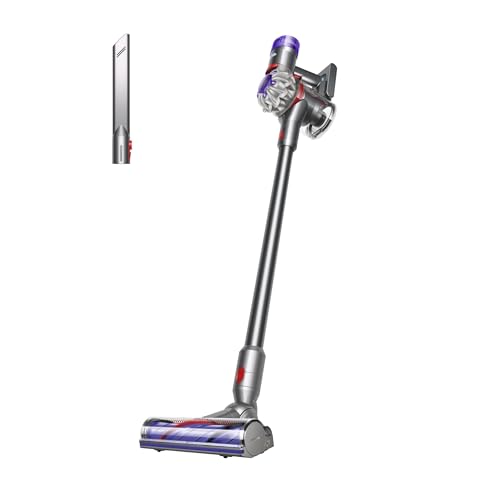
Dyson V8
a long-standing benchmark in the premium tier, known for a compact, well-balanced body, a trigger-style power control, and a hygienic bin-emptying action that pushes debris out without you touching it. In daily use its character is light and nimble rather than brute-force: it suits hard floors and mixed homes cleaned often, converts to handheld in a click, and is supported by a wide ecosystem of heads and tools. The honest limitations are a small bin that pet-heavy homes will empty often, and a sealed-in ownership model where you should confirm pack replacement options before buying for the long term. As a reference point for what the format should feel like, it earns its place in any shortlist — check the current listing for the exact configuration on offer.
Shark Stratos Cordless
a feature-led contender from the value-conscious end of the premium tier, built around hair-wrap resistance, odour-neutralising touches on some configurations, and a flexible wand on certain versions that bends for under-furniture reach and compact storage. Its personality is practical: strong everyday pickup, a head that handles mixed floors without swapping, and tools aimed squarely at pet households. Trade-offs to weigh are a slightly heavier in-hand feel than the lightest rivals and a busier design with more nooks to keep clean. For buyers who want modern conveniences without stepping to the very top of the market, it is one of the most complete packages going, and the one many pet owners end up choosing after comparing tool kits side by side.
Setup and Care That Reduce the Cons
Filtration is the quiet specification that decides whether a vacuum returns dust to the room. A well-sealed system with proper exhaust filtration captures the fine particles that cheaper, leaky designs blow back out through seams and vents. You can often feel the difference as a faint dusty smell during cleaning. For households with allergies or asthma concerns, a fully sealed system with a washable pre-filter and a proper exhaust filter is worth prioritising over headline suction claims. Filters are also maintenance items: a clogged filter strangles performance long before the motor weakens, and many ‘my vacuum lost suction’ complaints are really ‘my filter has never been cleaned’ complaints. Whatever model you choose, learn where every filter lives, which ones can be washed, and which must be replaced dry, and put filter care on a regular rhythm rather than waiting for performance to drop.
Getting the most from a battery machine is partly technique. Clean in a route rather than at random: start in the rooms that need the higher modes — the rug zones and entry mats — while the pack is fresh, then finish on hard floors in the gentler modes that sip power. Use max mode like a tool, in short bursts on the spots that need it, rather than as a default setting for the whole home. Keep the brush roll and filters clean, because a machine fighting clogs drains its pack doing wasted work. And plug the stick back into its dock every time, so the next session always starts full. Owners who adopt this rhythm routinely find the same machine feels far more capable than owners who run it flat out, everywhere, from a half-charged start.
Charging habits shape battery life more than most owners realise. Lithium packs are happiest when they are neither left flat for long periods nor baked in heat, so a dock in a cool laundry or hallway beats one beside a hot water heater or in a sun-struck garage. The docked-and-ready habit that stick vacuums encourage — the machine lives on its charger — is generally fine for modern packs with proper charge management, and the convenience is the point of the format. If you store the vacuum unused for a long stretch, such as at a holiday home, leaving the pack partly charged rather than brim full or empty is the kinder choice. And if the pack is removable, taking it out for long storage keeps it away from any parasitic drain in the body.
Bottom Line
The pros are about how you will live with the machine every day; the cons are about physics that no brand can fully repeal. If your home’s mess is frequent and light, the pros dominate and the cons shrink to a small routine of emptying, rinsing and occasional pack planning. If your home’s cleaning is rare, deep and carpet-heavy, the cons dominate and a stick should be a second machine, not the only one. That single honest self-assessment is worth more than any specification sheet in this category.
Living With It Day to Day
Ergonomics decides long-term satisfaction more than most buyers expect. Beyond weight and balance, consider the grip shape, how the machine pivots at the wrist when the head steers around chair legs, and whether the wand length suits your height — stooping through every clean because the wand feels short is a slow route to a sore back. The best stick designs steer with a loose wrist, keep the hand in a neutral position, and put controls where the thumb naturally rests. If you can, mimic your real cleaning in the shop: push, turn, lift to handheld, carry up a step. Two minutes of honest mimicry tells you more than an hour of reading specifications, and it is the cheapest insurance against a machine that is powerful on paper and punishing in the hallway.
Edge cleaning separates thoughtful head designs from lazy ones. Dirt accumulates exactly where the floor meets the wall, and a head that cannot clean to its own front and sides leaves a permanent grey line that a crevice tool then has to chase room by room. Good designs pull debris in from the front corners, keep suction channels open at the edges, and let the head run flush along skirting. Watch for this in demonstrations and reviews more than in specifications, because no headline number captures it. In kitchens, where crumbs migrate to the toe-kick line under cabinets, a head that reaches under low furniture and cleans at its edge saves the second pass with a handheld that lesser designs force on you every single time.
Stick vacuums are not quiet, but they are used in short bursts, which changes how the noise lands in a household. A two-minute pass after dinner is a different proposition from twenty minutes of a big upright on a Sunday morning. Higher modes are noticeably louder, and some designs have a higher-pitched motor note that some people find more tiring than the raw volume suggests. For flats with thin walls, homes with sleeping babies, or anyone who cleans early or late, it is worth favouring standard modes for routine passes and saving max mode for short, targeted work. Pets react differently too: many animals that flee a full-size machine tolerate a stick’s shorter sessions, especially when the machine appears often and briefly rather than rarely and at length.
Headlights on the floor head sound like a gimmick until you clean under a sofa or along a shaded hallway for the first time. Low, angled light rakes across hard floors and reveals dust, hair and crumbs that ceiling light hides completely — most people are quietly shocked by how much debris appears in the beam the first time they use one. Once seen, it changes habits: you slow down in the lit zone, you notice the grit line along baseboards, and you stop declaring a floor clean when it only looks clean from standing height. Not every model has lights, and they are not a reason to buy one machine over another on their own, but as a tiebreaker between two otherwise equal sticks, the light is worth more than it sounds.
Whether a stick vacuum stands up on its own sounds trivial and turns out to be a daily quality-of-life detail. Many sticks cannot: they must be leaned against a wall, laid flat, or returned to the dock every time you pause to move a chair, answer the door or empty the bin mid-clean. A design that stands upright, even temporarily, makes stop-start cleaning around furniture far less fiddly, and reduces the slow slide-down-the-wall crash that chips paint and cracks plastic. If you shop in person, stand the machine up and let go. If you shop online, read the design notes carefully for self-standing or park features. It is a small thing you will notice several times a week for the entire life of the machine, which makes it a big thing in disguise.
Seasonal moments test any cleaning system. Spring brings pollen and open windows; autumn brings leaves, mud and grit at every door; the festive season brings tree needles, glitter and guests. A stick vacuum’s contribution is frequency: short, cheerful passes that stop seasonal debris becoming embedded grime. Pair those passes with the deeper clean the season deserves — the full-size machine, the mop, the moved furniture — and the home stays ahead of the calendar. It also helps to give the stick itself a seasonal service: a proper filter clean or replacement, a brush-roll clear-out, and a check of the head wheels and seals. Ten minutes of attention at the season change keeps the machine performing like the one you bought, rather than the tired version of it.
The handheld mode earns a permanent place in car care. Crumbs in footwells, grit in boot liners, and pet hair on seats are exactly the small, frequent messes a stick handles well, and there is no cord to run from the house. A crevice tool reaches between seats, a mini motorised brush lifts hair from upholstery and mats, and the short body works in a footwell where a full-size machine simply cannot go. Battery discipline matters — a car interior is a longer handheld session than most — so start with a charged pack and work in zones. For households that treat the car as another room of the house, this second job alone justifies the handheld conversion for many owners, and it costs nothing beyond the tools already in the box.
Above-floor cleaning is where attachments stop being accessories and become the product. Sofas collect crumbs, hair and dust in seams that a floor head never touches; curtains and pelmets gather dust that rains down whenever they move; shelves, skirting and the tops of door frames all hold the fine layer that makes a room feel less clean than its floor suggests. A stick in handheld form with a soft dusting brush handles the delicate jobs without the blast of a big machine, and a motorised mini tool does the heavy lifting on fabric. Working top-down — high dusting first, floors last — means the floor pass collects whatever the upper work dislodged. Households that build this loop into a monthly routine notice the difference in how the whole home feels, not just in how the floor looks.
A final habit separates happy owners from frustrated ones: they clean little and often, and they stop expecting one session to do everything. Ten relaxed minutes across a day keeps a home visibly ahead of its dirt, while one exhausting weekly battle against a week’s accumulation makes any machine feel inadequate. The stick format is built for the first pattern. If your household can adopt it, the machine will feel generous; if your household is locked into the second pattern by work, children or sheer floor area, judge the machine by that reality and choose the battery arrangement, bin size and partner appliances that the pattern demands, rather than hoping the pattern will change for the machine.
Neighbours, flatmates and family members all experience a vacuum differently, and a shared home argues for the quietest reasonable routine: standard modes for early and late cleaning, higher modes reserved for the middle of the day, and a dock location that does not turn charging cables into a hallway trip hazard. These are small courtesies, but they decide whether the machine is welcomed as part of the household or resented as an intruder, and welcomed machines get used — which, as every section of this guide keeps concluding, is the entire point of the format.
Second-hand stick vacuums deserve a word of caution. The machine you can see — body, wand, head — is usually the healthy part; the battery you cannot see is where the value has quietly drained away. A used stick with a faded, sealed pack can be worse value than a modest new machine, while a used model with a swappable pack can be revived cheaply and honestly. If you buy used, price in a replacement pack from the start, test the machine on carpet and not just hard floor, and check that filters and the charger are included, because missing accessories erase the saving.
Renters have a particular version of the storage question. Many sticks offer freestanding docks, lean-to designs or charging stands that need no screws, and a machine that can live in a laundry corner on its charger keeps the format’s benefits without touching a wall. If you do mount a dock in a rental, a couple of small, fillable holes are usually all that is at stake — but the freestanding route removes the conversation entirely, and several of the designs discussed in this guide offer exactly that option in their current configurations.
Guests change the cleaning equation in ways worth planning for. The week before visitors is when households attempt the deep clean the stick was never built for, and conclude unfairly that it has failed them. The settled pattern is the reverse: let the stick hold the daily line all year, so the pre-guest session is a genuine deep clean of a home that is already tidy, done with the big machine, the mop and the moved furniture. Homes that live this way describe the stick as the reason hosting stopped being stressful, which is a benefit no specification sheet knows how to print.
There is an environmental ledger to this category too, and it favours longevity over novelty. A stick vacuum whose battery, filters and brush roll can be replaced is a machine that stays out of landfill for years; a sealed, unsupported design becomes waste the day its pack fades. Choosing replaceable parts, using the machine fully rather than upgrading on a whim, and recycling spent lithium packs through proper collection points are the meaningful choices here. The greenest stick vacuum, as with most appliances, is the one that is still working in your home a long time from now.
Weather writes the cleaning calendar in many homes. Rainy weeks track mud and grit to every entrance; dry windy weeks blow dust through every gap; pollen season coats sills and floors alike. A docked stick answers all three without ceremony, which is why owners in changeable climates rate the format so highly. Keep a mat at each door, give entrances the short daily pass they ask for in wet weeks, and the rest of the home stays remarkably untouched by whatever the sky is doing outside.
Finally, a word about expectations at the moment of unboxing. The first clean with a new stick is usually a small shock: the bin fills with a quantity of hair and fine dust that the old routine had been leaving behind, especially along edges and under furniture. That shock fades within a fortnight as the home reaches its new, cleaner baseline. Judge the machine at week three, not hour one — by then the frequency habit has formed, the battery rhythm is understood, and what you are evaluating is the ownership experience you will actually have for years.
Living With the Trade-Offs: A Week-by-Week Reality Check for a Stick Vacuum
A pros-and-cons list is a snapshot, but living with a stick vacuum is a film, and this section follows the trade-offs across the first weeks when novelty fades and routine takes over. In week one, most owners notice the headline advantage of a stick vacuum constantly, because every use is a comparison with whatever came before it, while the headline drawback feels minor simply because it is still new. Consider the cleaning rhythm honestly: a stick vacuum that needs attention after every use suits a household that enjoys small rituals, and frustrates a household that wants to finish a job and walk away, so match the upkeep to the temperament, not the intention. Keep a short note of what you adjusted on the stick vacuum during the first month, even just a line on your phone, since those notes turn vague impressions into a setup you can repeat, share or troubleshoot months later.
When something about the stick vacuum disappoints, change one variable at a time — position, setting, timing, load, accessory or technique — and give the change a fair trial, because changing three things at once leaves you with a better or worse result and no idea why. Plan the storage home for the stick vacuum before it arrives, naming the exact cupboard, corner, shelf, hook or stretch of floor, because a product without a home migrates around the house and slowly becomes the clutter it was bought to reduce. One-time costs forgive easily, so a stick vacuum that is slow to assemble, heavy to position once, or demanding on its first deep clean can still be the right long-term choice if daily use afterwards is effortless. Look at replacement parts and consumables for the stick vacuum while you are still comparing, confirming that the pieces most likely to wear, clog, tear, fade or get lost can actually be obtained without replacing the whole product.
By week three the pattern usually reverses: the advantage becomes invisible background, part of how the room or routine simply works now, while any recurring friction with the stick vacuum — a awkward reach, a fiddly clean, a storage squeeze — is the thing you feel on every single use. If you want a concrete listing check, take a name already shortlisted in this guide, such as Dyson V8 and Shark Stratos Cordless, and verify that exact stick vacuum listing against the measurements and compatibility questions above, field by field, rather than trusting the headline description alone. That reversal is the real test for a stick vacuum: ask whether the drawback you are weighing is a one-time cost, paid at setup or purchase, or a per-use cost that you will pay hundreds of times a year without ever getting used to it. Use a simple decision checklist at the end: the stick vacuum fits the measured space, suits the real frequency of the job, matches the household’s cleaning temperament, has obtainable parts, and has a named storage home — five yeses make a confident order.
Read the manual’s warnings page for the stick vacuum even if you read nothing else, because that page is a compressed list of every way the product has ever been misused, and it tells you exactly which of your own habits needs adjusting. Check the floor, wall, ground or surface the stick vacuum will meet, since level, texture, moisture and finish decide more about everyday performance in home cleaning settings than most shoppers expect when they are comparing listings on a screen. Seasonal thinking helps more than expected: a stick vacuum bought in one season will meet different light, humidity, mud, heat, guests and routines in another, so judge its size, storage and upkeep against the hardest season it will face.
Frequently Asked Questions
What is the biggest advantage of a stick vacuum?
Frequency. Because it lives charged on a small dock and starts instantly, it gets used for the small daily messes that a heavy corded machine gets skipped for. Owners consistently report that their floors look better overall with frequent light cleaning than they did with one powerful weekly session, especially for crumbs, grit and pet hair.
What is the biggest disadvantage of a stick vacuum?
Endurance and capacity. Runtime in the higher modes used on carpet is a small fraction of the headline figure, and the small bin fills quickly in pet-heavy homes. Neither flaw is hidden, but both surprise buyers who read only the box. Swappable spare packs and a simple emptying rhythm are the practical answers.
Are stick vacuums good or bad for carpet?
Both, depending on the carpet. Low and medium pile, rugs and runners are handled well by a motorised brush roll. Deep, plush pile is the format’s honest limit: the head works harder, the battery drains faster and embedded grit stays put. Thick-carpet homes usually pair a stick for daily work with a full-size machine for deep cleans.
Do the cons outweigh the pros for pet owners?
For most pet households, no — pet owners are among the format’s happiest users, because hair is a daily, light, widespread mess, which is exactly the stick’s strength. The cons they feel are bin emptying and brush-roll hair, both reduced by choosing wrap-resistant designs, a motorised mini tool and sealed filtration, and by emptying little and often.
Can I avoid the battery cons entirely?
You can reduce them a lot. Choose a swappable pack so a spare is ready and a faded pack can be replaced without replacing the vacuum, use higher modes only where needed, and keep filters and brush rolls clean so the motor is not wasting energy. What you cannot do is repeal physics: a compact pack will never match corded endurance.
Who should skip a stick vacuum despite the pros?
Households that clean rarely and deeply, homes that are large and wall-to-wall in thick carpet, and anyone who wants an appliance needing no routine at all. Also skip it as an only machine if nobody in the home will empty a small bin or rinse a filter — the format rewards a tiny bit of regular care and punishes total neglect.
Related Guides
vacuums for hardwood floors and pet hair
