Disclosure: As an Amazon Associate, dailyhomedecorating.com earns from qualifying purchases. Links on this page are affiliate links; they cost you nothing extra. Prices and availability change often, so check the current Amazon listing before you buy.
This snow blower review exists for one reason: to help you decide, before the first storm is on the radar, whether a modern snow blower deserves a place in your garage and which kind of machine fits the way your household actually lives. A snow blower review that only repeats catalogue language is useless in January, so this one is built around real clearing work — paved and gravel driveways, wet snow and powder, the plow ridge at the end of the drive, and the six-in-the-morning clear before a commute. By the end you will know what the machine class does well, where it frustrates owners, how it compares with the alternatives, and exactly what to check before you spend anything.
Key Takeaways
- A snow blower turns the heaviest household chore of winter into a walk behind a machine, and the right size matters more than the biggest size.
- Single-stage machines suit paved surfaces and moderate snow; two-stage machines handle gravel, slopes, deep snow, and the plow ridge.
- Gas, corded, and cordless power each win somewhere: runtime, simplicity, and quiet convenience respectively.
- Safety is non-negotiable: the auger lockout rule, carbon monoxide awareness, and chute discipline prevent the injuries that actually happen.
- Buy in autumn, match the machine to your worst realistic storm, and plan storage before you plan anything else.
The short verdict: a snow blower is worth it for almost any household that clears more than a short walkway in a region with regular snow, and the modern cordless and single-stage machines have removed most of the old excuses about noise, fuel, and maintenance. It suits the commuter who must leave on time, the homeowner with a long or sloped driveway, and anyone whose back has opinions about shoveling. It suits less well the apartment dweller with a few steps to clear, the mild-climate household that sees two light storms a year, and anyone without a dry corner to store a machine. Everyone in between should read on, because the difference between the right blower and the wrong one is the difference between a tool you trust and a machine you dread.
In this guide
Snow Blower Review: What a Snow Blower Is and Where It Fits
A snow blower is not one machine but a family of machines, and the differences between them decide whether a storm feels like a short chore or a long fight. Single-stage models use a rubber-edged auger that sweeps the pavement clean as it pulls snow into the chute, which makes them light, simple, and well suited to paved driveways and moderate snowfalls. Two-stage models add an impeller behind the auger and metal auger teeth that bite into packed snow, plus driven wheels that push the machine so you do not have to. Three-stage designs add an accelerator that processes snow even faster, aimed at deep drifts and the dense ridge a plow leaves at the end of a driveway. Around those three families sit the power choices: gasoline engines, corded electric motors, and cordless battery platforms, each with its own trade-offs in runtime, maintenance, and effort.
Regional snow character should steer the purchase as much as driveway size. Lake-effect and mountain regions get deep, frequent storms where two-stage capacity and fuel runtime pay for themselves by mid-winter. Coastal and mid-Atlantic snow tends to arrive wet and heavy near the freezing point, which favors torque, anti-clog chute design, and taking narrower passes over headline clearing width. The upper Midwest and plains add brutal cold, where battery performance dips, cords stiffen, and a reliable gas start or a well-kept battery stored indoors matters. Mild-snow regions — a handful of modest storms a year — are where compact electric machines and even the humble shovel stay competitive, because the machine spends most of its life in storage and should be chosen for how little it asks during those months.
Where a snow blower fits in the household is simple to state and easy to underestimate: it owns the twenty to sixty minutes after every storm when the driveway, the walkway, and the path to the car have to become passable. That window decides whether school runs happen, whether a car can leave for work, whether an elderly parent can reach the mailbox safely, and whether deliveries and visitors can reach your door. A household that treats that window as a planned, equipped routine has a calmer winter than one that improvises with a shovel and hope. The blower is the centerpiece of that routine, supported by stakes marking the driveway edges, a clearing tool clipped to the housing, and a fuel or battery routine that keeps the machine ready before the forecast turns serious.
Design, Build and Setup
Single-stage blowers earn their popularity honestly. The auger touches the ground, so a paved surface comes out nearly bare in one pass, and the machine stays compact enough to hang on a garage wall or tuck beside a car. Because there is no separate impeller, there are fewer parts to service, and starting is usually a matter of plugging in, pressing a button, or pulling a cord a time or two. The limits show up in heavy, wet snow and on gravel, where a ground-hugging auger can pick up stones and throw them, and where deep accumulation forces you to take partial bites and make extra passes. For households whose storms are usually modest and whose surfaces are paved, a single-stage machine is often the sweet spot between capability and simplicity.
Two-stage blowers are the workhorses of snow country. The auger does not touch the ground; instead it chews snow and feeds it to a high-speed impeller that throws it clear of the driveway, and adjustable skid shoes let the machine ride safely over gravel and uneven surfaces. Driven wheels, often with several forward speeds and a reverse gear, mean the machine does the pushing, which matters enormously when you are clearing a long driveway in deep snow. Power steering, heated grips, headlights, and chute controls you can adjust from the operator position all appear in this class. The cost of that capability is size and weight: a two-stage blower needs real storage space, asks for more maintenance, and is more machine than a small townhouse driveway will ever need.
Build quality in this class shows in specific places. Look at the auger housing welds, the thickness of the chute, and whether chute rotation is geared metal or a simple friction crank you will fight when it ices. Check the controls in order: the auger lever and drive lever should both be reachable without shifting your grip, the chute control should swing through its full arc with one gloved hand, and the deflector should hold its angle under the vibration of a full chute of wet snow. Setup out of the box is usually an hour of handle assembly, control adjustment, and a first start; read the manual’s setup section fully, because skid shoe height and scraper bar clearance are set at the factory for shipping, not for your driveway, and a machine adjusted wrong either leaves a layer of snow or chews your gravel into the lawn.
You will walk behind this machine for every storm, for years, so how it treats your body matters as much as how it treats snow. Adjustable handle height keeps your back neutral instead of hunched. Power steering or easy-turn systems matter more with every pound of machine weight, especially at the end of each pass where you pivot and start again. Heated grips sound like a luxury until your third pass in a biting wind. Weight distribution matters on slopes, and a machine that pulls itself forward with driven wheels turns a workout into a walk. If you can, push the machine around a showroom floor, work its chute control through a full swing, and check that every lever falls naturally under gloved hands, because you will operate all of it with gloves on, in the dark, in falling snow.
Surface type quietly eliminates whole categories of machines. Paved asphalt and concrete accept anything, including the ground-hugging auger of a single-stage blower, which leaves them nearly bare. Gravel and crushed stone demand a two-stage machine whose auger rides above the surface on skid shoes, set high enough to leave a thin layer of snow rather than launching stones through the chute. Steep slopes reward driven wheels, aggressive tire tread or tracks, and a machine balanced enough to work across the grade without sliding. Wooden decks want a light machine with a non-marring edge, and steps want no machine at all beyond a compact electric shovel. Walking your own surfaces with these rules in mind will narrow the field faster than any advertisement.
Performance in Real Use
On a Paved Driveway After an Ordinary Storm
Technique multiplies whatever machine you own. Start as soon as snow stops — or during a long storm, clear once midway — because six inches cleared twice is far easier than twelve inches cleared once, and because tires and boots pack fresh snow into ice that no blower fully removes. Work with the wind at your back and throw downwind so snow does not blow back onto cleared ground or into your face. Take full-width passes in light snow and narrower bites in heavy snow rather than forcing the machine and clogging the chute. Keep a steady walking pace; a blower that is lugging and slowing is telling you to narrow the bite. Finish with the end-of-driveway ridge while it is still fresh from the plow, and clear around mailboxes, hydrants, and the path your household actually walks to the car.
In the ordinary storm — the kind that drops a manageable layer overnight — a well-matched blower is almost boring, and boring is the goal. You work in lanes, throw downwind, pivot at the end of each pass, and watch the pavement appear behind you. The machine’s rhythm matters more than its peak ability: a steady pace the engine or motor can hold without lugging, a chute that stays where you aimed it, and controls that never need a second thought. This is also where single-stage machines shine, because their ground-hugging auger leaves pavement nearly bare, which means less ice later and less de-icer spread over the season.
In Wet, Heavy Snow
Not all snow asks the same of a machine. Light, dry powder is the easy case: almost any blower throws it far and fast, and the main risk is wind blowing it back into your face. Wet, heavy snow — the kind that falls near the freezing point and packs into a solid snowball — is the real test, because it is dense, it clogs chutes, and it punishes undersized machines; taking narrower bites and slowing your ground speed matters more than raw power. The plow ridge at the end of the driveway is its own category: compacted, icy, and full of road grit, it is where single-stage machines struggle most and where two-stage augers earn their keep. Clearing early and often, before snow gets deep or gets driven over and packed, is the oldest and most effective technique there is.
Wet snow separates honest machines from optimistic ones. The technique that saves the day is unglamorous: narrow your bite, slow your pace, and let the auger work at the speed it can clear rather than the speed you want to walk. If the chute clogs — and in wet snow every owner meets a clog eventually — the response is always the same disciplined sequence. Stop, shut the machine fully down, remove the key or disconnect the power, wait for everything to stop, and clear the blockage with the clearing tool, never with your hands. Owners who build that sequence into habit clear wet snow safely for decades; the injuries in this category come almost entirely from skipping it once.
The Plow Ridge and the End of the Driveway
Good snow clearing starts before the blower does. Mark the edges of the driveway and any obstacles — curb lines, sprinkler heads, landscape stones, the low wall by the garden — with tall stakes while the ground is still visible, because fresh snow hides every boundary. Move cars out of the clearing zone or plan your passes around them, and decide in advance where the snow will go: piling it all at the driveway entrance creates a wall you will fight at the next storm. Check that the machine has fuel or charged batteries, that the clearing tool is clipped in place, and that you are dressed for the work, with boots that grip, gloves that let you feel the controls, and eye protection if the wind is throwing snow back at you.
Every review should be judged at the end of the driveway, because that ridge of compacted, salted, gravel-flecked snow the plow leaves behind is the hardest material you will ever feed a blower. Two-stage machines with metal augers and driven wheels earn their price here, chewing through in low gear with partial bites. Single-stage machines can manage a fresh ridge if you break it up first with a shovel and feed it in pieces, but a frozen overnight ridge is beyond them and forcing the issue breaks shear pins and tempers. Whatever you run, clear the ridge while it is fresh, keep the chute pointed away from the road and passing cars, and remember that the ridge is full of stones, which is one more reason the area gets walked and checked before the machine starts.
Early-Morning Clearing Before a Commute
Noise shapes when you can clear and how your neighbors feel about it. Gas blowers are the loudest tools in the winter garage, loud enough that hearing protection is a sensible habit and early-morning clearing is a genuine social decision. Electric models, corded and cordless alike, run dramatically quieter, which makes dawn clearing before a commute far more reasonable and removes one excuse for letting snow get packed down by tires. Quieter operation also makes it easier to hear a child, a pet, or a passing car near the work area. If your schedule means clearing at hours when the street is asleep, or if your home sits close to your neighbors, the quieter machine is not a luxury choice; it is the difference between clearing when you should and clearing when you dare.
The commute clear is its own discipline: darkness, a deadline, and a household still asleep. Headlights, quiet operation, and a machine that starts first try are worth more here than any headline capability. Battery and corded machines start instantly and quietly; gas machines start reliably when they have been maintained and stored with stabilized fuel. Lay out your route the night before, know where the snow will go, and clear the path the car actually takes plus the walkway to the door, leaving cosmetic perfection for the weekend. A blower that makes this routine calm is a blower that has justified itself, whatever its size.
Strengths and Trade-Offs
Strengths
- Clears a typical driveway in a fraction of shoveling time, with a fraction of the strain on your back and heart.
- Throws snow clear of the path instead of piling it at the edge, so banks grow where you choose rather than where you collapse.
- Handles the plow ridge, wet snow, and deep storms that turn a shovel session into an ordeal.
- Modern electric options start instantly, run quietly, and ask for almost no seasonal maintenance.
Trade-offs
- Takes real storage space, and the most capable machines take the most.
- Gas models add fuel discipline, noise, exhaust, and a maintenance list that cannot be ignored.
- Battery models trade unlimited runtime for a finite pack, and deep wet snow drains that pack quickly.
- Any blower is a powered machine with a serious auger, and it demands disciplined safety habits every single use.
The purchase is only the first cost of ownership, and the others arrive quietly. Gas machines consume fuel, oil, stabilizer, plugs, belts, and shear pins, and they occasionally consume a service visit when a carburetor gums up after a careless summer. Battery machines concentrate their cost in the packs: a second set doubles your runtime and your flexibility, and packs eventually age and need replacing, though they often earn their keep across a whole platform of tools. Every machine needs storage space, a clearing tool, spare shear pins where applicable, and eventually a scraper bar or skid shoes. None of this is a reason to avoid buying; it is a reason to buy the machine whose ongoing costs match the way you actually live, rather than the one that merely looked simplest on the shelf.
How It Compares
Against the shovel, the comparison is time and body versus money and storage, and it is covered honestly below. Against an electric snow shovel, a blower wins on width, depth, and throw, and loses on weight, price of entry, and storage. Against a plow service, a blower wins on timing — you clear when you need to leave, not when the route reaches you — and loses on effort, since a service asks nothing of you at all; households that travel in winter or cannot walk behind a machine at all should price a service before they price a blower. Against a lawn tractor or ATV plow, the blower is slower on very long lanes but far cheaper, easier to store, and able to work walkways and tight spaces a blade cannot reach. Most households land on the blower because it is the only option that covers driveway, walkway, and ridge in one machine that fits in a garage corner.
The honest baseline for every snow blower decision is the shovel already in your garage. Shoveling costs nothing to buy, nothing to maintain, and nothing to store, and for a short walkway in a light-snow climate it remains a perfectly rational choice. Its costs are paid in time and in your back: a moderate driveway in a moderate storm is a long, heavy session, wet snow is genuinely strenuous, and the heart-attack statistics around snow shoveling are not a myth. A blower converts that labor into a walk, clears a wider path in a fraction of the time, and throws snow clear instead of asking you to lift it onto an ever-taller bank. The households that benefit most are the ones with longer driveways, heavier snow, older backs, or mornings that start with a commute deadline.
The Machines in This Review
Toro Power Max Two-Stage Snow Blower
Treat the Toro Power Max Two-Stage Snow Blower as a premium, gas-powered prose-only recommendation for now: it is named here because the model family is a genuine, widely sold option in this class, and its listing will be checked against the Creators API before any buy link is added at publish time. Judge it the way this guide judges every machine — by how it fits your surface, your snowfall, and your storage — and check the current Amazon listing for the latest configuration and availability before you buy, since model line-ups change between seasons.
The Toro Power Max family represents the traditional two-stage formula done thoroughly: driven wheels, a chute control designed to be worked from the operator position, and a reputation built on anti-clog chute design. In prose terms it is the machine for the household whose storms are serious and whose driveway is long, and its trade-offs are the class trade-offs — size, weight, noise, and fuel care — rather than surprises of its own.
Ariens Deluxe Two-Stage Snow Blower
Treat the Ariens Deluxe Two-Stage Snow Blower as a premium, gas-powered prose-only recommendation for now: it is named here because the model family is a genuine, widely sold option in this class, and its listing will be checked against the Creators API before any buy link is added at publish time. Judge it the way this guide judges every machine — by how it fits your surface, your snowfall, and your storage — and check the current Amazon listing for the latest configuration and availability before you buy, since model line-ups change between seasons.
Ariens builds its Deluxe line around durability: a heavy housing, a gearbox owners tend to keep for decades, and steering assistance that makes a big machine manageable at the end of each pass. It is the pick for buyers who intend to keep one blower for a very long time and who clear enough snow, often enough, that build quality is the feature that pays them back every single storm.
EGO Power+ Cordless Snow Blower
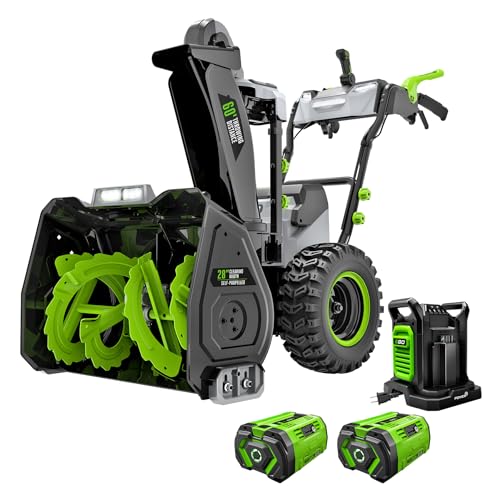
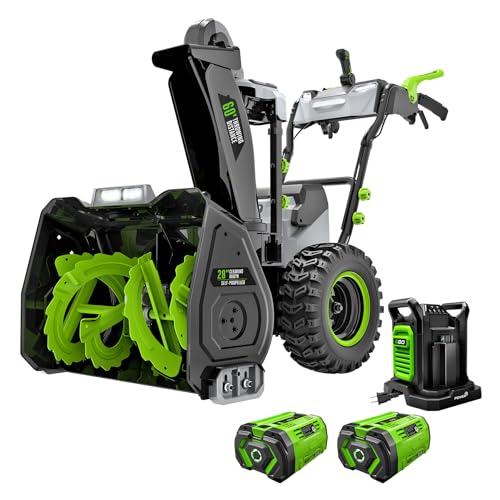
Treat the EGO Power+ Cordless Snow Blower as a mid-range, battery-powered prose-only recommendation for now: it is named here because the model family is a genuine, widely sold option in this class, and its listing will be checked against the Creators API before any buy link is added at publish time. Judge it the way this guide judges every machine — by how it fits your surface, your snowfall, and your storage — and check the current Amazon listing for the latest configuration and availability before you buy, since model line-ups change between seasons.
The EGO Power+ line is the reference point for cordless clearing: instant starts, quiet running, and a battery platform that extends across a whole garage of outdoor tools. For paved driveways in moderate-snow regions it delivers the easiest ownership experience in this review. Its honest limits are the platform limits — runtime in deep wet snow, and the need for a second set of packs on longer driveways — and buyers should size those packs to their property, not to optimism.
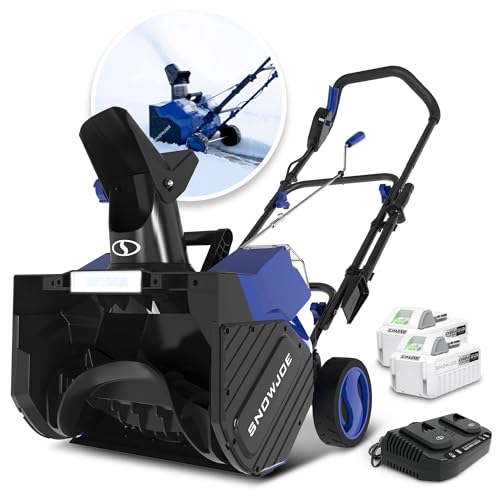
Snow Joe Cordless Snow Blower
Treat the Snow Joe Cordless Snow Blower as a entry-level, battery-powered prose-only recommendation for now: it is named here because the model family is a genuine, widely sold option in this class, and its listing will be checked against the Creators API before any buy link is added at publish time. Judge it the way this guide judges every machine — by how it fits your surface, your snowfall, and your storage — and check the current Amazon listing for the latest configuration and availability before you buy, since model line-ups change between seasons.
Snow Joe built its name making electric snow clearing accessible, and its cordless blowers suit smaller paved properties whose owners want to retire the shovel without adopting a gas engine. Expect a lighter, simpler machine aimed at ordinary storms rather than the ridge at the end of a long gravel lane, and judge it as that: an honest tool for modest work, at a modest tier.
Who Should Buy It and Who Should Skip It
Buy a snow blower if your driveway takes more than a few minutes to shovel, if your region’s storms regularly exceed what a shovel session handles comfortably, if anyone in the household has a back, heart, or schedule that argues against heavy shoveling, or if a commute depends on the driveway being open at a fixed hour. Buy the bigger two-stage class if you have gravel, slopes, deep snow, or a long lane. Skip it — for now — if your clearing is a few steps and a short walk in a mild climate, if you have genuinely nowhere dry to store a machine, or if winter travel means nobody is home to use it and a service would clear regardless. And before you buy anything, walk your property with the sizing questions in our companion guide how to choose a snow blower, step by step, and read the balanced case in the full snow blower pros and cons breakdown.
Matching machine size to property is the decision everything else hangs on. Start with the honest measurements: how long and wide is the driveway, is it paved or gravel, how steep is any slope, and how much walkway, patio, and deck comes with it. Then be honest about your snow: how much falls in a typical storm, how much falls in the worst storm you actually intend to handle yourself, and how wet it usually is. A compact machine on a small paved driveway clears quickly and stores easily; that same machine on a long gravel lane in lake-effect country will exhaust its owner and itself. Buy for your worst realistic storm, not your worst imaginable one, and remember that clearing twice during a big storm with a right-sized machine beats wrestling an oversized one out of a crowded garage.
The classic buying mistakes repeat every winter. The first is sizing for the average storm and being helpless in the big one, or sizing for the storm of the century and fighting an oversized machine out of a small garage all season. The second is ignoring surface: a single-stage auger on gravel is a stone-throwing machine, full stop. The third is forgetting storage and discovering in November that the new blower and the car do not actually fit together. The fourth is buying a battery platform you own nothing else on, when a rival platform already runs your mower and trimmer. The fifth is waiting for the first forecast: shelves empty fast, and the household that shops in autumn chooses, while the household that shops during a storm takes what is left.
Setup, Care and Maintenance Essentials
A snow blower asks for a short list of care in exchange for years of reliable starts. Before the season, check the auger and impeller for damage, inspect belts and shear pins, confirm the skid shoes and scraper bar are set correctly, and make sure you own spare shear pins, because they are designed to break to protect the gearbox and they always break mid-storm. Gas machines add oil changes, fresh fuel discipline, and an occasional spark plug; electric machines mostly ask that cords, batteries, and connections stay clean and dry. During the season, knock packed snow out of the housing after each use so it does not freeze into a block overnight, and never store the machine with wet snow still packed around the auger. Ten minutes of care after a storm is what separates a blower that starts on the first pull from one that does not.
Storage is the hidden cost of snow equipment, and it is worth planning before you buy. A two-stage gas blower needs a floor footprint roughly like a large lawn mower, plus room to maneuver it in and out without scraping the car. Single-stage and cordless machines are far more forgiving: many hang on wall hooks or stand in a corner, which is why they suit small garages, sheds, and townhouse storage closets. Off-season, clean the machine before you put it away, treat fuel or remove batteries according to the manual, and store batteries indoors at a moderate charge rather than in a freezing or sweltering garage. A machine that is easy to store is a machine that stays accessible, and accessibility is what gets a driveway cleared at six in the morning instead of argued about.
Fuel handling deserves the same respect as the auger. Refuel a gas blower only outdoors, only with the engine off and cool, and never anywhere near a pilot light, heater, or open flame. Use a proper approved fuel container, wipe up spills before starting, and change out of fuel-splashed clothing rather than working in it. Buy fuel in quantities you will actually use within the season, add stabilizer when the label calls for it, and store the container in a cool, ventilated spot away from living spaces and ignition sources. At the end of the season, follow the manual: either run the carburetor dry or store the machine with stabilized fuel, so spring does not begin with a no-start and a repair bill.
Electric models trade fuel hazards for cord hazards, and the rules are simple but strict. Use only an extension cord rated for outdoor use and sized for the load the blower draws, inspect it for cuts or cracked insulation before every storm, and retire it if the jacket is damaged. Plan your clearing pattern so the cord trails behind you and stays clear of the auger path at all times; a cord that drifts in front of the machine can be pulled in and severed in a second. Keep connections dry and off the snow where practical, plug into a ground-fault protected outlet, and never use a cordless or corded electric blower in standing water or freezing rain. When the session ends, coil the cord loosely and store it indoors so the insulation stays flexible for the next storm.
Final Verdict
The snow blower is one of the few household machines whose value you can feel in your shoulders after a single storm. Matched honestly to your property — paved or gravel, modest or deep snow, short or long driveway — it converts winter’s worst chore into a routine, and the modern electric options have made that routine quieter and simpler than it has ever been. The conditions are respect and fit: respect the auger lockout, the carbon monoxide rule, and the chute, and fit the machine to your worst realistic storm rather than your average one. Do those two things and the verdict of this snow blower review is straightforward: buy once, buy right, and stop dreading the forecast. For the wider category picture, continue with our snow blower buying guide and the ownership question in is a snow blower worth it.
Power Sources, Judged in Use
Gasoline power remains the reference point for raw clearing ability. A gas blower refuels in minutes, runs as long as you keep feeding it, and shrugs off the wettest, heaviest snow that stalls lesser machines. That freedom comes with obligations: fresh fuel, fuel stabilizer for storage, oil changes, a spark plug now and then, and a pull cord or electric starter that must be kept in working order. Gas engines are loud, they produce exhaust, and they absolutely must never be run inside an enclosed garage, because carbon monoxide builds up invisibly and can be lethal. Owners who accept the maintenance rhythm get a machine that is ready for the worst storm of the decade, not just the average one.
Cordless battery blowers have changed what a lot of households expect from snow clearing. They start instantly with a button, run quietly enough for early-morning clearing without waking the street, need no fuel, no oil, and almost no seasonal maintenance, and they store without any fuel smell in the garage. The honest limits are runtime and deep-snow stamina: a battery holds a finite amount of energy, heavy wet snow drains it quickly, and very long driveways may need a second set of batteries to finish in one session. Battery platforms soften that limit, because the same packs often power a leaf blower, a trimmer, or a mower the rest of the year. For small to mid-sized paved driveways in regions with moderate snowfall, a cordless blower is frequently the easiest machine to live with.
Corded electric blowers are the simplest and lightest option of all. With no fuel to store and no battery to charge, they are ready whenever the snow is, and they cost the least to buy and maintain. The cord is the compromise: it limits your range to the length of an outdoor-rated extension cord, it must be managed constantly so it stays clear of the auger path, and it can stiffen in deep cold. Corded models also sit at the modest end of the power range, so they suit short driveways, walkways, decks, and patios rather than long rural lanes. Households that clear small paved areas close to an outdoor outlet often find a corded machine is all the snow blower they will ever need.
Living With the Machine
A snow blower changes the household’s whole winter routine, not just its driveway. Storms get planned for the way rain gets planned for: the forecast is checked the night before, fuel or batteries are confirmed, the car is parked where clearing is easiest, and the morning alarm accounts for a short, known routine instead of an unknown ordeal. Deliveries reach the door, the dog gets its path, the bins reach the curb, and the walkway a visitor uses is as clear as the drive. Households underestimate this compounding effect when they shop, because it does not appear on any feature list, yet it is the benefit owners describe most warmly by their second winter: winter stopped being an ambush and became a schedule.
Longevity in this category is less about the badge and more about the pattern of care, which is good news for buyers: the machine’s lifespan is largely in your hands. Housings rust where paint chips go untended and where wet snow is left packed against steel. Engines suffer from old fuel far more than from hard work. Batteries age fastest when stored empty, frozen, or baking. The owners who report decades of service share unglamorous habits: a dry storage spot, an end-of-season cleaning, fresh fuel or sane battery storage, and small problems fixed in October rather than discovered in January. Choose any reputable machine, keep those habits, and the question stops being how long it will last and becomes how long you will live with snow.
Under the Surface: The Snow Blower Details That Decide Long-Term Satisfaction
Listings present a snow blower at its best, so this section slows the assessment down and looks at the evidence an individual model offers: its construction, its finish, its listing detail and the checks you can run before and just after it arrives. The aim is a verdict based on inspection rather than impression.
Start With Your Space and Your Routine
Take a break between shortlisting and ordering if you can, and return to the listings with fresh eyes, because fatigue makes almost any snow blower look acceptable late in a long search. Look for the detail photographs in the listing, not just the wide shots, and zoom in on edges, joints, fasteners, controls and finishes, which is where build quality usually shows itself first. Keep the care routine simple enough to repeat: a snow blower that needs ten minutes of attention weekly will usually get it, while one that needs an hour monthly often gets none. The best snow blower for a rented home may differ from the best for an owned one, because fixings, marks and alterations carry different consequences in each case.
When you examine a snow blower in detail, work from the largest element to the smallest, checking overall proportions first, then construction, then finish, and only then the small features sellers emphasise. Ask how the snow blower will be cleaned on an ordinary week, with the products and time you actually have, not with a special routine you are unlikely to keep up. Apply the same checks to each shortlisted example, whether that is the Ariens Deluxe Two-Stage Snow Blower; the EGO Power+ Cordless Snow Blower; the Toro Power Max Two-Stage Snow Blower, because consistent testing is what makes the differences between models visible. A good test is the two-week question: imagine the snow blower after a fortnight of ordinary use, with no special effort from you, and ask whether you would still choose it.
Consider the busiest version of the day, not the calmest one, and ask whether the snow blower still works when people are hurrying, carrying things or sharing the same space. If you shop with someone else, agree the must-haves together before looking, so that the snow blower you choose is a shared decision rather than one person’s compromise discovered later. Finally, judge the snow blower against the life you actually lead this year, not the tidier or more ambitious life in the listing photographs, and the choice will usually make itself. Where the snow blower has a surface you will set things on, lean on, or load, consider the heaviest realistic load in your household rather than the lightest display load in the photos.
When Small Problems Appear
Households with children or pets put different demands on a snow blower than the listing photographs suggest, so judge edges, stability and cleanability against your real household, not a styled one. A single snow blower can be well made and still wrong for your home, so keep two verdicts separate as you assess it: the quality verdict and the fit-for-your-life verdict. A return is easiest when you have kept the packaging until you are sure, so give the snow blower a fair trial period in its real position before you break down boxes and dispose of padding. Small problems are easiest to solve in order: check position first, then adjustment, then cleaning, and only then conclude that the snow blower itself is at fault.
Where the snow blower has moving parts, work them through their full range during your first checks, listening and feeling for roughness that a photograph cannot show. Start by writing down the job the snow blower has to do in your home, in one plain sentence, before you look at another listing, because a clear job statement turns a long shortlist into a short one. Compare how each option handles the in-between moments, such as being half full, partly open, moved aside or used in a hurry, because daily life happens mostly in those moments. If the snow blower needs assembly, read the instruction preview if one is offered, count the steps honestly against the time you have, and check whether a second pair of hands is recommended.
Measure the space where the snow blower will live, including the clearance needed to use it, move around it and clean behind or beneath it, and keep those numbers beside you while you compare options.
A Short Decision Checklist
- How the snow blower will be cleaned in an ordinary week
- What your current arrangement does well that the snow blower must not lose
- Assembly needs, tools required and whether help is needed
- What your current arrangement does badly that the snow blower must fix
- Who will use the snow blower most, and any limits they have
- The material and finish, matched to light, moisture and wear in its spot
- The main job the snow blower must do, written in one sentence
- Where the snow blower and its accessories will be stored when not in use
Taken together, these checks take only a little time, yet they answer the questions that decide whether the snow blower suits your home, your household and your routine, and they do so before money changes hands rather than after.
Frequently Asked Questions
What is the difference between a single-stage and a two-stage snow blower?
A single-stage blower uses one ground-hugging auger to sweep snow into the chute, which suits paved surfaces and moderate snow and keeps the machine light and simple. A two-stage blower adds an impeller, metal auger teeth, and driven wheels, so it throws snow farther, handles gravel safely on skid shoes, and chews through deep snow and the plow ridge. Choose by surface and snowfall first, power source second.
Are cordless snow blowers strong enough for real winters?
For paved driveways and moderate snowfall, yes — modern cordless blowers clear ordinary storms confidently and start instantly in the cold. Their limit is energy: deep, wet snow drains a pack quickly, and long driveways may need a second set of batteries. Households in deep-snow regions with long or gravel driveways still get more certainty from a two-stage gas machine, which refuels in minutes and never runs out of runtime.
What is the most important snow blower safety rule?
The auger lockout. Before clearing any clog, turn the engine or motor fully off, remove the key or disconnect the power, and wait until all moving parts stop. Never put your hands in the chute or auger housing for any reason; use the clearing tool the machine ships with. A clogged impeller can hold stored tension and spin after shutdown, which is why this single habit prevents the most serious injuries in snow clearing.
Can I run a gas snow blower in my garage with the door open?
No. Never run a gas blower in an enclosed garage, even with the door partly open, because carbon monoxide collects invisibly and can be lethal. Start the machine outside in open air, shut it off before stepping back inside, and keep exhaust pointed away from doors, windows, and vents while you work near the house. Working carbon monoxide detectors on each level of the home are part of safe gas ownership.
When is the best time to buy a snow blower?
Autumn, before the first forecast empties the shelves. Shopping early means you choose by fit — surface, snowfall, storage — rather than taking whatever remains during a storm. It also gives you time to assemble the machine calmly, set skid shoes and scraper height for your surface, stock spare shear pins and a clearing tool, and practice the controls on a dry day instead of during the first real snowfall.
How long should a snow blower last?
A well-kept machine should serve for many winters; the difference between a long life and a short one is almost entirely care. Fresh fuel discipline and oil changes for gas models, dry storage and sane battery habits for electric ones, spare shear pins on hand, and ten minutes spent knocking packed snow out of the housing after each storm matter more than brand. Machines die from neglected summers far more often than from hard winters.
Related Guides
Keep reading with these companion guides from this site: how to use a snow blower safely, step by step; snow blower vs electric snow shovel, compared; best leaf blower vacuums for the rest of the yard year; entryway rugs that catch snow at the door; indoor rugs that survive snowy boots.