Disclosure: As an Amazon Associate, dailyhomedecorating.com earns from qualifying purchases. Links on this page are affiliate links; they cost you nothing extra. Prices and availability change often, so check the current Amazon listing before you buy.
A snow blower buying guide should do one job: turn a confusing wall of machines into a short list that fits your driveway, your snowfall, and your garage. This snow blower buying guide is built in that order — types first, then the questions that actually decide the purchase, then the picks, then the ownership details that listings never mention. You will not find price ladders or spec-sheet contests here. You will find a way to measure your property honestly, match it to a class of machine, and avoid the five mistakes that send buyers back to the store every winter. Start with the types, answer each question in writing if you have to, and the right machine will identify itself.
Key Takeaways
- Surface decides the class: ground-hugging single-stage for pavement, two-stage on skid shoes for gravel and deep snow.
- Power source decides the lifestyle: gas for runtime, battery for quiet convenience, corded for simple small areas.
- Size for your worst realistic storm, and confirm the machine fits your storage before you fall for it.
- Chute control, steering help, and a clearing tool matter more in February than headline power does in the showroom.
- Safety gear and habits — auger lockout, carbon monoxide awareness, eye protection — are part of the purchase.
In this guide
What a Snow Blower Does and the Main Types
A snow blower is not one machine but a family of machines, and the differences between them decide whether a storm feels like a short chore or a long fight. Single-stage models use a rubber-edged auger that sweeps the pavement clean as it pulls snow into the chute, which makes them light, simple, and well suited to paved driveways and moderate snowfalls. Two-stage models add an impeller behind the auger and metal auger teeth that bite into packed snow, plus driven wheels that push the machine so you do not have to. Three-stage designs add an accelerator that processes snow even faster, aimed at deep drifts and the dense ridge a plow leaves at the end of a driveway. Around those three families sit the power choices: gasoline engines, corded electric motors, and cordless battery platforms, each with its own trade-offs in runtime, maintenance, and effort.
Single-Stage Blowers
Single-stage blowers earn their popularity honestly. The auger touches the ground, so a paved surface comes out nearly bare in one pass, and the machine stays compact enough to hang on a garage wall or tuck beside a car. Because there is no separate impeller, there are fewer parts to service, and starting is usually a matter of plugging in, pressing a button, or pulling a cord a time or two. The limits show up in heavy, wet snow and on gravel, where a ground-hugging auger can pick up stones and throw them, and where deep accumulation forces you to take partial bites and make extra passes. For households whose storms are usually modest and whose surfaces are paved, a single-stage machine is often the sweet spot between capability and simplicity.
Two-Stage and Three-Stage Blowers
Two-stage blowers are the workhorses of snow country. The auger does not touch the ground; instead it chews snow and feeds it to a high-speed impeller that throws it clear of the driveway, and adjustable skid shoes let the machine ride safely over gravel and uneven surfaces. Driven wheels, often with several forward speeds and a reverse gear, mean the machine does the pushing, which matters enormously when you are clearing a long driveway in deep snow. Power steering, heated grips, headlights, and chute controls you can adjust from the operator position all appear in this class. The cost of that capability is size and weight: a two-stage blower needs real storage space, asks for more maintenance, and is more machine than a small townhouse driveway will ever need.
Gas, Corded, and Cordless Power
Gasoline power remains the reference point for raw clearing ability. A gas blower refuels in minutes, runs as long as you keep feeding it, and shrugs off the wettest, heaviest snow that stalls lesser machines. That freedom comes with obligations: fresh fuel, fuel stabilizer for storage, oil changes, a spark plug now and then, and a pull cord or electric starter that must be kept in working order. Gas engines are loud, they produce exhaust, and they absolutely must never be run inside an enclosed garage, because carbon monoxide builds up invisibly and can be lethal. Owners who accept the maintenance rhythm get a machine that is ready for the worst storm of the decade, not just the average one.
Cordless battery blowers have changed what a lot of households expect from snow clearing. They start instantly with a button, run quietly enough for early-morning clearing without waking the street, need no fuel, no oil, and almost no seasonal maintenance, and they store without any fuel smell in the garage. The honest limits are runtime and deep-snow stamina: a battery holds a finite amount of energy, heavy wet snow drains it quickly, and very long driveways may need a second set of batteries to finish in one session. Battery platforms soften that limit, because the same packs often power a leaf blower, a trimmer, or a mower the rest of the year. For small to mid-sized paved driveways in regions with moderate snowfall, a cordless blower is frequently the easiest machine to live with.
Corded electric blowers are the simplest and lightest option of all. With no fuel to store and no battery to charge, they are ready whenever the snow is, and they cost the least to buy and maintain. The cord is the compromise: it limits your range to the length of an outdoor-rated extension cord, it must be managed constantly so it stays clear of the auger path, and it can stiffen in deep cold. Corded models also sit at the modest end of the power range, so they suit short driveways, walkways, decks, and patios rather than long rural lanes. Households that clear small paved areas close to an outdoor outlet often find a corded machine is all the snow blower they will ever need.
Snow Blower Buying Guide: Top Picks at a Glance
These picks are presented as prose-only recommendations at qualitative tiers, with listings to be verified against the Creators API before any buy link is added at publish time. Read the badge as a household description, not a ranking: the best machine here is the one whose description sounds like your winter.
Ariens Deluxe Two-Stage Snow Blower
Treat the Ariens Deluxe Two-Stage Snow Blower as a premium tier — Best Overall for serious snow prose-only recommendation for now: it is named here because the model family is a genuine, widely sold option in this class, and its listing will be checked against the Creators API before any buy link is added at publish time. Judge it the way this guide judges every machine — by how it fits your surface, your snowfall, and your storage — and check the current Amazon listing for the latest configuration and availability before you buy, since model line-ups change between seasons.
Best for: deep-snow regions, long or gravel driveways, buyers purchasing once for the long term. Not suited for: small garages or light-snow climates where its capability would sit idle.
EGO Power+ Cordless Snow Blower
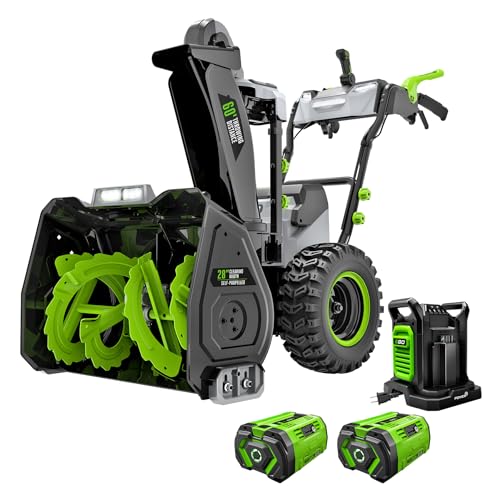
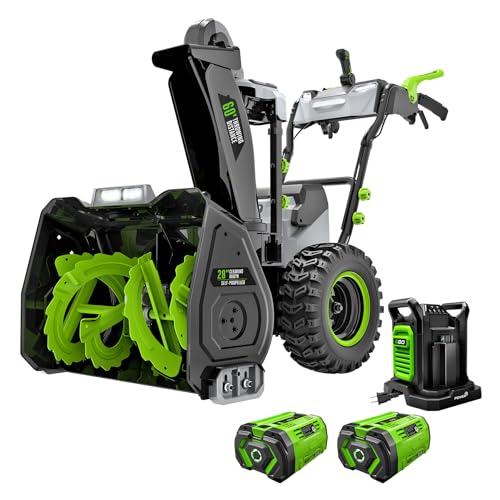
Treat the EGO Power+ Cordless Snow Blower as a mid tier — Best for most paved driveways prose-only recommendation for now: it is named here because the model family is a genuine, widely sold option in this class, and its listing will be checked against the Creators API before any buy link is added at publish time. Judge it the way this guide judges every machine — by how it fits your surface, your snowfall, and your storage — and check the current Amazon listing for the latest configuration and availability before you buy, since model line-ups change between seasons.
Best for: suburban paved driveways, moderate snowfall, early starts, and households already using the battery platform. Not suited for: very long driveways on a single set of packs, or daily battles with a frozen plow ridge.
Toro Power Max Two-Stage Snow Blower
Treat the Toro Power Max Two-Stage Snow Blower as a premium tier — Best for wet snow and the plow ridge prose-only recommendation for now: it is named here because the model family is a genuine, widely sold option in this class, and its listing will be checked against the Creators API before any buy link is added at publish time. Judge it the way this guide judges every machine — by how it fits your surface, your snowfall, and your storage — and check the current Amazon listing for the latest configuration and availability before you buy, since model line-ups change between seasons.
Best for: wet, heavy snow regions and households whose end-of-driveway ridge is a genuine opponent. Not suited for: buyers who want the lightest or quietest machine in the class.
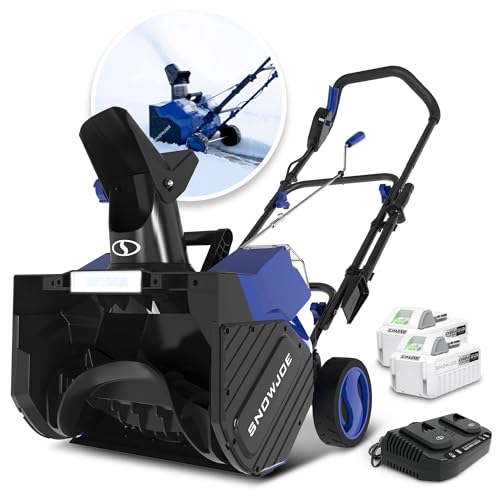
Snow Joe Cordless Snow Blower
Treat the Snow Joe Cordless Snow Blower as a entry tier — Best for small properties prose-only recommendation for now: it is named here because the model family is a genuine, widely sold option in this class, and its listing will be checked against the Creators API before any buy link is added at publish time. Judge it the way this guide judges every machine — by how it fits your surface, your snowfall, and your storage — and check the current Amazon listing for the latest configuration and availability before you buy, since model line-ups change between seasons.
Best for: townhouses, short paved driveways, and first-time buyers retiring the shovel on a budget tier. Not suited for: gravel, slopes with deep snow, or storms that routinely bury a car.
Greenworks Cordless Snow Blower
Treat the Greenworks Cordless Snow Blower as a mid tier — Best platform alternative prose-only recommendation for now: it is named here because the model family is a genuine, widely sold option in this class, and its listing will be checked against the Creators API before any buy link is added at publish time. Judge it the way this guide judges every machine — by how it fits your surface, your snowfall, and your storage — and check the current Amazon listing for the latest configuration and availability before you buy, since model line-ups change between seasons.
Best for: households already invested in Greenworks batteries who want snow clearing on the same packs. Not suited for: buyers expecting two-stage gas stamina from a cordless single-stage design.
How Much Clearing Capacity Do You Need?
Matching machine size to property is the decision everything else hangs on. Start with the honest measurements: how long and wide is the driveway, is it paved or gravel, how steep is any slope, and how much walkway, patio, and deck comes with it. Then be honest about your snow: how much falls in a typical storm, how much falls in the worst storm you actually intend to handle yourself, and how wet it usually is. A compact machine on a small paved driveway clears quickly and stores easily; that same machine on a long gravel lane in lake-effect country will exhaust its owner and itself. Buy for your worst realistic storm, not your worst imaginable one, and remember that clearing twice during a big storm with a right-sized machine beats wrestling an oversized one out of a crowded garage.
Capacity is really three questions wearing one coat. How much area, answered by walking your driveway and counting car lengths honestly. How much snow, answered by your region’s typical storm and your biggest plausible one, not the record-breaker everyone still talks about. And how fast, answered by your mornings: a household that must be out by a fixed hour needs more margin than one that can clear at leisure after the storm. Write the three answers down. They eliminate most of the catalogue immediately, and they protect you from the two classic errors — the charming compact machine that cannot finish your driveway, and the magnificent flagship that cannot fit through your garage door.
Which Power Source Fits Your Life?
Regional snow character should steer the purchase as much as driveway size. Lake-effect and mountain regions get deep, frequent storms where two-stage capacity and fuel runtime pay for themselves by mid-winter. Coastal and mid-Atlantic snow tends to arrive wet and heavy near the freezing point, which favors torque, anti-clog chute design, and taking narrower passes over headline clearing width. The upper Midwest and plains add brutal cold, where battery performance dips, cords stiffen, and a reliable gas start or a well-kept battery stored indoors matters. Mild-snow regions — a handful of modest storms a year — are where compact electric machines and even the humble shovel stay competitive, because the machine spends most of its life in storage and should be chosen for how little it asks during those months.
Noise shapes when you can clear and how your neighbors feel about it. Gas blowers are the loudest tools in the winter garage, loud enough that hearing protection is a sensible habit and early-morning clearing is a genuine social decision. Electric models, corded and cordless alike, run dramatically quieter, which makes dawn clearing before a commute far more reasonable and removes one excuse for letting snow get packed down by tires. Quieter operation also makes it easier to hear a child, a pet, or a passing car near the work area. If your schedule means clearing at hours when the street is asleep, or if your home sits close to your neighbors, the quieter machine is not a luxury choice; it is the difference between clearing when you should and clearing when you dare.
Choose power by lifestyle, not by ideology. Gas suits the owner who will genuinely keep a fuel and oil routine and who needs unlimited runtime in serious snow. Battery suits the owner who values instant starts, quiet mornings, and a garage with no fuel in it, and who will store packs indoors and size them honestly. Corded suits the small property near an outlet whose owner wants the simplest machine that exists. Each choice is respectable; each fails when it is forced onto the wrong household. The test is a single question: on the worst morning of your winter, will this power source be ready, and will you be glad you chose it?
Paved, Gravel, or Sloped: Does the Machine Match Your Surface?
Surface type quietly eliminates whole categories of machines. Paved asphalt and concrete accept anything, including the ground-hugging auger of a single-stage blower, which leaves them nearly bare. Gravel and crushed stone demand a two-stage machine whose auger rides above the surface on skid shoes, set high enough to leave a thin layer of snow rather than launching stones through the chute. Steep slopes reward driven wheels, aggressive tire tread or tracks, and a machine balanced enough to work across the grade without sliding. Wooden decks want a light machine with a non-marring edge, and steps want no machine at all beyond a compact electric shovel. Walking your own surfaces with these rules in mind will narrow the field faster than any advertisement.
Throwing distance sounds like a spec-sheet contest, but what matters in a real driveway is control, not maximum range. You need enough throw to clear the full width of your driveway from a sensible number of passes, and enough chute control to place snow precisely: low and close when the wind is up or the neighbor’s walk is near, high and far when you are building the season’s bank along open ground. A chute you can rotate and tilt quickly from the operator position, without stopping and walking around the machine, is worth more than a few extra feet of theoretical distance. Deflector control also protects windows and cars, because the safest throw is the one aimed exactly where you intended, every single pass.
How Much Machine Can You Store and Handle?
Storage is the hidden cost of snow equipment, and it is worth planning before you buy. A two-stage gas blower needs a floor footprint roughly like a large lawn mower, plus room to maneuver it in and out without scraping the car. Single-stage and cordless machines are far more forgiving: many hang on wall hooks or stand in a corner, which is why they suit small garages, sheds, and townhouse storage closets. Off-season, clean the machine before you put it away, treat fuel or remove batteries according to the manual, and store batteries indoors at a moderate charge rather than in a freezing or sweltering garage. A machine that is easy to store is a machine that stays accessible, and accessibility is what gets a driveway cleared at six in the morning instead of argued about.
You will walk behind this machine for every storm, for years, so how it treats your body matters as much as how it treats snow. Adjustable handle height keeps your back neutral instead of hunched. Power steering or easy-turn systems matter more with every pound of machine weight, especially at the end of each pass where you pivot and start again. Heated grips sound like a luxury until your third pass in a biting wind. Weight distribution matters on slopes, and a machine that pulls itself forward with driven wheels turns a workout into a walk. If you can, push the machine around a showroom floor, work its chute control through a full swing, and check that every lever falls naturally under gloved hands, because you will operate all of it with gloves on, in the dark, in falling snow.
How to Prioritise by Use Case
The commuter. Your non-negotiables are a first-try start, lighting for dark mornings, and enough capacity to clear the car’s path and the walkway in one calm session. Battery and well-kept gas both qualify; quiet operation is worth real money to you because your clearing hour is your street’s sleeping hour.
The long-driveway rural household. Runtime and ridge ability dominate everything. A two-stage gas machine, spare shear pins in the drawer, fuel stored properly, and a clearing pattern planned around where a season of snow will pile. Smaller machines are not savings here; they are delays measured in storms.
The townhouse and small-lot owner. Storage and simplicity dominate. A compact cordless or corded single-stage, hung on a wall or stood in a corner, clears your world completely. Spend remaining budget on boots, a clearing tool, and entryway matting for the melt you will track inside.
The older homeowner or anyone protecting a back. Driven wheels, steering assistance, and a machine that pulls itself are the purchase; the blower is bought precisely so that lifting and pushing disappear from your winter. Electric start, heated grips, and controls that work under gloves are not luxuries for you — they are the product.
First Setup and Care Essentials
A snow blower asks for a short list of care in exchange for years of reliable starts. Before the season, check the auger and impeller for damage, inspect belts and shear pins, confirm the skid shoes and scraper bar are set correctly, and make sure you own spare shear pins, because they are designed to break to protect the gearbox and they always break mid-storm. Gas machines add oil changes, fresh fuel discipline, and an occasional spark plug; electric machines mostly ask that cords, batteries, and connections stay clean and dry. During the season, knock packed snow out of the housing after each use so it does not freeze into a block overnight, and never store the machine with wet snow still packed around the auger. Ten minutes of care after a storm is what separates a blower that starts on the first pull from one that does not.
Good snow clearing starts before the blower does. Mark the edges of the driveway and any obstacles — curb lines, sprinkler heads, landscape stones, the low wall by the garden — with tall stakes while the ground is still visible, because fresh snow hides every boundary. Move cars out of the clearing zone or plan your passes around them, and decide in advance where the snow will go: piling it all at the driveway entrance creates a wall you will fight at the next storm. Check that the machine has fuel or charged batteries, that the clearing tool is clipped in place, and that you are dressed for the work, with boots that grip, gloves that let you feel the controls, and eye protection if the wind is throwing snow back at you.
First setup deserves an unhurried hour. Assemble per the manual, set skid shoes for your surface — skimming pavement or riding above gravel — confirm the scraper bar clearance, work every control through its range, and start the machine on a dry day. Stock the unglamorous kit now: spare shear pins, the clearing tool clipped in place, eye protection, fuel stabilizer or a battery charging spot indoors, and a marker-stake set for the driveway edges. Then read the safety sections of the manual as if they were the feature list, because in this product category they are.
Mistakes to Avoid
The classic buying mistakes repeat every winter. The first is sizing for the average storm and being helpless in the big one, or sizing for the storm of the century and fighting an oversized machine out of a small garage all season. The second is ignoring surface: a single-stage auger on gravel is a stone-throwing machine, full stop. The third is forgetting storage and discovering in November that the new blower and the car do not actually fit together. The fourth is buying a battery platform you own nothing else on, when a rival platform already runs your mower and trimmer. The fifth is waiting for the first forecast: shelves empty fast, and the household that shops in autumn chooses, while the household that shops during a storm takes what is left.
The single most important safety rule in this entire guide is the auger lockout: before clearing any clog, turn the engine or motor fully off, remove the key or disconnect the power source, and wait until every moving part has stopped completely. Never put your hands in the discharge chute or the auger housing, for any reason, at any time — a clogged impeller can hold stored tension and spin without warning even after shutdown, which is exactly how the most serious snow blower injuries happen. Every reputable machine ships with a clearing tool for a reason; keep it clipped to the machine and use it, with gloves on, for every blockage. If a clog will not clear with the tool, that is a job for a service shop, not for your fingers.
Carbon monoxide is the quiet hazard of gas-powered snow clearing. Never run a gas snow blower inside an enclosed garage, shed, or any space where exhaust can collect, even with the door partly open, and never warm the engine up indoors before heading out. Start the machine outside, in the open air, and if you need to pause and step into the garage, shut the engine off first. Keep the exhaust pointed away from doors, windows, and vents while you work near the house, and make sure your home has working carbon monoxide detectors on each level. Headache, dizziness, or nausea during or after clearing snow is a warning sign to take seriously: get into fresh air and seek help rather than pushing through the last few passes.
One more mistake deserves its own line because it is a buying mistake with safety consequences: choosing a machine without a proper clearing tool, or planning to clear clogs by hand because the tool seems fiddly. The tool is part of the machine’s safety system, as much as the auger lockout habit — engine or motor fully off, key removed, everything stopped — that must accompany its use. If a listing or a seller treats clog clearing casually, walk away from that machine and that seller, and put your money with a maker that takes the auger as seriously as this guide does. Round out your research with the snow blower pros and cons weighed honestly and how to choose a snow blower, step by step.
Final Word
A snow blower is a decade-long relationship with a machine that works a dozen mornings a year and must never fail on the hardest of them. This snow blower buying guide reduces that relationship to fit: class by surface, power by lifestyle, size by your worst realistic storm, storage by your actual garage. Answer those four honestly and the catalogue narrows to a handful of machines, any of which will serve you well. Then buy in autumn, set the machine up on a dry day, learn the safety habits until they are reflexes, and let winter do its worst — you will be ready before the plow comes down your street.
The Ownership Questions Listings Never Ask
Ownership runs smoother where service lives nearby, and that geography deserves a place in any serious assessment. Belts, shear pins, skid shoes, and cables are wear items any competent small-engine or outdoor-equipment shop can supply for major brands, while obscure machines can wait weeks for a part in the middle of the season — the worst possible weeks to wait. Before buying, find the nearest dealer or service point for the brand you favor, confirm they stock its common parts, and ask what their January turnaround looks like. A slightly less exciting machine with a good shop ten minutes away will out-serve a marvelous one supported from another time zone, every single winter you own it.
Longevity in this category is less about the badge and more about the pattern of care, which is good news for buyers: the machine’s lifespan is largely in your hands. Housings rust where paint chips go untended and where wet snow is left packed against steel. Engines suffer from old fuel far more than from hard work. Batteries age fastest when stored empty, frozen, or baking. The owners who report decades of service share unglamorous habits: a dry storage spot, an end-of-season cleaning, fresh fuel or sane battery storage, and small problems fixed in October rather than discovered in January. Choose any reputable machine, keep those habits, and the question stops being how long it will last and becomes how long you will live with snow.
Every new owner has a first-storm learning curve, and planning for it is part of using the machine well. The first session teaches what no manual can: where your driveway’s low spots hold slush, which direction the wind actually blows across your lot rather than the forecast’s, how the plow ridge on your street is built, and exactly how wide a bite your machine likes in your typical snow. Smart owners treat the season’s first light snowfall as a rehearsal — full routine, low stakes — and save their ambitions for later storms. By the third session the routine is muscle memory: lanes, chute, ridge, details, shutdown, in an order that feels less like operating equipment and more like a walk you happen to take with a machine.
A snow blower changes the household’s whole winter routine, not just its driveway. Storms get planned for the way rain gets planned for: the forecast is checked the night before, fuel or batteries are confirmed, the car is parked where clearing is easiest, and the morning alarm accounts for a short, known routine instead of an unknown ordeal. Deliveries reach the door, the dog gets its path, the bins reach the curb, and the walkway a visitor uses is as clear as the drive. Households underestimate this compounding effect when they shop, because it does not appear on any feature list, yet it is the benefit owners describe most warmly by their second winter: winter stopped being an ambush and became a schedule.
The accessories that matter are the unglamorous ones. A fitted cover keeps a stored machine clean in a working garage. A drift cutter helps in regions where snow piles higher than the housing along driveway edges. Tire chains or upgraded tread answer specific slope problems on specific properties. A spare drive belt, kept with the shear pins, turns a mid-season failure into an evening’s repair instead of a service queue. What does not matter much: cosmetic extras and novelty attachments that add weight, cost, and storage bulk without touching the core job. Spend on the items that keep the machine clearing — pins, belts, covers, traction — and let the rest wait until a real storm proves you need it.
Clearing is only half of winter surface management; the melt is the other half. Snow thrown against the house melts toward the foundation, snow piled at the top of a slope melts across the driveway and refreezes as sheet ice by morning, and banks left at the street edge channel meltwater into exactly the ruts tires follow. Aim your season’s piles at ground that drains away from pavement and foundation, keep the driveway’s downhill edge open so melt escapes, and after a sunny day, check for the thin ice film that forms where melt crossed a walk — that film, not the storm, is what slips visitors. A blower’s precise chute makes this management possible; where the snow goes is a decision you make with every pass.
Two More Ways to Get the Decision Wrong
An electric snow shovel is best understood as a powered hand tool rather than a small snow blower. It uses a spinning paddle or auger in a narrow head to scoop and toss snow forward or to the side, and you supply the pushing, the lifting, and the steering, much as you would with a manual shovel. That design keeps it light, inexpensive, and easy to store on a hook, and it shines on steps, decks, patios, short walkways, and the narrow strip between parked cars. Its limits are reach and depth: the head is narrow, the throw is short, and deep or heavy snow turns the work back into labor, pass after shallow pass. It is a specialist, and judged as a specialist it is a very good one.
The honest baseline for every snow blower decision is the shovel already in your garage. Shoveling costs nothing to buy, nothing to maintain, and nothing to store, and for a short walkway in a light-snow climate it remains a perfectly rational choice. Its costs are paid in time and in your back: a moderate driveway in a moderate storm is a long, heavy session, wet snow is genuinely strenuous, and the heart-attack statistics around snow shoveling are not a myth. A blower converts that labor into a walk, clears a wider path in a fraction of the time, and throws snow clear instead of asking you to lift it onto an ever-taller bank. The households that benefit most are the ones with longer driveways, heavier snow, older backs, or mornings that start with a commute deadline.
A snow blower quietly changes your standing on the street. The household that can clear its own ridge can also, in ten spare minutes, clear the ridge of the elderly neighbor whose plow service came at dawn, or open the driveway of the family that just brought a baby home. These small rescues are the currency of winter neighborhoods, and owners consistently report them among the machine’s unlisted benefits: favors given are favors banked, and the street where two or three households own capable machines is a street where nobody is ever truly snowed in. None of this appears in a buying guide’s tables, but it belongs in an honest accounting of what the machine is for.
Big storms reward a staged approach that smaller machines and wise owners share. The first stage, during the storm, is a quick pass that keeps the driveway passable and prevents depth from compounding; it does not need to be pretty. The second stage, when the snow stops, is the full clear: lanes, edges, walkways, and details. The third stage waits for the municipal plow’s final pass and deals with the ridge it leaves, fresh rather than frozen. Staging converts one overwhelming job into three ordinary ones, keeps batteries and fuel ahead of demand, and means the household is never more than one short session from an open driveway at any point in the storm. It is the single most useful habit a new owner can adopt.
Before You Order: A Practical Fit and Listing Check for the Snow Blower
Most of the groundwork for choosing a snow blower is covered above, so this section turns to the stage where orders are actually placed: verifying fit, reading listings critically and checking the practical details that photographs tend to hide. Work through it with your measurements and your shortlist in front of you.
Start With Your Space and Your Routine
Beware of choosing a snow blower for a rare occasion, such as a large gathering once a year, if that choice makes everyday use worse for the other fifty-one weeks. Households with children or pets put different demands on a snow blower than the listing photographs suggest, so judge edges, stability and cleanability against your real household, not a styled one. Write down the three tasks you will do most often with the snow blower and score each shortlisted option against those tasks alone, ignoring features you are unlikely to touch. Consider the busiest version of the day, not the calmest one, and ask whether the snow blower still works when people are hurrying, carrying things or sharing the same space.
In a buying guide the order of decisions matters, so settle size and placement for the snow blower first, materials and build second, and style last, when the practical questions can no longer be changed by a prettier photograph. When something about the snow blower starts to annoy you, note whether the cause is the product itself, its position, or the way it is being used, since each cause has a different and usually cheaper fix. Apply the same checks to each shortlisted example, whether that is the Toro Power Max Two-Stage Snow Blower; the Greenworks Cordless Snow Blower; the Snow Joe Cordless Snow Blower, because consistent testing is what makes the differences between models visible. Keep a short note of the questions each listing leaves unanswered, and treat a seller who answers them clearly as a better prospect than one who repeats general claims.
Do not let a single impressive feature distract you from a basic mismatch in size, capacity or care needs, since basics decide satisfaction long after features stop being novel. Decide in advance which single feature you would refuse to compromise on, and let that one priority settle ties between otherwise similar snow blower choices. Read the listing for what it does not say as carefully as for what it does, because missing information about materials, assembly or care is itself a useful signal when you compare snow blower options. Start by writing down the job the snow blower has to do in your home, in one plain sentence, before you look at another listing, because a clear job statement turns a long shortlist into a short one.
When Small Problems Appear
Recheck any adjustable part of the snow blower after the first week of use, once materials have settled and the household has stopped being careful with it. When specifications are given for the snow blower, compare like with like across listings, since sellers measure and describe the same things differently and headline numbers are rarely the whole story. Take a photograph of the space before you order and mark the intended position of the snow blower on it, then revisit that photo whenever a listing tempts you toward a larger or different style. Think about the end of the snow blower’s life with you as well, including whether it could move to another room, be passed on, or be stored without damage when your needs change.
A good test is the two-week question: imagine the snow blower after a fortnight of ordinary use, with no special effort from you, and ask whether you would still choose it. Keep the fittings, spare parts and instructions that come with the snow blower together in one labelled place, because the part you need in a year is always the one that was put somewhere safe. A return is easiest when you have kept the packaging until you are sure, so give the snow blower a fair trial period in its real position before you break down boxes and dispose of padding. If the snow blower needs assembly, read the instruction preview if one is offered, count the steps honestly against the time you have, and check whether a second pair of hands is recommended.
Seasonal checks suit most Seasonal & Holiday items well, so tie a quick inspection of the snow blower to a job you already do, such as changing clocks or clearing gutters. Build your shortlist in two passes: first remove every snow blower that fails a hard requirement such as size, capacity or placement, then compare what remains on quality and feel rather than on features alone.
A Short Decision Checklist
- The one feature you will not compromise on
- Who will use the snow blower most, and any limits they have
- Packaging kept until the snow blower has passed its first trial in place
- How the snow blower will be cleaned in an ordinary week
- Where the snow blower and its accessories will be stored when not in use
- What your current arrangement does well that the snow blower must not lose
- Delivery path, from the door to the final position
- What your current arrangement does badly that the snow blower must fix
Taken together, these checks take only a little time, yet they answer the questions that decide whether the snow blower suits your home, your household and your routine, and they do so before money changes hands rather than after.
Frequently Asked Questions
What size snow blower do I need for my driveway?
Size by area, surface, and snowfall together. A short paved driveway in a moderate-snow region is well served by a compact single-stage machine. A long, gravel, or sloped driveway, or a region with deep storms, calls for a two-stage machine with driven wheels. The common error is buying for the average storm; buy instead for the worst storm you genuinely intend to clear yourself, and let a service or a neighbor’s tractor own the once-a-decade event.
Is gas or battery better in a snow blower?
Neither is better in the abstract. Gas offers unlimited runtime, the strongest deep-snow stamina, and a maintenance routine you must actually keep. Battery offers instant starts, quiet operation, and almost no maintenance, with runtime limited by your packs. Paved suburban driveways in moderate snow usually live happiest on battery; long rural driveways in serious snow still belong to gas. Choose by your worst morning, not by the showroom.
Can a snow blower handle a gravel driveway?
Yes, but only the right kind. A two-stage blower rides on adjustable skid shoes that hold the auger above the stones, leaving a thin layer of snow instead of throwing gravel. A single-stage blower’s auger touches the ground by design and will pick up and throw stones, which is dangerous and damaging. Set the skid shoes deliberately for gravel, keep the chute pointed away from windows and cars, and expect to leave that thin layer as the price of a safe surface.
What should I check before the first storm of the season?
Start the machine on a dry autumn day. Check the auger and impeller for damage, inspect belts, set skid shoes and scraper clearance for your surface, and confirm the clearing tool is clipped in place. Stock spare shear pins, fresh fuel or charged batteries stored indoors, and eye protection. Walk the driveway and set marker stakes at edges and obstacles while the ground is still visible, and review the auger lockout rule with anyone who might run the machine.
How much maintenance does a snow blower need?
Less than owners fear, but more than zero. Gas machines need fresh fuel discipline, oil changes, and an occasional plug; battery machines need sane pack storage and clean connections; all machines need shear pins, skid shoe checks, and packed snow knocked out of the housing after each use. Ten minutes after each storm and one unhurried hour each autumn cover nearly all of it, and they are the difference between a first-pull start and a repair visit.
Should I buy a snow blower or hire a plow service?
Price both against your reality. A blower wins when you need the driveway open at your hour, when you also have walkways and paths a plow cannot do, and when someone at home is willing and able to walk behind the machine. A service wins when you travel in winter, when no one at home should be doing the work, or when the driveway is very long. Many households do both: a modest blower for walkways and timing, a service for the biggest storms.
Related Guides
Keep reading with these companion guides from this site: our featured snow blower review; is a snow blower worth it for your household; entryway rugs that catch snow at the door; indoor rugs that survive snowy boots; pool pillows for winter closing season.