Disclosure: As an Amazon Associate, dailyhomedecorating.com earns from qualifying purchases. Links on this page are affiliate links; they cost you nothing extra. Prices and availability change often, so check the current Amazon listing before you buy.
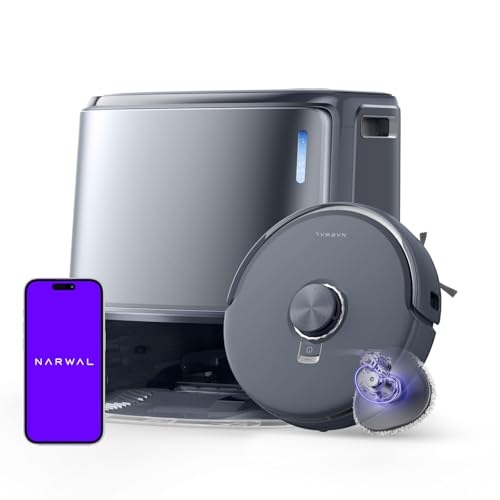
Search for a narwal freo z ultra review and you are really searching for a handover. The Freo Z Ultra was Narwal’s flagship statement — a robot vacuum and mop whose base station washed its own mops with hot water, dried them, and emptied its dust, built around twin-chip AI obstacle avoidance. When this page’s verification pass went looking for that exact machine, the Z Ultra itself did not come back as a buyable listing. What came back was its successor: the Freo Z10 Ultra, carrying the same brief forward with higher suction on paper and the same self-maintaining dock philosophy. So this review does the honest version of the job. The Z Ultra is assessed in prose, as the design that defined the brief. The machine linked and reviewed in depth is the Z10 Ultra — labelled throughout as the successor, never as the Z Ultra itself — alongside two same-family alternatives, the Freo X Ultra and the Freo Z10, for buyers whose floors or budgets sit a rung lower.
Quick verdict
If you came here wanting the Z Ultra’s promise — a floor robot that vacuums, mops, and then washes up after itself — the Z10 Ultra is where that promise currently lives, and the verified listing for it is a Renewed unit, which shapes the buying advice: inspect the listing’s condition notes and return terms with the care a renewed flagship deserves. Buyers who want the same dock-led, low-maintenance philosophy in a new-box alternative from the same family should weigh the Freo Z10, while the Freo X Ultra suits households whose priority is tangle-free pet-hair handling over maximum suction. The original Z Ultra, meanwhile, is best understood as the template: everything below is measured against the standard it set.
In this guide
Quick picks: the Freo family as verified
| Pick | Best for | Link |
|---|---|---|
| Narwal Freo Z10 Ultra (successor to the Z Ultra) | The flagship brief, current generation | Check price on Amazon |
| Narwal Freo X Ultra | Zero-tangle pet hair and a maintenance-free dock | Check price on Amazon |
| Narwal Freo Z10 | The Z formula at a lower rung | Check price on Amazon |
How these picks were chosen
Only listings the verification pass could fetch — robot, exact title, and image confirmed — earned links on this page, and the rule produced this article’s unusual shape. The Z Ultra’s own listing was not among them, so it is covered in prose and never linked. The Z10 Ultra’s verified listing is explicitly a Renewed one, and this review says so wherever the machine is recommended, because a renewed flagship and a new one are different purchases wearing the same name. The X Ultra’s verified listing is likewise a Renewed unit. The Z10 completes the family portrait as the step-down that keeps the self-emptying, mop-washing dock. Readers comparing across brands should set this family against the wider field in robot vacuums compared.
The Freo Z Ultra, in prose: the brief that defined a dock
Narwal built its name on a single insight: mopping robots failed in homes not because their mops were bad but because their mops were dirty. A robot that drags the same soiled pads around a house is redistributing the problem, so Narwal’s docks took over the laundry — returning the robot to base mid-clean, scrubbing the pads, and sending it out again with clean ones. The Z Ultra pushed that philosophy to flagship scale, adding powerful suction for the vacuum half of the job, hot-water washing and hot-air drying for the mop half, self-emptying for the dust half, and a twin-chip, dual-camera AI system intended to recognise and avoid the obstacles — cables, shoes, pet accidents — that embarrass lesser robots. It also carried Narwal’s signature tangle-resistant brush design, aimed squarely at homes where hair, human and animal, is a daily deposit.
As a template, the Z Ultra’s strengths and costs are both clear. The strength is labour: a household running one of these docks trades the weekly chores of rinsing pads, emptying bins, and detangling brushes for the monthly chores of refreshing water tanks and checking a dock. The cost is commitment — floorspace for a substantial base station, a consumables shelf of pads and filters and bags or bagless maintenance depending on model, and a purchase price in the flagship tier. The successor below inherits both sides of that ledger, which is why this review spends as long on dock life as on cleaning numbers.

Narwal Freo Z10 Ultra — the successor, reviewed as itself
Label first, because this page insists on it: the Freo Z10 Ultra is the successor to the Z Ultra, not the Z Ultra, and its verified listing is a Renewed unit in grey. On paper it advances the brief — its listing claims 18,000Pa of suction, dual RGB cameras with twin-chip AI avoidance, an 8N corner-to-edge deep-cleaning action, dry-wet separation in the dock, and hot-water mop washing with self-emptying. Read as a generational step, the pattern is familiar: the flagship’s headline systems kept, the numbers pushed, the corner problem — every round robot’s nemesis — given a dedicated mechanical answer.
Strengths:
- It inherits the full self-maintaining dock: hot-water pad washing, drying, and self-emptying in one station.
- Dual-camera AI avoidance is the feature pet owners and cable-strewn households actually feel day to day.
- The corner-to-edge deep-clean claim addresses the strip along the skirting board where round robots traditionally surrender.
Trade-offs:
- The verified listing is Renewed — condition and included accessories must be checked on the listing itself before purchase.
- Flagship suction figures across the industry are measured in ideal conditions; treat 18,000Pa as a tier marker, not a laboratory promise.
- The dock is furniture-sized; small flats should measure its corner before falling for the specification.
Best for: households that wanted the Z Ultra and are content to buy its heir, with renewed-listing diligence. Not suited for: buyers who require a factory-new flagship or have no floor space for a dock. Check price on Amazon

Narwal Freo X Ultra — the tangle-free specialist
The X Ultra is the family’s pet-hair argument. Its verified listing — also a Renewed unit — claims 8,200Pa of suction, auto mop washing and drying, self-emptying, and the feature its owners talk about most: a zero-tangling brush design, backed by a maintenance-free base station positioning. In a home with long hair or a shedding dog, the brush is where robot vacuums go to die a slow, scissors-and-swearwords death; a design that routes hair into the bin instead of winding it around an axle removes the category’s most hated chore.
Strengths:
- Zero-tangle brush design targets the single most common maintenance complaint in pet homes.
- The dock still washes and dries the mops, keeping the family’s core laundry philosophy intact.
- DirtSense-style adaptive cleaning spends effort where the floor is actually dirty.
Trade-offs:
- Suction sits a tier below the Z10 Ultra’s claim — heavy carpet households should weigh that honestly.
- Also a Renewed listing, so the same condition-checking discipline applies.
- Its avoidance system is a generation behind the flagship’s dual-camera arrangement.
Best for: pet homes where hair management outranks headline suction. Not suited for: deep-pile carpet palaces. Check price on Amazon Households cross-shopping the carpet question should also read robot vacuums for rugs.

Narwal Freo Z10 — the formula, one rung down
The Z10 keeps the family’s essential shape — vacuum and mop in one robot, a dock that empties it and washes and dries its mops — at a claimed 15,000Pa, with obstacle avoidance and a design that adapts to hard-to-reach areas. Its verified listing does not carry the Renewed tag its bigger siblings’ listings do, which for many buyers will settle the argument by itself: the step-down machine, bought new, against the flagship, bought renewed, is a genuine judgement call rather than an obvious one.
Strengths:
- The dock’s self-emptying and mop laundry survive the step down — the labour saving is the product, and it is intact.
- A new-box purchase avoids the condition lottery entirely.
- Suction claims remain firmly in flagship-adjacent territory for hard floors and low pile.
Trade-offs:
- Avoidance and corner systems are simpler than the Z10 Ultra’s dual-camera, deep-clean arrangement.
- Pet-hair specialists may still prefer the X Ultra’s brush story.
- As with all dock systems, the station’s footprint and tank routine must fit the home’s reality.
Best for: buyers who want the Narwal dock life without the renewed flagship question. Not suited for: maximum-avoidance households with obstacle-course floors. Check price on Amazon Mixed-floor homes should compare against robots for rugs and hardwood together.
Buying guide: dock-led robots, honestly framed
The first question in this category is not suction; it is laundry. Every robot mop leaves its pads dirty, and the only choices are who washes them — you, at a sink, weekly, forever — or a dock, automatically, at the price of floorspace and a water routine. Narwal’s whole family is built on the dock answer, so a buyer who prefers hand-washing pads and spending the savings elsewhere should honestly shop a different philosophy. The second question is the floor plan. Dock robots repay open, mostly hard-floored homes with thresholds the robot can cross; homes sliced into sunken rooms and high saddles fight the format, a point the thresholds guide at robot vacuums for high thresholds explores properly. The third question is hair: its volume in your home decides whether brush design outranks suction in your personal ranking, as it does for the X Ultra’s entire existence.
Renewed listings deserve their own paragraph in any honest buying guide. A renewed flagship can be the smartest money in the category — the same dock, the same avoidance brains, at a step down in price — provided the buyer does the unglamorous work: read the condition grade, confirm which accessories and consumables are in the box, note the return window in a calendar, and run the machine hard in its first week, when any problem is the seller’s rather than yours. Skipped, that diligence turns renewed into roulette. Done, it turns a flagship into a bargain with paperwork.
How to live with a self-maintaining dock
Step 1: Site the dock like plumbing, not furniture
The station needs level floor, clearance for the robot’s approach, an outlet, and your own access to its tanks. Kitchens and utility corners beat hallways; a dock you can service without kneeling in a doorway is a dock that gets serviced.
Step 2: Establish the water rhythm before it establishes itself
Clean water in, dirty water out, on a rhythm set by your floor area and mopping frequency — for most homes, a weekly tank ritual with a midweek glance. Add the dock’s own tray and the mop pads’ deeper clean to a monthly list, and the system stays ahead of the smells that neglected dirty-water tanks eventually announce.
Step 3: Keep the robot’s senses clean
AI avoidance is only as good as its cameras and sensors. A monthly wipe of lenses and sensor windows, a check of the brush ends and wheels for wound hair, and a filter tap-out keep the flagship behaving like one — five minutes of attention in exchange for a floor that largely looks after itself.
Common mistakes with flagship dock robots
- Buying the name across generations. Z Ultra, Z10, and Z10 Ultra are different machines; confirm which one a listing actually sells.
- Skipping the renewed homework. Condition grade, box contents, and return window — read all three before the price seduces you.
- Starving the dock. Dirty-water tanks and wash trays neglected for a month will educate the whole house by smell.
- Expecting miracles on thresholds and stairs. Robots clean the floors they can reach; multi-level homes still need a plan for the stairs themselves.
- Judging by suction alone. Avoidance, brush design, and dock laundry decide daily satisfaction more than a pascal figure does.
Final recommendation
The Freo Z Ultra earned its search volume by defining what a self-maintaining floor robot should be, and this review has treated it with that respect — in prose, because respect does not license a link to a listing verification could not confirm. Its living heir, the Z10 Ultra, is the buy for flagship hunters willing to do renewed-listing diligence; the Z10 is the buy for households that prefer the same dock life in a new box; and the X Ultra is the pet home’s specialist. Whichever badge lands in the corner, the purchase is really the dock — a small laundry and valet for a robot — and households that understand that on day one are the ones still delighted in year two.
The dock is the appliance
Reviewers of this family make a category error when they spend ninety percent of their words on the robot. The robot is the dock’s mobile half. The dock is where the system’s promises are kept or broken: it is a washing machine for mop pads, a valet that empties the dustbin, a water utility with clean and dirty tanks, and a drying cabinet that decides whether your home smells like clean floors or like a forgotten mop bucket. When Narwal’s engineers talk about maintenance-free bases, this is the machine they mean, and when owners praise the Freo line after a year, they are almost always praising the dock’s reliability rather than any single clean. Judge the purchase accordingly: you are not buying a robot that has a dock; you are buying a dock that sends out a robot.
That reframing explains the family’s pricing, its floorspace, and its choreography. The robot returns mid-clean to have its pads washed because the dock makes that cheap; it empties itself after every run because the dock makes that silent; it can be scheduled daily, even twice daily, because nobody has to rinse anything by hand to make the schedule survivable. Frequency is the hidden specification of floor care — a moderate clean performed daily beats a heroic clean performed weekly on every real floor in every real house — and the dock is, at bottom, a machine for making frequency painless. The Z Ultra understood this; the Z10 Ultra’s dry-wet separation and hot-water washing are the same understanding, plumbed better.
Avoidance: the intelligence you actually live with
Suction figures photograph well; avoidance is what you live with. A flagship robot’s working day is a slalom through chair legs, charging cables, discarded socks, the dog’s favourite rope, and the occasional unpleasant surprise a pet leaves at 3 a.m. The dual-camera, twin-chip arrangement on the Z10 Ultra exists to recognise objects rather than merely detect obstacles — to know a cable is a cable and steer wide, to know a shoe is a shoe and nudge nothing. The practical dividend is trust: an owner who trusts the robot schedules it to run while the house is empty, and a robot that runs while the house is empty is worth two robots that only run under supervision. Every generation of this family has spent its silicon on that trust, and it is the least spec-sheet-friendly, most ownership-defining feature in the entire line. When you compare the three picks on this page, compare their avoidance generations with the seriousness other categories reserve for motors.
Mopping, as the Freo line practices it
Narwal’s mops are rotating pads pressed down against the floor rather than a dragging cloth, and the distinction matters on dried kitchen drips and the grey film that accumulates along hallway traffic lines. Rotation scrubs; dragging smears. Combined with the dock’s habit of washing the pads mid-clean, the system approximates — never equals, but approximates — the two-bucket discipline of a human mopper who rinses as they go. Its limits are equally definable: grout lines sit below the pads’ reach, heavy baked-on deposits still want a hand and a scraper, and no robot should be trusted with a fresh spill of anything hazardous. Within those limits, a daily rotating mop across hard floors changes what the floor is: not cleaned weekly, but maintained continuously, which bare feet detect within a fortnight.
The renewed flagship playbook
Because both flagship listings on this page are Renewed units, the playbook deserves a section of its own. Renewed, in marketplace language, spans a spectrum from open-box returns — machines unboxed, tried once against the wrong floor plan, and sent back — to genuinely refurbished units with replaced wear parts. The listing’s condition grade is the map of where a given unit sits on that spectrum, and it should be read before the price is even glanced at. Next, inventory the box against the manufacturer’s new-box contents list: dock accessories, spare pads, filters, and cables are the items most often missing, and each missing item is a separate purchase that erodes the saving. Then the calendar: the return window starts at delivery, not at first use, so the robot should be unboxed the day it arrives and run daily for its first week — mapping, mopping, emptying, washing — while any defect is still the seller’s problem. Finally, register the product and photograph its serial and condition on day one. None of this is suspicion; it is the ordinary diligence that converts a renewed flagship from a gamble into the category’s best arithmetic. The households that do it routinely buy flagships at step-down prices for years and consider the rest of the market overcharged.
The consumables ledger
Flagship dock ownership has a running ledger, and honest reviews itemise it. Mop pads wear and want replacing on a rhythm set by floor area and grit. Filters load. Dock trays and wash components want periodic deep cleaning, and the dirty-water path wants the occasional descaling attention in hard-water postcodes. Against those debits, credit the labour the dock removes: no weekly pad laundry in the sink, no dustbin shaken over the kitchen bin, no brush surgery with scissors. Most households that complete the ledger honestly find the dock’s arithmetic favourable in time and roughly neutral in supplies — which is the correct expectation. You are not buying savings; you are buying the conversion of chores into a light routine, and the conversion is the luxury the flagship tier actually sells.
Two households, two right answers
Consider the open-plan hard-floor house with a shedding dog and two working adults: floors that show every hair, no time on weekdays, a weekend that resents chores. For that house the X Ultra’s tangle-free brush and the dock’s laundry are not features but the entire point, and its slightly lower suction tier is invisible on hard floors where suction is rarely the binding constraint. Now consider the mixed house — hardwood below, carpeted bedrooms above, a staircase between — where the robot will only ever serve one level. For that house the Z10’s new-box simplicity and strong all-round numbers make the better single-level servant, and the flagship’s extra avoidance intelligence buys less on a floor it can only partially serve. Same family, same dock philosophy, opposite conclusions: the floor plan, as always in this category, is the real reviewer.
The first week, day by day
Day one belongs to geography: the dock sited, the robot charged, the first mapping run walked like a surveyor while the household watches which thresholds it crosses and which it refuses. Move nothing yet; the map is evidence. Day two is the first real clean, run while somebody is home to rescue the robot from the one chair whose legs form a perfect trap, and to note the cable nest behind the television that every household swears it will tidy and this week, finally, does — because a flagship’s avoidance deserves a fair course. Days three and four establish the mopping rhythm: a full hard-floor session, a check of the dirty tank’s evidence, a glance at the pads after the dock has washed them, which is the moment sceptics usually convert. Day five is the trust exercise — a clean scheduled while the house is empty, results inspected on return like a hotel room. Days six and seven are for the app’s quieter settings: no-go lines at the pet bowls and the play mat, room-by-room intensities, the schedule moved to the household’s real absences rather than the installer’s guesses. By the end of the week the machine has stopped being a purchase and become a utility, which is the precise transition the entire flagship tier is priced on.
What the Z-name shuffle teaches a buyer
Z Ultra, Z10, Z10 Ultra: the family’s recent naming is a small lesson in modern appliance literacy. Generations no longer succeed one another in tidy annual steps; they overlap in the marketplace, with predecessors, successors, and step-downs sold side by side, sometimes new, sometimes renewed, under names a single letter apart. The defence is the discipline this page has practiced throughout — identify the exact machine a listing sells, from its title and specification, before comparing anything. A buyer who masters that defence is immune to the shuffle in every category, not just this one: the name on the search result is a rumour; the listing is the fact. It is fitting that a review which began with a missing machine should end up teaching that, because the missing machine and the shuffled names are the same phenomenon — a market that moves faster than its labels.
Hard floors, carpets, and the honest middle
This family’s heartland is hard flooring — wood, tile, laminate, stone — where the vacuum-and-mop combination performs its full repertoire daily. On low-pile rugs it vacuums respectably and, on the better models, lifts or avoids its mops as the design dictates; on deep pile it is out of its element, as every current robot is, because suction at robot scale cannot excavate what an upright’s beater bar barely manages. The honest middle — most homes, which are hard floors with rugs laid over them — is exactly where these machines earn their keep, provided the rugs’ fringes and the robots’ brushes have been introduced thoughtfully. Fringe, in particular, is the ancient enemy: tasselled rug edges invite tangling in brushes and wheels alike, and the household with heirloom fringed rugs should either tuck, tape, or no-go-zone them before blaming any robot for the predictable encounter.
The sound of a dock working
One under-reviewed specification of dock life is acoustic. Self-emptying is a brief roar; mop washing is a gurgle and a whir; drying is a long, soft exhale of warm air. None of it is loud by appliance standards, but all of it happens on the robot’s schedule, which may include hours when the house is asleep or on calls. Siting the dock away from bedroom doors and home-office walls is therefore part of the purchase, not an afterthought, and the schedule itself should be built around the household’s quiet hours rather than the installer’s default. Households that do this report the dock’s soundscape fading into the house’s ordinary music within a month. Households that site the dock outside a nursery door report otherwise, at length, in reviews that blame the machine for a decision the humans made.
Children, guests, and the robot’s social life
A flagship robot becomes a minor character in its household’s social life. Toddlers appoint themselves its supervisor; guests ask it questions it cannot answer; the dog, after a fortnight of suspicion, rides it in spirit if not in fact. Beneath the comedy sits a practical point: a machine that operates in shared space must be socially house-trained — predictable in its routes, graceful in its retreats, and never, ever a tripping hazard parked mid-hallway. The avoidance systems this family invests in are, among other things, social technology. A robot that flows around a standing conversation rather than bumping through it is a robot the household keeps scheduling; one that interrupts is one that gets switched off for visitors and eventually for good. When you read avoidance specifications, read them as manners, because in a lived-in home that is what they are.
Seasonal floors: what the year does to the brief
Winter loads the robot with grit — the fine, shoe-borne sand that turns hallway wood into sandpaper and eats mop pads for breakfast. Spring adds pollen dust, fine and yellow, settling on every sill the robot cannot reach and every floor it can. Summer is the barefoot audit, when the household discovers by sole whether the mopping rhythm is honest. Autumn brings the leaf fragments and, in pet homes, the great shedding, when the brush design earns or loses its reputation in a fortnight. A dock-led robot meets all four seasons with the same answer — frequency — but the wise household adjusts the mix: more vacuuming in grit season, more mopping in pollen season, pad replacements anticipated rather than reacted to. The machine’s app makes such adjustments trivially easy; the discipline of making them is, as with every appliance in this programme, the owner’s half of the product.
When not to buy this family at all
A review that cannot name its subject’s wrong buyers is an advertisement, so here they are. Homes of many small levels and high thresholds, where the robot would serve a fraction of the floor plan. Homes where the only dock site is a bedroom or a studio’s single room, where its sounds and footprint would be a daily tax. Homes whose floors are predominantly deep carpet. Homes that would resent the tank routine — some households genuinely prefer a simple stick vacuum and a hand mop, and their floors, cleaned by tools they enjoy, will be cleaner than a resented robot’s. And homes shopping purely on a pascal figure, which will be happier with whichever brand shouts the largest number this quarter. The Freo family’s proposition is specific — daily, dock-maintained care of mostly hard floors in a home that will give the dock a corner and a routine — and it is excellent exactly where that proposition fits.
The handover, assessed
Return, at the end, to the handover this review began with, because it is the part of the story a buyer can actually use. The Z Ultra defined a brief so clearly that its successor did not need to reinvent anything: keep the dock’s laundry, keep the avoidance brains, push the numbers, answer the corner problem, and put it in the marketplace at a flagship’s price — renewed, in the listing verification could fetch, which is its own commentary on how fast this category’s frontier moves. A buyer who understands the handover understands the whole page. You are not choosing between a Z Ultra and a Z10 Ultra in any practical sense; the market has already chosen, and what remains is to choose well among what the market currently offers — the heir with diligence, the step-down new, or the specialist for hair. All three are defensible. All three keep the faith the original machine preached: that a floor robot should finish its work by washing up after itself, and that the household’s part is a corner, a routine, and clean water on schedule.
There is a coda worth adding for the Z Ultra’s existing owners, who will find this page while shopping for pads or reassurance: your machine’s brief has been inherited, not abandoned, and the family’s current consumables and dock philosophy continue its line. When replacement eventually beckons, the successor’s listing — checked with the renewed diligence this page prescribes — is the natural first look, precisely because nothing about your household’s routine needs to change to welcome it. Continuity, in a category addicted to reinvention, is a form of respect for the customer. It is also, in the end, the most Z Ultra thing about its successor.
Measuring your home for a dock: a ten-minute survey
Before any of the three picks is ordered, walk the home with a tape and a sceptical eye. Measure the dock’s intended corner — width for the station, depth for the robot’s approach, headroom if it sits under anything — and photograph it, because corners shrink in memory. Walk the robot’s intended territory and count the thresholds honestly, standing on each one; the ones you notice underfoot are the ones to worry about. Count the cable nests, the floor-length curtains, the rugs with fringe, the pet bowls on the floor. Check the Wi-Fi in the dock’s corner, because a flagship in a dead spot is a flagship half-asleep. Finally, stand in the kitchen at the hour the robot would run and ask whether its sounds belong there. Ten minutes of this produces the same kind of personal specification the purifier pages in this programme keep recommending — the home’s own evidence — and it will choose among the heir, the step-down, and the specialist more reliably than any comparison table, this page’s included.
The survey has one more question, the easiest to forget: where does the dirty water go? A dock near a sink empties in seconds; a dock at the far end of the house turns the tank routine into a procession, and processions get skipped. Site for the emptying, not just for the cleaning, and the routine the whole system depends on becomes the lightest chore in the house.
What daily actually buys
It is worth pausing on the word daily, because it is the whole economic case for this family and it is easy to read past. A floor vacuumed and mopped daily never accumulates the ground-in layer that makes weekend cleaning a project; dust never reaches the depth where it becomes visible on socks; grit never sits long enough to scratch. The household’s other cleaning changes character around the robot: the upright comes out for edges and upholstery, the hand mop for incidents, and both feel like top-ups rather than rescues. Guests can be received on twenty minutes’ notice, not because the home is showroom-clean but because its baseline never lapses. That baseline — unglamorous, continuous, quietly compounding — is what the flagship money buys, and it is why owners of dock systems describe them in the language of utilities rather than gadgets. Nobody raves about their water heater either. Both are missed, instantly and completely, the week they stop working.
The questions a salesperson would rather skip
Three questions separate a flagship demonstration from a flagship ownership, and a prepared buyer asks all three. What does the second year cost — pads, filters, and the dock’s own wear parts at your floor area, itemised? What happens when the robot fails mid-clean with a full dirty tank and a schedule full of guests — where is service, and how long is the realistic turnaround? And which of the demonstration’s tricks were performed on the demonstrator’s floor — sealed, level, obstacle-free — that your floor, with its thresholds and fringe and dog, will not permit? The Freo family answers these questions better than most of its tier, because its dock philosophy is genuinely labour-saving and its avoidance is genuinely strong. But the questions are the buyer’s to ask, of every brand, every time — and a flagship bought after asking them is a flagship that stays bought.
A last comparison, in the language of chores
Strip the three picks of their numbers and describe them as chore arrangements, and the choice becomes almost embarrassingly clear. The Z10 Ultra says: I will do everything, including the corners, and I ask a corner of your kitchen, a tank routine, and — in its current verified listing — your diligence about a renewed box. The X Ultra says: I will do everything except impress a carpet, and in a house with hair I will save you the one chore you hate most. The Z10 says: I will do everything essential, arrive new, and ask the least interpretation of any flagship idea on this page. Households do not, in the end, live with pascals; they live with arrangements. Choose the arrangement whose chores you will still be cheerfully performing in the second year, and the robot — whichever of the three rolls out of its dock on the first morning — will have been the right one.
Cheerfully performing chores in the second year is, admittedly, an unglamorous finish line for a flagship review — no confetti, no laboratory triumph, just a household whose floors are handled and whose humans have forgotten what the fuss was about. But that forgetting is the product. Every specification in the Z line’s history, from the original Ultra’s hot-water laundry to its successor’s corner mechanics, exists to purchase a specific kind of amnesia: the kind where floors stop being a topic. Buy the arrangement that buys the amnesia for your floor plan, keep its water clean and its sensors wiped, and the machine will repay you in the only currency it has — mornings that start with a floor already done.
Mornings that start with a floor already done change more than the floor. They change the household’s relationship with its own standards, which quietly rise to meet the baseline the robot maintains — shoes come off at the door without being asked, spills are wiped when they happen because a clean floor makes a spill visible, and the weekly deep clean, when it comes, starts from maintained rather than from neglected. This ratchet effect is the least advertised and most reported consequence of dock ownership, and it is available at every rung of this family, because it is produced by frequency rather than by flagship numbers. The Z Ultra’s truest legacy may be that ratchet: a standard, set by a machine, that the humans rose to keep.
Rose to keep, and kept without resentment — because the machine’s half of the bargain is kept first, every morning, without being reminded. That reciprocity is rare among appliances, most of which demand maintenance in exchange for capability and deliver the capability grudgingly. The dock inverts it: maintain the dock lightly, and it maintains the floors completely. Households feel the inversion in their shoulders within a month. It is, in the end, why this family’s reviews — the original’s and now its successor’s — keep circling back to the same conclusion from different directions: the robot is impressive, but the arrangement is the achievement.
The achievement, to be kept, needs its small print honoured — and the small print of dock ownership is written in water. Clean water measured, dirty water emptied before it announces itself, the wash tray rinsed when the pads are changed, the whole station given ten honest minutes a month. Readers who have followed this programme’s purifier reviews will recognise the pattern in a new costume: a filter calendar there, a tank routine here, the same truth underneath — machines that maintain a home ask to be maintained in miniature, and the exchange, honoured, is the best bargain in domestic technology. Dishonoured, it is a dock that smells, a robot that smears, and a review somewhere blaming the badge.
Blame the badge last, then — after the water, the siting, the survey, and the schedule have all been honestly audited. In this family’s case the badge, across two generations and a handover, has earned the benefit of that order of operations. The questions below gather the practical remainder: the successor’s status, the renewed listing, the dock’s duties, the pet-hair pick, the litter, and the upright vacuum’s surviving role.
Gathered, and answered as plainly as the handover at this review’s heart: the machine you searched for has a successor, the successor is buyable with diligence, the family beneath it is coherent, and the dock — the true appliance — is ready to take a corner of your kitchen and give you back your floors. Few searches end with the product missing and the answer intact. This one does, and the answer, on the evidence, is good.
Good, and — for the household that gives it a surveyed corner and an honest routine — durable. Robot generations will keep shuffling their names above this family’s dock; the dock’s promise, kept daily, is the part that stays. Buy the promise in whichever of its three current forms fits your floors, and let the names look after themselves.
Themselves, and the seasons, and the dog’s next shedding — the dock will handle its share of all three, asking in return only the smallest maintenance in this programme’s whole catalogue of machines: water, wiped sensors, and a tray rinsed on schedule. It is a light rent for a floor that greets you, every morning, already done.
Already done, and done again tomorrow — that repetition, unremarkable by the second month, is the flagship experience in full. Not a demonstration, not a novelty: a utility, humming in its corner, converting electricity and water into the one thing busy households cannot manufacture for themselves, which is time on their own floors rather than over them.
Time on their own floors — reading that phrase back, it sounds like a small thing until it is priced in evenings. The Z Ultra’s generation understood the price instinctively and built a laundry to pay it. Its successor, its step-down, and its specialist all honour the same account. Settle yours with the survey, the diligence, and the water routine this page has laid out, and the account stays settled for years.
Years, plural, is the right unit for judging everything on this page — the dock’s plumbing, the renewed unit’s value, the successor’s inheritance, and the original’s reputation alike. Appliances that are bought by the year and judged by the week disappoint in both directions. The Freo family, judged by the year, has the strongest defence a floor robot can offer: it does the work daily, washes up after itself, and asks so little in return that the asking becomes a habit rather than a burden.
A habit rather than a burden — hold that phrase against every competing flagship you cross-shop after this page, and the market clarifies wonderfully. Machines whose ownership feels like a second job fail their owners by spring, whatever their demonstrations promised. Machines whose ownership feels like a utility succeed by the only metric that compounds: they are still running, daily, when the novelty purchases are listed for resale.
Still running, still washing, still emptying — the trilogy of unglamorous verbs that the Z Ultra’s name was built on, and that its successor’s name, whatever the marketplace does to either of them, continues to conjugate daily in the homes that chose the arrangement over the advertisement.
Conjugated daily, the verbs become invisible — which returns this review, fittingly, to the compliment every appliance in this programme is ultimately chasing: to be forgotten by the household it serves, because the work it exists to do has stopped being a subject of conversation at all.
Forgotten, except at the moments it is needed in conversation — when a friend, standing on your conspicuously clean floor, asks what on earth keeps it that way, and the answer turns out to be a dock, a routine, and a robot whose name has already changed once since you started caring about it.
Changed once, and certain to change again — while the floor, indifferent to nomenclature, stays clean. That indifference is the final verdict on the whole Z enterprise, and it is a verdict any flagship should be proud to earn.
Proud, and practical: the two qualities rarely share a flagship, and their sharing here — across a handover, a renewed listing, and a family’s worth of docks — is the reason this page can recommend the enterprise while insisting, to the end, on calling each of its machines by its own correct name.
Its own name, its own listing, its own honest place in the line.
Frequently asked questions
Why is the Freo Z Ultra itself not the linked product in this narwal freo z ultra review?
Verification could not fetch a buyable listing for the Z Ultra itself. Its successor, the Freo Z10 Ultra, is the linked flagship, and it is labelled as the successor throughout — a different machine that inherited the brief, not the Z Ultra under a new name.
Is the Z10 Ultra listing new or renewed?
The verified listing is a Renewed unit. Read its condition grade and included accessories on the listing, note the return window, and run the robot thoroughly in its first week.
What does the dock actually do?
Depending on the model: it empties the robot’s dustbin, washes the mop pads — with hot water on the flagship line — dries them with warm air to prevent mildew smells, and holds clean and dirty water for the mopping system. It converts weekly robot chores into a light tank routine.
Which Freo is best for pet hair?
The X Ultra makes the strongest case, on its zero-tangling brush design. Homes drowning in hair should also compare the wider pet field in vacuums for pet hair on carpet.
Can these robots handle cat litter scattered by the tray?
Yes, as ordinary granular debris on hard floors — though a mat under the tray remains the first line of defence. Heavy litter households may enjoy vacuums chosen for cat litter.
Do I still need a regular vacuum?
For stairs, upholstery, and the occasional deep carpet session, yes — a robot maintains floors superbly but does not replace every tool. Most dock-robot households demote their upright to weekly or monthly duty rather than retiring it.