Disclosure: As an Amazon Associate, dailyhomedecorating.com earns from qualifying purchases. Links on this page are affiliate links; they cost you nothing extra. Prices and availability change often, so check the current Amazon listing before you buy.
This is an outdoor heater worth it is written for households who want warmer evenings outside without guesswork, hype, or unsafe shortcuts. It explains what an outdoor heater can and cannot do, compares the main formats honestly, names real models in prose, and puts safety first, so the is an outdoor heater worth it you finish here leads to a heater that fits your space, your fuel, and your evenings.
Key Takeaways
- Outdoor heaters warm a local seating zone, not a whole garden; placement and shelter decide comfort.
- Propane suits open, larger, movable setups; electric infrared suits covered, fixed, smaller zones.
- Fuel-burning models are outdoor-only, always, because carbon monoxide kills without warning signs you can smell.
- Clearances, level ground, a secured base, and supervision around children and pets are non-negotiable.
- Buy for your real evenings: frequency, group size, wind, and storage matter more than headline claims.
In this guide
Is An Outdoor Heater Worth It: The Short Answer
Worth it if you eat, read, or host outside often enough that cooler evenings regularly send you indoors earlier than you want. Not worth it if your outdoor space is enclosed, too small for clearances, or used only a handful of times a year.
Accessories that genuinely help are few and plain: a well-fitting cover, a spare propane tank kept ready and stored correctly, a stable level base or mat where the maker allows one, and outdoor-rated extension equipment only where the manual permits it for electric models. Gadgets that promise to multiply heat or stretch fuel should be treated with polite scepticism.
Wind is the quiet variable that decides real-world comfort. Moving air strips warmth away from exposed skin and pushes a flame heater’s output off target, while infrared designs hold up better because their energy travels to surfaces first. A sheltered corner with a fence, hedge, or wall behind the seating will always feel warmer than an exposed deck with the same heater.
Running costs are best thought of qualitatively. A propane model burns through tanks at a pace set by how high and how long it runs; an electric model draws power for exactly the hours it is switched on and no longer. Households that heat a small zone for short evenings usually find electric ownership simpler, while long, large gatherings often suit the independence of propane.
Think of the space in zones rather than as one big area. A dining table, a pair of lounge chairs, and a walkway all ask for different things, and a heater that delights the diners may do almost nothing for someone standing at the grill. Mapping the zones first, before any model is chosen, prevents the most common disappointment in this category.
Storage decides whether a heater survives to its third season. A cover that fits, a dry corner of a shed or garage for the heater itself, and tanks stored upright outdoors as the maker directs will do more for lifespan than any finish claim. Electric models want their cables inspected before they are coiled away, not after they come back out.
Tabletop heaters serve a narrower, useful job. Set at the centre of a dining table or a small bistro set, they take the chill off hands and faces for the people seated around them. They are not whole-patio solutions, and judging them as if they were is unfair to a design that does its small job neatly and stores away easily.
What You Actually Get
Fuel choice shapes the ownership rhythm more than the first evening does. Propane means tanks to store upright outdoors, connections to check, and a spare ready when a gathering runs long. Electric means a suitable outlet, a tidy cable route, and no fuel runs at all. Natural gas, where a line already exists, removes refuelling but ties the heater to one fixed place.
Tabletop heaters serve a narrower, useful job. Set at the centre of a dining table or a small bistro set, they take the chill off hands and faces for the people seated around them. They are not whole-patio solutions, and judging them as if they were is unfair to a design that does its small job neatly and stores away easily.
Placement and furniture should be planned together. A heater dropped into a finished layout usually ends up too close to one chair and too far from the rest, while a layout drawn around a warm centre feels generous to everyone. Move chairs, not just the heater, during the first week until the arc of warmth and the conversation both settle.
Accessories that genuinely help are few and plain: a well-fitting cover, a spare propane tank kept ready and stored correctly, a stable level base or mat where the maker allows one, and outdoor-rated extension equipment only where the manual permits it for electric models. Gadgets that promise to multiply heat or stretch fuel should be treated with polite scepticism.
Assembly is a one-time cost that buyers consistently underestimate. Tall propane models arrive in panels and sections, reward a patient hour with a helper, and punish rushing with misaligned holes and a wobbly stance. Checking every fastener again after the first few uses, once parts have settled, is a small habit that keeps the structure feeling solid.
Hosts should think about the guest who runs cold. Every group has one, and placing the heater so that person can sit in its warm arc without moving the whole party is a small act of hospitality. A second, smaller heat source for the far end of a long table often serves a gathering better than one large unit straining to cover everything.
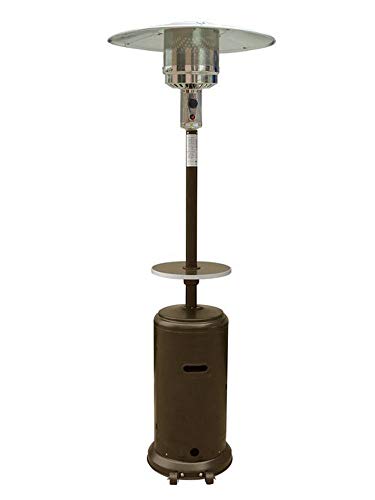
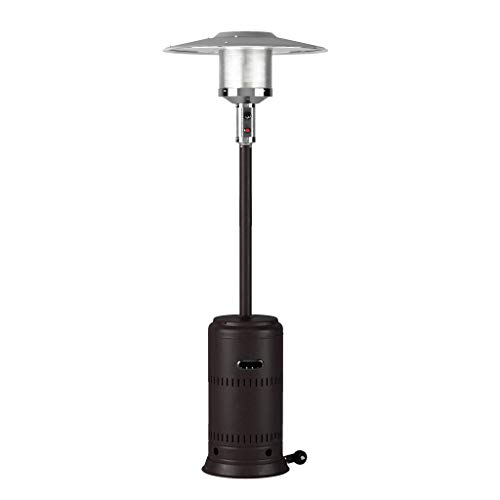
Propane freestanding heaters are the familiar tall design with a reflector at the top that throws warmth outward and downward. They suit open patios and larger seating circles, they move on wheels between spots, and they ask for headroom, clearance, and a level surface. Their appeal is flexibility; their cost is footprint and the ongoing rhythm of tank changes.
Materials decide how a heater ages outside. Powder-coated steel can look smart and still need a cover and dry storage to stay that way, while stainless finishes shrug off weather with less fuss. Reflectors dull, bases collect grit, and wheels seize if a heater lives uncovered through winter, so the care routine in the manual is part of the real product.
Noise is rarely discussed and often noticed. Propane burners make a soft presence, electric infrared is essentially silent, and the clicking of cooling metal after shut-off surprises new owners. For quiet conversation, a silent electric panel over a reading chair is a pleasure; for a lively party, a gentle burner sound disappears under voices without anyone noticing.
Think of the space in zones rather than as one big area. A dining table, a pair of lounge chairs, and a walkway all ask for different things, and a heater that delights the diners may do almost nothing for someone standing at the grill. Mapping the zones first, before any model is chosen, prevents the most common disappointment in this category.
Storage decides whether a heater survives to its third season. A cover that fits, a dry corner of a shed or garage for the heater itself, and tanks stored upright outdoors as the maker directs will do more for lifespan than any finish claim. Electric models want their cables inspected before they are coiled away, not after they come back out.
A covered porch with a ceiling changes the answer again. Flame designs may be ruled out by the maker’s clearances above, while a mounted electric heater turns the porch into a three-season room without touching the floor plan. The seating becomes fixed beneath it, which suits a porch that already knows its own furniture arrangement.
A rental garden with no outdoor outlet nearby pushes the choice toward propane independence, provided the space is open, level, and large enough for clearances. The same garden with a good outdoor outlet opens the electric route and removes tank storage from a household that may have nowhere sensible to keep a spare.
Picture a narrow city terrace with a bistro set for two. Floor space is precious, the railing is close, and the neighbours are nearer still. A compact electric infrared panel or a small tabletop design serves this home, because the warm zone needed is tiny, the setup is instant, and nothing tall has to be wrestled through a hallway or stored in a cupboard all winter.
The Real Costs Beyond Money
Think of the space in zones rather than as one big area. A dining table, a pair of lounge chairs, and a walkway all ask for different things, and a heater that delights the diners may do almost nothing for someone standing at the grill. Mapping the zones first, before any model is chosen, prevents the most common disappointment in this category.
For renters and anyone who cannot alter a structure, portability is the deciding virtue. A wheeled propane model or a plug-in infrared unit can arrive, work, and leave with its owner, asking nothing of the building. Mounted and plumbed designs belong to owners with a settled layout, and borrowing their logic for a temporary home usually ends in compromise.
Placement and furniture should be planned together. A heater dropped into a finished layout usually ends up too close to one chair and too far from the rest, while a layout drawn around a warm centre feels generous to everyone. Move chairs, not just the heater, during the first week until the arc of warmth and the conversation both settle.
Children change the placement maths completely. Hot surfaces, a tall structure that invites curiosity, and a base that must not be climbed on all argue for a heater positioned outside the natural play route, with adults able to see it at all times. The safety section of this guide is not decoration; read it before the first lighting, not after the first scare.
Noise is rarely discussed and often noticed. Propane burners make a soft presence, electric infrared is essentially silent, and the clicking of cooling metal after shut-off surprises new owners. For quiet conversation, a silent electric panel over a reading chair is a pleasure; for a lively party, a gentle burner sound disappears under voices without anyone noticing.
Pyramid and flame-tube designs trade some practical simplicity for theatre. The visible flame inside a glass tube becomes part of the evening, drawing the eye the way a small fire does, while the structure still works as a heater first. They suit hosts who entertain often and who want the heater to contribute to the mood, not just hide in a corner.
Wall-mounted and ceiling-mounted electric models disappear into the architecture. Once installed in the right place they free the floor entirely, keep walkways clear, and turn on without any repositioning. The trade is permanence: the heated zone is fixed, so the seating plan underneath it needs to be settled before the mounting position is chosen.
Propane freestanding heaters are the familiar tall design with a reflector at the top that throws warmth outward and downward. They suit open patios and larger seating circles, they move on wheels between spots, and they ask for headroom, clearance, and a level surface. Their appeal is flexibility; their cost is footprint and the ongoing rhythm of tank changes.
Storage decides whether a heater survives to its third season. A cover that fits, a dry corner of a shed or garage for the heater itself, and tanks stored upright outdoors as the maker directs will do more for lifespan than any finish claim. Electric models want their cables inspected before they are coiled away, not after they come back out.
Accessories that genuinely help are few and plain: a well-fitting cover, a spare propane tank kept ready and stored correctly, a stable level base or mat where the maker allows one, and outdoor-rated extension equipment only where the manual permits it for electric models. Gadgets that promise to multiply heat or stretch fuel should be treated with polite scepticism.
Clean a heater the way its manual directs and no more aggressively. A soft brush for dust on reflectors and guards, a damp cloth for cooled exterior surfaces, and a check that burner ports and vents are clear of webs and debris cover most of the routine. Abrasives and pressure washing shorten the life of finishes and seals.
For propane models, keep the tank connection clean, cap open ports when a tank is disconnected, and store spare tanks upright outdoors away from heat and ignition sources. For electric models, coil cables loosely, avoid sharp bends at the plug, and keep the unit’s vents unobstructed in storage so nothing presses against delicate elements.
Keep the manual. Clearances, assembly order, cleaning limits, and troubleshooting steps are model-specific, and advice from a neighbour’s different heater can be wrong in exactly the detail that matters. A photo of the rating plate on a phone is a small trick that makes any future parts or support conversation far easier.
Who It Pays Off For
Light matters too. A flame design adds a warm glow that flatters faces and food, while an infrared element may glow faintly or not at all depending on its type. Neither replaces lighting for steps, edges, and the path back to the house, so plan the heater and the lighting as separate systems that happen to share an evening.
Electric infrared heaters feel different because they warm objects and people directly rather than heating the air first. That makes them steady in a light breeze and well suited to covered porches, pergolas, and smaller terraces where a flame design would be unwelcome. Their limit is reach and their dependence on a suitable outdoor power supply nearby.
An outdoor heater earns its keep in the shoulder hours, early in the morning when coffee tastes better outside and late in the evening when nobody wants the conversation to move indoors. The heat it gives is local and directional in spirit, warming the people and the seating closest to it far more than it warms the whole yard, and honest expectations start there.
Finally, buy for the evenings you actually have, not the party you imagine once a year. A household that eats outside three nights a week needs reliability and easy ignition above all. A household that hosts twice a season can borrow drama from a flame design and accept more setup. Matching the heater to the real calendar is the whole secret of this category.
Children change the placement maths completely. Hot surfaces, a tall structure that invites curiosity, and a base that must not be climbed on all argue for a heater positioned outside the natural play route, with adults able to see it at all times. The safety section of this guide is not decoration; read it before the first lighting, not after the first scare.
Placement and furniture should be planned together. A heater dropped into a finished layout usually ends up too close to one chair and too far from the rest, while a layout drawn around a warm centre feels generous to everyone. Move chairs, not just the heater, during the first week until the arc of warmth and the conversation both settle.
Controls deserve more attention than they usually get. A simple dial that can be found by feel in the dark, a clear off position, and an ignition that lights reliably on a cold evening matter more than a long feature list. Remote control and timers help on mounted electric models, where reaching the unit itself would mean fetching a step stool.
Pyramid and flame-tube designs trade some practical simplicity for theatre. The visible flame inside a glass tube becomes part of the evening, drawing the eye the way a small fire does, while the structure still works as a heater first. They suit hosts who entertain often and who want the heater to contribute to the mood, not just hide in a corner.
A home that hosts tasting dinners and cares about atmosphere will forgive a flame-tube heater its extra assembly for the glow it lends the table. A home that wants heat for a solitary morning reader will not; it wants a switch, silence, and warmth in under a minute, which is the electric panel’s whole reason to exist.
A windy coastal deck is the hardest test in this category. Flame output bends and comfort comes and goes, while infrared keeps delivering to the people in its line of sight. Screening the seating corner, lowering expectations on the wildest nights, and choosing infrared for the exposed spot is the combination experienced coastal owners describe again and again.
A covered porch with a ceiling changes the answer again. Flame designs may be ruled out by the maker’s clearances above, while a mounted electric heater turns the porch into a three-season room without touching the floor plan. The seating becomes fixed beneath it, which suits a porch that already knows its own furniture arrangement.
Who Should Skip It
Children change the placement maths completely. Hot surfaces, a tall structure that invites curiosity, and a base that must not be climbed on all argue for a heater positioned outside the natural play route, with adults able to see it at all times. The safety section of this guide is not decoration; read it before the first lighting, not after the first scare.
Think of the space in zones rather than as one big area. A dining table, a pair of lounge chairs, and a walkway all ask for different things, and a heater that delights the diners may do almost nothing for someone standing at the grill. Mapping the zones first, before any model is chosen, prevents the most common disappointment in this category.
Pyramid and flame-tube designs trade some practical simplicity for theatre. The visible flame inside a glass tube becomes part of the evening, drawing the eye the way a small fire does, while the structure still works as a heater first. They suit hosts who entertain often and who want the heater to contribute to the mood, not just hide in a corner.
The honest way to judge output claims is by comfort at the seat, not by a headline figure on a box. Sit where your guests will sit, at the distance your furniture dictates, on a typical cool evening rather than the coldest night of the year. A heater that makes an ordinary autumn evening pleasant is a success, even if a deep-winter night still belongs indoors.
An outdoor heater earns its keep in the shoulder hours, early in the morning when coffee tastes better outside and late in the evening when nobody wants the conversation to move indoors. The heat it gives is local and directional in spirit, warming the people and the seating closest to it far more than it warms the whole yard, and honest expectations start there.
Storage decides whether a heater survives to its third season. A cover that fits, a dry corner of a shed or garage for the heater itself, and tanks stored upright outdoors as the maker directs will do more for lifespan than any finish claim. Electric models want their cables inspected before they are coiled away, not after they come back out.
For renters and anyone who cannot alter a structure, portability is the deciding virtue. A wheeled propane model or a plug-in infrared unit can arrive, work, and leave with its owner, asking nothing of the building. Mounted and plumbed designs belong to owners with a settled layout, and borrowing their logic for a temporary home usually ends in compromise.
Light matters too. A flame design adds a warm glow that flatters faces and food, while an infrared element may glow faintly or not at all depending on its type. Neither replaces lighting for steps, edges, and the path back to the house, so plan the heater and the lighting as separate systems that happen to share an evening.
Strengths and Trade-Offs of Owning One
Strengths
- Warms people and seating in a local zone, extending real outdoor evenings at both ends of the season.
- Several distinct formats exist, so almost any open patio, porch, or terrace can be matched honestly.
- Most models ask for no building work and can be repositioned as the furniture moves.
- Controls are simple, ignition is quick on well-kept models, and the ritual becomes part of the evening.
- A flame design adds glow and a focal point; an infrared design adds silence and steadiness in a breeze.
- Ownership costs stay qualitative and predictable: fuel or power for the hours used, a cover, and seasonal checks.
Trade-offs
- It will not heat a whole garden, and windy, exposed sites will always fight it.
- Fuel-burning models carry an absolute outdoor-only rule because of carbon monoxide.
- Clearances rule out many small or cluttered spaces, and hot surfaces demand supervision around children and pets.
- Propane ownership means tanks, leak checks, and upright outdoor storage; electric ownership means outlets, GFCI protection, and cable discipline.
- Tall models need level ground, a secured base, and real storage space out of season.
- Finishes and burners age outdoors, so covers and seasonal inspection are not optional extras.
Alternatives to Consider
Pyramid and flame-tube designs trade some practical simplicity for theatre. The visible flame inside a glass tube becomes part of the evening, drawing the eye the way a small fire does, while the structure still works as a heater first. They suit hosts who entertain often and who want the heater to contribute to the mood, not just hide in a corner.
Wall-mounted and ceiling-mounted electric models disappear into the architecture. Once installed in the right place they free the floor entirely, keep walkways clear, and turn on without any repositioning. The trade is permanence: the heated zone is fixed, so the seating plan underneath it needs to be settled before the mounting position is chosen.
Assembly is a one-time cost that buyers consistently underestimate. Tall propane models arrive in panels and sections, reward a patient hour with a helper, and punish rushing with misaligned holes and a wobbly stance. Checking every fastener again after the first few uses, once parts have settled, is a small habit that keeps the structure feeling solid.
Controls deserve more attention than they usually get. A simple dial that can be found by feel in the dark, a clear off position, and an ignition that lights reliably on a cold evening matter more than a long feature list. Remote control and timers help on mounted electric models, where reaching the unit itself would mean fetching a step stool.
Wind is the quiet variable that decides real-world comfort. Moving air strips warmth away from exposed skin and pushes a flame heater’s output off target, while infrared designs hold up better because their energy travels to surfaces first. A sheltered corner with a fence, hedge, or wall behind the seating will always feel warmer than an exposed deck with the same heater.
Hosts should think about the guest who runs cold. Every group has one, and placing the heater so that person can sit in its warm arc without moving the whole party is a small act of hospitality. A second, smaller heat source for the far end of a long table often serves a gathering better than one large unit straining to cover everything.
If You Do Buy, Start Here
Each model below is presented in prose only, as a prose-only pick in an entry, mid, or premium tier, with no link until verification is complete. Read the fit and the limitation together; the right heater is the one whose limitation you will never meet.

Fire Sense Patio Heater
Best for: first-time propane buyers. Not suited for: covered spaces where the maker does not clear a flame heater for use. Tier: entry to mid.
This model represents a long-running propane patio heater line known for straightforward assembly, a weighted base approach, and readily understood controls. In daily use that means thinking about where it will stand or mount, how its controls feel on a dark evening, and how its care routine fits a household that would rather be sitting down than maintaining equipment.
Light matters too. A flame design adds a warm glow that flatters faces and food, while an infrared element may glow faintly or not at all depending on its type. Neither replaces lighting for steps, edges, and the path back to the house, so plan the heater and the lighting as separate systems that happen to share an evening.
Noise is rarely discussed and often noticed. Propane burners make a soft presence, electric infrared is essentially silent, and the clicking of cooling metal after shut-off surprises new owners. For quiet conversation, a silent electric panel over a reading chair is a pleasure; for a lively party, a gentle burner sound disappears under voices without anyone noticing.

Dr Infrared Heater Outdoor Infrared Heater
Best for: covered porches and workshops with suitable power. Not suited for: open, windy sites far from an outlet. Tier: mid.
This model represents an electric infrared approach aimed at patios and garages, built around direct radiant warmth rather than a flame. In daily use that means thinking about where it will stand or mount, how its controls feel on a dark evening, and how its care routine fits a household that would rather be sitting down than maintaining equipment.
Weatherproofing claims need a careful read. Outdoor-rated for electric models means the unit can live in its intended exposure when installed as directed; it does not mean any indoor heater can be carried outside. Likewise a propane heater built for open air is not cleared for a porch roof that traps heat and fumes, and the maker’s stated setting is the boundary, not a suggestion.
A heater also changes how a garden is used across the year. Breakfast outside in early spring, a work call from the porch in autumn, seedlings hardened off near a warm wall, a dog that finally gets its evening garden time in comfort. The purchase is really about buying back weeks of outdoor life at both ends of the season, and that framing helps the value question later in this guide.
The Decision Checklist
- Do you use the outdoor space at least weekly in the cooler months?
- Is the space open and large enough for the maker’s clearances?
- Can you store the heater dry and any tanks upright outdoors?
- Is there a suitable GFCI outlet for electric, or a sensible propane routine for fuel?
- Will children and pets be supervised around hot surfaces every time?
- Would a fire pit or simply better seating and blankets solve the real problem instead?
Light matters too. A flame design adds a warm glow that flatters faces and food, while an infrared element may glow faintly or not at all depending on its type. Neither replaces lighting for steps, edges, and the path back to the house, so plan the heater and the lighting as separate systems that happen to share an evening.
Noise is rarely discussed and often noticed. Propane burners make a soft presence, electric infrared is essentially silent, and the clicking of cooling metal after shut-off surprises new owners. For quiet conversation, a silent electric panel over a reading chair is a pleasure; for a lively party, a gentle burner sound disappears under voices without anyone noticing.
Hosts should think about the guest who runs cold. Every group has one, and placing the heater so that person can sit in its warm arc without moving the whole party is a small act of hospitality. A second, smaller heat source for the far end of a long table often serves a gathering better than one large unit straining to cover everything.
Safety First: Carbon Monoxide, Clearances and Everyday Care
Fuel-burning heaters are for outdoor, well-ventilated use only. Never use one in an enclosed space, a garage, or a tent. Burning fuel produces carbon monoxide, which kills without warning signs you can smell, so this rule is absolute and has no exceptions for a quick warm-up, a rainy evening, or a well-liked porch with the screens down.
Keep the maker’s stated clearances from furniture, curtains, cushions, and structures on every side and above the heater. Reflectors and burner heads run extremely hot, fabrics dry and scorch faster than people expect, and a cushion pushed back in conversation can drift into the danger zone without anyone noticing until damage is done.
Treat tip-over risk seriously. Set the heater on level, firm ground, fill or secure the base exactly as the manual directs, and keep it out of bump zones such as walkways, ball routes, and the swing of a gate. A tall heater that rocks when touched is not ready to light, however convenient the spot may be.
Supervise children and pets around any hot surface, and assume a curious hand will reach for a glowing tube or a warm guard. Position the heater where play does not pass, teach the household that it is never a leaning post or a toy, and let surfaces cool fully before anyone moves or covers the unit.
For electric models, use only outdoor-rated cords where a cord is needed at all, plug into a GFCI-protected outlet, and never run a cord through water, puddles, or a wet lawn route. Inspect cables for damage before each season, keep connections dry and off the ground where the manual requires it, and stop using any unit with a damaged cable.
Store propane tanks upright and outdoors, never in a living space or a hot enclosed box. Before each use, check connections for leaks in the way the manual describes, keep the valve and hose free of dirt and insects, and close the tank valve when the heater is not in use, even between evenings of the same weekend.
Let the heater cool completely before moving, covering, or storing it, and never leave a lit or running heater unattended. If a flame design blows out repeatedly, or an electric model trips protection repeatedly, stop and solve the cause rather than relighting or resetting your way through the evening.
Setup, Care and Maintenance Essentials
Clean a heater the way its manual directs and no more aggressively. A soft brush for dust on reflectors and guards, a damp cloth for cooled exterior surfaces, and a check that burner ports and vents are clear of webs and debris cover most of the routine. Abrasives and pressure washing shorten the life of finishes and seals.
At the start of each season, run a full inspection before the first gathering depends on the heater. Look for rust that flakes, hoses that crack when flexed gently, cables that show damage, loose fasteners, and a base that still sits flat. Lighting the heater on a quiet afternoon for a short test beats discovering a fault in front of guests.
Between uses in season, a fitted cover keeps rain and grit off the working parts, but only once the unit is fully cool and dry. Covering a damp heater traps moisture against the metal, so a few patient minutes after shut-off protect the finish better than the cover itself does.
For propane models, keep the tank connection clean, cap open ports when a tank is disconnected, and store spare tanks upright outdoors away from heat and ignition sources. For electric models, coil cables loosely, avoid sharp bends at the plug, and keep the unit’s vents unobstructed in storage so nothing presses against delicate elements.
Keep the manual. Clearances, assembly order, cleaning limits, and troubleshooting steps are model-specific, and advice from a neighbour’s different heater can be wrong in exactly the detail that matters. A photo of the rating plate on a phone is a small trick that makes any future parts or support conversation far easier.
Wind is the quiet variable that decides real-world comfort. Moving air strips warmth away from exposed skin and pushes a flame heater’s output off target, while infrared designs hold up better because their energy travels to surfaces first. A sheltered corner with a fence, hedge, or wall behind the seating will always feel warmer than an exposed deck with the same heater.
Weatherproofing claims need a careful read. Outdoor-rated for electric models means the unit can live in its intended exposure when installed as directed; it does not mean any indoor heater can be carried outside. Likewise a propane heater built for open air is not cleared for a porch roof that traps heat and fumes, and the maker’s stated setting is the boundary, not a suggestion.
Materials decide how a heater ages outside. Powder-coated steel can look smart and still need a cover and dry storage to stay that way, while stainless finishes shrug off weather with less fuss. Reflectors dull, bases collect grit, and wheels seize if a heater lives uncovered through winter, so the care routine in the manual is part of the real product.
A heater also changes how a garden is used across the year. Breakfast outside in early spring, a work call from the porch in autumn, seedlings hardened off near a warm wall, a dog that finally gets its evening garden time in comfort. The purchase is really about buying back weeks of outdoor life at both ends of the season, and that framing helps the value question later in this guide.
Final Verdict
Noise is rarely discussed and often noticed. Propane burners make a soft presence, electric infrared is essentially silent, and the clicking of cooling metal after shut-off surprises new owners. For quiet conversation, a silent electric panel over a reading chair is a pleasure; for a lively party, a gentle burner sound disappears under voices without anyone noticing.
Running costs are best thought of qualitatively. A propane model burns through tanks at a pace set by how high and how long it runs; an electric model draws power for exactly the hours it is switched on and no longer. Households that heat a small zone for short evenings usually find electric ownership simpler, while long, large gatherings often suit the independence of propane.
Fuel choice shapes the ownership rhythm more than the first evening does. Propane means tanks to store upright outdoors, connections to check, and a spare ready when a gathering runs long. Electric means a suitable outlet, a tidy cable route, and no fuel runs at all. Natural gas, where a line already exists, removes refuelling but ties the heater to one fixed place.
Pyramid and flame-tube designs trade some practical simplicity for theatre. The visible flame inside a glass tube becomes part of the evening, drawing the eye the way a small fire does, while the structure still works as a heater first. They suit hosts who entertain often and who want the heater to contribute to the mood, not just hide in a corner.
Related reading: outdoor heater buying guide and outdoor heater vs patio heater.
For seating that works inside the warm zone, see best chairs for fire pit and best adirondack chairs for fire pit.
Continue with how to choose an outdoor heater, fire pit buying guide, and is a fire pit worth it.
Before the season starts, best outdoor chairs for patio and best cleaner for patio furniture cushions round out the outdoor setup.
Earning Its Keep: The Long View on Owning a Outdoor Heater
Whether a outdoor heater is worth it is rarely settled on the day it arrives, so this section judges value across ordinary weeks of ownership: how often it is used, what it replaces, what it costs in space and upkeep, and the point at which it has quietly paid for its place in the home.
Start With Your Space and Your Routine
Keep a short note of the questions each listing leaves unanswered, and treat a seller who answers them clearly as a better prospect than one who repeats general claims. Consider the busiest version of the day, not the calmest one, and ask whether the outdoor heater still works when people are hurrying, carrying things or sharing the same space. Keep the fittings, spare parts and instructions that come with the outdoor heater together in one labelled place, because the part you need in a year is always the one that was put somewhere safe. Read the listing for what it does not say as carefully as for what it does, because missing information about materials, assembly or care is itself a useful signal when you compare outdoor heater options.
When Small Problems Appear
Count the hidden costs of owning the outdoor heater as part of the worth question: the space it occupies, the accessories it needs, the cleaning it demands and the storage it takes when idle. If you are replacing an older outdoor heater, list what failed or frustrated you about it, and check each item on that list against the new listing before you order its successor. Apply the same checks to each shortlisted example, whether that is the Fire Sense; the Dr Infrared Heater, because consistent testing is what makes the differences between models visible. Take a break between shortlisting and ordering if you can, and return to the listings with fresh eyes, because fatigue makes almost any outdoor heater look acceptable late in a long search.
If you shop with someone else, agree the must-haves together before looking, so that the outdoor heater you choose is a shared decision rather than one person’s compromise discovered later. Look for the detail photographs in the listing, not just the wide shots, and zoom in on edges, joints, fasteners, controls and finishes, which is where build quality usually shows itself first. The best outdoor heater for a rented home may differ from the best for an owned one, because fixings, marks and alterations carry different consequences in each case. Think about the end of the outdoor heater’s life with you as well, including whether it could move to another room, be passed on, or be stored without damage when your needs change.
A Short Decision Checklist
- Assembly needs, tools required and whether help is needed
- The one feature you will not compromise on
- What your current arrangement does well that the outdoor heater must not lose
- The main job the outdoor heater must do, written in one sentence
- Who will use the outdoor heater most, and any limits they have
- Delivery path, from the door to the final position
- How the outdoor heater will be cleaned in an ordinary week
- The material and finish, matched to light, moisture and wear in its spot
Taken together, these checks take only a little time, yet they answer the questions that decide whether the outdoor heater suits your home, your household and your routine, and they do so before money changes hands rather than after.
Frequently Asked Questions
Can an outdoor heater be used in a garage or enclosed porch?
No. Fuel-burning heaters are for outdoor, well-ventilated use only, and never in enclosed spaces, garages, or tents, because burning fuel produces carbon monoxide that kills without warning signs you can smell. Electric models should only be used in the setting and exposure the maker states. If a space encloses the heater, the answer is to choose a different, maker-approved solution for that space, not to open a door and hope.
How close can furniture be to an outdoor heater?
Follow the maker’s stated clearances for your exact model, on every side and above the unit, and treat them as minimums rather than targets. Keep furniture, curtains, cushions, and structures outside that zone, and re-check after guests start moving chairs, because seating drifts during an evening. If your patio cannot honour the clearances with the furniture in place, the heater is too big or wrongly placed for that patio.
Are outdoor heaters safe around children and pets?
They can be part of a safe setup only with placement and supervision doing the work. Keep the heater out of play routes and bump zones, on level ground with its base secured as directed, and supervise children and pets around hot surfaces at all times. Teach the household that the heater is never to be touched, leaned on, or used as a goal post, and let it cool fully before moving or covering it.
What should I do with propane tanks between uses?
Store tanks upright and outdoors, close the tank valve when the heater is not in use, and check connections for leaks in the way the manual describes before lighting. Keep spare tanks away from heat and ignition sources, keep valves and hoses clean, and never store a tank in a living space. A tidy, consistent tank routine is what makes propane ownership feel easy rather than anxious.
Can I run an electric outdoor heater on an extension cord?
Only with outdoor-rated equipment and only where the maker’s instructions permit it, plugged into a GFCI-protected outlet. Never run a cord through water or puddles, keep connections dry, and inspect the cable for damage before use. If the route to the outlet is long, wet, or crosses a walkway, a mounted installation arranged properly or a different heater type will serve the space more safely.
Why does my patio still feel cold with the heater running?
Usually the cause is placement, wind, or expectations rather than a faulty heater. Outdoor heaters warm a local zone, and moving air strips that warmth away, especially from a flame design. Try a more sheltered position that still honours clearances, arrange seating inside the warm arc, and judge comfort at the seat on a typical cool evening. A second smaller source for a long layout often beats one unit straining alone.
Related Guides
outdoor heater vs patio heater