Disclosure: As an Amazon Associate, dailyhomedecorating.com earns from qualifying purchases. Links on this page are affiliate links; they cost you nothing extra. Prices and availability change often, so check the current Amazon listing before you buy.
This guide answers one question honestly: is a storage ottoman worth it for your home, your room, and your clutter, or is it a piece that photographs well and disappoints quietly? The short answer is that a storage ottoman is worth it if you have soft household goods that need a home in the room where you sit, if you will open it at least weekly, and if everyone in the household will respect the safety rules around its lid and cavity. It is not worth it if your storage problem is heavy or hard objects, if the room is damp, or if you actually need a step stool or a primary seat.
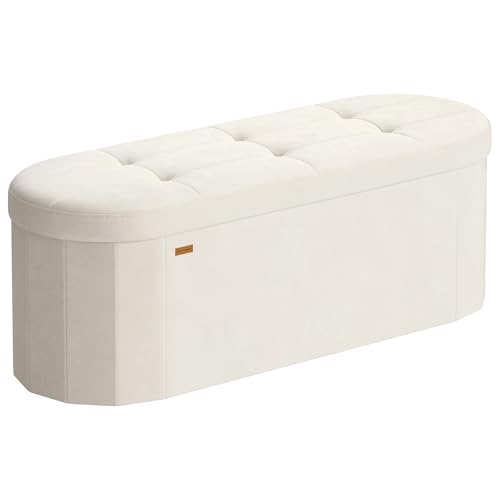
Key Takeaways
- Worth it if: throws, bedding, games, and soft clutter need a home where you sit, and the piece will be opened weekly.
- Not worth it if: your clutter is heavy, hard, or damp-prone, or the room cannot spare the footprint.
- Safety is non-negotiable: never a hiding place, never climb inside, lids must not slam, and never stand on it.
- Value comes from double duty done well, not from capacity alone.
Safety First: Read This Before Anything Goes Inside
A storage ottoman is never a hiding place. Children must never climb inside a storage ottoman, and no game of hide-and-seek should ever involve one. A child inside a closed or closing ottoman can become trapped, and an enclosed, fabric-lined cavity can suffocate. Treat the inside of this furniture exactly as you would the inside of a chest, a trunk, or a washing machine: it is a space for blankets and objects only, never for a person, however small, and never for a pet. If children use the room, the ottoman stays closed, the rule is explained plainly and repeated, and younger children are supervised around it just as they would be around any lidded chest.
Hinged lids need safety hinges and stays. A heavy upholstered lid that falls shut can slam on small fingers, hands, or a head leaning into the cavity. Look for lids that hold themselves open at any angle, that close slowly, or that lift off completely rather than hinging down under gravity. Test the lid in the shop or on delivery day: open it halfway and let go. It should stay where you left it. If it drops, that model does not belong in a home with children, and it is a poor choice for anyone who will load it one-handed while holding laundry in the other arm.
A storage ottoman is not a step stool and it is not a ladder. Never stand on one to reach a shelf, change a bulb, or hang a picture, and never let a child stand or jump on one. The sitting ratings makers quote are static-load figures: they describe a seated adult settling down evenly, not a standing person shifting their full weight onto one foot, and not jumping, rocking, or perching on an edge. Use a storage ottoman for sitting and for resting feet, within the maker’s stated sitting guidance, and use a proper step stool with a handle for anything above shoulder height.
Store textiles dry, or do not store them at all. A closed ottoman has very limited airflow, and a blanket, throw, or cushion stored even slightly damp can mildew inside it, emerging weeks later with a musty smell that is hard to wash out and, in bad cases, visible spotting. Only store items that are fully clean and fully dry, leave the lid open for a few hours after the first loading on a humid day, and open the ottoman every week or two in damp climates to let the contents air. If a room itself is damp, a ventilated basket or an open shelf is the more honest storage choice.
In this guide
Is a Storage Ottoman Worth It? The Short Answer in Full
A storage ottoman earns its floor space by doing at least two jobs at once, and the second job is usually the one that decides whether it stays in the room for a decade or gets donated within a year. A beautiful box that is uncomfortable to sit on becomes an obstacle. A supremely comfortable footrest with a shallow, awkward cavity becomes a footrest with a gimmick. Judge both halves of the bargain with equal suspicion, and be especially wary of showroom impressions: a lid that feels plush for thirty seconds may feel very different after a two-hour film, and a cavity that looks generous empty may swallow far less once a folded throw takes its share.
The honest starting point for any storage ottoman is what actually needs storing. In most living rooms the list is unglamorous and specific: two or three throws that live on the sofa all winter, a spare cushion or two, the board game that only comes out when guests do, a tangle of charging cables, and perhaps a knitting project or a child’s colouring books. None of that needs a cupboard. All of it benefits from being within arm’s reach of the seat it belongs to, which is precisely the gap a storage ottoman fills. Measure your pile before you shop, because the right cavity size follows from the pile, never the other way round.
Placement changes what the ottoman has to be. At the foot of a bed it becomes a blanket chest that also gives you somewhere to sit while you put on shoes. In front of a sofa it is a coffee-table substitute, a footrest, and a toy clear-up box in one footprint. In a hallway it catches scarves, gloves, and dog leads while offering a perch for tying laces. In a nursery it holds muslins and spare bedding within reach of the feeding chair. Each job weights the buying criteria differently, so name the primary job in one sentence before you compare a single model.
The room’s traffic pattern matters more than most listings admit. An ottoman placed in a walkway will be bumped, leaned on, sat on by guests who were never told it opens, and used as an impromptu drinks surface. It needs a wipeable finish, a stable base that does not rock on uneven boards, and a lid that stays put under casual use. An ottoman in a quiet reading corner faces a gentler life and can carry a more delicate fabric or a lighter frame. Be honest about which room yours will really live in, not the tidier room you imagine on delivery day.
What You Actually Get
Legs and bases change both style and practicality. Short wooden legs lift the piece, let a vacuum pass underneath, and suit mid-century and traditional rooms. A flat, floor-sitting base feels more stable and more casual, hides the storage function better, and collects dust along its bottom edge instead of under it. Castors appear occasionally and help in rooms that reconfigure often, though they can wander on hard floors under a seated person. Whatever the base, the ottoman should sit level and silent: a rock or a creak on day one rarely improves with use.
Colour choice is a storage decision too, because the ottoman will be one of the larger blocks of colour at the centre of the room. A tone matched to the sofa makes the piece recede and the room feel calmer and larger. A deliberate contrast makes it a focal point and hides the fact that it is, functionally, a box. Mid-tone, slightly textured fabrics hide the evidence of daily life best: pale solids show every mark, very dark solids show every pale fibre and pet hair. If the ottoman will double as a coffee table, remember that mugs and books will sit on your colour choice every day.
Upholstery decides both the look and the maintenance burden. Woven polyester fabrics shrug off daily use, clean easily with a damp cloth, and suit busy family rooms. Linen-look weaves read softer and more relaxed but show pressure marks and spills more readily. Velvet and velvet-look finishes bring depth of colour and a formal note, and they ask for gentle brushing and prompt attention to spills. Faux leather wipes clean in seconds, which parents and pet owners value, though lower-grade versions can crack or peel at the corners after a few years of flexing. Choose for the life the piece will actually lead.
A storage ottoman earns its floor space by doing at least two jobs at once, and the second job is usually the one that decides whether it stays in the room for a decade or gets donated within a year. A beautiful box that is uncomfortable to sit on becomes an obstacle. A supremely comfortable footrest with a shallow, awkward cavity becomes a footrest with a gimmick. Judge both halves of the bargain with equal suspicion, and be especially wary of showroom impressions: a lid that feels plush for thirty seconds may feel very different after a two-hour film, and a cavity that looks generous empty may swallow far less once a folded throw takes its share.
The honest starting point for any storage ottoman is what actually needs storing. In most living rooms the list is unglamorous and specific: two or three throws that live on the sofa all winter, a spare cushion or two, the board game that only comes out when guests do, a tangle of charging cables, and perhaps a knitting project or a child’s colouring books. None of that needs a cupboard. All of it benefits from being within arm’s reach of the seat it belongs to, which is precisely the gap a storage ottoman fills. Measure your pile before you shop, because the right cavity size follows from the pile, never the other way round.
The Real Costs Beyond Money
Weight is a practical spec hiding in plain sight. A light folding ottoman can be carried to another room for guests, emptied and collapsed for a move, or lifted easily for vacuuming underneath. A heavy, framed piece stays where it is put, feels more substantial to sit on, and resists being knocked askew, but it will not be moved for cleaning without commitment. Consider who will move it, how often, and whether the floor beneath it needs regular attention. In homes with shedding pets, the answer to that last question tends to settle the weight debate on its own.
External size and internal capacity are different numbers, and listings do not always make the distinction kindly. Thick padded walls and a deep, cushioned lid can consume a surprising share of the footprint, so a generously sized ottoman may hold less than a slimmer-walled rival. Think in terms of what must fit: a folded double throw, a board game box, a spare cushion. If you can, compare cavity descriptions against those real objects rather than against abstract volume claims. When a maker gives no internal dimensions at all, treat that silence as information and look at a model that does.
Lids and hinges reward a minute of attention twice a year. Check that hinge screws are snug, that a safety stay still holds the lid open at halfway, and that a lift-off lid still sits square without rocking. On folding models, collapse and rebuild the piece once in a while to confirm the panels still slot together firmly; a frame that has started to bow will announce itself here before it fails under a guest. Tighten, adjust, or retire accordingly. Furniture that opens and closes daily is machinery in a small way, and treating it as such prevents the slam, pinch, and sag problems that give the category a bad name.
If the ottoman doubles as a coffee table, protect the top as you would any upholstered surface. Use a tray for drinks and snacks: it creates a stable, level surface, catches condensation rings before the fabric does, and lifts away in one motion when someone needs to open the lid. Avoid placing hot dishes directly on upholstery or faux leather. Rotate the piece occasionally if one end always takes the feet and the other never does, so wear spreads evenly. Small habits like these are the difference between an ottoman that looks tired in two years and one that looks settled in ten.
Height deserves more attention than it usually gets. As a footrest, the ottoman top should sit at roughly the same height as the sofa seat or a touch lower, so legs rest level rather than propped or dangling. As extra seating, a very low ottoman puts adult knees uncomfortably high and makes standing up again a small effort, which guests will notice even if they are too polite to say so. As a coffee-table substitute, height relative to the sofa decides whether a mug feels naturally placed or precariously perched. One piece can do all three jobs, but only if its height was chosen with all three in mind.
Floor space is the first cost, and in a small room it is a real one: the ottoman will occupy the centre of the room’s circulation, and everything else arranges itself around it. Maintenance is the second cost, small but recurring: airing the cavity, checking the hinge, and storing only dry textiles. The third cost is discipline. A lidded box in a family home carries rules, about hiding, climbing, standing, and slamming, that someone has to teach and occasionally re-teach. None of these costs is large. Together they are the true price of the convenience, and households that accept them happily are the ones who rate the purchase worthwhile years later.
Who It Pays Off For
The Small-Space Household
The room’s traffic pattern matters more than most listings admit. An ottoman placed in a walkway will be bumped, leaned on, sat on by guests who were never told it opens, and used as an impromptu drinks surface. It needs a wipeable finish, a stable base that does not rock on uneven boards, and a lid that stays put under casual use. An ottoman in a quiet reading corner faces a gentler life and can carry a more delicate fabric or a lighter frame. Be honest about which room yours will really live in, not the tidier room you imagine on delivery day.
A storage ottoman earns its floor space by doing at least two jobs at once, and the second job is usually the one that decides whether it stays in the room for a decade or gets donated within a year. A beautiful box that is uncomfortable to sit on becomes an obstacle. A supremely comfortable footrest with a shallow, awkward cavity becomes a footrest with a gimmick. Judge both halves of the bargain with equal suspicion, and be especially wary of showroom impressions: a lid that feels plush for thirty seconds may feel very different after a two-hour film, and a cavity that looks generous empty may swallow far less once a folded throw takes its share.
The Foot-of-the-Bed Household
Weight is a practical spec hiding in plain sight. A light folding ottoman can be carried to another room for guests, emptied and collapsed for a move, or lifted easily for vacuuming underneath. A heavy, framed piece stays where it is put, feels more substantial to sit on, and resists being knocked askew, but it will not be moved for cleaning without commitment. Consider who will move it, how often, and whether the floor beneath it needs regular attention. In homes with shedding pets, the answer to that last question tends to settle the weight debate on its own.
Shape steers both capacity and circulation. Rectangular benches hold the most, suit the foot of a bed, and seat two people at a pinch. Square cubes tuck into corners, work as side tables, and pair well in twos. Round ottomans soften a room full of straight lines, remove the corner-bump problem in tight walkways, and usually hold a little less than their footprint suggests. In a small room, leave honest walking space around whichever shape you choose: an ottoman that forces a sideways shuffle past it every day will be resented long after its storage has been forgiven.
The Family Room That Resets Every Night
The honest starting point for any storage ottoman is what actually needs storing. In most living rooms the list is unglamorous and specific: two or three throws that live on the sofa all winter, a spare cushion or two, the board game that only comes out when guests do, a tangle of charging cables, and perhaps a knitting project or a child’s colouring books. None of that needs a cupboard. All of it benefits from being within arm’s reach of the seat it belongs to, which is precisely the gap a storage ottoman fills. Measure your pile before you shop, because the right cavity size follows from the pile, never the other way round.
The room’s traffic pattern matters more than most listings admit. An ottoman placed in a walkway will be bumped, leaned on, sat on by guests who were never told it opens, and used as an impromptu drinks surface. It needs a wipeable finish, a stable base that does not rock on uneven boards, and a lid that stays put under casual use. An ottoman in a quiet reading corner faces a gentler life and can carry a more delicate fabric or a lighter frame. Be honest about which room yours will really live in, not the tidier room you imagine on delivery day.
Who Should Skip It
Finally, do not let the ottoman become the room’s unexamined hazard. It should never be the step up to a high shelf, never the platform for a child reaching a counter, and never a hiding place in any game, and those rules need saying out loud to guests and children rather than assuming. Keep it out of the top-of-stairs landing and away from any spot where a lid left open blocks a route in the dark. Used as designed, a storage ottoman is one of the safest, most useful pieces in the house. The problems in this category almost always begin where the designed use ends.
A second mistake is ignoring the lid until it becomes the problem. Heavy lids discourage putting things away. Lids without a safety stay are a genuine hazard around children and a nuisance for everyone else. Lift-off lids get parked on the floor mid-task and tripped over. None of this appears in a product photograph. Decide how the lid will behave in your busiest, most distracted moment, not your calmest, and if children are in the home, let the safety requirements in this guide veto any model whose lid can fall shut under its own weight, whatever its other charms.
The most frequent mistake is buying storage for a tidier, imaginary household. Owners picture folded throws and seasonal cushions, then in practice the cavity fills with whatever was in the way: broken toys awaiting a decision, cables for devices long gone, paperwork that belongs in a filing system. The ottoman then fails at its real job because its real job was never admitted. Be candid about what will actually go inside. If the honest answer is general clutter, choose the larger cavity, add a simple divider or fabric boxes inside it, and schedule a five-minute sort whenever the lid starts needing force to close.
A sensible buying sequence starts with the contents, moves to the room, and only then reaches the catalogue. List what will live inside, measure the largest item, and note how often each item is used. Measure the footprint the room can spare, including walking space, and the seat height of the sofa or bed it will serve. Decide the lid type from the frequency of access and from who else uses the room, especially children. Only then compare models, because at that point most listings eliminate themselves and the remaining choice is genuinely about fabric, colour, and build. Shopping in the reverse order is how attractive, wrong ottomans get bought.
Strengths and Trade-Offs of Owning One
- Strength: two or three jobs in one footprint.
- Strength: clutter disappears behind a furniture finish.
- Strength: flexible across rooms and life stages.
- Trade-off: cavity airflow is limited, so dryness discipline is required.
- Trade-off: the lid is a moving part that needs a safety stay and periodic checks.
- Trade-off: it is a seat and a footrest, never a step, a ladder, or a toy.
Legs and bases change both style and practicality. Short wooden legs lift the piece, let a vacuum pass underneath, and suit mid-century and traditional rooms. A flat, floor-sitting base feels more stable and more casual, hides the storage function better, and collects dust along its bottom edge instead of under it. Castors appear occasionally and help in rooms that reconfigure often, though they can wander on hard floors under a seated person. Whatever the base, the ottoman should sit level and silent: a rock or a creak on day one rarely improves with use.
Colour choice is a storage decision too, because the ottoman will be one of the larger blocks of colour at the centre of the room. A tone matched to the sofa makes the piece recede and the room feel calmer and larger. A deliberate contrast makes it a focal point and hides the fact that it is, functionally, a box. Mid-tone, slightly textured fabrics hide the evidence of daily life best: pale solids show every mark, very dark solids show every pale fibre and pet hair. If the ottoman will double as a coffee table, remember that mugs and books will sit on your colour choice every day.
Stitching and corners are the honest tell of build quality at every tier. Look for even seams, corners that sit square rather than twisted, and a lining that is attached rather than loose and bagging into the cavity. On folding models, check how the base panel sits: it should drop in flat and stay put, because a base that shifts makes the whole box feel unstable under a seated adult. On hinged models, examine the hinge itself. It should be metal, firmly screwed into frame rather than thin board, and paired with a stay or a soft-close action for the safety reasons covered in this guide.
Alternatives to Consider
Beware the two most common specification traps. The first is judging storage by external dimensions, which flatters thick-walled designs. The second is reading a sitting weight figure as a general strength promise. A static sitting rating describes one seated adult, settled evenly; it says nothing about standing, jumping, a child treating the lid as a stage, or two people dropping onto it at once during a party. Buy for the use you actually expect, keep the piece for sitting and foot-resting, and reach for a step stool, never the ottoman, when something is above shoulder height. Honest expectations are a feature of a good purchase.
Value in this category is not the lowest tier or the highest; it is the match between build and duty. A lightly used guest-room ottoman does not need a heavy framed build, and paying for one buys little. A family-room ottoman opened six times a day, sat on by everyone, and expected to survive a decade earns a stronger frame, better hinges, and a harder-wearing fabric. Spend where the use is, save where it is not, and treat mid-tier, well-reviewed designs from established furniture brands as the default hunting ground for most homes. The cheapest option that fails in a year is the expensive one.
Delivery and returns deserve a thought before ordering, because ottomans are bulky in opposite ways depending on type. Folding models arrive compact, assemble in minutes without tools, and are easy to return if the colour disappoints. Framed and hinged models arrive as furniture: check the delivery route, door widths, and stair turns before committing, and keep the packaging until you have tested the lid action, sat on it through a full evening, and loaded the cavity with your real belongings. A ten-minute test on delivery day is worth more than any amount of listing photography.
Three representative directions, in prose, so you can see what the money buys at each tier before checking current listings.

Songmics Folding Storage Ottoman Bench
Best for: households whose needs match its format. Not suited for: anyone expecting it to serve as a step, a ladder, or a hiding place, which no storage ottoman should ever be. Tier: entry-to-mid tier; check the current Amazon listing before you buy.
The Songmics Folding Storage Ottoman Bench is a collapsible bench format that folds flat when empty, suits renters and spare rooms, and gives a long, low profile that slides neatly at the foot of a bed or under a window. In daily use that format decides the experience more than any finish: how the lid behaves when your hands are full, how the cavity swallows a folded throw, and how the piece sits after a full evening of use all follow from it. Load it with soft goods first, confirm the lid action suits everyone in the house, and pay particular attention to the hinge or folding joints, because those are the parts that will be exercised thousands of times over the piece’s life.
Strengths and trade-offs, stated plainly. Strengths: it combines seating or foot-resting with genuinely useful enclosed storage in one footprint; its format suits the job described above; and it can be repositioned or repurposed as rooms change. Trade-offs: like every model in this category, its cavity has limited airflow, so only clean, fully dry textiles belong inside; its sitting guidance is a static-load figure for seated use only; and its lid must be treated with the respect set out in the safety section of this guide, especially in homes with children.
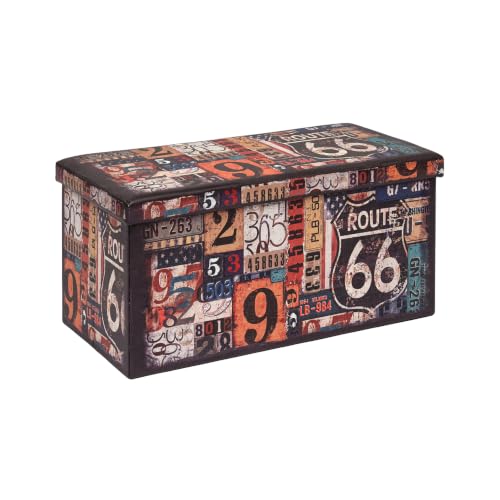
B FSOBEIIALEO Faux Leather Storage Ottoman
Best for: households whose needs match its format. Not suited for: anyone expecting it to serve as a step, a ladder, or a hiding place, which no storage ottoman should ever be. Tier: entry tier; check the current Amazon listing before you buy.
The B FSOBEIIALEO Faux Leather Storage Ottoman is a compact cube in faux leather that works as a single footrest, a small side seat, and a tidy box for remotes, chargers, and the everyday clutter that migrates across a living room. In daily use that format decides the experience more than any finish: how the lid behaves when your hands are full, how the cavity swallows a folded throw, and how the piece sits after a full evening of use all follow from it. Load it with soft goods first, confirm the lid action suits everyone in the house, and pay particular attention to the hinge or folding joints, because those are the parts that will be exercised thousands of times over the piece’s life.
Strengths and trade-offs, stated plainly. Strengths: it combines seating or foot-resting with genuinely useful enclosed storage in one footprint; its format suits the job described above; and it can be repositioned or repurposed as rooms change. Trade-offs: like every model in this category, its cavity has limited airflow, so only clean, fully dry textiles belong inside; its sitting guidance is a static-load figure for seated use only; and its lid must be treated with the respect set out in the safety section of this guide, especially in homes with children.

SIMPLIHOME Harrison Storage Ottoman
Best for: households whose needs match its format. Not suited for: anyone expecting it to serve as a step, a ladder, or a hiding place, which no storage ottoman should ever be. Tier: mid-to-premium tier; check the current Amazon listing before you buy.
The SIMPLIHOME Harrison Storage Ottoman is a more furniture-like build with a structured frame and upholstered finish, aimed at buyers who want the ottoman to read as a permanent piece rather than a temporary storage box. In daily use that format decides the experience more than any finish: how the lid behaves when your hands are full, how the cavity swallows a folded throw, and how the piece sits after a full evening of use all follow from it. Load it with soft goods first, confirm the lid action suits everyone in the house, and pay particular attention to the hinge or folding joints, because those are the parts that will be exercised thousands of times over the piece’s life.
Strengths and trade-offs, stated plainly. Strengths: it combines seating or foot-resting with genuinely useful enclosed storage in one footprint; its format suits the job described above; and it can be repositioned or repurposed as rooms change. Trade-offs: like every model in this category, its cavity has limited airflow, so only clean, fully dry textiles belong inside; its sitting guidance is a static-load figure for seated use only; and its lid must be treated with the respect set out in the safety section of this guide, especially in homes with children.

Christopher Knight Home Storage Ottoman
Best for: households whose needs match its format. Not suited for: anyone expecting it to serve as a step, a ladder, or a hiding place, which no storage ottoman should ever be. Tier: mid tier; check the current Amazon listing before you buy.
The Christopher Knight Home Storage Ottoman is a design-led option in the tufted, traditional direction, useful where the ottoman needs to hold its own visually beside a rolled-arm sofa or a reading chair. In daily use that format decides the experience more than any finish: how the lid behaves when your hands are full, how the cavity swallows a folded throw, and how the piece sits after a full evening of use all follow from it. Load it with soft goods first, confirm the lid action suits everyone in the house, and pay particular attention to the hinge or folding joints, because those are the parts that will be exercised thousands of times over the piece’s life.
Strengths and trade-offs, stated plainly. Strengths: it combines seating or foot-resting with genuinely useful enclosed storage in one footprint; its format suits the job described above; and it can be repositioned or repurposed as rooms change. Trade-offs: like every model in this category, its cavity has limited airflow, so only clean, fully dry textiles belong inside; its sitting guidance is a static-load figure for seated use only; and its lid must be treated with the respect set out in the safety section of this guide, especially in homes with children.

Adeco Storage Ottoman Chest
Best for: households whose needs match its format. Not suited for: anyone expecting it to serve as a step, a ladder, or a hiding place, which no storage ottoman should ever be. Tier: mid tier; check the current Amazon listing before you buy.
The Adeco Storage Ottoman Chest is a chest-style format with a generous single cavity, better for blankets and bulkier soft goods than for small items that would disappear into a deep, undivided space. In daily use that format decides the experience more than any finish: how the lid behaves when your hands are full, how the cavity swallows a folded throw, and how the piece sits after a full evening of use all follow from it. Load it with soft goods first, confirm the lid action suits everyone in the house, and pay particular attention to the hinge or folding joints, because those are the parts that will be exercised thousands of times over the piece’s life.
Strengths and trade-offs, stated plainly. Strengths: it combines seating or foot-resting with genuinely useful enclosed storage in one footprint; its format suits the job described above; and it can be repositioned or repurposed as rooms change. Trade-offs: like every model in this category, its cavity has limited airflow, so only clean, fully dry textiles belong inside; its sitting guidance is a static-load figure for seated use only; and its lid must be treated with the respect set out in the safety section of this guide, especially in homes with children.
Homebeez Folding Storage Ottoman
Best for: households whose needs match its format. Not suited for: anyone expecting it to serve as a step, a ladder, or a hiding place, which no storage ottoman should ever be. Tier: entry tier; check the current Amazon listing before you buy.
The Homebeez Folding Storage Ottoman is another folding design that prioritises easy setup and light weight, a sensible second ottoman for a guest room, a dorm, or a play corner that is reconfigured often. In daily use that format decides the experience more than any finish: how the lid behaves when your hands are full, how the cavity swallows a folded throw, and how the piece sits after a full evening of use all follow from it. Load it with soft goods first, confirm the lid action suits everyone in the house, and pay particular attention to the hinge or folding joints, because those are the parts that will be exercised thousands of times over the piece’s life.
Strengths and trade-offs, stated plainly. Strengths: it combines seating or foot-resting with genuinely useful enclosed storage in one footprint; its format suits the job described above; and it can be repositioned or repurposed as rooms change. Trade-offs: like every model in this category, its cavity has limited airflow, so only clean, fully dry textiles belong inside; its sitting guidance is a static-load figure for seated use only; and its lid must be treated with the respect set out in the safety section of this guide, especially in homes with children.
How to Get the Most Value If You Buy
Lids and hinges reward a minute of attention twice a year. Check that hinge screws are snug, that a safety stay still holds the lid open at halfway, and that a lift-off lid still sits square without rocking. On folding models, collapse and rebuild the piece once in a while to confirm the panels still slot together firmly; a frame that has started to bow will announce itself here before it fails under a guest. Tighten, adjust, or retire accordingly. Furniture that opens and closes daily is machinery in a small way, and treating it as such prevents the slam, pinch, and sag problems that give the category a bad name.
Routine care is simple, and that simplicity is part of the appeal. Vacuum the upholstery with an upholstery attachment every week or two, working into the seam where the lid meets the body, because that channel collects crumbs, pet hair, and grit. Blot spills immediately rather than rubbing them, which drives liquid deeper into foam. Most fabric and faux leather finishes tolerate a cloth dampened with water and a small amount of mild soap; test any cleaner on the underside first. Keep the piece out of prolonged direct sunlight, which fades fabric unevenly and can dry out faux leather until it cracks.
If the ottoman doubles as a coffee table, protect the top as you would any upholstered surface. Use a tray for drinks and snacks: it creates a stable, level surface, catches condensation rings before the fabric does, and lifts away in one motion when someone needs to open the lid. Avoid placing hot dishes directly on upholstery or faux leather. Rotate the piece occasionally if one end always takes the feet and the other never does, so wear spreads evenly. Small habits like these are the difference between an ottoman that looks tired in two years and one that looks settled in ten.
The cavity needs care as well, and it is the part owners forget. Empty it fully every few months, vacuum the lining, and leave the lid open for several hours to air. This is the moment to check that everything stored inside is still clean and completely dry, because a single damp throw put away after a picnic or a spill can mildew quietly in a closed box and scent everything stored with it. A light, breathable liner or a fabric storage bag for delicate textiles adds a layer of protection. Never store anything damp, and never use the ottoman as a laundry basket for worn clothing.
The Decision Checklist
- Do I have soft goods, used weekly, that need a home in this room?
- Have I measured the pile and the footprint, including walking space?
- Does the lid have a safety hinge or stay, or lift off lightly?
- Will every child in this home be taught: never hide in it, never climb inside?
- Is everything I plan to store clean and fully dry?
- Am I buying it as a seat and footrest, not as a step?
- Would I still want it if the cavity held slightly less than promised?
If you answered yes to at least six of the seven, buy with confidence. If the safety questions gave you pause, choose a plain ottoman instead and solve storage separately; that is a good decision, not a failed one.
Frequently Asked Questions
Is a storage ottoman worth it for a small apartment?
In a small apartment it is often one of the highest-value pieces you can buy, because floor space there has to multitask. One footprint gives you a footrest, occasional seating, and enclosed storage for throws or bedding. It earns its place fastest when the cavity holds things you use weekly. If it would only store rarely touched items, a smaller footprint or a different piece may serve you better.
What should you never store in a storage ottoman?
Never store anything damp, anything a child or pet could be tempted to climb in after, valuables you would be devastated to have sat on daily, or heavy hard objects that strain the frame and hinges. Food, liquids, and anything with a strong scent also belong elsewhere. Clean, dry, soft household goods are the sweet spot, and the lid should be opened regularly to air the contents.
Can you sit on a storage ottoman every day?
Yes, daily sitting is a designed use, provided you respect the maker’s sitting guidance and sit rather than stand, perch on an edge, or jump. A framed model suits daily sitting better than the lightest folding designs. If the ottoman will be a primary seat for long periods, prioritise firmer foam and a structured build, and test it through a full evening before deciding to keep it.
Is a storage ottoman safe in a home with young children?
It can be, with the right model and firm rules. Choose a lid with a safety hinge or stay that cannot slam, or a light lift-off lid, and teach from day one that the ottoman is never a hiding place and children never climb inside, because a closed cavity can trap and suffocate. Supervise younger children around it, keep it closed, and never let a child stand or jump on it.
How does a storage ottoman compare with a storage basket?
A basket is cheaper, ventilated, and honest about being storage only, but it offers no seating, no footrest, and no lid to hide visual clutter. An ottoman costs more and needs the safety and dryness care described in this guide, but it returns seating and a finished furniture look. Many homes end up with both: the ottoman for the living room, baskets for bedrooms and cupboards.
When is a storage ottoman not worth it?
Skip it if your storage problem is mostly heavy or hard objects, if the room is persistently damp, if you need a step stool rather than a seat, or if no one in the household will respect the child-safety rules around the lid and cavity. In those cases a cabinet, a ventilated basket, or a plain ottoman plus separate storage will make you happier and safer.
Related Reading and Next Steps
Keep exploring with these related guides, chosen to sit alongside this one rather than repeat it.


