Disclosure: As an Amazon Associate, dailyhomedecorating.com earns from qualifying purchases. Links on this page are affiliate links; they cost you nothing extra. Prices and availability change often, so check the current Amazon listing before you buy.
So, is a refrigerator organizer worth it? The honest answer depends less on the bins than on the household behind the fridge door. For homes that waste food because it gets forgotten, that buy duplicates because nothing is visible, or that lose minutes daily to fridge archaeology, organisers pay for themselves in behaviour change. For a small, already-tidy fridge run by one careful person, they may add little. This guide weighs both sides plainly, with the real costs, the real gains, and a checklist to decide for your own kitchen.
The Short Answer: Is a Refrigerator Organizer Worth It?
Worth it if your fridge regularly hides food until it spoils, if more than one person loads and unloads it with different ideas of order, if deep shelves swallow jars whole, or if you cook often and need ingredients findable fast. Not worth it if your fridge is small and already readable at a glance, if you shop little and often and keep very little stored, or if you know honestly that zoning and rotation habits will not survive the fortnight. The plastic is cheap; the habit is the purchase, so judge whether you are buying the habit.
In this guide
Key Takeaways
- Worth it mainly through less waste and fewer duplicate purchases
- The bins enable habits; they do not create them
- Deep shelves and busy households gain the most
- Small, simple fridges gain the least
- Start small and expand only where problems persist
What You Actually Get From a Refrigerator Organizer
You get visibility first: a fridge you can read in one glance, where the yoghurt, the leftover rice, and the last of the cheese announce themselves instead of hiding behind a sauce bottle barricade. You get containment second: drips, crumbs, and sticky rings land in a washable bin instead of on glass shelves. You get speed third: groceries go away without decisions and ingredients come out without excavation. None of these is glamorous, and together they change the daily experience of the most-opened appliance in the home.
Organise by zone, not by shopping trip. Give each shelf or bin a single job: one zone for raw meat on the lowest shelf, one for dairy and eggs, one for produce that is not in the crispers, one for leftovers and ready-to-eat food, one for drinks, and one small zone for the odds and ends that otherwise wander. When everything has a job, putting groceries away becomes fast because there is no decision to make, and finding things becomes fast because there is only one sensible place to look.
Leftovers deserve special treatment because they are where fridges go wrong. A single, shallow, clearly visible leftover zone at eye level, with containers you can see into, means yesterday’s food gets eaten instead of slowly migrating to the back and becoming a science project. Date leftovers with a washable marker or a strip of tape on the lid. When the leftover zone is full, that is your signal to plan a meal around it rather than buying more, which is where an organiser quietly starts saving real money.
Keep a small landing zone for the items in active rotation: the jam in current use, the open milk, the butter dish, the snacks the household reaches for daily. Everything else can live a shelf deeper or higher. This front-of-fridge thinking mirrors how good kitchens have always worked, with the everyday within easy reach and the reserves behind. An organiser system that ignores daily habits and instead arranges food by category purity will be abandoned within a fortnight, so design around behaviour first and tidiness second.
Food Safety Comes First in Any Fridge Layout
Rotation is the second habit an organiser either supports or quietly undermines. Work first in, first out: when new groceries come home, move the older items to the front and put the fresh purchases behind them, so the food that needs using first is the food you see and reach first. Clear bins help here because you can see what you already have before you shop, which cuts duplicate buying. Be honest about the limit, though: visibility does not extend shelf life, it only stops good food being forgotten, and dates and your own judgement still decide what stays.
Two housekeeping rules protect both food and appliance. Wash bins regularly with warm soapy water and dry them fully before they go back, because sticky residue in a cold, damp space is exactly where odours and mould take hold. And never block the air vents inside the fridge with tall bins pushed hard against the back or side walls. Cold air needs to circulate to keep temperatures even, and a bin wall sealing off a vent creates warm pockets where food spoils faster while the rest of the compartment over-chills.
Food safety is the quiet reason organisation matters, and it starts with placement rather than plastic. Raw meat belongs on the lowest shelf, inside a leak-proof bin with a raised lip, because drips travel downward and contaminate everything stored below them. A dedicated meat bin turns a potential cross-contamination problem into a simple rinse, and it also keeps packages from freezing against a cold back wall or sliding behind other food where they are forgotten until they are well past their best.
The Real Costs Beyond Money
Organisers cost shelf space: every bin wall and base steals a little room, and in a small fridge that tax is real. They cost cleaning time, because bins must be wiped and washed regularly or they become the dirtiest objects in the fridge. They cost a short learning curve while a household absorbs new zones, and they can cost flexibility, because a rigid system resists the oversized item, the holiday shop, and the celebratory cake box. None of these costs is a deal-breaker for most homes, but pretending they do not exist is how good products get unfair reviews.
Cleaning an organised fridge is faster than cleaning a chaotic one, but only if you clean the bins themselves on a rhythm. A quick wipe when a bin empties, a proper warm soapy wash on a regular cycle, and a full dry before refilling will keep odours away. Sticky rings from jars and sauce bottles build up invisibly, and a bin that looks clean can still smell of last month’s pickle brine. Rotating one or two bins through the sink each week spreads the work so it never becomes a dreaded whole-fridge project.
Check care instructions before assuming everything is dishwasher safe. Many clear bins prefer hand washing, because high dishwasher heat can cloud or warp rigid clear plastic over time, and cloudy bins quietly destroy the visibility you bought them for. Warm water, a soft sponge, and ordinary washing-up liquid handle nearly everything a fridge bin collects. For stubborn odours, a soak with bicarbonate of soda in the water usually does the job without harsh chemicals near food.
While a bin is out being washed, wipe the shelf beneath it. Crumbs and drips migrate under bins and are easy to miss for months. That thirty-second habit, repeated bin by bin, keeps the whole compartment fresher than an occasional heroic deep clean, and it gives you a natural moment to check dates, rotate stock to the front, and notice what needs using up. Organisation and hygiene are the same habit viewed from two directions.
Who a Refrigerator Organizer Pays Off For
It pays off for the batch cook, whose containers stack into a disciplined zone instead of colonising every shelf. It pays off for the family, where a shared visible system ends the era of five open jars of the same thing. It pays off for the deep-shelf sufferer, whose turntable or rolling caddy returns the back third of the fridge to active service. In each case the gain is measurable in food used rather than binned, and in minutes and temper saved across hundreds of small daily moments.
A household that batch cooks needs organisers that respect containers: flat, stackable bins that corral meal-prep boxes into one zone, room for a large stock pot to land without rearranging three shelves, and a freezer-adjacent plan for overflow. A household that grazes needs the opposite: small, open, eye-level bins for snacks, yoghurt, cheese, and fruit, refreshed often and never buried. Neither system is better; they are answers to different questions, and buying the wrong answer is the commonest reason organisers end up in a cupboard.
Families with children benefit from a deliberate low zone: drinks, fruit, and approved snacks in one reachable bin turns the fridge from an adult-only puzzle into something a child can use without climbing or rummaging. Keep raw meat and heavy glass well away from that zone, and expect the kids’ bin to need the most frequent washing of any in the fridge. Small hands and sticky fingers are a design constraint, not a failure of the system.
Small fridges and under-counter models punish wasted millimetres. In a compact fridge, one or two perfectly fitted bins beat a large set of almost-right sizes, and a turntable can be transformative because depth you cannot reach is storage you do not have. Measure twice, buy once, and be willing to return a set that nearly fits. Nearly is not a size, and living with a bin that sticks every day costs more patience than a return ever will.
Who Should Skip a Refrigerator Organizer
Skip it, or buy only a meat bin, if your fridge is a compact model you already keep half-empty and fully visible. Skip it if you eat mostly fresh food bought daily and store almost nothing. Skip the large sets if you are moving soon, between homes, or feeding a household in transition; buy for the fridge and the life you have, not the one in a catalogue. And skip premium tiers entirely if the honest plan is to test the idea, because an entry set answers the worth-it question at the lowest possible stake.
Strengths and Trade-Offs of Owning One
- Strengths: food stays visible, so less is wasted
- Strengths: spills are contained and shelves stay cleaner
- Strengths: everyone in the household shares one system
- Trade-offs: bins take a little shelf space of their own
- Trade-offs: bins need regular washing to stay hygienic
- Trade-offs: a rigid layout resists oversized and seasonal items
Weigh those lists against your own fridge diary for one honest week. Count how many items were thrown away unseen, how many duplicates came home, and how often someone stood with the door open searching. If those numbers are near zero, the trade-offs win and you should keep your money. If they sting a little, the strengths win, and the only remaining question is how small a set you can start with while still changing the behaviour that costs you food.
Alternatives to Consider Before You Buy
Three alternatives frame the decision. A turntable alone solves the deep-corner problem for very little commitment, a rolling caddy is the premium answer to heavy jars on deep shelves, and a value multipack is the low-stakes way to test full zoning. Sometimes the best alternative is no product at all: a shelf reshuffle, a leftover rule, and a marker for dates cost nothing and deliver half the benefit, which is a fair benchmark any purchase should have to beat.

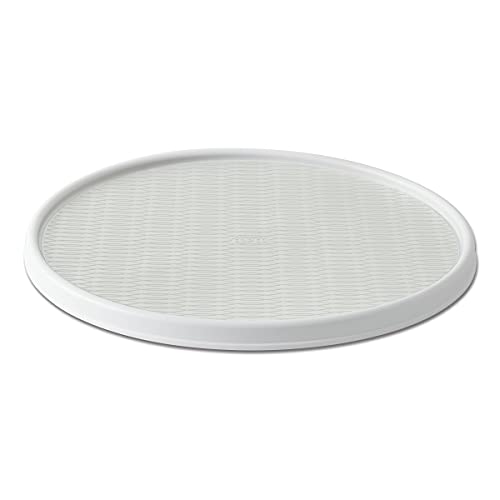
Copco Non-Slip Turntable
The Copco Non-Slip Turntable is a rotating tray with a grippy surface that turns the deep back corner of a shelf into reachable storage, positioned in the entry to mid tier, and equally useful in a pantry cupboard. In daily use it earns its place by doing one job predictably: food goes in, the bin slides or lifts out without drama, and the contents stay visible so nothing is forgotten at the back. Treat it as a mid-tier choice and check the current listing for the exact configuration on offer, because sets and sizes change often.
Best for: households whose fridge habits match what the Copco design does well, and who will wash and rotate it as part of a weekly rhythm. Not suited for: fridges whose shelf dimensions fight its footprint, or anyone expecting a bin alone, without zoning and rotation habits, to transform how fresh their food stays. Visibility helps you use food in time; it does not extend shelf life, and honest expectations keep a good product from disappointing you.
- Strengths: clear walls that keep contents visible at a glance
- Comfortable handling when the bin is full and cold
- Smooth surfaces that wash clean without fuss
- Trade-offs: takes a little shelf space of its own
- Needs regular washing to stay odour-free
- Works best as part of a zoned layout, not alone

YouCopia RollOut Fridge Caddy
The YouCopia RollOut Fridge Caddy is a rolling caddy with small wheels and a handle that lets heavy bottles and jars glide forward instead of being dragged, positioned in the premium tier, and one of the few designs that genuinely changes how a deep shelf feels. In daily use it earns its place by doing one job predictably: food goes in, the bin slides or lifts out without drama, and the contents stay visible so nothing is forgotten at the back. Treat it as a premium choice and check the current listing for the exact configuration on offer, because sets and sizes change often.
Best for: households whose fridge habits match what the YouCopia RollOut design does well, and who will wash and rotate it as part of a weekly rhythm. Not suited for: fridges whose shelf dimensions fight its footprint, or anyone expecting a bin alone, without zoning and rotation habits, to transform how fresh their food stays. Visibility helps you use food in time; it does not extend shelf life, and honest expectations keep a good product from disappointing you.
- Strengths: clear walls that keep contents visible at a glance
- Comfortable handling when the bin is full and cold
- Smooth surfaces that wash clean without fuss
- Trade-offs: takes a little shelf space of its own
- Needs regular washing to stay odour-free
- Works best as part of a zoned layout, not alone
SimpleHouseware Refrigerator Organizer Bins
The SimpleHouseware Refrigerator Organizer Bins is a value-focused clear bin set sold in generous multipacks, positioned in the entry tier, that makes it affordable to give every shelf and door zone its own container in one purchase. In daily use it earns its place by doing one job predictably: food goes in, the bin slides or lifts out without drama, and the contents stay visible so nothing is forgotten at the back. Treat it as a entry-tier choice and check the current listing for the exact configuration on offer, because sets and sizes change often.
Best for: households whose fridge habits match what the SimpleHouseware design does well, and who will wash and rotate it as part of a weekly rhythm. Not suited for: fridges whose shelf dimensions fight its footprint, or anyone expecting a bin alone, without zoning and rotation habits, to transform how fresh their food stays. Visibility helps you use food in time; it does not extend shelf life, and honest expectations keep a good product from disappointing you.
- Strengths: clear walls that keep contents visible at a glance
- Comfortable handling when the bin is full and cold
- Smooth surfaces that wash clean without fuss
- Trade-offs: takes a little shelf space of its own
- Needs regular washing to stay odour-free
- Works best as part of a zoned layout, not alone
How to Get the Most Value If You Buy
Start with the lowest shelf meat bin and the leftover zone, because safety and waste are where value concentrates. Add the dairy and daily-items zones next, and only then consider turntables and caddies for depth problems. Wash bins on rotation, rotate stock first in, first out every time you shop, and photograph the working layout so the household can restore it after a big shop disturbs it. Review the system after a month and remove any bin that has not earned its space; a smaller system that survives beats a grand one that quietly dissolves.
Measure before you shop, and measure the fridge you actually use rather than the one in the brochure. Shelf depth, the clear height between shelves, the width left beside the crisper drawers, and the door bin spacing all decide which organisers fit. Write the numbers down, then subtract a little breathing room: a bin that only just squeezes in will scrape, stick, and annoy you every single day, while a bin with a finger of clearance slides in and out without a fight. Remember that many fridges taper slightly toward the back, so a bin that fits at the front lip may bind deeper in.
Height is the dimension shoppers most often get wrong. A tall bin looks efficient on a product page and then prevents the shelf above from sitting at its usual height, or forces you to tilt bottles to get them in and out. Think in layers: low bins for the main shelves where you reach over the front edge, taller bins only where the shelf spacing genuinely allows them, and nothing so tall that it blocks the air vents or hides the shelf light. If your fridge has adjustable shelves, decide their final positions first and organise second, not the other way round.
Door storage deserves its own measurement pass. Door bins vary enormously between models, and an organiser insert that is slightly too wide will bow the door bin or rattle every time the door swings. Condiments, small jars, and eggs suit the door because it is the warmest part of the fridge and they tolerate that well. Milk and other highly perishable items are better on a main shelf toward the back, where temperatures are coldest and steadiest, even if the door feels like their natural home.
Judge value over years, not at the checkout. A bin that is used every day, washed weekly, and still clear and uncracked after years of service has cost almost nothing per use, whatever its tier. A cheap set that clouds, cracks at the handles, or never quite fits has cost its full price for a few months of mild improvement. This is why the entry, mid, and premium tiers all have honest cases: entry sets let you test a system before committing, mid-tier bins balance clarity and toughness for most homes, and premium designs add the finishing details that heavy daily use rewards.
The savings an organiser creates are mostly invisible: less food thrown away because it was forgotten, fewer duplicate purchases because you can see what you own, and fewer emergency takeaway meals because tonight’s ingredients are findable. None of that appears on a receipt, and it easily outweighs the cost of the bins themselves in a busy household. The honest counterweight is that none of it happens automatically. The bin is a tool; the rotation, zoning, and washing habits are the actual product, and they are free but not effortless.
The Decision Checklist
- Do you throw away food that was forgotten at the back?
- Do you buy duplicates because you cannot see what you own?
- Do deep shelves hide jars and bottles from you?
- Will everyone in the household follow simple zones?
- Will you wash bins regularly without resentment?
- Is raw meat currently stored without leak-proof containment?
- Can you start with two or three bins rather than a full set?
Mostly yes answers mean a refrigerator organizer is worth it for your home, and you should buy a small core set in the tier that matches how hard your fridge works. Mostly no answers mean your current system is already doing the job, and the honest recommendation is to keep a single leak-proof meat bin for safety and spend nothing more. Either answer is a good outcome; the only bad outcome is buying a large set on hope and abandoning it by spring.
Going Deeper: Making the System Last
Organise by zone, not by shopping trip. Give each shelf or bin a single job: one zone for raw meat on the lowest shelf, one for dairy and eggs, one for produce that is not in the crispers, one for leftovers and ready-to-eat food, one for drinks, and one small zone for the odds and ends that otherwise wander. When everything has a job, putting groceries away becomes fast because there is no decision to make, and finding things becomes fast because there is only one sensible place to look.
Leftovers deserve special treatment because they are where fridges go wrong. A single, shallow, clearly visible leftover zone at eye level, with containers you can see into, means yesterday’s food gets eaten instead of slowly migrating to the back and becoming a science project. Date leftovers with a washable marker or a strip of tape on the lid. When the leftover zone is full, that is your signal to plan a meal around it rather than buying more, which is where an organiser quietly starts saving real money.
Keep a small landing zone for the items in active rotation: the jam in current use, the open milk, the butter dish, the snacks the household reaches for daily. Everything else can live a shelf deeper or higher. This front-of-fridge thinking mirrors how good kitchens have always worked, with the everyday within easy reach and the reserves behind. An organiser system that ignores daily habits and instead arranges food by category purity will be abandoned within a fortnight, so design around behaviour first and tidiness second.
Cleaning an organised fridge is faster than cleaning a chaotic one, but only if you clean the bins themselves on a rhythm. A quick wipe when a bin empties, a proper warm soapy wash on a regular cycle, and a full dry before refilling will keep odours away. Sticky rings from jars and sauce bottles build up invisibly, and a bin that looks clean can still smell of last month’s pickle brine. Rotating one or two bins through the sink each week spreads the work so it never becomes a dreaded whole-fridge project.
Check care instructions before assuming everything is dishwasher safe. Many clear bins prefer hand washing, because high dishwasher heat can cloud or warp rigid clear plastic over time, and cloudy bins quietly destroy the visibility you bought them for. Warm water, a soft sponge, and ordinary washing-up liquid handle nearly everything a fridge bin collects. For stubborn odours, a soak with bicarbonate of soda in the water usually does the job without harsh chemicals near food.
While a bin is out being washed, wipe the shelf beneath it. Crumbs and drips migrate under bins and are easy to miss for months. That thirty-second habit, repeated bin by bin, keeps the whole compartment fresher than an occasional heroic deep clean, and it gives you a natural moment to check dates, rotate stock to the front, and notice what needs using up. Organisation and hygiene are the same habit viewed from two directions.
Judge value over years, not at the checkout. A bin that is used every day, washed weekly, and still clear and uncracked after years of service has cost almost nothing per use, whatever its tier. A cheap set that clouds, cracks at the handles, or never quite fits has cost its full price for a few months of mild improvement. This is why the entry, mid, and premium tiers all have honest cases: entry sets let you test a system before committing, mid-tier bins balance clarity and toughness for most homes, and premium designs add the finishing details that heavy daily use rewards.
The savings an organiser creates are mostly invisible: less food thrown away because it was forgotten, fewer duplicate purchases because you can see what you own, and fewer emergency takeaway meals because tonight’s ingredients are findable. None of that appears on a receipt, and it easily outweighs the cost of the bins themselves in a busy household. The honest counterweight is that none of it happens automatically. The bin is a tool; the rotation, zoning, and washing habits are the actual product, and they are free but not effortless.
A household that batch cooks needs organisers that respect containers: flat, stackable bins that corral meal-prep boxes into one zone, room for a large stock pot to land without rearranging three shelves, and a freezer-adjacent plan for overflow. A household that grazes needs the opposite: small, open, eye-level bins for snacks, yoghurt, cheese, and fruit, refreshed often and never buried. Neither system is better; they are answers to different questions, and buying the wrong answer is the commonest reason organisers end up in a cupboard.
Families with children benefit from a deliberate low zone: drinks, fruit, and approved snacks in one reachable bin turns the fridge from an adult-only puzzle into something a child can use without climbing or rummaging. Keep raw meat and heavy glass well away from that zone, and expect the kids’ bin to need the most frequent washing of any in the fridge. Small hands and sticky fingers are a design constraint, not a failure of the system.
Small fridges and under-counter models punish wasted millimetres. In a compact fridge, one or two perfectly fitted bins beat a large set of almost-right sizes, and a turntable can be transformative because depth you cannot reach is storage you do not have. Measure twice, buy once, and be willing to return a set that nearly fits. Nearly is not a size, and living with a bin that sticks every day costs more patience than a return ever will.
The Weekly Rhythm That Keeps It Working
Systems survive on rhythm, not enthusiasm. Anchor the fridge rhythm to an existing moment: the main shop, the bin collection, or a regular cooking night. Before the shop, glance through every zone, move older food forward, note what needs using, and pull one or two bins for washing. After the shop, load new food behind the old, date the leftovers as they are made, and return washed bins to their zones. Ten unhurried minutes a week outperforms a heroic monthly purge, because food rarely goes wrong all at once; it drifts, and a weekly rhythm catches drift while it is still cheap.
Teaching the Household Without a Lecture
The best fridge systems teach themselves. A label on each bin front, a photograph of the finished layout inside a cupboard door, and zones that match how people naturally reach will align a household faster than any rule announced at dinner. Children learn a snack zone in a day when it is reachable and clearly theirs. Guests put things back correctly when the right home is obvious. Design for the least attentive user on their busiest day, and the system will hold; design for a careful adult with time to think, and it will quietly fail by Thursday.
When to Reorganise and When to Leave It Alone
Reorganise when the evidence changes: a new household member, a new way of shopping, a new fridge, or a zone that overflows weekly while another sits empty. Leave the system alone when it merely looks imperfect but wastes nothing and annoys nobody. Constant reorganisation is its own disorder, because nobody can learn a moving system. Change one zone at a time, live with it for a fortnight, and keep the change only if waste, time, or temper measurably improves. Stability is a feature, and a settled, slightly imperfect layout beats a perfect one that changes monthly.
Seasonal Pressure and the Flexible Shelf
Every fridge meets its seasons: festive feasts, summer drinks, preserving gluts, and the January of good intentions. A system that cannot flex will be dismantled by its first celebration and never rebuilt. Protect the layout by designating one shelf or zone as deliberately flexible, where oversized and temporary food lands without evicting the permanent zones. The meat bin and the leftover zone never flex, because safety and waste live there; everything else can lend space for a week. When the season passes, the photograph of the normal layout restores order in minutes.
What Good Looks Like After a Month
Judge an organised fridge after a month, not after the satisfying first afternoon. Good looks like this: every zone still matches its contents, the meat bin is washed and in place, leftovers are dated and being eaten, bins are clear rather than cloudy with grime, and nobody in the household can remember the system being discussed. Waste is visibly down, duplicates have stopped arriving, and the door opens onto calm. If instead the bins are sticky, the zones are fiction, and food still hides, the honest fix is fewer bins and simpler zones, not more products.
Small Fridges, Big Lessons
Compact fridges teach the discipline that large ones let you postpone. With no space to waste, fit becomes exact, zones become few, and every product must argue for its volume. The lessons transfer upward: a big fridge organised with a small fridge’s discipline feels luxurious rather than merely large, because every shelf is readable and every item reachable. If you are between sizes, organise the fridge you have as if it were smaller. The habits cost nothing, and they will make any future fridge, of any size, work better from its first day.
The Shopping Trip Starts at the Fridge Door
An organised fridge changes shopping before it changes storage. A readable inventory means the list is written from evidence: what is finished, what is low, what is waiting to be used. Duplicate jars stop arriving, impulse extras meet the honest question of which zone they would live in, and food bought with a plan gets eaten on schedule. Over months this is where the money is saved, quietly, in food used rather than binned and in shopping that answers needs instead of guesses. The bins started it, but the list is where it pays.
Reading Your Fridge Like a Cook
A cook reads a fridge the way a driver reads a dashboard: one glance should report what is fresh, what is urgent, and what is missing. Organisation is what makes that glance possible. When leftovers sit dated at eye level, dairy rides together, and the meat bin guards the bottom shelf, the cook plans from reality instead of hope. Meals get built around food that needs using, shopping lists shrink to genuine gaps, and the small daily friction of cooking drops. This is the unglamorous heart of the whole topic: not tidiness for its own sake, but information, delivered at the speed of a opening door, to the person deciding what dinner is.
The Weekly Rhythm That Keeps It Working
Systems survive on rhythm, not enthusiasm. Anchor the fridge rhythm to an existing moment: the main shop, the bin collection, or a regular cooking night. Before the shop, glance through every zone, move older food forward, note what needs using, and pull one or two bins for washing. After the shop, load new food behind the old, date the leftovers as they are made, and return washed bins to their zones. Ten unhurried minutes a week outperforms a heroic monthly purge, because food rarely goes wrong all at once; it drifts, and a weekly rhythm catches drift while it is still cheap.
Teaching the Household Without a Lecture
The best fridge systems teach themselves. A label on each bin front, a photograph of the finished layout inside a cupboard door, and zones that match how people naturally reach will align a household faster than any rule announced at dinner. Children learn a snack zone in a day when it is reachable and clearly theirs. Guests put things back correctly when the right home is obvious. Design for the least attentive user on their busiest day, and the system will hold; design for a careful adult with time to think, and it will quietly fail by Thursday.
When to Reorganise and When to Leave It Alone
Reorganise when the evidence changes: a new household member, a new way of shopping, a new fridge, or a zone that overflows weekly while another sits empty. Leave the system alone when it merely looks imperfect but wastes nothing and annoys nobody. Constant reorganisation is its own disorder, because nobody can learn a moving system. Change one zone at a time, live with it for a fortnight, and keep the change only if waste, time, or temper measurably improves. Stability is a feature, and a settled, slightly imperfect layout beats a perfect one that changes monthly.
Seasonal Pressure and the Flexible Shelf
Every fridge meets its seasons: festive feasts, summer drinks, preserving gluts, and the January of good intentions. A system that cannot flex will be dismantled by its first celebration and never rebuilt. Protect the layout by designating one shelf or zone as deliberately flexible, where oversized and temporary food lands without evicting the permanent zones. The meat bin and the leftover zone never flex, because safety and waste live there; everything else can lend space for a week. When the season passes, the photograph of the normal layout restores order in minutes.
What Good Looks Like After a Month
Judge an organised fridge after a month, not after the satisfying first afternoon. Good looks like this: every zone still matches its contents, the meat bin is washed and in place, leftovers are dated and being eaten, bins are clear rather than cloudy with grime, and nobody in the household can remember the system being discussed. Waste is visibly down, duplicates have stopped arriving, and the door opens onto calm. If instead the bins are sticky, the zones are fiction, and food still hides, the honest fix is fewer bins and simpler zones, not more products.
The Break-Even Question: When a Refrigerator organizer Earns Its Space, and When It Honestly Does Not
Worth it is a personal verdict dressed as a product question. The same refrigerator organizer can be money well spent for one household and an expensive ornament for another, and the difference is almost never quality — it is frequency of use, fit with the space, and what it replaces. This section gives you a break-even way of thinking about the refrigerator organizer: a simple accounting of cost per use, space per benefit, and effort per result, plus the honest signs that your household should skip it, borrow it, or buy the simpler version instead. Run your own numbers through it before you decide.
The Arithmetic That Actually Matters
Start with cost per use. Take the full cost of owning the refrigerator organizer — purchase, any consumables, any accessories you genuinely need, and the space it occupies valued honestly — and divide it by a realistic count of uses in its first two years. Realistic is the key word: count the uses your calendar supports, not the uses your intentions promise in January. Then compare that figure with the alternatives you would actually use — hiring, borrowing, a service, or the simpler item you already own. A refrigerator organizer that wins that comparison on your real schedule is worth it almost regardless of its badge; one that only wins on an imagined schedule is not.
The Signs on Each Side of the Line
On the worth-it side: you already do the task or feel the gap weekly; you have measured the space and it fits with room to live around; someone besides the buyer will use it too; and you can name what it replaces or retires. On the skip-it side: the purchase is motivated by a rare event, a visitor, or a version of your routine you have never actually kept; the space only works if something else is moved into storage; or the honest plan is to change your habits first and buy later. Neither list is a judgement — households change, and a refrigerator organizer that fails the test this year may pass it easily after a move, a new job or a new family member.
Before you buy the refrigerator organizer, answer these five questions out loud or on paper:
- How many times did I genuinely need this in the last three months — not wished for it, needed it?
- What exactly does it replace, retire or stop me paying for, starting in its first month?
- Where does it live when idle, measured and checked, and what currently in that spot gets moved?
- Who else in the household will use it without being asked, and who will maintain it?
- If it stopped working in a year, would I replace it immediately, manage without, or feel quietly relieved?
If the refrigerator organizer will serve children or older relatives, test the key actions with the weakest grip and the shortest reach in the house in mind. Leave a little capacity unused — in size, storage or power — because a refrigerator organizer run permanently at its limit ages faster and annoys sooner than one with headroom.
The last question is the sharpest: immediate replacement means the refrigerator organizer has become infrastructure in your home, and purchases like that are almost always worth it. Quiet relief means the opposite, however good the reviews were. Decide with your own arithmetic and your own answers, and whichever way the verdict falls you will have bought — or saved — with your eyes open, which is the only definition of value that survives contact with real life.
Frequently Asked Questions
Do refrigerator organisers really keep food fresher?
Not directly, and any claim that a bin extends shelf life should be treated with suspicion. What organisers do is make food visible and reachable, so it gets used in good time instead of being forgotten at the back. Freshness still comes from correct temperatures, sensible storage, and using food within its dates. The organiser supports those habits; it does not replace them, and that honesty is exactly why a simple system outperforms an expensive one that promises miracles.
Where should raw meat go in an organised fridge?
On the lowest shelf, in a leak-proof bin with a raised lip, every time. Drips travel downward, so meat stored higher up can contaminate everything below it. A dedicated bin contains leaks, protects the shelf, and makes clean-up a quick rinse instead of a full shelf scrub. Keep the meat bin away from ready-to-eat food and wash it after every use, especially after poultry, and never let packages sit directly on the shelf where a torn wrapper can leak unnoticed.
How often should fridge organiser bins be washed?
Wipe a bin whenever it empties and give it a proper warm soapy wash on a regular weekly-to-fortnightly rhythm, drying it fully before it goes back. Sticky residue builds up quietly in a cold, damp compartment and is where odours start. Rotating one or two bins through the sink each week spreads the effort so it never becomes a big job. Hand washing suits most clear bins best, since high dishwasher heat can cloud rigid clear plastic over time.
Can organiser bins block the fridge air vents?
Yes, and it matters. Tall bins pushed hard against the back or side walls can seal off the vents that circulate cold air, creating warm pockets where food spoils faster while other areas over-chill. Leave a clear gap around vents, keep tall bins away from them, and check vent positions in your fridge manual before finalising a layout. Even temperatures protect food far more than any single accessory, so airflow always wins over one extra bin of storage.
What is first in, first out and why does it matter?
First in, first out means the oldest food gets used first. When new groceries come home, move older items to the front of the bin or shelf and place fresh purchases behind them. It sounds trivial and it is the single most effective waste-cutting habit in a fridge, because the food that needs eating first becomes the food you see first. Clear bins make the habit easy to keep, since a quick glance shows what is waiting before you write a shopping list.
How many organiser bins does a typical fridge need?
Fewer than most sets assume. Start with the zones you will genuinely maintain: a meat bin for the lowest shelf, one or two bins for dairy and ready-to-eat food, a leftover zone, and perhaps a turntable or rolling caddy if deep shelves hide food from you. Live with that core for a few weeks, notice what still wanders or gets lost, and add only the bin that solves that specific problem. A fridge crowded with organisers is just clutter with better marketing.
Related Guides and Next Steps
Keep building the system with the companion guides in this series. See how to choose a refrigerator organizer for more on this topic. See refrigerator organizer buying guide for more on this topic. See refrigerator organizer pros and cons for more on this topic. See refrigerator organizer review for more on this topic. See refrigerator organizer reviews for more on this topic. See best jewelry organizers for more on this topic. See best closet organizer shelves for more on this topic. See best under bed storage for more on this topic. See best vacuum storage bags for more on this topic. Each guide approaches the same fridge from a different angle, so read the one that matches the decision you are making next, put one shelf at a time in order, and let the habits settle before reorganising again.


