Disclosure: As an Amazon Associate, dailyhomedecorating.com earns from qualifying purchases. Links on this page are affiliate links; they cost you nothing extra. Prices and availability change often, so check the current Amazon listing before you buy.
So, is a greenhouse worth it for a home gardener, or is it an expensive shed for tomatoes? The short answer is that a greenhouse is worth it when three conditions meet: a sunny site, crops and sowings you genuinely want to protect, and a routine that can spare a short daily visit in season. Miss one condition and the honest answer tilts the other way, at least until the site or the routine changes. This assessment works through what you actually get, the real costs beyond money, the growers it pays off for, the growers who should skip it, and the alternatives that might serve the same goal more simply.
Short Answer and Key Takeaways
Worth it if: you garden most weeks, your plot has honest sun, and earlier sowings, sheltered fruiting crops or overwintered plants would genuinely change what you eat and grow. Not worth it if: the only site is shaded or severely exposed without shelter work, you are away for long summer stretches with no cover for venting and watering, or your real goal is a few herbs that a sunny windowsill and a mini shelter already serve. The structure itself is rarely the problem; the match is everything.
The structure is only the first commitment: staging, shading, vents, watering kit, growing medium and replacement plants all belong in an honest picture of ownership. A smaller house that is well sited, well anchored and used constantly will out-earn a grand one that is badly placed and visited once a week.
In this guide
Is a Greenhouse Worth It: What You Actually Get
Label everything as you sow, with the variety and the date, since seedlings of very different crops look remarkably alike at two leaves. Rotate what grows where, refresh tired growing medium, and feed steadily rather than in occasional floods, because container plants depend entirely on what you provide. Start with crops that forgive mistakes: tomatoes, peppers, cucumbers, salad leaves and herbs all repay a beginner quickly and teach the rhythms of the space.
Spring is the greenhouse at full stretch: seed trays on every surface, hardening off by day, and a nightly check of vents and doors as temperatures swing. Summer rewards the grower who planned shade and airflow, with fruiting crops ripening fast and herbs growing almost faster than the kitchen can use them. Keep a simple notebook of sowing dates, varieties and results, because one season of honest notes teaches more than a shelf of general advice.
The Real Costs Beyond Money
Buy the best frame and base you can manage first, because accessories can be added over seasons, while a weak structure cannot be upgraded in place. Judge value by seasons of use rather than by the day the frame goes up, because a greenhouse that is used from early spring to late autumn spreads its effort and expense widely. Time is a real cost too, since a greenhouse asks for a short visit most days in the growing season, and more in hot spells when vents and watering cannot wait.
Store shade cloth, fleece and spare clips where you can find them in a hurry, labelled by season, rather than in the general tangle of the shed. Wash the glazing inside and out at least once a year, ideally before the main sowing season, because algae film and dust quietly steal the light your plants are counting on.
Count the build honestly too: a weekend or more of assembly, a base to prepare, anchoring to engineer for your surface and weather, and panels to handle with care and protection during glazing. None of this is hidden, and none of it repeats yearly, but a buyer who budgets only for the kit and not for the setup is planning to be annoyed in the first month.
Who It Pays Off For
The Keen Sower
Growers who sow in volume gain the clearest return: trays started early, young plants raised under control, and failures reduced by shelter. The house becomes the engine room of the whole garden, and its value shows in every bed outside it.
Drip lines and soaker hoses put water at the roots, keep foliage drier, and cut the splashing that spreads soil-borne problems from pot to pot. A water butt near the door, filled from a nearby downpipe where local rules allow, shortens every watering round and softens the shock of cold mains water on warm roots.
The Fruit and Salad Grower
Growers chasing ripe tomatoes, peppers, cucumbers and long salad seasons in a cool or wet climate gain the crops themselves as the return. Where the open garden ripens these unreliably, the house converts hope into routine, and the kitchen notices first.
Staging and shelving multiply your growing area, but only if light still reaches the lower levels, so arrange tall plants where they will not shade the trays behind them. Harvest promptly and often, because picked plants keep producing, crowded fruit invites rot, and the kitchen is the real test of whether the space is earning its keep.
The Tender-Plant Keeper
Gardeners with citrus, pelargoniums, young shrubs and other tenderness to carry through winter gain shelter that no fleece pile quite matches, plus a bright, dry place to work with plants when the garden outside is dormant.
Shelter from the prevailing wind helps, but a solid wall of fencing hard against the glass can create turbulence, so a little distance plus a porous hedge or screen usually behaves better. Start with the sunniest honest spot you have, because no frame, panel or accessory can fully make up for a site that sits in shade for most of the day.
Who Should Skip It
The Absent Summer Gardener
If work or travel empties the house through the hottest weeks and no neighbour, timer or automatic system covers venting and watering, skip the rigid house for now. A tunnel with roll-up sides, or beds with covers, forgive absence far better.
Ventilation is the difference between a greenhouse that grows plants and one that cooks them, because a small sealed space in full sun heats far faster than most new owners believe. Roof vents that open high, where hot air collects, do more work than a door left ajar, and automatic openers that respond to temperature keep working on the days you are away.
The Shaded-Plot Gardener
If trees, buildings or aspect shade every candidate site for most of the day, fix the light first or grow what shade suits. A greenhouse cannot manufacture sun, and a shaded house grows algae and disappointment with equal reliability.
A level base matters more than most first-time owners expect, since a frame that starts out of square tends to rack, strain its fixings and leave doors that never quite close cleanly. Watch how light moves across the garden in the morning and again in the late afternoon, and note which fences, trees and buildings throw long shadows in winter when the sun sits lower.
The Minimalist Herb Grower
If the whole ambition is basil, parsley and a few chillies, a mini greenhouse or a bright sheltered corner delivers it without a building, a base or a storm plan. Scale the structure to the ambition and the answer stays yes at a fraction of the commitment.
Soil beds inside the house grow deeply and hold moisture kindly, while pots and grow bags give control, mobility and an easier fresh start each season.
Strengths and Trade-Offs of Owning One
Strengths
- Seasons that start earlier and end later, every year, not just in kind ones.
- Crops and young plants sheltered from the weather that actually ruins them.
- A bright, dry workspace that makes gardening happen on days it otherwise would not.
Trade-Offs
- Daily summer duties around heat and water that cannot be postponed.
- Storm, anchoring and upkeep responsibilities that come with any light structure.
- Garden space and setup effort committed permanently to one spot.
Anchoring is not an optional finishing touch: a greenhouse is a light structure with large flat surfaces, and wind will find every weakness in a frame that is simply sitting on the ground. After the first strong blow, walk the whole perimeter and re-check every anchor, bolt and clip, because fixings bed in and loosen slightly as a new frame settles.
Alternatives to Consider

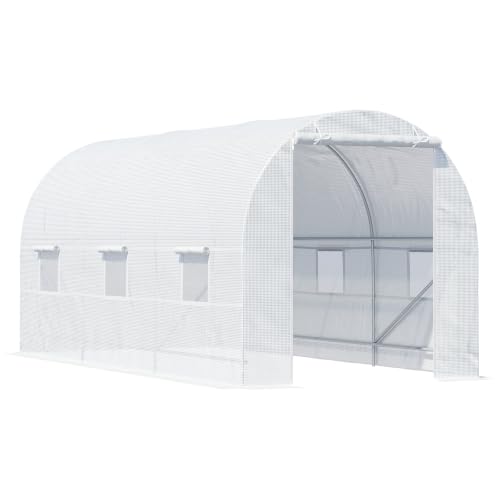
Outsunny Walk-In Tunnel Greenhouse
Best for: the alternative that tests the habit seasonally. Not suited for: a permanent rigid building.
In prose terms, this pick is a walk-in tunnel style greenhouse with a flexible cover, suited to seasonal growing, crop protection and gardeners testing whether a permanent structure is right for them. Treat it as a tier and a shape rather than a promise about any single listing: check the current listing carefully for exactly what is included, how the base and anchoring are handled, and which vents or openers come in the box versus which are added later.
Strengths and trade-offs in brief: the strengths are the clarity of its intended job, a frame and glazing combination that suits that job, and a footprint that maps onto real gardens rather than show plots. The trade-offs are the usual honest ones for its class: assembly takes patience, anchoring and ventilation are your responsibility to get right, and accessories that transform daily use are rarely all included at the start. Position it in the entry, mid or premium tier by comparing its frame, glazing and included hardware against the rest of the class, not by chasing a headline figure.
Quictent Mini Greenhouse
Best for: the alternative for patio-scale ambitions. Not suited for: walk-in growing.
In prose terms, this pick is a compact mini greenhouse format for balconies, patios and small corners, built around sheltering pots, herbs and seedlings rather than full walk-in cropping. Treat it as a tier and a shape rather than a promise about any single listing: check the current listing carefully for exactly what is included, how the base and anchoring are handled, and which vents or openers come in the box versus which are added later.
Strengths and trade-offs in brief: the strengths are the clarity of its intended job, a frame and glazing combination that suits that job, and a footprint that maps onto real gardens rather than show plots. The trade-offs are the usual honest ones for its class: assembly takes patience, anchoring and ventilation are your responsibility to get right, and accessories that transform daily use are rarely all included at the start. Position it in the entry, mid or premium tier by comparing its frame, glazing and included hardware against the rest of the class, not by chasing a headline figure.

MCombo Polycarbonate Greenhouse
Best for: the alternative for small gardens wanting rigid shelter. Not suited for: large-scale cropping.
In prose terms, this pick is a polycarbonate panel greenhouse in the compact walk-in class, aimed at smaller gardens that still want a rigid, lockable structure rather than a soft cover. Treat it as a tier and a shape rather than a promise about any single listing: check the current listing carefully for exactly what is included, how the base and anchoring are handled, and which vents or openers come in the box versus which are added later.
Strengths and trade-offs in brief: the strengths are the clarity of its intended job, a frame and glazing combination that suits that job, and a footprint that maps onto real gardens rather than show plots. The trade-offs are the usual honest ones for its class: assembly takes patience, anchoring and ventilation are your responsibility to get right, and accessories that transform daily use are rarely all included at the start. Position it in the entry, mid or premium tier by comparing its frame, glazing and included hardware against the rest of the class, not by chasing a headline figure.
Cold frames, cloches and fleece remain honourable alternatives for single jobs: hardening off, protecting a row, or carrying one crop through a cold snap. The greenhouse wins when the jobs multiply and the seasons stack up; the simpler covers win when the job list stays short.
How to Get the Most Value If You Buy
Extending the season at both ends is where most owners feel the value first, weeks before outdoor beds wake and weeks after the first frost ends the outdoor crop. Autumn is for clearing honestly, washing the structure down, removing diseased material promptly, and sowing the hardy salads that carry the space into winter. Winter use is a choice rather than a promise: an unheated greenhouse still shelters tender pots, ripens late fruit and gives seedlings a head start, even if growth slows to a crawl.
Quarantine new plants on a separate shelf for a short while before they join the main staging, since most greenhouse pest stories begin with an unnoticed passenger. Sticky traps hung early tell you what is arriving before colonies establish, and they cost almost no effort once they are part of the routine.
The Decision Checklist
- Do I have a sunny, reasonably level site with working room around it?
- Can I anchor the structure properly for my surface and my weather?
- Will I visit most days in the growing season, or is cover arranged?
- Do I have a ventilation and shading plan for the hottest weeks?
- Have I checked local rules at concept level for a structure of this size?
- Is my crop and sowing list long enough to fill the house honestly?
- Would a tunnel, mini or cold frame meet the same goal more simply?
Mostly yes answers, with the last question honestly answered no, mean the greenhouse is worth it for you. Several no answers are not a failure; they are directions, pointing at the site work, the routine cover or the simpler structure to sort first.
A Closer Look: Working Notes for the Greenhouse Year, Part 1
Keep a dated photo record of the house through the year, because comparing the same view month by month shows shading, crowding and growth patterns that memory smooths away. Rotate a small task list on the door: vents checked, watering done, ties adjusted, ripe fruit picked, so a covering helper can keep the house safe in your absence. Leave a spare thermometer where you can read it without opening the door, and glance at it at the same times each day until the house’s daily rhythm feels familiar. Plan successional sowings in small batches rather than one heroic tray, so salads, herbs and young plants arrive in a steady line instead of a glut and a gap.
Keep twine, labels, clips and a pencil in a lidded box inside the house, because the job you postpone for want of a label is the job that causes confusion at harvest. Tie in tall crops little and often, guiding stems while they are supple instead of wrestling woody growth back to its support after a windy night. Feed the soil or the pots as a routine, not a rescue, and write down what each crop received so next season starts from evidence rather than guesswork. Thin seedlings bravely and early, because a tray of strong, spaced plants outperforms a crowded tray of rivals every single time.
A Closer Look: Working Notes for the Greenhouse Year, Part 2
Use the quiet winter weeks to sort seed packets by sowing date, test old seed on damp paper, and clear out varieties that never earned their space. Watch the corners and the staging undersides when you inspect, since pests settle where eyes rarely go and problems found there early stay small. Harvest in the cool of the morning where you can, when leaves are crisp and fruit is firm, and carry a basket in rather than balancing produce in your arms. Keep paths inside the house clear and dry, because a greenhouse you can move through safely with full hands is a greenhouse you will use properly.
Group heat-lovers together in the warmest, brightest zone and give cooler crops the door end, so the house’s natural gradient works for you instead of against you. Open vents before you open the door on a still, bright morning, so the hottest air leaves by the roof rather than rolling over the plants at head height. Save strong, true seedlings when you prick out and compost the weak without sentiment, because bench space under glass is the most valuable ground you own. Mulch soil beds inside the house to hold moisture and keep roots cool, topping it up as it settles rather than letting the surface bake and crack.
A Closer Look: Working Notes for the Greenhouse Year, Part 3
Check ties and supports after every storm as part of the anchor round, since a fallen tomato stem is usually a support that loosened days earlier. Sow a few pots purely for pleasure each season, a flower or an experiment, because enjoyment is part of what keeps the daily routine alive in year three. Vent on bright winter days even when the house feels cold, trading a little warmth for dry, moving air that keeps mould off overwintering leaves. Clean labels and reuse them where the writing allows, keep a marker that survives watering, and date everything as if a stranger had to run the house, because one day a helper will.
Notice which bench gets the first sun and which corner stays cool, and move tender trays through those microclimates as deliberately as you choose the site itself. Water the pots that dry fastest first and check the rest with a fingertip rather than a schedule, because thirst follows weather, not the calendar. Keep a hand fork, a small brush and a bucket by the door for the two-minute jobs, sweeping fallen leaves and soil before they become a slippery, pest-friendly layer. Prune and train on a dry day, remove yellowing leaves promptly, and bin diseased material rather than composting it, so the house resets cleanly each week.
Deep Dive: Soil, Feeding and Root Care
Roots under glass live in a world you control completely, which means every success and every failure in the root zone traces back to a decision you made. Fresh growing medium each season is not extravagance but hygiene, since old medium carries salts, compaction and the resting stages of problems you cleared in autumn. A medium that drains freely yet holds moisture evenly suits almost everything under glass, and gritty, tired or waterlogged mixes show in the leaves within weeks. Feed little and often once growth is moving, because container roots cannot forage beyond the pot and a feast-and-famine rhythm stresses exactly the plants you value most.
Yellow leaves ask questions before they want answers: check water first, then light, then feeding, in that order, since most feeding problems begin as watering problems. Bigger pots forgive more than small ones, holding moisture and nutrients steadier through a hot day, so pot on promptly when roots circle the base. Soil beds inside the house reward a yearly top-up of organic matter, worked in lightly, because a living bed buffers moisture and temperature better than any bagged mix alone. Keep a simple rule for grow bags and beds alike: never let the root zone swing from dust-dry to flooded in a single day if you can possibly help it.
Roots dislike hot pots, so stand dark containers out of direct glare or cluster them so neighbours shade each other’s sides on bright afternoons. When you empty a finished crop, shake the old medium out, inspect the roots for health and lessons, and let what you see inform next season’s spacing and feeding. A handful of slow, steady nutrition beats repeated rescue doses, and plants fed calmly grow the firm, green growth that resists pests best. If growth stalls in good light with even moisture, suspect the roots before the leaves: slip the plant out and look, because the answer is usually visible in thirty seconds.
Deep Dive: Seed, Sowing and Young Plants
Seed under glass wants three things in balance: warmth to germinate, light the moment it emerges, and air around the stem so seedlings grow stocky rather than pale and drawn. Sow thinner than instinct suggests, because pricking out a sparse tray is quick work while rescuing a crowded, tangled one wastes the strongest seedlings. Label with variety and date at the moment of sowing, never later from memory, since memory is the least reliable tool in any greenhouse. Bottom heat helps stubborn germinators, but move trays off the heat as soon as shoots appear, because warm roots plus low light is the recipe for leggy plants.
Harden off in stages: vents first, then a sheltered spot by day, then nights outside, so young plants meet the real garden as a gradient rather than a shock. Prick out holding a leaf, never the stem, because a bruised leaf regrows and a crushed stem does not, a small technique that saves more plants than any gadget. Water seedlings from below where you can, keeping stems and first leaves dry, and empty the tray after a short soak so roots never sit in stagnant water. Give every tray its turn at the brightest bench, rotating positions weekly, because the tray at the back quietly becomes next month’s weak plants.
Succession is the quiet skill: a small sowing every few weeks beats a spring avalanche, spreading harvests, bench space and your own workload evenly. Save the strongest spare seedlings as insurance until the main batch is safely established, then share or compost them without regret. Old seed deserves a germination test on damp paper before it earns bench space, and the result, written on the packet, saves a wasted fortnight in spring. Young plants tell you about the house before anything else does: stretching means light or heat is wrong, and checking seedlings daily is the cheapest monitoring system there is.
Deep Dive: Climate, Light and Microclimates
Every greenhouse contains several climates at once: hot at the ridge, cool at the floor, bright at the south bench and softer behind the door, and good growers plant to that map. Learn your house’s gradient by moving one reliable crop through it for a season and watching where it thrives, rather than trusting general diagrams. Light is the currency everything else is priced in, so keep glazing clean, staging uncluttered and tall plants where their shade falls on paths, not on trays. In the darkest weeks, cleanliness matters most of all, because a film of algae on panels steals a share of light the plants cannot spare.
Heat rises and collects where seedlings on high shelves sit, which is why the top shelf that suits germinating trays in March can cook them in June. A max-min record, even kept casually in a notebook, turns arguments about the house’s climate into facts within a single season. Still air is the enemy twice over: it lets heat stratify on hot days and lets damp settle on leaves on cold ones, so gentle movement is always working for you. Shade should be adjustable where possible, added as light strengthens and eased as it fades, because fixed heavy shade solves July by dimming September.
Cold sinks to the floor on still nights, so tender pots ride safer on staging than on the ground when a late frost is forecast. The door end of the house is a distinct zone, cooler and draughtier, and it suits hardening off and tough salads better than it suits tender exotics. Watch condensation patterns on the panels at dawn, because they draw you an honest map of where air moves and where it stagnates. Your climate outside sets the questions, but the house’s own microclimates set the answers, and a season of observation beats any imported rule.
Deep Dive: Crops and the Growing Calendar
Plan the year in waves: sowings that start the house, crops that fill it, clearances that reset it, and sowings that carry it into winter, each wave making room for the next. Fruiting crops are the long tenants, so give them the best positions first and fit shorter crops around them rather than the other way round. Salads and leaves are the flexible fillers of the greenhouse year, quick, forgiving and happy in the gaps, edges and in-between weeks that main crops leave. Herbs under glass reward restraint with water and generosity with harvesting, and a picked herb bed stays productive far longer than a neglected one.
Leave one small space deliberately unplanned each season, because the crop you suddenly want to try always appears, and a planned gap turns temptation into experiment. Clear finished crops promptly and completely, roots and all, since tired plants left standing become hotels for pests and shade for their successors. Record harvests as honestly as sowings, with weights or simple notes, because the kitchen ledger is what turns opinions about varieties into knowledge. Grow at least one crop purely because your household loves eating it, even if the textbooks call it inefficient, since enthusiasm is a genuine input.
Interplant thoughtfully: a quick crop between slow tenants uses light and space that would otherwise grow nothing but weeds and algae. As autumn approaches, shift the plan from growth to protection, choosing the plants worth sheltering and letting the rest finish with dignity outside. Winter salads sown in late summer are the house’s quiet triumph, modest in size and enormous in satisfaction when the outdoor garden offers nothing green. Review the calendar each winter with your notes open, keep what worked, drop what flattered you, and let the plan shrink or grow only on evidence.
Deep Dive: Tools, Order and Daily Routine
A greenhouse runs on small habits: the morning glance at vents and thermometer, the evening check of water and doors, each taking minutes and preventing hours of rescue. Keep the tool kit tiny and fixed: hand fork, ties, labels, pencil, spray bottle for damping paths, and a brush, all living in one box by the door. A tidy house is not vanity but pest control and safety, since clear paths, stacked pots and swept floors remove hiding places and tripping hazards together. String, clips and cane tops deserve a proper home, because the support job done at the right moment takes two minutes and the same job done late takes twenty.
Wipe and oil tools when the season turns, and the spring rush will start with equipment that works rather than a morning lost to rust and searching. Keep spare clips, a panel or two of repair material and the maker’s details in one labelled place, so storm damage meets a plan instead of a panic. The five-minute tidy at the end of a visit, pots straightened and debris binned, is what keeps a busy house feeling manageable all season. Work from a short written list on busy weekends, because greenhouse jobs are numerous, small and easy to forget exactly when they matter most.
Teach anyone who covers for you the three essentials, vents, water and doors, and leave the list on the door where they will actually see it. Store chemicals and feeds, if you use them, locked from small hands, labelled, and out of the heat, and keep their use the exception rather than the routine. A stool or kneeler that lives in the house sounds trivial until the first long pricking-out session, when comfort decides whether the job gets finished well. End each season with an honest hour of sorting: keep, repair, recycle and discard, so the house starts spring as a workspace rather than a store room.
Deep Dive: Records, Planning and Honest Review
The notebook is the most underrated greenhouse tool: dates, varieties, weather notes and results, kept roughly, outperform the finest memory within one season. Photograph problems before treating them, because a dated image settles arguments about whether things are improving and shows patterns across years. Review failures without flinching, since the crop that failed teaches the siting, timing or watering lesson that next year’s plan is built on. Set one clear goal per season, more salads, earlier tomatoes, better overwintering, rather than five vague ones, and judge the year against it.
Compare like with like when you judge varieties: same sowing date, same bench, same care, or the comparison is theatre rather than evidence. Keep the plan visible inside the house, a simple calendar on the wall, so intentions survive the busy weeks when memory is full of everything else. Budget your attention before your money: list the daily, weekly and seasonal jobs, and size the growing plan to the time that truly exists. Invite a gardening friend to walk the house once a season, because fresh eyes spot the shading, crowding and tired corners that familiarity hides.
Celebrate the small wins in the record too, the first ripe fruit, the tray that germinated perfectly, because morale is a renewable resource worth managing. When advice conflicts, and it will, trust your own dated notes about your own house over any general rule, including the ones in this guide. Plan purchases from the record: the crops that earned space, the tools that wore out, the accessories whose absence genuinely cost you, in that order. A greenhouse improves every year its owner keeps records, and stands still every year they rely on impressions, which is why the notebook outranks every other accessory.
Deep Dive: Water, Humidity and Daily Checks
Humidity under glass is a balance to steer, not a number to chase: leaves that stay wet overnight invite trouble, while air that stays desert-dry stresses roots and invites spider mite. Damping down paths on hot mornings buys a cooler, moister hour for the plants, and doing it early lets surfaces dry before the evening chill. Rainwater, where you can collect it, suits most greenhouse plants kindly and keeps lime-heavy deposits off leaves and glazing over a long season. Check the pots at the edges of benches first, because they dry fastest and quietly become the house’s early-warning system for watering.
A watering can with a rose gives gentle control for trays, while a hose with a soft lance suits beds and large pots, and using the right one halves the time. Group the thirstiest pots together in summer so a single thorough round serves them all, and keep the drought-tolerant herbs at the drier end. If you go away, move the most vulnerable trays to the coolest, shadiest bench and water deeply before you leave, since position can buy days. Wilting at noon on a fierce day is not always thirst: check the root zone before flooding a plant whose roots are already wet and struggling.
Empty saucers and trays after watering settles, because roots standing in water sour quietly while the leaves above still look innocent. In winter, water sparingly and in the morning, so foliage dries and the house does not sit cold and saturated through the longest nights. Misting propagation trays is a different job from watering the house, and keeping the two habits separate prevents a great deal of rot. The best watering system is the one you actually use daily, whether that is a can, a hose or a drip line, and simplicity wins in August.
Deep Dive: Health of the House: Pests and Disease Prevention
Prevention under glass is mostly housekeeping: air movement, cleared debris, spaced pots and prompt removal of dying leaves, repeated without drama all season. Inspect the undersides of leaves weekly, because that is where the small problems live, and a hand lens turns suspicion into certainty in seconds. Isolate a troubled plant on a separate shelf or outside the house while you deal with it, rather than treating its neighbours as hostages. Sticky traps are monitors first and controls second, telling you what has arrived and whether your response is working.
Wash hands and tools between handling a diseased plant and a healthy one, a dull habit that quietly stops a surprising share of spread. Avoid overhead watering of dense foliage in still weather, since wet leaves plus still air is the combination most fungal problems are waiting for. Clear the house completely at least once a year, wash surfaces and staging, and let it dry in bright weather before the new season’s plants arrive. Resist the urge to keep a failing plant out of sentiment, because one chronically sick specimen can seed problems across an otherwise healthy house.
Encourage air gaps between pots even when bench space feels precious, since touching leaves pass both moisture and pests freely. New plants earn their place after a short observation period apart, and that single rule prevents most imported outbreaks. Record outbreaks with dates and weather, because patterns emerge across seasons and next year’s prevention can start a month earlier. A healthy house smells of soil and growth, and learning that baseline makes the sour note of trouble obvious the moment you open the door.
Deep Dive: Getting Value Season After Season
Value compounds in a greenhouse: soil knowledge, saved notes, tuned positions and your own skill all appreciate, even as the structure itself ages. Spend first on the things that protect the whole house, base, anchoring, vents and shading, and let decorative extras wait for later seasons. A modest house run at full stretch teaches more and yields more than a grand one at half stretch, and the record of most gardens proves it yearly. Share the house’s abundance deliberately, seedlings, herbs and harvests, because a greenhouse that feeds a street of neighbours is never short of holiday watering cover.
Reinvest a little each season where the notes say it hurt most: the bench that shaded, the vent that stuck, the path that flooded, one fix at a time. Keep the structure insured in your attention if not on paper: the annual check of anchors, clips and seals is the premium that prevents the claim. When the house feels like a burden, shrink the growing plan before blaming the building, because most greenhouse fatigue is a planning problem in disguise. Let children or grandchildren own one pot or one corner, and the house gains a second generation of visitors who notice wilting before you do.
Photograph the house at its best each year and keep the picture with your notes, a reminder in the dark months of exactly why the routine is worth it. The growers who keep their houses longest are rarely the ones who bought biggest, but the ones whose site, routine and ambitions matched from the start. Treat every season as a draft of the next, and the house becomes a long, improving conversation between you, the weather and the plants. That long view is the real return on a greenhouse: not one summer of tomatoes, but a decade of earlier springs and later autumns, reliably, in the same bright corner of the garden.
The Break-Even Question in Real Life: When a Greenhouse Pays Its Way
This section exists to ask the break-even question honestly, counting not just the purchase but the space, upkeep and attention the item will claim for as long as it is owned. It adds a layer that a feature list cannot give you, grounded in the garden & lawn context this greenhouse will actually live in. Where this guide names examples such as Quictent Mini Greenhouse, MCombo Polycarbonate Greenhouse, use them as test cases for the checks below rather than as shortcuts past them.
Start with the unglamorous measurements. For a greenhouse, the numbers that decide satisfaction are rarely the headline ones in a listing; they are gate width, path slope, storage in a shed that is already full and how far the work really is from the nearest tap or socket. Write the real dimensions of your space down, including the awkward constraints you normally work around without thinking, and hold every contender up against that sheet rather than against a showroom photograph. Then walk the route the greenhouse will take on delivery day and during normal use. A choice that fits on paper but fights you every time it is moved, opened, cleaned or stored will lose its shine quickly, however strong its other qualities look in a comparison table.
Next, rehearse the week, not the ideal day. Picture the greenhouse inside a Saturday catch-up after two weeks of growth, a quick tidy before visitors, and the wet week when everything is heavier and muddier. Most disappointment comes from buying for the best-case scenario: the tidy version of the household, the motivated version of yourself, the weather or the guest list you hope for rather than the one you usually get. If the greenhouse only makes sense when everything goes to plan, it is the wrong size, the wrong format or the wrong purchase for now. If it still looks useful on the tired, rushed, slightly chaotic version of the day, it has passed the most honest test there is, and the remaining questions are about detail rather than direction.
Pay close attention to the recurring friction points, because they compound. With a greenhouse, owners tend to run into blades, lines and fittings wearing quietly, parts clogging mid-job, and instructions that assume a flat, empty garden that nobody actually has. None of these is dramatic on its own, and that is exactly why they get underestimated at buying time. Ask how the design you are considering handles each one: can the wearing part be replaced, can the awkward part be reached without tools, does the job take two minutes or twenty. A greenhouse that makes its own upkeep easy gets maintained; one that makes upkeep a project gets neglected, and neglected products perform badly in ways that then get blamed on the original purchase.
Use the listings as a checklist rather than as entertainment. For each greenhouse you shortlist, note the exact variant, the included parts, what is sold separately, and which photographs show the item in a setting like yours rather than in a studio. If a model named elsewhere in this guide catches your eye, treat it as a worked example for this process: run it through the same measurements, the same weekly rehearsal and the same friction list before letting familiarity turn into preference. Consistency is the whole trick. Shoppers go wrong not by choosing the objectively weaker greenhouse, but by judging one contender on features, the next on looks and the third on a single enthusiastic anecdote.
Frequently Asked Questions
Do I need a base for a greenhouse?
Yes, in practice a proper base is part of the structure rather than an accessory. A level, solid base keeps the frame square, gives doors and vents something true to close against, and provides the fixing points that anchoring depends on. Whether the base is a purpose-made plinth, a slab or a well-built perimeter on soil, it should be finished and checked for level before assembly begins, because correcting a twisted base under a completed frame is miserable work.
How do I stop a greenhouse overheating in summer?
Plan for heat before it arrives: roof vents that open high, an inlet route for cooler air low down, and shade cloth or shading applied before the hottest weeks. Open up early on bright days, water paths or use matting where appropriate so evaporation softens peak temperatures, and consider automatic vent openers so the house protects itself when you are out. Seedlings and flowering crops suffer fastest, so check the house at midday during any hot spell rather than assuming yesterday’s settings still work.
How should a greenhouse be anchored against wind?
Anchor the base frame to the ground or slab using the fixings the design calls for, and add hold-downs on exposed sites instead of trusting weight alone. On soil, driven or screw-in anchors tied to the base resist uplift; on hard surfaces, bolt through sound material. Keep doors and vents latched in storms, remove loose items that could strike the panels, and re-check every fixing after the first strong blow, because new frames settle and fasteners bed in.
Is polycarbonate or glass better for a home greenhouse?
Neither wins everywhere. Polycarbonate is light, tough against knocks, kind in the way it diffuses light and better insulating in twin-wall form, which suits family gardens and early sowing. Glass is clearer, heavier, traditional in look and long-lived, but it needs a sturdier frame and careful handling when panes are fitted or replaced. Choose by your site, who uses the garden, and whether insulation or clarity matters more to the way you actually grow.
Do I need permission to put up a greenhouse?
It depends on where you live, the size and height of the structure, and how close it sits to a boundary, so treat this as a check to make rather than a question with one answer. Many small domestic greenhouses sit comfortably within local allowances, while larger or permanent builds can be treated as structures with setbacks or approvals. A short check with your local authority or planning guidance before you order is the concept to hold on to, and it is far cheaper than relocating a finished house.
What can I grow in an unheated greenhouse?
More than most people expect: tomatoes, peppers, cucumbers and herbs through the warm months, salads and hardy leaves deep into autumn, seedlings started weeks ahead of outdoor sowing, and tender pots sheltered through winter. The house will not turn winter into summer without heating, and honest expectations matter, but season extension at both ends plus reliable shelter is exactly what most home growers use an unheated greenhouse for, season after season.