Disclosure: As an Amazon Associate, dailyhomedecorating.com earns from qualifying purchases. Links on this page are affiliate links; they cost you nothing extra. Prices and availability change often, so check the current Amazon listing before you buy.
Weighing up greenhouse pros and cons is less about listing good and bad points in the abstract and more about matching them to your garden, your climate and the time you can honestly give the space. The advantages are real: earlier sowings, sheltered crops, ripe fruit where the open garden struggles, and a dry place to work when the weather turns. The disadvantages are equally real: heat that must be managed daily in summer, wind that must be planned for, panels that must be handled and cleaned with care, and a structure that asks for a level base and a check of local rules before it goes up. This balance sheet works through both sides properly.
Quick Verdict and Key Takeaways
A greenhouse rewards growers who will visit it most days, site it in honest sun, anchor it like they mean it and vent it before the heat builds. It frustrates growers who want a plant-and-forget structure, because under-cover growing trades weather problems for management duties. If your garden has the sun and your routine has ten daily minutes in season, the pros usually outweigh the cons by a wide margin. If the only site is shaded, exposed and far from a tap, the same structure becomes a chore, and raised beds with covers may serve you better.
The structure is only the first commitment: staging, shading, vents, watering kit, growing medium and replacement plants all belong in an honest picture of ownership. A smaller house that is well sited, well anchored and used constantly will out-earn a grand one that is badly placed and visited once a week. Buy the best frame and base you can manage first, because accessories can be added over seasons, while a weak structure cannot be upgraded in place.
In this guide
Greenhouse Pros and Cons: The Pros
Earlier Starts and Longer Seasons
Spring is the greenhouse at full stretch: seed trays on every surface, hardening off by day, and a nightly check of vents and doors as temperatures swing. Autumn is for clearing honestly, washing the structure down, removing diseased material promptly, and sowing the hardy salads that carry the space into winter. Winter use is a choice rather than a promise: an unheated greenhouse still shelters tender pots, ripens late fruit and gives seedlings a head start, even if growth slows to a crawl.
Shelter From Wind, Rain and Pests
Inspect little and often, because aphids, whitefly and red spider mite all multiply quietly in warm shelter and are far easier to manage when caught on one leaf rather than forty. Quarantine new plants on a separate shelf for a short while before they join the main staging, since most greenhouse pest stories begin with an unnoticed passenger. Encourage the garden’s own helpers by avoiding broad, harsh treatments, and deal with outbreaks on the affected plant first rather than treating the whole house by default.
Crops That Ripen Where the Open Garden Struggles
Rotate what grows where, refresh tired growing medium, and feed steadily rather than in occasional floods, because container plants depend entirely on what you provide. Soil beds inside the house grow deeply and hold moisture kindly, while pots and grow bags give control, mobility and an easier fresh start each season. Label everything as you sow, with the variety and the date, since seedlings of very different crops look remarkably alike at two leaves.
A Controlled Place to Raise Young Plants
A water butt near the door, filled from a nearby downpipe where local rules allow, shortens every watering round and softens the shock of cold mains water on warm roots. Water early in the day where you can, so leaves dry before evening and roots start the warm hours with moisture in reserve. Self-watering trays and capillary matting forgive a missed day for seedlings, which is often the difference between a tray that recovers and one that does not.
Gardening Comfort in Poor Weather
Wash the glazing inside and out at least once a year, ideally before the main sowing season, because algae film and dust quietly steal the light your plants are counting on. Store shade cloth, fleece and spare clips where you can find them in a hurry, labelled by season, rather than in the general tangle of the shed. At the end of the season, empty, wash and stack pots, disinfect trays that held diseased plants, and let the house dry with vents open on a bright day.
Better Use of a Sunny Corner
Start with the sunniest honest spot you have, because no frame, panel or accessory can fully make up for a site that sits in shade for most of the day. Think about water and power before the structure goes up, because running a hose or a cable across a busy path all season quickly becomes the chore you resent most. Leave working room on every side so you can wash panels, clear gutters, reach vents and walk a wheelbarrow past without squeezing between the frame and a fence.
The Cons, Stated Honestly
Summer Overheating Demands Daily Attention
If you grow through the hottest weeks, plan the ventilation and shading before you buy, because retrofitting bigger vents into a finished frame is awkward and sometimes impossible. Position matters as much as quantity, since air needs a route in low and out high, and a single vent with no inlet mostly stirs the hottest layer around. Ventilation is the difference between a greenhouse that grows plants and one that cooks them, because a small sealed space in full sun heats far faster than most new owners believe.
Wind and Storm Exposure Must Be Engineered Out
On a slab or patio, the base needs to be bolted down through proper fixings into sound material, not rested on loose pavers that can shift in a storm. After the first strong blow, walk the whole perimeter and re-check every anchor, bolt and clip, because fixings bed in and loosen slightly as a new frame settles. On soil, driven or screw-in anchors tied to the base frame resist uplift far better than a few heavy blocks placed hopefully on the corners.
The Build Needs a Level Base and Careful Assembly
Keep panels clean with plain water and a soft cloth, because detergent films, abrasive pads and pressure jets can mark surfaces and shorten the life of protective coatings. Glass gives the clearest view, a traditional look and a long service life, yet it is heavier, demands a sturdier frame, and broken panes must be replaced promptly and handled as sharp waste. Polycarbonate panels are light and forgiving of knocks, diffuse light kindly, and insulate better than single glass, but they need their correct face to the sun and their edges sealed as the maker directs.
Ongoing Cleaning, Checks and Small Repairs
Oil hinges, check door runners, tighten accessible fixings and clear gutters in the same annual round, so small jobs never gather into a repair weekend. Keep a short list of the maker’s spare parts route before you need it, since a single replacement clip or pane ordered calmly beats a panel taped through a storm.
Watering Becomes Entirely Your Job
Watering inside a greenhouse is a different rhythm from watering outdoors, since rain never reaches the soil and pots dry from warmth as much as from thirst. Drip lines and soaker hoses put water at the roots, keep foliage drier, and cut the splashing that spreads soil-borne problems from pot to pot. Group plants by thirst so thirsty crops are not drowned alongside Mediterranean herbs that prefer a leaner, drier root run.
Space, Rules and Neighbours Need Thought
A level base matters more than most first-time owners expect, since a frame that starts out of square tends to rack, strain its fixings and leave doors that never quite close cleanly. Drainage deserves a look on a wet day, since a greenhouse floor that puddles after rain will keep humidity high, rot timber staging and turn every visit into muddy work. Check local rules at the level of principle before you commit: some areas treat a permanent greenhouse as a structure that needs permission, setbacks from boundaries or limits on height, and a short check with your local authority is far easier than moving a finished build.
What the Trade-Offs Mean for You
For Beginners
Beginners gain the most forgiving classroom in gardening: seedlings sheltered from slugs and storms, clear feedback when watering or venting slips, and early successes that build the habit. The risk is scale. Start with a modest house, learn its heat and thirst through one full season, and let the notebook, not enthusiasm, argue for anything bigger.
Start with crops that forgive mistakes: tomatoes, peppers, cucumbers, salad leaves and herbs all repay a beginner quickly and teach the rhythms of the space. Staging and shelving multiply your growing area, but only if light still reaches the lower levels, so arrange tall plants where they will not shade the trays behind them.
For Small Gardens
In a small garden the space trade-off is sharpest, because the house competes with beds, seating and storage for the same sunny ground. A compact or lean-to format, chosen honestly, usually resolves it: shelter and sowing space without surrendering the whole plot. Measure the working room around the structure, not just its footprint, before deciding.
Watch how light moves across the garden in the morning and again in the late afternoon, and note which fences, trees and buildings throw long shadows in winter when the sun sits lower. Shelter from the prevailing wind helps, but a solid wall of fencing hard against the glass can create turbulence, so a little distance plus a porous hedge or screen usually behaves better.
For Exposed or Windy Plots
On an exposed plot the cons concentrate in one word: weather. Anchoring, bracing, shelter planting and storm routines decide whether the house is an asset or an anxiety. None of this is impossible, and plenty of windy gardens grow beautifully under cover, but the engineering must be part of the purchase, not an afterthought.
Snow load is the quiet partner of wind load in colder areas, so brush heavy accumulation off the roof before its weight bows panels or bends light frame members. In storm season, keep doors and vents latched, remove loose items that can be thrown against the panels, and never rely on the weight of staging and pots inside to hold the structure down.
How a Greenhouse Compares With the Alternatives

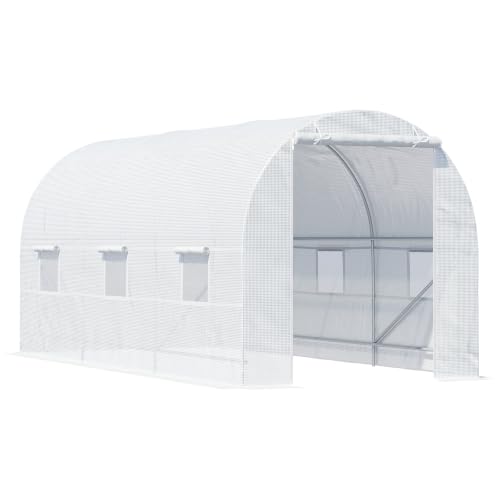
Outsunny Walk-In Tunnel Greenhouse
Best for: testing under-cover growing before a permanent build. Not suited for: anyone wanting rigid glazing and a lockable door.
In prose terms, this pick is a walk-in tunnel style greenhouse with a flexible cover, suited to seasonal growing, crop protection and gardeners testing whether a permanent structure is right for them. Treat it as a tier and a shape rather than a promise about any single listing: check the current listing carefully for exactly what is included, how the base and anchoring are handled, and which vents or openers come in the box versus which are added later.
Strengths and trade-offs in brief: the strengths are the clarity of its intended job, a frame and glazing combination that suits that job, and a footprint that maps onto real gardens rather than show plots. The trade-offs are the usual honest ones for its class: assembly takes patience, anchoring and ventilation are your responsibility to get right, and accessories that transform daily use are rarely all included at the start. Position it in the entry, mid or premium tier by comparing its frame, glazing and included hardware against the rest of the class, not by chasing a headline figure.

MCombo Polycarbonate Greenhouse
Best for: a rigid compact house on a small plot. Not suited for: tall crops at volume.
In prose terms, this pick is a polycarbonate panel greenhouse in the compact walk-in class, aimed at smaller gardens that still want a rigid, lockable structure rather than a soft cover. Treat it as a tier and a shape rather than a promise about any single listing: check the current listing carefully for exactly what is included, how the base and anchoring are handled, and which vents or openers come in the box versus which are added later.
Strengths and trade-offs in brief: the strengths are the clarity of its intended job, a frame and glazing combination that suits that job, and a footprint that maps onto real gardens rather than show plots. The trade-offs are the usual honest ones for its class: assembly takes patience, anchoring and ventilation are your responsibility to get right, and accessories that transform daily use are rarely all included at the start. Position it in the entry, mid or premium tier by comparing its frame, glazing and included hardware against the rest of the class, not by chasing a headline figure.
Quictent Mini Greenhouse
Best for: patio and balcony shelter for pots and herbs. Not suited for: walk-in growing of any kind.
In prose terms, this pick is a compact mini greenhouse format for balconies, patios and small corners, built around sheltering pots, herbs and seedlings rather than full walk-in cropping. Treat it as a tier and a shape rather than a promise about any single listing: check the current listing carefully for exactly what is included, how the base and anchoring are handled, and which vents or openers come in the box versus which are added later.
Strengths and trade-offs in brief: the strengths are the clarity of its intended job, a frame and glazing combination that suits that job, and a footprint that maps onto real gardens rather than show plots. The trade-offs are the usual honest ones for its class: assembly takes patience, anchoring and ventilation are your responsibility to get right, and accessories that transform daily use are rarely all included at the start. Position it in the entry, mid or premium tier by comparing its frame, glazing and included hardware against the rest of the class, not by chasing a headline figure.
Against cold frames and cloches, a walk-in house wins on working comfort, height and season length, and loses on simplicity and cost of effort. Against open beds, it wins on shelter and control and loses on freedom from daily duties. The honest comparison is never house versus nothing; it is house versus the simpler cover that might meet your actual goal with a tenth of the management.
How to Buy Smart if the Pros Win
Doors deserve more attention than brochures give them, because you will pass through with trays, cans and harvest baskets thousands of times, often with both hands full. A sliding door saves swing space and rarely blows open, while a hinged door seals neatly and feels familiar, so choose by your path layout rather than habit. Steel and heavier galvanised frames bring reassuring stiffness for large or exposed builds, at the cost of weight during assembly and a harder day if you ever move the structure.
When you handle cut edges or remove a damaged panel, wrap sharp pieces before disposal and keep children and pets away from the work area until the frame is closed again. Treat panels with respect during installation: polycarbonate and glass both punish rushed handling, and eye protection plus gloves are sensible basics whenever you cut, carry or clip panels overhead. Check clips, seals and capping strips each season, since a panel that rattles in wind is a panel working loose, and small gaps invite both draughts and driving rain.
Setup and Care That Reduce the Cons
In high summer, combine vents with shade cloth or shading paint, open the door early, and water paths or use wet matting where appropriate so evaporation takes the edge off peak heat. Roof vents that open high, where hot air collects, do more work than a door left ajar, and automatic openers that respond to temperature keep working on the days you are away. Good airflow also lowers the still, damp conditions that moulds and mildew love, so venting on mild winter days matters even when heating is not part of your routine.
Bottom Line
The pros of a greenhouse are about growth, shelter and season; the cons are about management, weather and upkeep. Gardeners who accept the second list as the price of the first tend to love their houses for years. Gardeners who buy only the first list tend to sell the frame within two seasons. Decide which gardener you are, site and anchor accordingly, and the balance resolves itself.
Keep a simple notebook of sowing dates, varieties and results, because one season of honest notes teaches more than a shelf of general advice. Extending the season at both ends is where most owners feel the value first, weeks before outdoor beds wake and weeks after the first frost ends the outdoor crop.
A Closer Look: Working Notes for the Greenhouse Year, Part 1
Keep a dated photo record of the house through the year, because comparing the same view month by month shows shading, crowding and growth patterns that memory smooths away. Rotate a small task list on the door: vents checked, watering done, ties adjusted, ripe fruit picked, so a covering helper can keep the house safe in your absence. Leave a spare thermometer where you can read it without opening the door, and glance at it at the same times each day until the house’s daily rhythm feels familiar. Plan successional sowings in small batches rather than one heroic tray, so salads, herbs and young plants arrive in a steady line instead of a glut and a gap.
Keep twine, labels, clips and a pencil in a lidded box inside the house, because the job you postpone for want of a label is the job that causes confusion at harvest. Tie in tall crops little and often, guiding stems while they are supple instead of wrestling woody growth back to its support after a windy night. Feed the soil or the pots as a routine, not a rescue, and write down what each crop received so next season starts from evidence rather than guesswork. Thin seedlings bravely and early, because a tray of strong, spaced plants outperforms a crowded tray of rivals every single time.
A Closer Look: Working Notes for the Greenhouse Year, Part 2
Use the quiet winter weeks to sort seed packets by sowing date, test old seed on damp paper, and clear out varieties that never earned their space. Watch the corners and the staging undersides when you inspect, since pests settle where eyes rarely go and problems found there early stay small. Harvest in the cool of the morning where you can, when leaves are crisp and fruit is firm, and carry a basket in rather than balancing produce in your arms. Keep paths inside the house clear and dry, because a greenhouse you can move through safely with full hands is a greenhouse you will use properly.
Group heat-lovers together in the warmest, brightest zone and give cooler crops the door end, so the house’s natural gradient works for you instead of against you. Open vents before you open the door on a still, bright morning, so the hottest air leaves by the roof rather than rolling over the plants at head height. Save strong, true seedlings when you prick out and compost the weak without sentiment, because bench space under glass is the most valuable ground you own. Mulch soil beds inside the house to hold moisture and keep roots cool, topping it up as it settles rather than letting the surface bake and crack.
A Closer Look: Working Notes for the Greenhouse Year, Part 3
Check ties and supports after every storm as part of the anchor round, since a fallen tomato stem is usually a support that loosened days earlier. Sow a few pots purely for pleasure each season, a flower or an experiment, because enjoyment is part of what keeps the daily routine alive in year three. Vent on bright winter days even when the house feels cold, trading a little warmth for dry, moving air that keeps mould off overwintering leaves. Clean labels and reuse them where the writing allows, keep a marker that survives watering, and date everything as if a stranger had to run the house, because one day a helper will.
Notice which bench gets the first sun and which corner stays cool, and move tender trays through those microclimates as deliberately as you choose the site itself. Water the pots that dry fastest first and check the rest with a fingertip rather than a schedule, because thirst follows weather, not the calendar. Keep a hand fork, a small brush and a bucket by the door for the two-minute jobs, sweeping fallen leaves and soil before they become a slippery, pest-friendly layer. Prune and train on a dry day, remove yellowing leaves promptly, and bin diseased material rather than composting it, so the house resets cleanly each week.
Deep Dive: Soil, Feeding and Root Care
Roots under glass live in a world you control completely, which means every success and every failure in the root zone traces back to a decision you made. Fresh growing medium each season is not extravagance but hygiene, since old medium carries salts, compaction and the resting stages of problems you cleared in autumn. A medium that drains freely yet holds moisture evenly suits almost everything under glass, and gritty, tired or waterlogged mixes show in the leaves within weeks. Feed little and often once growth is moving, because container roots cannot forage beyond the pot and a feast-and-famine rhythm stresses exactly the plants you value most.
Yellow leaves ask questions before they want answers: check water first, then light, then feeding, in that order, since most feeding problems begin as watering problems. Bigger pots forgive more than small ones, holding moisture and nutrients steadier through a hot day, so pot on promptly when roots circle the base. Soil beds inside the house reward a yearly top-up of organic matter, worked in lightly, because a living bed buffers moisture and temperature better than any bagged mix alone. Keep a simple rule for grow bags and beds alike: never let the root zone swing from dust-dry to flooded in a single day if you can possibly help it.
Roots dislike hot pots, so stand dark containers out of direct glare or cluster them so neighbours shade each other’s sides on bright afternoons. When you empty a finished crop, shake the old medium out, inspect the roots for health and lessons, and let what you see inform next season’s spacing and feeding. A handful of slow, steady nutrition beats repeated rescue doses, and plants fed calmly grow the firm, green growth that resists pests best. If growth stalls in good light with even moisture, suspect the roots before the leaves: slip the plant out and look, because the answer is usually visible in thirty seconds.
Deep Dive: Seed, Sowing and Young Plants
Seed under glass wants three things in balance: warmth to germinate, light the moment it emerges, and air around the stem so seedlings grow stocky rather than pale and drawn. Sow thinner than instinct suggests, because pricking out a sparse tray is quick work while rescuing a crowded, tangled one wastes the strongest seedlings. Label with variety and date at the moment of sowing, never later from memory, since memory is the least reliable tool in any greenhouse. Bottom heat helps stubborn germinators, but move trays off the heat as soon as shoots appear, because warm roots plus low light is the recipe for leggy plants.
Harden off in stages: vents first, then a sheltered spot by day, then nights outside, so young plants meet the real garden as a gradient rather than a shock. Prick out holding a leaf, never the stem, because a bruised leaf regrows and a crushed stem does not, a small technique that saves more plants than any gadget. Water seedlings from below where you can, keeping stems and first leaves dry, and empty the tray after a short soak so roots never sit in stagnant water. Give every tray its turn at the brightest bench, rotating positions weekly, because the tray at the back quietly becomes next month’s weak plants.
Succession is the quiet skill: a small sowing every few weeks beats a spring avalanche, spreading harvests, bench space and your own workload evenly. Save the strongest spare seedlings as insurance until the main batch is safely established, then share or compost them without regret. Old seed deserves a germination test on damp paper before it earns bench space, and the result, written on the packet, saves a wasted fortnight in spring. Young plants tell you about the house before anything else does: stretching means light or heat is wrong, and checking seedlings daily is the cheapest monitoring system there is.
Deep Dive: Climate, Light and Microclimates
Every greenhouse contains several climates at once: hot at the ridge, cool at the floor, bright at the south bench and softer behind the door, and good growers plant to that map. Learn your house’s gradient by moving one reliable crop through it for a season and watching where it thrives, rather than trusting general diagrams. Light is the currency everything else is priced in, so keep glazing clean, staging uncluttered and tall plants where their shade falls on paths, not on trays. In the darkest weeks, cleanliness matters most of all, because a film of algae on panels steals a share of light the plants cannot spare.
Heat rises and collects where seedlings on high shelves sit, which is why the top shelf that suits germinating trays in March can cook them in June. A max-min record, even kept casually in a notebook, turns arguments about the house’s climate into facts within a single season. Still air is the enemy twice over: it lets heat stratify on hot days and lets damp settle on leaves on cold ones, so gentle movement is always working for you. Shade should be adjustable where possible, added as light strengthens and eased as it fades, because fixed heavy shade solves July by dimming September.
Cold sinks to the floor on still nights, so tender pots ride safer on staging than on the ground when a late frost is forecast. The door end of the house is a distinct zone, cooler and draughtier, and it suits hardening off and tough salads better than it suits tender exotics. Watch condensation patterns on the panels at dawn, because they draw you an honest map of where air moves and where it stagnates. Your climate outside sets the questions, but the house’s own microclimates set the answers, and a season of observation beats any imported rule.
Deep Dive: Crops and the Growing Calendar
Plan the year in waves: sowings that start the house, crops that fill it, clearances that reset it, and sowings that carry it into winter, each wave making room for the next. Fruiting crops are the long tenants, so give them the best positions first and fit shorter crops around them rather than the other way round. Salads and leaves are the flexible fillers of the greenhouse year, quick, forgiving and happy in the gaps, edges and in-between weeks that main crops leave. Herbs under glass reward restraint with water and generosity with harvesting, and a picked herb bed stays productive far longer than a neglected one.
Leave one small space deliberately unplanned each season, because the crop you suddenly want to try always appears, and a planned gap turns temptation into experiment. Clear finished crops promptly and completely, roots and all, since tired plants left standing become hotels for pests and shade for their successors. Record harvests as honestly as sowings, with weights or simple notes, because the kitchen ledger is what turns opinions about varieties into knowledge. Grow at least one crop purely because your household loves eating it, even if the textbooks call it inefficient, since enthusiasm is a genuine input.
Interplant thoughtfully: a quick crop between slow tenants uses light and space that would otherwise grow nothing but weeds and algae. As autumn approaches, shift the plan from growth to protection, choosing the plants worth sheltering and letting the rest finish with dignity outside. Winter salads sown in late summer are the house’s quiet triumph, modest in size and enormous in satisfaction when the outdoor garden offers nothing green. Review the calendar each winter with your notes open, keep what worked, drop what flattered you, and let the plan shrink or grow only on evidence.
Deep Dive: Tools, Order and Daily Routine
A greenhouse runs on small habits: the morning glance at vents and thermometer, the evening check of water and doors, each taking minutes and preventing hours of rescue. Keep the tool kit tiny and fixed: hand fork, ties, labels, pencil, spray bottle for damping paths, and a brush, all living in one box by the door. A tidy house is not vanity but pest control and safety, since clear paths, stacked pots and swept floors remove hiding places and tripping hazards together. String, clips and cane tops deserve a proper home, because the support job done at the right moment takes two minutes and the same job done late takes twenty.
Wipe and oil tools when the season turns, and the spring rush will start with equipment that works rather than a morning lost to rust and searching. Keep spare clips, a panel or two of repair material and the maker’s details in one labelled place, so storm damage meets a plan instead of a panic. The five-minute tidy at the end of a visit, pots straightened and debris binned, is what keeps a busy house feeling manageable all season. Work from a short written list on busy weekends, because greenhouse jobs are numerous, small and easy to forget exactly when they matter most.
Teach anyone who covers for you the three essentials, vents, water and doors, and leave the list on the door where they will actually see it. Store chemicals and feeds, if you use them, locked from small hands, labelled, and out of the heat, and keep their use the exception rather than the routine. A stool or kneeler that lives in the house sounds trivial until the first long pricking-out session, when comfort decides whether the job gets finished well. End each season with an honest hour of sorting: keep, repair, recycle and discard, so the house starts spring as a workspace rather than a store room.
Deep Dive: Records, Planning and Honest Review
The notebook is the most underrated greenhouse tool: dates, varieties, weather notes and results, kept roughly, outperform the finest memory within one season. Photograph problems before treating them, because a dated image settles arguments about whether things are improving and shows patterns across years. Review failures without flinching, since the crop that failed teaches the siting, timing or watering lesson that next year’s plan is built on. Set one clear goal per season, more salads, earlier tomatoes, better overwintering, rather than five vague ones, and judge the year against it.
Compare like with like when you judge varieties: same sowing date, same bench, same care, or the comparison is theatre rather than evidence. Keep the plan visible inside the house, a simple calendar on the wall, so intentions survive the busy weeks when memory is full of everything else. Budget your attention before your money: list the daily, weekly and seasonal jobs, and size the growing plan to the time that truly exists. Invite a gardening friend to walk the house once a season, because fresh eyes spot the shading, crowding and tired corners that familiarity hides.
Celebrate the small wins in the record too, the first ripe fruit, the tray that germinated perfectly, because morale is a renewable resource worth managing. When advice conflicts, and it will, trust your own dated notes about your own house over any general rule, including the ones in this guide. Plan purchases from the record: the crops that earned space, the tools that wore out, the accessories whose absence genuinely cost you, in that order. A greenhouse improves every year its owner keeps records, and stands still every year they rely on impressions, which is why the notebook outranks every other accessory.
Deep Dive: Water, Humidity and Daily Checks
Humidity under glass is a balance to steer, not a number to chase: leaves that stay wet overnight invite trouble, while air that stays desert-dry stresses roots and invites spider mite. Damping down paths on hot mornings buys a cooler, moister hour for the plants, and doing it early lets surfaces dry before the evening chill. Rainwater, where you can collect it, suits most greenhouse plants kindly and keeps lime-heavy deposits off leaves and glazing over a long season. Check the pots at the edges of benches first, because they dry fastest and quietly become the house’s early-warning system for watering.
A watering can with a rose gives gentle control for trays, while a hose with a soft lance suits beds and large pots, and using the right one halves the time. Group the thirstiest pots together in summer so a single thorough round serves them all, and keep the drought-tolerant herbs at the drier end. If you go away, move the most vulnerable trays to the coolest, shadiest bench and water deeply before you leave, since position can buy days. Wilting at noon on a fierce day is not always thirst: check the root zone before flooding a plant whose roots are already wet and struggling.
Empty saucers and trays after watering settles, because roots standing in water sour quietly while the leaves above still look innocent. In winter, water sparingly and in the morning, so foliage dries and the house does not sit cold and saturated through the longest nights. Misting propagation trays is a different job from watering the house, and keeping the two habits separate prevents a great deal of rot. The best watering system is the one you actually use daily, whether that is a can, a hose or a drip line, and simplicity wins in August.
Deep Dive: Health of the House: Pests and Disease Prevention
Prevention under glass is mostly housekeeping: air movement, cleared debris, spaced pots and prompt removal of dying leaves, repeated without drama all season. Inspect the undersides of leaves weekly, because that is where the small problems live, and a hand lens turns suspicion into certainty in seconds. Isolate a troubled plant on a separate shelf or outside the house while you deal with it, rather than treating its neighbours as hostages. Sticky traps are monitors first and controls second, telling you what has arrived and whether your response is working.
Wash hands and tools between handling a diseased plant and a healthy one, a dull habit that quietly stops a surprising share of spread. Avoid overhead watering of dense foliage in still weather, since wet leaves plus still air is the combination most fungal problems are waiting for. Clear the house completely at least once a year, wash surfaces and staging, and let it dry in bright weather before the new season’s plants arrive. Resist the urge to keep a failing plant out of sentiment, because one chronically sick specimen can seed problems across an otherwise healthy house.
Encourage air gaps between pots even when bench space feels precious, since touching leaves pass both moisture and pests freely. New plants earn their place after a short observation period apart, and that single rule prevents most imported outbreaks. Record outbreaks with dates and weather, because patterns emerge across seasons and next year’s prevention can start a month earlier. A healthy house smells of soil and growth, and learning that baseline makes the sour note of trouble obvious the moment you open the door.
Where the Trade-Offs Show Up in Daily Use: Greenhouse in Practice
This section exists to move past the tidy two-column summary and watch where each advantage and disadvantage actually appears during an ordinary week. It adds a layer that a feature list cannot give you, grounded in the garden & lawn context this greenhouse will actually live in. Where this guide names examples such as MCombo Polycarbonate Greenhouse, Quictent Mini Greenhouse, use them as test cases for the checks below rather than as shortcuts past them.
Finally, plan the first fortnight. Decide where the greenhouse will live from day one, what it replaces, what accessory or companion it needs straight away and what small job you will use to learn its habits while returning it is still simple. Keep the packaging until that learning period is over, note anything that surprises you, and deal with a mismatch early rather than adapting yourself around a poor fit for years. The households that end up happiest with a greenhouse are rarely the ones that researched longest; they are the ones that checked fit honestly, bought for the ordinary week, and paid attention during the first days instead of assuming the decision ended at checkout.
One more angle is worth your time: the second-order costs. A greenhouse changes what happens around it. It can demand a different cleaning product, a new storage habit, a moved piece of furniture, a rearranged cupboard or a standing arrangement with the people you live with. List those knock-on effects before you buy and decide whether you accept them as part of the deal. Sometimes the answer is an easy yes, and the greenhouse earns its place by improving the whole routine around it. Sometimes the honest answer is that the supporting changes are the real project, and the purchase should wait until you are ready for them. Either answer is useful; the only bad outcome is discovering the knock-on effects by accident, one irritation at a time, after the decision can no longer be revisited.
It also helps to separate the problems a greenhouse can solve from the problems it merely moves. If the underlying difficulty is space, the answer may be a smaller format or a different location rather than a more elaborate model. If the difficulty is time, look for the option that removes steps rather than the one that performs each step slightly better. If the difficulty is that several people want different things, a compromise design that everyone rates as good enough will usually outlast a specialist design that one person loves and everyone else avoids. Naming the real problem in one sentence, out loud, before you order, is a surprisingly powerful filter, and many shoppers find that the sentence itself points at a different greenhouse than the one they started out researching.
Frequently Asked Questions
Do I need a base for a greenhouse?
Yes, in practice a proper base is part of the structure rather than an accessory. A level, solid base keeps the frame square, gives doors and vents something true to close against, and provides the fixing points that anchoring depends on. Whether the base is a purpose-made plinth, a slab or a well-built perimeter on soil, it should be finished and checked for level before assembly begins, because correcting a twisted base under a completed frame is miserable work.
How do I stop a greenhouse overheating in summer?
Plan for heat before it arrives: roof vents that open high, an inlet route for cooler air low down, and shade cloth or shading applied before the hottest weeks. Open up early on bright days, water paths or use matting where appropriate so evaporation softens peak temperatures, and consider automatic vent openers so the house protects itself when you are out. Seedlings and flowering crops suffer fastest, so check the house at midday during any hot spell rather than assuming yesterday’s settings still work.
How should a greenhouse be anchored against wind?
Anchor the base frame to the ground or slab using the fixings the design calls for, and add hold-downs on exposed sites instead of trusting weight alone. On soil, driven or screw-in anchors tied to the base resist uplift; on hard surfaces, bolt through sound material. Keep doors and vents latched in storms, remove loose items that could strike the panels, and re-check every fixing after the first strong blow, because new frames settle and fasteners bed in.
Is polycarbonate or glass better for a home greenhouse?
Neither wins everywhere. Polycarbonate is light, tough against knocks, kind in the way it diffuses light and better insulating in twin-wall form, which suits family gardens and early sowing. Glass is clearer, heavier, traditional in look and long-lived, but it needs a sturdier frame and careful handling when panes are fitted or replaced. Choose by your site, who uses the garden, and whether insulation or clarity matters more to the way you actually grow.
Do I need permission to put up a greenhouse?
It depends on where you live, the size and height of the structure, and how close it sits to a boundary, so treat this as a check to make rather than a question with one answer. Many small domestic greenhouses sit comfortably within local allowances, while larger or permanent builds can be treated as structures with setbacks or approvals. A short check with your local authority or planning guidance before you order is the concept to hold on to, and it is far cheaper than relocating a finished house.
What can I grow in an unheated greenhouse?
More than most people expect: tomatoes, peppers, cucumbers and herbs through the warm months, salads and hardy leaves deep into autumn, seedlings started weeks ahead of outdoor sowing, and tender pots sheltered through winter. The house will not turn winter into summer without heating, and honest expectations matter, but season extension at both ends plus reliable shelter is exactly what most home growers use an unheated greenhouse for, season after season.


