Disclosure: As an Amazon Associate, dailyhomedecorating.com earns from qualifying purchases. Links on this page are affiliate links; they cost you nothing extra. Prices and availability change often, so check the current Amazon listing before you buy.
Knowing how to clean area rug fibres properly is the difference between a rug that looks good for a decade and one that looks tired by its second year. The good news is that rug care is mostly rhythm rather than effort: thorough vacuuming on a schedule, fast and gentle spill response, a periodic deep clean matched to the fibre, and drying done completely. This guide lays out the full routine in order, from the tools you need to the numbered steps for routine and deep cleaning, plus the troubleshooting that handles the problems households actually meet.
The process in brief: vacuum slowly with the right setting for your pile, blot spills immediately without rubbing, deep clean only as far as your fibre allows, and never put a rug back under furniture until it is fully dry. Everything below expands those four habits into a routine you can actually keep, because a cleaning method you will not repeat is worth nothing no matter how correct it is.
How to Clean Area Rug: What You Need
The required kit is short. A vacuum with adjustable height or a suction-only mode covers most rugs; a machine with a beater bar suits medium pile but must be kept off loops, flatweaves, and fringe. Keep clean pale cloths or towels for blotting, a mild detergent, a soft brush, and a spray bottle of plain water for rinsing residue. Optional but genuinely useful: a fan for drying, a carpet rake for lifting pile, and, for washable rugs, access to a machine that truly fits the cover. That is the whole arsenal; technique, not products, does the work.
In this guide
Safety and Before-You-Start
What is on the back of a rug matters to your floor. Some backings are rough enough to abrade delicate floor finishes over time, which is another reason a pad is standard practice rather than an upgrade. Latex-style backings can crumble with age and heat, leaving dust beneath the rug; if you lift an older rug and find powder, the backing is at end of life. Washable systems separate the backing into the pad itself, which keeps the cover light enough for a home machine. Whatever the construction, lift a corner every few months to check for moisture, grit build-up, or early signs of trouble while they are still cheap to fix.
Basements and ground-floor rooms over concrete introduce moisture into the rug equation. A rug laid directly on a cool slab can trap condensation against its backing, which over time invites musty odours and, in the worst cases, mildew. A breathable pad improves airflow slightly, but the real fixes are choosing synthetic or washable constructions that tolerate damp, lifting the rug periodically to check beneath it, and solving any genuine water intrusion at its source. Natural plant fibres are the poorest choice in these rooms. If a rug in a dry room smells musty, suspect a spill that never fully dried rather than the room itself.
Before any wet cleaning, test your solution on a hidden corner and wait several minutes for colour movement. Check the fibre if you know it: synthetics tolerate the most, wool asks for restraint and little water, and plant fibres should barely meet water at all. Move furniture off the rug for deep cleaning rather than cleaning around it, and plan the drying time before you start, because a rug that must go back damp under a sofa is a rug being set up for a musty week.
The Routine and Deep-Clean Steps
Step 1: Shake and Vacuum the Loose Soil Out
Start dry, always. Take smaller rugs outside for a proper shake or a beat over a railing; the amount of grit this releases explains why vacuuming alone never feels finished. For rugs staying in place, vacuum the top slowly in overlapping passes, then, a few times a year, flip the rug and vacuum its back so vibration shakes embedded grit down through the pile, then vacuum the floor and the top again. Slow passes matter: grit at the pile base is what dulls and cuts fibres, and it only lifts when suction gets time at each spot.
Step 2: Vacuum With the Right Setting for the Pile
Vacuuming is the main event of rug care, and technique matters more than frequency charts suggest. Use suction strong enough to lift grit from the base of the pile, because it is the sharp grit at the bottom, ground in by footsteps, that saws through fibres and dulls a rug from the inside out. On medium and high pile, a rotating brush helps lift that grit, but on flatweaves, loop piles, and delicate vintage-style rugs, suction-only cleaning or a raised brush setting avoids snagging loops and fuzzing the surface. Vacuum the back of the rug a few times a year too; vibration shakes embedded dirt down through the pile where you can finally remove it.
Step 3: Treat Spots and Spills the Moment They Happen
Spills reward speed and punish enthusiasm. Blot, never rub, because rubbing drives the spill deeper and frays the pile into a permanently fuzzy scar. Work from the outside of the mark inward so it does not spread, use a clean pale cloth so you can see what is transferring, and test any cleaning solution on a hidden corner first. Most everyday spills on synthetic rugs yield to cool water and a drop of mild detergent. Wool and plant fibres deserve more caution and less water. Whatever the fibre, finish by blotting with plain water to remove residue, since leftover soap attracts dirt and creates a dull patch that returns within weeks.
Step 4: Deep Clean According to the Fibre
Even a well-vacuumed rug slowly accumulates the fine soil that ordinary cleaning leaves behind, and a periodic deep clean restores both colour and texture. Washable rugs make this easy at home, provided your machine genuinely fits the rug without forcing it. Conventional rugs can be cleaned with a rented or owned extractor on synthetic fibres, with care not to overwet the backing. Wool, silk blends, and anything with an unstable dye are better handed to a professional who can test and control the process. However you deep clean, the non-negotiable step is complete drying, ideally with airflow on both sides, before the rug goes back under furniture.
Step 5: Dry Completely Before Replacing
Drying is a step, not a pause. Lift the rug so air reaches both sides if you can, aim a fan across it, and allow hours rather than minutes, longer in humid weather. A rug that feels dry on top can still hold moisture at its backing, which is where odours begin. Only when the backing feels as dry as the surface should furniture return, and the pad, if it got wet, must pass the same test separately.
Step 6: Reset the Room and Rotate
Every rug develops a geography of use. The path from the door to the sofa, the pivot point in front of a favourite chair, and the strip beside the bed all receive many times the wear of the corners. Rotating the rug a half turn twice a year evens out that wear and also balances fading where sunlight falls unevenly across the room. Rotation is free, takes two people five minutes, and can add years to the period during which a rug looks even rather than tired in one lane. Put it on the same mental calendar as changing smoke alarm batteries and it will actually happen.
Troubleshooting and Common Mistakes
New rugs shed, and knowing that in advance turns alarm into routine. Loose fibres worked free during manufacturing rise to the surface during the first weeks of use, filling a vacuum canister with surprising speed. This is normal for wool and for many cut-pile synthetics, and it slows steadily with regular vacuuming. What is not normal is shedding that continues at the same rate for many months, bald patches, or fibres pulling out in tufts when pinched. Those signs point to a construction problem worth raising with the seller promptly rather than a quirk to live with.
A new rug often arrives with a noticeable smell from its backing, dyes, and packaging, and in most cases it is a short-lived nuisance rather than a defect. Unroll the rug in a ventilated room, let air move across both sides, and give it several days before judging; the odour from ordinary manufacturing residues fades steadily. Vacuuming helps, as does time spent out of the plastic it shipped in. If a strong chemical smell persists unchanged after a couple of weeks of ventilation, that is a reasonable basis for contacting the seller, particularly if anyone in the household is sensitive.
Sunlight edits a rug slowly and permanently. Ultraviolet light fades dyes unevenly, so the section of rug under a south-facing window can end up visibly lighter than the section protected beneath a sofa. Sheer curtains or window film slow the process, and the twice-yearly rotation habit described elsewhere in this guide turns uneven fading into an even, gentle mellowing. Dark, saturated designs show fading most dramatically, while already-distressed vintage patterns disguise it almost completely, which is one more reason those patterns suit bright rooms. If a room gets intense direct sun for most of the day, factor fading into the budget and choose accordingly.
The mistakes that cause the most damage are consistent: scrubbing a spill and fraying the pile into a permanent fuzzy patch; soaking a wool or natural-fibre rug as if it were synthetic; using hot water that sets protein stains; leaving soap residue that attracts dirt back within weeks; and returning a damp rug to a dark room. Each is avoided by the same trio of habits: blot, test, and dry. When a problem is beyond those habits, staining on a valuable wool rug, dye movement, backing failure, a professional clean is cheaper than a replacement.
Gear That Makes Cleaning Easier
The products below earn a place in a cleaning guide for honest reasons: a washable system removes the deep-clean problem entirely for messy zones, and a proper pad protects both rug and floor between cleans. They are presented prose-only while verification is pending, so check price on Amazon if one of them fits your rooms.
Ruggable Kamran Washable Rug
The Ruggable Kamran is a two-part washable system with a thin rug cover that attaches to a non-slip pad, designed to go in a home washing machine when life gets messy. In daily use its strengths show up in the ways that matter for this category: it settles a room visually, it behaves predictably on hard floors with the right pad beneath it, and it asks for ordinary care rather than specialist attention. Treat it as a working part of the room rather than a fragile decoration and it will repay that attitude for years.
Best for: homes with dogs, toddlers, or a dining room that sees weekly spills. Not suited for: anyone who dislikes the flatter feel of washable covers compared with a conventional pile rug. This pick sits in the mid tier of the category, so check price on Amazon and compare the current size options before you commit, because the right footprint matters more than any single feature.
Gorilla Grip Rug Pad
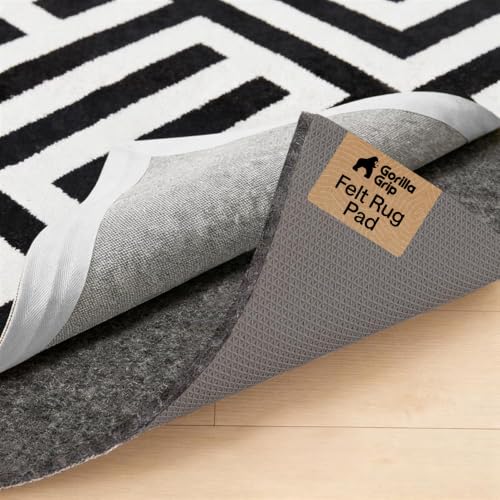
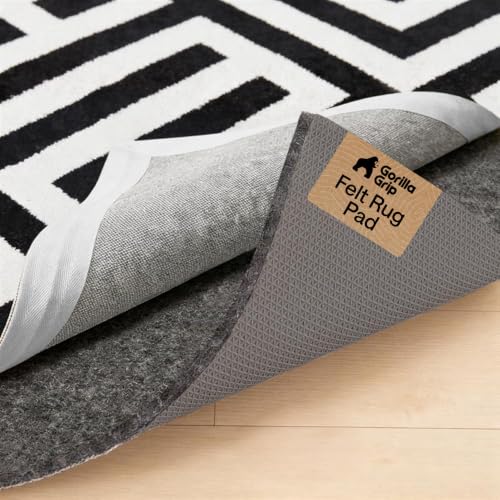
A gripping pad is cleaning equipment as much as it is safety equipment: it holds the rug flat so vacuuming passes stay even, stops the bunching that grinds grit into one spot, and keeps the backing off direct contact with floor grit. The Gorilla Grip style of rubberised pad suits smaller and medium rugs and washable setups where a thin profile matters. Best for: keeping rugs flat and cleanable in high-traffic spots. Not suited for: adding deep cushion, where a felt pad serves better. It sits in the entry tier, so check price on Amazon in your rug’s size.
nuLOOM Wynn Vintage Area Rug
The nuLOOM Wynn Vintage is a machine-made vintage-look design with a low, easy-care pile and a distressed medallion pattern that hides everyday wear gracefully. In daily use its strengths show up in the ways that matter for this category: it settles a room visually, it behaves predictably on hard floors with the right pad beneath it, and it asks for ordinary care rather than specialist attention. Treat it as a working part of the room rather than a fragile decoration and it will repay that attitude for years.
Best for: busy living rooms and dining areas where spills and foot traffic are routine. Not suited for: very formal rooms where a hand-knotted heirloom look is the whole point. This pick sits in the mid tier of the category, so check price on Amazon and compare the current size options before you commit, because the right footprint matters more than any single feature.
Maintenance and Keeping It Working
Rugs and allergies have a more nuanced relationship than the usual advice suggests. A rug traps dust and pollen at floor level instead of letting foot traffic kick them back into the air, which can help, but only if the rug is vacuumed thoroughly and often enough to actually remove what it traps. Low pile releases dust to a vacuum far more completely than deep pile, and a washable rug goes further by allowing genuine laundering. Anyone with significant sensitivities should treat the rug as a filter that must be serviced: the cleaning routine is part of the purchase decision, not an afterthought.
Storing a rug correctly is the difference between a seasonal swap and a ruined textile. Clean the rug before storage, because soil and food residue attract insects, then roll it, never fold it, with the pile facing inward and the roll kept as straight as possible. Wrap it in a breathable cover rather than sealed plastic, which can trap moisture, and store it off a damp floor in a space without extreme heat. When it comes back out, reverse-roll it briefly or lay books along any reluctant curl, and give it a day under its pad to relax back to flat.
Rugs and furniture negotiate constantly. Felt protectors under chair and table legs prevent the point loads that crush pile and, on some backings, tear it. When you rearrange, lift furniture rather than dragging it across the rug; dragging can friction-burn synthetic tips and can pull a rug out from its pad into wrinkles that take days to settle. After any rearrangement, walk the rug flat from the centre outward and check that the pad still sits fully beneath it. Dents left by heavy legs usually recover with time and humidity; an ice cube melting slowly into a wool dent is the classic household trick for coaxing fibres back up.
A Simple Schedule That Works
Weekly: vacuum the traffic lanes thoroughly and the whole rug at least once. Immediately: blot every spill the day it happens. Twice a year: rotate the rug a half turn, vacuum its back, and inspect beneath it. Yearly, or as the fibre and household demand: a genuine deep clean or a wash for washable covers. That schedule, kept loosely, outperforms any heroic annual effort, because rug damage accumulates in the small neglects between big cleans.
Getting It Right in Practice: A Careful Working Check for the Area Rug
The main steps for the area rug are covered above; what follows is the working discipline around those steps, covering preparation, order of work, the checks that catch mistakes early and the small follow-up habits that keep the result sound. It is written for real homes, where interruptions and imperfect spaces are normal.
Start With Your Space and Your Routine
If the area rug needs assembly, read the instruction preview if one is offered, count the steps honestly against the time you have, and check whether a second pair of hands is recommended. Take a break between shortlisting and ordering if you can, and return to the listings with fresh eyes, because fatigue makes almost any area rug look acceptable late in a long search. A good test is the two-week question: imagine the area rug after a fortnight of ordinary use, with no special effort from you, and ask whether you would still choose it. Think about the end of the area rug’s life with you as well, including whether it could move to another room, be passed on, or be stored without damage when your needs change.
When Small Problems Appear
If a step involving the area rug feels forced, stop and re-read rather than pushing harder, since force is usually a sign of a missed alignment, a wrong order or a part fitted the wrong way round. Storage is part of ownership, so decide now where the area rug, its accessories and its seasonal extras will go when they are not in use, and measure that space too. Apply the same checks to each shortlisted example, whether that is the Ruggable Kamran Washable Rug; the Gorilla Grip Rug Pad; the nuLOOM Wynn Vintage Area Rug, because consistent testing is what makes the differences between models visible. If the listing offers accessories for the area rug, decide which ones solve a problem you already have, and set aside the ones that only solve problems the listing itself invented.
A Short Decision Checklist
- The main job the area rug must do, written in one sentence
- The material and finish, matched to light, moisture and wear in its spot
- What your current arrangement does badly that the area rug must fix
- Delivery path, from the door to the final position
- The measured space, including clearance to use and clean around the area rug
- Who will use the area rug most, and any limits they have
- Assembly needs, tools required and whether help is needed
- How the area rug will be cleaned in an ordinary week
Taken together, these checks take only a little time, yet they answer the questions that decide whether the area rug suits your home, your household and your routine, and they do so before money changes hands rather than after.
Frequently Asked Questions
How often should I vacuum an area rug?
At least once a week across the whole rug, and more often in the traffic lanes of busy homes, because the grit that damages fibres accumulates there fastest. Vacuum slowly with overlapping passes; a fast once-over removes surface fluff while leaving the harmful grit at the pile base exactly where it does its damage.
Can I use a carpet cleaner machine on an area rug?
On synthetic rugs, generally yes, with moderate water and a thorough rinse so residue does not attract dirt back. On wool, use restraint, cool water, and minimal wetting, or hand the job to a professional. On natural plant fibres, avoid wet extraction altogether. Whatever the fibre, complete drying before the rug returns to use is non-negotiable.
How do I get a smell out of an area rug?
First find the source: most persistent odours are a spill that never fully dried or moisture held at the backing. Air both sides, vacuum thoroughly, and deep clean only as far as the fibre allows, then dry completely with airflow. A new rug’s manufacturing smell is different and usually fades with ventilation over several days without any treatment.
Why does my rug look dirty again right after cleaning?
The usual cause is residue. Soap or detergent left in the pile attracts soil rapidly, so the rug re-dirties along exactly the cleaned paths. Blot or rinse with plain water until no residue transfers, and use less solution next time. The second cause is wicking, where deep soil rises as the rug dries, which a slower, more complete drying helps prevent.
Should I vacuum the back of my rug?
Yes, a few times a year. Vacuuming the back vibrates embedded grit down through the pile so it can be removed from the floor and the surface, which is the grit most responsible for dulling and fibre wear. Flip the rug, vacuum the back, clean the floor beneath, then vacuum the top again once it is back in place.
When should I hire a professional instead?
For wool, silk-blend, antique, or high-value rugs; for dye that moves in a spot test; for large rugs you cannot dry properly at home; and for odours or stains that survive one honest attempt. Professionals can test, control water and temperature, and dry at scale, which removes the three risks that cause most home-cleaning damage.
More Detail Worth Knowing
Start with the furniture, not the floor. In a living room, the most forgiving layout places at least the front legs of every seat on the rug, which visually stitches the seating group into one conversation area and stops the rug from looking like a postage stamp floating in the middle of the room. If your budget forces a choice between a larger rug in a simpler material and a smaller rug in a luxurious one, choose the larger footprint almost every time. An undersized rug is the single most common decorating mistake in this category, and no fibre quality can rescue a layout where the rug ends awkwardly a few inches short of the sofa.
Bedrooms follow their own geometry. A generous rug should extend well beyond both sides of the bed and past the foot, so that the first steps of the morning land on something warm instead of cold boards. As a working rule, aim for at least two feet of rug visible on each side of the bed and a similar margin at the foot. With a smaller rug, a pair of runners flanking the bed can deliver the same barefoot comfort for less money, but the single large rug almost always looks calmer and more deliberate, and it muffles the sound of the bed frame shifting at night.
Dining rooms demand arithmetic. Measure your table, then add enough on every side for chairs to slide back fully while all four chair legs stay on the rug. In practice that means roughly two feet of extra rug beyond the table edge on each side. If chairs catch on the rug edge every time someone sits down, the meal becomes an obstacle course and the rug edge wears prematurely. A low, dense pile or a flatweave is the right partner here, because chair legs glide instead of digging in, and crumbs shake out far more easily than they do from a deep shag.
Wool remains the benchmark fibre for a reason. Its natural crimp gives it resilience, so pile springs back after furniture is moved, and its fibres hold dye in deep, slightly heathered tones that forgive everyday dust between cleanings. Wool also regulates the feel of a room in a subtle way, staying comfortable in both summer and winter. The honest downsides are price and shedding: a new wool rug releases loose fibres for its first months, and it asks for prompt attention when red wine or pet accidents land on it. For a buy-it-for-a-decade living room rug, though, wool is still the fibre most owners end up happiest with.
Modern synthetic fibres, most often polypropylene and polyester, have closed much of the gap with wool for everyday family use. They resist staining because they absorb very little moisture, they tolerate solution cleaning that would damage natural fibres, and they hold bright, sharp pattern work at accessible prices. The trade-off is resilience: under heavy furniture or in a narrow traffic lane, synthetic pile can flatten and develop a tired sheen sooner than wool. Heat is another enemy, since dragging furniture can friction-burn the tips of synthetic fibres. For dining rooms, playrooms, and rental homes, those compromises are usually worth accepting.
Plant fibres such as jute, sisal, and seagrass bring a dry, architectural texture that suits bright, informal rooms and layers beautifully under a smaller patterned rug. They are hard-wearing in the sense that their surfaces shrug off shoe grit, but they are unforgiving about water: sustained moisture can stain, darken, or even encourage mildew, and many spills leave a permanent watermark. Their hand feel is firm rather than cosy, so they rarely satisfy in a bedroom. Choose them where their texture is the point of the room, keep them away from damp entryways and dining chairs, and vacuum with suction only, never a beater bar.
Pile height quietly decides how a rug behaves every single day. Low pile and flatweave constructions let doors swing freely, allow dining chairs and office casters to move, and release dirt to a vacuum with little fuss. Medium pile adds the softness most people picture when they imagine a rug, while still cleaning reasonably well. High pile and shag feel luxurious for the first barefoot steps, yet they hide crumbs, complicate vacuuming, and can swallow small objects whole. Match pile to the room’s workload rather than its photograph: the busiest rooms in the house almost always reward the lowest pile you can happily live with.
A rug pad is not an accessory; it is half the product. The right pad stops creeping and bunching, which is a genuine trip hazard on hard floors, and it adds the cushion that a low-pile rug cannot provide on its own. It also protects both sides of the investment, keeping the rug backing from grinding against grit on the floor and keeping the floor finish from being scuffed by a rough backing. Felt with a rubberised underside suits larger rugs on hardwood, while thinner rubberised pads fit under doors with tight clearance. Whatever you choose, cut it slightly smaller than the rug so the pad stays hidden and the rug edges lie flat.
Pattern is a practical tool disguised as a style choice. A busy vintage motif with tonal variation will hide crumbs, pet hair, and the faint traffic lane that develops between the sofa and the door, stretching the time between deep cleans without the room ever looking neglected. A pale, solid rug does the opposite: it shows every footprint and demands a household rhythm that can keep up with it. Neither is wrong, but be honest about your household. Families who choose forgiving patterns consistently report that the rug still looks good on an ordinary Tuesday, which is the test that actually matters.
Colour changes how a room feels before it changes how it looks. Light rugs open up small or north-facing rooms and make dark furniture appear to float, but they ask for shoes-off discipline. Dark and saturated rugs ground large, bright spaces and anchor pale sofas, though they reveal lint and pet hair in light colours. A reliable method is to pull the rug’s secondary colour, not its dominant one, from something already in the room: a cushion fabric, a curtain tone, or the artwork over the mantel. That quiet echo makes the rug feel chosen rather than matched, and it leaves you freedom to change accessories later.
Homes with children and pets should shop with different priorities: washability or stain resistance first, pile low enough that crumbs and hair release easily, and pattern busy enough to hide the evidence between cleans. A washable two-part system earns its keep the first time a full cup of juice goes over, because the cover goes in the machine instead of you going to the floor with towels. For conventional rugs, solution-friendly synthetic fibres and a good pad underneath handle most of what family life delivers. Save the pale wool rug for the years when the household is calmer, or for the one room with a door that closes.
Layering a smaller patterned rug over a larger neutral base is a decorator’s trick with real practical benefits. The base layer, often an inexpensive flatweave in a natural fibre, provides the generous footprint the furniture layout needs, while the smaller top rug delivers the colour, pattern, and softness exactly where people sit and walk. Layering also lets you change the room’s personality by swapping the top rug alone. Keep the combination low in total thickness so doors still clear it, use a pad beneath the base layer, and let the base extend evenly on all sides so the composition looks intentional rather than improvised.
The edges of a rug tell you how it was made and how it will age. Machine-made rugs usually have serged or bound edges that resist fraying well. Hand-knotted pieces may have a fringe that is actually the foundation threads of the rug itself, which means fringe should never be vacuumed aggressively or pulled, since damaging it damages the structure. Curling edges are usually a backing or storage issue rather than a defect: reverse-rolling the rug for a day, or weighting the corner while the pad grips, settles most cases. Persistent curling in a high-traffic doorway is a trip risk worth solving with a lower-profile rug instead.
It helps to think of this category in tiers defined by construction rather than by decoration. Entry-tier rugs are almost always machine-made synthetics: sharp patterns, modest pile resilience, and a realistic life measured in a handful of years of family use. The mid tier buys better density, better dye work, and fibres that hold their texture longer, and it is where most households find the best balance. Premium rugs, typically wool and often hand-finished, cost more because they are built to be cleaned, repaired, and lived on for a decade or more. None of these tiers is the correct one in the abstract; the room’s traffic and your likely moving plans should decide.
Hard-floored rooms without rugs sound harsher than their owners usually realise. A rug absorbs the mid and high frequencies that make footsteps, chair scrapes, and conversation feel echoey, and the effect is strongest when the rug is large and paired with a felt pad. Apartment dwellers gain a second benefit: a rug and pad meaningfully reduce the impact noise transmitted to the neighbours below. If a room feels mysteriously tiring to spend time in despite looking right, listen to it before redecorating further. Often the missing ingredient is not another object but a large, soft surface doing quiet acoustic work.
In open-plan spaces, rugs do the job walls used to do. A rug under the seating group declares the living zone, a rug under the table declares dining, and the bare floor between them becomes circulation space. For this to work, each rug must be big enough to hold its furniture group convincingly, and the rugs should share a colour temperature or a fibre family so the space still reads as one room. Avoid matching patterns exactly; coordination beats duplication. Open-plan homes are also where the size mistake hurts most, because two small rugs in one big space read as clutter rather than zones.
Entryways are the harshest environment a rug can face: grit, moisture, and concentrated pivoting wear at the door swing. If you want a rug here, choose a very low pile or flatweave in a forgiving pattern, sized so the door clears it completely, and accept that this rug will be shaken out and washed more often than any other in the house. Many households do better with a washable runner in this spot and save area rugs for rooms where they can be enjoyed rather than endured. Whatever you place, a stiff mat outside the door dramatically reduces what gets tracked onto it.
Buying a rug online means managing the gap between a screen and a room. Order the smallest size first when the design is unfamiliar, live with it in your actual light for a few days, and only then commit to the large format; the small one can move to a hallway if the colour sings. Read the fibre and pile details rather than the marketing adjectives, check the return conditions for large sizes specifically, and photograph your room in daylight to compare against the listing’s tones. Colour variation between dye lots is real, so if you need a matching pair, order both at the same time.
Feel is the feature you will notice every day and the one listings describe worst. Density matters more than pile height for a satisfying step: a dense low pile can feel more substantial than a lofty, sparse one that collapses straight to the backing. If you sit on the floor often, play with children there, or exercise on the rug, prioritise the combination of a medium pile and a good felt pad, which together produce most of the comfort people attribute to expensive rugs. Barefoot bedrooms reward softness most; dining rooms reward it least. Spend your softness budget where your feet actually linger.
Judging durability in a listing comes down to a handful of signals. Look for density language and fibre type first, then pile height relative to the room’s traffic, then construction: power-loomed and machine-made rugs offer the most consistent quality at family budgets, while hand construction rewards buyers who value repairability and longevity. A rug that will live under a dining table needs a different build from one that will live under a coffee table. Be sceptical of any listing that leads with softness claims for a rug destined for a hallway; in high traffic, survival is the luxury.
Vintage-look rugs dominate this category for practical as much as aesthetic reasons. Their distressed motifs and tonal variation forgive real life, they bridge traditional furniture and modern upholstery without arguing with either, and they come in every fibre and price tier. The risk is a room that feels themed rather than lived in, which is avoided by keeping the surrounding pieces plain and contemporary in shape. If your furniture is already ornate, a quieter, more tonal rug will serve better than a busy medallion. Pattern scale matters too: large motifs suit large rugs, while small rugs carry small repeats more gracefully.
Modern and geometric rugs bring order to rooms full of soft, unstructured furniture, and their clean lines make small spaces feel deliberate. The catch is maintenance honesty: flat colour fields and sharp geometric boundaries show crumbs, hair, and wear lanes far more than distressed patterns do. Choose modern designs in fibres that clean easily, keep the palette forgiving, mid-toned rather than pale, and expect to vacuum a little more often. In return you get the crispest visual payoff in the category, particularly in rooms photographed or seen from a doorway, where the pattern reads as a single graphic gesture.
Renters should weigh one more factor that owners can ignore: reversibility. A rug is among the few furnishing changes that transform a room while leaving no trace when you leave, which makes it disproportionately valuable in homes you do not own. Choose sizes by measuring the current room rather than hoping the rug will suit the next one, favour constructions that clean easily so the rug survives moves in good condition, and keep the original packaging tube if you can, because a rug that travels rolled travels safely. A rug bought well for a rental rarely becomes a stranded purchase; bedrooms and hallways in the next home absorb most sizes gracefully.
A secondhand rug can be excellent value, but it deserves a more sceptical inspection than a new one. Smell it, because odours absorbed into backing and pile are the hardest fault to reverse. Flex the backing gently; cracking or powder suggests age damage that cleaning cannot fix. Check the pile in the traffic lanes against the protected edges to judge how much life has been used, and ask about pets and smoking with a friendly directness. Budget for a professional clean as part of the true price. Bought with those checks, a used wool rug in particular can deliver years of service that its price would never predict.
Some households keep two rugs for one room and swap them seasonally: a flatweave or natural fibre for the warm months, when bare feet want a cool, dry surface, and a piled rug for winter, when warmth is the point. The habit spreads wear across two textiles, lets each rest and be cleaned properly in its off season, and refreshes the room twice a year for no new spending after the initial pair. It works best when both rugs share the same footprint and pad, so the swap is an hour’s work rather than a refit. Storage discipline, clean and rolled, is what makes the system sustainable.
Children’s bedrooms ask for a specific compromise: soft enough for floor play, tough enough for the years when everything spills, and patterned or mid-toned enough to hide the evidence of both. Low-to-medium pile synthetic rugs dominate this brief for good reason, and a washable design earns serious consideration while children are small. Size the rug to the play area rather than wall to wall, leaving a hard border that is easier to sweep. As children grow, the same rug often migrates to a study corner or a first flat, which argues for choosing a pattern that is cheerful without being childish.
A rug under a desk chair is a small purchase with an outsized daily effect: it quiets the room for calls, warms the working day, and protects the floor from casters, which are among the most destructive forces a floor finish ever meets. The construction rule is strict, though. Pile must be low and dense, or the chair will fight every movement and chew the surface it stands on. A chair mat over a low rug is a legitimate combination in heavy-use offices. Size the rug so the chair’s full travel, back to the wall and forward to the desk, stays on it.
Guest rooms are where rugs quietly justify themselves to people who doubted them. A guest room that is used six weeks a year still feels cared for when a rug softens it, and guests notice warm floors and quiet rooms more than almost any other furnishing choice. Because traffic is light, this is the room where a more delicate or paler rug can live safely, and where a hand-me-down rug from a busier room can retire with honour. It is also the natural destination for the smaller first rug you bought to test a design before committing to the large format.
Climate should steer construction more than most buyers allow. In humid regions, quick-drying synthetics and washable systems resist the mustiness that plagues natural fibres, and rugs should be lifted and aired more often. In dry, cold climates, wool and medium pile earn their keep as genuine insulation over slab and board floors alike, noticeably changing how a room heats. In dusty, sandy environments, low pile and forgiving patterns are survival traits, and a serious mat at the door is part of the rug system rather than a separate purchase.
The most sustainable rug is usually the one you keep longest, which reframes the buying decision: durability and repairability are environmental features, not just economic ones. Wool and other natural fibres biodegrade at end of life but demand more careful years; synthetics last by resisting everything, including decomposition. A practical middle path is to buy the most durable construction your room’s workload genuinely needs, maintain it with the boring consistency that doubles service life, and pass it on rather than binning it when your scheme changes. Longevity beats novelty in this category every time.
Landings and the tops of stairs are transitional spaces where a small rug or a runner earns its keep by catching the household at its most distracted: arms full of laundry, half awake, moving between floors. The priorities here are grip and flatness above all else, because a landing rug that slides is worse than none. Low profile, a serious pad, and a size that keeps edges away from the first stair tread are the rules. Pattern can be bold, since the space is seen briefly and often, and a cheerful landing rug does more for a home’s mood than its square footage suggests.
A reading corner is the smallest room a rug can make. One chair, one lamp, and a rug just large enough to hold the chair’s feet and yours turns a leftover corner into a destination, and the rug’s softness and quiet are the whole architecture. This is a safe place for a slightly deeper pile or a more delicate design, because traffic is one person moving slowly. It is also the natural home for a smaller rug bought as a colour test for a bigger room: if the palette works in the nook at arm’s length, it will work at living-room scale.
Very heavy furniture, pianos, solid bookcases, pool tables, changes the rug conversation. Point loads of that scale will crush any pile permanently and can crack some backings, so the honest options are a dense low pile, a flatweave, or placing the rug so the heaviest feet stand off it. Felt protectors spread load only modestly at this weight. If the piece must sit on the rug, accept the dents as the price of the arrangement and choose a pattern that disguises them. Moving day rules apply double: lift, never drag, and check the pad is still flat before the weight goes back down.
Before committing to a large rug in a strong colour, test the colour where it will live, because light changes everything a screen promised. A small size of the same design, a manufacturer’s swatch where offered, or even the rug’s palette printed at large scale and taped to the floor will reveal how your daylight and evening light treat it. North-facing rooms cool every colour; warm evening bulbs enrich reds and flatten blues. A day of testing is cheap insurance against living for years with a rug that is almost the colour you wanted.
Related Guides
Keep exploring with these companion guides: area rug buying guide, area rug pros and cons, area rug review, area rug reviews, best vacuums for rugs, best non-shedding area rugs, best kilim rugs for flatweave style.


