Disclosure: As an Amazon Associate, dailyhomedecorating.com earns from qualifying purchases. Links on this page are affiliate links; they cost you nothing extra. Prices and availability change often, so check the current Amazon listing before you buy.
Learning how to choose a window fan is mostly learning what order to ask the questions in. Most buyers start with brands and speed settings; the buyers who end up happy start with their window, their room and their nights, and let those answers shorten the list until the choice makes itself. This guide on how to choose a window fan walks through the decision step by step — the measurements, the formats, the features that matter and the ones that merely decorate listings — and finishes with worked examples for common households, so you can watch the method being applied before you apply it yourself.
Key Takeaways
- Measure the window before looking at a single fan; fit eliminates more options than any other factor, and that is a favour.
- Choose the format by room: reversible twin for bedrooms and living rooms, sturdier single fan for utility spaces and exhaust duty.
- Spend on controls before power: a thermostat and a calm low setting decide whether the fan runs all night.
- Plan the airflow path — a second opening somewhere in the home — as part of the purchase, not an afterthought.
- Reject any fan whose cord, fit or window compatibility requires optimism; this category rewards the literal-minded.
What You Need to Know Before Comparing
A window fan exchanges air between a room and the outdoors. That sentence contains the whole buying decision. Because it exchanges rather than cools, its value depends on your climate’s evenings. Because it sits in a window, its feasibility depends on your window’s type and size. Because it runs for hours at a time, usually while you sleep, its acceptability depends on its quietest behaviour rather than its strongest. Every step below flows from those three facts, and any listing, advertisement or well-meaning recommendation that ignores them is noise. Hold onto the sentence and the steps will feel less like shopping advice and more like common sense written down.
Know your window types before anything else. The double-hung window — two sashes sliding vertically — is the format the category is built around. Vertical and horizontal sliders are conditional cases, workable only where a fan’s maker explicitly allows the orientation. Casement windows that crank outward generally exclude standard fans altogether and need their own solutions, covered on this site at window fans for casement windows. Knowing which type each of your rooms has, before you fall for any particular model, is the single most valuable preparation you can do.
In this guide
How to Choose a Window Fan in 8 Steps
Step 1: Measure Your Window Opening
Raise the sash and measure the width of the opening the fan will occupy, then note the height available. Compare your measurement with each candidate fan’s stated window range and prefer a fan that sits comfortably in the middle of its range over one stretched to its panels’ limits — mid-range fits seal better, sit more securely and run more quietly. Write the measurement down. A remarkable share of window fan misery is a fan bought from memory meeting a window measured never, and it is the easiest misery in this entire guide to avoid.
Step 2: Confirm the Window Type and Orientation
Check that your window is a type the fan is designed for, in the orientation the maker allows. Double-hung: proceed with confidence. Slider: only with explicit manufacturer approval for sideways mounting, and a plan for securing the unit. Casement: stop and look at dedicated alternatives instead of forcing the format. While you are at the window, check the sash itself — it must hold position firmly, because it will be holding the fan. A sash that slips needs a block or lock as part of the install, and knowing that now beats discovering it at midnight.
Step 3: Decide the Fan’s Main Job
Name the job in one sentence: import cool night air into a bedroom; exhaust a steamy kitchen; flush a whole flat slowly; clear a workshop. The sentence chooses the format. Bedroom and living-room jobs point to a reversible twin with overnight manners. Pure exhaust jobs can use simpler or sturdier single-direction fans. Whole-home ambitions point to two fans and a push-pull plan rather than one heroic unit. Buyers who skip this step buy features; buyers who do it buy outcomes, and the difference shows up on the first hot evening.
Step 4: Choose the Format — Twin or Single
Twins fit wide, low double-hung openings, seal with expandable panels and usually reverse, which is why they own the household market. Singles are squarer, often sturdier, and suit utility openings and dedicated exhaust. Let the window and the job decide, in that order. If both formats fit, the tiebreaker is direction: a fan that must work both ways across a season should be a fan built to reverse without being wrestled out of the window and turned around by hand every time the weather changes its mind.
Step 5: Prioritise Controls Over Power
Rank the control list by your nights. A thermostat matters if the fan will run while you sleep, because it prevents the small-hours over-chill that gets fans switched off and abandoned. A remote matters if the window is across the room from the bed. A timer matters if you want the evening flush without an all-night run. Manual controls are fine for kitchens, spare rooms and exhaust duty. Top speed, by contrast, is the least useful number in the decision: every credible fan is strong enough on high for its window, and none is strong enough to repeal a hot night.
Step 6: Judge Noise by the Lowest Setting
For any room someone sleeps in, evaluate the fan’s reputation at its gentlest. Steady and even beats powerful and buzzy, every night of the season. Remember that installation is half the sound: a snug fit with sealed panels and foam at the contact points silences most of what gets blamed on motors. If you are choosing between two otherwise equal fans for a bedroom and one is reputed calmer on low, the decision is already made — take the calm one and spend your remaining effort on fitting it beautifully.
Step 7: Plan the Airflow Path and the Second Opening
Before ordering, walk the route the air will take. In at the fan or out at the fan, where does the other end of the exchange happen? A second window across the home, a door that can stay ajar, an upstairs window for the warm air’s exit — one of these must exist, or the fan will underperform no matter its quality. If the honest answer is that no path exists, the correct purchase might be a second, cheaper fan for the far end rather than a better fan for the near one. Push-pull pairs are this step, taken seriously.
Step 8: Check the Ownership Details
Finish with the unglamorous list. Cord length and condition, and a route that keeps the sash off it — never accept a setup that pinches the cord, and never run a fan whose cord is damaged. Bug screen included or available, if the fan will draw in at dusk. A cover or your own plan for the off-season. The security question answered for your floor: fan out and window locked when you travel. And the weather habit agreed by the household: this fan is not weatherproof, so storms mean the window closes or the fan comes out. A fan that passes all eight steps is not the perfect fan; it is the right one, which is better.
Gear for This Guide

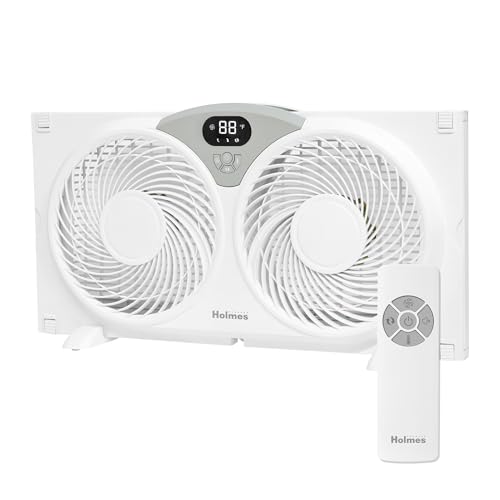
Holmes Twin Window Fan
In short: a long-running twin-blade design with straightforward controls and a thermostat on many versions. What follows is an honest prose assessment — positioning is qualitative, in the entry-to-premium range of the category, and final verification of this pick is pending, so treat it as guidance to compare against the current listing rather than a lab verdict.
The default outcome of this method for a standard bedroom window: reversible, thermostat versions available, sized for the common run of double-hung openings. If your eight steps end in a shrug between reputable twins, end them here.
Best for: the standard case this guide is built around. Not suited for: non-standard windows without a compatibility check.

Bionaire Twin Window Fan
In short: a twin design known for a remote control and a programmable thermostat on many versions. What follows is an honest prose assessment — positioning is qualitative, in the entry-to-premium range of the category, and final verification of this pick is pending, so treat it as guidance to compare against the current listing rather than a lab verdict.
The outcome when Step 5 dominates: remote and programmable thermostat on many versions for households whose fan must manage itself overnight. Choose it when the bedroom is the main event and the budget allows the control tier.
Best for: sleep-first households weighting controls highest. Not suited for: buyers whose steps end at simple exhaust duty.

Comfort Zone Twin Window Fan
In short: a reversible twin design with expandable side panels and a removable bug screen on many versions. What follows is an honest prose assessment — positioning is qualitative, in the entry-to-premium range of the category, and final verification of this pick is pending, so treat it as guidance to compare against the current listing rather than a lab verdict.
The outcome when value leads or a second fan is being added for push-pull duty: reversible, screened, panelled, and simple to live with. Manual reversing is its known compromise, priced into its tier.
Best for: second fans, spare rooms and value-led shortlists. Not suited for: anyone whose Step 5 demands remote reversing.

Air King Window Fan
In short: a sturdier, more utilitarian window fan aimed at garages, workshops and whole-room exhaust duty. What follows is an honest prose assessment — positioning is qualitative, in the entry-to-premium range of the category, and final verification of this pick is pending, so treat it as guidance to compare against the current listing rather than a lab verdict.
The outcome when Step 3 names a workshop, garage or greenhouse: sturdier single-direction air movement that does not pretend to bedroom manners. A reminder that the right answer to the steps is sometimes a different kind of fan entirely.
Best for: utility spaces chosen honestly at Step 3. Not suited for: bedrooms, where its virtues are irrelevant and its manners matter.
Common Mistakes
The champion mistake is buying before measuring, followed closely by buying for the wrong window type and discovering it on delivery day. Next comes optimising for top speed and waking at 2 a.m. beside a fan whose low setting nobody vetted. Then the sealed-room error: one fan, no second opening, and a baffled review blaming the product for a missing airflow path. The safety mistakes are in a class of their own — a cord pinched by the sash or run while damaged, a fan left in a storm because nobody owned the weather habit — and they are the only mistakes in this guide that can hurt anyone. Finally, the security oversight: a ground-floor fan left in place through a holiday, in a window that is no longer locked, because the question was never asked at Step 8.
Pro Tips
Buy the fan before the heat arrives, when choice is wide and nobody is panic-ordering at midnight in a heatwave. Fit with foam weatherstripping even if the panels seem snug; the quiet will thank you nightly. Mark the sash position that seats the fan perfectly, so reinstallation after every storm closure takes a minute instead of a fresh negotiation. Keep the remote, if your model has one, in a bedside drawer rather than on the sill, and keep a note of your window measurement with it — the note turns next year’s second-fan purchase into a two-minute job. And run the fan for one full evening before judging it; airflow is a system, and systems need a night to show you what they do.
How a Window Fan Actually Moves Air
A window fan does not cool air the way an air conditioner does. It moves air, and everything about whether it helps comes down to direction. Set to exhaust, the fan pushes warm indoor air out through the window, and that outgoing air has to be replaced, so cooler outdoor air gets pulled in through any other opening you give it — another window, a door left ajar, even the gaps a house naturally has. Set to intake, the fan pulls outdoor air in and pushes it into the room, and the air already inside escapes through those same openings. Neither direction is magic. The fan is simply giving the air a deliberate path instead of leaving exchange to chance breezes.
This is why the honest expectation matters: one window fan moves a modest amount of air. It can transform a stuffy bedroom on a mild evening, because the gap between indoor and outdoor temperature is doing most of the work and the fan just speeds the exchange up. It will not rescue a sun-baked room on the hottest afternoon of the year, because the air it pulls in is nearly as hot as the air it pushes out. Judged as an air-exchange tool for mornings, evenings and shoulder seasons, a window fan is genuinely effective. Judged as an air-conditioning substitute at midday in a heatwave, it will always disappoint, and no model at any tier changes that physics.
Exhaust mode earns its keep in kitchens, bathrooms without proper venting, and any room where cooking smells, steam or stale air build up. Blowing out at the source means odours leave instead of drifting through the house. Intake mode suits bedrooms and living rooms in the evening, when the goal is a steady stream of cooler night air across the space where people actually sit or sleep. Twin fans add a third option: one side blowing in while the other blows out, a compromise that stirs air at the window itself. That circulation mode feels pleasant near the window, but for whole-room exchange, committing the whole fan to one direction and opening a second window elsewhere almost always moves more air.
Placement decides more than power does. Air takes the shortest path between the opening it enters and the opening it leaves, so a fan exhausting from a window with a cracked door beside it mostly recirculates hallway air. The classic arrangement is a fan low on the shady side of the home pulling cool air in, or a fan high on the hot side pushing warm air out, with interior doors arranged so the stream crosses the rooms you live in. Warm air rises, which is why exhausting from an upstairs window while drawing from a shaded ground-floor window can flush a whole house slowly over an evening, even though each individual fan is only modest in output.
Fit First: Windows, Panels and Measuring Honestly
More window fans disappoint over fit than over airflow. A twin window fan is built for a double-hung window: the lower sash rises, the fan sits in the opening, expandable side panels close the gaps at the edges, and the sash comes down to rest on top of the unit and hold it in place. Measure the width of your opening before anything else, and check the fan’s stated window range against your measurement rather than against a guess. A fan stretched to the very end of its panel range seals poorly and rattles; a fan comfortably inside its range sits tight and quiet.
Sliding windows and casement windows are the awkward cases. A horizontal slider can sometimes take a fan mounted sideways if the manufacturer allows it, but many twin fans are not rated for that orientation, and a unit wedged insecurely is a unit that can fall. Casement windows that crank outward usually cannot host a conventional window fan at all, which is why they have their own category of solutions. Being honest about your window type at the buying stage saves a return later. If your windows are unusual, that is not a reason to give up on moving air — it is a reason to pick the fan style that matches the opening you actually have.
The seal around the fan matters as much as the fan. Gaps at the sides are open invitations to insects, dust and the very hot air you are trying to keep out, and they whistle on windy nights. Foam weatherstripping along the top where the sash meets the unit, and careful extension of the side panels, turn a drafty install into a snug one. Many twin fans include a bug screen or a fabric cover in the box; use the screen while the fan is installed and the cover when the season ends and the fan stays in place or goes into storage.
Finally, think about what the fan does to the window itself. While a fan is installed, that window no longer opens for a breeze, no longer serves as an emergency exit, and — stated plainly — is not a secure window. A fan held by a lowered sash can be pushed in far more easily than a locked window, so ground-floor windows in vulnerable spots deserve honest thought, and removing the fan and locking up when you travel is the prudent habit. None of this makes window fans a bad idea. It makes them a considered one, installed with eyes open about the trade-offs.
Worked Examples
The upstairs bedroom, double-hung window, light-sleeping owner: measurement mid-range, job is night intake, format twin, controls weighted first — the answer is a thermostat twin with a remote, fitted with foam, fed by a landing window left open. The steamy galley kitchen, window over the sink: job is exhaust, format chosen by fit, controls manual and proud of it, and the fan earns its keep in twenty-minute bursts after cooking rather than all-night runs. The garage workshop, squarer utility window: Step 3 reroutes the whole decision to a sturdy single fan, where bedroom criteria are irrelevant and build is everything. Three households, three different right answers, one method — which is the entire argument for choosing by steps instead of by badges or habit.
Final Word
How to choose a window fan, in the end, is how to choose anything well: in the right order, with measurements before opinions and the room before the brand. Window, job, format, controls, quiet, path, ownership — seven honest enquiries and one purchase. Do them in that order and the fan you bring home will fit your window, suit your nights and still be earning its place when the season turns.
More Practical Notes From Real Use
A detail new owners often miss: the direction labels on twin fans assume you are standing inside the room looking at the fan. Intake means air arriving into the room you are in, exhaust means air leaving it. It sounds too basic to mention, yet a remarkable share of disappointing first evenings turn out to be a fan faithfully blowing the day’s warm air inward, or pulling cool air in on one side of the house with every other window shut tight. Check the direction with a tissue held at the grille — it takes five seconds and settles the question beyond argument.
Screens deserve a word of their own. A window screen left in place behind a fan slows the air a little and collects a visible mat of dust within weeks, which is the fan showing you what it has been breathing. If your fan’s design replaces the screen position, use the bug screen supplied with it; if the screen stays, add it to the cleaning routine. Insects are the other half of the equation: a fan on intake at dusk will happily import whatever is flying toward your lit window, so the snugger your side seals and the finer your screen, the fewer uninvited guests share your cooler evening.
Think about which rooms deserve the fan first. Bedrooms win, because sleep is where heat does its worst damage and where a steady night breeze pays you back the next morning. After that, the room where the household actually spends its evenings. Kitchens and bathrooms benefit from exhaust duty in short, deliberate bursts rather than permanent installation. A single fan moved between windows as needed is a perfectly respectable strategy, especially early on, while you learn your home’s air patterns — which windows catch the evening breeze, which rooms hold heat, and where a second fan would earn its keep if you add one later.
Humidity changes the verdict from day to day. Moving air feels cooler on skin partly through evaporation, so on a dry evening a modest breeze feels like a bigger win than the thermometer explains. On a muggy night, the same fan still helps — air exchange can pull in slightly drier outside air and movement still aids comfort — but expectations should shrink with the dew point. This is also why window fans pair so well with the shoulder seasons: spring and autumn air is often cool and comparatively dry, the exact conditions where simple air exchange does its best work for the least fuss.
If your home has an attic or a hot upstairs landing, exhaust placement there is disproportionately effective. Heat collects at the top of a house and radiates back down through ceilings long after sunset, which is why upstairs bedrooms stay stubborn on warm nights. A fan exhausting from the highest window you have, drawing replacement air from shaded lower windows, attacks the reservoir of heat itself rather than its symptoms. It is slow work — think in hours, not minutes — but it is the closest a window fan comes to whole-house effect, and it costs nothing beyond running the fan you already own.
Controls separate the fans people keep from the fans people tolerate. A thermostat sounds like a luxury until the first night it switches the fan off at the temperature you chose instead of chilling the room by four in the morning. A remote sounds trivial until the fan is in the window across the room and the bed is warm. Timer functions suit people who want the flush of evening air without an all-night run. None of these change how much air the fan moves at full speed; all of them change how well the fan fits a real household’s real routine, which is what decides whether it is still in the window in August.
Renters have particular reasons to like window fans: they install without tools, leave no holes, and move out with you. The cautions are equally specific. Check that your lease allows items in windows if your building is strict about appearances, keep the unit secure so it cannot fall outward, and be extra careful with older windows whose sashes no longer hold position firmly — a sash that slips can damage the fan and itself. A strip of foam and a simple sash lock or block of wood cut to length, holding the sash from inside, solves most wobbly-window worries cheaply.
Children change the safety calculation in ways worth stating plainly. Beyond keeping fingers from grilles, remember that a window occupied by a fan is a window a child may treat as openable, climbable or interesting in ways a closed window is not. Install fans in children’s rooms only where the unit is secure, the cord is entirely out of reach, and the grille cannot be pulled free by determined small hands. If any of those cannot be guaranteed, put the fan in a hallway or landing window and let the moving air reach the child’s room through the doorway instead.
Dust tells you the truth about direction. After a few weeks, look at where dust and fluff collect around your fan and its window. Heavy build-up on the room side of an intake fan means it is faithfully importing your street’s dust along with its air — a finer screen or a different window may serve better. Build-up patterns also reveal leaks: dust streaks at the panel edges mark the gaps where air is sneaking past the fan instead of through it, doing none of the work and letting in insects besides. A minute with foam tape at those streaks is maintenance with a visible payoff.
There is a right way to retire a fan for the winter. Clean it first, while the season’s dust is still easy to remove, check the cord along its whole length, and run it for a minute to confirm all is well before it goes away — discovering a fault in spring is better than discovering it during the first hot night, but discovering it in autumn is better still. Store it upright, dry, with its panels and any remote kept together. Owners who do this get years of service from unremarkable fans; owners who shove a dirty fan into a damp garage each October tend to buy replacements and blame the brand.
Consider the shoulder-season mornings, the ones nobody writes reviews about. The house has cooled overnight, the fan has done its quiet work, and the decision is simply when to close up. Owners who develop the instinct — windows shut and curtains drawn on the sunny side before the day warms — find the night’s coolth lasting into the afternoon. It is the cheapest comfort in the whole system, bought with thirty seconds of attention, and it is why experienced owners talk about their fan as part of a routine rather than as a gadget. The appliance is simple; the practice around it is the actual product.
A word about older houses, whose windows tell stories. Sashes that have been painted shut, frames a quarter-inch out of square, openings that match no modern standard — these are the installs that need patience rather than force. Foam is the older house’s best friend, filling the irregular gaps that rigid panels cannot. A fan seated with care in a crooked old window works beautifully; a fan forced into one works loudly and briefly. If your home is old, budget an extra quarter hour for the fitting and expect to spend it happily, because the same thick walls that complicate the install hold the night’s cool wonderfully once it is inside.
Guests notice window fans, which makes them a small test of household confidence. The fan that hums steadily and keeps its room pleasant is invisible in the best way; the fan that rattles in a loose frame announces itself all night. If your spare room hosts the people you love most, it deserves the snug install and the low setting you would want yourself. This is not really about hospitality. It is about the fact that a window fan’s quality is mostly installation quality, and the guest room is simply where that truth gets an audience.
There is an underrated pleasure in the first evening of the season when the fan goes in. It marks a household decision: the warm months will be met with moving air, open windows at dusk and a house that breathes, rather than sealed against the weather from May to September. Owners describe a genuine lift to the evening — the smell of outside returning, the day’s heat leaving on a visible current. Practical people are allowed their rituals, and this one happens to lower the temperature of the bedroom at the same time.
Think about the fan’s relationship with curtains and blinds, because they are teammates. Daytime solar gain through glass is the heat the fan must evict at dusk; every hour a sunny window spends shaded is heat that never enters the ledger. Light-coloured curtains on the sun side, closed through the bright hours, can matter as much as the fan’s own strength. Conversely, the window holding the fan wants its curtain managed — tied back or shortened — so fabric never drifts toward the intake. Small choreography, nightly payoff.
Power cuts and storms teach the same lesson from opposite ends. When the electricity fails on a hot night, the household with a ventilation habit — windows that open, a sense of which side catches air — copes measurably better than the household sealed around a dead air conditioner. And when the storm arrives, the fan owner’s practiced closure routine is simply part of how the house is buttoned up. Resilience is too grand a word for a window fan, but habits of air and weather are a real, quiet asset that comes free with owning one thoughtfully.
Do not overlook the fan’s value in the in-between rooms: the landing that roasts, the box room that stores the day’s heat and radiates it into the nursery wall, the hallway whose stillness makes the whole flat feel close. Sometimes the highest-value placement is not the room you sit in but the reservoir of heat beside it. A few evenings of experiment — fan here, fan there, hand on the wall at bedtime — teach a home’s thermal geography better than any diagram, and the knowledge stays useful long after the fan itself is replaced.
Pets have opinions about window fans, and they are mostly positive: a cat will claim the intake stream’s path within the hour, and dogs gravitate to the cooled room with unerring instinct. The owner’s duties are the grille, the cord and the sill — a fan is not a cat perch, however it may be marketed by the cat. Keep the unit secure against the weight of an animal leaning into the breeze, keep cords entirely out of chewing range, and everyone in the household gets to enjoy the moving air on their own terms.
If you work night shifts, the window fan calculus inverts in an interesting way. You sleep through the day, when intake would import heat, so your fan’s shift is exhaust and preparation: flush the room in the cool early morning before you sleep, then close the house down dark and quiet. A fan with a timer earns special respect in this household, running the dawn flush and stopping itself. It is a reminder that every rule in this cluster assumes a conventional day, and the method — exchange when outside is kinder — survives the inversion intact.
Sound cuts both ways in shared housing. Your fan’s steady hum may be your sleep aid and your flatmate’s grievance if the window is shared or the wall is thin. The courtesies are simple: the calm low setting after midnight, the snug fit that prevents the rattle nobody can sleep through, and the honesty to move the fan to another window if the arrangement genuinely disturbs. Most fan noise disputes are installation disputes wearing a disguise, and they end the evening somebody adds foam tape and reseats the unit properly.
The second-hand market in window fans is active every spring, and it is a rational place to shop if you inspect like an owner rather than a bargain hunter. Check the cord along its whole length — a damaged cord ends the negotiation, full stop. Run every speed and both directions, listen for the uneven note that means a tired bearing, and confirm the panels and any remote are present. A sound used fan at a friendly price is the worth-it argument in its purest form; a damaged one is not a bargain at any price, because the repair it needs is called replacement.
Window fans and houseplants coexist happily, with one caution: a direct, constant blast will dry and batter delicate foliage, so place the green things at the edge of the stream rather than in its throat. The gentler truth is that most indoor plants prefer the exchanged, moving air of a ventilated room to the sealed stillness of a shut one, and the room’s human occupants are not so different. Arrange the stream for the sleepers first, the sitters second and the plants third, and the whole population of the room tends to thrive.
Travel changes the fan’s duties to none at all. The rule for an empty house is absolute: fans out, windows locked, because a fan-filled window is not a secure window and an unattended appliance should not run for an absent audience. The two minutes this takes is the cheapest insurance in the whole ownership proposition. Put the fan’s removal on the same checklist as the thermostat and the bins, and the homecoming version of the routine — fan in, dusk flush, first cool night back — becomes its own small pleasure.
Finally, a note on patience as a specification. Window fans work on the timescale of evenings, not minutes, and nearly every disappointed owner judged on the wrong clock: twenty minutes after switching on, in a room whose walls had stored a full day of sun. Warm fabric, warm plaster and warm furniture all re-radiate into your newly exchanged air for the first stretch, and the fan must cool the room’s contents as well as its air. Give the system an evening before you grade it. Judged on its own timescale, the modest fan in the window is a far more capable appliance than the stopwatch ever suggests.
Humidity deserves one more pass, because it decides whole regions. Where summer nights are cool but damp, the fan still wins — moving air on skin does its evaporative work even when the thermometer barely moves, and exchanging indoor air for outdoor air at the same temperature can still freshen a close room. Where nights are both hot and saturated, the honest verdict flips, and no arrangement of fans substitutes for cooling or dehumidifying. Knowing which of those climates is yours, from experience rather than hope, is the ground every other decision in this cluster stands on.
There is a simple experiment that predicts a fan’s success in your home before you spend anything. On the next warm evening, open a window on the shady side and another across the home, and notice whether a natural current forms and whether the bedroom feels kinder by bedtime. If the house breathes willingly on its own, a window fan will multiply that willingness on calm nights and impose it on still ones. If no arrangement of open windows ever produces a current, expect the fan to work harder for smaller gains, and weight your decision accordingly.
Maintenance has a rhythm worth writing on the calendar rather than trusting to memory: a wipe of blades and grilles when the fan goes in, another in high summer, a proper clean before storage, and a cord inspection at every one of those moments. Each session takes minutes. Together they are the difference between a fan that serves for years at full effect and one that fades into noise and dust by its second season. Appliances this simple do not ask for much; the ones that fail early are almost always the ones that received even less.
Measure Twice, Order Once: A Hands-On Fit Check Before You Choose a Window fan
Choosing a window fan goes wrong far more often at the measuring stage than at the comparing stage. Listings are easy to browse; rooms are unforgiving. This section turns the advice elsewhere in the guide into a single hands-on session with a tape measure, a phone camera and twenty unhurried minutes. Work through it before you order, and you will eliminate the most common causes of returns in the seasonal & holiday category: the near-fit, the blocked door, the cable that does not reach, and the delivery that cannot get through the hallway.
Step One: Measure the Space, Then Measure the Journey
Measure the destination first — width, depth and height, at floor level and again higher up, because walls lean and skirting steals more room than people expect. Note sockets, vents, radiators, window swings and door arcs on the same sketch. Then measure the journey: every doorway, turn and stair the window fan must pass through, boxed, on delivery day. A model that fits the room but not the route is a return waiting to happen. Photograph each measurement with the tape in frame; when you compare listings later, the photos end arguments that memory would lose.
Step Two: Mock It Up Before You Commit
Mark the footprint on the floor with painter’s tape, or build the volume from cardboard boxes, and live around the mock-up for a day. Open nearby doors and drawers against it, walk past it carrying something bulky, and sit or stand in your usual spot to check sightlines. For anything with a screen, flame, light or lid, check the viewing or working angle from where you will actually be, not from where the photograph was taken. This crude rehearsal catches proportion mistakes that no dimension table can, and it costs nothing but an evening.
Photograph your room at the time of day you will use the window fan most, and compare candidates against that light rather than against bright midday photographs.
A window fan chosen this way rarely surprises its owner, and that is the real goal: not the thrill of a bargain, but the quiet absence of regret. Keep the sketch and photographs with the receipt. If you ever add a matching piece, extend the setup, or move home, those twenty minutes of measurements become the most useful document you own for this category.
Frequently Asked Questions
What is the most important factor when choosing a window fan?
Fit. A fan that matches your measured window opening, in a format your window type accepts, seals properly, sits securely and runs quietly. Every other virtue — controls, power, brand — is worthless if the fan does not fit, and most returns and bad reviews in this category trace back to fit and window type rather than to the fan itself. Measure first, confirm the window type second, and only then compare models.
How do I know if a window fan will fit my window?
Measure the opening with the sash raised — width first — and compare it with the fan’s stated window range. Aim for a fan whose range holds your measurement comfortably in its middle rather than at its stretched limit. Confirm your window type is one the fan is designed for: double-hung is standard, sliders only where the maker allows the orientation, and casements generally need a different solution entirely.
Should I choose a fan with a thermostat?
If it will run overnight in a bedroom, yes. A thermostat cycles the fan off before the room over-chills in the small hours and back on if the night warms, which keeps the fan running all night instead of being switched off in irritation. For kitchens, spare rooms, workshops and short exhaust bursts, manual control is perfectly adequate and simpler. Match the controls to the hours the fan will actually work.
Is a more powerful window fan always better?
No. Beyond the level every reputable fan reaches, extra top-end power buys little, because real performance is governed by fit, direction and whether air has a path through the home. A modest fan in a snug window with a second opening across the house outperforms a stronger fan sealed into a closed room. Spend first on fit and controls; treat headline power as the last and least criterion.
Can I use a window fan in a sliding or casement window?
Sliding windows are a conditional yes: only where the manufacturer explicitly approves sideways mounting, and only with the unit securely supported so it cannot fall. Casement windows that crank outward are generally a no for standard window fans; they need dedicated alternatives. Forcing a fan into an unsuitable window risks damage and a falling unit. Check the window type honestly at the start and choose from the designs that genuinely fit it.
One fan or two — how should I decide?
Start with one fan in the room that suffers most, usually the bedroom, and open a second window somewhere in the home to feed the exchange. Live with it for a few weeks. Add a second fan — arranged as a push-pull pair, intake at one end of the home and exhaust at the other — if rooms stay stubbornly stuffy, the home is large, or a kitchen or workshop needs its own exhaust. Experience, not enthusiasm, should make the second purchase.
Related Reading
This method is part of our window fan cluster. See also our in-depth window fan review for the companion view on this topic. See also our roundup of window fan reviews for the companion view on this topic. See also our window fan buying guide for the companion view on this topic. See also the full window fan pros and cons breakdown for the companion view on this topic. See also our honest answer to is a window fan worth it for the companion view on this topic. For models already covered on this site, read the best window fans for a bedroom. For models already covered on this site, read window fans for casement windows. For models already covered on this site, read thermostat window fans. For models already covered on this site, read high-capacity window fans. For models already covered on this site, read window vent fans for a kitchen.