Disclosure: As an Amazon Associate, dailyhomedecorating.com earns from qualifying purchases. Links on this page are affiliate links; they cost you nothing extra. Prices and availability change often, so check the current Amazon listing before you buy.
Learning how to choose a cereal dispenser is mostly learning how to observe your own kitchen for one honest week. The product itself is simple — a sealed chamber with a controlled exit — but the fit depends on your cereals, your eaters, your bowls and your shelves, in that order. This guide turns the choice into seven concrete steps, each with the detail that makes it decisive rather than decorative. Follow them in sequence and you will arrive at a specific type, chamber count and size with reasons you can defend. Skip ahead to the pretty listings first, and you will likely buy a photograph and spend a month discovering which step you missed. The steps are short; the week of watching your own mornings is the real work, and it is worth it.
Key Takeaways
- Count open cereals and eaters before looking at a single product; those two numbers set chamber count and size.
- Measure bowls and the serving spot — bowl clearance under the outlet is the fit detail that decides daily happiness.
- Match mechanism to cereal: gravity knobs for free-flowing pieces, pour-style seals for chunky or fragile ones.
- Judge the seal by hand where possible; even gasket pressure is the freshness feature.
- Buy once, at the tier your frequency justifies — the framework in the cereal dispenser buying guide prices the tiers in words.
In this guide
What You Need to Know Before Comparing
It is worth being fair to the humble cereal box before replacing it. The box is free, recyclable, labelled with everything a shopper needs, and shaped by a century of shelf logic. Its failures are specific rather than total: the inner bag tears unevenly, the fold-top never reseals with conviction, the pour widens as the bag loosens, and the box hides its contents until they are nearly gone. A dispenser is not an argument that boxes are terrible. It is an answer to those four specific failures, bought once and used daily. That framing matters because it tells you who should not buy one. If your household finishes a box within days of opening it, rotates brands too fast for any chamber to keep up, or stores cereal in a cupboard where a dispenser physically cannot stand, the box’s failures never have time to bite, and the dispenser becomes an ornament. Buy against the failures you actually have.
Breakfast is the most time-pressured meal in most homes, and its frictions are wildly disproportionate to its complexity. Nobody is poaching anything at seven in the morning; the entire operation is cereal, milk, fruit, coffee, bags, shoes, and yet it frays tempers like a dinner service. Anything that removes a step, a search or a spill from that compressed window has a value out of proportion to its size. A dispenser removes the hunt for the box, the fight with the bag, the over-pour and the cleanup, four small removals stacked into one gesture. It also front-loads the work to a calm moment, the refill, instead of the rushed one. That is the deepest reason the category persists: it is not really about cereal storage at all. It is about moving effort from the worst ten minutes of the day to almost any other ten minutes, and households feel that trade immediately.
One more preliminary: decide where the dispenser will serve from, because several steps below depend on it. The serving spot needs to be on the morning path, with room for a bowl beneath an outlet and enough calm around it that a child can operate it without elbowing the kettle. If no such spot exists in your kitchen, the correct purchase may be a pour-style container for the cupboard, or no purchase at all — and knowing that before shopping is a success, not a failure of the guide.
How to Choose a Cereal Dispenser in 7 Steps
Step 1: Count Your Open Cereals
Open the cupboard and count the boxes that are open today, then repeat the count at the end of the week and average the two. That average is your chamber count, and it is almost always one, two or three. Resist rounding up for imagined variety; an unused chamber is not future-proofing, it is a crumb museum. Households whose count swings wildly — one this week, five the next — are novelty households, and they should choose a single flexible chamber or a pour-style container rather than a station built for a stability they do not have.
Step 2: Count Your Eaters and Their Independence
For children, a dispenser quietly redraws the map of breakfast independence. A box demands two hands, a steady tilt and the judgement to stop, and it punishes mistakes with a counter full of loops. A dispenser at the right height asks for one turn and a bowl held underneath, which a young child can master on the first morning and feel proud of by the third. That independence is worth more than the saved cleanup: it moves breakfast from a task done to children toward a routine they own. There are honest caveats. The dispenser must sit where a child can reach the knob but not climb for it, the bowl clearance must suit the bowls your family actually uses, and sticky fingers will find the outlet, so a weekly wipe belongs in the routine. Chosen and placed well, though, few cheap kitchen objects buy as much morning calm.
Note who serves themselves and who is served. Every self-server multiplies the value of a metered knob; every eater who must be served anyway reduces it. Note also the youngest hands: if a child will operate the dispenser, its station must sit at their working height, which may rule out high pantry shelves and argue for the counter. This step decides knob versus pour more honestly than any product comparison can.
Step 3: Audit Your Cereals
Every dispenser owner eventually meets the hesitant pour, and it helps to know the usual suspects in order. First, cereal shape: large flakes and clustered granola bridge across outlets more readily than small loops or puffs, because flat pieces interlock like fallen timber. Second, the crumb layer: the bottom of any chamber accumulates fragments that pack tighter than whole pieces and resist flow. Third, humidity: a kitchen that steams kettles beside the dispenser all winter will soften cereal enough to make it cling. None of these is a defect in the product so much as physics asserting itself. The fixes match the causes. Rotate the chamber gently before dispensing, break up a bridged layer with a clean dry spoon handle, keep fragile flake cereals for the pour-style containers if your household eats a lot of them, and empty the crumb layer at each wash instead of letting it become the chamber’s permanent geology.
List what the household actually eats, in order of frequency. Free-flowing loops, puffs and crisp rice suit every mechanism. Large flakes suit most. Chunky granola with dried fruit is the troublemaker that bridges gravity outlets. Your most-eaten cereal chooses the mechanism; your third-favourite does not get a vote. If the champion cereal is a bridger, choose pour-style and accept freehand portions with a good seal — a match that works beats a mechanism that fights you weekly.
Step 4: Measure the Space and the Bowls
Where a dispenser lives decides whether it gets used. The ideal spot has three properties: it is on the path between waking and eating, it has the vertical clearance the bowl needs under the outlet, and it does not fight the kettle, toaster or coffee maker for the same square of counter. Pantry shelves tempt tidy minds, but a dispenser buried behind other jars becomes a storage container with delusions; the dispensing advantage only exists when the bowl can slide underneath without moving anything else. Measure your bowls, not the manufacturer’s photograph. Measure shelf height with the lid’s removal in mind, because a chamber you cannot lift out or open in place will be refilled awkwardly over a sink. And think about light: a sunny windowsill spot will warm the chamber daily, which cereal does not enjoy. Cool, shaded, reachable and boring is the correct specification for placement.
Capacity questions sound technical but are really questions about your household’s week. A single person eating one cereal most mornings needs a chamber that holds a standard box without forcing it, because a dispenser that swallows only two-thirds of a box creates a worse problem than it solves: a leftover third rattling around in a half-open box. A family needs either one generous chamber per staple cereal or the honesty to admit that two or three dispensers will live on the counter. Refill frequency is the hidden variable. Every refill is a small chore involving the chamber, the new box and a few minutes of counter space, and a dispenser that needs it every third day will slowly be abandoned by a busy household. Match chamber size to the interval you can sustain, which for most homes means a refill roughly once a week or less, aligned with the normal shop.
Step 5: Judge the Seal Like You Mean It
The single biggest job of any dispenser is keeping air away from cereal between breakfasts. An opened box, even one folded shut with care, breathes every time the cupboard door moves, and staleness is mostly a story of air and moisture trading places with the crispness baked into the flakes. A dispenser with a proper lid and a gasket interrupts that trade. The cereal you pour on day ten comes from a chamber that has been opened for seconds at a time, through a small outlet, rather than a wide box mouth left gaping during a long pour. No home dispenser is a laboratory vacuum, and none will keep cereal crisp forever, but the difference between a sealed chamber and a tired cardboard fold is easy to taste in the second half of a box, which is exactly where most households quietly lose interest and let cereal die in the cupboard.
Nearly every home dispenser is built from clear food-grade plastic, and the arguments about that material are worth having plainly. Plastic keeps the weight low, the price sane and the chamber transparent, which the whole visibility benefit depends on. Its weaknesses are that it can scratch with abrasive cleaning, absorb strong odours if stored badly, and crack if dropped onto tile when full. The practical response is boring and effective: wash with soft sponges, keep the dispenser for dry goods only, and place it where a full chamber is not being carried around the kitchen daily. Lids and gaskets deserve more attention than the chamber walls. A supple gasket that still springs back when pressed will out-seal a rigid lid on a fancier body, so when you shop, press the seal, work the knob, and judge the moving parts. Dispensers fail at their mechanisms and seals, not at their walls.
Step 6: Set the Refill Rhythm You Can Keep
The refill is the dispenser’s only real chore, and doing it well takes less time than resenting it. Work at a clear counter with the empty chamber, the new box and a bowl or jug for the last fragments. Empty the old crumbs into the bowl for that morning’s serving rather than binning them, wash and dry the chamber if it is due, then pour the new cereal in a slow stream, pausing once to let it settle so the chamber takes the full box without a mound above the rim. Seat the lid firmly, work the knob once to confirm the flow, and note the level with your eyes; that glance is your shopping forecast for the week. The whole operation, done at the empty point rather than mid-week in a panic, takes a few unhurried minutes. Households that fold refills into the weekly shop unpacking find the chore disappears into an existing routine entirely.
Decanting is a habit before it is a product. Households that already decant flour, rice or coffee into canisters will take to a cereal dispenser instantly, because the ritual is familiar: open, pour, seal, shelve the packaging. Households that have never decanted anything should be honest about the first fortnight, during which the dispenser is a novelty that must survive contact with real mornings. The habit forms fastest when the refill moment is painless, which means keeping the dispenser where the new box can stand beside it, and refilling at the calm end of the day rather than during the morning rush. It also helps to decant the whole box at once rather than topping up in dribs, both for freshness rotation and because a single decisive refill feels like one chore instead of a recurring tax. Most people who abandon dispensers do not dislike dispensing; they dislike a refill routine they never designed.
Choose the chamber size that makes refills land roughly weekly or less, aligned with your normal shop, and be honest about who owns the job. A dispenser whose refill belongs to nobody gets topped up resentfully over old crumbs, which is how the category’s rare horror stories are manufactured. Assign the ritual while you are still enthusiastic; habits chosen in advance survive busy months.
Step 7: Pick the Tier Your Frequency Justifies
The value case for a dispenser is built from small savings that repeat. Less cereal thrown away stale at the bottom of forgotten boxes. Fewer emergency purchases because the level was visible in time. Fewer duplicate boxes bought because nobody knew one was already open. None of these will transform a household budget, and honesty demands saying so. What they do is shave a persistent small waste off a purchase the household makes every single week, and they pair that saving with daily conveniences that have nothing to do with money: calmer mornings, independent children, cleaner counters. Judged purely as an investment, a dispenser is modest. Judged as a tool that touches a daily routine twice a day and makes it slightly better each time, it belongs to the category of cheap objects with outsized contact hours, and contact hours are how kitchen tools actually justify themselves.
A dispenser has almost no way to die dramatically, which is a point in its favour. There are no motors, elements or electronics in the mainstream designs; the moving parts are a knob, a paddle or impeller, a lid and a gasket. Longevity therefore comes down to how those few parts tolerate repetition and washing. Knobs that feel positive rather than vague, paddles that turn without scraping, and lids that seat with a definite soft resistance are the signs of a unit that will still feel right in year three. The realistic enemies are drops, dishwasher heat applied to parts never meant for it, and gasket fatigue. Treat the gasket as the consumable it is: if a maker offers replacements, that is a mark of seriousness. A dispenser should be judged the way you judge a good can opener, not a phone: by whether its one mechanical gesture still works smoothly after thousands of repetitions.
Gear for This Guide
With the steps done, the shortlist resolves itself into shapes. These are the reference models for each outcome, presented prose-only pending verification, tiers in words, check price on Amazon at the end of your process rather than the beginning.

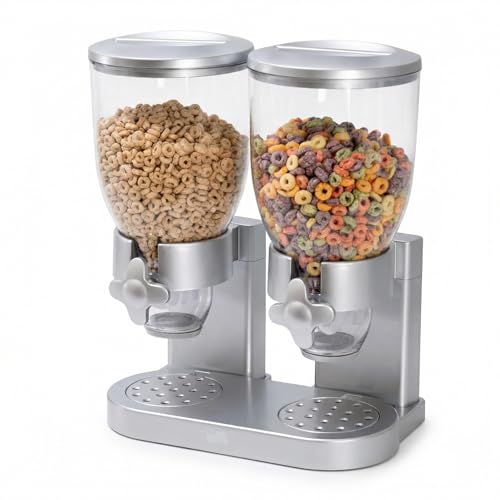
Zevro Dual Dry Food Dispenser — Best for Two-Cereal Households
A twin-canister countertop dispenser for households that keep two everyday cereals in rotation, with separate knobs, clear fill-level walls and a breakfast-station feel. Tier: mid-range. Choose it when your seven steps land on its shape; pass it by without regret when they land elsewhere.

OXO Good Grips POP Cereal Dispenser — Best Airtight Pour-Style Pick
A pour-style, push-button-seal dispenser for cupboard storage and tidy matching-canister looks, without a fixed portion mechanism. Tier: mid-range. Choose it when your seven steps land on its shape; pass it by without regret when they land elsewhere.

Shazo Cereal Dispenser — Best Simple Single Dispenser
A simple single-chamber dispenser for one-cereal households, small kitchens and first-time buyers who want the core benefits without a big footprint. Tier: entry-level. Choose it when your seven steps land on its shape; pass it by without regret when they land elsewhere.
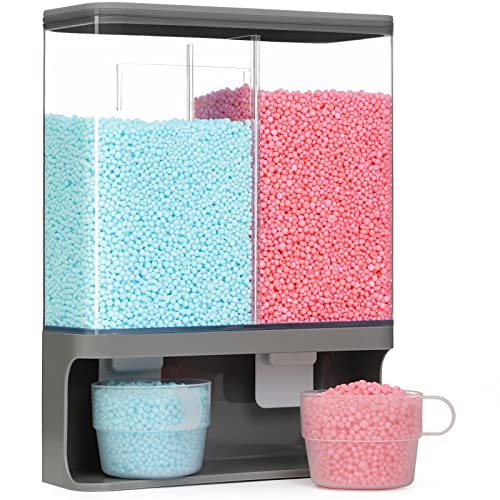
Conworld Cereal Dispenser — Best for Pantry Shelves
A larger single-chamber dispenser for pantry shelves and family counters, built around capacity, fewer refills and a calmer morning routine. Tier: entry-to-mid-range. Choose it when your seven steps land on its shape; pass it by without regret when they land elsewhere.
Common Mistakes
The mistakes rhyme with the steps: buying chambers for imaginary variety, buying height for low cabinets, buying gravity for granola, buying a station for a novelty household, and buying before measuring a single bowl. A sixth mistake deserves its own sentence because it is the most human: choosing by the tidiest photograph, which always shows chambers full, matched and crumb-free — a state your kitchen will enjoy for exactly one day unless the fit underneath it is right. Fit first, photograph second, and the photograph has a chance of staying true. The full downside inventory lives in cereal dispenser pros and cons.
Pro Tips
- Shop after the weekly count, not before: seven days of observation beats any comparison chart.
- Take your largest everyday bowl’s measurements to the listing, not your smallest.
- If two models tie, choose the one whose lid you can seat one-handed on a rushed morning.
- Plan the dispenser’s second career — snacks, oats, pet food — before dismissing a larger chamber.
- Write the refill owner and day on the family calendar for the first month; habits need scaffolding before they need willpower.
Worked Examples
Consider the weekday family of four, two adults leaving early, two children who can dress themselves but cannot be trusted with a full box and a small bowl. For this household the dispenser is not a storage upgrade; it is a staffing solution. The children serve themselves at a station stocked the night before, the adults stop being the cereal bottleneck, and the one open box problem disappears because the chamber holds the supply. A dual or triple unit fits this home best, because choice is the thing children argue about and pre-loading two or three agreed cereals removes the argument’s raw material. The seal keeps the second half of each supply fresh through the school week, and the visible levels let the adults add cereal to the shopping list before the crisis. This is the profile for whom the category was effectively designed, and the fit is close to total.
Now consider the single-person household, one cereal, eaten most mornings, bought on a weekly shop. The freshness case still holds, because a box opened by one person lasts long enough for the fold-top’s failures to matter, and the second week of a box is exactly when solo eaters drift toward toast and waste the rest. A single modest dispenser solves that, and its visibility benefit shrinks but does not vanish: one person still forgets what is in the cupboard. The portion benefit matters least here, since an adult pouring for one quickly calibrates. The honest recommendation for this profile is the simple end of the market, one chamber, no station-building, placed where the morning actually happens. Anything larger buys capacity and variety this household will never use, and the unused second chamber of an ambitious unit becomes a tiny monument to over-buying.
A third profile hides inside many homes: the household whose cereal problem is not breakfast at all, but grazing. Dry cereal doubles as a snack, eaten by the handful in front of the television, and the box lives a hard life of constant opening by many hands, some of them not freshly washed, all of them widening the bag’s tear. A dispenser disciplines this pattern without banning it. The knob makes snacking a deliberate small act, keeps hands out of the shared supply, and the closed chamber survives the living-room phase of its life far better than a box does. For this household, placement is the decision: a dispenser stationed where snacking legitimately happens, stocked with the cereal everyone actually grazes on, converts a hygiene niggle and a freshness leak into a tidy house rule. It is an unfashionable use case and, in the right home, the most valuable one.
More Detail Worth Knowing Before You Decide
Most countertop dispensers work by gravity and a metering chamber. Cereal rests in the clear canister, a turn of the knob or a press of the lever moves a measured amount into the outlet, and the bowl waits underneath. The elegance of the system is that it has almost nothing to power, programme or repair. Its weakness is equally physical: the mechanism assumes cereal flows like a dry granular material, which flakes, loops and puffs mostly do, right up until a crushed layer at the bottom of the chamber starts behaving like rubble. Understanding that one fact explains most dispenser behaviour, good and bad. Keep the chamber reasonably full, give it an occasional gentle shake when you refill, and the flow stays honest. Let it run to dust and crumbs for weeks, and any design will eventually hesitate, grind or deliver a sad half-portion of fragments.
Portion behaviour changes the moment cereal comes out of a dispenser instead of a box. A free pour is governed by mood, hunger and the angle of a tired wrist, and it reliably overshoots. A knob-style dispenser meters each turn, so a bowl fills in repeatable increments and people quickly learn how many turns make their normal breakfast. That repeatability matters in three directions at once: children serve themselves without flooding the bowl, households watching sugar intake get a serving they can actually reproduce, and the box lasts the number of days the shopping plan assumed it would. Nobody needs to weigh breakfast, and this is not about restriction for its own sake. It is about removing the small daily randomness that makes one box vanish by Wednesday while the next survives to Sunday, and about giving younger eaters a serving tool sized to their judgement rather than to the width of a box opening.
Breakfast mess rarely comes from one dramatic spill. It accumulates: the dust shaken out of a box, the three loops that bounce off the bowl rim, the sugar film near the cupboard, the handful taken straight from the box by someone passing. A dispenser attacks that accumulation at its source by giving cereal one narrow, predictable exit. The pour, if you can even call it that, travels a few centimetres in a controlled stream instead of arcing from a tilting box. Counters stay cleaner, the floor under the breakfast spot stops crunching, and the cereal itself stays inside a closed system rather than shedding dust every time it moves. The benefit sounds small until you multiply it by two or three breakfasts a day, every day, across a school year. Small frictions and small messes are exactly the kind that compound, and compounding is where a simple dispenser earns its keep.
A clear chamber changes shopping behaviour in a way nobody mentions in the product description. When the cereal level is visible from across the kitchen, the household brain tracks it without effort: you see the supply dropping on Tuesday, it joins the shopping list on Wednesday, and nobody faces an empty box on Thursday morning. Compare that with the opaque box, whose contents are a rumour until the day the pour produces dust and disappointment. Visibility also disciplines variety. A household can see, literally, how fast each cereal is moving, which one the family has quietly gone off, and which one needs finishing before a new box is opened. Pantries organised around visible levels waste less food, because food is forgotten in the dark far more often than it is thrown away in the open. It is a modest, unglamorous advantage, and over a year it is one of the largest ones a dispenser offers.
Cleaning a dispenser is a short job done rarely, or a miserable job done once. The correct rhythm is to wash the chamber at refill boundaries: when a canister runs empty, before new cereal goes in, rinse or wash the parts the manufacturer allows, dry everything completely, and only then refill. Moisture is the enemy twice over, because a damp chamber both stales the new batch and encourages residue to cling. Between refills, a dry wipe of the outlet and knob keeps sugar dust from building into a sticky film. The mistake to avoid is topping up indefinitely, layering fresh cereal over the ageing fragments at the bottom until the bottom becomes archaeology. First in, first out is the rule that keeps both flavour and hygiene honest: finish the chamber, wash it, dry it, refill it. Ten unhurried minutes at the natural empty point replaces the deep scrub that neglected dispensers eventually demand.
The honest comparison set for a dispenser is not other dispensers; it is the other things a household might do instead. Airtight canisters with scoop or pour lids solve the freshness problem and stack beautifully, but they restore the two-handed pour and its randomness. Bag clips and careful folding cost almost nothing and solve almost nothing beyond the first day. Keeping cereal in its box inside a sealed plastic tub is a compromise some tidy households swear by, and it works, at the price of an extra layer between hand and breakfast. Vacuum-sealed bulk storage serves the stockpiling household, not the daily one. Each alternative optimises something: canisters optimise shelf looks, clips optimise cost, tubs optimise tidiness. A dispenser is the only option that optimises the serving moment itself, which is why the decision should start from a simple question: is your pain at the point of storage, or at the point of pouring on a weekday morning?
Although cereal is the headline act, a dispenser’s chamber is really a general dry-goods tool, and many households quietly reassign theirs. Granola, muesli and oats behave beautifully. Trail mix and mixed nuts suit a snack station. Dry pet food is a genuinely popular second career, because the portion knob disciplines the enthusiastic scoop that overfeeds small animals, and the seal keeps kibble aroma inside the chamber instead of perfuming the utility room. Rice and lentils flow well through wider outlets but can jam narrow ones, so test a small batch before committing a chamber. This versatility matters to the value question: a dispenser bought for a cereal phase the children later outgrow is not necessarily headed for the charity box. It can migrate to snacks, baking goods or pet supplies and keep earning its shelf space in a second role, which is more than can be said for most single-purpose kitchen gadgets.
There is an aesthetic argument for dispensers that deserves neither mockery nor exaggeration. A row of clear chambers with visible, level contents looks calm in a way that a leaning tower of printed boxes never will, and calm-looking kitchens genuinely are pleasanter to cook and eat in. Open shelving and glass-front cupboards amplify the effect, because the storage becomes part of the room rather than a secret behind a door. But the look only stays calm if the household maintains it: half-empty chambers with mismatched cereals and crumb layers look worse than boxes, because the mess is on display. Buyers motivated mainly by the pantry photograph should ask whether they will enjoy the upkeep that photograph implies. Those who will, find dispensers deeply satisfying. Those who will not, should choose opaque canisters and keep the same honesty behind a solid lid.
Kitchen humidity is the invisible opponent in every freshness conversation. Cereal lives in the room where kettles boil, pasta steams, dishwashers vent and ovens exhale, often several times a day, and dry food absorbs that moisture patiently and silently. This is why two households can own the same dispenser and report different results: the one sited beside the kettle ages its contents faster than the one across the room. Placement is therefore a freshness decision, not merely a convenience one. Keep the chamber away from steam sources, out of direct sun that warms it daily, and in the driest calm corner the morning path allows. The same logic applies to the cupboard alternative: the shelf above a frequently used oven is the worst address in the kitchen for anything crisp. Respect the room’s microclimate and even a mid-tier seal performs like a premium one; ignore it and premium hardware fights a losing battle against physics.
First in, first out sounds like warehouse language, but it is the single rule that separates households whose dispensers delight them from households whose dispensers slowly disappoint. It means the chamber is finished before it is refilled, so no layer of cereal becomes a permanent resident at the bottom, ageing under every fresh arrival. The rule costs nothing and asks only for timing: let the level run low, plan the last bowls, and refill from empty rather than topping up at half. Households that find empty-point refills impractical — because breakfast cannot pause — can keep a small pour-style container as the bridge supply for the wash-and-dry window. What matters is that rotation happens somehow. Cereal is a food with a quiet clock on it, and the dispenser slows that clock; rotation is what stops anyone’s serving from being the one that has been waiting longest at the bottom of the chamber.
A small labelling habit upgrades any dispenser from storage to system. When you decant a box, note the cereal and the date it went in, on a removable label or a strip of tape on the back of the chamber where only the household sees it. The date disciplines rotation, because a chamber labelled six weeks ago starts a conversation that an anonymous chamber never does. The name matters more than it sounds in multi-chamber homes, where two similar-looking cereals — one plain, one sweetened, one reserved for a child with preferences — are otherwise distinguished by memory and hope. Labels also rescue the end of the box problem: the nutrition panel and allergen information live on the packaging you are about to recycle, so photograph it or keep the cut panel in a drawer until the chamber is finished. None of this is mandatory. All of it is the difference between a tidy gadget and a small, well-run breakfast institution.
Guest mornings reveal a dispenser’s social talents. Visitors do not know your cupboards, your boxes or your family’s unwritten rules, and they feel the peculiar helplessness of standing in someone else’s kitchen at dawn. A visible dispenser station answers their questions without waking the house: here is the cereal, here is how it works, here is a portion. Hosts who keep a spare chamber for a guest-friendly cereal find breakfast stops being a service they perform and becomes a facility they provide. The same logic serves holiday lets, grandparents’ houses and any home where teenagers’ friends descend at weekends. It is a minor benefit in the purchase decision and a surprisingly large one in lived experience, because hospitality is mostly the removal of small awkwardnesses, and few awkwardnesses are smaller or more daily than not knowing how to feed yourself in a strange kitchen.
Beyond the family kitchen, dispensers earn their keep in small shared spaces: the office kitchen corner, the studio, the workshop tea station, the dorm room. Shared spaces punish open boxes, which are handled by everyone, sealed by no one and finished by whoever is least polite. A dispenser imposes a tiny, fair order on that commons: hands stay out, portions stay sane, the level is public information, and the person who notices it running low can say so before it is empty. Hygiene, which is a minor theme in a family, becomes the headline in a shared space, and the closed chamber with a metered exit is simply a more civilised way to share dry food. If your cereal problem lives at work rather than at home, judge models by sturdiness and simplicity above all, because shared tools are used by people who did not buy them and will not baby them.
Crispness is partly a sound, and the sound is a legitimate freshness test anyone can perform. Fresh flakes and puffs arrive in the bowl with a dry, lively rattle; stale ones land softly, with the muted thud of food that has taken on water. Households learn to hear the difference within a fortnight of owning a dispenser, because the contrast between the first bowl from a fresh chamber and the last bowl from an old box is so consistent. Use the sound honestly when you assess any storage method, including this one: pour, listen, and let your ears file the report your eyes cannot. It is also a useful teaching tool for children, who enjoy being put in charge of quality control and who will announce staleness findings to the household with a rigour no adult would dare apply. Small rituals like that are how a storage purchase becomes part of a family’s food culture rather than another object on the counter.
The shopping-list benefit deserves a fuller telling, because it compounds quietly for years. Most households buy cereal reactively: a box runs out midweek, someone improvises, a replacement is grabbed at convenience prices, and a duplicate appears because two people solved the same problem. A visible chamber converts that chaos into a forecast. The level is public, the burn rate becomes familiar, and cereal joins the planned shop at the planned shop’s prices. Over a year, the avoided waste is not dramatic in any single week, but it is relentless in aggregate — fewer stale tails discarded, fewer duplicates expiring in parallel, fewer premium-priced emergency boxes. This is the unglamorous arithmetic underneath the worth-it question, and it favours households with a regular shopping rhythm most. If your household already shops like a logistics operation, you will feel it immediately; if it shops like a jazz improvisation, the chamber may be the first instrument of order.
Hands are the unmentionable variable in shared cereal. In a box household, the supply is touched constantly: hands reach in for handfuls, measuring cups are plunged and returned, the bag’s mouth is handled by everyone who pours. None of this is scandalous within a healthy family, but it is unnecessary, and a dispenser removes it wholesale. The supply is touched once, at decanting, by the person refilling; after that, cereal travels from chamber to bowl without contact. For households with young children — whose hand hygiene is, charitably, a work in progress — and for homes where someone is briefly unwell and breakfast must go on, that separation is a genuine comfort. It also keeps the cereal itself cleaner in a simpler sense: no crumbs from the counter, no dust from the cupboard shelf, nothing drifting into an open bag left gaping beside the toaster. Closed systems stay clean because they are closed.
From First Step to Final Check: Working Well With a Cereal Dispenser
The main steps for the cereal dispenser are covered above; what follows is the working discipline around those steps, covering preparation, order of work, the checks that catch mistakes early and the small follow-up habits that keep the result sound. It is written for real homes, where interruptions and imperfect spaces are normal.
Start With Your Space and Your Routine
Take a photograph of the space before you order and mark the intended position of the cereal dispenser on it, then revisit that photo whenever a listing tempts you toward a larger or different style. Consider the busiest version of the day, not the calmest one, and ask whether the cereal dispenser still works when people are hurrying, carrying things or sharing the same space. Keep the fittings, spare parts and instructions that come with the cereal dispenser together in one labelled place, because the part you need in a year is always the one that was put somewhere safe. Decide in advance which single feature you would refuse to compromise on, and let that one priority settle ties between otherwise similar cereal dispenser choices.
When you have finished, run one deliberate test of the cereal dispenser doing its ordinary job, and fix small issues immediately while the steps and the tools are still fresh in your mind. Households with children or pets put different demands on a cereal dispenser than the listing photographs suggest, so judge edges, stability and cleanability against your real household, not a styled one. Apply the same checks to each shortlisted example, whether that is the Shazo Cereal Dispenser; the Zevro Dual Dry Food Dispenser; the Conworld Cereal Dispenser, because consistent testing is what makes the differences between models visible. If the cereal dispenser will be seen every day, its proportions matter as much as its function, so hold the listing dimensions up against a familiar piece nearby to judge the visual weight honestly.
When Small Problems Appear
Recheck any adjustable part of the cereal dispenser after the first week of use, once materials have settled and the household has stopped being careful with it. Keep the care routine simple enough to repeat: a cereal dispenser that needs ten minutes of attention weekly will usually get it, while one that needs an hour monthly often gets none. A return is easiest when you have kept the packaging until you are sure, so give the cereal dispenser a fair trial period in its real position before you break down boxes and dispose of padding. If you are replacing an older cereal dispenser, list what failed or frustrated you about it, and check each item on that list against the new listing before you order its successor.
If the cereal dispenser needs assembly, read the instruction preview if one is offered, count the steps honestly against the time you have, and check whether a second pair of hands is recommended. Check your work from a distance as well as up close, because proportions, levels and alignment in Food Storage & Organization tasks are far easier to judge from across the room. Colour and finish samples in listings are taken under controlled light, so expect the cereal dispenser to look different at home and favour options that sit comfortably with the tones already in the room. Seasonal checks suit most Food Storage & Organization items well, so tie a quick inspection of the cereal dispenser to a job you already do, such as changing clocks or clearing gutters.
A Short Decision Checklist
- Where the cereal dispenser and its accessories will be stored when not in use
- Packaging kept until the cereal dispenser has passed its first trial in place
- How the cereal dispenser will be cleaned in an ordinary week
- Assembly needs, tools required and whether help is needed
- The one feature you will not compromise on
- What your current arrangement does well that the cereal dispenser must not lose
- What your current arrangement does badly that the cereal dispenser must fix
- The main job the cereal dispenser must do, written in one sentence
Taken together, these checks take only a little time, yet they answer the questions that decide whether the cereal dispenser suits your home, your household and your routine, and they do so before money changes hands rather than after.
Frequently Asked Questions
How many chambers do I actually need?
As many as the number of cereals open in your kitchen during a typical week — usually one to three. Count honestly across seven days rather than guessing. An unused chamber gathers crumbs and regret, while a missing one strands an open box in the cupboard and recreates the problem you bought the dispenser to solve.
What if my kitchen has no counter space?
Consider a pour-style airtight dispenser that lives in the cupboard, or a wall-mounted unit if a suitable wall sits on the morning path. If neither works, the honest answer may be good canisters instead. A countertop station without a serving spot will be exiled and unused.
Which matters more, capacity or seal?
The seal, once capacity clears the minimum bar of swallowing your usual box whole. A huge chamber with a lazy lid stales cereal at scale. A modest chamber with an honest gasket keeps every serving crisp and refills at a rhythm most households can sustain.
Should children influence the choice?
Yes, if they eat cereal. A metered knob at their working height buys real morning independence and ends the flooded bowl. That argues for a countertop knob model placed safely within reach. If adults serve everyone anyway, the knob’s advantage shrinks and a pour-style seal may serve better.
How do I know if a dispenser fits my shelf?
Measure shelf height including the room needed to lift or open the lid in place, then measure your bowls against the outlet clearance. Do both with a tape, not an estimate. A dispenser that almost fits is a daily irritation, and almost is the word to eliminate before ordering.
When should I not buy one at all?
When boxes in your home are finished within days, when cereal variety rotates too fast for any chamber to track, or when no serving spot exists. In those kitchens the box’s weaknesses never bite, and the money serves better against a storage problem you actually have.
Related Reading
- the full cereal dispenser buying guide
- cereal dispenser pros and cons in full
- our in-depth cereal dispenser review
- cereal dispenser reviews compared side by side
- whether a cereal dispenser is worth it for you
- best storage baskets for the rest of the pantry
- how vacuum storage bags handle the bulky overflow
- closet organiser shelves for overflow dry goods
- storage ottomans that hide kitchen clutter in plain sight


