Disclosure: As an Amazon Associate, dailyhomedecorating.com earns from qualifying purchases. Links on this page are affiliate links; they cost you nothing extra. Prices and availability change often, so check the current Amazon listing before you buy.
Dehumidifier not collecting water is what people type when they want a straight answer about a dehumidifier that runs but leaves its tank dry. This guide gives that answer without the usual fog. It explains what actually matters for working through the causes in the order they actually occur, compares the verified options honestly, walks through the practical steps and mistakes that decide real-world results, and ends with the questions readers ask most. Where a product below carries an Amazon link, that product was verified against the retailer’s own catalogue data for this site on 2026-11-23; where a well-known model could not be verified that way, it is discussed in prose only, and the guide says so openly rather than inventing a link.
Why does dehumidifier not collecting water deserve a long guide rather than a short list? Because a dry tank is a symptom with at least eight different causes, and the cheapest ones come first. Readers who understand that single point make better decisions than readers who memorise specifications, so the sections that follow keep returning to it from different directions: the buying criteria, the product comparisons, the day-to-day routine and the failure cases. If you only have five minutes, read the key takeaways and the final recommendation; if you have a decision to make this week, the whole guide is built to be worked through in order.
Honesty first, on dehumidifier not collecting water: nothing in this guide claims hands-on laboratory testing that did not happen. Product judgements rest on verified specifications, construction analysis, manufacturer documentation and the patterns that recur in owner reporting. Prices are deliberately not printed for individual products, because they move constantly; every linked product says check price on Amazon, and the current listing is the only price worth trusting on the day you buy.
Dehumidifier Not Collecting Water: Key Takeaways
- Capacity is a test condition, not a promise — the section below on this point is the one to read twice if working through the causes in the order they actually occur is your situation.
- Coverage area assumes a sealed, average room — the section below on this point is the one to read twice if working through the causes in the order they actually occur is your situation.
- Drainage decides whether the machine works while you sleep — the section below on this point is the one to read twice if working through the causes in the order they actually occur is your situation.
- Internal links in this guide point only to related guides on this site, so you can go deeper on sizing, care and alternatives without leaving the topic.
In this guide
How the Options in This Guide Were Chosen
Dehumidifier not collecting water was the starting question for selection in this guide. Products earned their place by matching that intent — working through the causes in the order they actually occur — and by having a verifiable, current listing whose title confirms the model being discussed. Products that failed verification, however famous, were demoted to prose. That rule costs this guide some famous names and buys it something more valuable: every link below lands on the product the surrounding text actually describes.
For the dehumidifier not collecting water shortlist, three filters did the work beyond verification. First, relevance: does this product solve the problem the reader arrived with, or a neighbouring problem the marketing prefers? Second, specification honesty: are the figures that matter published in a form that can be compared, or hidden behind adjectives? Third, ownership friction: drainage, cleaning, returns handling, replacement parts and the other unglamorous details that decide whether a good specification becomes a good year. Products were ranked by how they survive all three filters, not by any single headline number.
What Actually Matters: The Buying Criteria
Drainage decides whether the machine works while you sleep
Where dehumidifier not collecting water is concerned, every compressor dehumidifier eventually faces the same arithmetic: the bucket fills, the float switch stops the machine, and humidity climbs again until somebody empties it. Continuous drain hose routing, or a built-in pump where the drain sits above the machine, is the difference between a tool and a chore. Gravity drainage needs a genuine downhill run; a hose that sags into a loop will airlock and quietly flood the bucket instead.
Noise is a placement problem before it is a product problem
Read against dehumidifier not collecting water, compressor hum and fan wash carry through floor joists and along hard walls. A machine that is unobtrusive in a basement becomes a presence in a studio flat. Low fan settings trade extraction speed for quiet, and most owners settle into using the quiet setting at night and the fast setting when the room is empty. Rubber feet, a level floor and a few centimetres of clearance from the wall change the perceived volume more than most model-to-model differences.
Controls and humidity sensing are where daily friction lives
Considering dehumidifier not collecting water specifically, a humidistat that reads the air at the machine, rather than across the room, will cycle the compressor around its own microclimate. Set the target, then check it against a small standalone hygrometer placed where people actually sit or sleep. For working through the causes in the order they actually occur, the controls worth wanting are simple: a clear target setting, a timer for laundry loads, an auto-restart after power cuts, and a filter reminder that reflects hours run rather than a calendar guess.
Energy use follows the compressor, and the rating class matters
Read against dehumidifier not collecting water, dehumidifiers are among the hungrier small appliances because the compressor runs for hours. Efficiency ratings expressed as litres per kilowatt-hour let you compare machines honestly: two units with the same pint rating can differ substantially in running cost across a damp season. Desiccant machines behave differently again, using more electricity but working steadily in cold spaces where compressor models frost and stall.
Capacity is a test condition, not a promise
Considering dehumidifier not collecting water specifically, pint ratings are measured in warm, very humid test air, and the same machine removes noticeably less in a cool basement at moderate humidity. When you read any claim about a dehumidifier that runs but leaves its tank dry, translate the headline number down for your own room: a machine rated at the top of its class in the test chamber may behave like a mid-class machine at 18 degrees and half-saturated air. That is not dishonesty, it is physics — cold coils condense less, and drier air gives up its water more slowly. Buy for your worst month, not your average one.
Coverage area assumes a sealed, average room
Read against dehumidifier not collecting water, square-foot coverage figures assume standard ceiling heights, closed doors and a single open space. A basement broken into a laundry corner, a storage bay and a hallway behaves like three small rooms, and air does not turn corners on its own. For working through the causes in the order they actually occur, placement and air movement matter as much as the sticker: a well-placed smaller machine in the dampest zone often outperforms a bigger machine parked behind a sofa at the dry end of the house.
Three Households, Three Different Answers
The basement that smells fine in March
Where dehumidifier not collecting water is concerned, a basement can pass a sniff test in spring and fail it by August, because warm air carries more moisture and summer storms load the ground around the foundations. If a dehumidifier that runs but leaves its tank dry is aimed at a basement, judge it against the August version of the room: doors closed, laundry running, a week of rain behind it. Equipment chosen for the worst month idles comfortably in the easy ones; equipment chosen for spring spends August losing.
The rental with one damp bedroom
Considering dehumidifier not collecting water specifically, in a rental you cannot replumb, repoint or install extraction in every room, so the strategy narrows to source control you are allowed to do — lids on pans, window discipline after showers, furniture pulled a few centimetres off cold walls — plus one portable machine moved to where the problem currently lives. Portability, a handle that works and a bucket you can carry without sloshing become the deciding features.
The laundry-heavy family home
Where dehumidifier not collecting water is concerned, a household washing for five produces a continuous moisture load that surprises people: every air-dried load releases litres of water into the indoor air. Here the winning setup is boring and effective — a closed laundry room or bathroom, the machine beside the airer, a timer set for the drying window — and it beats a bigger machine left running all week in the wrong room.
Detailed Reviews: The Verified Options

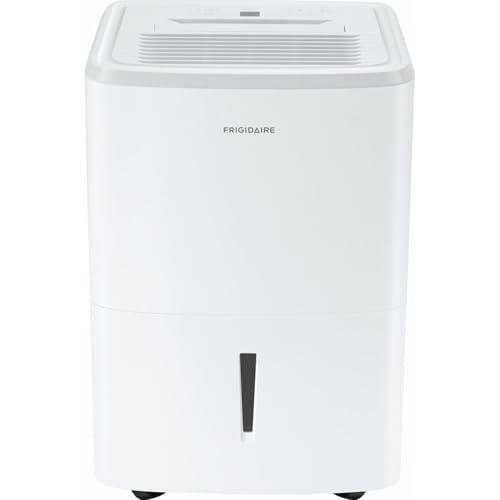
Frigidaire 50 Pint WiFi Dehumidifier — Top verified pick
For this dehumidifier not collecting water guide, the listing checked is the Frigidaire 50 Pint WiFi Dehumidifier — the version identified by energy efficient and humidity absorber — rather than a neighbouring model in the same range.
In this dehumidifier not collecting water guide, the Frigidaire 50 Pint WiFi Dehumidifier earns its place because its published specification answers the intent behind the search directly: working through the causes in the order they actually occur. Read its listing title closely and you will see the design priorities stated plainly, which is itself a good sign — products that hide their format behind lifestyle language usually do so because the format is ordinary. This one competes on the specifics, and the specifics are the right ones for the job described in the criteria sections above.
In the dehumidifier not collecting water guide, living with the Frigidaire 50 Pint WiFi Dehumidifier quickly becomes a matter of small repeated habits rather than headline features. Its distinguishing trait on paper, energy efficient, translates in practice into emptying the bucket or checking the drain hose, rinsing the filter before airflow fades, and glancing at the hygrometer reading where people actually sit. That routine is helped by the fact that app and WiFi control let you react to a humidity spike or a partner’s schedule from another room, which sounds minor until the machine lives in a basement or a child’s room. Seasonally, a humid week tests drainage first and specifications second, and a cold snap tests the defrost behaviour that never appears in a headline. None of that is visible on a product page, which is why this guide judges the Frigidaire 50 Pint WiFi Dehumidifier on the mechanics of ordinary use rather than on the feature that photographs best.
For dehumidifier not collecting water shoppers, where does the Frigidaire 50 Pint WiFi Dehumidifier sit in its market? Honestly in the competitive middle-to-upper band of its class: not the cheapest way to buy the format, and not a luxury badge either. That positioning suits buyers who intend to keep the product for years and would rather pay for the mechanics than for styling. If your need is temporary or experimental, a simpler verified option in this guide may serve you better; if your need is the full daily version of working through the causes in the order they actually occur, this is the level at which the compromises mostly disappear.
At a glance:
- Format confirmed by its verified listing title, matched to this guide’s subject: a dehumidifier that runs but leaves its tank dry.
- Sold through Amazon with the current listing carrying live price and availability.
- Covered by the maker’s standard warranty and Amazon’s returns handling.
Strengths
- App and WiFi control let you react to a humidity spike or a partner’s schedule from another room, which sounds minor until the machine lives in a basement or a child’s room.
- The 50-pint class is the workhorse size for whole basements and large open rooms, strong enough for a wet season without commercial bulk.
- The 50-pint class is the workhorse size for whole basements and large open rooms, strong enough for a wet season without commercial bulk.
Trade-offs
- As with every product in this class, the published figures come from standard test conditions; a cold room, a heavy sleeper or an unusual layout will move real-world performance away from the headline.
- The feature set is deliberately focused, so buyers wanting every connected extra should compare the connected alternatives in this guide before deciding.
- Availability and configuration options change over time, so the exact variant you want may not always be the one in stock.
Verdict for dehumidifier not collecting water: best for readers whose situation matches working through the causes in the order they actually occur and who want the verified, keep-it-for-years version of the format. / Not suited for: buyers shopping purely on the lowest upfront number, or anyone whose room, body or layout contradicts the criteria sections above.
The Practical Routine: Getting It Right Day to Day
Step 1: Measure before you buy or troubleshoot
Considering dehumidifier not collecting water specifically, put a small hygrometer in the room for two full days and note the morning and evening readings. A room that sits between roughly 40 and 50 percent relative humidity is comfortable for most people and unkind to mould; sustained readings above 60 percent are where dust mites thrive and condensation starts feeding mildew on cold surfaces. Numbers turn a vague feeling of damp into a decision you can check later.
Step 2: Find the moisture source first
Read against dehumidifier not collecting water, walk the room slowly. Check the cold-water pipes for condensation, the window reveals for black spotting, the base of exterior walls for tide marks, and the floor drain or sump for standing water. A dehumidifier asked to fight an active leak is a subscription, not a solution: fix ingress, seal the obvious gaps, and let the machine handle the residual airborne moisture it is actually designed for.
Step 3: Place the machine for airflow, not convenience
Read against dehumidifier not collecting water, air needs a path in and out. Keep the intake and outlet clear by roughly a forearm’s length, point the discharge toward the dampest zone rather than into a wall, and avoid tucking the unit behind curtains or inside a cupboard. In long rooms, a small fan moving air toward the machine does more than a second machine fighting stagnant corners.
Step 4: Set the target and let it work
Read against dehumidifier not collecting water, start at 50 percent and live with it for a few days before chasing lower numbers. Over-drying below the mid-30s makes air feel harsh on throats and eyes, shrinks timber, and runs the compressor for no benefit. Most households land between 45 and 50 percent in living spaces and a touch lower in storage areas where nobody breathes the air.
Step 5: Maintain the parts that touch air and water
Where dehumidifier not collecting water is concerned, rinse the washable filter on the schedule the manual gives, wipe the bucket with a mild detergent solution before biofilm gets a foothold, and check the drain hose for kinks and slime each season. Coils that stay clean exchange heat efficiently; coils furred with dust make the compressor work longer for the same water.
Common Mistakes That Waste Money
Read against dehumidifier not collecting water, the mistake: Sizing by the room you wish you had: measuring the dry end of a space, or forgetting that coverage figures assume one sealed room, then blaming the machine for a layout problem. In a guide about dehumidifier not collecting water, this one recurs because it is easy to make and invisible until its cost has been paid — in a return, a replacement, or a product that never gets used the way its owner intended. The fix costs nothing but attention: run the relevant check from the criteria sections before the purchase, not after the delivery.
Read against dehumidifier not collecting water, the mistake: Running the machine with windows open on a humid day, which asks it to dehumidify the weather; extraction only wins in a closed space. In a guide about dehumidifier not collecting water, this one recurs because it is easy to make and invisible until its cost has been paid — in a return, a replacement, or a product that never gets used the way its owner intended. The fix costs nothing but attention: run the relevant check from the criteria sections before the purchase, not after the delivery.
Where dehumidifier not collecting water is concerned, the mistake: Setting the target once and never checking it against a hygrometer where people actually sit, so the machine optimises its own corner. In a guide about dehumidifier not collecting water, this one recurs because it is easy to make and invisible until its cost has been paid — in a return, a replacement, or a product that never gets used the way its owner intended. The fix costs nothing but attention: run the relevant check from the criteria sections before the purchase, not after the delivery.
Read against dehumidifier not collecting water, the mistake: Ignoring the filter until extraction fades, then pricing a replacement machine instead of performing the ten-minute clean that restores airflow. In a guide about dehumidifier not collecting water, this one recurs because it is easy to make and invisible until its cost has been paid — in a return, a replacement, or a product that never gets used the way its owner intended. The fix costs nothing but attention: run the relevant check from the criteria sections before the purchase, not after the delivery.
Considering dehumidifier not collecting water specifically, the mistake: Treating collected water as free distilled water for drinking or appliances; it is neither sterile nor food-grade, whatever the internet says. In a guide about dehumidifier not collecting water, this one recurs because it is easy to make and invisible until its cost has been paid — in a return, a replacement, or a product that never gets used the way its owner intended. The fix costs nothing but attention: run the relevant check from the criteria sections before the purchase, not after the delivery.
Final Recommendation
Searching dehumidifier not collecting water? Start from the criteria, not from a brand. The Frigidaire 50 Pint WiFi Dehumidifier is the default recommendation because it survives the most criteria with the fewest conditions attached. Everything else in this guide — the scenarios, the mistakes, the routine — exists to help you confirm that default or to show you the specific reason a different option fits you better.
Going Deeper: Angle 1 on This Decision
Step back from dehumidifier not collecting water for a moment and consider the calendar. A decision in this category is not really judged in the week it is made; it is judged across the hardest stretch of the year, when the weakness named under ‘Drainage decides whether the machine works while you sleep’ stops being theoretical. Read this guide’s section on ‘Controls and humidity sensing are where daily friction lives’ again with that hardest stretch in mind, and notice how the ranking of the options quietly rearranges itself: margin matters more than peak performance, and the option that looked merely adequate in mild conditions can become the one still working without complaint. That is the longer view this angle asks for — buy for the season that tests the choice, and the easy seasons will look after themselves.
For dehumidifier not collecting water households, records sound like bureaucracy until the second season arrives, and then they become the difference between knowing and guessing. For dehumidifier not collecting water, the useful record is tiny: the settings that worked, the date ‘measure before you buy or troubleshoot’ was last done properly, and anything that felt different afterwards. Add the same note whenever ‘find the moisture source first’ comes round, and within a year the household owns a small, honest history of the product and the room it serves. Drift — a room getting damper, a surface getting softer, a routine slipping — is only visible against a record, and catching drift early is worth more than any single upgrade this guide could recommend.
Going Deeper: Angle 2 on This Decision
Step back from dehumidifier not collecting water for a moment and consider the calendar. A decision in this category is not really judged in the week it is made; it is judged across the hardest stretch of the year, when the weakness named under ‘Noise is a placement problem before it is a product problem’ stops being theoretical. Read this guide’s section on ‘Energy use follows the compressor, and the rating class matters’ again with that hardest stretch in mind, and notice how the ranking of the options quietly rearranges itself: margin matters more than peak performance, and the option that looked merely adequate in mild conditions can become the one still working without complaint. That is the longer view this angle asks for — buy for the season that tests the choice, and the easy seasons will look after themselves.
With dehumidifier not collecting water, the companion habit to the longer view is a notebook habit, and it rewards the effort out of all proportion. Write down the configuration that suited a particular guest, the target that held through the wettest week, the order in which ‘find the moisture source first’ and ‘place the machine for airflow, not convenience’ actually got done. Households that keep those few notes stop re-solving the same problem every season; the answer from last year is simply there, dated and specific. Almost every expensive failure in this category began as a small, observable change that nobody wrote down — the record is what turns noticing into acting while the correction is still cheap.
Going Deeper: Angle 3 on This Decision
Step back from dehumidifier not collecting water for a moment and consider the calendar. A decision in this category is not really judged in the week it is made; it is judged across the hardest stretch of the year, when the weakness named under ‘Controls and humidity sensing are where daily friction lives’ stops being theoretical. Read this guide’s section on ‘Capacity is a test condition, not a promise’ again with that hardest stretch in mind, and notice how the ranking of the options quietly rearranges itself: margin matters more than peak performance, and the option that looked merely adequate in mild conditions can become the one still working without complaint. That is the longer view this angle asks for — buy for the season that tests the choice, and the easy seasons will look after themselves.
For dehumidifier not collecting water households, records sound like bureaucracy until the second season arrives, and then they become the difference between knowing and guessing. For dehumidifier not collecting water, the useful record is tiny: the settings that worked, the date ‘place the machine for airflow, not convenience’ was last done properly, and anything that felt different afterwards. Add the same note whenever ‘set the target and let it work’ comes round, and within a year the household owns a small, honest history of the product and the room it serves. Drift — a room getting damper, a surface getting softer, a routine slipping — is only visible against a record, and catching drift early is worth more than any single upgrade this guide could recommend.
Going Deeper: Angle 4 on This Decision
Read the whole dehumidifier not collecting water question another way, and it becomes a question about years rather than products. The purchase is a single afternoon; the consequences are distributed across hundreds of ordinary days, most of them unremarkable, a few of them — the heatwave, the houseful of guests, the damp month — decisive. Hold the options up against those decisive days, using ‘Energy use follows the compressor, and the rating class matters’ as the test, and the guide’s recommendations become easier to defend: the right choice is the one whose worst day is still acceptable. Choices bought exactly to the measure of an average week spend their hardest weeks at their limit, and limits are where the complaints in this category are born.
With dehumidifier not collecting water, the companion habit to the longer view is a notebook habit, and it rewards the effort out of all proportion. Write down the configuration that suited a particular guest, the target that held through the wettest week, the order in which ‘set the target and let it work’ and ‘maintain the parts that touch air and water’ actually got done. Households that keep those few notes stop re-solving the same problem every season; the answer from last year is simply there, dated and specific. Almost every expensive failure in this category began as a small, observable change that nobody wrote down — the record is what turns noticing into acting while the correction is still cheap.
Going Deeper: Angle 5 on This Decision
In most dehumidifier not collecting water advice, time is the missing criterion, so this angle adds it deliberately. The options in this guide will not stay new: filters load, fabrics compress, mechanisms loosen, and households change around them. The sections on ‘Capacity is a test condition, not a promise’ and ‘Drainage decides whether the machine works while you sleep’ describe how each option behaves at the start; the longer view asks how gracefully each one ages once the start is forgotten. An option that degrades slowly and predictably is worth more than one that begins brilliantly and fades without warning, because predictable decline can be planned around — and planning, in this category, is most of what ownership actually is.
In the dehumidifier not collecting water context, keep the simple records this category quietly depends on: the dates attached to ‘maintain the parts that touch air and water’, a line whenever ‘measure before you buy or troubleshoot’ revealed something unexpected, and the settings or arrangement that worked for a particular month or a particular sleeper. None of this takes more than a minute, and it compounds: the second year of ownership starts from evidence instead of from memory, and memory in this category is generous to products and unfair to routines. When something does change — and something always does — the notes say when it changed and what changed alongside it, which is most of a diagnosis before any money is spent.
Going Deeper: Angle 6 on This Decision
In most dehumidifier not collecting water advice, time is the missing criterion, so this angle adds it deliberately. The options in this guide will not stay new: filters load, fabrics compress, mechanisms loosen, and households change around them. The sections on ‘Coverage area assumes a sealed, average room’ and ‘Noise is a placement problem before it is a product problem’ describe how each option behaves at the start; the longer view asks how gracefully each one ages once the start is forgotten. An option that degrades slowly and predictably is worth more than one that begins brilliantly and fades without warning, because predictable decline can be planned around — and planning, in this category, is most of what ownership actually is.
In the dehumidifier not collecting water context, keep the simple records this category quietly depends on: the dates attached to ‘measure before you buy or troubleshoot’, a line whenever ‘find the moisture source first’ revealed something unexpected, and the settings or arrangement that worked for a particular month or a particular sleeper. None of this takes more than a minute, and it compounds: the second year of ownership starts from evidence instead of from memory, and memory in this category is generous to products and unfair to routines. When something does change — and something always does — the notes say when it changed and what changed alongside it, which is most of a diagnosis before any money is spent.
Going Deeper: Angle 7 on This Decision
In most dehumidifier not collecting water advice, time is the missing criterion, so this angle adds it deliberately. The options in this guide will not stay new: filters load, fabrics compress, mechanisms loosen, and households change around them. The sections on ‘Drainage decides whether the machine works while you sleep’ and ‘Controls and humidity sensing are where daily friction lives’ describe how each option behaves at the start; the longer view asks how gracefully each one ages once the start is forgotten. An option that degrades slowly and predictably is worth more than one that begins brilliantly and fades without warning, because predictable decline can be planned around — and planning, in this category, is most of what ownership actually is.
In the dehumidifier not collecting water context, keep the simple records this category quietly depends on: the dates attached to ‘find the moisture source first’, a line whenever ‘place the machine for airflow, not convenience’ revealed something unexpected, and the settings or arrangement that worked for a particular month or a particular sleeper. None of this takes more than a minute, and it compounds: the second year of ownership starts from evidence instead of from memory, and memory in this category is generous to products and unfair to routines. When something does change — and something always does — the notes say when it changed and what changed alongside it, which is most of a diagnosis before any money is spent.
Going Deeper: Angle 8 on This Decision
In most dehumidifier not collecting water advice, time is the missing criterion, so this angle adds it deliberately. The options in this guide will not stay new: filters load, fabrics compress, mechanisms loosen, and households change around them. The sections on ‘Noise is a placement problem before it is a product problem’ and ‘Energy use follows the compressor, and the rating class matters’ describe how each option behaves at the start; the longer view asks how gracefully each one ages once the start is forgotten. An option that degrades slowly and predictably is worth more than one that begins brilliantly and fades without warning, because predictable decline can be planned around — and planning, in this category, is most of what ownership actually is.
For dehumidifier not collecting water households, records sound like bureaucracy until the second season arrives, and then they become the difference between knowing and guessing. For dehumidifier not collecting water, the useful record is tiny: the settings that worked, the date ‘place the machine for airflow, not convenience’ was last done properly, and anything that felt different afterwards. Add the same note whenever ‘set the target and let it work’ comes round, and within a year the household owns a small, honest history of the product and the room it serves. Drift — a room getting damper, a surface getting softer, a routine slipping — is only visible against a record, and catching drift early is worth more than any single upgrade this guide could recommend.
Going Deeper: Angle 9 on This Decision
In most dehumidifier not collecting water advice, time is the missing criterion, so this angle adds it deliberately. The options in this guide will not stay new: filters load, fabrics compress, mechanisms loosen, and households change around them. The sections on ‘Controls and humidity sensing are where daily friction lives’ and ‘Capacity is a test condition, not a promise’ describe how each option behaves at the start; the longer view asks how gracefully each one ages once the start is forgotten. An option that degrades slowly and predictably is worth more than one that begins brilliantly and fades without warning, because predictable decline can be planned around — and planning, in this category, is most of what ownership actually is.
With dehumidifier not collecting water, the companion habit to the longer view is a notebook habit, and it rewards the effort out of all proportion. Write down the configuration that suited a particular guest, the target that held through the wettest week, the order in which ‘set the target and let it work’ and ‘maintain the parts that touch air and water’ actually got done. Households that keep those few notes stop re-solving the same problem every season; the answer from last year is simply there, dated and specific. Almost every expensive failure in this category began as a small, observable change that nobody wrote down — the record is what turns noticing into acting while the correction is still cheap.
Going Deeper: Angle 10 on This Decision
Read the whole dehumidifier not collecting water question another way, and it becomes a question about years rather than products. The purchase is a single afternoon; the consequences are distributed across hundreds of ordinary days, most of them unremarkable, a few of them — the heatwave, the houseful of guests, the damp month — decisive. Hold the options up against those decisive days, using ‘Energy use follows the compressor, and the rating class matters’ as the test, and the guide’s recommendations become easier to defend: the right choice is the one whose worst day is still acceptable. Choices bought exactly to the measure of an average week spend their hardest weeks at their limit, and limits are where the complaints in this category are born.
With dehumidifier not collecting water, the companion habit to the longer view is a notebook habit, and it rewards the effort out of all proportion. Write down the configuration that suited a particular guest, the target that held through the wettest week, the order in which ‘maintain the parts that touch air and water’ and ‘measure before you buy or troubleshoot’ actually got done. Households that keep those few notes stop re-solving the same problem every season; the answer from last year is simply there, dated and specific. Almost every expensive failure in this category began as a small, observable change that nobody wrote down — the record is what turns noticing into acting while the correction is still cheap.
Going Deeper: Angle 11 on This Decision
Step back from dehumidifier not collecting water for a moment and consider the calendar. A decision in this category is not really judged in the week it is made; it is judged across the hardest stretch of the year, when the weakness named under ‘Capacity is a test condition, not a promise’ stops being theoretical. Read this guide’s section on ‘Drainage decides whether the machine works while you sleep’ again with that hardest stretch in mind, and notice how the ranking of the options quietly rearranges itself: margin matters more than peak performance, and the option that looked merely adequate in mild conditions can become the one still working without complaint. That is the longer view this angle asks for — buy for the season that tests the choice, and the easy seasons will look after themselves.
For dehumidifier not collecting water households, records sound like bureaucracy until the second season arrives, and then they become the difference between knowing and guessing. For dehumidifier not collecting water, the useful record is tiny: the settings that worked, the date ‘measure before you buy or troubleshoot’ was last done properly, and anything that felt different afterwards. Add the same note whenever ‘find the moisture source first’ comes round, and within a year the household owns a small, honest history of the product and the room it serves. Drift — a room getting damper, a surface getting softer, a routine slipping — is only visible against a record, and catching drift early is worth more than any single upgrade this guide could recommend.
Going Deeper: Angle 12 on This Decision
Step back from dehumidifier not collecting water for a moment and consider the calendar. A decision in this category is not really judged in the week it is made; it is judged across the hardest stretch of the year, when the weakness named under ‘Coverage area assumes a sealed, average room’ stops being theoretical. Read this guide’s section on ‘Noise is a placement problem before it is a product problem’ again with that hardest stretch in mind, and notice how the ranking of the options quietly rearranges itself: margin matters more than peak performance, and the option that looked merely adequate in mild conditions can become the one still working without complaint. That is the longer view this angle asks for — buy for the season that tests the choice, and the easy seasons will look after themselves.
For dehumidifier not collecting water households, records sound like bureaucracy until the second season arrives, and then they become the difference between knowing and guessing. For dehumidifier not collecting water, the useful record is tiny: the settings that worked, the date ‘find the moisture source first’ was last done properly, and anything that felt different afterwards. Add the same note whenever ‘place the machine for airflow, not convenience’ comes round, and within a year the household owns a small, honest history of the product and the room it serves. Drift — a room getting damper, a surface getting softer, a routine slipping — is only visible against a record, and catching drift early is worth more than any single upgrade this guide could recommend.
Going Deeper: Angle 13 on This Decision
In most dehumidifier not collecting water advice, time is the missing criterion, so this angle adds it deliberately. The options in this guide will not stay new: filters load, fabrics compress, mechanisms loosen, and households change around them. The sections on ‘Drainage decides whether the machine works while you sleep’ and ‘Controls and humidity sensing are where daily friction lives’ describe how each option behaves at the start; the longer view asks how gracefully each one ages once the start is forgotten. An option that degrades slowly and predictably is worth more than one that begins brilliantly and fades without warning, because predictable decline can be planned around — and planning, in this category, is most of what ownership actually is.
In the dehumidifier not collecting water context, keep the simple records this category quietly depends on: the dates attached to ‘place the machine for airflow, not convenience’, a line whenever ‘set the target and let it work’ revealed something unexpected, and the settings or arrangement that worked for a particular month or a particular sleeper. None of this takes more than a minute, and it compounds: the second year of ownership starts from evidence instead of from memory, and memory in this category is generous to products and unfair to routines. When something does change — and something always does — the notes say when it changed and what changed alongside it, which is most of a diagnosis before any money is spent.
Frequently Asked Questions
What humidity should I actually aim for at home?
Read against dehumidifier not collecting water, for most homes, somewhere between 40 and 50 percent relative humidity is the comfortable working range: dry enough to discourage mould and dust mites, moist enough that eyes, throats and timber do not complain. Storage-only spaces can sit a little lower. In the context of a dehumidifier that runs but leaves its tank dry, treat that range as the target and judge every setting, machine and habit in this guide by whether it holds your rooms inside it through your dampest season.
How long should a dehumidifier run each day?
Where dehumidifier not collecting water is concerned, there is no fixed schedule; the machine should run until the room reaches the target and then cycle as needed. In a wet basement in summer that can mean most of the day; in a bedroom in spring it may mean a few hours after showers and laundry. A humidistat-controlled machine decides this itself, which is why automatic control matters more than raw power for most households.
Why does the collected water look cloudy or smell stale?
Considering dehumidifier not collecting water specifically, condensate starts as vapour but washes dust, spores and coil residue on its way to the bucket, and a warm tank is a friendly place for biofilm. Cloudiness and stale smells are arguments for regular bucket cleaning, not mysteries. They are also part of why this guide treats dehumidifier water as utility water for plants or cleaning at most, and never as drinking water.
Can a dehumidifier dry laundry indoors?
Read against dehumidifier not collecting water, yes, and it is one of the best uses: place the machine near the airer in a closed room, aim the discharge across the clothes, and a load dries in hours rather than days, without the condensation a tumble of wet laundry otherwise deposits on windows and walls. Laundry modes simply run the fan harder and target a lower humidity for a set period.
When is a problem beyond a dehumidifier’s pay grade?
Read against dehumidifier not collecting water, standing water, a leaking pipe, failed damp-proofing, rising damp in walls and sewage issues are building problems, not appliance problems. A dehumidifier can manage airborne moisture while repairs are arranged, but if the source keeps flowing, the machine will run forever and the structure will keep suffering. Fix the ingress, then let the machine handle the residue.
Do I need a pump, or is a bucket enough?
Considering dehumidifier not collecting water specifically, a bucket is enough if someone passes the machine daily and the room is lived in. A pump or gravity hose earns its place when the machine guards a basement, crawl space or holiday home between visits, or when the only drain sits above floor level. Overflow protection stops the machine when the bucket fills, which protects the floor but abandons the room.