Disclosure: As an Amazon Associate, dailyhomedecorating.com earns from qualifying purchases. Links on this page are affiliate links; they cost you nothing extra. Prices and availability change often, so check the current Amazon listing before you buy.
Welcome to this decorative wall mirror buying guide, written for the way mirrors are actually chosen: not from a showroom photograph, but from a real wall, in a real room, with real light and real furniture already in it. A decorative wall mirror is simultaneously a light tool, a space tool and a piece of furniture, and a good purchase balances all three jobs instead of falling for the first handsome frame. This guide walks the whole decision in order — the types, the picks worth shortlisting, the questions that size and shape and frame must answer, and the hanging and safety rules that decide whether a beautiful object becomes a calm part of the home or an expensive worry.
A decorative wall mirror earns its keep first through light. Hung opposite or beside a window, it catches daylight that would otherwise stop at the wall and throws it back into the room at a softer angle, lifting corners that lamps rarely reach. The effect is not magic and it is not automatic: a mirror facing a dark hallway reflects a dark hallway, while a mirror angled toward a garden, a bright curtain or a pale wall reflects brightness. Before choosing a size or a frame, stand where the mirror will hang and look at what it will face. That view, doubled, is what you are really buying. Rooms that feel dim despite decent windows often improve more from one well-placed mirror than from another lamp, because the mirror works all day without a switch and without adding heat, cords or another surface to dust around the base.
Key Takeaways
- Light and reflection come first: a mirror doubles whatever faces it, so choose the view before the frame.
- Size generously and prove it with a paper template before ordering; too small is the classic regret.
- Match frame material to the room — sealed and moisture-tolerant for bathrooms, warm wood or metal for dry rooms.
- Plan the fixing with the purchase: studs or anchors matched to wall and weight, and never heavy glass above beds, cots or sofas.
- Buy the tier by the job — statement, service or sparkle — and spend once in the right tier.
What a Decorative Wall Mirror Does and the Main Types
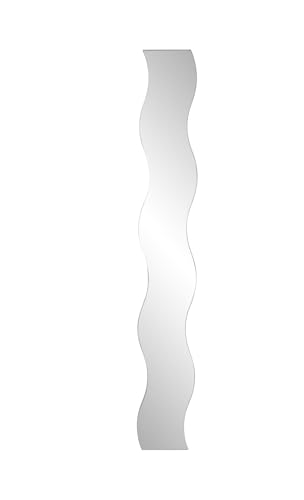
Shape changes the mood of a room more than frame colour does. Round and oval mirrors soften spaces full of hard rectangles — sofas, screens, door frames, shelving — and they suit entryways and bathrooms where a gentler outline feels welcoming. Rectangular mirrors echo architecture, sit happily above consoles and mantels, and give the most usable reflection for getting dressed. Arched mirrors borrow the language of windows and doorways, adding height and a hint of formality that works in hallways and bedrooms. Irregular, wavy or sunburst shapes are the most decorative and the least about reflection; treat them as wall art that happens to shine. None of these is better in the abstract. The right shape is the one that answers the room: soften a boxy space with a curve, structure a loose space with a rectangle, or lift a low space with an arch.
Frameless mirrors, often with polished or bevelled edges, are the quietest option of all. With nothing to match and nothing to clash, they suit rented homes, changing schemes and rooms where the mirror is there for light and function rather than decoration. A bevelled edge catches a fine line of light and keeps the piece from feeling like a bare sheet of glass. The trade-offs are real, though. The exposed edge is the most vulnerable part of the mirror, so chips happen more easily during moving and cleaning, and fingerprints along the edge are part of ownership. Frameless also offers no visual anchor, which means in a large, plain room it can almost disappear when you wanted a focal point. Choose frameless when the room already has strong furniture and art; choose a frame when the wall itself needs the help.
Tie shape to room and the shortlist writes itself. Entryways love round and arched mirrors: welcoming, space-softening, easy above a console crowded with the day’s arrivals. Living rooms take the statement pieces — large rectangles over sideboards, generous rounds over mantels, the occasional sunburst where pure decoration is the point. Bedrooms want tall, calm shapes, rectangles and soft arches that serve dressing without shouting. Bathrooms reward ovals and rounds above basins, softening tile and chrome, with rectangles where two basins ask for order. Dining rooms carry the most traditional shapes with the deepest frames, because the mirror is furniture there, seen for hours at candle distance. Hallways take whatever borrows the most light — often a tall, slim shape that turns a corridor’s end into a destination. Keep this map in mind and showroom wandering becomes decision-making: you are no longer choosing a mirror, you are choosing the one your room described.
In this guide
Top Picks at a Glance
Six prose-first picks cover the honest spread of this category, from a premium statement frame to a light decorative set. Each is positioned qualitatively by tier; confirm size, finish, hanging method and bathroom suitability on the current listing before ordering.

Howard Elliott Decorative Wall Mirror
a statement piece in the classic mould: substantial framing, formal shapes and finishes that suit mantels, dining rooms and entryways where the mirror is meant to be noticed. In prose terms it sits at the premium tier, and it earns that position through presence rather than novelty — the kind of piece you hang once and redecorate around for years. Best for: traditional and transitional rooms wanting a focal point. Not suited for: minimal schemes where the frame would argue with everything else, or steamy bathrooms unless the specific piece is described for bathroom use. As a prose-first pick it is presented here at the premium tier with qualitative positioning only; check the current listing for the exact size, finish, hanging method and bathroom suitability before you order, and confirm the stated dimensions include the frame. Judge it against your template measurements and your wall, and hang it by the safety rules in this guide — studs or matched anchors, two people for larger pieces, and never heavy glass above a bed, cot or sofa.
Kate and Laurel Decorative Wall Mirror
a versatile, design-led option whose range runs from soft arches and rounds to clean modern rectangles, usually in finishes chosen to sit comfortably in lived-in rooms rather than showrooms. It sits in the mid tier and suits buyers who want the shape to do the decorating — an arch over a console, a round over a dresser — without the ceremony of a heavy formal frame. Best for: entryways, bedrooms and modern-traditional living rooms. Not suited for: anyone wanting heirloom-weight construction or a very large single piece of glass. As a prose-first pick it is presented here at the mid tier with qualitative positioning only; check the current listing for the exact size, finish, hanging method and bathroom suitability before you order, and confirm the stated dimensions include the frame. Judge it against your template measurements and your wall, and hang it by the safety rules in this guide — studs or matched anchors, two people for larger pieces, and never heavy glass above a bed, cot or sofa.

MCS Studio Decorative Wall Mirror
a practical, gallery-minded choice: straightforward framed mirrors in the shapes and finishes that work over consoles, mantels and vanities, without pretending to be furniture. It sits at the entry-to-mid tier and makes sense where the mirror’s job is service — light, reflection, a finished wall — across several rooms at once. Best for: first homes, rentals with permission to fix, and multi-room refreshes on a sensible budget of effort. Not suited for: a single grand statement wall, where its quietness would be outscaled by the room. As a prose-first pick it is presented here at the entry-to-mid tier with qualitative positioning only; check the current listing for the exact size, finish, hanging method and bathroom suitability before you order, and confirm the stated dimensions include the frame. Judge it against your template measurements and your wall, and hang it by the safety rules in this guide — studs or matched anchors, two people for larger pieces, and never heavy glass above a bed, cot or sofa.
DecoMust Decorative Wall Mirror
a decorative-first option known for grouped and shaped pieces — the sort of mirrors bought as a set or a motif to animate a hallway, a stair wall or the space above a sofa-side console. It sits at the entry tier, light in construction and light in commitment, which is honestly its appeal. Best for: renters, beginners and anyone testing whether a mirror suits a wall before investing in a permanent piece. Not suited for: dressing or bathroom duty where a single true, calm reflection is the whole point. As a prose-first pick it is presented here at the entry tier with qualitative positioning only; check the current listing for the exact size, finish, hanging method and bathroom suitability before you order, and confirm the stated dimensions include the frame. Judge it against your template measurements and your wall, and hang it by the safety rules in this guide — studs or matched anchors, two people for larger pieces, and never heavy glass above a bed, cot or sofa.
Dulles Glass Decorative Wall Mirror
a glass specialist’s take on the category: clean, frameless or minimally edged pieces where the quality of the glass and the finish of the edge are the product. It sits at the mid-to-premium tier and suits bathrooms, dressing areas and modern rooms that want light and reflection without a frame to match. Best for: contemporary schemes, bathroom vanities and anyone whose eye is bothered by distortion in cheaper glass. Not suited for: rooms needing the warmth and anchoring weight that only a real frame provides. As a prose-first pick it is presented here at the mid-to-premium tier with qualitative positioning only; check the current listing for the exact size, finish, hanging method and bathroom suitability before you order, and confirm the stated dimensions include the frame. Judge it against your template measurements and your wall, and hang it by the safety rules in this guide — studs or matched anchors, two people for larger pieces, and never heavy glass above a bed, cot or sofa.
FAB Glass and Mirror Decorative Wall Mirror
a made-with-intent option covering framed and frameless decorative mirrors with a practical, specification-led character — the choice of buyers who read the hanging method and materials before the styling photographs. It sits in the mid tier and suits planned purchases: a known wall, a known size, a known job. Best for: careful buyers furnishing a whole home and bathrooms needing properly described glass. Not suited for: impulse decoration, since its strengths are in considered, measured buying rather than instant motifs. As a prose-first pick it is presented here at the mid tier with qualitative positioning only; check the current listing for the exact size, finish, hanging method and bathroom suitability before you order, and confirm the stated dimensions include the frame. Judge it against your template measurements and your wall, and hang it by the safety rules in this guide — studs or matched anchors, two people for larger pieces, and never heavy glass above a bed, cot or sofa.
How Much Light Can a Mirror Really Add?
Where light comes from matters as much as how much of it there is. A mirror opposite a window fills with the view and the sky, the most flattering reflection of all. A mirror on the wall adjacent to a window catches light at an angle and throws it deeper into the room, often the better trick in a long or north-facing space. Direct sun blasting into a mirror can dazzle people sitting opposite and, concentrated by an unlucky angle, is unkind to fabrics and floors nearby, so watch a sunny room at different hours before fixing positions. Evening light deserves the same thought: a mirror behind a table lamp doubles a warm pool of light beautifully, while one that catches a bare bulb or a screen’s glare will annoy you nightly. The template test, repeated morning and evening, settles all of this before a single hole exists.
A mirror is only as beautiful as what it reflects, and this simple truth should be printed on every box. Before choosing the wall, choose the view: the mirror will double whatever faces it, so aim it at the window, the garden, the bookshelf you styled, the painting you love. Aim it away from the exercise bike that became a clothes horse, the utility corner, the television’s black stare. Sometimes the right answer is to improve the view first — clear the surface opposite, hang the picture, move the plant — and let the mirror multiply something worth multiplying. This is also why two people shopping together sometimes disagree about a mirror’s effect in a showroom: they are picturing different reflections. Picture yours, specifically, in your room, from your chair. If the doubled view delights you on an ordinary Tuesday, the mirror will earn its wall; if it doubles the chores, move the mirror or move the mess.
How Big Should It Be, and Where Exactly?
Scale is the decision buyers get wrong most often, usually by going too small. A modest mirror floating alone on a wide wall reads as an afterthought, while the same wall with a generously sized mirror reads as designed. The reliable anchor is the furniture beneath it: a mirror above a console, sideboard or vanity generally looks settled when it is noticeably narrower than that piece but not by much, and a mirror standing alone can afford to be larger still. Height matters as much as width, because a tall shape pulls the eye upward and makes ceilings feel less close. When in doubt, cut a paper template to the size you are considering, tape it to the wall, and live with the outline for a day. Cardboard and painter’s tape are humble tools, but they prevent the most common and most avoidable disappointment in this whole category.
Measure twice is a cliché because it keeps being true. Before ordering, measure the wall, the furniture beneath the mirror’s future home and the space between shelves, sconces or door frames that the mirror must respect. Then make a paper template of the exact size you are considering — taped-together newspaper or the cardboard from a large delivery box works well — and fix it to the wall at the height you intend. Live with it through a day: check it standing, seated, and from the doorway, and check what the real mirror would reflect from each angle. This ten-minute rehearsal catches the errors that photographs never do — the mirror that would have reflected the boiler cupboard, the size that crowds a light switch, the height that cuts a tall partner’s reflection at the chin. Ordering after the template, rather than before it, is the single easiest upgrade to any mirror purchase.
Hanging height is a compromise between the mirror’s jobs. A mirror used for faces should centre roughly at the eye level of the people using it, which in a shared household means splitting the difference rather than optimising for one person. Above furniture, leave a breathing gap between the top of the console or sideboard and the bottom of the frame — enough that objects on the surface do not visually collide with the glass, not so much that mirror and furniture drift apart into unrelated objects. In dining rooms, hang for seated eyes as well as standing ones. Over a mantel, the mirror should relate to the fire surround as one composition. There is no universal number that survives contact with real rooms, which is why the template test, viewed from the actual seats and doorways, beats any rule of thumb. Mark the final position in pencil, step back once more, and only then drill.
Which Frame Material Suits Your Room?
Wood frames bring warmth that metal cannot imitate, and they range from pale, Scandinavian-leaning timbers to deep walnut tones that anchor a traditional room. A real wood frame also ages gracefully: small knocks can often be touched up, and the finish can be refreshed or even repainted years later if your palette changes. What to look for is honest joinery — mitres that meet cleanly at the corners without gaps or filler — and a finish that is even rather than blotchy. In steamy bathrooms, wood needs a properly sealed finish on every face, including the back edges, or moisture will creep in and lift it over time. In living rooms and bedrooms, wood is the forgiving choice, pairing with floors, side tables and picture frames you already own, and it rarely fights with changing textiles the way a strongly coloured frame can.
Metal frames give a mirror its crispest outline. Slim black metal suits industrial and modern rooms, reads almost like a drawn line on the wall, and disappears visually so the reflection does the work. Brass, gold and bronze tones add warmth and a little ceremony, flattering dining rooms, dressing areas and any space with warm lighting. Thicker metal frames feel more architectural and can carry larger glass with less visual bulk than wood. The honest cautions are fingerprints, which show quickly on polished finishes, and cheap plating, which can wear at the corners where hands adjust the mirror. A powder-coated or brushed finish hides daily life better than a mirror-polished one. Metal is also the practical pick where a slim profile matters, such as a hallway where every centimetre of passage counts and a deep frame would catch passing shoulders and bags.
Craftsmanship in a mirror hides in the corners. Look where the frame’s sides meet: mitres should close tightly, with the finish continuous across the joint and no step you can feel with a fingertip. Run a hand along the inner edge where frame meets glass; it should be clean and even, without sharp ridges of adhesive or gaps that collect dust and moisture. Turn the piece over. A tidy backing, firmly fixed, with hardware attached into the frame’s substance rather than its surface, predicts a long and uneventful life. Heft matters too — not because heavier is always better, but because a frame with some substance resists the warping and flexing that make cheap mirrors drum against the wall and rattle when doors close. None of this requires a magnifying glass or expertise, just the willingness to look at the unglamorous sides of a beautiful object before paying for the glamorous one.
How Will It Hang? Glass, Backing and Hardware
Not all mirror glass reflects equally honestly, and the differences are visible the moment you stand in front of it. A good mirror gives a true, calm image: straight lines stay straight to the edges, faces look like faces, and colours are not pushed green or grey by cheap glass. Wave a hand slowly across a large mirror and watch the reflection; rippling or warping, especially near the edges, signals glass that will annoy you daily in a dressing mirror, though it may matter less in a purely decorative sunburst. Edge finishing tells its own story — clean polished or bevelled edges on frameless pieces, frames that meet the glass neatly without gaps. The reflective backing should be even, with no cloudy patches or dark speckles, faults that only spread with time and humidity. In a category where you will literally look at the product every day, this quiet quality is worth more than ornament.
The part of a mirror you never see decides how long it lasts. Behind the glass sits the reflective layer and its protective backing, and moisture is its enemy: steam and cleaning fluid creep in at the edges, and the familiar dark spots and cloudy corners of old bathroom mirrors are the result. Better mirrors seal their edges and backings more thoroughly, and mirrors intended for bathrooms are built with exactly this battle in mind. You can help whichever mirror you choose. Ventilate after showers, wipe splashes rather than letting them sit on the bottom edge, keep spray cleaners off the glass perimeter, and avoid hanging a cherished dry-room mirror in a steamy bathroom just because the size fits. In dry rooms the backing asks almost nothing of you, which is one reason a quality mirror moved from room to room over the years so often outlives the furniture bought alongside it.
Hanging hardware shapes the whole installation. Rings or brackets fixed to the back of the frame, each on its own wall fixing, give the most control and keep the mirror flat and steady — the method to prefer for heavier pieces, ideally landing on studs. A hanging wire strung between two rings is forgiving of slightly uneven fixings but lets a mirror tilt forward at the top, concentrates load, and can creep over time; if a wire is supplied on a substantial mirror, upgrading the approach is worth considering. Keyhole slots are neat on small, light mirrors and maddening to align on large ones. A French cleat — interlocking angled rails, one on the wall and one on the mirror — spreads weight beautifully, holds the piece flat, and makes levelling almost pleasant; it is the connoisseur’s choice for big glass. Whatever arrives in the box, the wall side of the system must match your wall and the mirror’s weight, not merely the packet’s optimism.
You will rarely know a mirror’s exact weight before it arrives, and you do not need to: you need an honest category. Small, frameless or thin-framed mirrors are light objects that modest fixings handle easily. Medium framed mirrors — the console and dresser workhorses — are serious enough to deserve studs or proper anchors and a two-handed lift. Large mirrors, thick glass in deep wooden or metal frames, are heavy furniture that happen to hang: plan two people, load-spreading hardware and studs, or book the professional. Judge by size, frame material and glass area, and if the listing states a weight, believe it and plan around it rather than hoping the wall will cope. The moment of truth should never be the moment you let go of the frame. Support the mirror fully until every fixing is engaged, step back, and only then admire — in that order, every time.
How to Prioritise by Use Case
The entryway is where a decorative wall mirror works hardest per square inch. It gives you a final check before leaving, bounces light into a space that often has no window at all, and makes a narrow hall feel like a place rather than a passage. Hung above a slim console or a row of hooks, it completes the landing strip every home needs: keys, post and bags below, your reflection above. Practical details matter here. The mirror will be seen up close and in passing, at every hour, so a true, undistorted reflection matters more than in a purely decorative spot. It will also be bumped by coats, umbrellas and delivery boxes, so a secure fixing is not optional. A round or arched shape softens the hard lines of doors and shoe storage, and a frame that echoes your door hardware ties the whole small space together.
Bathrooms are the most demanding room a mirror will ever live in, and the most rewarding when it is chosen well. Steam, splashes and daily cleaning test the backing and the frame in ways a hallway never will. Look for mirrors described for bathroom use, with sealed edges and a backing that resists the dark spots — caused by moisture reaching the reflective layer — that creep in from the corners of cheaper glass. Ventilation is your mirror’s best friend: an extractor fan or an open window after showers extends its life more than any coating. A decorative frame can lift a plain bathroom enormously, turning a purely functional vanity mirror into the room’s designed moment, but choose finishes that tolerate humidity and wipe clean easily. Finally, light yourself kindly: a mirror flanked by or paired with even lighting flatters faces and makes shaving and make-up honest work rather than guesswork.
Dining rooms are where decorative mirrors have been earning their place for centuries, and candlelight is the reason. A mirror behind or beside a dining table doubles every flame and pendant glow, giving small dinners a sense of occasion that brighter overhead light destroys. It also helps the room that so many homes have: the dining space that is really a corner of an open plan, defined by a rug and a table. A substantial framed mirror on the wall gives that corner architecture, a sense of being a room within the room. Choose a frame with some presence — deeper wood, aged metal, a classic profile — because at dining distance the frame is seen and enjoyed for hours. Position it to reflect the table and its people rather than the kitchen beyond, and hang it securely; dining chairs move, guests lean, and this is glass living at elbow height.
Small rooms and hallways are the mirror’s natural habitat. A windowless box room, a corridor that ends in a blank wall, a cloakroom under the stairs — these are the spaces where one well-chosen mirror changes how the whole home feels. The trick is proportion and nerve: in a tiny space, one larger mirror usually works better than several small ones, because it reads as an opening rather than as decoration. A mirror at the end of a hallway, reflecting light from a doorway, can make the corridor feel twice its length. In a small bedroom or study, place the mirror where it reflects the window or the door, not the bed or the desk clutter. Renters should note that this transformation does not require a huge piece; a medium mirror, properly fixed and thoughtfully faced, delivers most of the effect with none of the handling drama of an oversized one.
First Setup and Care Essentials
Cleaning a mirror well is mostly about restraint. Dust the frame first with a dry, soft cloth so grit is not dragged across the glass, then clean the glass itself with a microfibre cloth and a light mist of glass cleaner — sprayed onto the cloth, not the mirror, so liquid cannot run down into the edges and attack the backing. Wipe in a slow S pattern rather than circles, and buff any haze with the dry side of the cloth. Around the edges, use the least moisture you can; the perimeter is where mirror backing fails first, and it fails from exactly this kind of well-meant soaking. Wood frames want only a barely damp cloth and prompt drying, metal frames a soft dry polish, and ornate frames a soft brush to lift dust from the detail. Cleaned gently and not too often, a good mirror stays bright for many years.
A hung mirror asks for a minute of attention now and then, and repays it with decades of service. Every season or so, check that the mirror still sits flat and firm: a gentle press at the corners should meet no rock or rattle, and fixings that have worked loose — in older plaster especially — should be renewed rather than tightened hopefully. Dust frames with a dry cloth, clean glass gently as this guide describes, and keep an eye on bathroom mirrors’ edges for the first dark speckling that says moisture is winning; better ventilation today is a new mirror not bought next year. If a frame finish dulls, wood can be nourished or repainted and metal polished, small renewals that make an old mirror look chosen again. And when you redecorate, resist replacing a sound mirror out of habit: rehang it in a new room and it will feel like a purchase you got for free.
Safety First: The Rules That Outrank Every Style Decision
Every honest conversation about wall mirrors ends at the fixing, because glass and gravity are unforgiving. The strongest fixing is into a wall stud — the timber or metal framing behind the plaster — and for anything beyond a small, light mirror, finding a stud should be your first plan. Where a stud is not where you need it, the anchor must match the wall: proper expanding or toggle-style anchors for hollow plasterboard, solid plugs for masonry and brick, and fixings suited to tile where bathrooms are concerned. The anchor must also match the weight, judged honestly — a big framed mirror in solid wood is a heavy object even if you can lift it easily for a moment. Hardware that arrives in the box is a starting suggestion, not a guarantee for your wall. When the wall, the weight or your confidence is in doubt, a stud finder, better anchors or a professional are all cheaper than a falling mirror.
Before any drill touches any wall, pause for the invisible: cables and pipes run through walls exactly where mirrors like to hang, especially above sockets, switches and radiators, and in bathrooms and kitchens where plumbing concentrates. A detector that senses studs, metal and live cables is a small price for certainty, and it should be swept over the whole area you plan to drill, not just the marked points. Treat the zones directly above and below switches and sockets as cable country even when a detector is quiet, and be doubly careful on walls shared with a bathroom or a boiler. If you strike something unexpected — resistance that changes, a hiss, a spark, water — stop immediately, make the area safe, and call the appropriate professional. No mirror, however beautiful, is worth an electric shock or a flooded wall cavity, and this check takes minutes.
In homes with children and pets, a wall mirror’s fixing is a safety device, not a detail. Mirrors should be fixed so they cannot be pulled, knocked or climbed into falling — screws and anchors, not leaning and hoping, wherever small hands can reach. Keep heavy glass out of play zones and away from the tops of stairs, and think twice about any position where a falling object would land on a cot, a bed or a favourite armchair; the rule throughout this guide is that heavy mirrors never hang above the places where people sleep or sit. Safety-backed or filmed glass, which holds together if broken, is worth seeking for family homes. Teach children early that mirrors are part of the wall, not part of the game, the same as bookcases — which should themselves be secured. A well-fixed mirror in a family home is a joy; a casually hung one is a worry you will feel every day.
Mistakes to Avoid
Most mirror mistakes are small, early and entirely avoidable. Hanging before deciding — drilling on the first enthusiastic afternoon — produces the extra holes that everyone then lives with; templates and pencil exist precisely to absorb that enthusiasm safely. Going too small is the aesthetic classic, fixed by remembering the furniture rule and testing with paper. Ignoring the reflection — hanging a beautiful mirror opposite a boiler door or a pile of laundry — wastes the purchase. Skimping the fixing is the only dangerous mistake on the list, and it is the one this guide repeats deliberately: match anchor to wall and weight, prefer studs, and never hang heavy glass over beds, cots or sofas. The final mistake is buying for the photograph instead of the room: colours shift, scale lies and finishes flatter online, so measure your wall, read the listing slowly, and let your own room cast the deciding vote.
An honest guide admits when a mirror is the wrong answer. A room with nothing worth reflecting and no light to borrow may need art, colour or a lamp first, with the mirror arriving later to multiply the improvement. A wall that cannot be fixed into safely — crumbling plaster awaiting repair, a known tangle of pipes, a tenancy that forbids holes with no leaning alternative — is a wall to leave alone for now. A household in the thick of toddler climbing may sensibly wait, or choose a small, high, firmly fixed piece rather than a leaning giant. And a buyer who dislikes cleaning glass, in a dusty house with an open fire, should choose a smaller mirror in a forgiving spot rather than a wall of glass they will resent. Saying no, or not yet, to a mirror is not a failed purchase; it is the same judgement that makes the eventual yes a success.
Decorative Wall Mirror Buying Guide: The Bottom Line
The bottom line of this buying guide: choose the view, prove the size with paper, match the frame to the room’s moisture and palette, and plan the fixing before the mirror arrives. Do those four things and almost any well-made mirror in the right tier will satisfy you for years; skip them and even a beautiful piece can disappoint. A decorative wall mirror is one of the longest-lived purchases in a home, so it rewards the buyer who spends an unhurried hour deciding and then decades not thinking about it again.
Measuring, Matching and Checking: The Decorative Wall Mirror Decision Worksheet
Most of the groundwork for choosing a decorative wall mirror is covered above, so this section turns to the stage where orders are actually placed: verifying fit, reading listings critically and checking the practical details that photographs tend to hide. Work through it with your measurements and your shortlist in front of you.
Start With Your Space and Your Routine
Dust, moisture, sunlight and heat each age Home Decor & Lighting items in different ways, so match the finish and material of the decorative wall mirror to the conditions of the room or outdoor spot it will occupy. Write down the three tasks you will do most often with the decorative wall mirror and score each shortlisted option against those tasks alone, ignoring features you are unlikely to touch. A return is easiest when you have kept the packaging until you are sure, so give the decorative wall mirror a fair trial period in its real position before you break down boxes and dispose of padding. Photograph the decorative wall mirror as delivered, before assembly or first use, so that any later question about condition, parts or finish can be answered from evidence rather than memory.
When specifications are given for the decorative wall mirror, compare like with like across listings, since sellers measure and describe the same things differently and headline numbers are rarely the whole story. Take a photograph of the space before you order and mark the intended position of the decorative wall mirror on it, then revisit that photo whenever a listing tempts you toward a larger or different style. Apply the same checks to each shortlisted example, whether that is the Kate and Laurel Decorative Wall Mirror; the Dulles Glass Decorative Wall Mirror; the MCS Studio Decorative Wall Mirror, because consistent testing is what makes the differences between models visible. A decorative wall mirror that fits on paper can still fail in daily use if a doorway, a corner, a cupboard door or a walkway cuts into the space it needs, so trace the full path from delivery to final position.
When Small Problems Appear
When you compare delivery options for a decorative wall mirror, factor in where the item will be left and who will move it to its final spot, since the last few metres are where damage and strained backs happen. Check the dimensions given in the listing against your own measurements rather than relying on the room name in a photograph, since staged photos routinely make Home Decor & Lighting pieces look smaller than they are. Equally, list what your old decorative wall mirror did well, because replacements sometimes quietly lose a virtue you relied on, such as a size, a shape or a simplicity the new model has redesigned away. If you shop with someone else, agree the must-haves together before looking, so that the decorative wall mirror you choose is a shared decision rather than one person’s compromise discovered later.
If the listing offers accessories for the decorative wall mirror, decide which ones solve a problem you already have, and set aside the ones that only solve problems the listing itself invented. If a decorative wall mirror comes in several sizes or configurations, choose by the measured demands of your space and household rather than by the middle option, which is a common default that suits nobody in particular.
A Short Decision Checklist
- What your current arrangement does well that the decorative wall mirror must not lose
- The main job the decorative wall mirror must do, written in one sentence
- The measured space, including clearance to use and clean around the decorative wall mirror
- The material and finish, matched to light, moisture and wear in its spot
- How the decorative wall mirror will be cleaned in an ordinary week
- Where the decorative wall mirror and its accessories will be stored when not in use
- Packaging kept until the decorative wall mirror has passed its first trial in place
- Delivery path, from the door to the final position
Taken together, these checks take only a little time, yet they answer the questions that decide whether the decorative wall mirror suits your home, your household and your routine, and they do so before money changes hands rather than after.
Frequently Asked Questions
How big should a decorative wall mirror be?
Let the furniture and the wall decide together. Above a console, dresser or sideboard, a mirror noticeably narrower than the piece below it but not by a wide margin looks settled; standing alone, it can go larger. Make a paper template of the size you are considering, tape it up for a day, and judge it from the doorway and the seats. Most buyers who follow the template test end up choosing one size larger than their first instinct, and being glad they did.
Can I hang a decorative wall mirror in a bathroom?
Yes, if the mirror is described for bathroom use, with sealed edges and a backing made to resist moisture. Ventilation matters as much as the product: run the extractor or open a window after showers, wipe splashes from the bottom edge, and keep spray cleaner on the cloth rather than soaking the glass perimeter. A decorative dry-room mirror with an unsealed wooden frame will slowly spoil in steam, so match the mirror to the room rather than only to the colour scheme.
What is the safest way to hang a heavy mirror?
Fix into wall studs wherever possible, or use anchors matched both to your wall type — hollow plasterboard, masonry, lath and plaster, tile — and to the mirror’s honest weight, with a load-spreading method such as a cleat or two separate fixings for larger pieces. Two people should lift and hold the mirror while fixings engage. Never hang a heavy mirror above a bed, a cot or a sofa where people sit or sleep, and if any part of the job feels improvised, hire a professional installer.
Should a mirror face a window?
Facing a window is usually the best seat in the house: the mirror fills with sky and view and returns real daylight to the room. An adjacent wall can work even better in long or dim rooms, catching light at an angle and throwing it deeper. What matters is the reflection itself — aim the mirror at something worth doubling, and watch a sunny room at different hours before fixing, so direct sun does not dazzle anyone seated opposite or glare across a screen.
How do I clean a mirror without damaging it?
Dust the frame first with a dry soft cloth, then mist glass cleaner onto a microfibre cloth — not onto the mirror — and wipe the glass in a slow S pattern, buffing with the dry side. Use as little moisture as possible around the edges, because liquid creeping behind the glass is what causes dark spots and cloudy corners over time. Wood frames need only a barely damp cloth and prompt drying; metal frames a soft, dry polish.
Round or rectangular: which shape should I choose?
Choose the shape that answers the room. Round and oval mirrors soften spaces full of rectangles — doors, screens, sofas, shelving — and suit entryways, bathrooms and above dressers. Rectangles echo architecture, give the most usable dressing reflection, and sit naturally over consoles and mantels. Arches add height and a formal, window-like note for hallways and bedrooms. Irregular and sunburst shapes are decoration first and reflection second. If the mirror must work for faces daily, favour the calm, larger shapes; if it must sparkle, shape can lead.
Related Reading
Keep exploring within this cluster and the wider mirror guides on the site:
- decorative wall mirror pros and cons
- decorative wall mirror review
- decorative wall mirror reviews
- best wall mirror under 100
- best wall mirror for bedrooms under 100
- best wall mirror for small rooms under 100
- best wall mirror for modern homes under 100
Going Deeper: More Judgement Calls Worth Making Well
In the living room, a decorative wall mirror usually plays one of two roles: focal point or quiet amplifier. As a focal point — large, framed with intent, hung where a picture might otherwise go — it anchors the seating arrangement and reflects the best of the room back at itself. As an amplifier, it sits behind a lamp, beside a window or opposite the garden doors, multiplying light without demanding attention. Both roles fail the same way: by reflecting something you do not want doubled, such as a cluttered shelving unit, the back of a television or a tangle of chargers. Walk the room before drilling anything. Sit in each seat and check the sightlines. And respect the safety rule that runs through this whole guide: a heavy mirror belongs on a properly fixed wall over a console or sideboard, never hung casually above the sofa where people sit and lean back beneath it.


