Where to buy
Check the latest price, availability and delivery on Amazon. Orders are placed on Amazon. We may earn a commission from qualifying purchases.
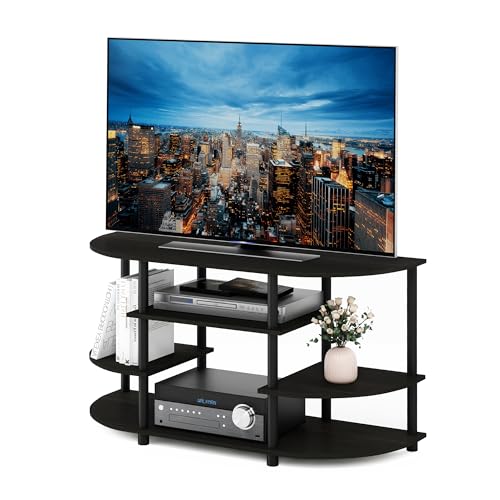
- Best overall for families: Furinno JAYA Simple Design Corner TV Stand, Espresso/Black — Check on Amazon
- Furinno TURN-S-TUBE 3-Tier TV Stand, French Oak Grey — Check on Amazon
- Furinno Turn-N-Tube No Tools 3D 3-Tier Entertainment TV Stand for TVs up to 50 Inch, Dark Brown/Black — Check on Amazon
- Perlegear Universal Swivel TV Stand PGTVS26 — Check on Amazon
- FITUEYES Universal TV Stand, Table Top TV Stand for 27-55 Inch TVs — Check on Amazon
Read the full guide ↓
Disclosure: As an Amazon Associate, dailyhomedecorating.com earns from qualifying purchases. Links to Amazon on this page are affiliate links; they cost you nothing extra. Listing details such as price and availability change often, so check the current Amazon listing before you buy.
Shopping for the best tv stand for families under $50 is really shopping for two things at once: a place to put the television, and a piece of furniture that will survive — and not endanger — the small people who treat the living room as a climbing frame, a racetrack and a stage. Those two jobs pull in opposite directions at this price. The under-$50 tier is built from light materials — engineered particleboard shelves on hand-twisted tube frames, mostly — and light furniture is exactly what family safety guidance tells you to think hardest about. So this guide does not pretend otherwise. It judges every pick through a family lens first: How stable is it, really? Does it have sharp corners at toddler head height? Can it be anchored? Does it put the screen out of reach, or invite small hands onto it? Only after a pick passes those questions do we ask the normal ones about size, storage and looks.
The single most important sentence in this article is this one: whatever stand you buy, anchor the TV. A modern flat TV on any stand in this price class should be secured — with an anti-tip strap to the wall, or by using a tabletop base that bolts the TV to a bracket — because the documented danger in family homes is not stands collapsing under weight, it is screens tipping forward when a child pulls up on the furniture or reaches for something on top. Two of our picks attack that problem directly by bolting the TV to steel. The furniture picks attack it indirectly: wide, low, corner-placed, with rounded edges and layouts that keep the TV’s weight low and back. None of them removes the need for a strap and five minutes with a stud finder. Budget for both, in money and in time, and this tier becomes a sensible family purchase. Skip the strap, and no stand at any price is a family stand.
Our short answer: start with the Furinno JAYA corner stand if your room has a corner — its rounded panel edges, corner-braced placement and 46-inch capacity make it the most forgiving furniture pick here. For a flat wall, take the TURN-S-TUBE, the widest and strongest-rated full stand under the ceiling. Families with a TV between 50 and 60 inches, or with a climber in the house, should skip furniture entirely and bolt the screen to the Perlegear or FITUEYES tabletop base on a dresser they already own. And the enclosed, child-latchable cabinet many parents picture? It does not exist verifiably under $50 — we explain why that slot is honestly empty below, and what to do instead. If your family can stretch further later, Best Tv Stand Under $100 is where cabinets begin; everything here stays under $50.
In this guide
Quick Picks: best tv stand for families under $50
Matched to family situations, not just TV sizes.
| Family situation | Pick | Why it stands out | Link |
|---|---|---|---|
| Best overall for families | Furinno JAYA Simple Design Corner TV Stand, Espresso/Black | Rounded panel edges, corner-braced placement, TVs up to 46 inches | Check on Amazon |
| Best for a flat wall | Furinno TURN-S-TUBE 3-Tier TV Stand, French Oak Grey | Widest verified stand under $50; top panel rated up to 80 lbs; TVs up to 55 inches | Check on Amazon |
| Best for a family TV up to 50 inches | Furinno Turn-N-Tube No Tools 3D 3-Tier, Dark Brown/Black | Stepped tiers keep a soundbar centered and consoles separated | Check on Amazon |
| Best for securing the screen itself | Perlegear Universal Swivel TV Stand PGTVS26 | Bolts the TV to a steel bracket; swivel and tilt; 32–70 inch TVs up to 88 lbs | Check on Amazon |
| Best on a dresser you already own | FITUEYES Universal TV Stand for 27-55 Inch TVs | Height-adjustable steel base with tempered glass foot; raises the screen above toddler reach on existing furniture | Check on Amazon |
| Best enclosed, latchable cabinet | No verified pick under $50 — see the honest note in the reviews | Doored consoles from verifiable brands start above this tier; slot is prose-only | Prose only — no link |
How we chose these picks — the family rules
Every pick had to pass the general rules for this batch — a verifiable Amazon listing from an identifiable brand, manufacturer-stated dimensions and TV size ratings cross-checked against a second source, and a genuine price sighting under $50 — and then three family-specific tests. First, stability geometry: we favored low, wide, or corner-braced forms and penalized tall, narrow towers, because a family’s stand gets bumped, leaned on and occasionally pulled. The tall small-TV tower that appears in our base guide is deliberately absent here; in a house with toddlers it is the wrong shape. Second, edges and materials: rounded panel edges scored, exposed sharp corners and easily shattered materials scored against — tempered glass, where it appears in the tabletop bases, is the safety-engineered kind used across the TV-mount industry, and it sits up on furniture rather than at floor level. Third, securability: can this setup be anchored or bolted? A stand that lets you strap the TV, or a base that bolts the TV to steel, outranks a prettier stand that offers neither.
We also made one editorial decision worth stating plainly. Family marketing in this category leans heavily on the phrase “kid-friendly” attached to products that are simply cheap. We ignored the phrase wherever it appeared and worked from dimensions, ratings and construction instead. A stand earns a place in a family guide by being low, wide, rounded, anchorable and honestly rated — not by having the word in its title.
The picks in detail
Furinno JAYA Simple Design Corner TV Stand, Espresso/Black — best overall for families
Who it suits: Families whose living room or playroom corner is free, with a TV of 46 inches or under, who want the most forgiving furniture shape this budget offers: braced by two walls, rounded at the edges, and low.
The JAYA’s family case starts with geometry. It is a corner unit — 42.04 inches across the front, 15.55 inches deep, 22.75 inches high, rated for flat-panel TVs up to 46 inches — and a corner is the most defensible place in a room for a TV stand. Two walls limit how far the unit can shift or tip; the TV’s weight sits back toward the corner where the frame is best supported; and the stand is out of the room’s traffic lanes, so it is not the thing a running child clips at full speed. Furinno cuts the JAYA line’s panels with rounded edges, which sounds like a styling note until you map it onto a toddler’s forehead height: the front corners of a TV stand sit almost exactly where a falling two-year-old’s head lands, and rounded is a real, physical difference there. The open shelves below fan out with room for a console on one level and a streaming box on another, keeping the family stack separated and ventilated.
Set it up like a family, not like a showroom. Push the TV as far back on the top panel as its feet allow, so its weight is over the corner. Put the heaviest component — usually the game console — on the bottom shelf to drop the unit’s center of gravity. Run every cable down into the corner itself, where small hands browsing behind furniture are least likely to find a dangling loop, and then fit an anti-tip strap from the TV to the wall; in a corner you have two studs’ worth of wall to choose from, which makes anchoring easier than anywhere else in the room. Construction is the honest budget kind — engineered composite wood shelves on plastic tube framing, hand-assembled without tools — and it is adequate for a modern 46-inch LED and light components. It is not a climbing structure, and no stand in this guide is; the corner placement and the strap are what make the setup family-grade, not the particleboard.
Pros: Corner placement braces the unit and removes it from traffic; rounded panel edges at exactly the height that matters; rated to 46 inches; cables route into the corner, out of sight and reach; open shelves keep consoles cool during long family gaming sessions.
Honest limitation: It commits your room to corner viewing, which suits an armchair or sectional corner better than a long sofa. The top panel’s usable width is narrower than the headline figure once the corner cut is counted, so measure your TV’s foot span against the front section. And like all furniture here, it still needs an anti-tip strap — the corner reduces risk, it does not delete it.
Choose it if you have a free corner and a TV up to 46 inches. Skip it if your seating faces a flat wall or the TV is larger. Check the live listing: Check on Amazon.
Furinno TURN-S-TUBE 3-Tier TV Stand, French Oak Grey — best for a flat wall
Who it suits: Families with a TV from 43 to 55 inches on a normal flat wall, who want the widest, lowest, strongest-rated full stand this budget can verify — and who will anchor it.
Width and lowness are the family virtues here. The TURN-S-TUBE measures about 47.25 inches wide by 13.4 inches deep and stands only 15.9 inches high; the manufacturer rates it for TVs up to 55 inches, with the top panel rated up to 80 lbs and the whole unit around 140 lbs — the strongest furniture figures in this guide, cross-checked against the same line at a second national retailer. A wide footprint resists rocking, a low profile keeps the combined center of gravity down, and a modern 50-inch LED’s modest weight leaves real margin under that top rating, which is exactly what a family should buy: margin. The three open tiers take the standard family load — console, streaming box, a basket of controllers — with the lower shelves rated around 20 lbs each, so the heavy console goes low and the light streaming stick goes high, which is also the stability-correct arrangement.
The family setup details matter as much as the stand. Anchor the TV with a strap to a stud; on a flat wall this is a ten-minute job and it converts the stand’s biggest risk into a non-issue. Add felt pads or a non-slip mat under the TV’s feet if your set’s feet are smooth plastic on a smooth shelf. Use the open back for cable discipline: bundle everything down one rear leg with hook-and-loop ties so there are no loops at toddler height, front or back. The pale French Oak Grey finish has a practical family benefit too — it shows dust and sticky fingerprints less than black or dark espresso finishes do, which anyone who has wiped down a media unit weekly will appreciate. Assembly is fully tool-free, tubes twisting by hand between composite wood shelves, and it disassembles just as easily when the room inevitably gets rearranged around the children’s next phase.
Pros: Widest and lowest full stand here; strongest top-panel rating of any furniture pick; open tiers ventilate consoles; light finish hides family dust; tool-free build and teardown for room rearrangements.
Honest limitation: Particleboard and tube construction still flexes if a child stands on a lower shelf — teach the rule early and keep tempting items (tablets, snacks) off the stand so there is nothing worth climbing for. The 13.4-inch depth will not take a deep AV receiver. Open shelves mean visible gear; fabric bins on the lower tier are the family’s usual truce.
Choose it if your TV is 43–55 inches, modern and light, and you will fit the strap. Skip it if the TV is an older heavy model or you need doors. See it here: Check on Amazon.
Furinno Turn-N-Tube No Tools 3D 3-Tier Entertainment TV Stand, Dark Brown/Black — best for a family TV up to 50 inches
Who it suits: Families with a TV of 50 inches or under in a narrower room, whose setup includes a soundbar and one games console, and who want the gear separated rather than stacked.
The 3D’s stepped three-tier layout is its family feature, though it is never marketed that way. The raised center section gives a soundbar a fixed, centered home — not balanced on the TV’s feet, not sliding around — and a soundbar that stays put is a soundbar that does not get pulled down by its cable. Below, the tiers separate the console from the streaming box, so the machine that runs hot gets its own air, and small fingers exploring one shelf meet one device, not a teetering stack. The frame is 43.8 inches wide, 11.7 inches deep and 16 inches high, rated by Furinno for TVs up to 50 inches, in a Dark Brown/Black finish that hides the scuffs and crayon-adjacent incidents of family life better than pale finishes — the mirror image of the dust argument for the grey stand above, and both are true; pick your enemy.
Family setup: the 11.7-inch depth is this stand’s watch-out. A 50-inch TV’s feet can sit close to the panel’s front and back edges, so measure the foot span and depth, center the set carefully, and strap it — on a shallow stand the strap is not optional garnish, it is the product. Keep the console on the lowest tier, keep game discs and controllers in a bin on the middle tier rather than loose, and route the soundbar’s cable behind the step where it cannot be tripped over or tugged. The hand-twist tube assembly is genuinely a one-adult, nap-time-length job, and the whole unit is light enough to move for the inevitable retrieve-the-toy-behind-the-TV operation without unloading it completely — though unloading the TV first remains the safe way.
Pros: Stepped shelf fixes a soundbar in place; tiers separate hot consoles from other gear; slim depth suits narrow family rooms; dark finish hides scuffs; tool-free assembly during a nap window is realistic.
Honest limitation: The shallow depth demands careful TV placement and absolutely requires the anti-tip strap with larger sets. Lower-tier height is limited by the step, so a tall vertical console may not fit standing — lay it flat or choose the TURN-S-TUBE. Shelf ratings are light; no stacks of board games or books.
Choose it if your TV is 50 inches or under, your room is narrow and a soundbar is in the setup. Skip it if your TV’s feet are deep or wide, or your console must stand vertically. Check the listing: Check on Amazon.
Perlegear Universal Swivel TV Stand PGTVS26 — best for securing the screen itself
Who it suits: Families whose worry is the TV itself — a big screen, a determined climber, a playroom setup — and who have a sturdy low table, sideboard or dresser to stand it on. This pick replaces the TV’s feet with a bolted steel bracket, which changes the safety conversation entirely.
The PGTVS26 fits TVs from 32 to 70 inches, is rated to hold up to 88 lbs, supports VESA patterns up to 400x400mm, and stands the screen on a tempered glass base through a steel pillar. The safety logic is different from every furniture pick: instead of a TV resting on a surface by gravity and friction, the TV is bolted to the bracket, and the bracket’s wide base is what meets the furniture. A child tugging the screen’s edge meets a bolted joint and a low, wide base rather than two small feet that can walk forward. The stand also swivels and tilts, which families use more than they expect — angle the screen toward the kitchen during cooking, square it for movie night, tilt it down slightly when the audience is small people on a floor cushion, which also cuts the window glare that otherwise sends everyone rearranging furniture at 4 p.m.
Height adjustment is the second family feature: raise the screen and a soundbar fits beneath it; raise it a little more and the bottom edge of the TV — power buttons, sensors, the tempting glowing light — clears toddler reach when the base sits on a dresser-height surface. Conditions apply, and they are the same as for any tabletop base: the TV needs VESA holes (check the pattern in its manual), the furniture beneath must be genuinely sturdy and wide enough for the base, and the furniture itself should be wall-anchored if it is tall — a dresser with a bolted TV on top is a system, and the system’s weakest link is whichever part nobody secured. Tempered glass as a base material is engineered for exactly this load-bearing role across the mount industry; keep it on the furniture surface where it belongs, not at floor level where it can be stepped on or driven into by ride-on toys.
Pros: TV is bolted, not balanced — the strongest anti-tip story in this guide; widest TV range here (32–70 inches) with an 88 lb rating; swivel and tilt adapt to family seating and floor-level audiences; height adjustment clears soundbars and small hands.
Honest limitation: It provides no storage and depends entirely on furniture you already own being strong and anchored. Assembly is real hardware work with a screwdriver, not a tool-free twist. The glass base needs the occasional wipe and should not live at floor level in a ride-on-toy household.
Choose it if securing the screen is the priority and you have a solid surface for it. Skip it if you need the purchase itself to be furniture with shelves. Verify your VESA pattern and check the listing: Check on Amazon.
FITUEYES Universal TV Stand for 27-55 Inch TVs — best on a dresser you already own
Who it suits: Families setting up a bedroom or playroom TV on a dresser, chest or low bookcase they already have — the classic “second TV” family scenario — who want the screen raised, bolted and off the furniture’s front edge.
FITUEYES’ tabletop stand covers TVs from 27 to 55 inches, is rated up to 88 lbs, and supports VESA patterns from 100x100mm up to 400x400mm, with a tempered glass base and a height-adjustable pillar (the base unit measures roughly 17.5 by 9.5 by 25.5 inches). On a family dresser it does three jobs at once. It centers the TV’s weight in the middle of the furniture instead of at two feet near the front edge, which is where dresser tops are weakest and where a leaning child applies force. It raises the screen so the set can be watched from a bed or a play mat at a sane angle. And it bolts the TV down, so the “pulled the TV toward me” scenario meets hardware instead of gravity. The smaller end of its range matters for families too: a 32-inch bedroom TV on this base, on an anchored dresser, is a genuinely tidy and secure kids’-room setup that costs less than any furniture route.
The family caveats mirror the Perlegear’s, with one addition. A dresser in a child’s room must be anchored to the wall in its own right — drawers pulled out turn any dresser into a climbing ladder with a counterweight problem, and adding a TV raises the stakes. Anchor the dresser, bolt the TV to the FITUEYES, route the cables down the back where the dresser meets the wall, and the setup is as safe as this budget can make it. If the room has no anchorable furniture, that is the signal to use the JAYA or TURN-S-TUBE furniture picks against a wall instead, with a strap. Do not improvise a stack of unanchored furniture and call it a stand.
Pros: Bolts and centers the TV on existing furniture; wide 27–55 inch range covers bedroom and playroom sets; height adjustment for bed and floor viewing; strong 88 lb rating gives large safety margin for mid-size TVs.
Honest limitation: No storage of its own; the dresser beneath must be anchored, especially in a child’s room; glass base shows fingerprints from the exact population this guide is about — expect to wipe it.
Choose it if a sturdy, anchorable dresser or low unit is already in the room. Skip it if there is no suitable furniture or anchoring is impossible in your rental — use a furniture pick plus strap instead. Check the listing: Check on Amazon.
The enclosed, latchable cabinet — the pick we cannot honestly make under $50
Who it suits: Parents who want doors they can close — and ideally latch — on the media stack: no visible console lights at bedtime, no small fingers in disc trays, no cable access. It is a reasonable want. It is also, verifiably, not an under-$50 product.
We looked for a cabinet-style console under the ceiling from a brand that states its dimensions and weight ratings, and that product does not exist. What the search returns instead are anonymous listings with reused photos and no stated load ratings — unacceptable for load-bearing family furniture — and legitimate wide open shelves from the same families as our picks, which currently sit just over this tier’s ceiling. Doors, hinges, backs and thicker panels are precisely the parts that cost money; a real cabinet is what the next tier is for, and our Best Tv Stand Under $100 guide is the honest next step when the budget allows. Until then, families have three workable truces, all used by real households: open shelves plus two fabric bins, which hide the clutter and the cable nest visually while keeping consoles ventilated; a tabletop base on an existing dressered unit with doors, which borrows the cabinet you already own; and a simple rule — the stand holds the TV and one console, everything else lives in a closed Best Bookcase Under $50 or a lidded basket beside the sofa, out of the TV zone entirely.
Pros of the truce: It works today, at this budget, without pretending a product exists. Honest limitation of this slot: no link, no product — deliberately. A family guide that invents a cabinet would be failing at the one job it has.
Choose this route if closed storage is the non-negotiable. Skip it if bins on open shelves solve your actual problem — most families find they do.
Comparison table
| Pick | Type | TV size rating | Family-relevant notes | Link |
|---|---|---|---|---|
| Furinno JAYA Corner, Espresso/Black | Corner stand | Up to 46 inch | 42.04 x 15.55 x 22.75 in; rounded edges; wall-braced placement | Check on Amazon |
| Furinno TURN-S-TUBE 3-Tier, French Oak Grey | Open 3-tier stand | Up to 55 inch | 47.25 x 13.4 x 15.9 in; top rated up to 80 lbs; low and wide | Check on Amazon |
| Furinno Turn-N-Tube 3D 3-Tier, Dark Brown/Black | Open stepped stand | Up to 50 inch | 43.8 x 11.7 x 16 in; fixed soundbar step; strap essential | Check on Amazon |
| Perlegear PGTVS26 | Tabletop swivel base | 32–70 inch | Bolts to TV; VESA up to 400x400mm; up to 88 lbs; tilt and swivel | Check on Amazon |
| FITUEYES Universal TV Stand | Tabletop base | 27–55 inch | Bolts to TV; VESA 100×100–400x400mm; up to 88 lbs; height adjustable | Check on Amazon |
| Enclosed latchable cabinet | Prose only | — | No verified option under $50; see the review above | — |
How to choose a family TV stand under $50
Decide how the TV gets secured before you decide anything else. Two architectures exist in this guide: furniture the TV rests on (which then needs an anti-tip strap to a wall stud) and a base the TV bolts to (which then needs its furniture anchored). Pick the architecture your room can actually complete. A renter who cannot drill at all should lean on corner placement, low stands and furniture straps that use existing fixings — and should be honest that some setups simply should not be built until anchoring is possible.
Measure the TV’s feet and weight, then buy margin. Panel wider than the foot span, rating comfortably above the TV’s weight. Families should buy more margin than single adults, because the stand’s real load case includes a bumped corner, a leaned-on shelf and a pulled cable, none of which appear in the manufacturer’s static test.
Think at toddler height. Crouch where your child stands. What is at eye and hand level? Sharp front corners, a glowing power button, a dangling cable loop, a console’s disc tray — the picks above were chosen to minimize that list: rounded edges on the JAYA, cable drops into corners and down rear legs, bases that lift screens and buttons out of reach. A Best Coffee Table Under $50 with rounded styling and a soft Best Area Rug For Apartments Under $100 under the viewing zone complete the same thinking for the rest of the room.
Place storage where childhood happens. Controllers, discs and remotes will live wherever they are dropped. A bin on the stand’s lowest tier — low, stable, reachable — becomes the home base if you put it there on day one; without it, the top panel beside the TV becomes the pile, and piles beside TVs get knocked.
Match height to the real audience. Family viewing is half on the floor. A low stand or a tilting base serves floor audiences better than a tall unit, and screens watched mostly from a bed are the one exception — there, the dresser-plus-base route earns its place.
Common family mistakes with budget TV stands
Skipping the anti-tip strap because the stand “feels sturdy.” Static sturdiness and tip resistance are different properties. A stand can hold 80 lbs straight down and still go over forward when 30 lbs of child pulls at the top front edge. The strap is the product; the stand is the accessory.
Putting the tempting things on the stand. Tablets charging, snacks, a parent’s phone — every desirable object placed beside the TV teaches a toddler that the stand is worth climbing toward. Charge devices elsewhere.
Overloading lower shelves with the family library. Board games, photo albums and book sets are heavy, and tube-stand lower tiers are rated light. A bowing lower shelf is a stand being slowly unbuilt by its own contents.
Leaving cable loops. A loop of cable behind a stand is a handle. Bundle cables vertically down one leg or into the corner, with no slack loops at child height, front or back.
Buying the tall tower for a small TV in a toddler’s room. Tall and narrow is the worst family geometry. For small TVs in children’s spaces, use a low stand, a corner, or a bolted base on an anchored dresser.
A family setup checklist, room by room
The main living room. This is the high-traffic installation, and it gets the full treatment: the widest or corner stand your layout allows, the TV strapped or bolted the same day the stand is built, the console on the lowest tier, a bin for controllers beside it, and cables bundled down a rear leg or into the corner with no loops at any height a child can reach. Walk the room at knee height once the setup is done — literally crouch — and look for the three things adults never see from standing height: a cable loop, a glowing button within arm’s reach, and a shelf edge with something desirable on it. Fix what you find, and the living room setup is finished in the only sense that matters: there is nothing left that invites a small person to interact with the TV furniture at all.
The children’s bedroom or playroom. The rules tighten here because supervision is intermittent. Prefer the bolted-base architecture: a tabletop base on a dresser or low unit that is itself anchored to the wall, drawers kept closed or fitted with latches so the dresser cannot become a staircase, and the screen raised so its controls sit above the room’s occupants’ reach. If furniture is used instead, the corner is the only placement we recommend in a child’s own room, with the strap fitted and the shelves holding soft, light things only — plush toys and picture books, not the games console, which belongs in the supervised room. Resist the tall narrow stand here even though small TVs tempt it; in this room, geometry is safety.
The grandparents’ house and the shared family room. The visiting-grandchild scenario is the one households forget: a stand that is perfectly fine for adults gets a two-year-old visitor twice a month. The cheap insurance is universal — strap every TV in the house, not just the ones in “the kids’ areas” — and to keep one lidded basket for the toys and remotes that migrate toward the TV, so the stand itself never becomes the interesting object. If a second TV is being set up mainly for family visits and holiday films, the small investment in a bolted base on an existing sideboard is the calmest money in this entire guide: it goes up in twenty minutes, it does not depend on anyone remembering a strap, and it comes down just as fast when the room goes back to adult use.
How family needs change as children grow
The stand that suits a household with a crawler is not the stand that suits the same household five years later, and one quiet virtue of this price tier is that it lets you re-solve the problem cheaply at each stage instead of defending one expensive purchase through all of them. In the baby and toddler stage, everything in this guide points the same way: low or corner geometry, the screen strapped or bolted, nothing stored on the stand that a small person could want, and the viewing setup treated as a piece of safety equipment that happens to hold a television. The JAYA and the bolted bases earn their keep here, and the correct emotional register is mild paranoia, briefly applied, then done.
In the early school years the risks change shape. Climbing fades; gaming arrives. The stand’s job becomes housing a console that runs hot for hours, surviving controllers dropped from sofa height, and keeping a thicket of charging cables from becoming the room’s floor decoration. The wide TURN-S-TUBE and the stepped 3D stand come into their own in this stage — open air for the console, a bin for the controllers, tiers that separate the children’s gear from the parents’ streaming box. This is also the stage to teach the two household rules that protect any stand: nothing stands on the shelves, and drinks live on the side table, never beside the TV. Rules absorbed at six are still working at sixteen.
By the teenage stage the family stand is mostly a media unit again, and the questions return to size and storage — a bigger screen, a soundbar, perhaps a second console. Households that bought honestly at each stage find the old budget stand migrates gracefully: to a bedroom, a hallway gaming nook, a first flat. That migration is the final argument for this tier in a family home. You are not buying a monument; you are buying the right answer to the current stage, at a price that lets you buy the next stage’s answer when it arrives.
Second-hand TVs, hand-me-down stands and the family spare room
A large share of family TV setups are not bought new as a system at all: the TV is the old living-room set demoted to a playroom, the stand is whatever the last house needed, and the children inherit the combination. This guide’s rules travel well to that scenario, and it is worth applying them retroactively. Check the demoted TV’s weight against the stand it is landing on — older sets are heavier than the modern panels the budget stands were rated around, and a stand that was fine under a new 43-inch may be marginal under a ten-year-old one. Re-twist every tube joint on a hand-me-down Furinno stand before loading it; joints loosen in moves, and a quarter-turn per tube is the difference between the stand’s rated self and its wobbly shadow. Fit the strap you never fitted in the main room — the playroom is precisely where supervision is thinnest. And if the inherited combination fails any of those checks, the tabletop bases in this guide exist for exactly this moment: bolting the old TV to steel on an anchored dresser is cheaper than replacing either half of the setup, and safer than hoping the combination holds.
Final recommendation
For most families, the best tv stand for families under $50 is the Furinno JAYA in a corner — rounded edges, wall-braced placement, honest capacity to 46 inches — with an anti-tip strap fitted the same day. Flat-wall families should take the wide, low TURN-S-TUBE and the same strap. Families with a big screen or a committed climber should skip furniture and bolt the TV to the Perlegear PGTVS26 or the FITUEYES base on furniture they have anchored. What this budget will not buy is a verifiable doored cabinet, and any guide that links you one under $50 without stated ratings is guessing with your child’s furniture. When the budget grows, Best Tv Stand Under $75 and the under-$100 roundup are where cabinets and thicker panels begin.
FAQ
Is a budget TV stand safe around toddlers? The stand alone is not the safety system — the setup is. A low, wide or corner-placed stand, a TV secured with an anti-tip strap or bolted to a tabletop base, cables bundled out of reach and nothing tempting stored on top together make a budget setup responsible. Any one of those missing matters more than the stand’s brand.
Should I choose a stand or a tabletop base for a family room? Choose the base if you have sturdy, anchorable furniture and a TV you want physically bolted down — it is the stronger safety story. Choose a furniture stand if you have no suitable surface, and complete it with a strap.
What TV size works for a family on this budget? Modern LED TVs up to 46 inches on the corner stand, up to 50–55 inches on the wide furniture stands, and up to 70 inches on the bolted Perlegear base — in every case provided the TV’s weight sits well within the rating and its feet fit the panel. Older, heavier sets shrink those numbers fast.
How do I stop my child pulling the TV forward? Remove the opportunity and the motive: bolt or strap the TV, raise buttons and lights out of reach where you can, keep cables loop-free, and keep desirable objects off the stand. Supervision does the rest; no product replaces it.
Are rounded corners a real feature or marketing? Real. The JAYA line’s panels are manufactured with rounded edges, and the front corners of a TV stand sit at roughly toddler head height in a fall. It does not make a stand “safe” by itself, but given two otherwise equal stands, a family should take the rounded one.
Why is there no cabinet with doors in the picks? Because none could be verified under $50 from an identifiable brand with stated dimensions and load ratings. The slot is left honestly empty, with workable alternatives — bins on open shelves, or a base on a doored dresser you already own — explained in the review.


