Affiliate disclosure: As an Amazon Associate, Daily Home Decorating may earn from qualifying purchases. Product links may earn a commission at no extra cost to you.
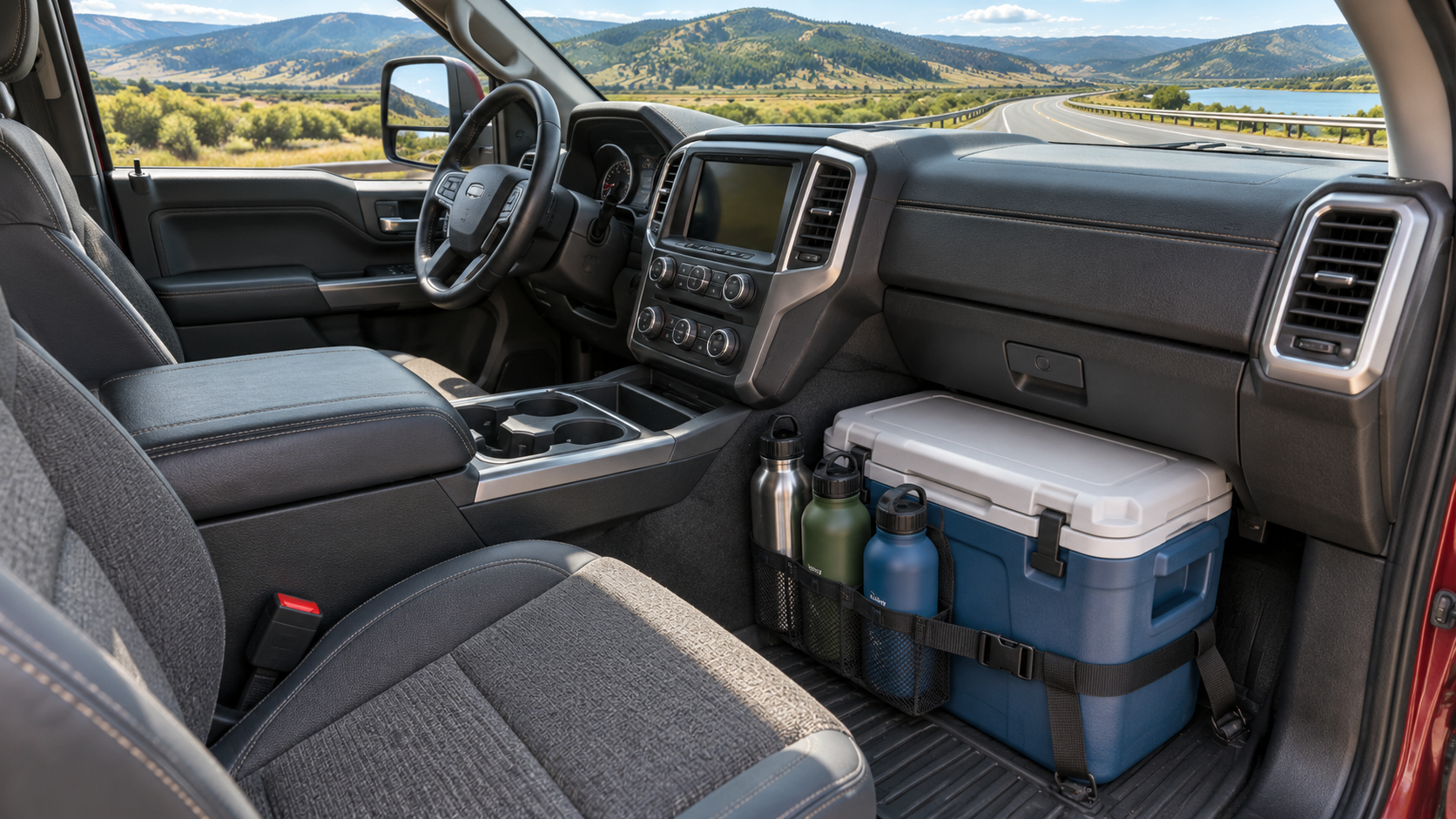
intro
The best truck water cooler is an insulated, covered beverage jug that fits the vehicle, stays put while driving, dispenses cleanly at a stop, and holds enough water for the route without becoming an awkward load. For many drivers and work crews, a 2-gallon jug is a useful starting point: it supplies several people, is easier to refill and clean than a very large cooler, and can be secured in a service body or cargo area. A smaller vacuum-insulated jug may suit a tight cab, while a 3- to 5-gallon unit is more practical for a crew in a work truck. This guide focuses on trucks and work vehicles—route length, cab space, tie-downs, heat exposure, drinking safety, and cleaning—rather than campsite water storage or powered dispensers.
Quick picks for common truck setups
For a one-driver cab with little free floor space, start with a personal insulated bottle or compact jug that can be secured outside the driver’s footwell. For a pickup with a service body, crew cab, or work truck serving several people, a 2-gallon spigot cooler offers more shared capacity. A 3-gallon jug can reduce refill stops for a crew but adds weight and takes more room. Choose a wide, insulated container with a lid and a protected spigot when it will ride in a cargo area. Avoid carrying an open bucket or unsecured heavy cooler in the cab. The best size is the largest one you can safely secure, access at a stop, and clean routinely.
What “truck water cooler” means here
The phrase can refer to a powered 12-volt refrigerator, an office-style hot/cold dispenser, a drinking-water jug, or a beverage cooler with a spigot. This page uses the worksite meaning: a passive insulated water container for drivers and crews in pickup trucks, delivery vehicles, utility trucks, and service fleets. It may use ice to keep water cool, but it does not require a compressor or a vehicle power outlet. The truck-specific questions are how it rides, where it can be secured, how easy it is to reach during a break, and how its capacity matches the route. If you need refrigerated food storage or a powered water dispenser, compare that separate equipment class instead.
Size and capacity for one driver
A solo driver often needs less water than a crew, but the right container depends on route length, access to refills, weather, activity, and personal preference. A 1-gallon jug holds 128 fluid ounces; a 2-gallon jug holds 256 fluid ounces. Those conversions describe container volume, not a recommendation for how much any person should drink. If you already carry individual bottles, a shared cooler may be unnecessary. If you work outdoors between stops, a 1- or 2-gallon insulated jug can let you refill a personal bottle without storing a case of small bottles in the cab. Keep enough headspace if you add ice, and check the manufacturer’s fill line.
Capacity for a crew or service vehicle
For a crew, estimate the water that will be used between safe refill opportunities, then choose a size with practical reserve. Two gallons can support several refills without the bulk of a large jobsite cooler. Three gallons may be better for a long shift or multiple workers, but a full water jug weighs about 8.3 pounds per gallon before the container, ice, and accessories. A full 3-gallon jug therefore contains nearly 25 pounds of water. Plan where that mass will sit and how a worker will lift it. More capacity is helpful only if the jug can be safely secured, its spigot can be kept clean, and it can be washed and refilled at the end of use.
Route length and refill access
Think in terms of the longest stretch between reliable, clean refill points rather than the total number of hours you are on the road. A local delivery route with frequent stops may need only a modest jug plus individual bottles. A utility crew working far from stores may benefit from a shared 2- or 3-gallon cooler, as long as the water stays protected and the unit is cleaned regularly. A long-haul driver who sits in the cab may prefer a smaller, easy-to-reach insulated container and a larger reserve stored in a secured sleeper or cargo area. Account for break schedules and hot work conditions; a jug is a convenience, not a substitute for proper access to drinking water.
Water weight changes the securement decision
Water weighs roughly 8.3 pounds per U.S. gallon. Add the jug, lid, ice, and any carrier, and a full cooler can become a heavy object. In a sudden stop, an unsecured container can move and injure occupants or damage the vehicle. Do not place a full large jug loose on a seat, in the driver footwell, on the dashboard, or where it blocks a seat belt, airbag, controls, visibility, or exit. In a cab, choose a size and location that can be secured with an appropriate holder or restraint. In a cargo area, use a tie-down point and strap suitable for the load, and keep the spigot protected.
Cab, sleeper, and cargo-area placement
A compact bottle or jug may be convenient in the cab, but every truck interior is different. Confirm that the container cannot interfere with pedals, the parking brake, gear selector, seat adjustment, seat belt, airbag deployment zones, mirrors, or door access. A passenger-side floor location can still become hazardous if the jug can roll forward. A sleeper compartment may provide more room but should not block an emergency exit. A pickup bed or service body can hold a larger cooler, yet the unit needs weather protection and a proper tie-down. Choose the place first, then measure the clear opening, height, handle path, and access needed to remove the lid and fill the jug.
How to secure the cooler
Use a purpose-designed mount, cargo net, crate, or tie-down arrangement that matches the vehicle and cooler shape. A round jug may need a cradle or non-slip base so it cannot roll; a square container may need restraint against sliding and tipping. Keep the lid and spigot from being pressed against tools or cargo. Check straps after loading and after the first trip because webbing can settle. Do not improvise by attaching a strap to a seat belt or an airbag component. Follow the vehicle maker’s cargo guidance and the restraint manufacturer’s instructions. A secure container should remain upright and stationary during ordinary driving and braking, while still being removable for cleaning.
Temperature retention in a hot vehicle
Insulation slows temperature change; it does not actively chill water. A closed jug with cold water and ice can stay cooler longer than a thin bottle, but direct sun, a hot cab, repeated lid opening, warm fill water, and low ice volume all shorten hold time. Manufacturer claims are made under specified conditions and should not be read as a guarantee for a truck cabin in summer. Park in shade when possible, keep the cooler out of direct sun, pre-chill the container if the maker recommends it, and use cold water and clean ice. Avoid leaving drinking water in a hot vehicle for extended periods; refill with fresh water and follow the container’s cleaning instructions.
Ice, ice packs, and refill strategy
Ice can help keep water cold in a passive cooler, but it takes up capacity and can dilute water as it melts. If you add loose ice, use ice made from potable water and avoid handling it with dirty tools. A sealed ice pack can reduce dilution and may be easier to remove, although it can occupy a substantial part of a small jug. Pre-chilling the water and container reduces the initial heat load. Do not freeze a completely full rigid container unless its manufacturer says it is safe; water expands as it freezes. For drivers who prefer undiluted water, a vacuum-insulated jug or individual stainless bottles can be more suitable than a large spigot cooler with loose ice.
Spigot, lid, and dispensing design
A recessed spigot is less likely to catch on cargo than a protruding faucet. A push-button or lever tap can be easy to use with one hand at a rest stop, but it should not be exposed to pressure while the vehicle is moving. A screw-on lid is generally more secure for transport than a loose cover; inspect the seal and latch before loading. Some jobsite models use a pressure-fit lid, side handles, and a push-button spigot intended for gloved hands. The design should be easy to clean around the outlet. After dispensing, close or lock the tap, keep the nozzle away from hands and surfaces, and wipe drips before placing the cooler back in its mount.
Choosing 1, 2, 3, or 5 gallons
A 1-gallon container is manageable for one driver and easiest to carry, but may need frequent refills for a crew. Two gallons is a common shared-work capacity and offers a useful compromise between reserve and portability. Three gallons adds supply for a longer route while weighing about 25 pounds when full, before the container. Five gallons is a large jobsite volume and may be best for a group in a service truck or worksite base, not for a small cab. Confirm that the container fits through doors, can be lifted safely, and can be tied down. Capacity should follow the water-use plan and loading situation, not a “bigger is better” assumption.
Insulated beverage cooler versus vacuum jug
A foam-insulated plastic dispenser with a spigot is designed to serve multiple people from one container. A double-wall vacuum jug usually emphasizes temperature retention and a smaller footprint, but may dispense through a narrower lid, press-button spout, or pour opening. The first is convenient for a crew break; the second is often easier for an individual driver to carry and keep near a seat. Both need cleaning and secure storage. Compare the opening width, lid seal, spigot protection, handle shape, and whether the jug is intended for ice. Do not assume a vacuum bottle’s advertised cold-retention period is the same as a jobsite cooler’s ice-retention claim.
Materials and taste
Food-contact surfaces should be intact, clean, and made for beverages. Plastic jobsite coolers are light and often have a broad opening and simple spigot; stainless vacuum jugs can resist odor retention when properly maintained but weigh more. Avoid containers with cracked interiors, peeling liners, damaged seals, or a strong persistent odor. Check manufacturer care information before using bleach, detergents, or abrasive tools. A container used for sports drink or flavored beverages may need more thorough cleaning than one used only for plain water. If you switch the contents, clean the spigot and lid before refilling. Never use a container intended for fuel, chemicals, or other non-food liquids for drinking water.
Cleaning and daily handling
Wash a new cooler before first use according to its care manual. After each workday, empty remaining water if the manufacturer recommends daily draining, rinse the reservoir, and leave parts open to dry. Clean the lid, spigot, gasket, and any removable parts so residue does not accumulate in hidden areas. Follow the maker’s cleaning-agent and dilution instructions; do not mix chemicals or use a cleaner that can damage plastic, seals, or stainless steel. Rinse completely and air-dry before storage. A truck cooler often sees dust, gloves, tools, and temperature swings, so keep the drinking outlet capped or shielded and do not let the spigot touch a dirty tailgate or workbench.
Drinking-water safety on the route
Use potable water from a trusted source and clean the jug regularly. An insulated cooler is not a purifier, disinfectant, or guarantee that water will remain safe indefinitely. If water has been left for a long time in a hot vehicle, tastes or smells unusual, or the container looks dirty, discard it, wash the jug, and refill with fresh potable water. Keep hands and cups away from the nozzle. Avoid shared cups; each worker should use a clean personal bottle. For work in high heat, OSHA advises employers to provide water and encourage workers to drink frequently; a vehicle jug can make water accessible between stops, but the work plan should ensure adequate water and rest access.
Choosing a cooler for a pickup truck
A pickup may offer several possible locations: behind a seat, in a bed box, in a tool compartment, or on a cargo platform. Measure actual space and consider whether the container will be exposed to direct sun, rain, dust, and vibration. A soft insulated carrier may fit behind a seat but may not have a dispensing tap; a rigid 2-gallon jug can be easier to clean and share. In an open bed, use a weather-resistant storage box or cover and tie the jug down. Do not leave an unsecured cooler in a bed where it can shift or fall out. Choose a spigot protected from impacts and position it so it cannot be opened by tools or straps.
Choosing a cooler for delivery vans and utility trucks
A delivery van or utility truck may have more cargo volume than a pickup cab but also more shelving, tools, and equipment. The cooler should occupy a designated spot that stays clear of cargo handling and emergency gear. Consider vibration, hot cargo compartments, and the ability to reach the jug during a break without unloading equipment. A 2-gallon unit can work for a small crew; a larger model is useful only if there is a secure bay and workers can lift it safely. A vehicle-mounted cooler should not obstruct a side door or emergency exit. For fleet use, standardize cleaning and refill routines and label the cooler for drinking water.
Choosing a cooler for a semi-truck or sleeper cab
Long-haul drivers may value easy access while parked and a compact form that fits a sleeper shelf or storage bay. During driving, store the water container in a restraint-approved location, never where it can roll under pedals or become a projectile. A large spigot jug can serve multiple people at a stop, while a smaller insulated bottle can remain within reach in a proper holder. If the sleeper has an auxiliary refrigerator or water system, compare the jug with that equipment rather than adding unnecessary capacity. Plan for cleaning and refilling at safe stops, and do not rely on water that has sat in a hot cab for an extended period.
Features worth paying for
For truck use, practical features include a lid that locks or screws on, a recessed spigot, handles that remain comfortable when the jug is full, a wide opening for cleaning, a stable base, and an exterior that is easy to wipe. A bright jobsite color can make the container visible among tools, while a water label can prevent confusion with other liquids. Some coolers claim ice retention for a stated duration; treat that as a test-condition claim rather than a vehicle guarantee. Avoid paying extra for a large capacity you cannot secure or for a spigot design that is difficult to clean. Built-in cup holders or decorative styling matter less than fit, stability, and hygiene.
What to check in a product listing
Confirm the exact capacity, exterior dimensions, empty weight, lid type, material, spigot design, and whether the container is intended for drinking water. Check how the manufacturer recommends cleaning it and whether the spigot or gasket can be replaced. If a listing makes an ice-retention claim, note its test conditions and verify them on the manufacturer’s own product page. Marketplace titles can combine several colors or generations; confirm the model number and image match the item selected. For a truck, measure the spot where the cooler will ride and leave room to open the lid and operate the tap. A listing’s “portable” label does not prove it is safe to carry unsecured inside a moving cab.
Product examples: compact, crew, and premium options
The examples below illustrate three different approaches, not a tested ranking. Igloo’s 2-gallon industrial cooler is a compact shared jug for short routes or small crews. Its 3-gallon industrial cooler adds capacity when the vehicle has a secure storage spot and the crew can handle the extra water weight. Stanley’s 2-gallon Fast Flow jug is a more insulated beverage dispenser; its listing states cold retention and ice performance under maker conditions, which may differ from a hot truck. Compare their dimensions, lid and spigot design, and current care instructions. The Amazon ASIN links identify specific listings, but sellers, color variants, stock, and included accessories may change.
A practical route-planning example
Suppose a two-person utility crew works a local route with a clean refill point at lunch and a safe place to park for water breaks. A 2-gallon cooler may be easier to secure and clean than a 5-gallon jug, while individual bottles keep each person’s drinking outlet separate. A crew working farther from refills may prefer a 3-gallon unit in a lockable service body, plus personal bottles. The correct amount depends on route duration, weather, physical work, and access to rest and water, not a fixed gallon-per-person rule. Plan the container, refill points, and securement together. If hot conditions are expected, follow the employer’s heat-safety procedures and do not assume one cooler alone is enough.
Short route versus long route
For a short route with frequent stops, prioritize low weight and one-hand dispensing at a break. Ice retention over several days may be unnecessary. For a long route, insulation and capacity can be more important, but an oversized jug may be hard to secure and may sit in a hot cargo area. Consider two smaller containers instead of one very large one: a small accessible bottle for the cab and a larger secured reserve in cargo. This separates driving access from supply storage. Refill the personal bottle at stops using the cooler’s tap without touching the nozzle. Keep the reserve closed and shaded, and replace water regularly.
Common mistakes to avoid
Do not place a full heavy water cooler loose in the cab. Do not put it where it can block an airbag, seat belt, controls, visibility, door, or pedal. Do not rely on a multi-day ice claim to predict water temperature in a sunlit truck. Do not leave water sitting in a hot vehicle for an extended period and assume it remains fresh. Do not use a cooler with a cracked lid or leaking spigot. Do not use strong cleaners without checking the manufacturer’s instructions. Do not choose five gallons simply because the price per gallon is lower; the filled jug may be difficult to lift, clean, or secure. Finally, do not let a shared spigot contact dirty gloves or tools.
Final buying recommendation
For a solo truck driver, choose a smaller insulated water jug that fits a proper holder and can be carried out for cleaning. For a small work crew, a 2-gallon jobsite cooler is a practical starting point; consider 3 gallons only if the work period, refill access, and secure storage justify the added weight. A 5-gallon jug belongs in a well-secured cargo or worksite location, not loose in the cab. Prioritize stable securement, protected spigot, easy cleaning, appropriate potable-water use, and a measured fit in the vehicle. For high-heat work, use the cooler as one part of a water-access plan and follow OSHA and employer guidance.
FAQ: What size water cooler is best for a truck?
A 1- or 2-gallon jug is often easier for one driver to manage. A 2- or 3-gallon cooler can serve a small crew if it has a secure cargo location. A full 5-gallon jug is heavy and bulky, so reserve it for an appropriate secured work area rather than a cab.
FAQ: Can I leave a water cooler in a hot truck?
Insulation slows warming but does not refrigerate or purify water. Keep the jug shaded, use clean cold water and ice as appropriate, and avoid leaving water for extended periods in a hot vehicle. If it smells or tastes unusual or has been contaminated, discard it and clean the cooler.
FAQ: Is a 2-gallon water jug too big for a truck cab?
It may be too large for many cabs. Measure the location and ensure the cooler cannot move or interfere with pedals, seat belts, airbags, controls, visibility, or doors. A personal bottle may be better inside the cab, with a larger jug secured elsewhere.
FAQ: How do I keep a cooler from sliding in a truck?
Use an appropriate cradle, cargo net, or tie-down in a designated storage area. Secure the cooler upright and keep the spigot protected. Follow the vehicle and restraint manufacturers’ guidance; do not attach straps to seat belts or airbag hardware.
FAQ: What is the difference between a water cooler jug and a powered truck cooler?
A beverage jug is passive and uses insulation, sometimes with ice. A powered 12-volt cooler actively cools and needs vehicle power. This guide covers passive insulated drinking-water containers with a lid or spigot.
Sources and further reading
Product specifications and care directions should be checked against the exact model. Igloo’s industrial 2-gallon cooler features and stated ice-retention conditions are summarized by White Cap’s Igloo 2-gallon listing; Igloo’s own model and care details may vary by product generation. For worker hydration, see OSHA Water, Rest, Shade guidance. Confirm vehicle storage and cargo restraint practices with your vehicle maker and any applicable employer policies. Amazon product examples and images were retrieved through Creators API; current stock, listing details, and performance claims can change.
Insulated truck water cooler examples

ASIN: B00NLFJR78

ASIN: B002YM2MHQ

ASIN: B0DTNB65LP
For another insulated crew jug to compare, see this exact-model Amazon search for the Rubbermaid Victory 1530 2-gallon jug; verify the listing and cleaning instructions.
Certain content that appears on this site comes from Amazon. This content is provided “as is” and is subject to change or removal at any time. Product examples and images are supplied through Amazon Creators API; confirm current specifications and availability on the product listing.