Where to buy
Check the latest price, availability and delivery on Amazon. Orders are placed on Amazon. We may earn a commission from qualifying purchases.
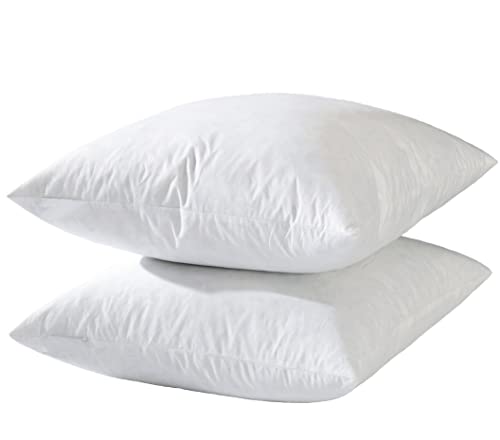
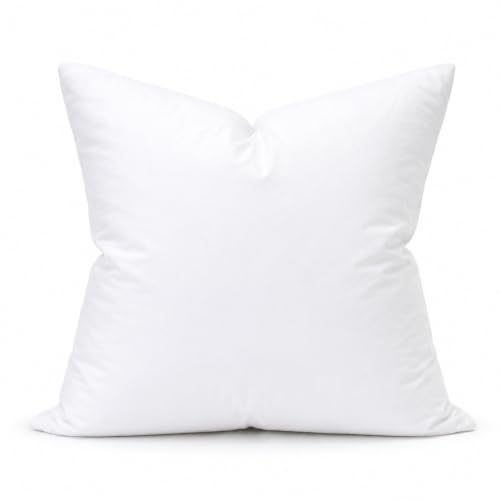
- Best insert upgrade: Continental Bedding 50/50 Down and Feather Throw Pillow Insert, 18 x 18 — Check on Amazon
- Loloi Chris Loves Julia Harvey Pillow, 12 x 27 Lumbar, Cover with Down, Ivory — Check on Amazon
- Safavieh Noel Velvet Throw Pillow, 18 x 18 — Check on Amazon
See 3 more options verified in research (no direct link — see the notes in each review)
- SARO Lifestyle Mongolian Lamb Fur Throw Pillow, 12 x 20 — a complete pillow in the lower part of this tier, with pricing that varies by color; search the exact name on Amazon
- Continental Bedding 100% White Goose Down Throw Pillow Insert — a top-tier insert, with pricing that varies by size, carried by a national retailer carrying the line; search the exact name on Amazon
- Michael Amini The Smith Chenille Accent Pillow, 13 x 24, Set of 2, Camel — a genuine designer pair; we could not pin a verified price, so check the live listing before buying
Read the full guide ↓
Disclosure: As an Amazon Associate, dailyhomedecorating.com earns from qualifying purchases. Links to Amazon on this page are affiliate links; they cost you nothing extra. Listing details such as price and availability change often, so check the current Amazon listing before you buy.
Every other guide in this series treats $500 as a sofa budget. This one starts with a ruder piece of arithmetic: a small room does not have a sofa’s worth of seating. It has a loveseat, or a compact two-seater, or one good chair — and seating that size holds a maximum of three throw pillows before the pillows start evicting the people. Three pillows, honestly bought from the verified picks below, cost only a small share of that budget: two velvet squares and one down lumbar. That is the whole need. Which means a $500 budget in a small room is not a pillow budget at all — it is the pillow budget of four or five small rooms, or of one small room plus the mirror and the lamp that would change it far more. This guide shows you the three pillows worth buying, explains why the expensive end of this category collapses in a small space, and tells you plainly where the remaining money does more work.
It also owes you the finding that shapes the whole $500 tier: there is no single throw pillow on Amazon that genuinely sells for $300 to $500. We scanned the designer names that do sell premium-tier pillows elsewhere and checked the most expensive single components in the category; the highest-positioned verified single component anywhere was the largest size of a 100% goose down insert, at the national retailer carrying that line — still well below this band. On Amazon itself, the priciest verified single components sit far lower in the tier, and the one listing that appeared to break into this band turned out, on cross-checking its model number, to be a four-piece patio furniture set wearing a pillow’s title. The upper shelf of this tier, for one pillow, is empty. In a big room that fact redirects the money across a sofa; in a small room it frees most of the budget entirely.
A word about links, because it is part of the honesty. Every linked product below had both its Amazon listing ID and its price confirmed from at least two independent records during our research in November 2026. Three of the six picks failed that test in one direction or the other — a verified price but an unpinnable listing ID, or a confirmed listing whose price no independent record ever printed. Those picks stay in the guide, because two of them teach this tier’s most important lessons, but they carry no direct link and, where the price was unverifiable, no printed price either. Each review says exactly what we could and could not confirm.
In this guide
Quick Picks
Short on time? Each row names a buyer type and the product that suits it. Three picks carry a direct link; three are verified purchases we could not pin to our two-source link standard, and their rows say so.
| Buyer type | Pick | Why it stands out | Link |
|---|---|---|---|
| Best insert upgrade | Continental Bedding 50/50 Down and Feather Throw Pillow Insert, 18 x 18 | A true 50% down / 50% feather fill in a 250-thread-count cotton shell — one of these revives the chair you actually sit in | Check on Amazon |
| Best designer pillow, down included | Loloi Chris Loves Julia Harvey Pillow, 12 x 27, Ivory | A designer-collaboration lumbar sold with a real down insert — check price on Amazon; the one long piece a small sofa needs | Check on Amazon |
| Best velvet value | Safavieh Noel Velvet Throw Pillow, 18 x 18 | A name-brand velvet pillow positioned in the lower part of this tier — check price on Amazon; buy the pair, stop there | Check on Amazon |
| Best statement texture — with a warning | SARO Lifestyle Mongolian Lamb Fur Throw Pillow, 12 x 20 | Real Mongolian lamb fur, a complete pillow positioned in the lower part of this tier — but its volume is a genuine problem in a small room; read the review before buying | No pinned link — see review |
| Best splurge insert — mostly a cautionary tale here | Continental Bedding 100% White Goose Down Throw Pillow Insert | Pure goose down in a 300-thread-count shell — the ceiling component at the top of this tier, and in a small room usually the wrong spend | No pinned link — see review |
| Best designer pair | Michael Amini The Smith Chenille Accent Pillow, 13 x 24, Set of 2 | A genuine furniture-designer pair of complete pillows — price unverifiable in research, check live; only buy if your seating truly has two ends to flank | No pinned link — see review |
How These Picks Were Chosen
The first filter is the one this category makes hardest, at every size of room: what, exactly, is being sold? A throw pillow listing is one of three different products wearing the same name. It can be a cover only — a zippered shell with nothing inside, which is how most genuinely high-end pillows are sold. It can be a complete pillow — cover and insert together, ready to place. Or it can be the insert alone, the invisible half that decides whether a pillow feels like a cloud or a bag of packing foam. Every pick below is labeled with which of the three it is, every pick is tied to the size and count it buys, and any combination we describe adds covers and inserts together. A guide that presents a cover and an insert as if either were a finished pillow is selling you a finished pillow in two separate purchases without saying so; we would rather be clear about what is included.
The second filter belongs to this lens, and it eliminated more products than any other: the seat test. In a small room, every pillow is bought against a fixed and tiny inventory of seats — a loveseat seats two, an accent chair seats one — and a plumped throw pillow occupies roughly a third of a seat’s width. A three-pillow arrangement on a loveseat has already claimed a visible share of the room’s sitting capacity; a fourth pillow is not decoration, it is a storage problem that migrates to the floor. So each pick was judged on whether it earns one of the two or three slots a small room actually has. Products that only make sense in fours and sixes were demoted, however good they are; products that do the work of two pillows in one slot — a long lumbar that anchors a whole loveseat — were promoted.
The third filter was verification. Amazon’s own pages do not always render for research tools, so every listing ID and price here was cross-checked against independent records — price trackers following the exact listing, retailer pages carrying the identical model, maker specification sheets. A product earned a direct link only when both its listing ID and its price could be pinned from two independent sources. That is why three picks below are prose-only: the SARO fur pillow was visible on Amazon’s own pages in two separate crawls, but its listing ID never surfaced in a second record, so it is described in prose and gets no link; the Michael Amini pair’s listing was confirmed twice, but no source ever printed its price, so it gets neither. Where a price moves — and in this category they all move — we describe its position in the tier and tell you to check the live listing.
The fourth filter was the ceiling scan, because a $500 guide owes you an answer to the obvious question: what is the most expensive real throw pillow on Amazon? We worked through the designer tier systematically — the made-in-USA feather-and-down houses, the embroidered studio lines, the European linen labels, the furniture brands’ pillow programs. The pattern was consistent: the true designer single pillow, positioned in the premium tier at design retailers with its insert included, largely does not sell on Amazon at all. What Amazon carries from the premium world is components and collaborations — serious inserts from bedding manufacturers, a designer-collaboration pillow here and there, real-material statement pieces from home-textile brands. The six picks below are those purchases, read through the seat test — which is why the two most expensive arrive with warnings attached.
We did not use these pillows ourselves. We read maker listings and specification fields and compared the numbers that decide whether a pillow works in a real room: fill composition as percentages, shell thread count where published, dimensions, count per purchase, closure and care. Where a maker does not publish a number, we say so rather than estimating one — at this budget the unpublished number is often the one that matters.
The 6 Best Throw Pillows for Small Rooms Under $500
Continental Bedding 50/50 Down and Feather Throw Pillow Insert, 18 x 18 (Insert Only)
Who it suits: The small-room reader whose one good chair — or the loveseat corner they live in — has gone flat. In a small room there is usually exactly one seat that matters, and this is how you make that seat feel expensive.
Start with what this is: an insert only, one 18 x 18 inch form, no cover. Its specification is the most honest in this guide. The fill is a true 50% down and 50% feather blend — not the 5%-down marketing blend that dominates the category, and not pure feather with its quills and crunch — inside a 250-thread-count 100% cotton shell, at a medium loft. That 50/50 ratio is the connoisseur’s compromise. Feather provides structure and the resistance that lets a pillow hold the vertical crease stylists call the karate chop; down provides the softness that makes it yield when you lean and recover when you stand. A 95/5 feather blend chops beautifully but feels firm and can poke; a pure down insert feels like a cloud and slumps like one. The 50/50 sits where a lived-on pillow should: soft in the hand, structured in the corner, choppable without a fight.
In a small room, the case for spending here is stronger than in a big one, not weaker. A large living room spreads its budget across five pillows and a sectional; a small room concentrates all of its sitting in one or two places, so the quality of the fill there is experienced constantly, at close range, every day. One of these inserts inside the cover on your reading chair — or two, flanking a loveseat — is the single highest-certainty upgrade in this guide. For pricing, check price on Amazon — this insert sits in the middle part of this tier, below the higher down rungs reviewed below. Down content is the one specification in this category that costs what it costs. The same maker’s line continues in both directions — a 10%-down feather insert for less, and the 80/20 and pure-down versions reviewed below for more — so this pick is the middle rung of a ladder we verified end to end. One sizing rule matters more than any other here: buy the insert two inches larger than the cover. An 18-inch insert belongs in a 16-inch cover for the full, tailored look; matched sizes produce the half-empty corners that make expensive covers look cheap — and in a small room, where the pillow sits three feet from your eye, tired corners are impossible to ignore.
- True 50% down / 50% feather fill — the balanced blend that both softens and holds a karate chop.
- 250-thread-count 100% cotton shell, medium loft, in the most useful small-space size.
- Positioned in the middle of this tier for its down content — check price on Amazon.
Honest limitation: It is an insert only — nothing visible arrives — and natural fill needs regular fluffing and a protector in homes with dust sensitivities; it is sold one at a time, so even a pair is a deliberate purchase.
Choose it if your one or two seats deserve better insides — this is where a small room’s pillow money does its best work. Skip it if you need a finished pillow today — the Loloi and Safavieh picks below arrive complete.

Loloi Chris Loves Julia Harvey Pillow, 12 x 27 Lumbar, Cover with Down, Ivory (Complete Pillow)
Who it suits: Anyone whose small room runs on a loveseat. A long lumbar is the one pillow format that does an arrangement’s whole job in a single slot — and this one arrives with real down inside.
Loloi is a genuine design house, and the Harvey comes from its collaboration with Chris Loves Julia, one of the most followed home-design studios in the country. What makes this listing remarkable in a $500 guide is not the name but the configuration: it is sold as a cover with down — a complete pillow whose insert is real down rather than the polyester fill inside almost every complete pillow at ordinary prices. The format is a 12 x 27 inch lumbar in ivory, the long low shape that stretches across the front of a loveseat seat, spans an accent chair, or lies across the foot of a bed. On a loveseat it replaces the usual pair of squares entirely: one horizontal line, one finished note, and both seats still fully usable — nobody has to move a pillow to sit down, which in a small room is the difference between decor and clutter.
Then there is its position in this tier, the most instructive point in this guide. Check the current price on Amazon: this designer-collaboration pillow, with a real down insert included, sits in the lower part of the tier — in a guide built around a $500 budget. That is not an error; it is the shape of the category on Amazon, where designer collaborations are merchandised as accessible lines and the premium lives in components instead. The honest response is not to buy a stack of them — a small room has no shelf for a stack of anything. It is to let this one piece do the visible work at the front of the loveseat and recognize how little of the budget the room actually needed. Readers whose small room is a bedroom first will find the same lumbar anchoring the bed arrangements in Best Throw Pillows For Bedrooms Under $500.
- Designer collaboration pillow sold complete with a real down insert — no separate insert purchase.
- 12 x 27 lumbar format: one piece anchors a whole loveseat, leaving both seats free.
- Positioned in the lower part of this tier — check price on Amazon; the guide’s clearest proof of where Amazon’s pillow prices really sit.
Honest limitation: The maker does not publish the down blend percentage or a detailed cover fabric specification, so we cannot verify it to the standard of the Continental picks; and ivory is a brave color where a loveseat doubles as a dining chair and a guest bed.
Choose it if you want one finished designer piece that finishes the loveseat by itself. Skip it if your seating is a single armchair you sit in sideways — a lumbar this long wants a horizontal surface to lie across.

Safavieh Noel Velvet Throw Pillow, 18 x 18 (Complete Pillow)
Who it suits: The small-room reader building the classic two-square arrangement — the pair that, with the lumbar above, completes the room. Velvet is the right fabric for a small space because it does its work in a few square feet of sightline.
Every layered arrangement needs one fabric that catches light differently from the rest, and velvet is that fabric. In a small room the effect is amplified: there is no distant viewing angle, the pillow is always near, and velvet’s pile shifting from deep to bright as you cross the room gives a tiny space a sense of movement flat fabrics cannot. The Noel is Safavieh’s beige velvet pillow in the standard 18 x 18 inch square, sold as a complete decorative pillow from the company’s Home Collection — the line whose listings specify insert-included construction, so what arrives is a finished pillow, not a shell. Safavieh is a century-old home furnishings house with a deep pillow catalogue, which matters at any budget: a real manufacturer’s model number, materials discipline and returns infrastructure stand behind the listing. In the room, this is the quiet pick — the soft neutral square at each end of the loveseat that makes the lumbar between them look deliberate.
Its position in the tier deserves the same plain reading as the Loloi’s: it sits in the lower part of this tier — check price on Amazon. Two honest qualifications follow. First, complete pillows at this level are filled for shape, not for the down experience — expect a fill that holds the square but does not karate-chop the way the feather-and-down inserts here do, and confirm the listing’s current fill field before ordering if that matters to you. Second, velvet’s pile shows pressure marks and wants a brush or a steamer now and then; a small upkeep habit, not a flaw. Now the combination that defines this lens: a pair of these, with the Harvey lumbar above, finishes the loveseat while using only a small share of the $500 budget. That is the entire honest need of most small rooms; everything after it in this guide explains why the rest of the $500 should mostly stay unspent.
- Name-brand velvet in the universal 18 x 18 size, sold as a finished pillow.
- Positioned in the lower part of this tier — check price on Amazon for the pair.
- From a major furnishings house with a full catalogue and model-number discipline behind it.
Honest limitation: The fill is a shape-holding complete-pillow fill, not down — it will not chop or feel like the premium inserts here — and velvet pile needs occasional brushing to look its best.
Choose it if you need the soft neutral pair that completes a loveseat — and then stop buying pillows. Skip it if the feel of the fill matters as much as the look — put the money into the Continental insert and cover it instead.

SARO Lifestyle Mongolian Lamb Fur Throw Pillow, 12 x 20 (Complete Pillow)
Who it suits: Honestly? In a small room, almost nobody — and this review exists to explain why the most tempting statement piece in the guide is the one a small space should usually refuse. Read it as a fence with a gate in it: one narrow set of conditions where it works, stated at the end.
First, what it is, because the product itself is genuinely good. This is a face of 100% Mongolian lamb fur, the long curly wool that reads as pure texture from across a room and cannot be convincingly imitated by the faux versions, in a 12 x 20 inch lumbar format. SARO Lifestyle is an established home-textiles brand; the same line is carried by national retailers, where the larger sizes sit higher in the tier. On Amazon, the 12 x 20 in ivory and gold sits in the lower part of this tier, with pricing that varies by color, for the stated size. Two disclosures still apply: the fill is polyester, not down — the fur face is the luxury, the inside is ordinary — and we could not pin this pillow’s listing ID from a second independent record, so it carries no direct link. Search the exact product name on Amazon and match the size, 12 x 20, before buying.
Now the fence. Mongolian lamb fur is not really 12 x 20 inches. The pile stands out from the core in every direction, so the object your room actually receives is several inches larger in every dimension — a cloud of volume that keeps moving. In a large room that volume is the point. In a small room, volume is the scarcest resource there is, scarcer than money. A fur lumbar on a small loveseat does not read as an accent; it reads as a third occupant. It cannot be sat against comfortably for long, and when it is not on the seat it has nowhere to go — a fur pillow squashed into a cupboard is a fur pillow being ruined. The gate in the fence is narrow and real: if your small room has exactly one chair, the chair is a deliberate statement piece in an otherwise calm, hard-surfaced room, and this lumbar would be the room’s only soft texture — then, and only then, it earns its slot. The footprint-first logic behind that exception is the same one worked through in Best Throw Pillows For Apartments Under $500. For everyone else, the velvet pair and the down lumbar above deliver the same money’s worth of comfort without annexing the room.
- Genuine 100% Mongolian lamb fur face — the strongest real texture verified on Amazon in this research.
- 12 x 20 lumbar in ivory and gold, positioned in the lower part of this tier — search the exact name on Amazon.
- The same line sits higher in the tier in larger sizes at a national retailer — size is what moves its position.
Honest limitation: Polyester fill under a luxury face, specialist cleaning only, not suitable for homes avoiding animal products — and in this lens, the decisive one: its real and visual volume is oversized for small seating, which is why this guide fences it rather than recommending it. No direct link, because its listing ID failed our two-source pinning standard even though it was verified in research.
Choose it if your one chair is a statement piece in a calm room and this would be its only texture. Skip it if your seating is a loveseat that people actually sit on — which is most small rooms.
Continental Bedding 100% White Goose Down Throw Pillow Insert (Insert Only)
Who it suits: In a big room, the purist. In a small room, this pick is here mainly so we can do one devastating piece of division out loud — then name the one exception where it survives.
The product first, fairly. If the 50/50 insert above is the balanced rung of Continental Bedding’s ladder, this is the top: a throw insert filled with 100% white goose down inside a 300-thread-count cotton shell. Pure down has no feather quills, so nothing pokes and nothing crunches; it compresses to almost nothing under your back, re-lofts the moment you stand, and takes the deepest, softest karate chop of any fill. The trade is structure — a pure-down pillow is a soft object, happiest as the front, leaned-on layer of an arrangement. The maker’s ladder is fully mapped from our research: the 80% goose down / 20% feather version sits below it by size, and this pure-down version sits at the top of the maker’s ladder — a line verified at a national retailer carrying the maker’s full line, because we could not pin the Amazon listing ID from a second independent record. It carries no direct link; search the exact product name on Amazon. Its top size is the highest-positioned single throw-pillow component in this research — the real ceiling of the category, belonging to an insert nobody can see.
Now the division. Take the standard premium move from the big-room plans: a pair of top-rung down inserts, before a single cover is bought; covers added on top make it the most expensive way to fill two slots in this guide. In a large room that pair disappears into a sectional. In a small room it goes onto a loveseat, where the two pillows together occupy roughly a third of the entire seating you own. Think of it per seat: a top-tier pair on a two-seat sofa means a premium insert’s worth of spending on each seat — spent not on the seat, its springs or its fabric, but on two soft objects that must be moved aside before anyone can sit down. The pillows would be magnificent. The room would be worse. Past the 50/50 rung, each higher rung buys a smaller increment of feel in a space that has already spent its scarcest asset — room — on the pillows themselves. The exception, stated precisely: if your small room contains exactly one pillow leaned on for hours daily — the reading chair where you spend your evenings — a single pure-down or 80/20 insert inside that one cover is a defensible luxury, as one insert, not a pair. Readers who would rather cap the whole project at a saner tier will find the same ladder logic applied in Best Throw Pillows Under $300.
- 100% white goose down in a 300-thread-count cotton shell — the softest verified insert in this research.
- At the top of the verified maker ladder by size — the highest-positioned single-component option we could confirm anywhere.
- Sits atop a fully verified maker ladder: 80/20 down/feather below it, 50/50 below that.
Honest limitation: Pure down offers the least structure of any fill here and needs daily fluffing to look tailored; it was verified at a national retailer rather than pinned on Amazon, so there is no direct link — and in a small room, a pair of these is the single worst allocation in this guide, however fine the fill.
Choose it if exactly one hard-working pillow in your room deserves the softest fill that exists — one insert, not two. Skip it if you were planning a pair: that is big-room thinking, and the 50/50 above gives a small room the same daily experience without the top-tier commitment.
Michael Amini The Smith Chenille Accent Pillow, 13 x 24, Set of 2, Camel (Complete Pillows)
Who it suits: The small-room reader whose seating genuinely has two ends — a compact sofa long enough to flank — and who wants a matched designer pair designed alongside real furniture collections.
Michael Amini is a furniture designer’s brand — AICO, the company behind it, designs whole room collections — and The Smith is its chenille accent pillow: a 13 x 24 inch lumbar in camel, sold as a set of two complete pillows. That pairing is the point. Designer pillow programs are built to flank a sofa symmetrically, and buying them as a made pair guarantees the dye lot, fabric hand and proportions match in a way two separately hunted singles never quite do. Chenille is the right fabric for the job: a soft, slightly lustrous woven pile that reads as tailored rather than plush, in a camel tone engineered to sit on the leather and warm-wood furniture the brand sells. The listing itself was confirmed in our research — the model and its two-pillow configuration are real and traceable to the maker. In a small room, a matched lumbar pair has one more virtue: two identical low-profile pieces read as architecture rather than clutter, and a 13 x 24 lumbar takes less seat than a square does.
And here this review must do something the others did not: decline to quote a price. Across every independent record we could reach — trackers, retailer mirrors, the maker’s own channels — no source printed a verifiable price for this set, so this guide prints none. That hands you a specific shopping task instead. When you find the live listing, check three things: that the price is for the set of two, not a single; that the seller is the brand’s own storefront or an authorized furniture retailer, because designer pillows are exactly where third-party listings drift furthest from the maker’s price; and that the total makes sense against this guide’s verified anchors — a genuine designer pair should cost more than the Safavieh pair and less than the pure-down inserts, and a listing far outside that band deserves suspicion. The small-room condition comes first, though: measure your sofa. Under about five feet, it does not have two ends worth flanking, and a pair becomes one pillow too many — the single Harvey lumbar is the better buy. In a tailored, coordinated room — the kind assembled in Best Throw Pillows For Modern Homes Under $500 — a matched pair like this is the finishing layer; bought for a sofa too small to hold it, it is the easiest place in this guide to overpay for symmetry you cannot use.
- A genuine furniture-designer pair: matched 13 x 24 chenille lumbars in camel, sold as a set of two.
- Complete pillows from a whole-room design program — the coordinated, symmetrical look, in a low-profile format that suits compact sofas.
- Listing and model verified in research; price deliberately not quoted because no source verified one.
Honest limitation: No verified price exists in our research, so we cannot tell you what a fair total is beyond the guide’s anchors — and designer lines like this attract third-party sellers whose prices drift well above the maker’s, so seller choice matters more here than for any other pick. A pair also presumes a sofa with two real ends; most small-room seating does not have them.
Choose it if your compact sofa is long enough to flank and you will verify the seller and the set-of-two configuration before paying. Skip it if your seating is a loveseat or a chair — one lumbar is the whole arrangement there, and the Harvey is a linked pick you can check on Amazon directly.
Comparison Table
| Product | What you get | Size & count | Link |
|---|---|---|---|
| Continental Bedding 50/50 Down and Feather Insert | Insert only — 50% down / 50% feather, 250TC cotton shell | 18 x 18, 1 insert | Check on Amazon |
| Loloi Chris Loves Julia Harvey Pillow | Complete pillow — cover with real down insert included | 12 x 27 lumbar, 1 pillow | Check on Amazon |
| Safavieh Noel Velvet Throw Pillow | Complete pillow — velvet, insert included | 18 x 18, 1 pillow | Check on Amazon |
| SARO Lifestyle Mongolian Lamb Fur Pillow | Complete pillow — real lamb fur face, polyester fill; oversized volume for small seating | 12 x 20 lumbar, 1 pillow | No pinned link — see review |
| Continental Bedding 100% White Goose Down Insert | Insert only — pure goose down, 300TC cotton shell | Sizes to 26 x 26, 1 insert | No pinned link — see review |
| Michael Amini The Smith Chenille Pillow | Complete pillows — chenille designer pair | 13 x 24 lumbar, set of 2 | No pinned link — see review |
How to Choose: Pillows for a Room That Counts Seats, Not Sofas
Count your seats before you count your pillows. This is the whole method, and it is why this guide reads differently from the general Best Throw Pillows Under $500. A standard sofa takes the designer’s five-piece formula — two large squares, two medium squares, one lumbar. A small room’s seating takes three pieces at most: two squares and a lumbar on a loveseat, or a single lumbar or square on a chair. Scale the formula down in size as well as count — 18-inch squares and a 12-inch-deep lumbar keep the layered rhythm without swamping compact furniture. Every pillow beyond the third is a tenant in the room, competing with the people for the same square feet, and it will spend its life being moved.
Decide what you are buying: cover, pillow, or insert. Everything in this category is one of the three, and listings do not always shout which. A cover-only listing shows a zipper and no fill specification; a complete pillow names its fill; an insert is a plain white form with a fill percentage and a thread count. At premium prices, assume cover only until proven otherwise — the designer world sells shells. Before any purchase, find the fill field and the count field and read them literally: “set of 2” for two pillows, “1-pack” for one insert, and a size that is the pillow’s size, not the cover it fits.
Climb the fill ladder deliberately — and stop at the rung your room can feel. Fill is where money converts to feel, and the ladder we verified runs like this. Polyester and down-alternative fills hold a shape cheaply and feel like it — acceptable inside a statement piece that is mostly looked at, wrong for a pillow leaned on daily. A 95% feather / 5% down blend is the entry to the real experience: structured, choppable, the workhorse of designer sofas, sold by long-standing Amazon insert brands — MIULEE’s goose feather and down pairs and Basic Home’s 233-thread-count hotel-style inserts both verified as real listings in our research, though neither’s price could be pinned to our standard, so compare them live. The 50/50 blend adds genuine softness — check price on Amazon for an 18-inch insert — and in a small room — where one or two pillows carry the entire sitting experience — this is the rung where the ladder effectively tops out. The 80/20 and pure-down rungs sit higher in the tier by size and buy the last increments of softness; here they make sense for at most one hard-working pillow, for the reasons the pure-down review lays out.
Size the insert two inches up. The single most useful rule in this guide: the insert should measure about two inches larger than the cover on each side — a 20-inch insert in an 18-inch cover — or the corners go slack. This matters more in a small room, not less: every object is seen at conversational distance, all day, and a tired pillow is a permanent close-up.
Now the arithmetic — what $500 actually does here. The honest small-room combination: two Safavieh velvet squares plus the Loloi down lumbar — three complete pillows, real materials, the loveseat finished — uses only a small share of the $500 budget. Add one Continental 50/50 insert to revive the cover on your reading chair and the room’s complete pillow project still stays in the lower part of the budget. The big-room plans are kept here as context, so you can see what you are declining: the general guide’s six-pillow plan — two SARO fur lumbars, two Loloi lumbars and two Safavieh velvets — is a larger spend for a full-size sofa, with much of the budget still unspent even there; its upgrade plan puts four Continental 50/50 inserts inside four existing covers; its splurge plan is a pair of top-rung down inserts, the guide’s most expensive combination, before covers. Every one of those plans assumes seating a small room does not have. Your room’s version of luxury is the three-pillow version, bought well.
The one exception: the small room that is the only room. A studio changes the count, because one room is doing the work of three. The bed takes a lumbar or a pair of squares, the chair takes one pillow, a floor cushion takes one more — three surfaces, and a total of four or five pillows is suddenly legitimate. Even then, the ceiling holds: built from this guide’s verified picks — the Harvey lumbar on the bed, the velvet pair split between chair and sofa-bed, one 50/50 insert in the floor cushion’s cover — the whole studio still uses only a modest share of the $500 budget. The exception expands the count, not the budget. If the pillow count keeps growing beyond the surfaces that need them, you are no longer furnishing a studio; you are collecting.
What the $300–$500 Band Actually Contains on Amazon
Because this guide’s budget names the band, it owes you a direct report on what lives there. We found three things. First, list prices: pillows positioned in the lower part of this tier are routinely dressed in much higher list prices, and a shopper reading the higher number as the value is reading theatre. Second, third-party drift: designer names often appear through marketplace sellers rather than the brand’s own storefront, at prices untethered from the maker’s — the same pillow can be a fair buy from one seller and a steep markup from another, which is why the Amini review makes seller-checking a step, not a tip. Third, mirages: the single listing that seemed to offer a pillow set in this band resolved, on a model-number check, into a four-piece patio furniture set. A title is not a specification. What the band does not contain, anywhere we could verify, is a single throw pillow — cover, complete pillow or insert — genuinely selling between $300 and $500. The real designer pillows in the premium tier exist; they are sold by design retailers and the makers themselves, with inserts included and names like D.V. Kap, Elaine Smith and Lili Alessandra on the label. If your heart is set on one object at that altitude, buy it there. On Amazon, a small room should spend on the three-pillow combination above — and send the rest where it will be seen.
Common Buying Mistakes
Buying the big-room formula for a small room. Five pillows is a standard sofa’s arrangement. On a loveseat it is an eviction notice for the second seat. Count seats first; the pillow count is whatever is left over, and it is rarely more than three.
Buying a cover and expecting a pillow. The most expensive misunderstanding in the category. At premium prices, assume cover only until the listing proves an insert is included — and if it is not, factor in a real insert before comparing anything.
Matching insert size to cover size. An 18-inch insert in an 18-inch cover looks underfilled within a week. Two inches up is the rule; it is the difference between a pillow that looks tailored and one that looks tired, and it costs nothing extra to get right.
Underestimating volume. A pillow’s listed size is its flat core. Long-pile fur, overstuffed down and generous lumbars all occupy more room than their dimensions claim — and in a small room the overage comes out of your seat. If a piece’s photograph shows it swelling past its frame, believe the photograph.
Paying the list price, or the third-party price, without a cross-check. List prices in this category are theatre, and designer names attract marketplace markups. Two minutes comparing the brand’s own storefront and one other retailer is the highest-value work in this purchase.
Final Recommendation
If you take one sentence from this guide, take this one: in a small room, $500 is not a pillow budget — it is three pillows, bought well, plus the rest of the room. Buy the trio that finishes a loveseat: the Loloi Harvey lumbar for the front — check price on Amazon — and two Safavieh Noel velvet squares for the ends — check price on Amazon. Together they use only a small share of the $500 budget. If one seat works harder than the rest, put a Continental Bedding 50/50 insert inside its cover for the single best comfort upgrade this category offers, and keep the project focused on how many seats you are serving. Decline the rest with a clear conscience: the fur lumbar’s volume, the pure-down pair’s per-seat absurdity, the six-pillow plans written for rooms three times yours. Then spend what is left where a small room actually feels it. A mirror opposite the window will do more for the room’s light and sense of space than any pillow at any price; a proper lamp will do more for its evenings than a fourth cushion. Pillows are the finishing layer of a small room, not its foundation — buy the three good ones, keep the change, and put the change on the wall and in the corner where it can change the room.
Frequently Asked Questions
How many throw pillows does a small room actually need?
Three at most on a loveseat — two squares and a lumbar, or a single lumbar doing the whole job — and one on an accent chair. The test is seating: an arrangement that has to be dismantled before anyone can sit down has already failed, however good it looks in a photograph. Studios are the exception, because the bed and the floor are seating too; even there, four or five pillows across all surfaces is the ceiling.
Does any single throw pillow on Amazon really cost $500?
Not that we could verify. Our ceiling scan found no single throw pillow, cover or insert genuinely selling in the $300–$500 band on Amazon. The highest-positioned verified single component was the largest size of a 100% white goose down insert at a national retailer carrying that line, still below this band; on Amazon itself, verified single items sit far lower in the tier. The one apparent exception in this band was patio furniture under a pillow’s title.
So how should a $500 budget be spent in a small room?
Mostly not on pillows. A pair of velvet squares plus a down lumbar finishes a loveseat with three complete pillows in real materials, using only a small share of the budget; adding a premium 50/50 insert for the seat that works hardest still leaves most of the budget unspent. The remainder does more visible work as a mirror or a lamp — the purchases that change a small room’s light and proportions — than as any fourth or fifth pillow.
Why do three picks in this guide have no Amazon link?
Because they failed our two-source standard in one direction: we could verify the SARO pillow on Amazon but not pin its listing ID independently; we could verify the pure-down insert at a national retailer but not pin its Amazon listing; and for the Michael Amini pair we could verify the listing but no source printed a price. Rather than guess, we publish what is verified and label the rest. Search the exact product names on Amazon.
Which insert fill is best for a small room: feather, down blend, pure down, or down alternative?
Each rung has a job, but small rooms reward stopping early. Feather-heavy blends (95/5) give structure and the crispest chop at the lower end of the real-fill ladder. A 50/50 blend adds genuine softness and is the best all-round fill we verified — in a room with one or two pillows, it is the sensible top of the ladder. Pure down is the softest and least structured, at the top of the tier by size; reserve it for at most one pillow leaned on for hours. Polyester fills hold a shape cheaply but feel firm and lifeless beside any of the above.
How long do down and feather inserts last?
Years longer than polyester ones — that durability is much of what the premium buys. A natural-fill insert that is fluffed regularly, kept in a protector and aired occasionally typically serves through several generations of covers, while a polyester form flattens within a season or two. In a small room this matters twice over: the insert is a larger share of the room’s comfort, and there is nowhere to store a spare — buy the one that lasts.