Where to buy
Check the latest price, availability and delivery on Amazon. Orders are placed on Amazon. We may earn a commission from qualifying purchases.
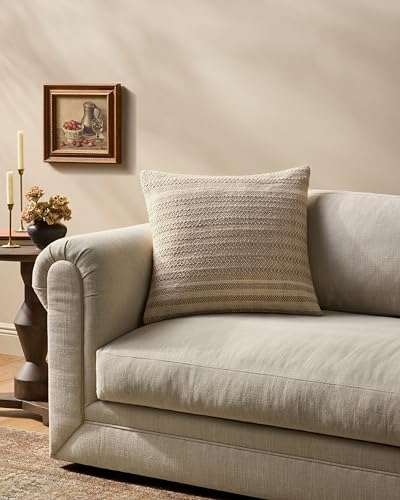
- Best overall: Loloi Amber Lewis Blair Throw Pillow, 22×22, Cover Only — check price on the listing; one cover only, no insert — Check on Amazon
- Best statement pillow: Furbish Studio Needlepoint Throw Pillow, 9×15, Complete Pillow — check price on Amazon; Amazon’s offer comes from a third-party seller — Check on Amazon
- Best handcrafted covers: The HomeCentric Aqua Infinity Euro Pillow Covers, 26×26, Set of 2 — check price on the listing; two covers only, no inserts — Check on Amazon
See 3 more options
- Best cover set for a small sofa: Woven Nook Dover Pillow Cover Set, 22×22, Pack of 4 — check price on Amazon; four covers only
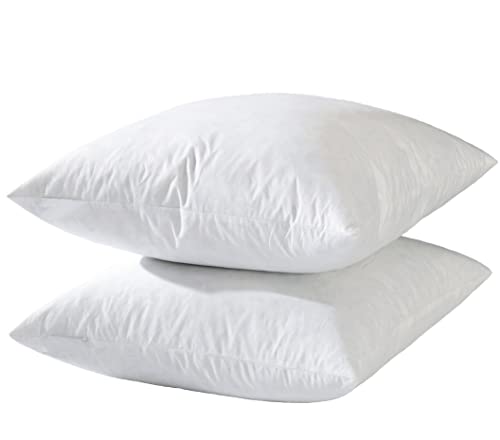
- Best premium insert: Continental Bedding 50/50 Down and Feather Throw Pillow Insert, 18×18, Single — check price on Amazon; one insert
- Best feather insert pair: MIULEE Down Feather Throw Pillow Inserts, 22×22, Set of 2 — check price on Amazon; two inserts
Read the full guide ↓
Disclosure: As an Amazon Associate, dailyhomedecorating.com earns from qualifying purchases. Links to Amazon on this page are affiliate links; they cost you nothing extra. Listing details such as price and availability change often, so check the current Amazon listing before you buy.
A small room changes the throw pillow question completely. The general version of this budget — worked through in Best Throw Pillows Under $300 — already comes with an honest warning: on Amazon, there is effectively no such thing as a $200 to $300 throw pillow, so the money resolves into combinations of designer covers, real feather and down inserts, and one hand-worked accent. In a small room, a second wall closes in behind that one: very few surfaces a pillow can sit on — a loveseat or compact sofa, perhaps one accent chair, perhaps the front of a bed. Two or three pillows dress all of it. The fourth has nowhere to go, and the fifth is furniture for the floor. So this guide’s conclusion can be stated in the first paragraph: a small room saturates with a single pillow — the single finest verified pillow in this guide, one designer cover over one true down-blend insert. Everything past that point is not a pillow purchase anymore. It is surplus looking for a surface.
That is not a reason to close the page. It is a reason to read it differently. The picks below are the same six verified components the $300 tier offers — because in a small room, quality concentrates: when only two or three pillows will be seen and touched every day, each one carries the whole room, and a hand-woven cover or a proper down insert earns its price in a way it cannot on a five-pillow sectional. What changes here is the ranking and the builds. The five-pillow sofa formula that anchors the general guide is demoted to a storage plan, the oversized Euro covers are fenced off by proportion, and the leftover — a large share of the budget, honestly unspent on pillows — is treated as the result it is, with a suggestion in the Final Recommendation for where it does more work in a small room than any pillow can.
Two category facts still govern everything: a throw pillow is two products — a cover and an insert — usually sold separately at this level, so every pick below states what arrives in the box, and any build adds the missing half before comparing; and the closer an Amazon listing gets to $300, the more likely it is a third-party reseller rather than the brand itself, which is printed in the review wherever it applies. Readers whose small room is also a rented one will find the same components re-ranked around leases and landlords in Best Throw Pillows For Apartments Under $300.
In this guide
Quick Picks
Short on time? Each row names a buyer type and the product that suits it. Each pick is always stated with what is in the box — covers only, inserts only, complete pillow, count and size — because in this category the contents define the purchase. Check the current price on Amazon for every pick before you buy. Note how few of these a small room actually needs: most small rooms should buy from the top two rows and one insert row, and stop.
| Buyer type | Pick | Why it stands out | Link |
|---|---|---|---|
| Best overall | Loloi Amber Lewis Blair Pillow, 22×22, Cover Only | A current designer collaboration, hand-woven cotton made in India; a current designer collaboration — check the current price on Amazon on the listing | Check on Amazon |
| Best statement pillow | Furbish Studio Needlepoint Pillow, 9×15 | Hand-embroidered wool needlepoint face with a cotton velvet back, sold complete and filled — check price on Amazon — and at 9×15, the one statement piece actually sized for a small room | Check on Amazon |
| Best handcrafted covers | The HomeCentric Aqua Infinity Euro Covers, 26×26, Set of 2 | Sequin-embellished handwork from India at Euro scale — included with a proportion warning: in a small room these belong on a bed’s back row, not on a chair | Check on Amazon |
| Best cover set for a small sofa | Woven Nook Dover Cover Set, 22×22, Pack of 4 | Four coordinated 100% cotton canvas covers — check price on Amazon; in a small room, two work and two store flat as the rotation | Check on Amazon |
| Best premium insert | Continental Bedding 50/50 Down-Feather Insert, 18×18, Single | A true 50% down blend in a 250-thread-count cotton shell — check price on Amazon; one insert, at the 18×18 scale small seating actually wants | Check on Amazon |
| Best feather insert pair | MIULEE Down Feather Inserts, 22×22, Set of 2 | Feather-dominant fill in a cotton shell — check price on Amazon; the engine inside the builds below | Check on Amazon |
How These Picks Were Chosen
The first filter was the box. Every candidate was classified before it was considered: cover only, insert only, complete pillow, or a coordinated set — and it was only ever compared inside its own class. At the $300 budget this discipline matters more, not less, because the listings get grander as they get vaguer: a grandly presented “designer pillow” can be one empty cover from a reseller, while a plainer listing is a finished, filled, hand-stitched object. Every build in this guide adds the missing half before it is compared.
The second filter was verification, and this tier is where it bit hardest. A product earns a link here only when its identity could be pinned from two independent sources — the Amazon listing itself plus the maker’s own store, a second retailer, or registry records of the same item. For prices, check the current price on Amazon on each listing: figures change, and this guide does not print a figure it cannot keep current. That applies in particular to the Loloi Blair cover and The HomeCentric Euro pair: the products are real, their makers and model numbers confirmed, but their live Amazon price is for the listing to state, not for this guide to guess.
The third filter was the specification field over the title. One pick below is sold under the word “silk” while its maker’s own product copy names the fabric as art silk — a synthetic — and the guide calls it art silk throughout, because sequined handwork on a synthetic ground is a legitimate product that does not need a borrowed fiber. The designer picks were read the same way: the Loloi cover is cotton because Loloi’s own description says hand-woven cotton, the Furbish face is wool because the brand’s construction notes say so, and no fiber appears in this guide on the strength of a title alone.
The fourth filter belongs to this lens alone: the surface audit. Before any pick was ranked, the room was inventoried. A typical small living room offers a loveseat or compact sofa (two pillows, three at the outside), one accent chair (one pillow, if the seat is deep enough to spare the depth), and sometimes a daybed or the foot of a bed. That is a hard ceiling of about four pillow positions, and most small rooms honestly have three. Every build below is costed against that ceiling, not against the budget — which is why this guide’s recommended spend lands well inside the budget, and why the step down, Best Throw Pillows Under $200, loses almost nothing in a room this size.
The Small-Room Math: Why This Budget Saturates Early
Start with the finding the whole tier hangs on, because it caps everything. Genuine top-of-the-band throw pillows exist — just not on Amazon. Ralph Lauren Home sells a single 22-inch pillow, the Northam, on its own site. Eastern Accents, the Chicago design-trade house, lists decorative pillows on its own store. D.V. Kap Home, handmade in California and sold complete with feather-down inserts, sells its 24×24 pillows through design retailers. None of that distributes through Amazon with a verifiable, brand-backed listing: what surfaces on Amazon under those names is third-party and resale stock. Inside Amazon, the ceiling is far lower. Loloi — the largest designer pillow maker with a genuine Amazon storefront — sits at the honest top of the mainstream designer range, and embroidered collaboration pillows occupy the upper reaches through retail partners. Above that level, Amazon’s designer pillow market does not thin out. It stops. Every candidate in the $200 to $300 band was checked against the two-source rule, and not one single pillow or pair inside the band passed it.
Now lay the small room over that market. The finest complete pillow this guide can verify — a Loloi 18×18 cover, over the Continental 50/50 down-blend insert — is a single, complete build. Put that one pillow on the accent chair, or at the center of the loveseat, and the room’s best seat is finished at the highest quality the platform sells. Add the one statement piece sized for small rooms, the Furbish lumbar, on the loveseat beside it, and the room is done — genuinely done, at designer level — with much of the budget still unspent. There is no third surface asking for the remainder, and inventing one is how small rooms end up with pillows stored on the floor — pillows that make the room look smaller and cheaper than the money spent on them. The general guide’s other two shapes still appear below, honestly labeled: the designer pair plus accent, which a small room can only justify if a bed’s front row counts as a second room’s worth of surface, and the five-pillow sofa formula — in a small room, a purchase of three pillows and two storage problems. Both are described in the reviews. Neither is the recommendation.
The 6 Best Throw Pillows Under $300
Loloi Amber Lewis Blair Throw Pillow, 22×22, Cover Only
Who it suits: The small-room buyer whose one large pillow position — the corner of a loveseat, the center of a daybed — deserves a genuinely designed cover, and who understands they are buying the cover, with the insert as a separate, planned line item.
The credentials are the verifiable kind. The Blair is a 22×22 pillow from the Amber Lewis collaboration with Loloi — a working designer line sold through Loloi’s own channels, not a licensed name pasted onto a generic listing. Loloi’s own description is specific: hand-woven cotton, made in India, in a richly textured beige with subtle striping. The Amazon listing is Loloi’s own — the model is PAL0058 — and it sells the cover only, within the maker’s standard three-way structure (cover only, cover with polyester fill, cover with down fill), offered in the maker’s standard three forms — cover only, cover with polyester fill, and cover with down fill — varying by collection. Check the current price on Amazon for whichever form you choose.
Scale is this pick’s small-room question, and it deserves a straight answer. What the Blair cannot do is share. On a compact accent chair, a 22-inch pillow consumes the seat; on a shallow loveseat, a pair of them leaves the middle unsittable. The build, for the position it fits: this cover over one insert from the MIULEE 22×22 feather pair below produces a complete designer pillow — or buy Loloi’s own down-filled version of its 22×22 pillows and skip the assembly.
Now the listing’s honest problem, printed in full. When checked, Amazon showed no featured offer for this cover — no price this guide could pin from a second source — which is why the Where to Buy box says check price instead of printing one. That is not a defect in the pillow; it is how Loloi’s newer collaboration stock moves on Amazon, in and out of featured placement. It does mean the live figure must be judged when you see it: check the current price on Amazon, and treat a figure that looks far out of line with the maker’s own channels as a reseller’s markup wearing a designer’s name.
- A real designer collaboration with a verifiable maker, model and material: hand-woven cotton, made in India, from Loloi’s own listing and description.
- The texture-first beige neutral layers with everything — the correct anchor for the one large position a small room has.
- A maker’s range offered cover-only and filled, so you can judge the live listing — check price on Amazon — against the form you actually need instead of guessing.
Honest limitation: Cover only — what you pay buys no insert — Amazon showed no featured offer when checked, and at 22 inches this is a one-position pillow: too big for accent chairs and for pairing on a shallow loveseat.
Choose it if your room has one large pillow position and you want it designed, with a feather insert added as a planned second line. Skip it if your seating is all compact chairs — the 18×18 perfect-pillow build in the Continental review below is your scale — or if you need a certain price before you commit.

Furbish Studio Needlepoint Throw Pillow, 9×15, Complete Pillow
Who it suits: The small-room buyer who wants the room’s one focal point — a finished, hand-worked accent that takes up almost no room, bought as a complete object with nothing else to purchase and nothing to store.
In the general guide this pillow is the personality. In a small room it is something better: the only statement piece in the tier actually sized for the room. Furbish Studio’s needlepoint pillows are hand-embroidered — the brand puts the labor at roughly twenty hours of hand stitching per pillow — with a face of 100 percent wool needlepoint and a back of 100 percent cotton velvet, sold as a complete, filled pillow rather than a cover. The design linked here is the 9×15 “Fun and Games” lumbar; the line spans dozens of sayings and motifs at the same construction, so the review applies to whichever wording suits your house. Nine by fifteen inches is a petit lumbar — the front-center shape of a sofa formula, scaled down — and that smallness is a genuine virtue here rather than a compromise. It sits on a loveseat without displacing a sitter, fits an accent chair that a 22-inch square would swallow, and delivers the room’s entire quota of pattern and wit in a footprint smaller than a shoebox. A small room gets one focal point; this is the only pick that is exactly one.
For price, check the current price on Amazon — and that instruction deserves the same openness as the other check-price picks. On Amazon, the pillow is sold by a third-party seller (the listing’s seller is sportique) and showed no featured offer when checked, so Amazon’s live figure is set by that seller. Compare it with the brand’s own channels — Furbish sells its pillows through its own store and at Anthropologie — and buy wherever the live figure is the fair one, because the object is identical and any large premium would be pure markup.
Care and limits are the handwork’s own. Amazon’s specification fields for the line are inconsistent across designs, so this guide relies on the brand’s published construction (wool face, cotton velvet back, sold filled) rather than the listing’s spec table, and prints the discrepancy rather than hiding it.
- Genuine hand embroidery — roughly twenty hours of stitching per the brand — in a 100 percent wool needlepoint face with a 100 percent cotton velvet back.
- Sold complete and filled: it buys a finished pillow, the only pick here with no insert to add and no storage footprint attached.
- At 9×15, the one statement piece proportioned for small seating — impact per square inch is the highest in this guide.
Honest limitation: On Amazon it is a third-party sale with no featured offer, so the live price is the seller’s, not the brand’s — check the current price on Amazon and compare it with the brand’s own channels — and a hand-stitched wool face is spot-clean only, built to be seen rather than used as furniture.
Choose it if your room needs its single focal point and your seating is compact. Skip it if every pillow in the room has to earn its keep as back support — buy the Dover covers, which wash and work, and let the statement wait.

The HomeCentric Aqua Infinity Euro Pillow Covers, 26×26, Set of 2
Who it suits: In a small room, a narrow buyer: someone whose small room is a bedroom, dressing a bed’s Euro back row — and almost no one else. This pick is included with its fence built in, because at 26 inches it is the wrong scale for small seating, and the review says so in the open.
The object itself is real handwork. The HomeCentric is an Indian maker selling handcrafted covers through its own store and on Amazon, and the Aqua Infinity is its statement Euro design: a 26×26 cover, sold here as a set of two, carrying a sea-waves pattern embellished with sequins across the face, handcrafted in India. The construction details are the brand’s standard and they are the right ones: a concealed flap-covered zipper on the back, so the embellished face is never interrupted by hardware, and finishing done by hand rather than serged in bulk. On a bed, that scale is correct — a pair of 26-inch Euros is the back row a queen or king bed is dressed with, and in a small bedroom that back row doubles as the room’s headboard substitute, the largest textile gesture the space contains. That is the one legitimate small-room job for this pick, and it is a good one.
Everywhere else in a small room, proportion bars it. A 26×26 pillow on an accent chair does not decorate the chair; it replaces it — the seat disappears, and the chair becomes a pillow stand. On a loveseat, a pair leaves no room for a person. Even singly, a Euro on compact seating eats the seat depth a sitter needs, the scarcest dimension in a small room. So the fence is simple: if these covers would sit on seating, skip them at any price; if they would stand against a headboard, they are the most handwork this budget buys. The sequin face reinforces the same division — embellished covers are dry-clean territory, a texture to look at, not to lean or sleep against, which is precisely why Euros live at the back of a bed.
Now the fiber, because this listing is the guide’s standing lesson in reading past a title. The Amazon title calls these “Silk” Euro covers. The maker’s own product copy names the fabric accurately: art silk — a synthetic woven to imitate silk’s sheen. This guide calls it art silk everywhere, including the tables: art silk is a sensible ground for sequin embellishment (stable, even, and it does not water-spot the way real silk does), but it must be bought as a synthetic at a synthetic’s value, not as silk at a silk premium. Price is the second open item: Amazon showed no featured offer for the set when checked, so check the current price on Amazon on the listing. The build stays inside this budget in form regardless: the pair of covers, plus a 26×26 feather insert pair from the MIULEE line below, completes the set.
- Real embellishment at real scale: sequined sea-wave handwork on a 26×26 Euro format, sold as a matched set of two, handcrafted in India.
- Concealed flap-covered zipper and hand finishing — the construction details that separate artisan covers from printed imitations of them.
- The correct back row for a small bedroom’s bed, with a build (covers plus Euro feather inserts) that fits this budget.
Honest limitation: The “silk” is art silk — a synthetic, per the maker’s own copy — the covers are dry-clean only, inserts are not included, Amazon showed no featured offer when checked, and at 26 inches these overwhelm any seating in a small room: bed back row only.
Choose it if your small room is a bedroom and the bed’s Euro row is the project. Skip it if the pillows would sit on a chair or loveseat — in a small room that is a proportion error no quality of handwork can rescue.

Woven Nook Dover Pillow Cover Set, 22×22, Pack of 4
Who it suits: The small-room buyer who wants coordinated, washable covers and a rotation — two on the sofa, two stored flat — as a coordinated set from the brand’s own storefront.
Woven Nook sells coordinated cover sets through its own Amazon storefront — the listing here is sold by Woven Nook itself and shipped from Amazon, so the brand itself is the seller, not a reseller. The Dover set is four 22×22 covers in a pre-mixed, boho-leaning palette of patterns and solids, cut from 100 percent cotton canvas per the maker’s specification, and machine washable per the listing. Check the current price on Amazon for the set; the brand sells its four-pack sets through its own store as well. In a large room, this set is the base layer of a five-pillow formula. In a small room, read it as what it actually is: a two-pillow working set plus a two-cover reserve — controlled surplus, not waste. Covers are the one pillow component a small room can store for free: folded flat, two spares occupy a drawer corner, where two spare filled pillows would occupy a closet shelf the room does not have. The rotation is genuinely useful, too — a washed pair while the other pair is on the sofa — in a room where the sofa is also the guest bed and the reading chair.
The build, stated both ways. All four covers plus two pairs of the MIULEE 22×22 feather inserts below assemble four complete 22-inch pillows — the general guide’s formula. The small-room deployment is half of that: two covers over one insert pair, with the second insert pair simply not bought until a surface exists for it. Cotton canvas is the honest middle of cover fabrics in both directions: a real natural fiber with a matte, woven hand, and machine washable — a first-order virtue in a small multi-use room; it is also not a luxury cloth — canvas is a work weave, sturdy rather than soft, and a buyer expecting the slub and drape of linen will find this plainer, well below what a verified linen cover commands in this tier.
Two limitations deserve their lines. The palette is fixed, as with any set: if your sofa or rug is a strong color, the set can sit quietly or can fight — the brand sells other sets in other palettes, which is the remedy. And the size cuts both ways in this lens: 22×22 covers on a shallow loveseat overwhelm it exactly as the Blair review warns, so compact furniture may be better served by the brand’s 18×18 sets — the coordination and the washability are the product, not the inches. Rooms where the bed does the living-room work too will find the layout questions answered in Best Throw Pillows For Bedrooms Under $300.
- Four coordinated covers in 100 percent cotton canvas — check price on Amazon — sold by the brand’s own Amazon storefront.
- The only surplus a small room can store for free: spare covers fold flat, so the rotation costs no closet.
- Machine washable and natural-fiber — the working layer of a multi-use room can be lived on, washed, and lived on again.
Honest limitation: Covers only — inserts are a separate purchase the brand states plainly — in a fixed palette, at a 22-inch size that overwhelms shallow seating, and half the set is reserve by design in a small room.
Choose it if you want the coordinated, washable answer plus a flat-storing rotation in one order. Skip it if you already own good covers — your money belongs in the inserts below — or if paying for two covers you will store, however flat, offends you more than it serves you.
Continental Bedding 50/50 Down and Feather Throw Pillow Insert, 18×18, Single
Who it suits: The small-room buyer furnishing the one seat that matters — the reading chair, the loveseat’s good corner — who would rather own one excellent pillow than four adequate ones. In this lens, that buyer is most buyers.
This is the premium insert, and in a small room it is also the destination. Continental Bedding sells this 18×18 insert singly — one insert in the box — filled with a stated 50 percent white goose down and 50 percent goose feather, inside a 100 percent cotton shell at a 250 thread count, at a medium loft. A 50/50 blend is the recipe behind the pillows in genuinely good hotels — the feather half gives body and the karate-chop dent that stays put, the down half gives loft that springs back. Check the current price on Amazon before you buy, because this is a premium insert at the top of the insert tier, and its live figure is the one to judge on the listing.
The size is the lens’s quiet headline: 18×18 is the scale small seating actually wants. A compact chair or loveseat corner dressed with an 18-inch pillow keeps its seat depth — the dimension small rooms cannot spare — while a 22-inch pillow spends it. And the build this insert anchors is the guide’s whole thesis: slip it into a Loloi cover — the maker’s Loloi II 18×18 cover, linked below — and the pair assembles one genuinely designer pillow, hand-woven cotton over a true down-blend core: the finest single finished pillow this guide can verify on Amazon, well inside the budget, at the right size for the room. What the money buys beyond feel is time: down-blend inserts are the longest-lived components in this guide — a quality 50/50, fluffed regularly and kept inside its down-proof shell, holds its loft for the better part of a decade, where polyester inserts are a two-to-four-year proposition. The limitations are natural fill’s own: a faint new-feather smell in the first days that airs out (milder at this down fraction, but present), an intolerance for neglect, and the deliberate fact that it is a component with no costume — it belongs in a cover you already love or in the Loloi build above.
- A true 50% goose down / 50% goose feather fill — the only high-down recipe in this guide, and the feel every “feather down” label is imitating.
- 100% cotton shell at 250 thread count, medium loft, at 18×18 — the proportion small seating keeps its depth with.
- The longest service life here — down blends hold loft for years beyond polyester’s working life.
Honest limitation: One premium insert — a significant share of the budget for a component with no cover — so check the current price on Amazon, because the live figure decides.
Choose it if one pillow matters more than four — in a small room, it usually does. Skip it if you are furnishing several seats from zero on a strict count — the MIULEE pair below cores two pillows instead of one.

Check on Amazon · The cover in the build above: Loloi II PLL0140 18×18 Cover Only
MIULEE Down Feather Throw Pillow Inserts, 22×22, Set of 2
Who it suits: The small-room buyer building pillows from covers — filling the loveseat’s two positions with a moldable, choppable feather core at a price that lets the covers carry the budget.
Every build in this guide runs on this pair, so its review is the practical one. MIULEE’s 22×22 inserts come two to a pack, filled with a down-feather blend inside a cotton shell — check price on Amazon for the pair. The listing does not headline an exact down percentage, and this guide will not invent one: at this tier, the honest expectation is the industry-standard feather-dominant recipe — feather doing the structural work, down softening the surface — and judged as that, rather than as a budget Continental, it is a good one. The cotton shell decides whether a feather insert is a pleasure or a slow leak of quills into your sofa, and it is why this pair, not a cheaper polycotton insert, is the guide’s default.
Small-room sizing needs one adjustment to the standard rule. The trade’s standing advice is an insert one to two inches larger than the cover for the full, tailored look — sound on a deep sofa, but on shallow seating an overstuffed 22-inch pillow pushes the sitter forward and spends seat depth twice: once in pillow, once in posture. In this lens, the same-size pairing is usually right — a 22×22 feather insert in a 22×22 cover gives the soft, slightly slumped silhouette designers style on purpose, because feather molds instead of pushing — and it is how the Dover build above is costed. The line is a family, not a single product: the same construction sells in an 18×18 pair — the size most compact chairs actually want — and a 26×26 Euro pair, the insert the HomeCentric build above uses. Maintenance is feather’s standard contract — a daily fluff, a weekly shake, a tumble in the dryer after shipping compression — and the honest problems are feather’s standard pair: a natural smell in the first days that must air out, and a slow settle in any household that will not fluff what it owns. Design-led small rooms will find these same components styled for cleaner lines in Best Throw Pillows For Modern Homes Under $300.
- The build engine of this guide: a feather-dominant fill in a cotton shell — check price on Amazon for the pair.
- Feather’s moldability suits shallow seating: the same-size pairing gives the relaxed designer slump without spending seat depth on overstuffing.
- A full size family — 18×18 pairs and 26×26 Euro pairs in the same construction — so one insert standard serves every build on the page.
Honest limitation: The exact down percentage is not published on the listing — expect a feather-dominant fill, not a down pillow — and feather needs regular fluffing and a few days of airing when new, or it settles and sulks.
Choose it if you are filling two covers and want the moldable, choppable feel that makes designer covers look designed. Skip it if anyone in the house has a feather sensitivity, or the pillows live somewhere that gets washed weekly — buy down-alternative there and spend the savings on covers.

Comparison Table
Every row states what the pick is — cover, insert, or complete pillow — and adds a small-room verdict, because at this budget the room, not the listing, decides. “To complete” names the missing half, so the rows can be compared as finished pillows. For every row, check the current price on Amazon.
| Pick | What you get | Size & count | Price basis | To complete | Small-room verdict |
|---|---|---|---|---|---|
| Loloi Amber Lewis Blair | Cover only — hand-woven cotton, made in India | 22×22, single | Check price on Amazon | Add one MIULEE feather insert | One large position only — loveseat corner or bed, never a compact chair |
| Furbish Studio Needlepoint | Complete pillow — wool needlepoint face, cotton velvet back, filled | 9×15 lumbar, single | Check price on Amazon; Amazon’s offer is a third-party seller’s | Nothing else to buy | The ideal small-room statement: maximum impact, minimum footprint |
| The HomeCentric Aqua Infinity | Covers only — art silk with sequin embellishment, handcrafted in India | 26×26 Euro, set of 2 | Check price on Amazon | Add a 26×26 feather insert pair | Bed back row only — barred from small seating by proportion |
| Woven Nook Dover Set | Covers only — 100% cotton canvas, machine washable | 22×22, pack of 4 | Check price on Amazon | Add one insert pair to deploy two pillows; two pairs to fill all four | Two working, two stored flat — the only free surplus in a small room |
| Continental Bedding 50/50 | Insert only — 50% goose down / 50% feather, 250TC cotton shell | 18×18, single | Check price on Amazon | Pair it with a Loloi 18×18 cover | The perfect-pillow core, at the scale small seating wants |
| MIULEE Down Feather | Inserts only — feather-dominant fill, cotton shell | 22×22, set of 2 | Check price on Amazon | One insert fills one cover | The engine pair; the line’s 18×18 pair suits compact chairs |
How to Choose Throw Pillows for a Small Room at This Budget
Count surfaces before counting pillows. The small-room discipline that replaces the budget discipline: inventory the room first. A loveseat takes two pillows honestly, three at the outside; an accent chair takes one, if its seat is deep enough to spare the depth; a bed takes a front row. Most small rooms total three or four pillow positions. Any purchase beyond that count is not decorating — it is storing, and in a small room storage is the one resource already spent. Let the count, not the $300, set the cart.
Proportion is the first specification. A pillow should never consume more than about a third of a seat’s depth, and its width should leave the sitter a clear majority of the seat. That arithmetic is why the 18×18 picks anchor this guide and the 26×26 Euro pair is fenced to beds: a Euro on a compact chair fails the test before fabric or price are even discussed. Measure the seat depth before ordering anything over 20 inches; in a small room, two inches of pillow is two inches of chair.
Budget the pillow, not the listing. Judge every candidate as a finished pillow: cover plus insert, at the sizes you will actually use. A cover that looks inexpensive on its own still needs an insert before it is a pillow, while a complete pillow needs nothing else; compared as listings alone, the first can look like the better value and not be. Force any listing you find elsewhere through the same test before it joins the cart.
Spend on the fill ratio, not the fill adjectives. “Feather down” is a recipe, not a material: the industry standard is about 95 percent feather to 5 percent down — substantial, moldable, slightly firm. Down percentage is what buys loft and softness, and it sits accordingly in the tier: a feather-dominant pair is the accessible option, a true 50/50 single is the premium one — check the current price on Amazon for each. With so few positions, the allocation is easy: the pillow leaned on daily deserves the down; the pillows that get looked at can run on feather.
Prefer covers to whole pillows when you buy ahead of your surfaces. If you do spend past the room’s current position count — a rotation, a seasonal swap, a second set for the guest configuration — buy it as covers. Covers fold flat into a drawer; filled pillows consume the closet. The Dover set is this guide’s example of surplus done correctly: the reserve costs no space, and the day a surface appears, an insert pair completes it.
Read fibers in the specification field, and sellers in the listing header. At this tier the two frauds are fiber and provenance. Provenance: a designer pillow sold by the brand’s own storefront is a product; the same name sold by an unknown third party at a steep markup over the brand’s own channels is a risk with a logo on it. Check the current price on Amazon, compare the figure to the maker’s own store, and let a price far above it be the warning it is.
Common Buying Mistakes
Buying the five-pillow formula for a two-pillow room. The standard sofa formula — two large, two medium, one lumbar — is written for a full-size sofa. Three pillows styled well beat five stored badly, every time.
Putting Euro pillows on small chairs. A 26×26 pillow is a bed’s back row, scaled to lean a row of sleeping pillows against. On a compact chair it swallows the seat whole; on a shallow loveseat it eats the depth two sitters needed. Proportion errors cannot be fixed by quality — the finest handwork in this guide is still the wrong pillow at the wrong size.
Skimping on the insert to afford the cover. A hand-woven cover over a lumpy polyester insert looks and feels like the insert, not the cover — the fill is what a pillow is, and the cover is its clothes. This mistake is cruelest in a small room, where the one pillow is touched daily and seen from three feet. If the budget forces a choice, secure the feather or down core first, spend what remains on the cover, and upgrade the cover later over a core that will last.
Final Recommendation
Buy the one perfect pillow, and let it be the room’s. The Continental 50/50 insert, inside a Loloi 18×18 cover, assembles the finest verified pillow on Amazon — check the current price on Amazon for both pieces — at the 18-inch scale a small room’s best seat actually wants, with a down-blend core that will outlast several cheaper pillows. If the room has a second surface — a loveseat beside the chair, a daybed — add the Furbish needlepoint lumbar: the one statement piece proportioned for small seating. Two surfaces, two excellent pillows, well within the budget, and the room is finished at a level no five-pillow pile in it could match.
Then do the thing this budget’s marketing hopes you will not: move the rest of the budget out of the pillow category entirely. In a small room, that remainder buys changes with far more effect than a third and fourth pillow — a lamp that fixes the room’s one dark corner, a mirror that doubles its light and apparent depth, a rug that defines the seating zone. Those are the purchases a small room actually feels. What $300 should not buy, here or anywhere on Amazon, is a single listing priced at $300 — at that figure you are paying for a story the specification field cannot support — and in a small room it should not buy surplus either: pillows beyond the surface count are not a collection, they are clutter with receipts. Spend on one pillow done perfectly, keep the rest honestly, and let the room stay the size it is — furnished, not filled.
Frequently Asked Questions
How many throw pillows does a small room actually need?
Usually three, four at the outside. Beyond the surface count, each additional pillow is stored more than it is seen — and stored pillows make a small room look smaller, not richer.
Can you really buy a $300 throw pillow on Amazon?
Not verifiably, no. Genuine top-of-the-band single pillows exist — Ralph Lauren Home’s Northam, Eastern Accents pillows, D.V. Kap Home’s California-made pillows — but they are sold through the makers’ own stores and design retailers, not stocked on Amazon with a verifiable listing. On Amazon, the verifiable designer ceiling sits well below the top of this budget, at the level of a down-filled designer 22×22 and embroidered collaboration designs. Listings priced in the $200 to $300 band on Amazon did not survive this guide’s two-source check.
What pillow size suits a loveseat or a compact chair?
Work from the seat, not the catalog: a pillow should take no more than about a third of the seat’s depth. For most loveseats that means 18×18 to 20×20 squares and a small lumbar; for a compact accent chair, a single 18×18 or a petit lumbar like the 9×15 Furbish. The 22×22 is a one-position anchor for a loveseat corner or a bed, and 26×26 Euros belong on beds only — on small seating they replace the seat rather than dressing it.
Is a 50/50 down insert worth the premium over a feather pair?
For the one pillow that gets leaned on, yes — and a small room is where that math is easiest, because there is usually exactly one such pillow. The Continental’s 50 percent down buys loft that springs back, a softer surface, and a service life measured in the better part of a decade. Feather-dominant inserts like the MIULEE pair give the moldable, choppable body at the more accessible end of the insert tier, and are the right core for second and third positions.