Where to buy
Check the latest price, availability and delivery on Amazon. Orders are placed on Amazon. We may earn a commission from qualifying purchases.
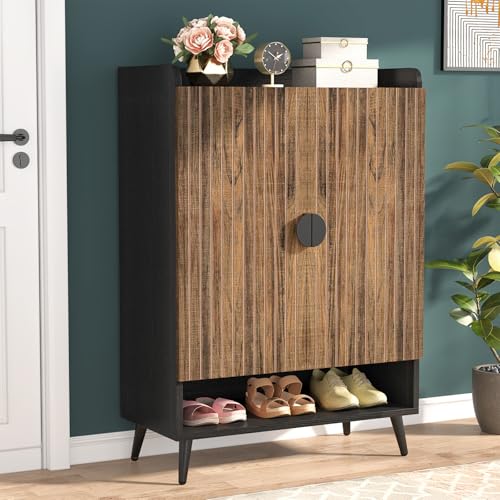
- Best overall closed cabinet: Tribesigns Shoe Cabinet with Doors, 7-Tier (Rustic Brown) — Check on Amazon
- VASAGLE LIRY Collection Shoe Cabinet with 3 Flip Drawers (Rustic White, UHSC301W02) — Check on Amazon
- Nicetree Shoe Storage Cabinet with 2 Flip Drawers (White) — Check on Amazon
See 3 more Amazon options
- Maupvit Shoe Storage Cabinet with 3 Flip Louvered Doors (Noble Blue Gray) — Check on Amazon
- YIKEHOME Shoe Cabinet with 2 Rattan Flip Drawers — Check on Amazon
- VASAGLE 10-Tier Shoe Storage Cabinet (White, ULBS273T14) — open-tier format — Check on Amazon
Read the full guide ↓
Disclosure: As an Amazon Associate, dailyhomedecorating.com earns from qualifying purchases. Links to Amazon on this page are affiliate links; they cost you nothing extra. Listing details such as price and availability change often, so check price on Amazon before you buy.
The best shoe cabinet for modern homes under $400 has to pass a test the other guides in this series do not set: it must look intentional. Modern interiors run on clean lines, flat fronts and visual quiet — and nothing breaks that calm faster than a shoe pile, or a storage unit that looks like storage. The design brief here is therefore stricter. Fronts should be flat, fluted, louvered or woven — texture without clutter. Shoes must disappear completely, because in an open-plan modern space the entryway is usually visible from the living area, the kitchen and sometimes the whole ground floor. And the piece should earn its floor space the way modern furniture is expected to: doubling as a console, holding a lamp or a tray, presenting a surface worth styling. The six picks below were judged on those terms first and storage second — though, as the reviews show, the best modern cabinets win on both.
Format is a design decision here. Hinged doors give the flattest, most architectural front — a closed cabinet can read as a sideboard or a wall panel. Flip drawers deliver the slimmest profile, and their horizontal divisions suit the long, low lines modern rooms favour. Rattan and louvered fronts bring the organic texture that keeps a minimalist scheme from feeling cold, while breathing better than sealed doors as a bonus. One pick in this guide breaks the modern rule on purpose: a tall open-tier organizer, labelled honestly as open, included because modern homes still have closets and utility corners where concealment does not matter and its plain white stack is visually harmless. Everything else here closes, because in a modern entryway, closed is the entire point.
A word on budget: under $400 is where this category gets interesting for design-led buyers. It buys fluted and louvered fronts, metal hardware, woven natural panels and finishes beyond basic white laminate — the difference between a cabinet that disappears into a scheme and one that elevates it. It does not buy solid hardwood or designer names, and this guide will not pretend otherwise: these are engineered-wood pieces with well-judged fronts, and the reviews are honest about that trade. What you are paying for is proportion, finish and the discipline of a front with nothing to hide behind — because it is hiding everything.
In this guide
Quick picks: best shoe cabinet for modern homes under $400 at a glance
Six picks, five genuinely closed cabinets and one honestly labelled open organizer. Prices are not printed in this guide — check price on Amazon for the live figure in the finish you choose.
| Pick | Best for | Key specs | Price |
|---|---|---|---|
| Tribesigns Shoe Cabinet with Doors, 7-Tier (Rustic Brown) | Best overall closed cabinet | Closed hinged doors; 7 tiers with adjustable shelves; engineered wood; freestanding floor cabinet; raised metal legs keep the base off damp floors; top surface usable for keys, bags and decor. | Check price on Amazon |
| VASAGLE LIRY Collection Shoe Cabinet with 3 Flip Drawers (Rustic White, UHSC301W02) | Best flip-drawer cabinet | 3 tilt-out flip drawers; farmhouse rustic white finish; interior shelves adjust between 3 positions; fits 18 to 24 pairs and shoes up to US size 14 per the maker; anti-tip kit included; freestanding. | Check price on Amazon |
| Nicetree Shoe Storage Cabinet with 2 Flip Drawers (White) | Best for very narrow hallways | Only 9.45 inches deep; 2 flip drawers with adjustable panels; metal legs; anti-tipping design; freestanding; maker describes capacity of 24 to 32 pairs across the two double-layer drawers. | Check price on Amazon |
| Maupvit Shoe Storage Cabinet with 3 Flip Louvered Doors (Noble Blue Gray) | Best ventilated flip cabinet | 3 flip drawers with louvered fronts for airflow; third drawer extended to 15.75 inches for larger shoes; metal flip hinges; 9.35 inches deep; anti-tipping device included; maker describes 24 to 32 pairs across three double-layer drawers. | Check price on Amazon |
| YIKEHOME Shoe Cabinet with 2 Rattan Flip Drawers | Best rattan / natural-texture pick | 2 rattan-front flip drawers; adjustable shelves inside the drawers; woven rattan panels allow airflow; engineered wood frame; freestanding entryway cabinet. | Check price on Amazon |
| VASAGLE 10-Tier Shoe Storage Cabinet (White, ULBS273T14) — open-tier format | Best open-tier tall organizer (not a closed cabinet) | 10 open tiers; 12.6 x 24.8 x 73.6 inches; holds up to 30 pairs per the maker; anti-tip kit included; freestanding; open shelves — shoes remain visible. | Check price on Amazon |
One more design deserves a mention without a link: the IKEA BISSA-style two-compartment tilt-out cabinet is a long-running small-entry favourite sold through IKEA’s own stores and site. No verified Amazon US listing could be confirmed for it at the time of writing, so it appears here as prose only — if you have an IKEA nearby it is worth a look as a budget-tier, mid-range-positioned alternative, and if you do not, every pick above is orderable today.
How the picks were chosen
Modern-home judging inverted the usual order. Design integrity came first: would this front hold its own in a considered interior — flat, fluted, louvered or woven, with hardware that looks chosen rather than included? Concealment came second: in open-plan spaces, a cabinet that shows shoe silhouettes through gaps fails the brief, so closed picks had to close cleanly. Storage competence still mattered — adjustable shelves, honest sizing, anti-tip hardware — because a beautiful cabinet that cannot fit your shoes is a sculpture, not a solution. Every linked pick is a verified real model from a named maker, checked against its listing for dimensions and construction before inclusion; a famous flat-pack design that could not be verified on Amazon US is discussed in prose only. No prices are printed in this guide — finishes and sizes shift the live price, so check the current Amazon listing for the exact configuration you want.
One rule ran through every decision in this guide: no invented numbers. There are no star ratings and no review counts anywhere in these reviews, because those figures change constantly on Amazon and printing them would mislead you within weeks. There are no static product prices either, for the same reason. What you get instead is what does not change: the format, the dimensions the maker publishes, the adjustability, the hardware, and an honest account of who each cabinet suits and who it will frustrate.
Detailed reviews
Tribesigns Shoe Cabinet with Doors, 7-Tier (Rustic Brown)
Who it suits: Best overall closed cabinet. Maker positions it as a large-capacity 7-tier cabinet; the matching wood-and-gold version is rated by the maker for up to 30 pairs.
This is the pick that behaves most like a real piece of entryway furniture rather than a rack with a cover on it. Two hinged doors close over seven tiers, so the whole shoe pile disappears behind a flat, calm front, and the shelves inside adjust, which matters more than the tier count suggests: one shelf comes out and a pair of ankle boots stands upright instead of lying crushed under a fixed divider. The raised legs lift the cabinet off the floor, so mop water and entryway slush do not wick straight into the bottom panel, and the space underneath swallows a pair of slippers or the shoes you kicked off ten seconds ago. The top is a genuine landing strip — wide enough for a key bowl, a plant and the bag you always put down in the same place. Assembly is flat-pack work with a lot of panels, so budget an unhurried hour and a second pair of hands for the door-hanging step, and anchor it to the wall if children or large dogs will lean on it.
In a modern scheme the rustic brown is the warm anchor — pair it with black or brass accessories and it reads as a deliberate console, not a shoe store.
Pros:
- Fully closed doors hide the entire shoe pile
- Adjustable shelves adapt to boots and heels, not just flats
- Raised legs protect the base from wet entryway floors
- Usable top surface works as a console
Honest limitation: The honest limitation is assembly and material: it is engineered wood, not solid timber, and the door alignment takes patience — a slightly rushed build shows up as a door gap you will see every day.
Choose it if: Choose it if you want one cabinet that ends the entryway shoe problem in a single purchase and looks like furniture doing it.
Skip it if: Skip it if your entryway is narrower than the cabinet is deep with the doors open, or if you need boot storage for tall winter boots in every tier.
VASAGLE LIRY Collection Shoe Cabinet with 3 Flip Drawers (Rustic White, UHSC301W02)
Who it suits: Best flip-drawer cabinet. Maker-rated for 18 to 24 pairs, up to US size 14.
Flip drawers solve a different problem than doors do. A hinged door needs swing clearance and shows you every shelf at once; a flip drawer tilts toward you, presents two rows of shoes, and closes with a push, so the cabinet can be genuinely slim without feeling flimsy. VASAGLE’s LIRY version leans farmhouse — rustic white panels, simple metal handles — and the working details are right: the divider inside each drawer moves between three positions, so one drawer can be all sneakers while another swallows ankle boots with the divider removed. The maker rates it for shoes up to US size 14, which is unusually honest sizing for this category, where many slim cabinets quietly stop fitting at a men’s 10. The top surface is narrow but real, enough for keys and mail, and an open bottom slot takes slippers. An anti-tip kit is in the box and it is not optional decoration on a tall, narrow, front-heavy piece like this — use it.
The farmhouse wording undersells it: in rustic white against a plain wall, the three clean drawer fronts read as minimalist panelling with storage behind.
Pros:
- Slim tilt-out design needs almost no swing clearance
- Adjustable dividers handle boots as well as flats
- Maker-rated up to US size 14 shoes
- Anti-tip kit included and genuinely needed
Honest limitation: The honest limitation is depth physics: very bulky high-tops and chunky trainers can stop a flip drawer closing flush, so the biggest shoes in the house may still live elsewhere.
Choose it if: Choose it if your hallway is narrow, your style leans farmhouse, and you want shoes hidden without giving up floor depth.
Skip it if: Skip it if most of your footwear is oversized trail shoes or work boots — a deeper shelved cabinet will serve you better.
Nicetree Shoe Storage Cabinet with 2 Flip Drawers (White)
Who it suits: Best for very narrow hallways. Maker describes 24 to 32 pairs across two double-layer flip drawers — treat the top of that range as smaller shoe sizes.
At 9.45 inches deep, this is the cabinet for the hallway where every other cabinet is a trip hazard. Most shoe cabinets run 13 to 15 inches deep; the Nicetree gives back nearly half a foot of passage while still hiding shoes behind two flip fronts, each with two layers of storage and an adjustable panel you can move or remove for heels and ankle boots. The metal legs raise it enough that a robot vacuum can pass underneath and mopping does not mean moving furniture. Because it is tall, slim and front-loaded, the anti-tip fitting matters — the maker builds anti-tipping into the design, and you should still fix it to the wall as instructed, especially in a rental hallway where a falling cabinet would take paint with it. The white farmhouse front is deliberately plain, which is the point in a small space: it reads as wall, not as storage, and the eye slides past it.
For modern homes this is the gallery trick — a plain white slim cabinet that disappears against the wall while removing twenty-plus pairs from view.
Pros:
- Shallowest footprint here at 9.45 inches deep
- Double-layer flip drawers keep capacity respectable despite the slim depth
- Raised on metal legs for cleaning underneath
- Plain front visually disappears in tight spaces
Honest limitation: The honest limitation is shoe size: slim flip cabinets trade depth for fit, and large men’s shoes sit at an angle or not at all in the tighter layer — measure your biggest pair before ordering.
Choose it if: Choose it if your hallway or apartment entry is genuinely narrow and every inch of passage matters.
Skip it if: Skip it if you wear larger than about a US men’s 11 in bulky styles, or if you need open quick-grab storage for daily runners.
Maupvit Shoe Storage Cabinet with 3 Flip Louvered Doors (Noble Blue Gray)
Who it suits: Best ventilated flip cabinet. Maker describes 24 to 32 pairs; the extended third drawer is the one sized for larger shoes.
Most closed shoe cabinets have an unspoken flaw: they seal shoes in a box. The Maupvit’s louvered flip fronts are the fix — the slats let air move through the cabinet, so the pair you wore in the rain does not spend the week fermenting in a sealed compartment. There are three flip drawers, each double-layered, and the detail that earns this cabinet its place is the extended third drawer, which reaches 15.75 inches so larger shoes get a home instead of being exiled to the floor beside the cabinet. The flip hinges are metal rather than plastic, which is the part of a flip cabinet that actually wears out, and the whole unit is only 9.35 inches deep, so it belongs to the same slim family as the Nicetree. The noble blue gray finish is a deliberate colour rather than a safe white or brown, and in the right hallway that is a feature: it reads as a painted furniture piece, not as storage apologising for itself. An anti-tipping device is included — fit it.
The louvered blue gray front is the most designed object in this guide: painted slats give a modern entryway a colour note and shadow lines flat doors cannot.
Pros:
- Louvered fronts ventilate shoes instead of sealing in odour
- Extended third drawer fits larger shoes that defeat other slim cabinets
- Metal flip hinges outlast plastic pivots
- Slim 9.35-inch depth suits narrow entries
Honest limitation: The honest limitation is the colour commitment and the louvers themselves: slatted fronts show dust in the grooves and need a brush-down now and then, and blue gray does not blend into every scheme.
Choose it if: Choose it if damp-climate shoes, gym trainers or work footwear make ventilation a real requirement, not a nicety.
Skip it if: Skip it if you want the lowest-maintenance front possible — flat doors wipe clean faster than louvers.
YIKEHOME Shoe Cabinet with 2 Rattan Flip Drawers
Who it suits: Best rattan / natural-texture pick. Two double-duty flip drawers sized for everyday family footwear; adjustable shelves let one drawer convert for taller shoes.
Rattan is doing two jobs in this cabinet. Visually, the woven fronts warm up an entryway in a way flat laminate never does — this is the pick that suits boho, coastal and Scandinavian-leaning rooms, and it photographs like decor rather than storage. Functionally, woven rattan breathes: air passes through the front, so shoes dry instead of stewing, the same ventilation argument as the louvered Maupvit but delivered with texture instead of slats. Inside, each flip drawer carries adjustable shelving, so the divider comes out for ankle boots and goes back in for two rows of flats. The frame is engineered wood with a wood-look finish, and the cabinet is sized as an entryway piece rather than a whole-house shoe warehouse — think the daily rotation for a household, with overflow living in bedroom closets. Treat the rattan kindly: it is a natural woven material, and dragging gritty soles across the inside of the front will fray it faster than the frame will ever wear out.
Rattan is the texture modern rooms currently run on — this is the pick for Japandi, coastal and warm-minimal schemes where flat laminate feels cold.
Pros:
- Woven rattan fronts add real texture and warmth
- Natural airflow through the fronts helps shoes dry
- Adjustable drawer shelves convert for boots
- Looks like decor, not storage furniture
Honest limitation: The honest limitation is capacity and delicacy: two drawers will not swallow a large collection, and woven rattan needs gentler handling than a flat laminate door.
Choose it if: Choose it if the entryway is on show — open-plan living, guests arriving through the front door — and you want storage that earns its place visually.
Skip it if: Skip it if you need maximum pairs per dollar, or if muddy boots are the main cargo.
VASAGLE 10-Tier Shoe Storage Cabinet (White, ULBS273T14) — open-tier format
Who it suits: Best open-tier tall organizer (not a closed cabinet). Maker-rated for up to 30 pairs across 10 tiers.
This pick is included deliberately as the honest contrast, and it is labelled as what it is: an open-tier organizer, not a closed cabinet. Ten shelves stack up to 73.6 inches tall on a footprint just 24.8 inches wide, holding up to 30 pairs with every pair visible and grabbable in one motion — no drawer to tilt, no door to swing, nothing between you and the shoes on a rushed morning. Taller shelves in the stack take boots and high-tops that defeat slim flip drawers. What you give up is exactly what the other five picks exist to provide: concealment and dust protection. Shoes on open tiers are on display, they gather dust, and a muddy pair looks muddy. So the right home for this unit is a closet, a bedroom corner or a utility space where access speed beats appearance — or a household that has made peace with seeing its shoes. An anti-tip kit is included; at over six feet tall, anchoring is mandatory, not advisory.
Keep this one behind a closet door: its plain white stack is visually quiet, but open shoes are open shoes, and the modern brief is concealment.
Pros:
- Fastest access of any pick — everything visible at a glance
- Tall tiers accept boots that slim cabinets reject
- Narrow 24.8-inch width uses vertical space well
- Simple, sturdy, easy assembly
Honest limitation: The honest limitation is fundamental: it hides nothing. If your goal is a calm, closed entryway, this is the wrong format no matter how good the shelves are.
Choose it if: Choose it for a closet, bedroom or back hallway where speed and capacity matter more than concealment.
Skip it if: Skip it for a front entryway you want to look tidy for guests — pick any of the five closed designs instead.
Comparison table
| Pick | Best for | Format and key specs |
|---|---|---|
| Tribesigns Shoe Cabinet with Doors, 7-Tier (Rustic Brown) | Best overall closed cabinet | Closed hinged doors; 7 tiers with adjustable shelves; engineered wood; freestanding floor cabinet; raised metal legs keep the base off damp floors; top surface usable for keys, bags and decor. |
| VASAGLE LIRY Collection Shoe Cabinet with 3 Flip Drawers (Rustic White, UHSC301W02) | Best flip-drawer cabinet | 3 tilt-out flip drawers; farmhouse rustic white finish; interior shelves adjust between 3 positions; fits 18 to 24 pairs and shoes up to US size 14 per the maker; anti-tip kit included; freestanding. |
| Nicetree Shoe Storage Cabinet with 2 Flip Drawers (White) | Best for very narrow hallways | Only 9.45 inches deep; 2 flip drawers with adjustable panels; metal legs; anti-tipping design; freestanding; maker describes capacity of 24 to 32 pairs across the two double-layer drawers. |
| Maupvit Shoe Storage Cabinet with 3 Flip Louvered Doors (Noble Blue Gray) | Best ventilated flip cabinet | 3 flip drawers with louvered fronts for airflow; third drawer extended to 15.75 inches for larger shoes; metal flip hinges; 9.35 inches deep; anti-tipping device included; maker describes 24 to 32 pairs across three double-layer drawers. |
| YIKEHOME Shoe Cabinet with 2 Rattan Flip Drawers | Best rattan / natural-texture pick | 2 rattan-front flip drawers; adjustable shelves inside the drawers; woven rattan panels allow airflow; engineered wood frame; freestanding entryway cabinet. |
| VASAGLE 10-Tier Shoe Storage Cabinet (White, ULBS273T14) — open-tier format | Best open-tier tall organizer (not a closed cabinet) | 10 open tiers; 12.6 x 24.8 x 73.6 inches; holds up to 30 pairs per the maker; anti-tip kit included; freestanding; open shelves — shoes remain visible. |
Read the format column carefully: five of these six designs close fully, and one — the tall VASAGLE — is open shelving. That single distinction predicts satisfaction better than any capacity figure.
How to choose the right shoe cabinet for your home
Match the front to the architecture
Flat fronts suit flat architecture — handleless or slim-handle doors in white or a single colour disappear into modern walls. Fluted and louvered fronts add shadow and rhythm where a room needs texture without objects. Rattan warms schemes built on oak, linen and plaster. Choose the front the way you would choose a sideboard, because visually that is what you are buying; the shoe storage is the bonus hidden behind it.
Use the cabinet as the console you were going to buy anyway
In most modern entries, floor space allows one piece of furniture, not two. A closed shoe cabinet with a finished top replaces the console table entirely: lamp, tray for keys, one piece of art leaning on the wall. Check the top’s depth and finish quality when you compare picks — on the best designs here, the top surface is a feature, not an afterthought — and you free the budget and the wall for the mirror or artwork instead.
Keep the silhouette low or the profile slim
Modern rooms dislike visual bulk at the door. Long, low flip-drawer cabinets echo the proportions of media units and sideboards; tall narrow cabinets work where the wall is short but the ceiling is high. Avoid mid-height, mid-width boxes that read as neither. Measure the wall and choose the proportion deliberately — horizontal calm or vertical accent — rather than whatever happens to be on sale.
Colour discipline: one note or none
The safest modern choice is a cabinet that matches the wall or the flooring tone, vanishing entirely. The bolder choice is a single colour note — the louvered blue gray in this guide — repeated nowhere else except perhaps a cushion or a print. What breaks modern schemes is the in-between: a wood tone that almost matches the floor, a white that almost matches the wall. Order samples or check listing photos against your room’s light before committing.
Common mistakes to avoid
- Buying storage that looks like storage. Visible shoe silhouettes, gaps and open tiers undo a modern scheme instantly; if it does not close cleanly, it does not belong in the entryway.
- Almost-matching finishes. A cabinet whose white or wood tone is close to but not equal to your wall or floor reads as a mistake at ten paces. Match deliberately or contrast deliberately.
- Forgetting the top. In a modern entry the cabinet top is a styled surface whether you plan it or not — choosing a design with a poor finish up top means styling around a flaw.
- Overfilling the visual field. One calm cabinet beats a cabinet plus a bench plus a rack. If the cabinet holds the daily rotation, resist adding the extra pieces that reintroduce clutter.
- Skipping the anchor for the look of it. Wall-fixing a tall cabinet is invisible from the front and essential for safety; there is no aesthetic argument against it.
Final recommendation
For a modern home, the Maupvit is the design statement — louvered, coloured, ventilated — while the YIKEHOME rattan cabinet is the warm-texture choice and the Tribesigns the calm all-rounder whose top works hardest as a console. Choose the Nicetree when the wall is short and the aesthetic is disappearance, and the VASAGLE flip drawers for long, low, panelled calm. Hide the open VASAGLE 10-tier in a closet where it belongs. Buy the front you would buy as furniture, verify it fits your largest shoes, anchor it, and your entryway stops being the room’s apology and becomes its first impression.
Frequently asked questions
What style of shoe cabinet suits a modern home best?
Flat-front door cabinets and slim flip-drawer designs suit modern homes best, because both present an unbroken surface. Fluted, louvered or rattan fronts add texture where a scheme needs warmth. The common thread is concealment: the front should read as furniture or panelling, never as storage.
Can a shoe cabinet replace a console table?
Yes — and in a small modern entryway it should. A closed cabinet with a finished top holds keys, mail and a lamp exactly like a console, while hiding the shoe rotation inside. Check top depth and finish when comparing models.
Is rattan too traditional for a modern interior?
No — woven rattan is a standard texture in current minimalist, Japandi and coastal-modern schemes precisely because it warms flat surfaces. It also ventilates shoes. Keep the surrounding palette simple and it reads contemporary, not cottage.
How do I stop a modern entryway cabinet looking bulky?
Choose proportion deliberately: a long low cabinet for wide walls, a tall slim one for short walls, and a finish that either matches the wall or makes one deliberate colour statement. Raised legs also lighten the visual weight considerably.
Do modern-style cabinets hold as much as ordinary ones?
The closed designs here hold the same realistic range as any cabinet in this guide — plan on roughly two-thirds of the maker’s pair claim for a mixed collection. Slim flip designs trade some capacity for their profile; deep door cabinets give nothing away.
Styling the cabinet into the room
A modern entryway is composed, not decorated, and the cabinet is its largest object — so compose around it deliberately. The top surface wants the rule of three: one functional object (a tray or bowl for keys), one vertical object (a small lamp or a vase with height), and one organic object (a plant or a branch). More than three groups and the surface becomes the clutter the cabinet exists to hide; fewer and it looks unfinished. Above the cabinet, a single large mirror or one piece of art at generous scale beats a gallery of small frames, which fights the cabinet’s calm front for attention. If the cabinet is the colour note — the louvered blue gray — let everything else on that wall be quiet, and repeat the colour once, small, elsewhere in the room: a cushion, a book spine, a print’s accent.
Lighting decides whether the piece reads as furniture or as a box. Modern entries often suffer one harsh ceiling light that flattens everything; a small lamp on the cabinet top changes the register of the whole space at arrival, and it makes the cabinet’s front — fluted, louvered or woven — perform, because texture is shadow and shadow needs a low, warm light source. This is also the practical argument for choosing a cabinet with a genuinely finished top: it is not storage for the lamp, it is the stage for it.
Keeping a modern entryway honest over time
Minimal spaces fail by accumulation, not by purchase. The discipline that protects a modern entry is a strict capacity contract: the cabinet holds the rotation, and a new pair entering the rotation sends an old pair to the closet or out of the house. The moment overflow appears on top of or beside the cabinet, the room’s whole premise collapses — so treat overflow as a signal about the collection, never as a reason to add a second storage piece. Twice a year, empty the cabinet fully: it takes twenty minutes, it is the only way the interior gets properly cleaned, and it forces the honest audit of which shoes are furniture and which are merely residents.
Care is light but specific. Flat and painted fronts want a damp microfibre cloth and nothing abrasive. Rattan wants a soft brush and dry dusting; water swells natural fibres and household sprays dull them. Louvered fronts collect dust in their grooves — a brush attachment on the vacuum, monthly, keeps the shadow lines crisp. Attend to those small rituals and a modern cabinet keeps the quality that justified it: not that it stores shoes, but that nobody can tell it does.
The pre-purchase checklist, design edition
Modern purchases fail on fit and finish more than on storage, so check in this order. One: photograph the entry wall straight-on, in daylight and in evening light; finishes read differently under the warm lamp light the cabinet will actually live in. Two: measure the wall and decide the proportion — long and low, or tall and slim — before looking at products, because proportion chosen in the abstract survives contact with a sale page. Three: settle the colour strategy: match the wall, match the floor tone, or make one deliberate statement — and reject every almost-match in between. Four: measure your largest shoes and tallest boots, and confirm the chosen design’s interior, including its tallest adjustable compartment, takes them; beauty that rejects your boots is a daily defeat. Five: confirm the top’s finish and depth as a styled surface. Six: confirm the anti-tip provision — invisible when fitted, essential always. Seven: check the live price on Amazon for the exact finish, since design-led finishes are priced individually. Eight: plan the styling trio for the top before the cabinet arrives, so it lands composed rather than accumulating.
Where design money goes inside the ceiling
Inside the under-$400 framing, the tiers buy visibly different things. The lower tier buys concealment in plain finishes — clean fronts, honest function, no texture to speak of. The middle tier is where texture arrives: woven rattan, louvered paint, fluted panels, metal hardware that looks specified rather than supplied. The upper tier buys scale and finish discipline — larger door cabinets with sideboard proportions, better-matched veneers and paints, fronts that hold a wall the way furniture should. What the ceiling does not reach is solid timber or designer provenance, and a modern buyer should be comfortable with that: in a composed interior, proportion, colour discipline and an unbroken front do the visual work, and all three are available well inside this budget.
The costliest modern mistake is not overspending — it is buying the almost-right tone, the almost-right proportion, the cabinet that needs an apology and a plant positioned to hide its worst angle. The checklist above exists to prevent exactly that purchase. Buy slowly, measure twice, commit fully: a modern entryway rewards decisiveness every single day you come home.
Decision shortcuts for the design-led buyer
Decide by the room, not by the shoes — the shoes, within the honest limits stated in every review here, will follow. If your interior is warm minimal — oak, linen, plaster, plants — take the YIKEHOME and let the rattan carry the texture of the whole entry. If your interior is graphic and coloured, take the Maupvit: its louvered blue gray is the one genuine colour statement in this guide, and a modern scheme with no statement at all risks reading as unfinished. If your interior is architectural and quiet, take the Tribesigns in its warm tone or the VASAGLE’s three calm white fronts, and let proportion and styling do the talking. If your wall is short and your taste is disappearance, take the Nicetree and paint the wall to meet it. The open VASAGLE tower, as established, belongs behind a closet door in even the most design-led home — modern discipline is knowing which objects earn visibility.
Two tie-breakers, both visual. Between two cabinets that fit the space and the shoes, choose the one whose top you would rather style — you will compose that surface weekly, and pleasure in it is what keeps it composed. And between a finish that matches and a finish that contrasts, choose the one you can commit to completely: the half-hearted middle is the only wrong answer in a modern interior. Then anchor it, style it once with intent, enforce the capacity contract, and let the entryway do what modern design promises — make coming home feel like the calmest decision of the day.
Care and cleaning by front type
Flat laminate and painted fronts — most of the cabinets in this guide — want the least: a damp cloth for the outside, a dry brush for interior grit, and no abrasive pads anywhere near the finish. Louvered fronts collect dust in their grooves, so add a monthly pass with a soft brush or the vacuum’s brush attachment; the slats that ventilate your shoes will otherwise slowly fur with household dust. Rattan wants to stay dry — dust it with a soft brush, wipe spills immediately, and never soak it, because natural fibres swell and stain in ways engineered finishes do not. Flip pivots and door hinges across every design benefit from a twice-yearly check: open each drawer and door fully, confirm the movement is smooth, and tighten any screw that has worked a quarter-turn loose before the looseness becomes wear. The floor beneath and behind the cabinet deserves the same rhythm — grit migrates, and a cabinet standing in its own dust line ages faster at the base than anywhere else. None of this takes more than ten minutes a month, and it is the entire difference between a cabinet that looks bought last year and one that looks bought last decade.
One last habit protects every format equally: never store a genuinely wet pair inside a closed cabinet overnight. Use the mat, let the pair dry in the open, and file it away dry the next morning. Closed storage is for dry shoes; treat that as the constitution of the entryway and odour, mildew and finish damage simply never get started — whatever cabinet, at whatever tier, you chose from this guide.
Should the cabinet match my flooring or my walls?
Match the walls if you want the cabinet to disappear — the safest modern strategy, especially in white-on-white schemes. Match the flooring tone if the cabinet is long and low, because the eye reads it as a continuation of the floor plane. Contrast only when you mean it: a single coloured or rattan piece against a quiet room. The one option to avoid is the near-match, close to the wall colour but visibly off, which reads as an error under every light. When in doubt, order the finish you can also imagine on a sideboard in the same room — that test points toward purchases buyers in this category rarely regret.


